
Reports
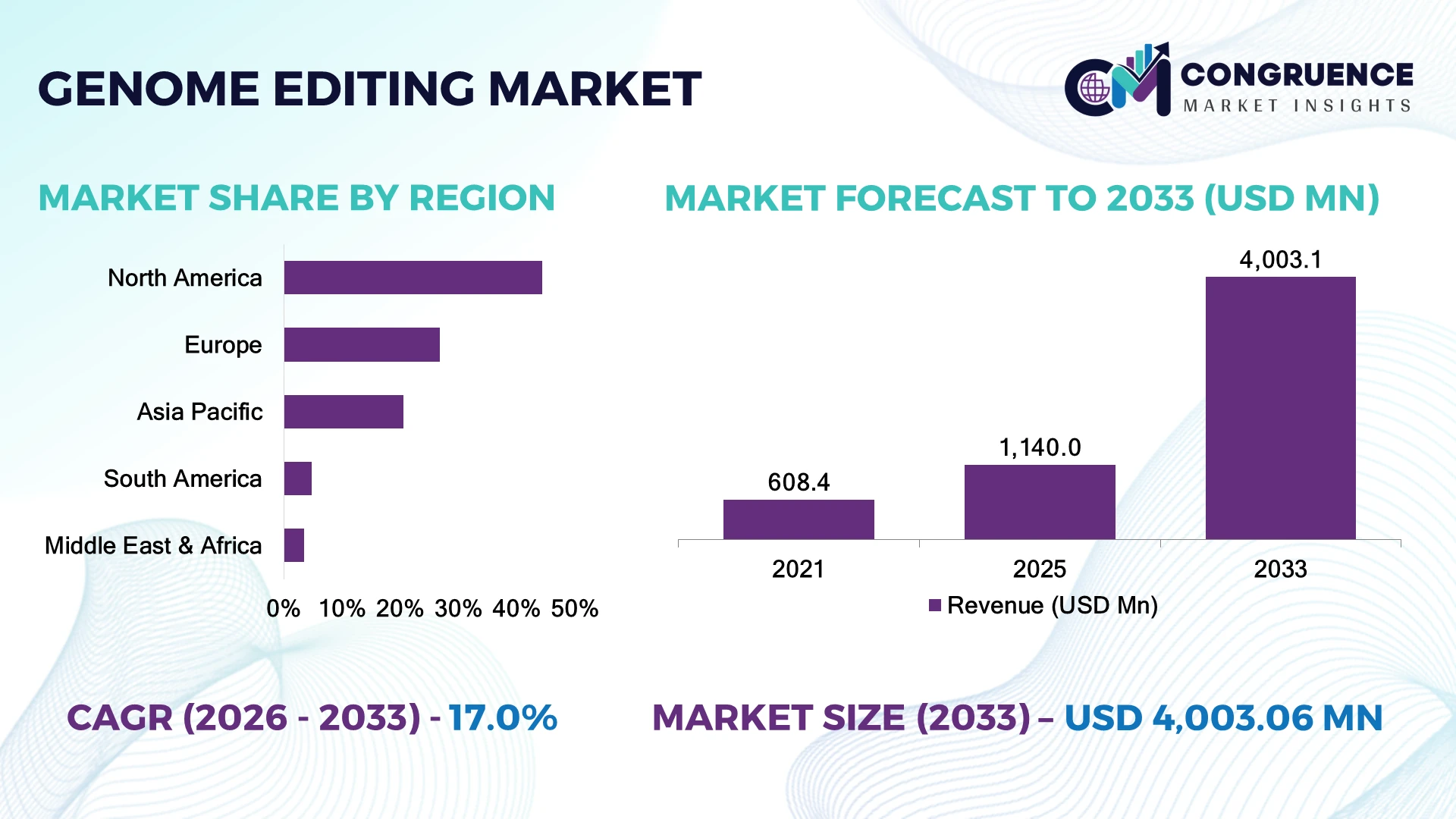
The Global Genome Editing Market was valued at USD 1,140.0 Million in 2025 and is anticipated to reach a value of USD 4,003.1 Million by 2033 expanding at a CAGR of 17.0% between 2026 and 2033. Growth is being accelerated by expanding CRISPR-based therapeutic pipelines, rising gene therapy approvals, and increasing precision agriculture genome engineering programs across major biotechnology economies.
The United States dominates the global genome editing landscape, accounting for nearly 42% of worldwide genome editing research activity and hosting over 55% of active clinical-stage gene-editing trials. More than USD 8 billion has been invested into gene-editing ventures and platform development over the last five years, supported by strong NIH-backed research ecosystems and biotechnology clusters. In comparison, China contributes approximately 18% of global genome editing publications and continues expanding agricultural genome engineering initiatives following food-security priorities and biotechnology modernization strategies. Advanced sequencing integration has improved editing validation efficiency by over 30% across leading laboratories.
Strategic implication organizations securing proprietary editing platforms, delivery technologies, and clinical partnerships are strengthening long-term competitive positioning across healthcare, agriculture, and industrial biotechnology applications.
Market Size & Growth: USD 1,140.0 Million in 2025, projected to reach USD 4,003.1 Million by 2033 at 17.0% CAGR, supported by expanding CRISPR therapeutics and precision medicine adoption.
Top Growth Drivers: Clinical gene-editing trial activity increased 22%, CRISPR research funding expanded 19%, and genomic medicine investments advanced 17% globally.
Short-Term Forecast: By 2028, genome editing workflow efficiency is expected to improve by 28% through automation, advanced sequencing, and AI-assisted design platforms.
Emerging Technologies: AI-guided guide-RNA optimization, base editing, and prime editing technologies are reducing off-target events by more than 35% in advanced research programs.
Regional Leaders: North America approaches USD 1.8 Billion, Asia Pacific exceeds USD 1.2 Billion, and Europe nears USD 700 Million, driven by therapeutic, agricultural, and industrial biotechnology adoption.
Consumer/End-User Trends: Over 60% of biotechnology firms now integrate genome editing into drug discovery pipelines to accelerate target validation and candidate screening.
Pilot/Case Example: In 2024, advanced CRISPR therapeutic programs demonstrated up to 40% improvement in targeted gene correction outcomes across selected rare disease studies.
Competitive Landscape: The leading participant controls approximately 12% market share, while Thermo Fisher Scientific, Danaher, Merck KGaA, CRISPR Therapeutics, and Editas Medicine remain influential innovators.
Regulatory & ESG Impact: Regulatory harmonization initiatives reduced certain clinical review timelines by nearly 15%, supporting faster translational research and commercialization pathways.
Investment & Funding: Genome editing ventures attracted over USD 3.5 Billion in funding, with strategic partnerships and platform expansion remaining primary capital deployment priorities.
Innovation & Future Outlook: Next-generation delivery systems, multiplex editing, and AI-enabled genomic engineering are reshaping competitive strategies amid global biotechnology expansion.
Genome editing technologies are becoming essential across therapeutic development, agricultural biotechnology, and synthetic biology applications. Demand is particularly strong in rare disease treatment, oncology research, and crop trait optimization. Recent advances in base editing and prime editing have improved targeting precision by over 35%, while regulatory support for advanced therapies is accelerating translational programs. As biotechnology supply chains become increasingly localized, organizations are prioritizing scalable editing platforms and delivery technologies, setting the stage for deeper strategic differentiation.
Genome editing has evolved into a strategic technology platform influencing healthcare innovation, agricultural productivity, and industrial biotechnology competitiveness. Organizations increasingly view gene-editing capabilities as a core differentiator because they enable faster biological discovery, targeted therapeutic development, and accelerated product commercialization. Recent regulatory modernization initiatives in the United States and Europe have streamlined advanced therapy evaluation pathways, while biotechnology infrastructure investments continue strengthening development ecosystems.
Compared with earlier gene modification techniques, modern CRISPR-based platforms can reduce experimental design timelines by approximately 40% and improve editing precision by more than 30% in selected applications. The United States leads clinical deployment and commercialization activity, while China demonstrates strong expansion in agricultural genome engineering and research output. This contrast highlights differences between therapeutic innovation leadership and large-scale application deployment. Over the next two to three years, automated laboratory workflows and AI-assisted genomic design tools are expected to become standard across a growing share of biotechnology organizations.
A practical example can be seen in biopharmaceutical companies integrating genome editing with advanced sequencing and cell engineering platforms to shorten development cycles. Industry participants are expanding strategic alliances, investing in delivery technologies, and strengthening intellectual property portfolios. Companies that establish scalable editing ecosystems and differentiated technology platforms will secure stronger competitive positioning and long-term operational advantage.
The rapid advancement of precision therapeutics is reinforcing genome editing adoption across biotechnology and pharmaceutical sectors. More than 55% of active gene-editing clinical programs are concentrated in the United States, while CRISPR-enabled therapeutic development activity has increased by over 20% during the past three years. Growing demand for targeted treatment approaches is driving higher utilization of genome engineering platforms for rare diseases, oncology, and inherited disorders. Regulatory agencies have also increased support for advanced therapeutic frameworks, accelerating translational development. This shift is creating a direct impact on R&D productivity and clinical success rates. In response, companies are expanding manufacturing capabilities, strengthening licensing agreements, and investing in proprietary delivery technologies. A notable strategic insight is that firms controlling both editing and delivery platforms are achieving stronger commercialization leverage than technology-only participants.
Genome editing programs continue to face structural limitations related to regulatory scrutiny, validation requirements, and development expenditures. Clinical-stage genome engineering projects can require 25–35% longer verification processes than conventional biologics due to extensive safety assessments and off-target analysis requirements. Approximately 40% of emerging biotechnology companies identify regulatory uncertainty as a primary commercialization barrier. Supply dependency for specialized reagents, viral vectors, and high-throughput sequencing tools further affects operational consistency. These constraints increase development timelines and capital intensity, limiting scalability for smaller innovators. To reduce exposure, companies are diversifying supplier networks, localizing manufacturing activities, and establishing long-term procurement agreements. A key operational insight is that organizations with vertically integrated development and validation capabilities are better positioned to maintain deployment consistency and regulatory compliance.
The integration of artificial intelligence with genome editing workflows represents a significant opportunity for technology differentiation and operational efficiency. AI-assisted guide RNA design platforms have demonstrated more than 30% improvements in target selection accuracy, while automated screening systems can reduce laboratory processing times by nearly 25%. Japan, Singapore, and South Korea are expanding biotechnology infrastructure programs that support advanced genomic research and digital laboratory transformation. Emerging trends such as base editing, prime editing, and multiplex genome engineering are opening new application areas beyond traditional therapeutic development. Companies are responding through strategic acquisitions, software partnerships, and expanded computational biology investments. A unique opportunity lies in combining AI-driven design with automated validation systems, creating integrated genomic engineering ecosystems that deliver measurable productivity advantages.
Achieving consistent large-scale deployment remains a critical challenge for genome editing technologies. Manufacturing variability, workforce specialization requirements, and complex integration across research and clinical environments continue to affect operational scalability. Industry assessments indicate that approximately 30% of advanced genome engineering projects experience deployment delays due to process standardization and validation challenges. Specialized scientific talent shortages have increased by nearly 20% in several leading biotechnology hubs, creating additional execution pressure. As editing applications expand into agriculture, healthcare, and industrial biotechnology, maintaining reproducibility and quality assurance becomes increasingly important. Companies must address these barriers through workforce development, automated production systems, and stronger infrastructure investments. The organizations that successfully standardize deployment processes will gain sustainable operational advantages and stronger long-term competitiveness across global biotechnology markets.
AI-Guided Editing Workflow Expansion Genome editing laboratories are increasingly deploying AI-driven guide RNA design and screening platforms, improving target selection accuracy by over 30% and reducing experimental iteration cycles by nearly 25%. More than 45% of large biotechnology enterprises have integrated computational genomic design into discovery workflows. Companies are scaling bioinformatics partnerships and automation investments to accelerate candidate validation while reducing laboratory bottlenecks created by skilled workforce shortages.
Shift Toward Precision Editing Platforms Base editing and prime editing technologies are gaining traction, with deployment activity increasing by approximately 35% across advanced research programs. Off-target modification rates have declined by nearly 40% compared with earlier editing approaches in selected applications. Regulatory focus on treatment precision and long-term safety is driving adoption. Organizations are restructuring R&D portfolios and expanding intellectual property positions around next-generation editing modalities to strengthen differentiation.
Localized Biotech Supply Networks Supply-chain resilience has become a priority as biotechnology firms reduce dependence on single-source reagent and vector suppliers. More than 28% of large genome engineering programs have diversified procurement strategies since 2024, while localized manufacturing initiatives have expanded by roughly 20%. This operational shift improves project continuity and quality assurance. Companies are establishing regional production partnerships and investing in domestic biotechnology infrastructure to secure critical inputs.
Automated Cell Engineering Scale-Up Automated cell processing systems are transforming genome editing deployment, reducing manual workflow requirements by approximately 32% and improving laboratory throughput by nearly 27%. Enterprise adoption is strongest among large therapeutic developers managing multiple editing pipelines simultaneously. A notable trend is the convergence of robotic processing with advanced sequencing validation, enabling faster decision-making. Companies are expanding automation platforms and cross-technology collaborations to improve scalability and operational consistency.
CRISPR technology remains the leading segment, accounting for approximately 58% of global genome editing activity due to its scalability, precision, and comparatively lower implementation complexity. Its broad applicability across therapeutics, agriculture, and industrial biotechnology continues to support widespread deployment. Research organizations report workflow efficiency improvements exceeding 30% when compared with earlier genome engineering techniques. Strong patent portfolios, expanding clinical programs, and continuous platform refinement further reinforce its market position.
TALEN is emerging as the fastest-growing type as developers increasingly seek highly targeted editing solutions for specialized therapeutic applications. Adoption has increased by nearly 18% across selected clinical development programs where editing specificity is a priority. Zinc Finger Nucleases (ZFNs) retain strategic relevance in established programs due to proven validation histories, while other niche editing technologies continue serving specialized research requirements. Companies are responding through platform diversification, licensing partnerships, and expanded investment in precision editing capabilities. Investment priorities are increasingly shifting toward technologies capable of balancing editing accuracy, regulatory compliance, and scalable deployment.
Therapeutic development represents the largest application segment with an estimated 47% share, supported by expanding gene therapy pipelines, oncology research, and rare disease treatment programs. Demand concentration remains strongest among organizations pursuing targeted genomic interventions where editing precision directly influences clinical outcomes. More than 55% of active genome editing clinical studies are focused on therapeutic applications, highlighting the segment’s operational importance.
Agricultural biotechnology is the fastest-growing application as food security initiatives and crop optimization programs accelerate adoption. Deployment activity has increased by approximately 20% across major agricultural economies seeking improved yield resilience and disease resistance. Drug discovery continues to expand through genome-based target validation, while basic research remains a foundational application supporting innovation pipelines. Companies are scaling automated screening platforms, integrating advanced sequencing, and expanding cross-sector collaborations. Demand is increasingly shifting toward applications that combine genomic engineering with measurable productivity, sustainability, and development-cycle advantages.
Biotechnology and pharmaceutical companies constitute the dominant end-user segment, representing approximately 48% of total demand. Their leadership is supported by extensive clinical development pipelines, advanced laboratory infrastructure, and continuous investment in genomic innovation. More than 60% of large therapeutic developers have integrated genome editing into at least one major research or development workflow. Operational intensity and commercialization objectives continue driving demand concentration within this group.
Academic and research institutes remain essential innovation hubs, while contract research organizations (CROs) are the fastest-growing end-user segment. Outsourced genome engineering activities have increased by nearly 22% as organizations seek specialized expertise and flexible development capacity. Agricultural biotechnology firms are also expanding utilization to support crop improvement initiatives. Companies are targeting these buyers through customized platforms, collaborative research agreements, and scalable service offerings. Competitive positioning increasingly depends on providing integrated editing, validation, and analytical capabilities tailored to specific end-user requirements.
North America accounted for the largest market share at 44.4% in 2025 however, Asia-Pacific is expected to register the fastest growth, expanding at a CAGR of 19.2% between 2026 and 2033.
North America accounted for approximately 44.4% of global market activity in 2025, supported by dense biotechnology clusters, advanced genomic research institutions, and strong commercialization capabilities. The region hosts the highest concentration of genome editing clinical programs globally, with the United States driving therapeutic deployment and technology validation. Integration of AI-enabled genomic design tools and automated laboratory systems has improved research productivity by more than 25% across leading enterprises. Strategic partnerships between biotechnology developers, pharmaceutical companies, and sequencing providers continue accelerating translational development. The region also benefits from extensive intellectual property ownership and specialized manufacturing infrastructure supporting cell and gene therapy production. More than half of active genome editing clinical-stage programs remain concentrated within North America, reinforcing its position as the industry's primary innovation hub.
United States Market Outlook: The United States remains the operational center of the global genome editing ecosystem due to its extensive biotechnology infrastructure, leading academic institutions, and deep venture capital participation. The country hosts the majority of CRISPR-focused therapeutic developers and maintains the highest concentration of genome editing patents globally. More than 55% of active clinical-stage genome editing trials are conducted in the U.S., supported by advanced sequencing networks and specialized manufacturing facilities. Strong collaboration between industry, research institutions, and healthcare organizations continues accelerating platform validation and therapeutic deployment across multiple disease categories.
Europe represented approximately 26.8% of the global market in 2025 and remains a critical center for genomic research, therapeutic innovation, and agricultural biotechnology development. The region benefits from strong public-private collaboration frameworks, advanced life sciences infrastructure, and expanding precision medicine initiatives. Germany, the United Kingdom, Switzerland, and France continue leading research output and commercialization activity. Regulatory discussions surrounding next-generation genomic technologies are encouraging greater investment in clinical and agricultural applications. Enterprise adoption of advanced genome engineering platforms has increased steadily as biotechnology firms focus on improving research efficiency and translational outcomes. Strategic alliances between pharmaceutical companies and research institutes are expanding access to advanced editing technologies and accelerating deployment across healthcare and industrial biotechnology sectors.
Germany Market Outlook: Germany serves as Europe's leading operational genome editing market through its strong biotechnology manufacturing base, translational research infrastructure, and industrial biotechnology capabilities. The country supports numerous genome engineering centers connected to pharmaceutical, agricultural, and academic networks. Advanced genomic research programs are increasingly integrated into precision medicine initiatives and biotechnology development projects. Germany also benefits from extensive laboratory automation deployment and strong enterprise participation in gene-editing innovation. The country's centralized research ecosystem continues attracting international collaborations focused on therapeutic development and agricultural genomics applications.
Asia-Pacific accounted for approximately 20.5% of global market activity in 2025 and represents the fastest-expanding regional ecosystem. Growth is supported by increasing biotechnology investments, genomic medicine initiatives, and agricultural modernization programs. China, Japan, South Korea, and Singapore are expanding genome editing infrastructure through research funding, biotechnology incubators, and manufacturing investments. Deployment of genome engineering technologies in crop improvement and biomedical research has increased substantially over recent years. More than 30% of newly established biotechnology research facilities in selected Asian markets now incorporate advanced genomic engineering capabilities. Regional enterprises are increasingly partnering with global technology providers to strengthen technical expertise, improve laboratory productivity, and expand commercialization opportunities.
China Market Outlook: China has emerged as the region's most strategically significant genome editing market due to its large-scale biotechnology investments, extensive research capacity, and expanding agricultural biotechnology programs. The country contributes a substantial share of global genome editing publications and continues strengthening domestic innovation capabilities through government-backed research initiatives. Advanced genome engineering technologies are increasingly applied across crop optimization, industrial biotechnology, and therapeutic research. China's expanding biotechnology manufacturing infrastructure and growing talent pool provide additional operational advantages, supporting broader commercialization and deployment across multiple end-use sectors.
South America accounted for approximately 4.8% of the global market in 2025, with demand primarily supported by agricultural biotechnology and crop improvement initiatives. The region's genome editing activity is closely linked to food production efficiency, climate resilience programs, and sustainable agriculture objectives. Brazil and Argentina continue leading deployment through investments in agricultural research and biotechnology innovation. Infrastructure limitations and uneven research funding remain constraints, but increasing collaboration with international biotechnology organizations is improving access to advanced technologies. Agricultural genome engineering programs focused on disease resistance and yield optimization are creating new commercialization pathways. Strategic partnerships between research institutes and agribusiness organizations are helping accelerate technology transfer and operational deployment.
Brazil Market Outlook: Brazil represents the largest genome editing market in South America due to its globally significant agricultural sector and strong biotechnology research capabilities. Genome editing technologies are increasingly integrated into crop development programs targeting productivity enhancement and environmental resilience. The country's agricultural research organizations maintain active collaboration with biotechnology developers focused on improving soybean, corn, and sugarcane performance. Regulatory support for agricultural biotechnology innovation and strong export-oriented agribusiness activity continue strengthening Brazil's position as the region's leading deployment center for genome engineering applications.
The Middle East & Africa accounted for approximately 3.5% of global market activity in 2025 and is gradually expanding through healthcare modernization, biotechnology infrastructure development, and genomics-focused investment programs. Countries across the Gulf region are strengthening precision medicine capabilities through national genomics initiatives and advanced healthcare projects. Research partnerships with international biotechnology organizations are improving technology access and knowledge transfer. Deployment remains concentrated within specialized research institutions and healthcare centers; however, infrastructure investment is steadily improving regional readiness. Emerging agricultural biotechnology applications are also gaining attention in selected markets seeking improved food security and environmental resilience. Strategic government-backed programs continue supporting long-term biotechnology ecosystem development.
Saudi Arabia Market Outlook: Saudi Arabia has established itself as the most influential genome editing market within the region through sustained investment in healthcare transformation, genomics programs, and biotechnology infrastructure. National initiatives focused on precision medicine and genetic research are expanding demand for advanced genomic technologies. The country is actively developing specialized research centers, biobanks, and genomic databases to support future healthcare applications. Strong government funding and international collaboration programs continue enhancing scientific capabilities, positioning Saudi Arabia as a regional leader in genome engineering research and translational genomics deployment.
Competition is led by CRISPR Therapeutics, Editas Medicine, Intellia Therapeutics, Beam Therapeutics, and Precision BioSciences, while large life science suppliers such as Thermo Fisher Scientific and Merck KGaA compete through tools, reagents, and platform integration. The top five genome editing innovators collectively control approximately 48% of advanced therapeutic and platform-development activity. Competition centers on editing precision, delivery efficiency, intellectual property strength, and development speed. Next-generation platforms have reduced off-target effects by over 35%, while AI-assisted guide design improves target selection accuracy by nearly 30%. Companies are competing through strategic licensing, delivery-technology partnerships, manufacturing expansion, and vertically integrated development models. The market is shifting from first-generation CRISPR platforms toward base editing, prime editing, and in vivo delivery systems. Patent portfolios, regulatory expertise, and clinical validation remain significant entry barriers. Success increasingly depends on combining proprietary editing technologies, scalable delivery platforms, strong intellectual property, and rapid clinical translation capabilities.
Editas Medicine, Inc.
Intellia Therapeutics, Inc.
Beam Therapeutics Inc.
Precision BioSciences, Inc.
Sangamo Therapeutics, Inc.
Caribou Biosciences, Inc.
Cellectis S.A.
Verve Therapeutics, Inc.
Thermo Fisher Scientific Inc.
Merck KGaA
Danaher Corporation
Integrated DNA Technologies, Inc.
New England Biolabs, Inc.
Genome editing technology is rapidly evolving beyond conventional CRISPR-Cas9 systems toward more precise and programmable platforms. CRISPR-Cas9 remains the dominant technology due to broad deployment across therapeutic development, agriculture, and industrial biotechnology. However, adoption of AI-assisted guide RNA design tools has surpassed 45% among advanced research organizations, improving target-selection accuracy by approximately 30% and reducing experimental optimization cycles. Automated sequencing validation platforms are also streamlining workflow execution and shortening development timelines.
Emerging technologies such as base editing and prime editing are gaining significant traction because they enable targeted genetic modifications without creating double-strand DNA breaks. Compared with traditional CRISPR-Cas9 workflows, advanced editing platforms can reduce off-target activity by more than 35% while improving editing precision by nearly 25%. Companies developing rare disease therapies and next-generation cell therapies are increasingly prioritizing these technologies to strengthen safety profiles and accelerate regulatory progression.
Disruptive innovation is centered on in vivo delivery systems, AI-integrated genomic engineering, and automated cell-processing platforms. Organizations with proprietary delivery technologies are achieving stronger competitive advantages through improved deployment efficiency and scalability. Between 2026 and 2028, broader adoption of multiplex editing, programmable gene regulation, and AI-driven genomic design is expected to reshape platform competition, making technology integration a decisive factor for long-term leadership.
June 2025 – Beam Therapeutics reported updated Phase 1/2 BEAM-101 clinical data in sickle cell disease. All treated patients achieved hemoglobin F induction above 60% with reduced disease burden, strengthening confidence in base-editing therapeutics and supporting future clinical expansion. Source: Beam Therapeutics
December 2024 – Editas Medicine announced its transition to a fully in vivo gene-editing strategy and implemented organizational restructuring. The company reported high-efficiency editing results in preclinical studies and extended its operational runway into 2027, sharpening focus on programmable in vivo therapies. Source: Editas Medicine Investor Relations
March 2025 – Editas Medicine confirmed plans to advance two in vivo development candidates targeting hematopoietic stem cells and liver applications. The strategic pipeline acceleration followed successful platform validation and strengthened the company’s position in next-generation in vivo genome engineering. Source: Editas Medicine News Release
February 2026 – Beam Therapeutics introduced BEAM-304, a liver-targeted base-editing program for phenylketonuria, expanding its genetic disease portfolio. The initiative targets a patient population of roughly 20,000 individuals in the United States and reinforces the scalability of its editing platform. Source: Beam Therapeutics Investor News
This report provides comprehensive analysis of the global genome editing market across major technology types, applications, end-user categories, and geographic regions. Coverage includes CRISPR systems, TALEN technologies, Zinc Finger Nucleases, and emerging editing platforms, alongside key application areas such as therapeutic development, agricultural biotechnology, drug discovery, and research. The study evaluates demand patterns across biotechnology companies, pharmaceutical organizations, research institutes, contract research organizations, and agricultural enterprises.
The report assesses regional deployment trends across North America, Europe, Asia-Pacific, South America, and the Middle East & Africa, while examining adoption patterns, technology integration, and competitive positioning. More than 60% of advanced therapeutic developers now utilize genome editing within research pipelines, highlighting growing operational significance. Strategic insights cover technology innovation, partnership activity, regulatory developments, investment priorities, and competitive dynamics. The analysis supports expansion planning, portfolio development, investment evaluation, and long-term market positioning through 2033 while identifying emerging opportunities in precision medicine, in vivo editing, AI-enabled genomic engineering, and advanced delivery systems.
| Report Attribute / Metric | Details |
|---|---|
| Market Revenue (2025) | USD 1,140.0 Million |
| Market Revenue (2033) | USD 4,003.1 Million |
| CAGR (2026–2033) | 17.0% |
| Base Year | 2025 |
| Forecast Period | 2026–2033 |
| Historic Period | 2021–2025 |
| Segments Covered |
By Type
By Application
By End-User
|
| Key Deliverables | Revenue Forecast; Market Trends; Growth Drivers & Restraints; Technology Insights; Segmentation Analysis; Regional Insights; Competitive Landscape; Regulatory & ESG Overview; Recent Developments |
| Regions Covered | North America; Europe; Asia-Pacific; South America; Middle East & Africa |
| Companies Profiled | CRISPR Therapeutics AG; Editas Medicine, Inc.; Intellia Therapeutics, Inc.; Beam Therapeutics Inc.; Precision BioSciences, Inc.; Sangamo Therapeutics, Inc.; Caribou Biosciences, Inc.; Cellectis S.A.; Verve Therapeutics, Inc.; Thermo Fisher Scientific Inc.; Merck KGaA; Danaher Corporation; Integrated DNA Technologies, Inc.; New England Biolabs, Inc. |
| Customization & Pricing | Available on Request (10% Customization Free) |




