
Reports
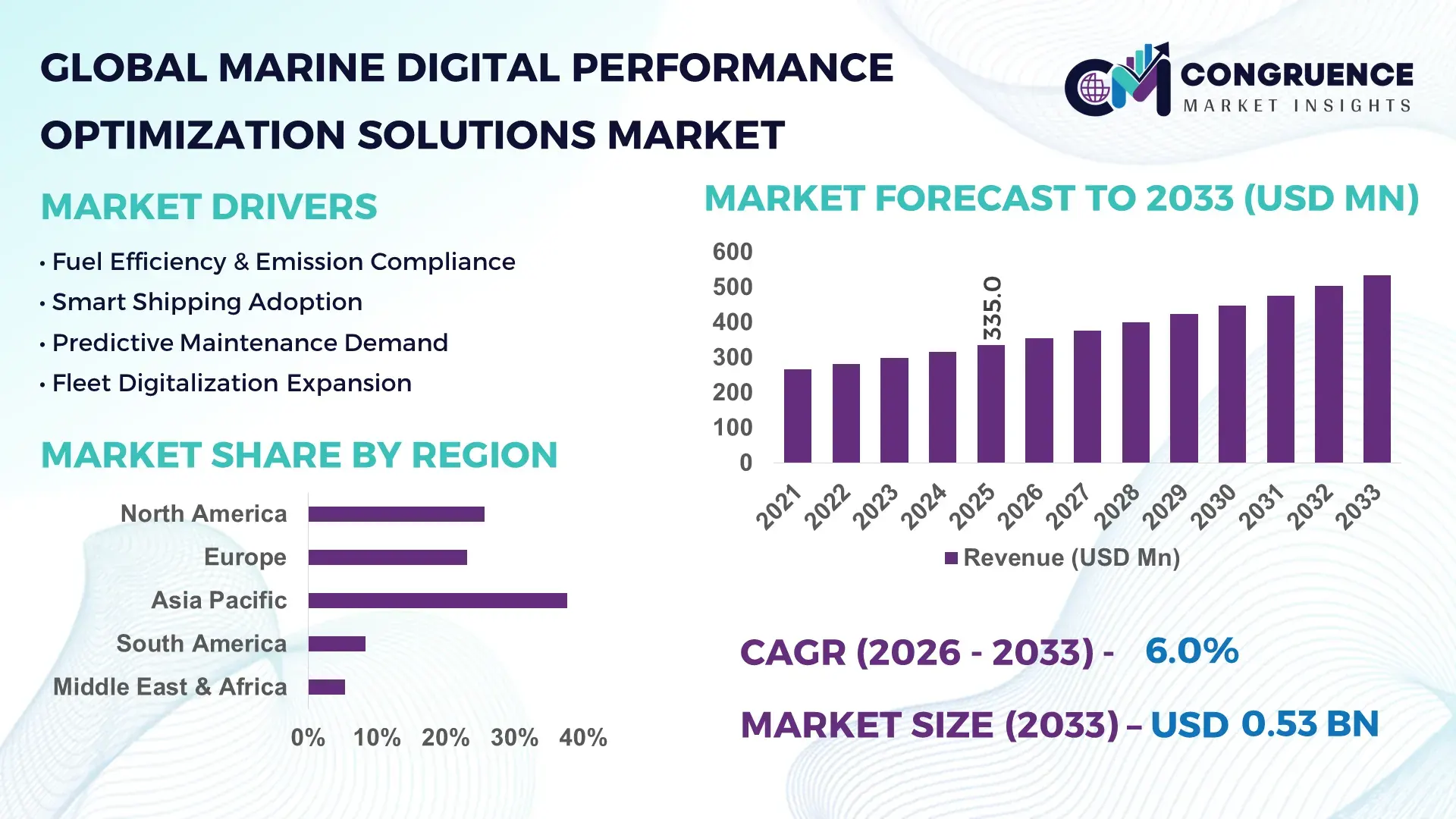
The Global Marine Digital Performance Optimization Solutions Market was valued at USD 335.0 Million in 2025 and is anticipated to reach a value of USD 533.9 Million by 2033, expanding at a CAGR of 6% between 2026 and 2033, according to an analysis by Congruence Market Insights. This growth is primarily driven by the rising adoption of digital solutions to optimize vessel performance and reduce fuel consumption.
Japan dominates the Marine Digital Performance Optimization Solutions Market, with annual shipbuilding capacity exceeding 800 vessels and investments over USD 1.2 billion in performance optimization technology. Japanese operators are deploying advanced monitoring systems on more than 1,500 active vessels, integrating predictive analytics and digital twin platforms. These innovations have led to an average operational efficiency improvement of 18% and annual fuel savings of over USD 250 million across major carriers.
Market Size & Growth: USD 335.0M in 2025 projected to USD 533.9M by 2033 at 6% CAGR due to increasing digital adoption in marine operations.
Top Growth Drivers: Adoption of real-time analytics (42%), reduction in fuel consumption (35%), regulatory compliance initiatives (28%).
Short-Term Forecast: By 2028, digital performance solutions expected to improve voyage optimization KPIs by 24%, reducing idle times.
Emerging Technologies: Edge computing for onboard analytics, AI-powered propulsion optimization, satellite-enabled IoT performance sensors.
Regional Leaders: Asia Pacific USD 210M by 2033 with enhanced fleet digitalization, Europe USD 150M with retrofit adoption in legacy fleets, North America USD 90M with defense applications.
Consumer/End-User Trends: Major adoption among commercial shipping lines for predictive maintenance and route optimization; cruise operators investing in performance dashboards.
Pilot or Case Example: In 2024, a major liner achieved 19% reduction in bunker consumption through AI-based trim and speed optimization.
Competitive Landscape: Market leader with ~22% share, followed by major competitors offering integrated analytics, IoT sensor suites, and digital twin platforms.
Regulatory & ESG Impact: Stricter emissions norms and incentives for digital retrofits driving accelerated adoption of optimization solutions.
Investment & Funding Patterns: Over USD 400M invested in performance optimization startups and digital retrofit programs in the past 24 months.
Innovation & Future Outlook: Expansion of autonomous performance management, hybrid connectivity frameworks, and predictive decision-support platforms shaping future growth.
Marine Digital Performance Optimization Solutions now underpin key industry sectors such as commercial shipping, offshore energy support, and naval fleets, with installation rates climbing above 60% in newbuilds. Recent innovations include high-resolution hull and propeller performance monitoring and adaptive AI route optimization, supporting environmental compliance and operational efficiency while driving regional fleet performance improvements.
The Marine Digital Performance Optimization Solutions Market is strategically critical for enhancing operational efficiency, regulatory compliance, and sustainability in maritime operations. AI-enabled route optimization delivers up to 22% improvement in fuel consumption compared to traditional scheduling approaches. Asia Pacific dominates in deployment volume, while Europe leads in enterprise adoption, with over 48% of major carriers implementing comprehensive digital performance management systems.
By 2028, edge-AI analytics is expected to improve real-time engine KPI accuracy by 30%, enabling predictive maintenance initiatives that reduce unplanned downtime by 25%. Companies are committing to ESG goals, aiming for measurable reductions in CO₂ emissions and optimized energy use. In 2025, a leading offshore logistics operator achieved an 18% reduction in fuel costs through integrated performance dashboards and adaptive trim systems.
Looking forward, the Marine Digital Performance Optimization Solutions Market will be a pillar of resilience, providing measurable operational efficiency gains, fostering innovation in autonomous and connected shipping, and supporting sustainable growth through data-driven decision-making frameworks aligned with global environmental goals.
The Marine Digital Performance Optimization Solutions Market is influenced by accelerating maritime digitization, stricter emissions standards, and the drive for operational agility. Digital performance platforms aggregate data from onboard sensors, satellites, and enterprise systems to improve fuel efficiency, hull performance, and voyage planning. Retrofit projects in aging fleets, coupled with rising demand for real-time performance visualization, have broadened market applicability across cargo, passenger, and specialized vessels. Predictive analytics, IoT connectivity, and machine learning play central roles in shaping operational efficiency and decision-making.
How does rising demand for fuel efficiency and regulatory compliance drive the Marine Digital Performance Optimization Solutions Market growth?
Global fuel price volatility and stricter environmental regulations are pushing operators to adopt solutions that optimize vessel performance. Digital platforms enable real-time engine, hull, and voyage monitoring, resulting in double-digit reductions in bunker usage and improved scheduling reliability. Emissions control areas (ECAs) further incentivize adoption, as shipping lines aim to meet sulfur and CO₂ regulations. Increased efficiency reduces operational risk while supporting long-term environmental compliance objectives.
Why does high upfront integration cost restrain adoption of Marine Digital Performance Optimization Solutions?
High initial investments for sensors, hardware upgrades, and integration with legacy shipboard systems can delay digital transformation. Compatibility challenges between new optimization platforms and existing operational technology require specialized expertise, extending implementation timelines. Smaller operators with limited budgets often prioritize essential maintenance over digital upgrades, slowing overall adoption despite long-term operational benefits.
What opportunities does autonomous and AI-powered analytics present for the Marine Digital Performance Optimization Solutions Market?
Autonomous and AI analytics enable predictive maintenance, anomaly detection, and adaptive vessel performance adjustments without continuous human intervention. Machine learning models analyze historical and real-time data to anticipate equipment degradation, optimizing maintenance schedules and reducing unplanned downtime. Remote monitoring supports new service models and recurring revenue, while prescriptive guidance helps fleets exceed traditional operational performance benchmarks.
Why does data interoperability across heterogeneous maritime systems challenge the Marine Digital Performance Optimization Solutions Market?
Vessels operate with a mix of legacy and modern systems, creating fragmented data environments that complicate integration. Standardizing data formats and ensuring reliable data flow between sensors, engines, and analytics platforms requires significant technical coordination. Cybersecurity concerns related to connecting operational technology with digital networks further increase complexity and implementation costs, hindering adoption.
Increased Integration of Predictive Analytics: 58% of major shipping operators have adopted predictive modules to forecast maintenance needs and reduce engine downtime. Early detection of sub-optimal hull performance improves fleet decision-making and reduces operational disruptions.
Proliferation of IoT Sensor Networks: IoT sensor installations have grown by over 45% in new and retrofit vessels, providing detailed data on engine conditions, fuel flow, and hull drag. Real-time insights allow dynamic operational adjustments for enhanced performance and environmental compliance.
Adoption of Digital Twin Frameworks: More than one-third of tier-1 operators use digital twins to simulate vessel performance scenarios. This enables optimized trim and speed adjustments before deployment, improving efficiency and reducing operational risk.
Focus on ESG-Aligned Performance Metrics: Operators track CO₂ intensity and energy efficiency metrics across operations. Optimization solutions now quantify emissions reductions achieved through digital interventions, aligning performance management with sustainability goals and regulatory requirements.
The Marine Digital Performance Optimization Solutions Market is segmented by type, application, and end-user to provide a comprehensive understanding of industry dynamics. By type, the market includes integrated performance monitoring systems, predictive analytics platforms, IoT sensor networks, and digital twin solutions. In terms of applications, the solutions are deployed across commercial shipping, naval operations, offshore energy support, and cruise lines, each utilizing performance optimization tools to reduce fuel consumption, enhance operational efficiency, and ensure regulatory compliance. End-user segmentation focuses on shipping operators, fleet managers, maritime service providers, and defense organizations, reflecting varying adoption patterns and investment priorities. This segmentation highlights how different stakeholders are integrating digital solutions to maximize efficiency, comply with environmental regulations, and achieve operational reliability across diverse vessel types and routes.
Integrated performance monitoring systems currently account for 40% of adoption due to their ability to provide real-time analytics on engine performance, hull condition, and fuel efficiency. Predictive analytics platforms are the fastest-growing segment, with adoption driven by rising demand for AI-based maintenance forecasting and operational optimization, projected to expand rapidly over the coming years. IoT sensor networks and digital twin solutions collectively hold a 35% share, contributing niche capabilities such as real-time vessel monitoring and simulation-based performance planning.
Commercial shipping dominates the application landscape with a 45% share, as operators prioritize fuel efficiency and route optimization for high-volume cargo transport. Offshore energy support is the fastest-growing application, driven by increased deployment of autonomous vessels and real-time monitoring to maintain offshore platform operations. Naval operations and cruise lines together account for 30% of adoption, focusing on precision navigation and compliance with stringent maritime regulations.
In 2025, over 38% of maritime enterprises globally reported piloting digital optimization systems for fleet management, while 55% of commercial carriers in Asia Pacific adopted AI-based performance monitoring.
Shipping operators remain the leading end-user segment with a 50% share, driven by fleet size and operational cost-saving objectives. Defense organizations are the fastest-growing end-user, motivated by operational readiness and the integration of digital performance optimization into naval fleets. Maritime service providers and fleet managers collectively hold 30% of the market, leveraging digital solutions to offer efficiency and compliance services across multiple operators.
In 2025, more than 40% of maritime service providers globally reported expanding their digital performance solution offerings, while over 60% of fleet managers in Europe implemented predictive monitoring tools for legacy vessels.
Asia-Pacific accounted for the largest market share at 38% in 2025; however, North America is expected to register the fastest growth, expanding at a CAGR of 6% between 2026 and 2033.
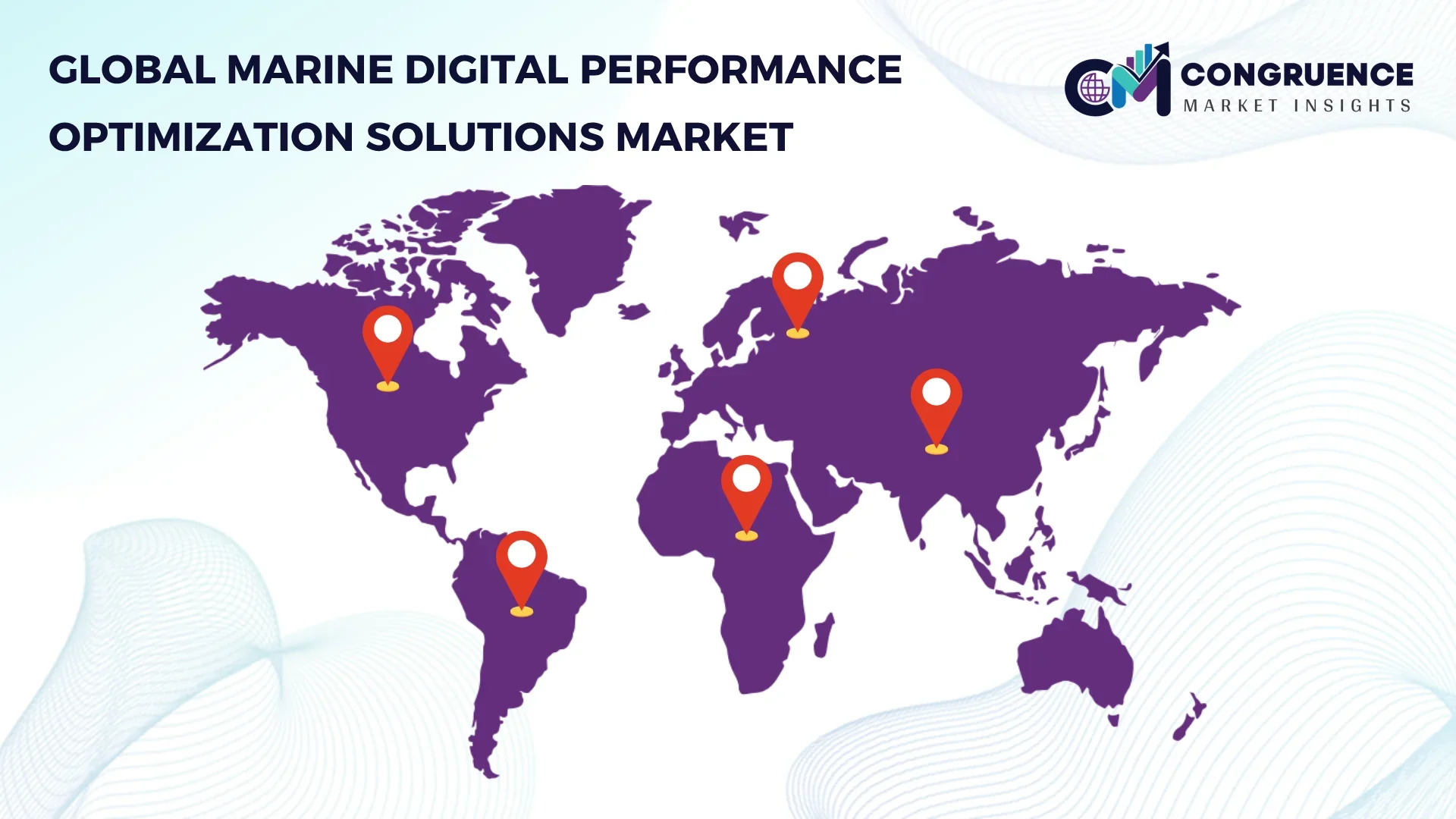
Asia-Pacific leads due to high shipbuilding volumes, with Japan producing over 800 vessels annually and China operating more than 2,500 commercial vessels equipped with digital performance solutions. The region also has a dense network of maritime ports exceeding 1,200 facilities, facilitating fleet-wide adoption. North America and Europe follow with 24% and 21% market shares, respectively, driven by defense fleets and regulatory mandates. South America holds 10% and the Middle East & Africa 7%, supported by offshore oil and shipping operations. Regional fleet digitization, predictive maintenance adoption, and increasing retrofitting of legacy vessels are key factors shaping market penetration.
North America accounts for 24% of the market, with major adoption among commercial shipping lines, naval fleets, and offshore logistics operators. Regulatory updates such as stricter emissions controls and government incentives for green shipping are driving investments. Companies are integrating AI-driven predictive analytics and IoT-based monitoring to optimize fuel consumption and maintenance schedules. Local players like Wartsila North America are deploying digital twin and propulsion optimization solutions across fleets. Higher enterprise adoption is noted in defense, offshore energy, and commercial logistics sectors, with fleets increasingly using real-time performance dashboards to enhance operational efficiency and compliance.
Europe represents 21% of the market, with Germany, the UK, and France as key contributors. Regulatory frameworks such as the European Union Emissions Trading Scheme and Green Shipping initiatives promote adoption of advanced monitoring and AI-based route optimization. Emerging technologies like AI-powered analytics and digital twins are increasingly integrated into new and retrofit vessels. Local players such as Rolls-Royce Marine are advancing autonomous propulsion and performance monitoring solutions. Regulatory pressure drives explainable optimization systems, with fleets prioritizing fuel efficiency, predictive maintenance, and emissions tracking. Enterprise adoption is highest among commercial shipping and naval operators focusing on compliance and operational reliability.
Asia-Pacific leads with 38% of the market, driven by high consumption in China, India, and Japan. Shipbuilding hubs in Japan produce over 800 vessels annually, while China deploys more than 2,500 vessels with digital performance monitoring. Infrastructure trends include modernization of ports and integration of AI and IoT platforms for fleet analytics. Local players like Mitsubishi Heavy Industries are implementing predictive maintenance and digital twin solutions for commercial shipping fleets. Growth is fueled by e-commerce expansion, increasing trade volumes, and mobile AI applications for fleet monitoring. Enterprise adoption is particularly strong in commercial shipping and offshore logistics.
South America holds 10% of the market, with Brazil and Argentina as key contributors. Investments in maritime infrastructure and offshore energy projects are driving fleet optimization adoption. Government incentives and favorable trade policies support digital retrofitting and emissions monitoring. Local players focus on integrating IoT sensors and predictive analytics into commercial and cargo vessels. Consumer behavior shows increasing demand for operational efficiency and localized fleet services, while digital monitoring adoption is accelerating in shipping companies operating across the Atlantic and Pacific trade routes.
The Middle East & Africa accounts for 7% of the market, led by UAE and South Africa. Growth is driven by oil & gas logistics and commercial shipping requiring enhanced operational efficiency. Technological modernization includes AI-based engine optimization, predictive maintenance, and IoT-enabled fleet monitoring. Local players are adopting hybrid digital twin frameworks to monitor offshore vessels and commercial fleets. Regulatory initiatives and trade partnerships incentivize emissions reduction and sustainable shipping. Enterprise adoption is concentrated in energy and logistics sectors, reflecting demand for cost optimization and compliance-driven digital solutions.
Japan – 18% Market Share: Driven by high shipbuilding capacity and advanced fleet digitalization.
United States – 15% Market Share: Led by strong end-user demand in defense and offshore logistics sectors.
The Marine Digital Performance Optimization Solutions Market exhibits a moderately fragmented competitive environment, with over 65 active companies globally. The top five players collectively hold around 42% of the market, indicating room for smaller and mid-sized companies to gain traction. Leading companies focus on strategic initiatives such as forming partnerships with shipbuilders, launching AI-based predictive analytics platforms, and integrating IoT-enabled propulsion optimization solutions. Recent innovations include digital twin frameworks, edge computing for real-time analytics, and hybrid monitoring systems combining satellite and onboard data. Market positioning varies: some firms dominate commercial shipping, while others specialize in defense or offshore operations. Approximately 30% of competitors are expanding into retrofit services, and 25% are investing in autonomous and remote monitoring technologies. Mergers and joint ventures are increasingly common, with over 15 partnerships announced between 2024 and 2025 to strengthen technology portfolios and geographic reach. Overall, the competitive landscape is dynamic, emphasizing innovation, customer-centric solutions, and strategic collaborations as key factors shaping market positioning and future growth.
Kongsberg Gruppen
DNV
ABB Marine & Ports
Caterpillar Marine
Navis
Wärtsilä Voyage
Schneider Electric Marine
Honeywell Marine Solutions
Marine Technologies LLC
General Electric Marine
Thales Group
Technological advancement is a critical driver of the Marine Digital Performance Optimization Solutions Market. Current technologies focus on AI-driven predictive analytics, IoT-enabled sensors for real-time vessel monitoring, and digital twin platforms for simulating hull, propulsion, and voyage performance. Edge computing allows for near-instant data processing onboard, enabling immediate adjustments to engine parameters and navigation strategies. Hybrid monitoring systems integrate satellite communications with onboard sensors to provide fleet-wide insights, optimizing fuel consumption, reducing emissions, and improving scheduling accuracy. Emerging technologies include machine learning models for predictive maintenance, autonomous vessel performance controls, and cloud-based analytics platforms that enable shore-based monitoring. Additionally, advancements in high-resolution sensor networks capture granular data on engine performance, hull stress, and propeller efficiency. These technologies enhance operational efficiency, regulatory compliance, and environmental performance while enabling fleet operators to anticipate maintenance needs and reduce downtime. The integration of multiple systems into unified dashboards is increasingly important, with over 50% of commercial fleets implementing connected analytics platforms to support data-driven decision-making.
In December 2025, Orca AI signed a multi‑year collaboration with Gram Car Carriers to deploy its AI‑powered navigational safety and fleet analytics platform across the operator’s 22 pure car and truck carriers (PCTCs) fleet, enhancing real‑time situational awareness, compliance, and operational decision‑making. Source: www.orca‑ai.io
In January 2026, Wärtsilä signed a 10‑year Lifecycle Agreement with MOL Global Ship Management for 12 new LNG carriers, providing enhanced operational support and predictive maintenance solutions to improve uptime, reduce engine downtime, and boost performance reliability across the fleet. Source: www.dredgewire.com
In May 2025, Wärtsilä launched its commercial carbon capture solution (CCS) for the shipping market after successful full‑scale testing, offering technology capable of capturing up to 70% of vessel CO₂ emissions and advancing maritime decarbonisation with retrofit and newbuild applications. Source: www.wartsila.com
In December 2025, Wärtsilä outlined four key shipping trends shaping 2026, including digitalisation and lifecycle optimisation through big data analytics and AI, signaling broader strategic adoption of fleet optimisation and data‑driven performance management across global shipping operations. Source: www.wartsila.com
The Marine Digital Performance Optimization Solutions Market Report covers a comprehensive evaluation of product types, including integrated performance monitoring systems, predictive analytics platforms, IoT sensor networks, and digital twin solutions. It examines applications across commercial shipping, defense fleets, offshore energy support, and cruise operations, providing insights into end-user adoption patterns, operational efficiency enhancements, and regulatory compliance strategies. Geographic coverage spans North America, Europe, Asia-Pacific, South America, and Middle East & Africa, detailing market volume, adoption trends, technological innovation, and regional fleet modernization initiatives. The report also highlights emerging technologies such as AI-driven predictive maintenance, edge computing, and hybrid monitoring systems. Additionally, it considers strategic investments, partnerships, and innovation trends shaping market dynamics, offering decision-makers actionable insights into market penetration strategies, niche opportunities, and technology deployment scenarios. The report provides a forward-looking perspective on fleet digitalization, environmental compliance, and operational optimization across global maritime sectors.
| Report Attribute / Metric | Details |
|---|---|
| Market Revenue (2025) | USD 335.0 Million |
| Market Revenue (2033) | USD 533.9 Million |
| CAGR (2026–2033) | 6% |
| Base Year | 2025 |
| Forecast Period | 2026–2033 |
| Historic Period | 2021–2025 |
| Segments Covered |
By Type
By Application
By End-User Insights
|
| Key Report Deliverables | Revenue Forecast; Market Trends; Growth Drivers & Restraints; Technology Insights; Segmentation Analysis; Regional Insights; Competitive Landscape; Regulatory & ESG Overview; Recent Developments |
| Regions Covered | North America; Europe; Asia-Pacific; South America; Middle East & Africa |
| Key Players Analyzed | Wartsila; Rolls-Royce Marine; Mitsubishi Heavy Industries; Kongsberg Gruppen; DNV; ABB Marine & Ports; Caterpillar Marine; Navis; Wärtsilä Voyage; Schneider Electric Marine; Honeywell Marine Solutions; Marine Technologies LLC; General Electric Marine; Thales Group |
| Customization & Pricing | Available on Request (10% Customization Free) |




