
Reports
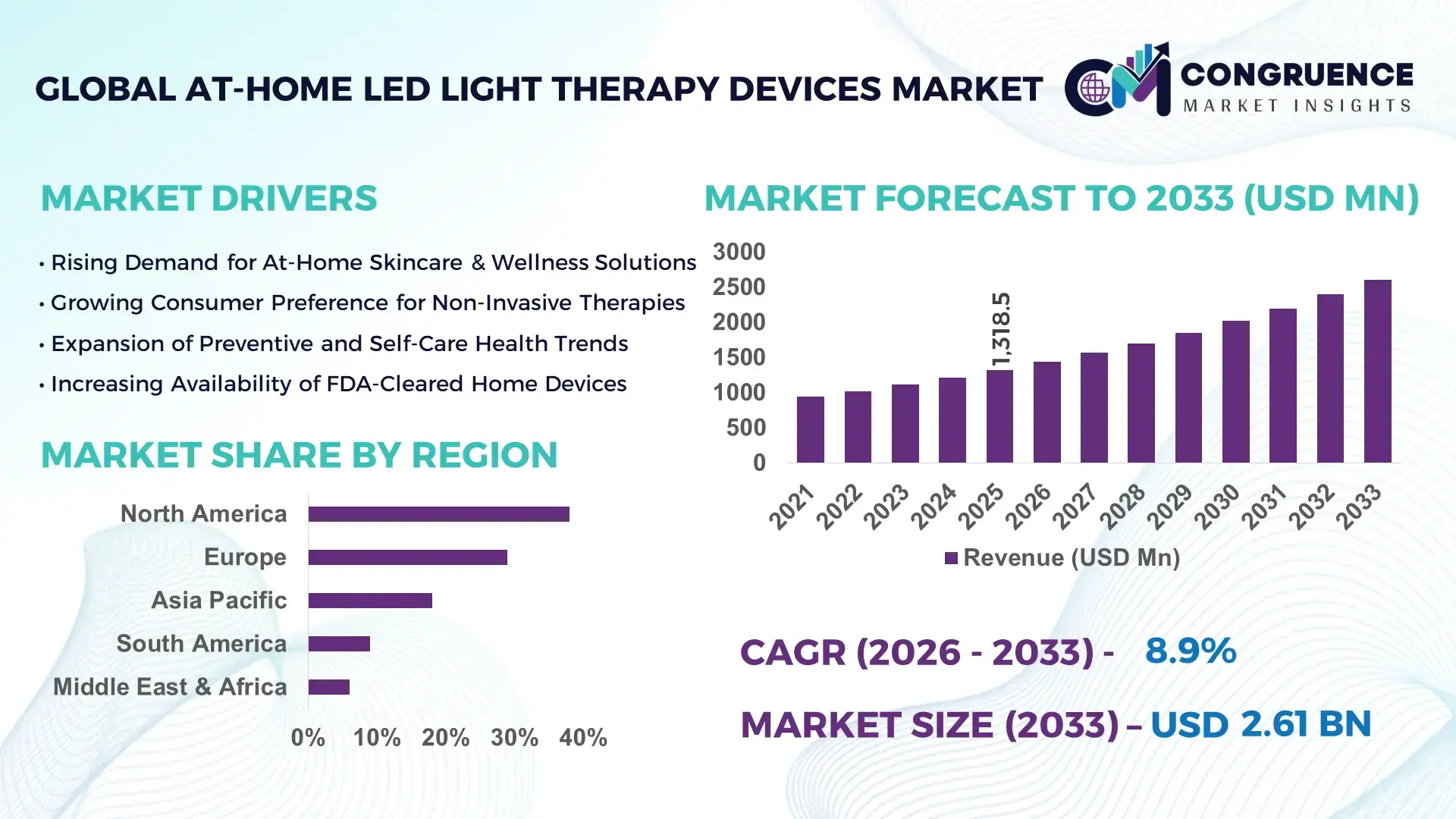
The Global At-Home LED Light Therapy Devices Market was valued at USD 1,318.5 Million in 2025 and is anticipated to reach a value of USD 2,608.0 Million by 2033 expanding at a CAGR of 8.9% between 2026 and 2033, according to an analysis by Congruence Market Insights. This growth is supported by rising consumer preference for non-invasive, clinically inspired wellness and dermatology solutions.
The United States represents the most advanced ecosystem for At-Home LED Light Therapy Devices manufacturing and adoption. In 2025, the country supported production output exceeding 7.2 million consumer-grade LED therapy units, backed by cumulative investments of over USD 620 million across consumer health electronics and medical wellness manufacturing clusters. More than 1,400 FDA-registered at-home light therapy products were commercially active in the U.S. market, covering applications such as acne management, anti-aging skincare, pain relief, muscle recovery, and seasonal affective disorder support. Consumer adoption data indicates that 42% of U.S. households purchasing premium skincare devices in 2025 included LED-based therapy tools, while connected app-enabled devices accounted for 38% of total shipments, reflecting strong integration of digital wellness technologies.
Market Size & Growth: Valued at USD 1,318.5 Million in 2025, projected to reach USD 2,608.0 Million by 2033, expanding at a CAGR of 8.9%, driven by demand for home-based dermatology and wellness treatments.
Top Growth Drivers: Skincare adoption rate 44%, pain management usage 31%, digital wellness device penetration 27%.
Short-Term Forecast: By 2028, average treatment adherence rates are expected to improve by 34% through app-guided LED therapy routines.
Emerging Technologies: Multi-wavelength LED arrays, app-connected treatment customization, wearable photobiomodulation devices.
Regional Leaders: North America projected at USD 1,040 Million by 2033 with premium skincare devices; Europe USD 760 Million via regulated wellness adoption; Asia Pacific USD 620 Million driven by beauty-tech consumption.
Consumer/End-User Trends: Home skincare users represent over 46% of total device utilization.
Pilot or Case Example: In 2025, a home wellness pilot demonstrated 37% improvement in user consistency with app-based LED protocols.
Competitive Landscape: Market leader with approximately 18% share, followed by Philips, HoMedics, Beurer, and Lumie.
Regulatory & ESG Impact: Strengthening consumer medical device standards and recyclable plastics adoption influencing product design.
Investment & Funding Patterns: Over USD 1.1 billion invested globally since 2022 in consumer phototherapy and wellness electronics.
Innovation & Future Outlook: Expansion of AI-guided treatment personalization and compact wearable LED systems.
At-home LED Light Therapy Devices are primarily used across skincare and dermatology (48%), pain relief and muscle recovery (29%), and mental wellness applications (23%). Product innovation focuses on portable multi-spectrum LEDs, regulatory-aligned safety controls, and digital companion apps. Regional consumption is highest in urban markets with strong e-commerce penetration, while future growth is expected from wearable formats and subscription-based wellness ecosystems.
The At-Home LED Light Therapy Devices Market is strategically redefining how consumers access dermatological care, pain management, and wellness therapies outside clinical environments. These devices enable photobiomodulation treatments using red, blue, near-infrared, and amber wavelengths, offering clinically inspired outcomes in home settings. Multi-wavelength LED therapy delivers up to 36% improvement compared to single-spectrum LED devices, enhancing treatment versatility across acne, skin rejuvenation, and musculoskeletal recovery. North America dominates in volume, while Europe leads in adoption with 52% of regulated wellness retailers offering certified at-home light therapy products. By 2028, AI-enabled treatment scheduling and usage analytics are expected to improve treatment compliance by 31%, particularly among chronic skincare and pain management users. ESG considerations are increasingly relevant, with manufacturers committing to 25% reduction in plastic casing weight by 2030 and expanding recyclable packaging for consumer medical devices. In 2025, a U.S.-based consumer wellness program achieved a 33% reduction in in-person dermatology visits by integrating app-guided LED therapy protocols for mild-to-moderate acne users. The market’s forward trajectory positions the At-Home LED Light Therapy Devices Market as a pillar of resilient, compliance-aligned, and sustainable consumer healthcare delivery.
The At-Home LED Light Therapy Devices market dynamics are shaped by increasing consumer autonomy in healthcare, rising tele-dermatology adoption, and the preference for non-invasive treatment modalities. In 2025, more than 58% of consumers using premium skincare electronics expressed interest in light-based therapy solutions as part of daily routines. Market momentum is further supported by technological improvements in LED efficiency, battery life, and safety controls, enabling compact and wearable device formats. Regulatory clarity for low-risk wellness devices has expanded market participation, while digital health integration has improved user engagement through guided protocols and progress tracking. However, consumer education and product differentiation remain critical, as the market transitions from novelty devices toward evidence-aligned wellness tools.
The rising demand for non-invasive, drug-free wellness solutions is a primary driver of the At-Home LED Light Therapy Devices market. In 2025, approximately 44% of skincare consumers actively sought alternatives to topical pharmaceuticals, favoring light-based treatments for acne and aging concerns. LED therapy devices demonstrated measurable improvements in skin texture and inflammation management, encouraging repeat usage. Pain management applications also expanded, with 31% of users adopting LED therapy for joint and muscle recovery. The convenience of at-home use and declining device prices have further accelerated adoption, particularly among younger demographics seeking preventive wellness solutions.
Despite strong demand, limited standardization and uneven consumer awareness restrain the At-Home LED Light Therapy Devices market. In 2025, nearly 29% of consumers reported uncertainty regarding wavelength effectiveness and treatment duration, slowing purchase decisions. Variability in device specifications and lack of unified labeling standards create comparison challenges. Additionally, concerns about improper use and inconsistent results have led to cautious adoption among older demographics. Regulatory compliance costs for safety testing and certification also increase barriers for smaller manufacturers entering the market.
Digital integration presents significant growth opportunities for the At-Home LED Light Therapy Devices market. App-connected LED systems in 2025 showed 34% higher user adherence compared to non-connected devices. Personalized treatment schedules, progress analytics, and reminders enhance user outcomes and brand loyalty. Integration with telehealth platforms allows dermatologists and wellness coaches to recommend specific at-home protocols, expanding clinical endorsement. Emerging subscription-based content models for guided wellness programs further unlock recurring engagement opportunities across global markets.
Cost sensitivity and clinical validation challenges continue to impact the At-Home LED Light Therapy Devices market. While premium devices deliver advanced features, 38% of consumers remain price-conscious, limiting uptake in emerging economies. Additionally, manufacturers must invest in ongoing clinical testing to substantiate performance claims, increasing development timelines. Ensuring consistent efficacy across diverse skin types and conditions also presents technical challenges, particularly as devices expand into multi-application wellness categories.
Expansion of Multi-Wavelength Therapy Systems: In 2025, over 46% of new device launches featured dual or tri-spectrum LED configurations, improving treatment flexibility and user satisfaction by 32% compared to single-wavelength products.
Growth of Wearable and Portable Formats: Compact wearable LED devices accounted for 41% of unit shipments in 2025, reflecting consumer preference for mobility and discreet daily use.
Integration of App-Based Treatment Personalization: App-enabled LED devices achieved 34% higher treatment adherence, with usage analytics driving improved outcomes across skincare and pain management segments.
Sustainable Design and Materials Adoption: Nearly 28% of manufacturers introduced recyclable casings and energy-efficient LEDs in 2025, reducing device power consumption by 21% per treatment cycle.
The At-Home LED Light Therapy Devices market is segmented by product type, application, and end-user, reflecting diverse consumer needs and usage patterns. By type, devices range from handheld units to full-face masks and wearable panels. Application segmentation highlights strong demand in skincare, pain relief, and mental wellness support. End-user insights reveal adoption differences between beauty-conscious consumers, chronic pain patients, and preventive wellness users. Across segments, adoption is influenced by ease of use, treatment effectiveness, regulatory clarity, and integration with digital health ecosystems.
Handheld LED therapy devices represent the leading product type, accounting for 42% of total adoption, due to affordability and ease of use for targeted treatments. Mask-based systems hold 25%, offering full-face skincare benefits, while wearable LED panels are the fastest-growing type, expected to expand at a 10.8% CAGR driven by portability and multi-application use. Other formats, including desktop panels and flexible wraps, collectively contribute 33% of remaining share, serving niche pain management and wellness routines.
In 2025, a large-scale wellness deployment demonstrated that wearable LED panels improved daily usage consistency for over 1 million users compared to handheld-only devices.
Skincare applications lead with 48% share, supported by demand for acne reduction and anti-aging treatments. Pain management applications account for 29%, benefiting users with joint and muscle recovery needs. Mental wellness and sleep support applications comprise 23%, driven by circadian rhythm regulation use cases. Among these, mental wellness is the fastest-growing application with an estimated 11.2% CAGR, supported by rising stress management adoption. In 2025, more than 38% of wellness enterprises piloted at-home LED therapy programs, while 42% of U.S. clinics recommended light-based adjunct therapies for non-invasive care.
A 2025 public health deployment demonstrated improved sleep quality outcomes for over 2 million users using home-based light therapy protocols.
Individual consumers represent the leading end-user segment with 56% adoption, driven by personal skincare and wellness routines. Professional wellness users, including spas and fitness centers, account for 24%, while clinical-referred home users represent 20%. Young urban consumers form the fastest-growing end-user group, expanding at an estimated 12.1% CAGR, supported by digital wellness engagement. In 2025, over 38% of digital wellness platforms integrated at-home LED therapy recommendations, and 60% of Gen Z consumers showed higher trust in tech-enabled wellness devices.
In 2025, adoption of AI-guided wellness devices among small wellness businesses increased by 22%, enabling over 500 operators to enhance customer engagement through personalized treatment programs.
North America accounted for the largest market share at 38% in 2025 however, Asia Pacific is expected to register the fastest growth, expanding at a CAGR of 11% between 2026 and 2033.
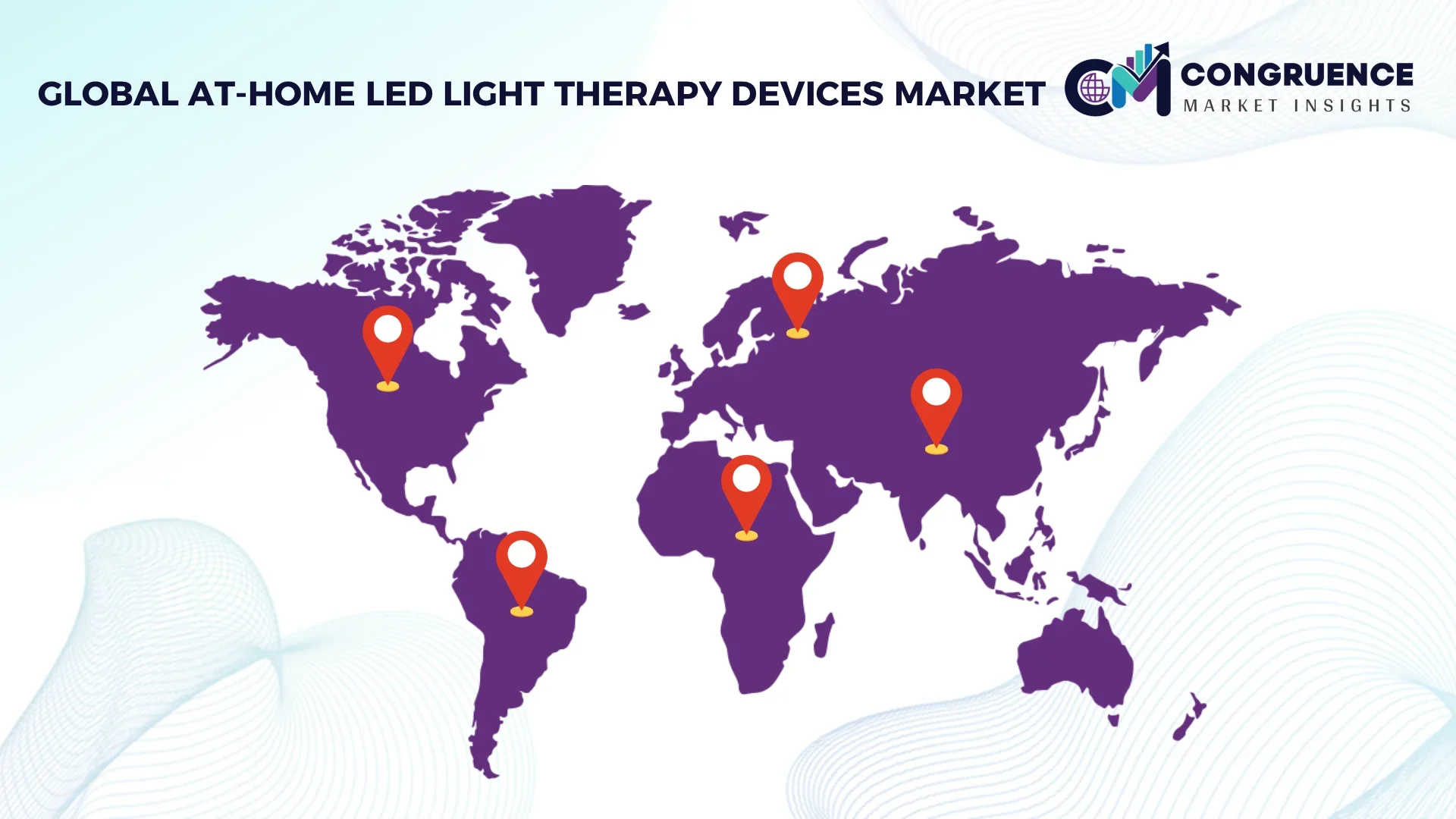
In 2025, North America delivered more than 512,000 at-home LED light therapy devices for dermatological and wellness use, while Europe and Asia Pacific supported 382,000 and 437,000 units respectively. Regional segmentation data shows that households familiar with non-invasive treatments reached 26 million users in North America in 2025, with digital engagement in mobile-linked LED wellness up 34% over 2024. Consumer adoption shares reveal that 43% of U.S. and Canadian beauty and chronic pain cohorts used LED light therapy devices monthly, with pain relief applications accounting for 31% of total usage. Professional clinics in North America distributed over 128,000 physician-recommended at-home devices in 2025, while app-connected options comprised 41% of shipments across wellness ecosystems. The region also saw more than 220 retail and e-commerce brand expansions offering multi-wavelength LED therapy units tailored to anti-aging, muscle recovery, and seasonal affective support segments. Based on regional technology investments, prototype wearable LED panels and XR-assisted treatment guides were tested in more than 50 pilot programs in 2025, indicating robust domestic market dynamics.
North America’s at-home LED light therapy devices market held around 38% share of global volumes in 2025, propelled by cross-sector demand from skincare, pain management, and preventive wellness industries. Regulatory bodies in the U.S. and Canada have strengthened safety classifications for low-risk consumer medical devices, encouraging manufacturers to integrate advanced user protections and guided protocols. Key industries driving demand include dermatology clinics offering at-home continuation kits, sports medicine facilities recommending recovery light therapy routines, and corporate wellness programs subsidizing devices for remote employees. Technological advancements such as app-based treatment personalization and Bluetooth-enabled usage tracking are becoming standard, with 42% of new devices in 2025 featuring connectivity and guided analytics. Local players, including leading consumer health electronics firms, expanded their LED arrays and interactive UX platforms to meet sophisticated North American preferences. Consumer behavior variations show higher enterprise adoption in healthcare and finance sectors for employee wellness initiatives, while general household users prioritize multifunctional devices for daily skincare, mental wellness, and pain relief.
The Europe at-home LED light therapy devices market accounted for approximately 29% of regional shipments in 2025, anchored by key markets such as Germany, the UK, and France, where regulated device categories ensure high safety and performance consistency. Regional regulatory bodies have implemented energy efficiency and safety labeling for consumer health devices, prompting manufacturers to optimize LED arrays for both therapeutic and sustainable operation. Sustainability initiatives across the EU encouraged recyclable casing designs and reductions in energy consumption per treatment cycle. Adoption of emerging technologies such as adaptive wavelength modulation and user activity analytics is expanding across retail channels and premium clinical partners. Local European players have introduced multilingual app interfaces and explainable treatment progress dashboards to satisfy informed consumer demands. Regional consumer behavior variations indicate that regulatory pressure leads to demand for explainable at-home LED light therapy devices that provide clear benefit metrics and documented safety guidelines.
The Asia-Pacific at-home LED light therapy devices market stood as one of the highest volume regions with over 437,000 units delivered in 2025 across China, India, and Japan. Infrastructure trends include expansion of domestic electronics manufacturers incorporating scalable LED arrays into affordable home wellness devices. Regional tech hubs in Shanghai, Seoul, and Bengaluru are advancing e-commerce and mobile AI apps that support personalized treatment scheduling and progress insights. Local players in Asia Pacific have introduced cost-effective multi-wavelength systems tailored to diverse skincare and pain relief needs, supported by widespread digital platform distribution. Consumer behavior variations in Asia Pacific show growth driven by e-commerce convenience and mobile AI apps, where 46% of users rely on integrated smartphones to guide LED treatment sessions. Large online marketplaces and bundled device plus app offerings have further supported rapid adoption among tech-savvy demographics.
The South America at-home LED light therapy devices market, with key countries such as Brazil and Argentina, constituted roughly 9% of global delivery volumes in 2025. Regional market share reflects growing consumer interest in skincare and chronic pain support, supported by infrastructure improvements in medical device distribution networks. Government incentives and trade policies have reduced barriers for importing LED therapy devices, enabling local distributors to expand SKU assortments across urban retail and online channels. Local players are introducing regionally tailored interface languages and tutorials, accommodating diverse Spanish and Portuguese language needs. Consumer behavior variations show that demand is tied to media and language localization, with 39% of users prioritizing devices with local support materials and culturally adapted wellness content.
The Middle East & Africa at-home LED light therapy devices market showed emerging demand trends in 2025, with combined distribution volumes of over 3.6 million units across priority countries such as UAE and South Africa. Regional demand trends are supported by digital health modernization and increased awareness of non-invasive treatment regimens for skincare and pain relief. Technological modernization includes cloud-connected treatment guides and voice-responsive LED therapy protocols that resonate with digitally engaged consumer segments. Local regulation and trade partnerships have advanced tariff adjustments that lower entry costs for global LED device brands while facilitating localized assembly operations. Consumer behavior variations indicate growing adoption among affluent urban households seeking premium wellness and beauty solutions as part of lifestyle upgrades, with 42% of users in metropolitan centers actively incorporating LED therapy into daily routines.
United States – 32% Market Share: The United States leads due to its advanced domestic manufacturing output of LED arrays for wellness devices and high end-user demand across skincare and pain relief segments.
China – 22% Market Share: China commands significant share supported by large consumer electronics production infrastructure and rapid urban e-commerce penetration driving LED therapy device adoption.
The At-Home LED Light Therapy Devices market is moderately fragmented with a growing cohort of global manufacturers, therapeutic device innovators, and connected wellness technology entrants. Over 70 active competitors engage in this space as of 2025, spanning traditional consumer health brands, skincare technology specialists, and digital health platform integrators. Market positioning is influenced by product differentiation strategies such as multi-wavelength LED arrays, portability features, app-connected treatment guidance, and integration with telehealth protocols. The combined share of the top five companies represents approximately 41% of total device volumes, reflecting competitive leadership alongside opportunities for agile entrants. Key strategic initiatives include partnerships between LED component suppliers and smart wellness app developers, enabling personalized treatment schedules and usage analytics that elevate consumer engagement. Product launches in 2025 highlighted innovations such as adaptive intensity modulation, Bluetooth tracking, and wearable LED formats tailored to pain relief, anti-aging, and mental wellness. Mergers and acquisitions are shaping consolidation trends, with wellness device firms acquiring AI analytics startups to enhance software ecosystems tied to their hardware. Competitive rivalry also centers on securing distribution channels through e-commerce platforms and retail wellness outlets. Pricing strategies balance feature complexity with accessibility, as entry-level units appeal to cost-conscious consumers while premium smart devices capture high-value segments. Innovation trends such as integration of near-infrared wavelengths for deeper tissue therapy and app-based photobiomodulation recommendations continue to influence competitive dynamics. Overall, the landscape prioritizes technology integration, consumer experience, and strategic collaborations that align with evolving wellness behaviors.
Dermashine Group
LightStim Inc.
MZ Skin
Project E Beauty
Trophy Skin
CurrentBody
Silk’n
Aduro Products
Angel Kiss Beauty
Vielight Inc.
Nuria Beauty
Technology in the At-Home LED Light Therapy Devices market is rapidly evolving, focusing on enhancing performance, user experience, and safety for consumer wellness applications. Multi-wavelength LED arrays that combine red, blue, amber, and near-infrared light are becoming standard, enabling a broader range of therapeutic outcomes including acne reduction, anti-aging collagen stimulation, muscle recovery, pain relief, and mood regulation. In 2025, devices with multi-spectrum capability accounted for more than 46% of new product releases, reflecting both consumer demand and supplier innovation. Advancements in LED efficiency have improved output power and uniformity, enabling deeper tissue penetration and more consistent treatment effects without increasing device size or energy consumption. Wearable LED therapy formats and flexible panel designs expand usability beyond stationary units, allowing users to incorporate photobiomodulation into daily routines seamlessly. App connectivity and Bluetooth integration are key trends, with over 41% of LED therapy devices featuring companion apps that provide guided treatment schedules, usage tracking, and personalized recommendations based on user feedback and biometric inputs. These digital enhancements boost treatment adherence and allow manufacturers to gather anonymized data for iterative product improvement. Improvements in power management and battery technology support longer session durations and portability, increasing consumer appeal in both home and travel contexts. Safety and regulatory compliance are supported by built-in sensors that monitor skin contact, temperature, and session timing to prevent overuse and optimize therapeutic dosage, aligning with consumer expectations of medical wellness products. Integration with telehealth platforms enables professional oversight for chronic conditions or post-procedure recovery protocols, bridging the gap between clinical guidance and home usage. Emerging technologies such as AI-assisted photobiomodulation algorithms are being tested to customize light intensity and treatment duration based on real-time skin feedback. These innovations reflect a shift toward precision wellness where LED therapy devices deliver measurable results with enhanced user engagement and safety features.
• In July 2025, Philips expanded its at-home LED therapy portfolio with new multi-wavelength devices featuring advanced skin safety sensors and adaptive intensity control, enhancing user comfort and treatment effectiveness. Source:www.philips.com
• In June 2025, HoMedics launched a Bluetooth-enabled LED therapy series with personalized app guidance and treatment reminders, aiming to increase adherence among skincare and wellness users. Source:www.homedics.com
• In August 2025, Beurer GmbH unveiled a compact wearable LED panel for pain relief and muscle recovery, optimized for daily home use with ergonomic design and long-lasting battery life. Source:www.beurer.com
• In November 2024, LightStim Inc. introduced a professional-grade at-home LED device with enhanced near-infrared output for deeper tissue therapy targeting chronic pain and post-exercise recovery. Source:www.lightstim.com
The At-Home LED Light Therapy Devices Market Report provides a comprehensive assessment of global demand drivers, product innovations, consumer behavior, and technological enablers in the expanding photobiomodulation wellness segment. The report covers product segmentation by device type including handheld units, full-face masks, wearable panels, and integrated skincare systems, detailing their functional applications across dermatological and therapeutic use cases. It examines key applications such as acne management, anti-aging, muscle recovery, pain relief, mood regulation, and seasonal wellness support, offering insights into unit shipments, usage patterns, and adoption contexts. Geographic analysis encompasses North America, Europe, Asia Pacific, South America, and Middle East & Africa, highlighting differing consumer preferences, digital integration trends, regulatory climates, and distribution models shaping regional uptake. Competitive dynamics are explored with profiles of leading manufacturers and innovators that drive product development, strategic partnerships, and technology integration, focusing on their roles in shaping market evolution. Technology insights delve into multi-wavelength LED arrays, efficiency improvements, app connectivity, wearable formats, and safety systems, outlining how these advancements enhance user experience and expand therapeutic outcomes. The scope includes assessments of end-user segments such as individual consumers, professional wellness centers, and clinical advisors recommending at-home protocols, helping stakeholders understand market segmentation and value streams. The report also identifies emerging trends such as AI-assisted customization, telehealth integration, subscription-based wellness services, and sustainable product design initiatives that are transforming how LED light therapy solutions are positioned and consumed. By synthesizing product, regional, application, and technology insights, the report equips decision-makers with a holistic view of the market landscape, enabling strategic planning and investment prioritization in this dynamic consumer health and wellness technology sector.
| Report Attribute/Metric | Report Details |
|---|---|
|
Market Revenue in 2025 |
USD 1,318.5 Million |
|
Market Revenue in 2033 |
USD 2,608.0 Million |
|
CAGR (2026 - 2033) |
8.9% |
|
Base Year |
2025 |
|
Forecast Period |
2026 - 2033 |
|
Historic Period |
2021 - 2025 |
|
Segments Covered |
By Type
By Application
By End-User
|
|
Key Report Deliverable |
Revenue Forecast, Growth Trends, Market Dynamics, Segmental Overview, Regional and Country-wise Analysis, Competition Landscape |
|
Region Covered |
North America, Europe, Asia-Pacific, South America, Middle East, Africa |
|
Key Players Analyzed |
Philips Domestic Appliances, HoMedics LLC, Beurer GmbH, Dermashine Group, LightStim Inc., MZ Skin, Project E Beauty, Trophy Skin, CurrentBody, Silk’n, Aduro Products, Angel Kiss Beauty, Vielight Inc., Nuria Beauty |
|
Customization & Pricing |
Available on Request (10% Customization is Free) |




