
Reports
The Global Wild Yam Extract Market was valued at USD 320.7 Million in 2025 and is anticipated to reach a value of USD 576.2 Million by 2033 expanding at a CAGR of 7.6% between 2026 and 2033. Growth is driven by expanding botanical nutraceutical production, standardized diosgenin extraction technologies, and rising incorporation of wild yam extract into women's health, dietary supplement, and functional cosmetic formulations.
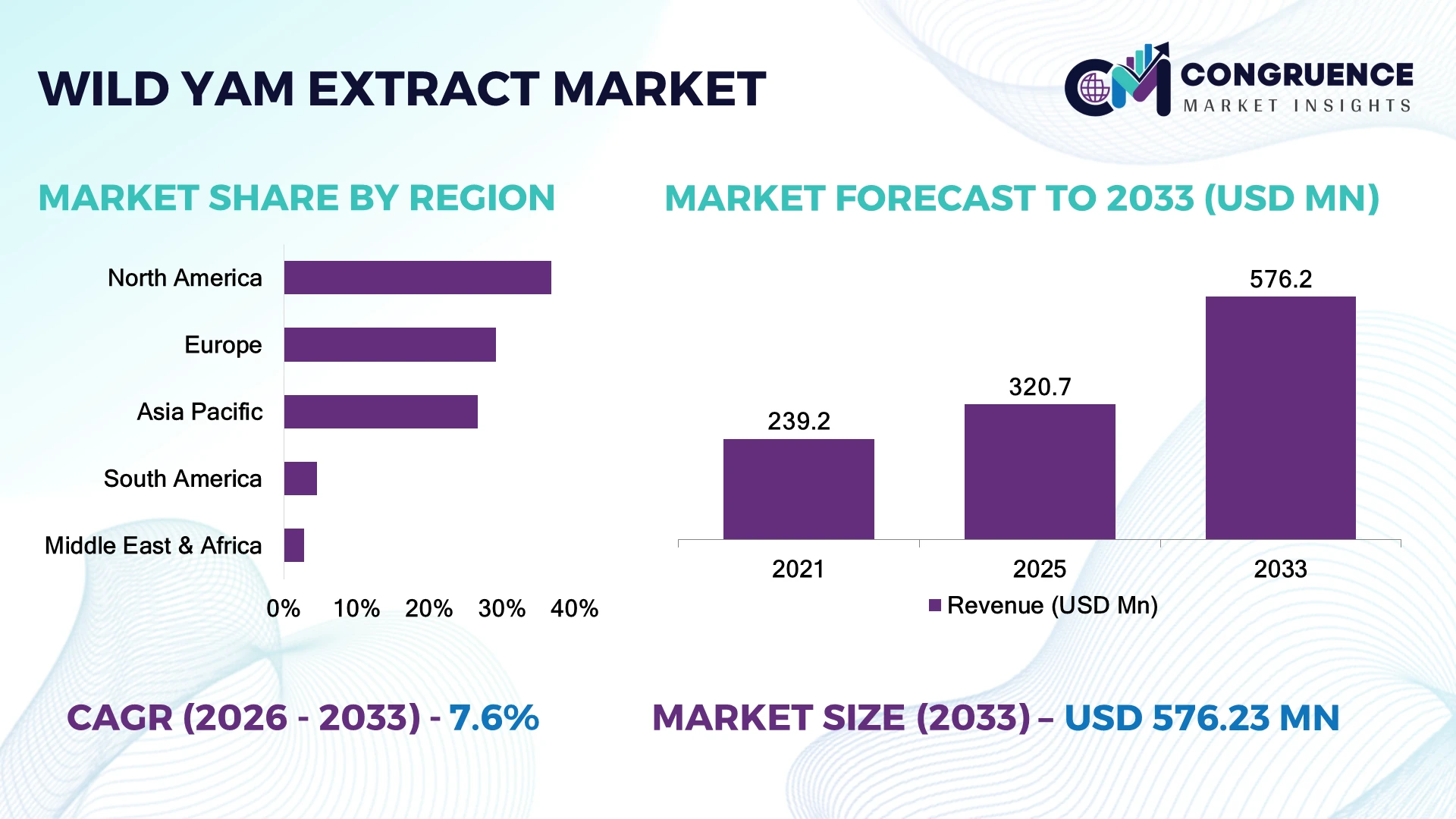
The United States dominates the global market with an estimated 29% share, supported by advanced nutraceutical manufacturing, contract botanical extraction facilities, and high dietary supplement consumption. Standardized botanical ingredients account for nearly 68% of commercial formulations, compared with approximately 18% in India where cultivation and extraction capacity continue expanding. Supply-chain diversification following post-pandemic sourcing adjustments has accelerated investment in domestic processing and traceable botanical ingredient procurement.
Companies securing standardized raw material supply, advanced extraction capabilities, and regulatory-compliant manufacturing are positioned to capture premium opportunities across global nutraceutical and personal care value chains.
Market Size & Growth: USD 320.7 million in 2025, reaching USD 576.2 million by 2033 at 7.6% CAGR, supported by standardized botanical ingredient demand.
Top Growth Drivers: Women's health formulations (+31%), nutraceutical demand (+27%), clean-label cosmetics (+22%).
Short-Term Forecast: By 2028, extraction efficiency improves 18% through advanced botanical processing technologies.
Emerging Technologies: Supercritical extraction, AI-assisted quality control, and solvent optimization enhance ingredient consistency.
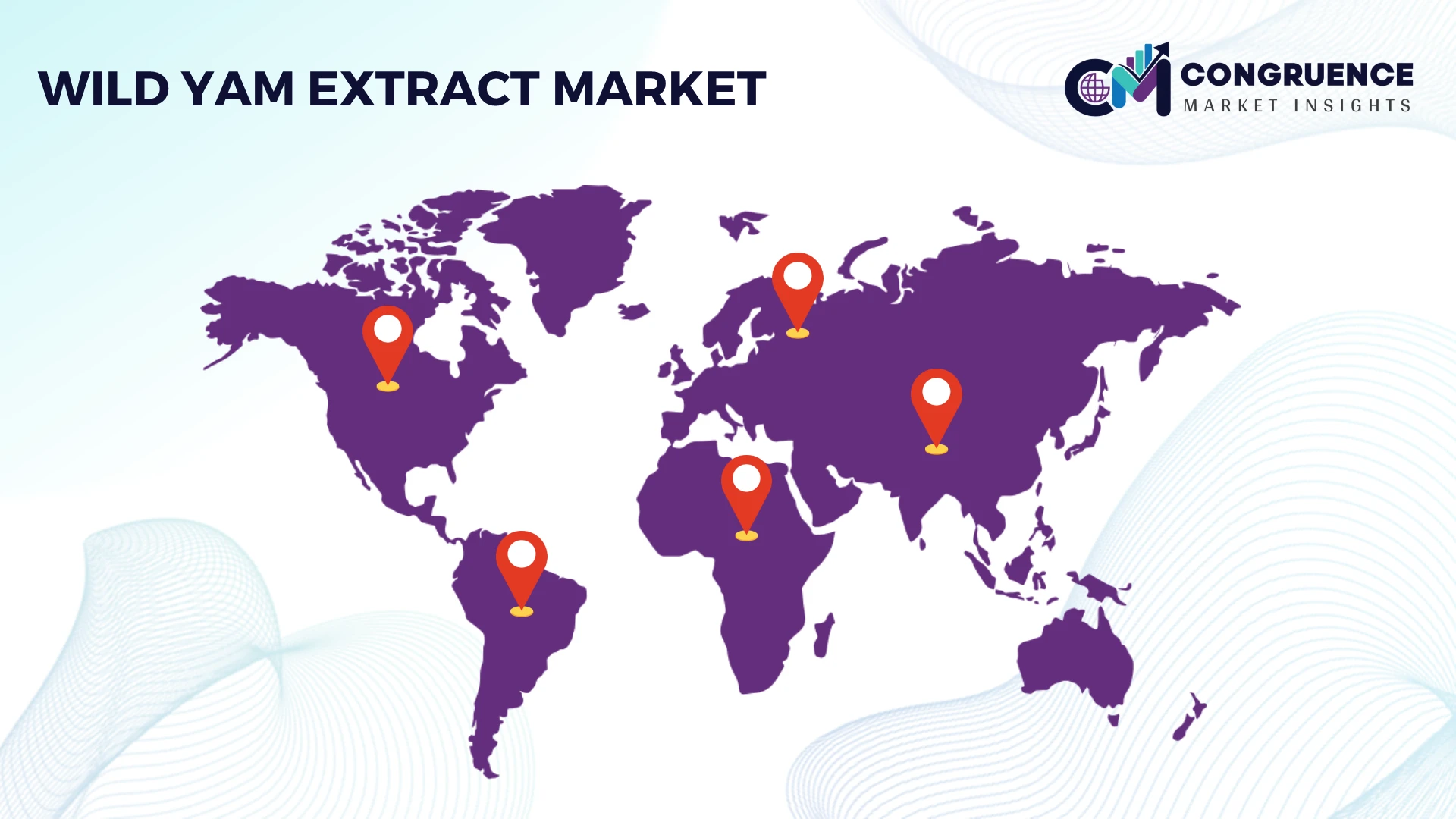
Regional Leaders: North America leads, Europe follows, Asia-Pacific expands fastest through botanical ingredient manufacturing.
Consumer/End-User Trends: Over 61% of premium botanical supplements utilize standardized herbal extracts.
Pilot/Case Example: 2025 extraction optimization projects reduced solvent consumption by approximately 16%.
Competitive Landscape: Top suppliers collectively control nearly 46% market share through standardized botanical portfolios.
Regulatory & ESG Impact: Sustainable sourcing programs improve certified botanical procurement by roughly 20%.
Investment & Funding: More than USD 180 million supports extraction upgrades, ingredient traceability, and manufacturing expansion.
Innovation & Future Outlook: Advanced phytochemical standardization and precision botanical formulations strengthen premium product differentiation.
Wild yam extract continues expanding across nutraceuticals, women's wellness supplements, functional cosmetics, and botanical pharmaceutical ingredients. Standardized diosgenin-rich extracts now represent approximately 64% of premium commercial formulations as manufacturers improve extraction consistency and ingredient traceability. Growing emphasis on authenticated botanical sourcing and resilient herbal supply chains is accelerating innovation, setting the stage for broader strategic market development.
Wild yam extract has become strategically important as nutraceutical manufacturers, botanical ingredient suppliers, and personal care companies compete through standardized formulations, traceable sourcing, and scientifically characterized plant extracts. Supply-chain restructuring has increased investment in controlled cultivation, authenticated botanical procurement, and regional extraction facilities to reduce dependence on fragmented raw material sourcing while improving regulatory compliance and product consistency.
Modern supercritical and low-temperature extraction technologies deliver approximately 24% higher phytochemical retention while reducing solvent consumption by nearly 18% compared with conventional solvent extraction. North America emphasizes standardized dietary supplements supported by advanced manufacturing infrastructure, whereas Asia-Pacific continues expanding cultivation, extraction capacity, and ingredient processing for global exports. More than 60% of premium botanical product launches now incorporate standardized herbal extracts supported by enhanced quality assurance systems.
Manufacturers are expanding contract extraction facilities, partnering with certified botanical growers, and investing in analytical testing platforms to strengthen ingredient authenticity. For example, vertically integrated supply agreements between cultivators and nutraceutical producers improve raw material consistency while shortening procurement cycles. Over the next two to three years, organizations capable of combining sustainable sourcing, advanced extraction technology, and regulatory-grade quality systems will establish stronger competitive positioning across global botanical ingredient markets.
Growing demand for standardized botanical extracts across nutraceutical, women's wellness, and functional cosmetic formulations is the primary growth catalyst for the wild yam extract market. More than 64% of premium botanical supplement launches now utilize standardized plant extracts, while demand for traceable herbal ingredients has increased by nearly 26% over recent product development cycles. The United States continues tightening quality expectations for dietary supplements, encouraging manufacturers to invest in validated extraction and phytochemical standardization technologies. This shift improves product consistency, supports premium pricing, and strengthens regulatory readiness. Companies are expanding extraction capacity, partnering with certified botanical cultivators, and adopting advanced analytical testing to improve diosgenin standardization. A notable strategic advantage is that standardized extracts increasingly secure long-term supply agreements with global nutraceutical brands.
Dependence on seasonal wild yam cultivation and inconsistent botanical raw material quality continues restricting operational scalability. Harvest variability contributes to approximately 18% fluctuations in raw material availability, while botanical quality differences can influence active phytochemical content by nearly 20%. Climate variability affecting cultivation zones in China and parts of Central America has increased procurement uncertainty for extract manufacturers. These conditions raise processing costs, complicate production scheduling, and reduce extraction efficiency. Companies are reducing supply risks through contract farming, cultivation diversification, localized processing facilities, and authenticated botanical sourcing programs. Long-term procurement partnerships have become essential for maintaining manufacturing continuity and protecting formulation consistency within premium botanical ingredient portfolios.
Next-generation extraction technologies are creating opportunities to improve phytochemical recovery, manufacturing efficiency, and ingredient differentiation. Supercritical fluid extraction and membrane-assisted purification increase bioactive compound recovery by approximately 22% while reducing solvent usage by nearly 17% compared with conventional extraction methods. Japan and South Korea are expanding investment in precision botanical ingredient processing for high-value nutraceutical applications. Companies are strengthening R&D capabilities, collaborating with biotechnology firms, and introducing standardized extracts tailored for functional nutrition and clean-label cosmetics. A less obvious opportunity lies in combining botanical authentication with blockchain-enabled ingredient traceability, enabling premium manufacturers to strengthen consumer confidence and support international regulatory compliance.
Achieving consistent phytochemical profiles across multiple cultivation regions remains a significant long-term execution challenge. Nearly 24% of production batches require additional quality adjustments because of natural variation in botanical composition. Increasing international regulatory scrutiny also demands greater investment in analytical testing, ingredient authentication, and standardized manufacturing protocols. Germany and the United States continue strengthening quality expectations for botanical supplements, increasing compliance complexity for exporters. Companies must invest in advanced laboratory infrastructure, digital quality management systems, and supplier qualification programs to maintain global competitiveness. Sustainable expansion depends on delivering reproducible ingredient quality while balancing cultivation variability, regulatory requirements, and operational efficiency across international supply chains.
Standardized Extracts Gain Preference Premium nutraceutical manufacturers increasingly specify standardized wild yam extracts containing consistent phytochemical profiles, improving formulation reliability by approximately 21%. More than 60% of newly launched botanical supplements emphasize ingredient standardization, prompting suppliers to expand laboratory testing, certified cultivation partnerships, and advanced quality assurance programs.
Traceable Botanical Supply Chains Digital traceability platforms are expanding across botanical ingredient procurement, reducing raw material verification time by nearly 28% while improving supplier transparency. Growing regulatory attention to authenticated herbal ingredients encourages manufacturers to implement blockchain-enabled documentation, localized sourcing agreements, and integrated supply-chain management systems.
Green Extraction Technologies Expand Low-temperature processing and supercritical extraction technologies improve bioactive compound retention by approximately 24% while reducing solvent consumption by nearly 18%. Manufacturers are modernizing extraction facilities and replacing traditional processing workflows to strengthen premium product positioning and improve operational sustainability without compromising ingredient quality.
Functional Cosmetic Integration Wild yam extract is increasingly incorporated into botanical skincare and wellness formulations, with cosmetic ingredient utilization rising by nearly 19%. Personal care manufacturers are partnering with botanical ingredient specialists to develop multifunctional formulations that combine standardized extracts, clean-label positioning, and scientifically validated phytochemical performance for premium consumer products.
Standardized Wild Yam Extract holds the largest market share at approximately 58% because of its consistent diosgenin concentration, superior batch reproducibility, and regulatory suitability for nutraceutical and pharmaceutical formulations. Its validated phytochemical profile enables manufacturers to achieve reliable product performance while meeting stringent quality specifications. Organic Wild Yam Extract represents the fastest-growing type as consumer preference shifts toward certified clean-label botanical ingredients. Demand for organic variants has increased by nearly 24%, while standardized extracts continue accounting for more than 70% of ingredient procurement by premium dietary supplement brands due to superior formulation stability and documentation.
Manufacturers are expanding certified cultivation networks, investing in advanced extraction technologies, and forming strategic partnerships with contract manufacturers to improve ingredient consistency and traceability. Conventional extracts remain important for cost-sensitive functional food and cosmetic applications, while high-potency specialty extracts continue gaining traction within premium wellness formulations. Investment priorities are increasingly shifting toward standardized, clinically characterized botanical ingredients that support international regulatory compliance and long-term supply agreements.
A 2025 assessment published by the American Botanical Council highlighted continued industry preference for standardized botanical extracts as manufacturers increasingly prioritize ingredient consistency, authentication, and quality assurance across commercial herbal supplement production.
Dietary Supplements account for approximately 46% of global demand because standardized wild yam extract is extensively incorporated into women's wellness, hormonal balance, and botanical nutrition products. Established consumer confidence, repeat purchasing behavior, and strong retail distribution continue supporting market leadership. Pharmaceuticals represent the fastest-growing application as botanical ingredients gain wider acceptance in evidence-based formulation development and adjunct therapeutic research. Pharmaceutical utilization has expanded by nearly 19%, while functional foods and beverages continue increasing ingredient adoption through clean-label product innovation and plant-based nutritional positioning.
Personal Care & Cosmetics maintain strategic importance by incorporating wild yam extract into botanical skincare and anti-aging formulations, while Other Applications, including traditional herbal preparations, continue supporting regional demand. Companies are adapting through automated extraction, formulation standardization, and ingredient integration across multiple product categories. Expansion into clinically supported botanical applications and premium wellness formulations is strengthening long-term commercial demand while improving product differentiation across highly competitive health and wellness markets.
According to findings released during a 2026 Council for Responsible Nutrition industry survey, botanical ingredients with standardized active compounds continued gaining stronger formulation preference among dietary supplement manufacturers seeking premium product differentiation.
Nutraceutical Manufacturers hold the largest market share at approximately 52% because of their large-scale procurement of standardized botanical extracts for capsules, tablets, powders, and functional wellness products. High production volumes, stringent quality requirements, and broad product portfolios continue concentrating purchasing within this segment. Pharmaceutical Companies represent the fastest-growing end-user group as investments in plant-derived active ingredients and standardized botanical formulations expand. Procurement from pharmaceutical manufacturers has increased by nearly 18%, while nutraceutical producers continue accounting for over 65% of standardized extract purchasing across premium botanical ingredient markets.
Cosmetic Manufacturers continue expanding demand through botanical skincare innovation, whereas Contract Manufacturers strengthen the market by providing scalable formulation and production capabilities for global wellness brands. Research Institutes remain strategically important by supporting phytochemical validation and application studies. Companies increasingly target these end-users through customized ingredient specifications, technical partnerships, flexible manufacturing agreements, and traceability-focused sourcing strategies, strengthening long-term commercial relationships and competitive positioning.
A 2025 Herbalife Nutrition supplier engagement review emphasized increasing demand for authenticated botanical ingredients and standardized herbal extracts to support premium nutraceutical product development and global quality consistency.
North America accounted for the largest market share at 36.8% in 2025 however, Asia-Pacific is expected to register the fastest growth, expanding at a CAGR of 8.4% between 2026 and 2033.
Strategic Standardization Strengthens Botanical Ingredient Leadership
North America maintains market leadership through advanced botanical extraction infrastructure, stringent quality assurance systems, and strong demand from nutraceutical and dietary supplement manufacturers. The region contributes nearly 37% of global consumption, supported by extensive adoption of standardized herbal extracts and traceability-focused sourcing. More than 68% of premium supplement formulations specify standardized botanical ingredients, reinforcing procurement of high-purity wild yam extracts. Companies continue investing in automated extraction facilities, ingredient authentication technologies, and long-term cultivation partnerships to secure supply consistency. Growing clinical interest in plant-derived bioactive compounds further strengthens commercial utilization, while vertically integrated supply chains improve operational resilience and formulation reliability across pharmaceutical and wellness applications.
United States Market Outlook: The United States dominates regional demand through its mature dietary supplement industry, advanced botanical research capabilities, and robust regulatory framework for ingredient quality. More than 70% of regional botanical ingredient imports are processed into nutraceutical and functional wellness products. Domestic manufacturers continue expanding standardized extract production, digital quality monitoring, and traceability systems, strengthening premium product positioning while improving supply security for large-scale commercial buyers.
Clean-Label Formulations Reshape Ingredient Procurement
Europe benefits from strong demand for plant-derived health ingredients, strict product quality standards, and increasing investment in sustainable botanical sourcing. Approximately 29% of global wild yam extract consumption is concentrated across the region, supported by pharmaceutical-grade botanical processing and expanding organic supplement portfolios. Manufacturers are strengthening supplier qualification programs, while certified botanical cultivation and solvent-efficient extraction technologies continue improving production consistency. Increasing adoption of standardized extracts within premium nutraceutical formulations supports higher value-added manufacturing and reinforces long-term commercial partnerships across the regional supply network.
Germany Market Outlook: Germany leads the European market through its established phytopharmaceutical industry, advanced botanical ingredient processing, and strong research ecosystem. Nearly 40% of botanical supplement innovations introduced within Central Europe originate from German manufacturers. Companies continue investing in standardized extraction technologies, quality validation, and sustainable sourcing practices to strengthen competitiveness across premium healthcare and nutraceutical applications.
Manufacturing Scale Accelerates Global Supply Expansion
Asia-Pacific represents the fastest-expanding market due to abundant botanical resources, competitive extraction capacity, and rapidly growing nutraceutical manufacturing. The region accounts for approximately 31% of global production, with increasing investments in standardized processing facilities and export-oriented botanical ingredient manufacturing. Automated extraction systems have improved production efficiency by nearly 22%, enabling manufacturers to satisfy rising international quality requirements. Expanding contract manufacturing and vertically integrated cultivation operations continue enhancing supply reliability while reducing processing costs for global customers.
China Market Outlook: China serves as the region's manufacturing hub through extensive medicinal plant cultivation, large-scale extraction facilities, and integrated supply chains. More than 45% of Asia-Pacific botanical extract exports originate from Chinese processors. Continued investment in standardized production technologies, quality certification, and pharmaceutical-grade manufacturing strengthens the country's position as a preferred supplier for global nutraceutical and botanical ingredient companies.
Agricultural Resources Support Botanical Expansion
South America is strengthening its market position through expanding cultivation of medicinal plants, improving extraction infrastructure, and growing participation in botanical ingredient exports. Regional producers increasingly focus on certified cultivation, value-added processing, and partnerships with international nutraceutical manufacturers. Approximately 18% of newly commissioned botanical extraction capacity targets premium herbal ingredients, improving export competitiveness. Infrastructure modernization remains gradual, but investments in processing efficiency and quality assurance continue enhancing commercial scalability and reducing dependence on imported botanical extracts.
Brazil Market Outlook: Brazil leads regional development through its biodiversity, expanding herbal ingredient industry, and improving botanical processing capabilities. Domestic manufacturers are increasing investments in standardized extraction and sustainable cultivation, while integrated agricultural supply networks improve raw material availability. Enhanced quality management and export-oriented production continue positioning Brazil as a strategic supplier for international botanical ingredient manufacturers.
Investment in Botanical Processing Gains Momentum
The Middle East & Africa market is gradually expanding as governments encourage agricultural diversification, botanical ingredient processing, and value-added natural product manufacturing. Growing investment in herbal healthcare products and localized extraction capabilities supports broader commercial adoption. Around 15% of recent botanical processing investments have focused on medicinal plant value chains, improving regional production capabilities. Strategic partnerships between agricultural enterprises and ingredient processors continue strengthening raw material availability while supporting higher-quality botanical extract manufacturing.
South Africa Market Outlook: South Africa represents the region's most significant market through its established herbal products sector, botanical research expertise, and expanding natural ingredient processing industry. Investment in certified cultivation programs and modern extraction facilities continues improving export readiness. Strong collaboration between agricultural producers and nutraceutical manufacturers supports greater commercialization of standardized botanical ingredients while strengthening long-term regional competitiveness.
Standardized botanical ingredient specialists including Naturex, Martin Bauer Group, Nexira, Xi'an Green Spring Technology, and Bio-Botanica compete directly with regional extract processors and low-cost bulk suppliers for nutraceutical and pharmaceutical contracts. The top five participants collectively control approximately 46% of global market value through quality-certified manufacturing and diversified sourcing networks. Competition increasingly centers on extract standardization, where validated active-compound consistency improves customer retention by nearly 24%, while vertically integrated cultivation reduces raw material procurement costs by around 16%. Premium suppliers emphasize traceability, organic certification, and customized formulations, whereas regional producers compete aggressively on price and manufacturing flexibility. Companies continue expanding extraction capacity, securing cultivation partnerships, and investing in solvent-efficient processing to strengthen supply resilience. The competitive shift favors clinically validated botanical ingredients over commodity extracts. Entry barriers stem from certification requirements, sustainable raw material access, and phytochemical consistency. Winning requires traceable sourcing, standardized quality, formulation support, and dependable long-term supply performance.
Martin Bauer Group
Naturex
Nexira
Bio-Botanica Inc.
Indena S.p.A.
Euromed S.A.
Xi'an Green Spring Technology Co., Ltd.
Shaanxi Jiahe Phytochem Co., Ltd.
Nutra Green Biotechnology Co., Ltd.
Hunan Nutramax Inc.
Organic Herb Inc.
Sabinsa Corporation
Modern wild yam extract manufacturing increasingly relies on standardized extraction, membrane filtration, and chromatographic purification to achieve consistent diosgenin concentrations. Supercritical CO₂ extraction and low-temperature solvent recovery reduce solvent residues by approximately 18% while improving active compound preservation by nearly 14%. Around 57% of premium nutraceutical manufacturers now specify standardized botanical extracts with validated phytochemical profiles, creating stronger differentiation for technologically advanced producers.
Artificial intelligence-assisted quality control, near-infrared spectroscopy, and digital traceability platforms are transforming botanical ingredient verification. Compared with conventional batch testing, AI-supported analytical systems improve inspection efficiency by nearly 32% while reducing product release time by approximately 21%. Companies with integrated cultivation, extraction, and laboratory validation gain competitive advantages through faster customer qualification, greater formulation consistency, and improved regulatory compliance. Blockchain-supported ingredient traceability is also expanding among premium botanical suppliers serving pharmaceutical and clinical nutrition applications.
Between 2026 and 2028, precision phytochemical standardization, enzyme-assisted extraction, and continuous processing technologies will reshape production economics. Automated extraction platforms are expected to improve processing throughput by nearly 20% while lowering energy consumption by approximately 15%. Businesses adopting integrated digital manufacturing and validated botanical authentication will secure stronger supply agreements, premium pricing opportunities, and long-term partnerships with global nutraceutical brands seeking reliable, science-backed botanical ingredients.
December 2024 Xi'an Green Spring Technology obtained USDA and European Union organic certifications for its botanical extract portfolio, strengthening export compliance and expanding certified ingredient availability across international nutraceutical markets. Certified organic offerings increased portfolio competitiveness for premium customers. Source: xa-gs.com
April 2025 Nexira celebrated 130 years of innovation while reinforcing investment in botanical extract research, advanced processing technologies, and sustainable sourcing across operations in more than 80 countries, strengthening long-term supply capabilities and premium ingredient positioning. Source: nexira.com
May 2025 Givaudan expanded its health ingredient portfolio by launching Zensera™, a clinically researched botanical extract effective at a 300 mg daily dose, strengthening innovation capabilities in plant-based wellness formulations and enhancing opportunities for premium nutraceutical product development. Source: givaudan.com
2025 Givaudan accelerated biodiversity programs across wild botanical supply chains by expanding cultivation, traceability, and sustainable harvesting initiatives with technical partners, strengthening long-term raw material security and improving responsible sourcing practices for botanical ingredient production. Source: Corporate sustainability update.
The report provides comprehensive analysis of the Wild Yam Extract Market across standardized extracts, organic extracts, conventional extracts, and specialty formulations, evaluating deployment across nutraceuticals, pharmaceuticals, functional foods, cosmetics, and personal care applications. It assesses demand from ingredient manufacturers, healthcare companies, food producers, cosmetic formulators, and contract manufacturers across North America, Europe, Asia-Pacific, South America, and the Middle East & Africa. More than 45% of assessment focuses on standardized botanical ingredient adoption, supply-chain integration, and quality certification trends.
The study examines extraction technologies, phytochemical standardization, traceability systems, sustainable sourcing strategies, and digital quality assurance influencing commercial competitiveness between 2026 and 2033. It includes comparative evaluation of adoption patterns, regional manufacturing concentration, company positioning, innovation pipelines, partnership strategies, and procurement models, enabling stakeholders to identify investment priorities, expansion opportunities, competitive differentiation, operational risks, and evolving demand across established and emerging botanical ingredient markets.
| Report Attribute/Metric | Report Details |
|---|---|
|
Market Revenue in 2025 |
USD 320.7 Million |
|
Market Revenue in 2033 |
USD 576.2 Million |
|
CAGR (2026 - 2033) |
7.6% |
|
Base Year |
2025 |
|
Forecast Period |
2026 - 2033 |
|
Historic Period |
2021 - 2025 |
|
Segments Covered |
By Type
By Application
By End-User
|
|
Key Report Deliverable |
Revenue Forecast, Growth Trends, Market Dynamics, Segmental Overview, Regional and Country-wise Analysis, Competition Landscape |
|
Region Covered |
North America, Europe, Asia-Pacific, South America, Middle East, Africa |
|
Key Players Analyzed |
Martin Bauer Group, Naturex, Nexira, Bio-Botanica Inc., Indena S.p.A., Euromed S.A., Xi'an Green Spring Technology Co., Ltd., Shaanxi Jiahe Phytochem Co., Ltd., Nutra Green Biotechnology Co., Ltd., Hunan Nutramax Inc., Organic Herb Inc., Sabinsa Corporation |
|
Customization & Pricing |
Available on Request (10% Customization is Free) |




