
Reports
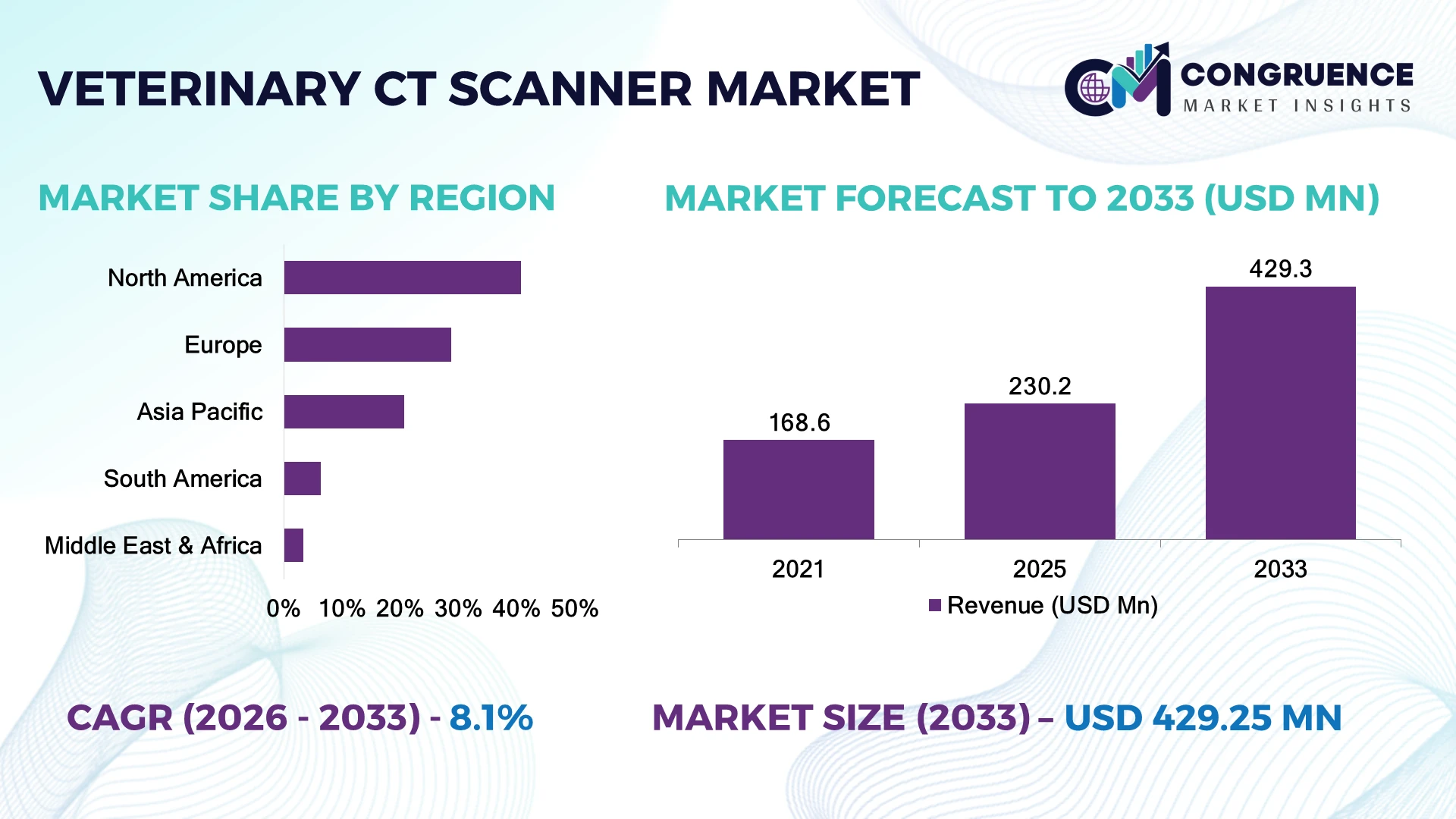
The Global Veterinary CT Scanner Market was valued at USD 230.2 Million in 2025 and is anticipated to reach a value of USD 429.3 Million by 2033 expanding at a CAGR of 8.1% between 2026 and 2033. Growth is being driven by rising referral-hospital imaging capacity, faster multislice CT workflows, and increasing adoption of advanced diagnostic imaging for oncology, orthopedics, and complex neurological cases.
The United States dominates the global Veterinary CT Scanner market, representing approximately 38% of installed veterinary CT capacity, supported by specialty hospitals, university veterinary centers, and private referral networks. Japan and Germany follow with stronger penetration of compact systems, while U.S. installations increasingly favor 16- to 64-slice platforms. The 2026 U.S. veterinary specialty expansion cycle is reinforcing investment in advanced imaging infrastructure.
Strategically, suppliers that combine high-throughput imaging, animal-specific protocols, and integrated service support are best positioned to capture premium hospital investments.
Market Size & Growth: USD 230.2 million in 2025 to USD 429.3 million by 2033, with 8.1% CAGR driven by specialty veterinary imaging expansion.
Top Growth Drivers: Specialty referral hospitals 38%, advanced oncology imaging 27%, orthopedic diagnostics 22%.
Short-Term Forecast: By 2028, automated reconstruction can reduce image-processing time by 20% and improve scanner utilization by 12%.
Emerging Technologies: AI-assisted reconstruction, low-dose protocols, 3D imaging, and automated positioning are reshaping veterinary CT workflows.
Regional Leaders: North America leads at roughly 42% adoption, Europe approaches 29%, while Asia-Pacific reaches 21% and accelerates installation.
Consumer/End-User Trends: Specialty veterinary hospitals account for approximately 54% of high-end CT deployments, prioritizing faster diagnosis and referral retention.
Pilot/Case Example: 2025 specialty imaging deployments using automated reconstruction recorded approximately 18% faster reporting workflows and reduced repeat scanning.
Competitive Landscape: GE HealthCare leads premium imaging positioning at approximately 18%, alongside Siemens Healthineers, Canon Medical Systems, FUJIFILM, and NeuroLogica.
Regulatory & ESG Impact: Low-dose imaging protocols can reduce radiation exposure by approximately 25%, supporting safer repeat examinations and stronger protocol compliance.
Investment & Funding: More than USD 60 million in estimated specialty-imaging infrastructure commitments during 2025–2026 are supporting scanner purchases, hospital upgrades, and diagnostic partnerships.
Innovation & Future Outlook: By 2028, AI triage, cloud-enabled image review, portable CT architectures, and veterinary-specific software will shift competition toward workflow integration.
Veterinary CT Scanner demand is concentrating in oncology, orthopedics, neurology, and trauma diagnostics, where rapid cross-sectional imaging improves clinical decision-making. Approximately 54% of premium installations are concentrated in specialty hospitals and referral centers. In 2026, manufacturers are emphasizing compact footprints, lower-dose protocols, automated reconstruction, and veterinary-specific positioning systems as hospitals manage staffing constraints and rising imaging workloads.
Veterinary CT scanners are becoming strategically important because advanced imaging is shifting from a tertiary referral capability toward a core service within high-volume specialty hospitals. The commercial advantage increasingly comes from scanner throughput, protocol flexibility, image quality, and integration with PACS and electronic medical-record workflows rather than hardware specifications alone. Approximately 54% of premium installations are concentrated in specialty veterinary facilities, reinforcing the importance of institutional purchasing relationships.
Technology is also changing the economics of deployment. Modern iterative and AI-assisted reconstruction can reduce radiation exposure by roughly 25% while shortening reconstruction workloads by approximately 20% compared with conventional processing approaches. North America remains the largest installed base, while Germany, Japan, South Korea, and China are expanding adoption through specialty hospital modernization and university veterinary infrastructure.
Between 2026 and 2028, hospitals are expected to prioritize 16- to 64-slice platforms, automated positioning, low-dose protocols, and remote image interpretation. A practical deployment model is emerging in which referral hospitals combine CT with digital radiography, ultrasound, MRI referral pathways, and centralized reporting. Manufacturers are therefore strengthening distributor networks, software partnerships, service contracts, and application training. Competitive leadership will depend on delivering faster diagnostic workflows and predictable lifecycle economics, not simply higher scanner specifications.
Rising adoption of high-resolution diagnostic imaging is shifting veterinary hospitals from referral-only CT access toward in-house diagnostic capacity. Approximately 35%–40% of advanced companion-animal hospitals in major U.S. metropolitan areas now maintain CT capability, while multislice systems increasingly represent more than 60% of new installations. Demand is strengthened by oncology, orthopedics, neurology, and emergency imaging, where rapid cross-sectional diagnosis improves treatment planning. In Japan, aging companion-animal populations and specialist veterinary infrastructure are reinforcing demand for compact systems. Manufacturers are responding with 16–64-slice platforms, automated positioning, and workflow software. The strategic shift is toward faster scanning and lower operator dependency, making system uptime and service coverage decisive purchasing criteria.
Capital intensity remains a significant constraint because CT deployment requires scanner acquisition, shielding, room modification, anesthesia capability, maintenance, and trained personnel. Equipment and installation can account for roughly 55%–70% of initial project expenditure, while service contracts can add 5%–10% annually to equipment-related operating costs. Smaller veterinary practices in emerging markets face additional financing and utilization pressure, particularly where advanced imaging volumes remain below economic thresholds. Replacement components and specialized detector or tube assemblies also create supply-chain exposure. Companies are reducing these pressures through modular configurations, financing programs, regional service hubs, and preventive-maintenance contracts. The strongest commercial opportunity lies in systems engineered for lower infrastructure requirements without compromising diagnostic throughput.
Compact multislice CT platforms are creating an underserved opportunity among mid-sized veterinary hospitals that cannot justify full-scale human-equivalent imaging infrastructure. Systems requiring 20%–30% less installation space can improve facility utilization, while automated protocols can reduce technologist-dependent workflow time by approximately 15%–25%. India, South Korea, and selected Southeast Asian markets are attractive as specialty veterinary hospitals expand advanced diagnostic offerings. AI-assisted reconstruction, dose optimization, and automated anatomical positioning are becoming important differentiators rather than optional features. Manufacturers are prioritizing distributor partnerships, subscription-based service models, and application-specific software bundles. A non-obvious opportunity is the retrofit market, where upgrading existing imaging rooms with workflow automation can deliver capacity gains without complete facility reconstruction.
Long-term deployment increasingly depends on integrating CT imaging with PACS, electronic veterinary records, anesthesia monitoring, radiology reporting, and cloud-based consultation workflows. Approximately 30%–40% of smaller practices still operate fragmented diagnostic software environments, increasing manual data transfer and reporting delays. Skilled veterinary imaging personnel remain concentrated in major academic and specialist centers, creating utilization constraints outside established hubs. Cybersecurity requirements are also becoming more important as cloud-connected scanners transmit diagnostic studies across facilities. Manufacturers must therefore invest in interoperable software, remote applications support, cybersecurity controls, and structured training programs. The strategic pressure is shifting from scanner performance alone toward complete imaging ecosystems that maintain consistent uptime, data continuity, and diagnostic quality across decentralized veterinary networks.
AI-Assisted Reconstruction Accelerates: AI-enabled reconstruction is increasingly integrated into veterinary CT workflows, with advanced systems targeting 15%–25% faster image processing and approximately 10%–20% lower radiation exposure. U.S. specialty hospitals are prioritizing automated reconstruction to shorten interpretation queues, while manufacturers are embedding algorithmic tools directly into acquisition platforms.
Mobile Imaging Gains Ground: Mobile and relocatable CT configurations are gaining traction where permanent installations remain financially restrictive. Deployment models can reduce facility modification requirements by roughly 20%–30% and improve equipment utilization across referral networks. Veterinary groups are increasingly using shared-service arrangements to increase scanner productivity without duplicating capital infrastructure.
Workflow Automation Reduces Dependence: Automated positioning, protocol selection, dose management, and image routing are reducing operator-intensive steps by approximately 15%–25%. Workforce shortages in specialist veterinary facilities are accelerating adoption, particularly in North American and Japanese hospitals. Vendors are responding with integrated software suites that connect acquisition, anesthesia monitoring, reporting, and archiving.
Service Models Become Strategic: Equipment suppliers are shifting toward uptime-focused contracts covering maintenance, software upgrades, remote diagnostics, and application support. Service-linked purchasing can represent 5%–10% of annual equipment-related expenditure, making lifecycle reliability a stronger differentiator. Manufacturers are expanding regional technician networks and predictive-maintenance capabilities to protect scanner availability and recurring customer relationships.
Stationary systems retain the performance-led advantage
Stationary CT scanners are estimated to account for approximately 78% of the global veterinary CT scanner market, supported by superior image stability, higher throughput, multislice capability, and integration with PACS and hospital workflows. Their dominance is strongest in referral hospitals and specialty centers handling orthopedic, neurological, oncology, and dental cases. Approximately 60%–65% of established high-acuity facilities prioritize fixed systems because utilization volumes justify dedicated infrastructure and service contracts. Portable CT scanners remain smaller but are the fastest-growing type, gaining traction where space, capital expenditure, or referral access limits fixed installations. Their flexible deployment can reduce infrastructure requirements by roughly 20%–30%, supporting mobile diagnostic services and smaller clinics. Manufacturers are consequently expanding compact configurations, remote support, and financing models. The investment priority is shifting toward portable systems for access expansion, while stationary platforms continue receiving upgrades in detector technology, reconstruction software, and workflow automation.
A 2026 UK survey of 93 veterinary anaesthesia professionals working in referral hospitals with CT access found that 65% reported no standardized protocol for choosing general anesthesia versus sedation, highlighting the importance of workflow-integrated CT solutions and standardized operating protocols.
Dental imaging is reshaping CT utilization
Orthopedic & musculoskeletal imaging represents the leading application, estimated at about 30% of veterinary CT scanner demand, because CT provides high-resolution assessment of fractures, joints, complex anatomy, and surgical planning. Neurology and oncology together account for roughly 35%–40% of utilization in advanced referral settings, reflecting the concentration of complex cases requiring cross-sectional imaging. Dental & maxillofacial imaging is the fastest-growing application, driven by increasing recognition of CT for periodontal, root, skull, and oral pathology that conventional radiography can miss. Dental-focused workflows are expanding approximately 15%–20% faster in adoption than traditional general imaging configurations in specialist practices. Manufacturers are responding with dedicated dental protocols, automated reconstruction, and faster acquisition capabilities. Orthopedic imaging remains the volume anchor, while dental and oncology applications are strengthening scanner utilization by broadening the number of clinically billable CT procedures per installed system.
A 2025 veterinary imaging review reported that CT adoption is expanding beyond specialty facilities into general veterinary practices, with improved training and easier-to-use systems supporting broader utilization for small-animal diagnostic imaging.
Veterinary hospitals anchor high-value adoption
Veterinary hospitals and clinics represent the leading end-user group, accounting for approximately 48% of market demand, because direct ownership supports faster diagnostic decisions, higher equipment utilization, and retention of complex cases in-house. Referral and multispecialty hospitals typically generate substantially higher CT workloads than general practices, making fixed multislice systems economically attractive. Veterinary diagnostic imaging centers are the fastest-growing end-user category, expanding as shared-service models reduce the capital burden for smaller practices. Their adoption is estimated to increase equipment utilization by approximately 20%–30% across participating referral networks. University teaching hospitals and academic institutes remain strategically important for advanced imaging research, specialist training, and large-animal applications, although procurement cycles are more budget constrained. Suppliers are targeting hospitals with premium configurations while offering diagnostic centers mobile or shared-access models. Competitive positioning is increasingly determined by uptime, radiologist access, financing flexibility, and interoperability rather than scanner specifications alone.
UC Davis opened its All Species Imaging Center in September 2025 with four diagnostic imaging suites and two new scanners, demonstrating how academic veterinary institutions are consolidating advanced imaging infrastructure to serve diverse animal populations and specialist clinical workflows.
North America accounted for the largest market share at 40.7% in 2025 however, Asia-Pacific is expected to register the fastest growth, expanding at a CAGR of 9.2% between 2026 and 2033.
Specialty-Hospital Expansion Drives High-Value CT Deployment
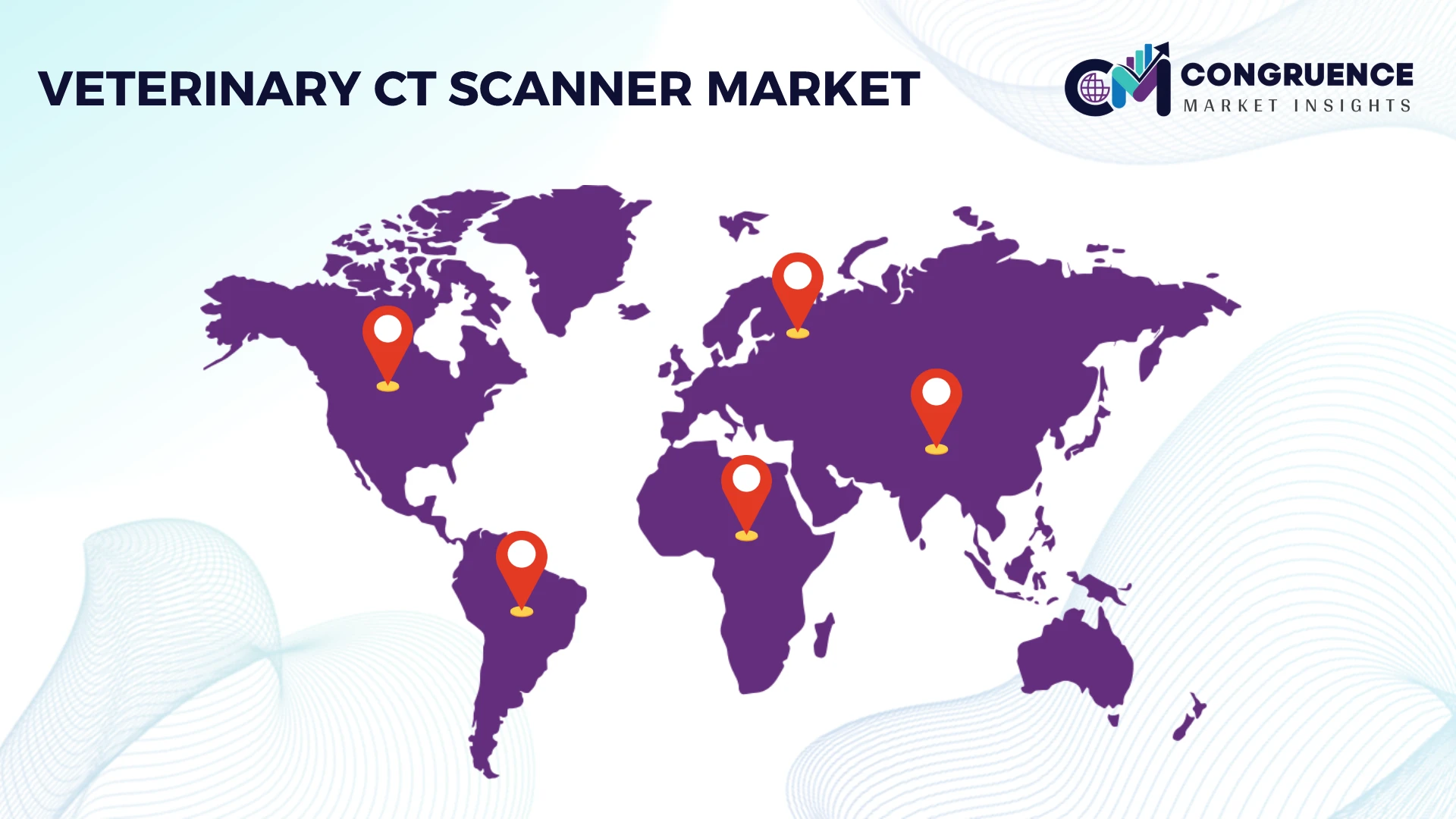
North America remains the leading veterinary CT scanner market, supported by dense networks of specialty hospitals, referral centers, and advanced companion-animal practices. The region represented approximately 40.7% of global veterinary CT imaging demand in 2025, while equipment remained the largest solution category at about 50.9% of regional revenue. The United States anchors regional adoption through high pet-care expenditure, oncology and orthopedic specialization, and availability of refurbished multislice systems. Hospitals are increasingly pairing CT acquisition with teleradiology and workflow software to improve utilization. The commercial opportunity is shifting toward faster scanners, compact configurations, and service contracts that increase uptime without requiring full infrastructure replacement.
United States Market Outlook: The United States dominates North American deployment, with its veterinary CT imaging market estimated at USD 125.9 million in 2025. Specialist hospitals and referral centers increasingly use multislice CT for oncology, neurology, and orthopedic cases, while refurbished systems lower entry costs for mid-sized practices. The country's dense network of veterinary specialists and advanced imaging centers gives manufacturers a strong installed-base opportunity.
Specialist Infrastructure and Diagnostic Standardization Strengthen Adoption
Europe accounted for approximately 28.8% of the global veterinary CT imaging market in 2025, supported by established specialty hospitals, academic veterinary centers, and advanced diagnostic infrastructure. Germany, the United Kingdom, France, and the Nordic countries maintain strong demand for high-resolution imaging, while specialist referral networks support greater scanner utilization. CT imaging software and services are becoming increasingly important as hospitals seek remote interpretation and workflow optimization. European procurement is also influenced by equipment lifecycle management, radiation-safety requirements, and interoperability. Manufacturers are responding with software-enabled platforms, application-specific protocols, and regional service capabilities, positioning lifecycle support as an important differentiator alongside scanner performance.
Germany Market Outlook: Germany represents Europe's strongest country-level opportunity, supported by advanced veterinary infrastructure, specialist hospitals, and high penetration of diagnostic imaging. Its veterinary CT imaging market was estimated at USD 25.1 million in 2024 and is projected to reach USD 45.2 million by 2033. Specialist referral centers, veterinary universities, and technologically advanced practices provide a favorable environment for multislice CT, AI-assisted reconstruction, and integrated imaging workflows.
Service-Based Access Is Expanding Advanced Imaging
Asia-Pacific is emerging as the fastest-growing veterinary CT scanner market, driven by expanding specialty-care infrastructure, rising veterinary expenditure, and greater use of service-based diagnostic models. China held a significant position in regional veterinary CT imaging in 2024, while India and Japan are developing additional specialist capacity. The region is increasingly using teleradiology and reporting-as-a-service to address shortages of trained veterinary radiologists. China is also seeing rapid AI adoption, with 71% of surveyed veterinarians reporting AI use for diagnostic or imaging-related tasks in 2025. Manufacturers are therefore prioritizing compact systems, AI-enabled reconstruction, distributor partnerships, and remote-support models.
China Market Outlook: China offers the strongest country-level growth opportunity in Asia-Pacific, with its veterinary CT scanner market estimated at approximately USD 19.4 million in 2026. Increasing investment in advanced veterinary diagnostics and AI-supported imaging is strengthening specialist hospital capabilities, while technology-focused procurement favors manufacturers able to combine imaging hardware with software and remote reporting. Urban veterinary networks are increasingly important deployment centers.
Specialist-Center Modernization Is Expanding Diagnostic Capacity
South America remains a developing veterinary CT scanner market, with Brazil representing the primary commercial and clinical hub because of its extensive veterinary hospital network, companion-animal population, and large agricultural animal sector. Regional adoption is concentrated in specialist hospitals and academic centers where complex orthopedic, neurological, and oncology cases justify advanced imaging investment. The Latin American veterinary CT market is estimated at approximately USD 15.0 million in 2026, reflecting a still-limited installed base compared with North America and Europe. Refurbished equipment, distributor financing, and mobile imaging services are helping reduce capital barriers. Suppliers with local maintenance capabilities and flexible deployment models are better positioned to expand beyond Brazil's major veterinary hubs.
Brazil Market Outlook: Brazil is the most strategically significant South American market because of its combination of companion-animal healthcare demand, veterinary education infrastructure, livestock activity, and specialist diagnostic centers. Adoption is concentrated in major urban veterinary facilities, where CT supports orthopedic, neurological, dental, and oncology workflows. Flexible financing and localized technical support remain important for expanding deployment beyond premium hospitals, particularly as specialist practices modernize diagnostic capabilities.
Premium Veterinary Infrastructure Drives Selective CT Investment
Middle East & Africa remains a selective but strategically important veterinary CT scanner market, with adoption concentrated in affluent urban centers, specialist animal hospitals, equine facilities, and academic institutions. The GCC veterinary CT market is estimated at approximately USD 3.8 million in 2026, while South Africa represents another established diagnostic hub. Investment is increasingly linked to premium companion-animal care and equine medicine, where advanced imaging supports high-value diagnostic workflows. Limited specialist staffing and uneven infrastructure restrict broader deployment. Manufacturers are responding with distributor-led expansion, remote applications support, compact systems, and service agreements. The strongest opportunities therefore sit in markets where new veterinary hospitals are being developed with advanced diagnostic capabilities incorporated from the planning stage.
United Arab Emirates Market Outlook: The UAE represents the strongest Middle East opportunity because veterinary investment is concentrated in modern urban hospitals, specialist animal-care facilities, and premium companion-animal services. The GCC veterinary CT market is projected at approximately USD 3.8 million in 2026, creating a concentrated addressable base for manufacturers offering compact scanners, rapid installation, and responsive technical support. Equine medicine and high-value companion-animal care further strengthen demand for advanced cross-sectional imaging.
GE HealthCare, Siemens Healthineers, Canon Medical, and Philips compete with veterinary specialists such as Epica Animal Health, Hallmarq, and portable-system innovators. The top five players hold an estimated 30–35% combined share, leaving room for specialists and niche manufacturers. Competition centers on technology, price, service reach, and customization: advanced systems command roughly 15–25% premiums, while faster workflows can reduce scanning time by 30–50%. Global OEMs leverage human-imaging R&D, distributor networks, and vertical integration; specialists differentiate through species-specific ergonomics, standing CT, compact footprints, and veterinary-focused software. Partnerships with referral hospitals and universities accelerate clinical validation, while refurbished equipment pressures premium pricing in cost-sensitive markets. The competitive shift is moving from hardware specifications toward workflow economics, AI-assisted reconstruction, uptime, and service contracts. High capital requirements, installation infrastructure, regulatory compliance, and specialist training remain key entry barriers. Winning requires image quality, throughput, lifecycle cost, workflow integration, and dependable local service.
Siemens Healthineers
Canon Medical Systems Corporation
GE HealthCare
Koninklijke Philips N.V.
Epica Animal Health
Hallmarq Veterinary Imaging
Carestream Health
Esaote S.p.A.
Animage LLC
Asto CT Inc.
GNI ApS
WOORIEN Co., Ltd.
Current veterinary CT platforms increasingly combine multi-slice acquisition, automated reconstruction, dose optimization, and AI-assisted workflow guidance. Modern systems can shorten examination setup and reconstruction by 15–30% versus older workflows, improving anesthesia utilization and throughput. Adoption is strongest in referral hospitals and university centers, where advanced imaging supports oncology, neurology, orthopedics, and complex surgical planning.
Photon-counting CT and species-specific cone-beam CT represent the disruptive edge. Cornell’s 2025 deployment of photon-counting technology introduced finer material differentiation and high-detail imaging into veterinary care, while pet-specific CBCT designs target compact footprints and anatomy-focused workflows. Newer systems can reduce acquisition time by 45–80% in product comparisons, improving throughput and reducing procedural stress. Veterinary specialists benefit most because workflow-specific hardware differentiates them from repurposed human CT installations.
From 2026–2028, the decisive technology stack will combine AI reconstruction, automated positioning, low-dose protocols, cloud-enabled image sharing, and species-specific software. Facilities integrating these layers should target 10–20% higher scanner utilization through faster protocols and remote interpretation. OEMs gain through installed-base upgrades, while veterinary specialists gain through differentiated workflows and lower infrastructure requirements. Investment priorities are shifting from standalone scanner purchases toward connected imaging platforms, service agreements, and interoperable data pipelines that improve utilization, clinician productivity, and lifecycle economics.
May 2025 Cornell University installed a Siemens NAEOTOM Alpha photon-counting CT, the first such scanner in veterinary medicine. Fewer than 50 systems were then clinically used worldwide. The upgrade expands high-detail imaging and strengthens advanced oncology, orthopedic, and research capabilities. Source: vet.cornell.edu
September 2025 UC Davis opened its All Species Imaging Center with four diagnostic imaging suites and two donor-funded scanners. The centralized facility expands cross-species imaging capacity, consolidates specialist workflows, and strengthens the hospital’s position for advanced diagnostics, research, and complex referral cases. Source: vetmed.ucdavis.edu
October 2024 WOORIEN launched MyVet CT Plus, reducing acquisition time by 45% to 80% versus its predecessor while retaining spiral imaging. The faster workflow lowers anesthesia exposure and improves throughput, strengthening the commercial case for veterinary-specific CT adoption. Source: woorien.com
February 2024 University of Pretoria installed a Siemens Somatom Confidence 64-slice CT after a R13 million donation. The upgrade created South Africa’s largest veterinary-practice CT capability, expanding specialist training, clinical research, and diagnostic access while strengthening advanced imaging infrastructure nationally. Source: up.ac.za.
The Veterinary CT Scanner Market Report covers product configurations, animal categories, clinical applications, end-user settings, technology architectures, and geographic markets. Segmentation evaluates stationary multi-slice and portable CT systems across companion, livestock, equine, and other animal types, with application analysis spanning neurology, oncology, orthopedics, cardiology, nephrology, gastroenterology, and trauma imaging. End-user coverage includes veterinary hospitals, specialty clinics, universities, research institutes, and referral centers.
Regional analysis examines North America, Europe, Asia-Pacific, South America, and Middle East & Africa, with country-level assessment of deployment intensity, infrastructure readiness, specialist capacity, and procurement patterns. The scope also tracks AI-assisted reconstruction, low-dose imaging, cone-beam CT, photon-counting CT, mobile systems, and interoperable imaging workflows. Quantitative indicators cover adoption levels, segment shares, scanner deployment patterns, technology penetration, and competitive participation, supporting investment planning, market-entry decisions, capacity expansion, partnerships, and positioning through 2033.
| Report Attribute/Metric | Report Details |
|---|---|
|
Market Revenue in 2025 |
USD 230.2 Million |
|
Market Revenue in 2033 |
USD 429.3 Million |
|
CAGR (2026 - 2033) |
8.1% |
|
Base Year |
2025 |
|
Forecast Period |
2026 - 2033 |
|
Historic Period |
2021 - 2025 |
|
Segments Covered |
By Type
By Application
By End-User
|
|
Key Report Deliverable |
Revenue Forecast, Growth Trends, Market Dynamics, Segmental Overview, Regional and Country-wise Analysis, Competition Landscape |
|
Region Covered |
North America, Europe, Asia-Pacific, South America, Middle East, Africa |
|
Key Players Analyzed |
Siemens Healthineers, Canon Medical Systems Corporation, GE HealthCare, Koninklijke Philips N.V., Epica Animal Health, Hallmarq Veterinary Imaging, Carestream Health, Esaote S.p.A., Animage LLC, Asto CT Inc., GNI ApS, WOORIEN Co., Ltd. |
|
Customization & Pricing |
Available on Request (10% Customization is Free) |




