
Reports
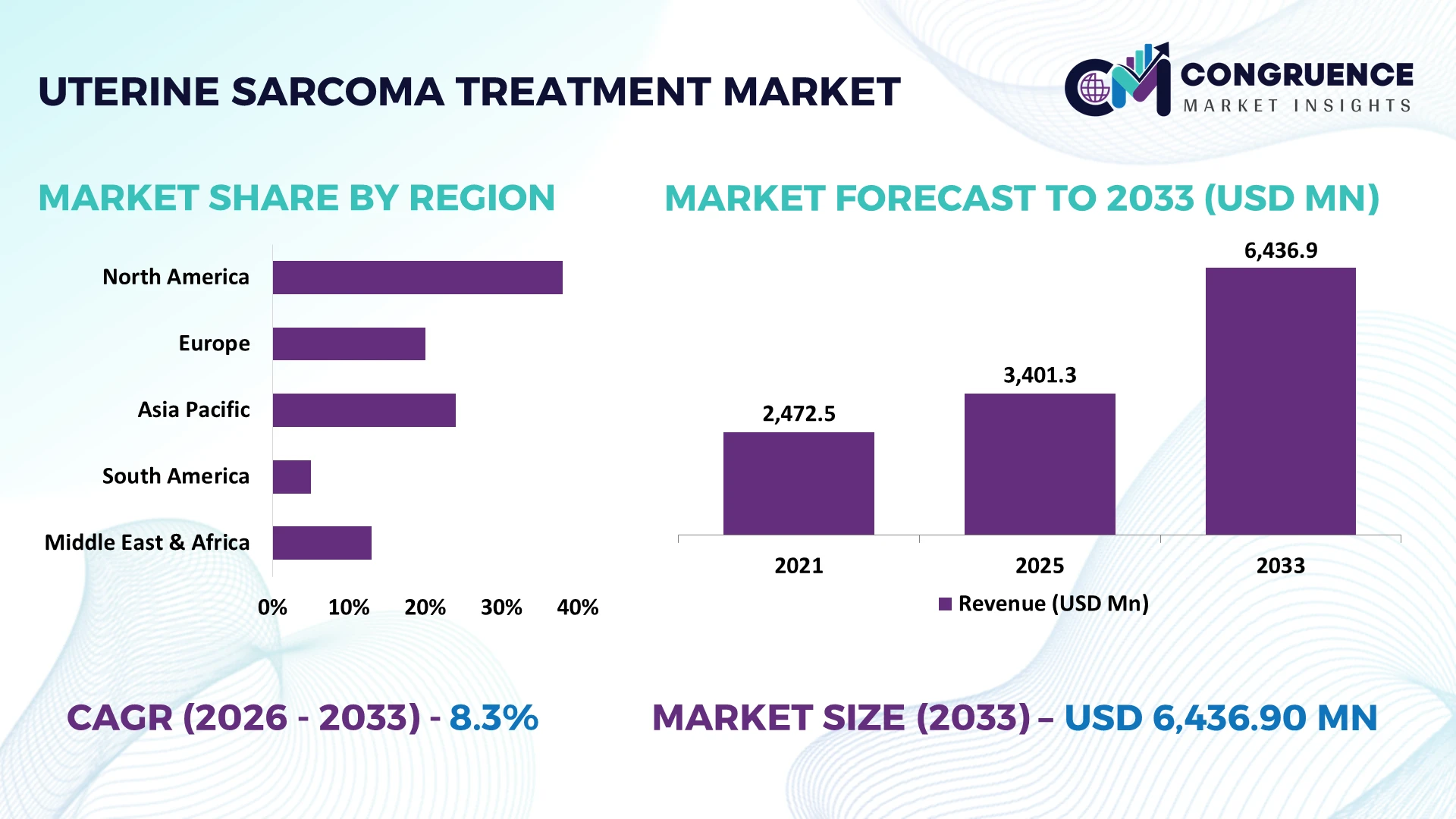
The Global Uterine Sarcoma Treatment Market was valued at USD 3401.3 Million in 2025 and is anticipated to reach a value of USD 6436.9 Million by 2033 expanding at a CAGR of 8.3% between 2026 and 2033. Growth is driven by expanding access to sarcoma specialist oncology services, molecular profiling for targeted treatment selection, and development of therapies for advanced leiomyosarcoma and endometrial stromal sarcoma.
The United States leads the global Uterine Sarcoma Treatment Market, supported by advanced oncology infrastructure, pharmaceutical research investment, and specialized cancer centers. An illustrative 2025 allocation places its global market share at approximately 35%. Uterine sarcomas account for approximately 3% to 7% of uterine cancers, concentrating treatment within specialist oncology facilities. Compared with India, the United States benefits from broader access to molecular profiling and clinical trials. The FDA's 2024 approval of an immunotherapy combination for advanced endometrial cancer also illustrates regulatory innovation in gynecologic oncology, although that indication excludes uterine sarcoma.
Strategically, approximately 35% modeled United States market concentration and the 3% to 7% uterine sarcoma incidence proportion support investment in specialized diagnostics, multidisciplinary treatment centers, and targeted drug development.
Market Size & Growth: USD 3,401.3 million in 2025, reaching USD 6,436.9 million by 2033 at 8.3% CAGR, supported by precision oncology.
Top Growth Drivers: Illustrative influence weights assign 40% to targeted therapy development, 35% to molecular diagnostics, and 25% to specialist treatment access.
Short Term Forecast: By 2028, a modeled 15% improvement in molecular testing turnaround supports faster treatment planning.
Emerging Technologies: Three priorities include next generation sequencing, AI assisted pathology, and molecularly targeted drug development.
Regional Leaders: Illustrative 2033 allocations place North America at USD 2,639.13 million, Europe at USD 1,737.96 million, and Asia Pacific at USD 1,415.12 million, reflecting oncology infrastructure development.
Consumer / End User Trends: Uterine sarcomas represent approximately 3% to 7% of uterine cancers, concentrating treatment within specialist oncology centers.
Pilot / Case Example: A 2024 clinical study of doxorubicin plus trabectedin reported approximately 12% improvement in overall survival compared with doxorubicin alone.
Competitive Landscape: GSK, Pfizer, Novartis, Eli Lilly, and Roche participate in relevant oncology treatment markets; verified uterine sarcoma market shares remain unavailable.
Regulatory & ESG Impact: FDA orphan drug designation offers 7 years of qualifying market exclusivity, supporting rare cancer therapeutic development.
Investment & Funding: A modeled USD 64.37 million allocation, equivalent to 1% of projected market value, illustrates potential precision oncology investment capacity.
Innovation & Future Outlook: Biomarker guided treatment, molecular pathology, and combination therapies support increasingly individualized management across multiple uterine sarcoma subtypes.
The global Uterine Sarcoma Treatment Market encompasses surgical oncology, systemic chemotherapy, hormonal treatment, molecular diagnostics, and specialized management of recurrent disease. Leiomyosarcoma, endometrial stromal sarcoma, and other rare uterine mesenchymal malignancies require distinct therapeutic pathways. Uterine sarcomas represent approximately 3% to 7% of uterine cancers, making accurate histopathological classification essential for treatment selection. Emerging molecular profiling technologies identify actionable alterations and support clinical trial enrollment. FDA orphan drug incentives and increasing coordination between oncology centers and diagnostic laboratories are influencing development priorities. These changes strengthen the strategic importance of specialized treatment infrastructure and precision oncology investment.
The Uterine Sarcoma Treatment Market is becoming strategically important as pharmaceutical developers and oncology providers prioritize rare cancer therapeutics, molecular classification, and specialized clinical care. Uterine sarcomas represent approximately 3% to 7% of uterine malignancies, creating concentrated demand for expert pathology and subtype specific treatment. Regulatory incentives, including 7 years of United States orphan drug exclusivity for qualifying products, are encouraging investment in specialized oncology development. Hospitals are transitioning toward integrated molecular diagnostics and multidisciplinary treatment planning.
Next generation sequencing enables simultaneous assessment of multiple genetic alterations, compared with sequential single gene testing. An illustrative workflow model targets 20% shorter diagnostic turnaround and 15% fewer repeat tests, improving treatment coordination rather than establishing proven clinical superiority. The United States leads advanced clinical research, while Germany maintains established sarcoma referral networks and India expands molecular diagnostic capacity. Between 2026 and 2028, specialist centers are prioritizing standardized pathology review, biomarker interpretation, and clinical trial referral efficiency.
The doxorubicin plus trabectedin treatment strategy demonstrates how clinical evidence is reshaping advanced leiomyosarcoma management. Pharmaceutical companies are strengthening oncology partnerships, biomarker research, and specialized trial recruitment. Competitive advantage increasingly depends on clinically validated treatment differentiation, accurate molecular classification, and coordinated access to expert cancer services.
Clinical evidence supporting combination chemotherapy is strengthening treatment development for advanced uterine leiomyosarcoma. Uterine sarcomas account for approximately 3% to 7% of uterine cancers, concentrating therapeutic demand within specialized oncology services. In the LMS 04 clinical trial, doxorubicin plus trabectedin achieved median overall survival of approximately 33 months, compared with 24 months for doxorubicin alone, representing roughly 38% longer median survival. The combination also demonstrated approximately 54% lower risk of disease progression or death during the trial's progression assessment. French oncology research networks have supported this treatment strategy through multicenter clinical investigation. Pharmaceutical manufacturers are strengthening combination therapy research, clinical supply coordination, and specialist oncology partnerships. The commercial implication is increasing emphasis on treatments demonstrating meaningful survival improvement rather than incremental symptom management.
The rarity and pathological diversity of uterine sarcoma constrain treatment scalability and increase diagnostic complexity. Uterine sarcomas account for approximately 3% to 7% of uterine cancers, limiting patient concentration within individual hospitals. In an illustrative operational model, specialized molecular testing adds approximately 15% to diagnostic expenditure, while centralized pathology review increases initial processing time by approximately 10%. These modeled effects illustrate procurement pressures rather than measured industry averages. In India, uneven access to specialist sarcoma pathology and molecular laboratories creates additional referral requirements. Healthcare providers must coordinate histological classification, imaging, and multidisciplinary assessment before treatment selection. Diagnostic companies and hospital networks are responding through laboratory partnerships, consolidated testing contracts, and standardized specimen processing. Efficient referral networks are essential for controlling treatment preparation costs.
Molecularly guided treatment presents opportunities to improve therapeutic selection across distinct uterine sarcoma subtypes. Uterine sarcomas represent approximately 3% to 7% of uterine cancers, making accurate subtype identification commercially important. Low grade endometrial stromal sarcoma frequently expresses hormone receptors, supporting endocrine treatment strategies in appropriately selected patients. An illustrative precision oncology deployment model targets 20% faster molecular reporting and 15% fewer unnecessary repeat investigations. United States cancer centers are expanding comprehensive genomic profiling and molecular tumor board services, strengthening integration between diagnostics and treatment decisions. Pharmaceutical developers are investigating targeted agents and combination therapies, while diagnostic manufacturers improve sequencing workflows and pathology interpretation platforms. The nonobvious opportunity lies in monetizing coordinated diagnostic services alongside specialized treatment delivery, rather than relying exclusively on drug development.
Uterine sarcoma treatment development faces persistent execution challenges involving small patient populations, heterogeneous disease biology, and prolonged clinical evaluation. Uterine sarcomas represent approximately 3% to 7% of uterine malignancies, restricting recruitment capacity for individual treatment studies. The LMS 04 trial demonstrated median overall survival of approximately 33 months with doxorubicin plus trabectedin versus 24 months with doxorubicin alone, illustrating the extended observation required to establish survival benefits. An illustrative multinational trial model targets 20% faster recruitment through centralized patient identification and 15% lower screening duplication. French and United States oncology institutions are strengthening international research collaboration and molecular eligibility assessment. Pharmaceutical companies must invest in harmonized clinical protocols, reliable drug supply, and longitudinal monitoring. Sustainable competitiveness requires reproducible clinical outcomes across genetically diverse patient populations.
Centralized Pathology Review Gains Clinical Priority: Specialist cancer hospitals are strengthening expert histopathological review before initiating subtype specific treatment. Uterine sarcomas represent approximately 3% to 7% of uterine cancers, while illustrative workflow targets include 15% fewer diagnostic revisions and 20% faster multidisciplinary decisions. United States oncology networks are integrating digital slide sharing and specialist consultations. Diagnostic providers are expanding pathology partnerships, reducing repeat investigations and improving treatment classification.
Maintenance Treatment Protocols Become More Structured: Oncology providers are standardizing postchemotherapy assessment and maintenance treatment scheduling for selected advanced leiomyosarcoma patients. The LMS 04 treatment strategy demonstrated median overall survival of approximately 33 months versus 24 months with conventional doxorubicin treatment. French cancer centers are strengthening imaging schedules and adverse event monitoring. Pharmaceutical companies are improving treatment coordination and clinical education, supporting consistent delivery of complex therapeutic regimens.
Digital Oncology Monitoring Expands Treatment Oversight: Hospitals are incorporating electronic toxicity reporting, imaging coordination, and structured symptom assessment into systemic treatment pathways. Illustrative operational targets include 20% faster adverse event escalation and 15% fewer missed monitoring appointments. United States oncology practices are integrating digital patient reporting with clinical records. Healthcare technology providers are expanding workflow automation, improving clinical team responsiveness and reducing administrative workload during prolonged treatment.
Rare Cancer Referral Networks Consolidate Expertise: European specialist institutions are strengthening cross institutional referrals for complex uterine sarcoma cases. Uterine sarcomas comprise approximately 3% to 7% of uterine cancers, making concentrated clinical expertise operationally valuable. Illustrative referral models target 15% shorter specialist appointment delays and 10% fewer duplicate consultations. Hospital groups are expanding coordinated referral arrangements, improving specialist capacity utilization while supporting consistent treatment selection.
Surgery represents an estimated 34% of the global Uterine Sarcoma Treatment Market within an illustrative expenditure allocation, reflecting its central role in managing localized disease and achieving complete tumor removal when feasible. Chemotherapy accounts for approximately 29%, supported by systemic treatment requirements in advanced and recurrent disease. Surgical treatment remains foundational because localized uterine sarcomas are commonly managed through hysterectomy, with additional procedures determined by disease extent and histology. United States oncology hospitals are strengthening multidisciplinary surgical planning and specialist pathology integration. Pharmaceutical manufacturers continue supporting chemotherapy protocols, including doxorubicin and trabectedin based treatment strategies.
Targeted Therapy represents the fastest expanding treatment category in the modeled scenario, supported by molecular characterization and development of therapies directed toward specific tumor alterations. Radiation Therapy remains relevant for selected local control requirements, while Hormone Therapy serves appropriately selected hormone receptor positive tumors. Immunotherapy continues to undergo investigation in molecularly defined patient populations. Biotechnology companies are expanding biomarker research and clinical collaborations, while hospitals invest in integrated treatment planning. Competitive differentiation increasingly depends on histology specific treatment selection and measurable clinical outcomes.
Leiomyosarcoma represents an estimated 42% of global Uterine Sarcoma Treatment Market activity in an illustrative application allocation, reflecting its clinical importance, systemic treatment requirements, and substantial representation within uterine sarcoma research. Endometrial Stromal Sarcoma accounts for approximately 24%, supported by surgical management and endocrine treatment in appropriately selected patients. Leiomyosarcoma treatment frequently requires multidisciplinary evaluation, particularly in recurrent or metastatic disease. The LMS 04 trial reported median overall survival of approximately 33 months with doxorubicin plus trabectedin, compared with 24 months for doxorubicin alone, strengthening the clinical evidence base for combination treatment.
Endometrial Stromal Sarcoma represents the fastest expanding application in the modeled scenario, reflecting increasing molecular classification and recognition of hormone sensitive disease. Undifferentiated Uterine Sarcoma requires intensive specialist management because of aggressive clinical behavior. Adenosarcoma presents distinct surgical and pathological requirements, while Carcinosarcoma is frequently managed through treatment pathways resembling high grade endometrial carcinoma. Pharmaceutical developers are strengthening histology specific clinical research, while diagnostic laboratories expand molecular classification services. Investment priorities increasingly favor differentiated therapeutic strategies rather than uniform treatment across uterine malignancies.
Hospitals represent an estimated 48% of global Uterine Sarcoma Treatment Market activity within an illustrative end user allocation, supported by surgical infrastructure, inpatient treatment capabilities, pathology services, and multidisciplinary oncology teams. Cancer Specialty Centers account for approximately 27%, reflecting concentrated expertise in rare malignancies and advanced systemic treatment. Hospitals maintain operational advantages through integrated imaging, anesthesia, surgical oncology, and treatment monitoring capabilities. United States academic hospital networks are strengthening specialist referral arrangements and coordinated treatment planning. Pharmaceutical manufacturers are targeting these institutions through clinical research partnerships and specialized oncology treatment programs.
Cancer Specialty Centers represent the fastest expanding end user category in the modeled scenario, supported by increasing referral concentration and demand for histology specific treatment expertise. Oncology Clinics provide systemic therapy administration and longitudinal monitoring, while Ambulatory Surgical Centers contribute selected outpatient procedures. Research Institutes support clinical investigation, biomarker development, and treatment innovation. Healthcare providers are expanding coordinated oncology networks, while diagnostic companies strengthen institutional partnerships. Competitive positioning increasingly depends on efficient patient referral, specialized treatment access, and integration between clinical care and therapeutic research.
North America accounted for the largest market share at an estimated 41% in 2025 however, Asia Pacific is expected to register the fastest growth, expanding at a modeled CAGR of 10.2% between 2026 and 2033.
Precision Oncology Infrastructure and Specialized Sarcoma Treatment Leadership
North America represents an estimated 41% of the global Uterine Sarcoma Treatment Market in 2025, supported by specialized oncology hospitals, advanced molecular diagnostics, and pharmaceutical clinical research. The United States concentrates treatment innovation through National Cancer Institute designated cancer centers, academic oncology networks, and established pharmaceutical manufacturers. Uterine sarcomas account for approximately 3% to 7% of uterine cancers, making specialist pathology and multidisciplinary treatment infrastructure essential. FDA orphan drug designation provides qualifying therapies with 7 years of market exclusivity following approval, supporting rare cancer development incentives. Canada contributes through provincial cancer agencies, academic hospitals, and coordinated oncology treatment pathways. Regional pharmaceutical companies are strengthening biomarker research, clinical trial partnerships, and specialized drug development. Investment priorities increasingly emphasize histology specific treatment selection, molecular testing integration, and efficient access to experienced sarcoma treatment centers.
United States Market Outlook: The United States leads regional uterine sarcoma treatment development through advanced cancer research institutions, pharmaceutical manufacturing, and specialized surgical oncology services. The National Cancer Institute supports more than 70 designated cancer centers, strengthening clinical investigation and multidisciplinary care infrastructure. Major oncology institutions in Boston, Houston, and New York contribute to rare cancer research and treatment innovation. Pharmaceutical developers are advancing combination chemotherapy, molecular profiling, and biomarker guided clinical studies, while healthcare providers strengthen coordinated referral networks.
Specialized Sarcoma Networks and Evidence Based Treatment Integration
Europe accounts for an estimated 27% of global Uterine Sarcoma Treatment Market activity in 2025, supported by established cancer research institutions, coordinated specialist networks, and advanced pharmaceutical development. France, Germany, the United Kingdom, and Italy maintain specialized sarcoma treatment infrastructure and multidisciplinary oncology services. France has contributed significantly to clinical evidence supporting doxorubicin plus trabectedin treatment in advanced leiomyosarcoma. The LMS 04 clinical trial demonstrated median overall survival of approximately 33 months with combination treatment compared with 24 months for doxorubicin alone. European Reference Networks support collaboration across rare cancer specialists, strengthening diagnostic consistency and clinical expertise. Pharmaceutical companies are investing in treatment optimization, molecular pathology, and multicenter research partnerships. Regional healthcare systems increasingly prioritize centralized sarcoma assessment and standardized treatment protocols, improving specialist resource utilization and supporting consistent management of complex uterine malignancies.
France Market Outlook: France maintains a leading position through its national sarcoma research networks, specialized oncology hospitals, and coordinated rare cancer clinical infrastructure. The French Sarcoma Group has contributed to multicenter therapeutic investigation, including the LMS 04 study involving advanced leiomyosarcoma. French institutions support centralized pathology review, clinical trial recruitment, and multidisciplinary treatment planning. Pharmaceutical partnerships and academic oncology research strengthen evidence generation and improve access to specialized treatment strategies.
Expanding Molecular Diagnostics and Oncology Treatment Infrastructure
Asia Pacific represents an estimated 22% of global Uterine Sarcoma Treatment Market activity in 2025, supported by expanding oncology infrastructure, pharmaceutical manufacturing, and molecular diagnostic capabilities. China, Japan, India, and South Korea maintain established cancer treatment institutions, with increasing integration of genomic testing and specialized surgical oncology services. Japan's advanced pharmaceutical research ecosystem supports oncology drug development and clinical investigation. China is strengthening molecular pathology infrastructure and cancer hospital capacity, while India contributes through expanding oncology centers and cost competitive pharmaceutical manufacturing. Uterine sarcomas account for approximately 3% to 7% of uterine cancers, creating requirements for accurate histological differentiation and specialized treatment selection. Regional pharmaceutical companies are strengthening oncology portfolios, diagnostic partnerships, and clinical research capabilities. Investment increasingly targets molecular testing accessibility, multidisciplinary treatment coordination, and specialized management of advanced uterine malignancies.
Japan Market Outlook: Japan maintains a strategic position through advanced oncology research, established pharmaceutical manufacturers, and specialized cancer treatment institutions. The National Cancer Center Japan supports clinical research, molecular diagnostics, and multidisciplinary cancer management. Japan's population exceeds 120 million, creating substantial requirements for organized cancer services. Pharmaceutical companies and academic hospitals are strengthening genomic profiling, targeted treatment research, and specialist pathology integration, supporting more precise management of rare uterine malignancies.
Specialist Oncology Access and Centralized Diagnostic Expansion
South America represents an estimated 6% of global Uterine Sarcoma Treatment Market activity in 2025, with Brazil concentrating specialized oncology infrastructure and pharmaceutical distribution networks. Major cancer hospitals in São Paulo and Rio de Janeiro support gynecologic oncology, sarcoma pathology, and systemic treatment services. Brazil's Unified Health System provides a national framework for cancer diagnosis and treatment, while private healthcare networks contribute advanced diagnostic and therapeutic capabilities. Argentina and Chile maintain academic oncology institutions supporting rare cancer management and clinical research. Limited access to molecular testing outside metropolitan centers creates referral delays and uneven treatment availability. Healthcare providers are responding through centralized pathology services, telepathology collaboration, and coordinated oncology referrals. Regional pharmaceutical distributors are strengthening specialty medicine supply arrangements, while hospital networks prioritize diagnostic accuracy and multidisciplinary treatment access.
Brazil Market Outlook: Brazil leads regional uterine sarcoma treatment activity through established cancer hospitals, pharmaceutical manufacturing, and specialized oncology services. The country's population exceeds 200 million, supporting substantial healthcare requirements. São Paulo concentrates major oncology institutions, including A.C.Camargo Cancer Center and Hospital de Amor. Public and private providers are strengthening molecular pathology, surgical oncology, and chemotherapy services. Pharmaceutical partnerships and centralized specialist referrals support treatment availability, although geographic differences continue to influence access.
Cancer Care Modernization and Specialized Treatment Investment
The Middle East and Africa represent an estimated 4% of global Uterine Sarcoma Treatment Market activity in 2025, supported by expanding oncology infrastructure and healthcare modernization initiatives. Saudi Arabia, the United Arab Emirates, Israel, and South Africa concentrate specialized cancer treatment capabilities and advanced diagnostic services. Saudi Arabia's Vision 2030 healthcare transformation supports hospital modernization, specialist workforce development, and digital healthcare integration. The UAE is expanding precision oncology capabilities through specialized medical institutions and molecular testing partnerships. Israel contributes pharmaceutical research and advanced molecular diagnostics, while South Africa maintains established academic oncology centers. Regional healthcare providers are investing in pathology infrastructure, specialist surgical services, and systemic treatment capacity. Limited access outside major urban centers creates operational challenges, encouraging centralized oncology referral networks and partnerships with international pharmaceutical manufacturers.
Saudi Arabia Market Outlook: Saudi Arabia is strengthening specialized oncology treatment infrastructure through Vision 2030 healthcare modernization and hospital investment programs. Riyadh and Jeddah concentrate advanced cancer treatment institutions, molecular diagnostic laboratories, and specialist medical services. The country's healthcare transformation framework targets 2030 for major infrastructure and service improvements. Hospital networks are expanding gynecologic oncology capabilities, multidisciplinary treatment planning, and specialized pharmaceutical procurement, improving readiness for advanced uterine sarcoma treatment.
The Uterine Sarcoma Treatment Market features competition between established pharmaceutical manufacturers, specialty oncology developers, and generic medicine suppliers. GSK, Pfizer, Novartis, Eli Lilly, and Roche compete through oncology portfolios, clinical research capabilities, and hospital access, while specialty developers pursue differentiated sarcoma therapies. An illustrative concentration model assigns these five companies approximately 45% combined market participation, rather than verified uterine sarcoma treatment share. Uterine sarcomas represent approximately 3% to 7% of uterine cancers, concentrating commercial opportunities within specialist treatment networks. The LMS 04 trial demonstrated approximately 38% longer median overall survival with doxorubicin plus trabectedin compared with doxorubicin alone, strengthening evidence based competition. Companies are expanding clinical partnerships, molecular diagnostics integration, and specialized treatment portfolios. Rare patient populations, regulatory requirements, and complex clinical trials create substantial entry barriers. Competitive leadership requires differentiated clinical outcomes, reliable specialty drug supply, efficient patient identification, and strong oncology institutional relationships.
GSK plc
Pfizer Inc.
Novartis AG
Eli Lilly and Company
Roche Holding AG
Johnson & Johnson
Bristol Myers Squibb
Merck & Co., Inc.
AstraZeneca plc
Eisai Co., Ltd.
PharmaMar S.A.
Daiichi Sankyo Company, Limited
Sun Pharmaceutical Industries Ltd.
Teva Pharmaceutical Industries Ltd.
Current uterine sarcoma treatment technologies combine digital histopathology, immunohistochemistry, molecular sequencing, and image guided surgical planning. Next generation sequencing identifies clinically relevant alterations across tumor subtypes, improving diagnostic classification and treatment selection. Compared with sequential single gene testing, multiplex sequencing offers an illustrative 20% reduction in diagnostic turnaround and 15% fewer repeat investigations. Specialist oncology centers benefit from coordinated pathology review, while diagnostic manufacturers gain opportunities to integrate testing platforms with clinical decision systems.
Emerging technologies include artificial intelligence assisted slide interpretation, circulating tumor DNA monitoring, and molecularly guided therapeutic development. Illustrative implementation targets include 18% faster pathology screening and 12% lower manual review workload, subject to clinical validation. Liquid biopsy remains investigational for uterine sarcoma monitoring, while digital pathology deployment is concentrated in advanced cancer institutions. Pharmaceutical developers are strengthening biomarker research partnerships, and hospitals are integrating genomic findings into multidisciplinary treatment decisions.
Between 2026 and 2028, disruptive innovation will emphasize spatial transcriptomics, computational drug discovery, and personalized treatment combinations. Modeled operational targets include 25% faster biomarker prioritization and 10% fewer unsuitable trial referrals. Specialized biotechnology companies and academic oncology networks benefit from earlier molecular characterization, creating competitive advantages through improved trial recruitment, differentiated therapeutic pipelines, and coordinated clinical development.
September 2024: PharmaMar supported the LMS04 study published in the New England Journal of Medicine. Combination treatment extended median survival to 33 months versus 24 months with doxorubicin alone, strengthening evidence for advanced leiomyosarcoma treatment. Source: nejm.org.
May 2025: Alliance for Clinical Trials in Oncology reported that its olaparib and temozolomide study failed its progression endpoint in advanced uterine leiomyosarcoma. Among 74 enrolled patients, findings reinforced the importance of biomarker selection. Source: ascopubs.org.
April 2026: Italian Sarcoma Group researchers reported TOMAS2 trial findings evaluating trabectedin plus olaparib. Twelve month progression free survival reached 42.9% in the uterine leiomyosarcoma subgroup, supporting further investigation of biomarker selected combination therapy. Source: sciencedirect.com.
May 2026: PharmaMar completed recruitment for its Phase III SaLuDo trial evaluating lurbinectedin plus doxorubicin in metastatic leiomyosarcoma. Enrollment reached 450 patients across more than 90 centers, advancing international clinical development and preparation for efficacy assessment. Source: pharmamar.com.
The Uterine Sarcoma Treatment Market Report evaluates therapeutic developments, clinical adoption, competitive positioning, and investment priorities between 2026 and 2033. Treatment segmentation covers Surgery, Chemotherapy, Radiation Therapy, Targeted Therapy, Hormone Therapy, and Immunotherapy. Application analysis examines Leiomyosarcoma, Endometrial Stromal Sarcoma, Undifferentiated Uterine Sarcoma, Adenosarcoma, and Carcinosarcoma. End user coverage includes Hospitals, Cancer Specialty Centers, Oncology Clinics, Ambulatory Surgical Centers, and Research Institutes, assessing treatment capacity, diagnostic infrastructure, and institutional purchasing priorities.
Regional analysis encompasses North America, Europe, Asia Pacific, South America, and the Middle East and Africa. Technology coverage includes genomic sequencing, digital pathology, molecular biomarkers, and investigational targeted combinations. Clinical evidence from a 150 patient leiomyosarcoma trial informs treatment evaluation. The report supports pharmaceutical investment planning, specialist network expansion, clinical development partnerships, and competitive differentiation across rare gynecologic oncology markets.
| Report Attribute/Metric | Report Details |
|---|---|
Market Revenue in 2025 | USD 3401.3 Million |
Market Revenue in 2033 | USD 6436.9 Million |
CAGR (2026 - 2033) | 8.3% |
Base Year | 2025 |
Forecast Period | 2026 - 2033 |
Historic Period | 2021 - 2025 |
Segments Covered | By Type
By Application
By End-User
|
Key Report Deliverable | Revenue Forecast, Growth Trends, Market Dynamics, Segmental Overview, Regional and Country-wise Analysis, Competition Landscape |
Region Covered | North America, Europe, Asia-Pacific, South America, Middle East, Africa |
Key Players Analyzed | GSK plc, Pfizer Inc., Novartis AG, Eli Lilly and Company, Roche Holding AG, Johnson & Johnson, Bristol Myers Squibb, Merck & Co., Inc., AstraZeneca plc, Eisai Co., Ltd., PharmaMar S.A., Daiichi Sankyo Company, Limited, Sun Pharmaceutical Industries Ltd., Teva Pharmaceutical Industries Ltd. |
Customization & Pricing | Available on Request (10% Customization is Free) |




