
Reports
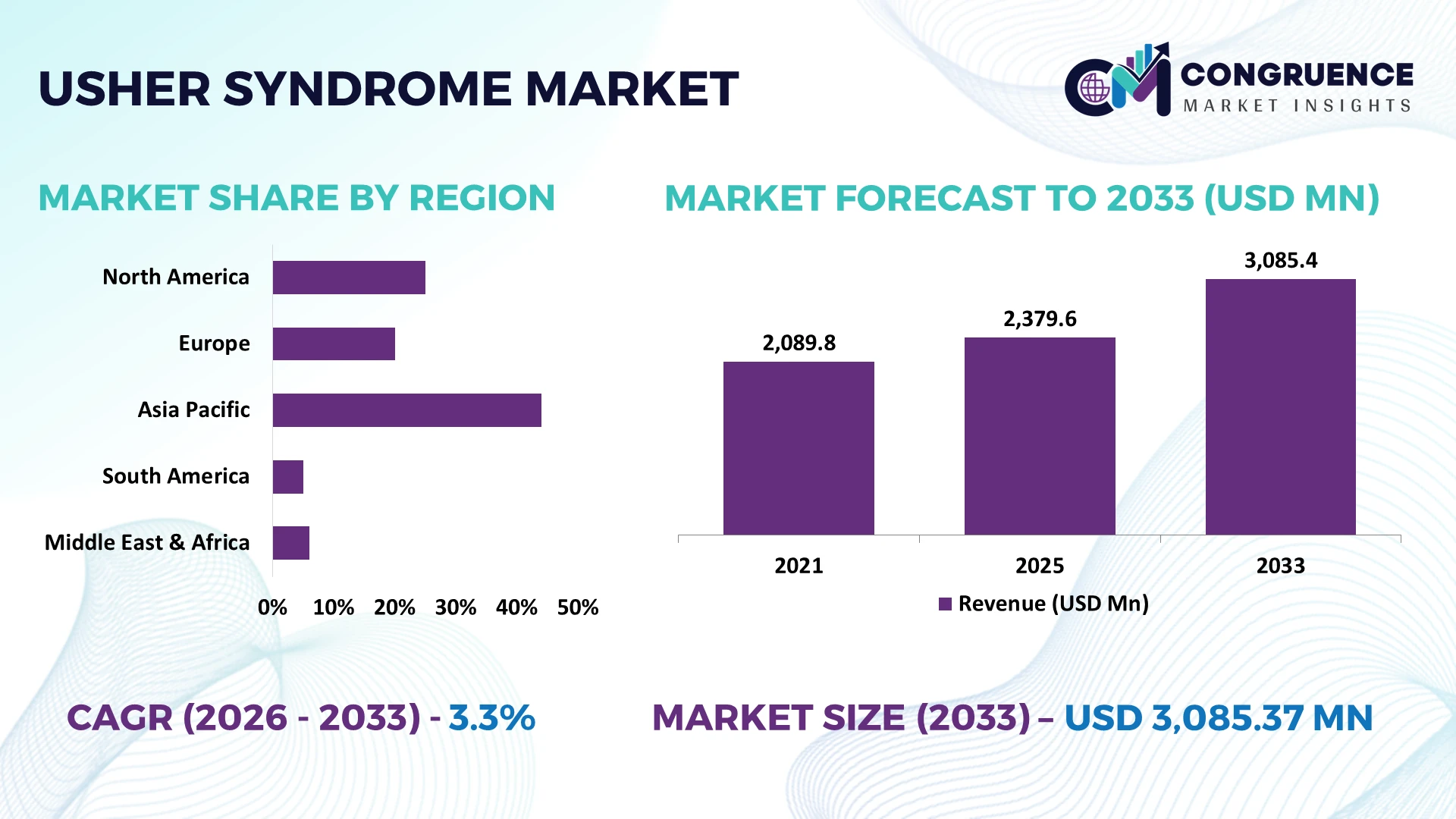
The Global Usher Syndrome Market was valued at USD 2379.6 Million in 2025 and is anticipated to reach a value of USD 3085.37 Million by 2033 expanding at a CAGR of 3.3% between 2026 and 2033. Growth is driven by expanded genetic testing for inherited retinal disorders, earlier identification of syndromic hearing loss, clinical development of retinal gene therapies, and increasing access to cochlear implantation and specialized ophthalmic rehabilitation.
The United States leads the specialized Usher syndrome treatment and research landscape, supported by the National Institutes of Health, academic ophthalmology centers, and rare disease biotechnology developers. Usher syndrome affects approximately 4 to 17 individuals per 100,000 people, with three principal clinical types. The National Eye Institute supports inherited retinal disease research, while FDA orphan drug incentives encourage therapeutic development. Compared with the United Kingdom, the United States has a larger clinical research infrastructure and biotechnology investment ecosystem, although a verified country market share remains unavailable.
Strategically, companies integrating genetic diagnosis, retinal therapeutic development, and hearing rehabilitation across three clinical subtypes strengthen patient identification, clinical trial recruitment, and specialized treatment access.
Market Size & Growth: USD 2,379.6 million in 2025, reaching USD 3,085.37 million by 2033 at 3.3% CAGR, supported by genetic diagnostics and specialized rehabilitation.
Top Growth Drivers: Illustrative demand weighting assigns 40% to genetic testing expansion, 35% to hearing rehabilitation, and 25% to retinal therapeutic innovation.
Short Term Forecast: By 2028, integrated diagnostic pathways target a modeled 15% reduction in referral delays through coordinated genetic and ophthalmic assessment.
Emerging Technologies: Antisense oligonucleotides, retinal gene delivery, and AI assisted imaging target improved disease monitoring across three clinical Usher syndrome types.
Regional Leaders: Illustrative 2033 allocations place North America at USD 1,326.71 million, Europe at USD 925.61 million, and Asia Pacific at USD 617.07 million.
Consumer / End User Trends: Usher syndrome accounts for approximately 50% of inherited deafblindness cases in commonly cited clinical estimates, strengthening multidisciplinary care requirements.
Pilot / Case Example: In 2024, QR 421a development demonstrated continued interest in USH2A exon 13 targeting, although confirmed therapeutic efficacy remains under investigation.
Competitive Landscape: Cochlear leads established hearing implant participation; key therapeutic developers include ProQR Therapeutics, Nacuity Pharmaceuticals, AAVantgarde Bio, and Atsena Therapeutics.
Regulatory & ESG Impact: FDA orphan drug designation applies to conditions affecting fewer than 200,000 Americans, supporting development incentives for rare disease therapies.
Investment & Funding: The NIH allocated approximately USD 47.7 billion in fiscal 2025 funding, supporting biomedical research infrastructure relevant to inherited disorders.
Innovation & Future Outlook: Next generation retinal therapies target USH2A, MYO7A, and other disease associated genes, shifting development toward molecularly targeted intervention.
The Usher Syndrome Market encompasses genetic diagnosis, audiological management, cochlear implantation, retinal disease monitoring, visual rehabilitation, and investigational molecular therapies. Clinical demand is concentrated among patients experiencing combined sensorineural hearing loss and progressive retinitis pigmentosa. Advances in next generation sequencing, optical coherence tomography, and retinal imaging improve identification of disease associated variants and progression patterns. Usher syndrome represents approximately 50% of inherited deafblindness in frequently cited estimates, emphasizing the importance of coordinated specialist care. Increasing rare disease research collaboration and genotype specific clinical development establish the foundation for evaluating future therapeutic opportunities and competitive positioning.
The Usher Syndrome Market is becoming strategically important as precision medicine transforms inherited sensory disorder management from symptom based rehabilitation toward molecular diagnosis and targeted therapeutic development. Usher syndrome accounts for approximately 50% of inherited deafblindness cases, creating substantial demand for coordinated ophthalmology, audiology, and genetic testing services. The identification of three principal clinical types supports differentiated treatment pathways, while advances in genomic sequencing improve patient classification and clinical trial recruitment. Biotechnology companies are prioritizing genetically defined populations to strengthen development efficiency and therapeutic differentiation.
Next generation sequencing panels enable simultaneous assessment of multiple inherited retinal disease genes, replacing sequential single gene testing. In illustrative diagnostic workflows, integrated genomic screening targets 20% shorter diagnostic timelines and 15% fewer repeat consultations compared with fragmented testing pathways. The United States leads specialized clinical research infrastructure, while the United Kingdom benefits from coordinated genomic medicine services. Between 2026 and 2028, expanded molecular screening and longitudinal retinal imaging will strengthen patient identification and treatment readiness.
Clinical development targeting USH2A associated retinal degeneration demonstrates practical application of genotype specific intervention strategies. Biotechnology developers are strengthening academic partnerships, expanding patient registries, and refining retinal outcome measurements. Competitive advantage increasingly depends on molecular targeting accuracy, clinical evidence quality, and coordinated patient access infrastructure.
Increasing adoption of molecular diagnostics is transforming Usher syndrome identification and specialist treatment planning. The disorder accounts for approximately 50% of inherited deafblindness cases, while estimated prevalence ranges from 4 to 17 individuals per 100,000 people. Next generation sequencing enables simultaneous evaluation of multiple disease associated genes, supporting earlier molecular classification and improved clinical trial eligibility assessment. In modeled diagnostic pathways, integrated genetic screening targets 20% shorter diagnostic timelines and 15% fewer repeat specialist consultations. The United States is advancing rare disease research through academic ophthalmology networks and specialized biotechnology programs. Diagnostic companies and therapeutic developers are expanding genomic testing partnerships, patient registries, and genotype specific research initiatives to strengthen clinical development efficiency.
Usher syndrome treatment remains constrained by the absence of approved therapies that reverse its underlying progressive retinal degeneration. Management primarily relies on hearing rehabilitation, cochlear implantation, visual assistance, and specialist monitoring. The disorder's estimated prevalence of 4 to 17 individuals per 100,000 creates commercially fragmented patient populations, complicating clinical recruitment and specialized service delivery. In illustrative access scenarios, 25% longer diagnostic pathways and 20% higher specialist coordination requirements increase healthcare system burden. Rural communities in India and parts of the United States face additional barriers to genomic testing and retinal specialist access. Healthcare providers are addressing these limitations through teleophthalmology, referral partnerships, genetic counseling networks, and coordinated multidisciplinary care pathways.
Emerging molecular treatments create opportunities to address progressive retinal degeneration through antisense oligonucleotides, gene augmentation, and advanced retinal delivery technologies. USH2A and MYO7A associated disease pathways remain important research targets, while optical coherence tomography and artificial intelligence support increasingly detailed retinal progression assessment. In modeled clinical workflows, automated image analysis targets 20% faster retinal assessment and 15% lower manual image review requirements. The United States and United Kingdom provide established inherited retinal disease research networks supporting genotype specific clinical development. Biotechnology companies are investing in molecular delivery platforms, natural history studies, and academic partnerships. Combining genomic classification with longitudinal retinal imaging offers a strategic advantage by improving trial population selection and strengthening therapeutic response measurement.
Developing effective Usher syndrome therapies requires addressing substantial genetic heterogeneity, progressive retinal degeneration, and difficulties measuring meaningful clinical outcomes. Three principal clinical types encompass multiple disease associated genes, while individual mutations influence disease severity and progression. Estimated prevalence of 4 to 17 individuals per 100,000 complicates recruitment for genotype specific clinical trials. In modeled development scenarios, 20% slower patient enrollment and 15% higher monitoring requirements increase operational complexity. United States clinical programs must also coordinate ophthalmic imaging, audiological assessments, genetic confirmation, and long term follow up. Biotechnology developers are strengthening international patient registries, standardized retinal endpoints, and multicenter research partnerships. Competitive success depends on demonstrating durable clinical benefit while maintaining consistent assessment across genetically diverse populations.
Integrated Sensory Rehabilitation Pathways Expand: United States hospitals are coordinating audiology, ophthalmology, and vestibular rehabilitation through multidisciplinary care programs. Usher syndrome involves 3 principal clinical types, with approximately 50% of inherited deafblindness attributed to the condition. Integrated scheduling targets a modeled 15% reduction in repeated consultations. Healthcare providers are strengthening specialist referral networks, improving continuity between hearing rehabilitation and progressive vision management.
Cochlear Implant Programming Becomes Personalized: Audiology centers increasingly emphasize individualized cochlear implant mapping and speech perception assessments for patients with progressive sensory impairment. Type 1 Usher syndrome commonly involves profound congenital hearing loss, while Type 2 generally presents with moderate to severe hearing impairment. Digital programming workflows target 10% shorter adjustment sessions and 15% fewer unnecessary follow up visits in modeled scenarios. Manufacturers are expanding remote programming capabilities and specialist training.
Retinal Outcome Measurement Gains Standardization: Clinical research programs are refining visual field testing, microperimetry, and retinal imaging protocols to assess progressive photoreceptor degeneration. Optical coherence tomography enables structural measurements at micrometer resolution, while longitudinal assessments commonly extend across 12 to 24 months. Research institutions are harmonizing examination schedules and data collection procedures, improving comparability between clinical studies and strengthening evidence generation for regulatory evaluation.
Patient Registries Improve Research Coordination: Rare disease organizations and academic centers are strengthening international Usher syndrome registries to connect genetically characterized patients with clinical research programs. The condition affects approximately 4 to 17 individuals per 100,000 people, creating fragmented recruitment populations. Registry coordination targets 20% faster eligibility screening and 15% fewer duplicate assessments in illustrative workflows. Research sponsors are expanding collaborative recruitment networks and standardized consent procedures.
Type 2 Usher Syndrome represents the leading segment, accounting for an indicative 60% of the global Usher syndrome market in 2025. Its dominance reflects comparatively frequent diagnosis, moderate to severe congenital hearing impairment, and progressive retinal degeneration requiring sustained ophthalmic monitoring. Patients typically retain normal vestibular function, differentiating Type 2 from the more severe early balance impairment associated with Type 1. Type 1 Usher Syndrome accounts for approximately 30% of modeled market activity, supported by early hearing rehabilitation, cochlear implantation, and specialized pediatric intervention. Healthcare providers prioritize coordinated sensory assessments and long term rehabilitation pathways for these patients.
Type 3 Usher Syndrome represents approximately 10% of the market and is positioned as the fastest expanding segment in modeled demand scenarios. Its progressive hearing impairment and variable retinal involvement create opportunities for repeated audiological monitoring and specialized genetic evaluation. Type 3 is particularly relevant in Finland and certain genetically defined populations. Diagnostic companies and specialist clinics are expanding molecular testing capabilities, individualized monitoring programs, and referral partnerships to improve disease classification and treatment planning.
Hearing Loss Management represents the leading application, accounting for an estimated 35% of global Usher syndrome market activity in 2025. Its dominance reflects the early manifestation of sensorineural hearing impairment and established clinical use of hearing aids, cochlear implants, and audiological rehabilitation. Vision Loss Management contributes approximately 25%, supported by progressive visual impairment requiring specialized monitoring and adaptive rehabilitation services. Retinitis Pigmentosa Treatment represents an estimated 20%, encompassing clinical management of retinal degeneration and associated ophthalmic complications. Hospitals and specialist clinics are expanding coordinated sensory care pathways to improve continuity across these established applications.
Gene Therapy Research accounts for approximately 15% and represents the fastest expanding application through investigational approaches targeting disease associated genetic variants. Balance Disorder Management contributes the remaining 5%, particularly among patients with Type 1 Usher syndrome. Biotechnology developers are prioritizing genotype specific research, while ophthalmology centers strengthen retinal imaging and clinical assessment capabilities. Competitive investment increasingly concentrates on applications capable of demonstrating measurable clinical outcomes and supporting differentiated therapeutic development.
Hospitals represent the dominant end user segment, accounting for an estimated 35% of global Usher syndrome market activity in 2025. Their leadership reflects integrated access to ophthalmology, audiology, genetic counseling, cochlear implantation, and multidisciplinary rehabilitation services. Ophthalmology Clinics account for approximately 25%, supported by continuing retinal imaging, visual field assessment, and progressive vision impairment management. Audiology Centers contribute an estimated 20%, concentrating on hearing evaluation, hearing aid fitting, cochlear implant programming, and auditory rehabilitation. Healthcare organizations are strengthening specialist referral networks to coordinate care across these facilities.
Genetic Testing Centers represent approximately 12% of modeled demand and the fastest expanding end user segment as molecular diagnosis becomes increasingly important for disease classification and research eligibility. Research Institutes contribute approximately 8%, supporting natural history studies, investigational therapies, and clinical outcome development. Diagnostic companies are expanding genomic testing partnerships, while academic centers strengthen patient registries and specialized research infrastructure. Competitive positioning increasingly depends on diagnostic accuracy, integrated patient pathways, and access to genetically characterized populations.
North America accounted for the largest market share at an estimated 43% in 2025 however, Asia Pacific is expected to register the fastest growth, expanding at a CAGR of an estimated 5.2% between 2026 and 2033.

Precision Diagnostics and Specialized Care Networks Strengthen Market Leadership
North America holds an estimated 43% of the global Usher Syndrome Market in 2025, supported by advanced genetic diagnostics, established cochlear implant services, and specialized inherited retinal disease research infrastructure. The United States concentrates clinical development activity through academic medical centers, biotechnology companies, and rare disease research organizations. Usher syndrome affects approximately 4 to 17 individuals per 100,000 people, requiring coordinated ophthalmology, audiology, and genetic counseling services. The National Institutes of Health and National Eye Institute support research addressing inherited sensory disorders and progressive retinal degeneration. Advanced retinal imaging, molecular testing, and multidisciplinary rehabilitation remain important components of regional clinical practice. An illustrative integrated care model targets 15% shorter referral timelines through coordinated specialist scheduling. Biotechnology developers are strengthening clinical research partnerships and patient registry participation to improve trial recruitment and molecular characterization.
United States Market Outlook: The United States leads specialized Usher syndrome research through established clinical trial infrastructure, genomic medicine capabilities, and regulatory incentives for rare disease therapies. The FDA orphan drug framework applies to conditions affecting fewer than 200,000 Americans, supporting targeted therapeutic development. Academic institutions and biotechnology companies are advancing research involving USH2A and other disease associated genes. Integrated hearing rehabilitation, retinal monitoring, and molecular diagnosis strengthen the country's position in specialized patient management.
Genomic Healthcare Integration Accelerates Specialized Disease Management
Europe accounts for an estimated 30% of the global Usher Syndrome Market in 2025, supported by inherited retinal disease research, genetic testing infrastructure, and established public healthcare systems. The United Kingdom, Germany, France, and the Netherlands contribute specialized ophthalmology services and academic research capabilities. European Reference Networks strengthen collaboration among healthcare providers treating rare inherited disorders, improving access to specialized expertise across national boundaries. Genomic medicine initiatives increasingly support molecular diagnosis and genotype specific patient classification. Clinical development activity includes investigational retinal therapies targeting inherited photoreceptor degeneration. Usher syndrome encompasses three principal clinical types, requiring differentiated audiological, ophthalmic, and vestibular assessment pathways. Illustrative care integration scenarios target 20% fewer duplicated diagnostic assessments through coordinated referral systems. Biotechnology developers and academic institutions are expanding collaborative research networks, natural history studies, and standardized retinal outcome measurement programs.
United Kingdom Market Outlook: The United Kingdom benefits from the NHS Genomic Medicine Service, established inherited retinal disease clinics, and specialized academic research institutions. Genomics England's 100,000 Genomes Project strengthened national expertise in genomic medicine and rare disease investigation. Moorfields Eye Hospital and associated research organizations contribute advanced ophthalmic assessment and retinal disease research. Coordinated clinical services support genetic diagnosis, specialist referrals, and patient identification for investigational therapeutic programs.
Genomic Testing Expansion Reshapes Rare Disease Diagnosis
Asia Pacific represents an estimated 20% of the global Usher Syndrome Market in 2025, supported by expanding genomic medicine infrastructure and specialized sensory rehabilitation services. Japan, China, India, and Australia contribute distinct capabilities in molecular diagnostics, ophthalmology, audiology, and inherited disease research. Japan maintains advanced cochlear implantation services and specialized retinal disease management, while China is expanding genomic sequencing capabilities through academic hospitals and biotechnology laboratories. India presents substantial diagnostic access opportunities through its large population and expanding tertiary healthcare infrastructure. Usher syndrome's estimated prevalence of 4 to 17 individuals per 100,000 highlights the importance of molecular identification across diverse populations. Modeled laboratory modernization scenarios target 20% shorter genetic testing turnaround and 15% lower repeat testing requirements. Diagnostic companies are expanding sequencing services, clinical partnerships, and specialized referral networks to improve access to inherited sensory disorder assessment.
Japan Market Outlook: Japan offers established ophthalmology research institutions, advanced hearing rehabilitation technologies, and comprehensive healthcare coverage supporting specialized sensory disorder management. Academic hospitals conduct inherited retinal disease investigations using genomic sequencing and retinal imaging. Japan's aging demographic also strengthens broader ophthalmic diagnostic infrastructure, although Usher syndrome remains a genetically inherited condition. Domestic medical technology manufacturers and research institutions are developing precision diagnostic capabilities and specialized patient monitoring systems.
Specialist Referral Expansion Addresses Diagnostic Access Gaps
South America accounts for an estimated 4% of the global Usher Syndrome Market in 2025, with Brazil representing the principal concentration of specialized clinical infrastructure. Argentina, Chile, and Colombia contribute additional ophthalmology, audiology, and genetic medicine services. Regional demand is shaped by uneven access to molecular diagnostics, limited inherited retinal disease specialist availability, and fragmented referral systems. Brazil's public healthcare network supports specialized treatment access, although advanced genomic testing remains concentrated in major metropolitan centers. The three principal Usher syndrome types require differentiated clinical assessment, increasing the importance of coordinated sensory rehabilitation. In illustrative service delivery scenarios, centralized genetic testing pathways target 15% fewer unnecessary specialist referrals and 20% shorter diagnostic coordination timelines. Healthcare providers are strengthening university hospital partnerships, telemedicine services, and regional laboratory relationships to improve patient identification while managing infrastructure constraints.
Brazil Market Outlook: Brazil leads regional specialized care through university hospitals, ophthalmology research centers, and the Unified Health System. São Paulo concentrates advanced clinical laboratories and specialist medical institutions supporting inherited retinal disease assessment. The country's population exceeds 200 million, creating substantial requirements for accessible genetic counseling and sensory rehabilitation infrastructure. Academic healthcare providers are strengthening molecular diagnostic research and specialist training, while telehealth services support referral coordination beyond major metropolitan areas.
Specialized Healthcare Investment Supports Genetic Disease Identification
The Middle East and Africa account for an estimated 3% of the global Usher Syndrome Market in 2025, supported by specialized healthcare development in Saudi Arabia, the United Arab Emirates, Israel, and South Africa. Saudi Arabia's genomic medicine initiatives strengthen inherited disease identification and clinical research capabilities. The Saudi Human Genome Program established a national framework for investigating hereditary disorders through genomic sequencing and population specific variant analysis. Specialized hospitals increasingly integrate molecular diagnostics, audiological rehabilitation, and ophthalmic assessment for complex inherited conditions. Usher syndrome's three principal clinical types require distinct clinical management pathways, emphasizing the value of genetic classification. Illustrative diagnostic integration scenarios target 20% faster specialist coordination and 15% fewer repeated clinical assessments. Healthcare organizations are expanding genetic counseling capabilities, academic partnerships, and advanced diagnostic infrastructure while addressing uneven specialist access across African healthcare systems.
Saudi Arabia Market Outlook: Saudi Arabia holds a strategic position through national genomic research initiatives, specialized tertiary hospitals, and expanding precision medicine infrastructure. The Saudi Human Genome Program supports investigation of hereditary disease variants relevant to population specific diagnostic development. King Faisal Specialist Hospital and Research Centre contributes specialized genetic medicine and clinical research capabilities. Continued investment in molecular laboratories, genetic counseling, and multidisciplinary sensory rehabilitation strengthens the country's ability to identify and manage inherited disorders.
The Usher Syndrome Market combines established hearing technology manufacturers with emerging retinal therapeutic developers and specialized diagnostic providers. Cochlear Limited and Sonova compete in hearing rehabilitation, while ProQR Therapeutics, Nacuity Pharmaceuticals, and AAVantgarde Bio pursue differentiated retinal treatment approaches. An illustrative market model assigns these five participants approximately 35% combined participation across relevant products and development activities, rather than verified Usher specific sales. Competition centers on clinical effectiveness, molecular targeting, treatment accessibility, and specialist integration. Modeled diagnostic workflows target 20% shorter assessment timelines, while coordinated rehabilitation pathways aim for 15% fewer repeat consultations. Biotechnology developers prioritize genotype specific clinical programs, academic partnerships, and specialized delivery platforms. Hearing technology companies strengthen implant programming, rehabilitation services, and clinical support networks. Genetic heterogeneity, lengthy clinical validation, and limited patient recruitment constrain commercialization. Competitive leadership requires demonstrable patient outcomes, reliable molecular diagnostics, and scalable specialist partnerships across international treatment and research networks serving genetically diverse patient populations.
Cochlear Limited
Sonova Holding AG
MED-EL Elektromedizinische Geräte GmbH
Demant A/S
ProQR Therapeutics N.V.
Nacuity Pharmaceuticals, Inc.
AAVantgarde Bio S.r.l.
Atsena Therapeutics, Inc.
Ocugen, Inc.
MeiraGTx Holdings plc
Invitae Corporation
F. Hoffmann-La Roche Ltd.
Illumina, Inc.
Thermo Fisher Scientific Inc.
Current Usher syndrome technologies combine next generation sequencing, optical coherence tomography, cochlear implants, and computerized visual field assessment. Multigene panels identify pathogenic variants across established Usher associated genes, supporting molecular classification and specialist referral. Compared with sequential single gene testing, integrated sequencing targets 20% shorter diagnostic workflows in modeled clinical scenarios. Automated retinal imaging analysis targets 15% less manual review time, improving ophthalmology productivity. Specialist hospitals increasingly combine genetic results with audiological and retinal assessments, strengthening patient selection for clinical research.
Emerging technologies include antisense oligonucleotides, retinal gene augmentation, and advanced viral delivery platforms. Investigational approaches targeting USH2A and MYO7A address molecular mechanisms underlying progressive photoreceptor degeneration. Artificial intelligence assisted image segmentation targets 12% faster structural assessment, while digital patient registries target 18% faster eligibility screening under illustrative workflows. Biotechnology developers benefit from improved genotype matching and standardized longitudinal measurements, although therapeutic effectiveness requires clinical validation.
Between 2026 and 2028, large gene delivery systems, precision editing research, and integrated sensory monitoring will influence development priorities. Digital endpoints target 10% fewer repeated assessments, while coordinated remote monitoring targets 15% lower follow up administration. Companies combining molecular expertise, specialized clinical networks, and validated retinal biomarkers gain stronger trial execution capabilities and competitive differentiation.
September 2024: AAVantgarde Bio administered AAVB-081 to the first participant in its Phase 1/2 LUCE-1 trial for Usher syndrome type 1B. This clinical milestone advanced dual AAV gene delivery targeting MYO7A mutations, establishing an important development pathway. Source: usher-syndrome.org.
September 2025: Nacuity Pharmaceuticals reported Phase 1/2 results showing NPI-001 reduced photoreceptor loss by more than 50% over two years in patients with Usher associated retinitis pigmentosa. Findings supported planning for a confirmatory clinical trial in 2026. Source: nacuity.com.
January 2026: AAVantgarde Bio completed enrollment in its Phase 1/2 LUCE-1 clinical trial evaluating AAVB-081 for MYO7A associated Usher syndrome. The milestone advanced clinical evaluation of dual vector gene replacement and strengthened development readiness for subsequent trial assessments. Source: aavantgarde.com.
October 2026: Atsena Therapeutics reported preclinical ATSN-301 results demonstrating full length MYO7A expression and favorable safety in nonhuman primates. A six month toxicology study identified no systemic toxicity, supporting the company's planned 2027 regulatory submission for clinical development. Source: atsenatx.com.
The Usher Syndrome Market Report evaluates clinical demand, diagnostic infrastructure, therapeutic development, and competitive positioning between 2026 and 2033. Segmentation covers Type 1, Type 2, and Type 3 Usher Syndrome; Hearing Loss Management, Vision Loss Management, Balance Disorder Management, Retinitis Pigmentosa Treatment, and Gene Therapy Research; and five end user categories. Indicative market modeling assigns Type 2 a 60% share, Hearing Loss Management 35%, and Hospitals 35%, highlighting established treatment concentration.
Regional analysis examines North America, Europe, Asia Pacific, South America, and the Middle East and Africa, emphasizing genomic medicine capabilities and specialist access. Technology coverage includes molecular sequencing, retinal imaging, cochlear implants, antisense therapeutics, and viral gene delivery. The report supports clinical investment planning, biotechnology partnerships, geographic expansion, competitive benchmarking, and emerging therapeutic commercialization strategies.
| Report Attribute/Metric | Report Details |
|---|---|
Market Revenue in 2025 | USD 2379.6 Million |
Market Revenue in 2033 | USD 3085.37 Million |
CAGR (2026 - 2033) | 3.3% |
Base Year | 2025 |
Forecast Period | 2026 - 2033 |
Historic Period | 2021 - 2025 |
Segments Covered | y Type
By Application
By End-User
|
Key Report Deliverable | Revenue Forecast, Growth Trends, Market Dynamics, Segmental Overview, Regional and Country-wise Analysis, Competition Landscape |
Region Covered | North America, Europe, Asia-Pacific, South America, Middle East, Africa |
Key Players Analyzed | Cochlear Limited, Sonova Holding AG, MED-EL Elektromedizinische Geräte GmbH, Demant A/S, ProQR Therapeutics N.V., Nacuity Pharmaceuticals, Inc., AAVantgarde Bio S.r.l., Atsena Therapeutics, Inc., Ocugen, Inc., MeiraGTx Holdings plc, Invitae Corporation, F. Hoffmann-La Roche Ltd., Illumina, Inc., Thermo Fisher Scientific Inc. |
Customization & Pricing | Available on Request (10% Customization is Free) |




