
Reports
The Global Urology Surgery Supplies Market was valued at USD 8420 Million in 2025 and is anticipated to reach a value of USD 12824.39 Million by 2033 expanding at a CAGR of 5.4% between 2026 and 2033. Growth is driven by increasing kidney stone procedures, rising benign prostatic hyperplasia interventions, expanding minimally invasive urological surgery, and adoption of disposable ureteroscopes, laser fibers, and robotic surgical instruments.
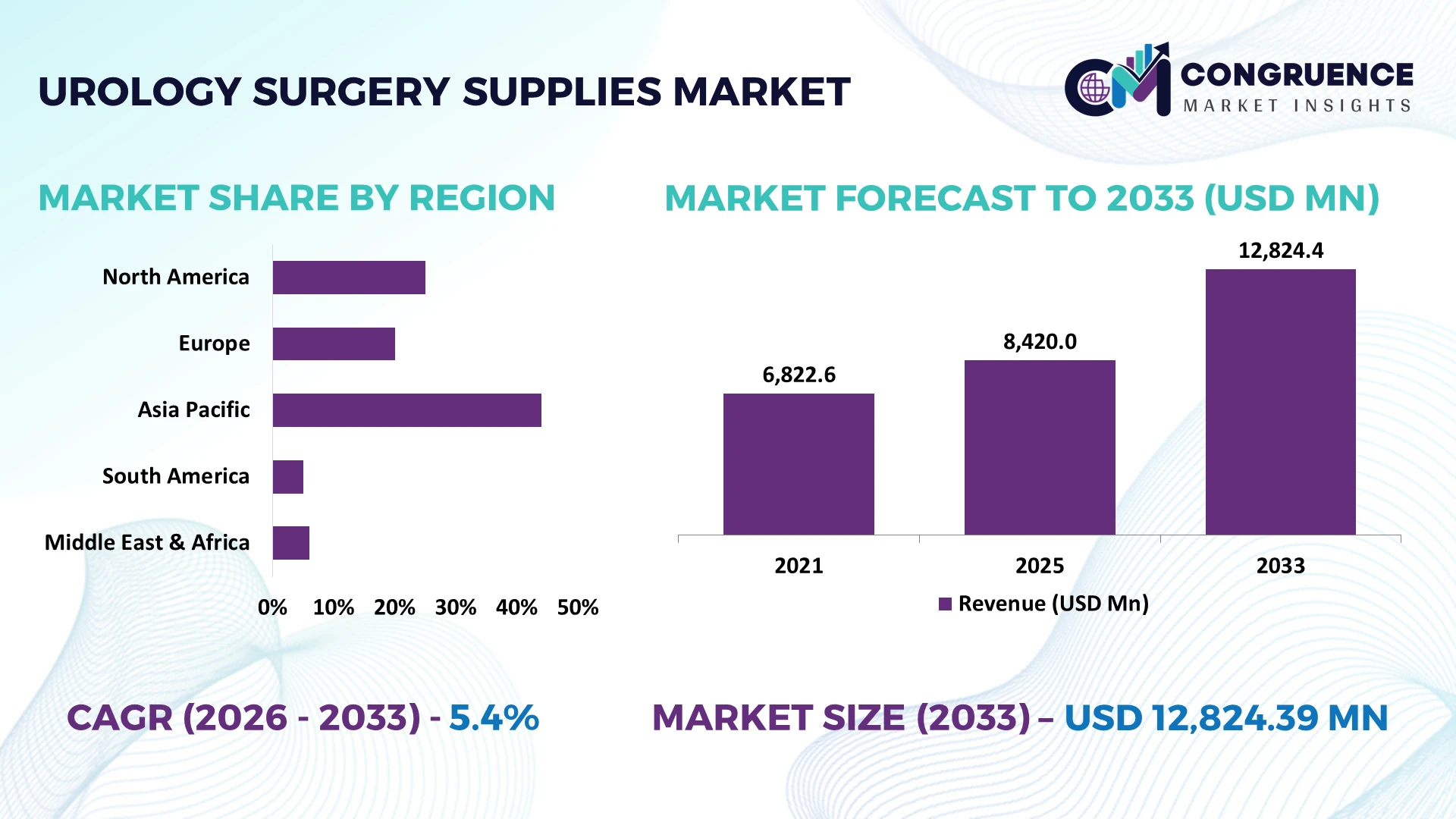
The United States leads the global Urology Surgery Supplies Market, with an estimated 38% market share, supported by advanced surgical infrastructure, medical device manufacturing, and hospital procurement networks. Approximately 11% of Americans experience kidney stones during their lifetime, sustaining demand for endoscopic instruments and stone retrieval devices. Compared with India, where urology equipment adoption is expanding through hospital modernization, the United States maintains greater robotic surgery penetration. FDA device oversight and investment in ambulatory surgical centers strengthen demand for disposable instruments, specialized catheters, and advanced surgical consumables.
Strategically, manufacturers should prioritize the estimated 38% United States market concentration and the 11% lifetime kidney stone prevalence, combining reusable equipment platforms with dependable disposable supply portfolios.
Market Size & Growth: USD 8,420 million in 2025, reaching USD 12,824.39 million by 2033 at 5.4% CAGR, supported by minimally invasive surgery adoption.
Top Growth Drivers: Illustrative demand weights assign 40% to kidney stone interventions, 35% to prostate procedures, and 25% to endoscopic technology adoption.
Short Term Forecast: By 2028, integrated instrument management programs target 15% faster surgical preparation and 10% lower inventory handling costs.
Emerging Technologies: Single use ureteroscopes, AI assisted surgical visualization, and robotic instrumentation represent 3 priority technology areas.
Regional Leaders: Illustrative 2033 allocations place North America at USD 4,873.27 million, Europe at USD 3,334.34 million, and Asia Pacific at USD 3,206.10 million, reflecting robotic, endoscopic, and disposable device adoption.
Consumer/End User Trends: Approximately 11% lifetime kidney stone prevalence in the United States supports recurring demand for endourology consumables.
Pilot/Case Example: In 2024, an illustrative single use ureteroscope deployment model targeted 20% fewer instrument reprocessing steps.
Competitive Landscape: Boston Scientific competes with Olympus, Coloplast, B. Braun, and Teleflex across endoscopic instruments, catheters, and surgical consumables.
Regulatory & ESG Impact: FDA quality system requirements influence 100% of regulated device manufacturing operations, strengthening traceability and sterilization controls.
Investment & Funding: An illustrative USD 150 million investment scenario prioritizes disposable endoscopy production, laser accessories, and surgical supply distribution.
Innovation & Future Outlook: Digital instrument tracking, next generation laser fibers, and robotic compatible disposables define 3 strategic procurement priorities.
The Urology Surgery Supplies Market is shifting toward integrated surgical ecosystems combining endoscopic devices, sterile consumables, laser accessories, and procedure specific instrumentation. Hospitals are strengthening procurement strategies around kidney stone removal, prostate surgery, urinary reconstruction, and minimally invasive cancer interventions. Single use ureteroscopes eliminate instrument reprocessing between patients, while reusable systems remain relevant where procedure volumes justify sterilization infrastructure. Approximately 11% lifetime kidney stone prevalence in the United States highlights sustained procedural demand. FDA quality requirements and hospital infection prevention protocols increasingly influence supplier selection, creating a strategic connection between product innovation, manufacturing reliability, and surgical operating efficiency.
The Urology Surgery Supplies Market is becoming strategically important as hospitals prioritize procedural efficiency, infection prevention, and reliable access to specialized surgical consumables. Approximately 11% of Americans experience kidney stones during their lifetime, sustaining demand for ureteroscopes, guidewires, retrieval baskets, and laser fibers. Healthcare procurement is shifting toward integrated supply contracts, while the FDA Quality Management System Regulation strengthens alignment with international device manufacturing standards and supplier quality requirements.
Single use ureteroscopes eliminate 100% of between patient instrument reprocessing steps, unlike reusable systems requiring cleaning, disinfection, and sterilization. However, reusable devices retain economic advantages in facilities with sufficient procedure volumes. The United States leads robotic urology deployment, while India is expanding endourology infrastructure through hospital modernization. Between 2026 and 2028, procurement teams will increasingly evaluate instrument availability, sterilization capacity, and procedure specific consumption rather than acquisition prices alone.
A practical deployment involves hospitals combining disposable ureteroscopes, laser fibers, access sheaths, and retrieval devices within standardized stone management kits. Boston Scientific, Olympus, and other suppliers are strengthening product portfolios, distribution partnerships, and surgical training programs. Competitive advantage increasingly depends on predictable instrument performance, dependable sterile supply, and measurable operating room efficiency.
Rising kidney stone treatment volumes and expanding minimally invasive urological surgery are strengthening demand for specialized instruments and sterile consumables. Approximately 11% of Americans experience kidney stones during their lifetime, while recurrence affects roughly 50% of patients within 10 years in frequently cited clinical estimates. Single use ureteroscopes eliminate 100% of between patient reprocessing requirements, improving immediate instrument availability and reducing dependence on sterilization infrastructure. United States hospitals are increasingly evaluating disposable endoscopy technologies alongside reusable systems. Boston Scientific, Olympus, and other medical device manufacturers are expanding endourology portfolios, improving visualization systems, and strengthening procedure specific supply offerings. Suppliers capable of combining reliable device performance with predictable procurement economics gain stronger hospital purchasing positions.
High instrument acquisition costs, recurring disposable expenditure, and sterilization infrastructure requirements constrain procurement flexibility. Reusable ureteroscopes require cleaning and sterilization after 100% of patient procedures, while single use alternatives eliminate between patient reprocessing but increase disposable material consumption. In India, healthcare providers must balance advanced endoscopy procurement against facility budgets and uneven sterilization capacity. Hospitals evaluating instrument conversion frequently target 10% to 15% reductions in overall procedure related handling expenditure, although outcomes depend on utilization and device repair frequency. Manufacturers are responding through tiered product portfolios, service agreements, and distributor partnerships. Competitive positioning depends on transparent lifecycle costing rather than device purchase price alone, particularly where procedure volumes fluctuate.
Digital instrument tracking, advanced laser technology, and standardized disposable procedure kits create opportunities to improve endourology supply management. Hospitals implementing integrated inventory systems can target 15% faster instrument preparation and 10% lower inventory handling costs through improved stock visibility and automated replenishment. Single use ureteroscopes remove 100% of between patient reprocessing requirements, creating particular value for facilities with limited sterilization capacity. India's expanding private hospital networks provide opportunities for bundled procurement covering access sheaths, guidewires, laser fibers, and retrieval baskets. Medical device manufacturers are strengthening digital inventory partnerships, developing compatible consumable portfolios, and expanding local distribution. Suppliers integrating procedural workflow data with predictable sterile instrument availability can improve purchasing relationships and reduce operating room disruption.
Long term market competitiveness depends on maintaining compatibility across endoscopic platforms, robotic systems, laser generators, and specialized disposable accessories. Single use ureteroscopes eliminate 100% of between patient reprocessing but introduce additional waste management requirements. Hospitals pursuing digital instrument tracking frequently target 15% improvements in inventory visibility and 10% reductions in supply related operating room delays, requiring reliable system integration. European healthcare providers face increasing pressure to balance infection prevention, medical device traceability, and environmental performance. Manufacturers must improve component compatibility, validate sterilization and packaging processes, and strengthen lifecycle assessment capabilities. Investment in standardized connectors, digital supply monitoring, and responsible materials management will determine whether suppliers can scale efficiently across diverse surgical environments.
Laser Technology Reshapes Stone Fragmentation Workflows: Hospitals are expanding thulium fiber laser utilization alongside established holmium laser systems. Clinical studies report stone free rates exceeding 85% in selected procedures, while newer laser platforms demonstrate shorter fragmentation times in comparative settings. United States equipment suppliers are strengthening laser accessory portfolios and surgeon training, improving procedural flexibility and supporting specialized endourology service expansion.
Enhanced Sterile Packaging Strengthens Supply Reliability: Medical device manufacturers are improving sterile barrier validation, packaging traceability, and distribution resilience following regulatory modernization. The FDA Quality Management System Regulation became effective in February 2026, aligning device quality requirements more closely with ISO 13485. Manufacturers are targeting 10% fewer packaging deviations and 15% faster batch release through automated inspection, improving hospital supply continuity and reducing quality related disruptions.
Ambulatory Procedure Scheduling Gains Operational Priority: United States surgical providers are reorganizing outpatient urology schedules around predictable instrument availability and postoperative recovery requirements. Facilities are targeting 15% shorter patient turnaround and 10% higher daily procedure utilization through coordinated operating room scheduling. Equipment suppliers are strengthening compact surgical instrument portfolios and service partnerships, supporting outpatient migration without compromising procedural capability or clinical oversight.
Robotic Instrument Maintenance Becomes More Specialized: Hospitals are strengthening inspection, calibration, and lifecycle monitoring for robotic urology instruments. Complex robotic platforms require validated instrument compatibility and documented maintenance procedures, increasing demand for specialized technical support. Procurement teams are targeting 20% fewer instrument related delays and 10% better utilization through preventive maintenance programs. Manufacturers are expanding service contracts and technical training, strengthening equipment availability while reducing avoidable surgical scheduling disruptions.
Endoscopes represent the leading segment of the Urology Surgery Supplies Market, with an illustrative market share of approximately 30%, supported by their essential role in diagnostic and therapeutic urological procedures. Flexible and rigid endoscopes enable visualization and intervention across kidney stone management, bladder examination, and urethral procedures. Hospitals prioritize imaging quality, instrument durability, and compatibility with surgical accessories. Catheters account for an estimated 25% share, reflecting their extensive use in urinary drainage, postoperative management, and procedural access. Guidewires and Stents support navigation and urinary tract patency, while Surgical Instruments remain essential for tissue manipulation and operative precision.
Endoscopes also represent the fastest advancing technology category as single use platforms expand in facilities seeking predictable instrument availability. Disposable systems eliminate between patient reprocessing requirements, while reusable devices remain economically relevant in high volume hospitals. Drainage Devices maintain steady demand in postoperative and complex urinary management. Boston Scientific, Olympus, and other manufacturers are strengthening imaging capabilities, accessory compatibility, and distribution partnerships. Investment priorities increasingly emphasize procedural reliability, sterile availability, and integrated instrument performance.
Urological Stone Treatment represents the leading application, with an illustrative market share of approximately 35%, supported by recurring kidney stone interventions and substantial consumption of endoscopic instruments, guidewires, stents, and retrieval accessories. Approximately 11% of Americans experience kidney stones during their lifetime, creating sustained demand for specialized endourology supplies. Hospitals increasingly combine flexible ureteroscopy, laser lithotripsy, and postoperative urinary drainage within standardized treatment pathways. Prostate Surgery accounts for an estimated 25% share, supported by surgical management of benign prostatic hyperplasia and prostate cancer. Suppliers prioritize compatible instrumentation and dependable consumable availability across these established procedural categories.
Kidney Surgery represents the fastest advancing application as robotic assisted procedures and minimally invasive techniques strengthen demand for specialized instruments. Bladder Surgery requires precise visualization and tissue management, while Urethral Surgery depends on access devices and reconstructive instrumentation. United States hospitals are expanding advanced surgical capabilities, while Indian specialty providers strengthen endourology infrastructure. Manufacturers are developing procedure specific instrument portfolios and training partnerships. Future purchasing decisions increasingly reflect clinical complexity, operating room utilization, and reliable supply integration.
Hospitals represent the leading end user segment, with an illustrative market share of approximately 55%, reflecting their concentration of operating rooms, specialist surgeons, sterilization infrastructure, and complex urological procedures. Hospital procurement teams manage diverse portfolios covering endoscopes, catheters, guidewires, stents, surgical instruments, and drainage devices. Urology Clinics account for an estimated 20% share, supported by outpatient diagnostic procedures and selected therapeutic interventions. Hospitals emphasize instrument compatibility, supplier reliability, and centralized purchasing, while clinics prioritize compact equipment, procedural accessibility, and manageable maintenance requirements. Manufacturers are strengthening hospital contracts and developing differentiated product packages for smaller facilities.
Ambulatory Surgical Centers represent the fastest advancing end user category, supported by increasing adoption of appropriately selected outpatient urology procedures. Specialty Surgical Centers maintain an important position in complex endoscopic and minimally invasive interventions requiring dedicated expertise. United States ambulatory providers are evaluating workflows targeting 15% shorter patient turnaround through coordinated scheduling and instrument preparation. Suppliers are expanding disposable instrument offerings, technical support agreements, and procedure specific kits. Competitive differentiation increasingly depends on facility appropriate product design, predictable supply availability, and demonstrable operating efficiency.
North America accounted for the largest market share at an estimated 38% in 2025 however, Asia Pacific is expected to register the fastest growth, expanding at an estimated CAGR of 7.2% between 2026 and 2033.

Advanced Endourology Infrastructure Strengthens Surgical Supply Leadership
North America represents an estimated 38% of the global Urology Surgery Supplies Market, supported by extensive hospital networks, specialized surgical centers, and established medical device distribution infrastructure. The United States dominates regional procurement through advanced endoscopic surgery, robotic urology programs, and substantial utilization of disposable surgical instruments. Canada contributes through publicly funded healthcare facilities and specialized urological treatment centers. Approximately 11% of Americans experience kidney stones during their lifetime, sustaining demand for ureteroscopes, guidewires, retrieval devices, and urinary stents. Hospitals increasingly evaluate instrument lifecycle costs, sterile processing requirements, and procedural compatibility when selecting suppliers. The FDA Quality Management System Regulation became effective in February 2026, strengthening manufacturing quality expectations. Boston Scientific, Olympus, and other manufacturers are expanding endourology portfolios and technical support services. Competitive advantage depends on dependable supply availability and integrated surgical capabilities.
United States Market Outlook: The United States maintains advanced urology surgery infrastructure through academic medical centers, specialty hospitals, and ambulatory surgical facilities. Robotic assisted prostatectomy and minimally invasive stone management support demand for specialized instrumentation. Approximately 50% of kidney stone patients experience recurrence within 10 years in frequently cited clinical estimates, reinforcing recurring procedural requirements. FDA device regulation and established hospital purchasing networks encourage manufacturers to prioritize product validation, distribution reliability, and comprehensive surgical accessory portfolios.
Regulatory Harmonization Reshapes Surgical Device Procurement
Europe represents an estimated 26% of global urology surgery supplies activity, with Germany, France, the United Kingdom, Italy, and Spain maintaining established surgical infrastructure and medical device procurement networks. Germany provides substantial endoscopic instrument manufacturing expertise, while France and the United Kingdom support specialized hospital urology programs. European healthcare providers increasingly prioritize device traceability, sterilization validation, and lifecycle procurement economics. The European Union Medical Device Regulation strengthens requirements for clinical evidence, conformity assessment, and postmarket surveillance. Hospitals are balancing reusable instrument durability against disposable alternatives that eliminate 100% of between patient reprocessing requirements. Medical device manufacturers are strengthening regulatory documentation, authorized distribution networks, and surgical training partnerships. Market differentiation increasingly depends on validated device performance, reliable component availability, and compliance with evolving procurement and quality standards.
Germany Market Outlook: Germany benefits from established precision instrument manufacturing, specialized surgical equipment companies, and advanced university hospital infrastructure. KARL STORZ and Richard Wolf maintain important positions in endoscopic technology development. German hospitals emphasize reusable instrument quality, specialized sterilization systems, and technical service availability. The country's medical device ecosystem supports integration between engineering, manufacturing, and clinical research, strengthening innovation in visualization systems and endourology instrumentation.
Hospital Modernization Accelerates Endoscopic Equipment Deployment
Asia Pacific accounts for an estimated 25% of global urology surgery supplies activity, supported by expanding healthcare infrastructure in China, India, Japan, South Korea, and Australia. China combines substantial medical device manufacturing capacity with growing hospital demand for endoscopic and robotic surgical technologies. Japan maintains advanced optical engineering and endoscopy manufacturing capabilities, supporting premium instrument development. India is expanding specialty urology services through private hospital investment and increasing access to minimally invasive procedures. Healthcare providers are strengthening procurement of ureteroscopes, catheters, stents, and surgical accessories while improving sterilization infrastructure. Approximately 11% lifetime kidney stone prevalence reported in the United States provides an international clinical benchmark, although regional disease patterns differ. Manufacturers are expanding local distribution partnerships, clinical training programs, and procedure specific instrument portfolios to improve access and service reliability.
China Market Outlook: China benefits from extensive medical device manufacturing networks, growing domestic surgical equipment capabilities, and large hospital procurement systems. Government policies supporting medical technology localization influence purchasing decisions and supplier positioning. Major medical centers in Beijing, Shanghai, and Guangzhou are expanding advanced urological procedures. Domestic manufacturers are strengthening endoscopic imaging, catheter production, and disposable instrument capabilities, while international suppliers compete through technology differentiation and specialist training partnerships.
Specialized Hospital Expansion Strengthens Endourology Access
South America represents an estimated 6% of global urology surgery supplies activity, with Brazil maintaining the largest concentration of specialized surgical infrastructure and medical device distribution networks. Argentina, Chile, and Colombia contribute through tertiary hospitals, private surgical centers, and expanding minimally invasive treatment services. Brazil's public healthcare system supports urological treatment delivery, although advanced endoscopic equipment availability varies between metropolitan hospitals and underserved regions. Healthcare providers prioritize durable instrumentation, dependable catheter supplies, and affordable maintenance arrangements. Procurement decisions increasingly balance imported device costs against local distribution capabilities and technical service availability. Manufacturers are strengthening regional partnerships and expanding procedure specific accessory portfolios. Competitive differentiation depends on equipment uptime, specialist training, and efficient replacement supply chains, particularly where foreign exchange fluctuations affect imported medical device procurement.
Brazil Market Outlook: Brazil benefits from established medical device distribution networks, specialist urology departments, and advanced surgical hospitals in São Paulo and Rio de Janeiro. The Unified Health System provides a framework for public sector surgical treatment, while private healthcare facilities support adoption of advanced endoscopic technologies. ANVISA regulates medical device registration and market access. Suppliers prioritize compliant product portfolios, dependable servicing, and distributor relationships to strengthen hospital procurement access.
Healthcare Modernization Expands Specialized Surgical Procurement
The Middle East and Africa represent an estimated 5% of global urology surgery supplies activity, with Saudi Arabia, the United Arab Emirates, Israel, and South Africa maintaining important specialist healthcare capabilities. Saudi Arabia is expanding advanced surgical infrastructure through healthcare transformation initiatives, while the United Arab Emirates is strengthening private hospital and specialty surgical services. Israel contributes medical technology research and specialized clinical expertise. South Africa maintains established academic hospitals and urology training centers, although access to advanced surgical equipment remains uneven. Healthcare providers prioritize reliable endoscopic instruments, urinary drainage supplies, and technical maintenance capabilities. Medical device suppliers are expanding distributor partnerships and clinical training services. Procurement competitiveness depends on equipment durability, regulatory compliance, and access to replacement accessories, particularly in facilities with limited specialized maintenance infrastructure.
Saudi Arabia Market Outlook: Saudi Arabia is strengthening specialized surgical services through Vision 2030 healthcare modernization initiatives. Major hospitals in Riyadh and Jeddah are expanding minimally invasive urology capabilities, supporting demand for endoscopes, catheters, and surgical consumables. The Saudi Food and Drug Authority oversees medical device market access and regulatory compliance. Healthcare procurement increasingly emphasizes reliable distribution, technical support, and compatibility with advanced surgical platforms.
The Urology Surgery Supplies Market features competition between diversified medical device manufacturers, specialized endoscopy suppliers, and catheter technology providers. Boston Scientific competes with Olympus and KARL STORZ in endourology instrumentation, while Coloplast and Teleflex emphasize catheter systems and procedural accessories. An illustrative concentration model places the combined share of five leading suppliers near 45%, reflecting diversified product categories and fragmented hospital procurement. Competition centers on visualization quality, instrument durability, sterile availability, and lifecycle costs. Single use ureteroscopes eliminate 100% of between patient reprocessing requirements, while integrated inventory programs target 15% faster surgical preparation and 10% lower handling costs.
Manufacturers are expanding disposable portfolios, technical service partnerships, and compatible accessory ecosystems. Regulatory documentation, sterilization validation, and hospital purchasing contracts create entry barriers. The competitive shift favors suppliers combining advanced instrumentation with predictable consumable availability. Winning requires dependable performance, efficient clinical integration, and comprehensive lifecycle support across surgical facilities.
Boston Scientific Corporation
Olympus Corporation
KARL STORZ SE & Co. KG
Richard Wolf GmbH
Coloplast A/S
Teleflex Incorporated
B. Braun SE
Cook Medical LLC
Stryker Corporation
Medtronic plc
BD (Becton, Dickinson and Company)
CONMED Corporation
Intuitive Surgical, Inc.
Ambu A/S
Current urology surgery technologies combine flexible ureteroscopy, digital imaging, laser lithotripsy, and robotic instrumentation. Reusable endoscopes remain established in hospitals with sterilization infrastructure, while disposable ureteroscopes eliminate 100% of between patient reprocessing requirements. Integrated visualization systems support precise navigation and instrument positioning. Compared with conventional reusable workflows, disposable platforms remove cleaning and sterilization steps entirely, improving immediate availability. Hospitals evaluating digital instrument tracking target 15% faster preparation, strengthening surgical scheduling and reducing equipment related interruptions.
Emerging thulium fiber lasers, robotic assisted endoscopy, and artificial intelligence supported imaging are reshaping equipment selection. Clinical studies report stone free rates exceeding 85% in selected laser lithotripsy populations, although outcomes depend on stone characteristics. Automated inventory platforms target 10% lower handling costs through improved stock visibility. Boston Scientific, Olympus, and specialized suppliers compete through visualization quality, instrument compatibility, and dependable consumable distribution. Facilities combining advanced imaging with standardized accessories gain operational flexibility.
Between 2026 and 2028, smart instrument tracking, improved laser fibers, and compact robotic platforms will influence procurement priorities. Manufacturers are integrating digital maintenance records with hospital supply systems. Providers targeting 20% fewer instrument related delays increasingly prioritize validated interoperability, sterile availability, and technical support. Competitive advantage depends on reliable device performance, efficient workflow integration, and scalable manufacturing across surgical facilities.
April 2024: Olympus announced FDA clearance for RenaFlex, its first single use flexible ureteroscope. The system supports diagnostic and therapeutic urinary tract procedures, extending Olympus into disposable endoscopy and giving hospitals an additional option for sterile instrument availability. Source: olympus-global.com.
June 2024: Ambu received FDA clearance for its aScope 5 Uretero and aBox 2 imaging system. The combined disposable ureteroscope and full HD platform expanded its United States urology portfolio, strengthening competition in flexible endoscopy procurement and clinical workflows. Source: ambu.com.
September 2025: Boston Scientific obtained FDA clearance for LithoVue Elite single use digital ureteroscopes with pressure monitoring, under clearance K252703. The milestone supported pressure aware endoscopic instrumentation and reinforced the company's position in integrated kidney stone treatment supplies. Source: fda.gov.
December 2025: Medtronic announced FDA clearance of its Hugo robotic assisted surgery system for urologic procedures. The authorization introduced another robotic platform into United States urology, increasing hospital choice and supporting competition in instruments, service contracts, and surgical integration. Source: medtronic.com.
The Urology Surgery Supplies Market Report examines surgical equipment demand, procurement strategies, technological innovation, and competitive positioning between 2026 and 2033. Type segmentation covers Endoscopes, Catheters, Guidewires, Stents, Surgical Instruments, and Drainage Devices. Application coverage includes Urological Stone Treatment, Prostate Surgery, Bladder Surgery, Urethral Surgery, and Kidney Surgery. End user analysis evaluates Hospitals, Urology Clinics, Ambulatory Surgical Centers, and Specialty Surgical Centers. Illustrative segment allocations position Hospitals at 55% and Urological Stone Treatment at 35%, identifying important procurement concentrations.
Regional analysis covers North America, Europe, Asia Pacific, South America, and the Middle East and Africa. Technology assessment examines disposable ureteroscopy, robotic instrumentation, laser lithotripsy, and digital supply management. The report evaluates regulatory compliance, manufacturing capabilities, distribution networks, and surgical infrastructure investment, supporting expansion planning, supplier selection, and long term competitive strategy.
| Report Attribute/Metric | Report Details |
|---|---|
Market Revenue in 2025 | USD 8420 Million |
Market Revenue in 2033 | USD 12824.39 Million |
CAGR (2026 - 2033) | 5.4% |
Base Year | 2025 |
Forecast Period | 2026 - 2033 |
Historic Period | 2021 - 2025 |
Segments Covered | By Type
By Application
By End-User
|
Key Report Deliverable | Revenue Forecast, Growth Trends, Market Dynamics, Segmental Overview, Regional and Country-wise Analysis, Competition Landscape |
Region Covered | North America, Europe, Asia-Pacific, South America, Middle East, Africa |
Key Players Analyzed | Boston Scientific Corporation, Olympus Corporation, KARL STORZ SE & Co. KG, Richard Wolf GmbH, Coloplast A/S, Teleflex Incorporated, B. Braun SE, Cook Medical LLC, Stryker Corporation, Medtronic plc, BD (Becton, Dickinson and Company), CONMED Corporation, Intuitive Surgical, Inc., Ambu A/S |
Customization & Pricing | Available on Request (10% Customization is Free) |




