
Reports
The Global Ulcerative Colitis Market was valued at USD 8,287.1 Million in 2025 and is anticipated to reach a value of USD 13,409.1 Million by 2033 expanding at a CAGR of 6.2% between 2026 and 2033. Growth is driven by expanding biologic and targeted oral therapies, earlier diagnosis, treatment escalation, and increasing adoption of advanced disease-monitoring and precision-treatment pathways.
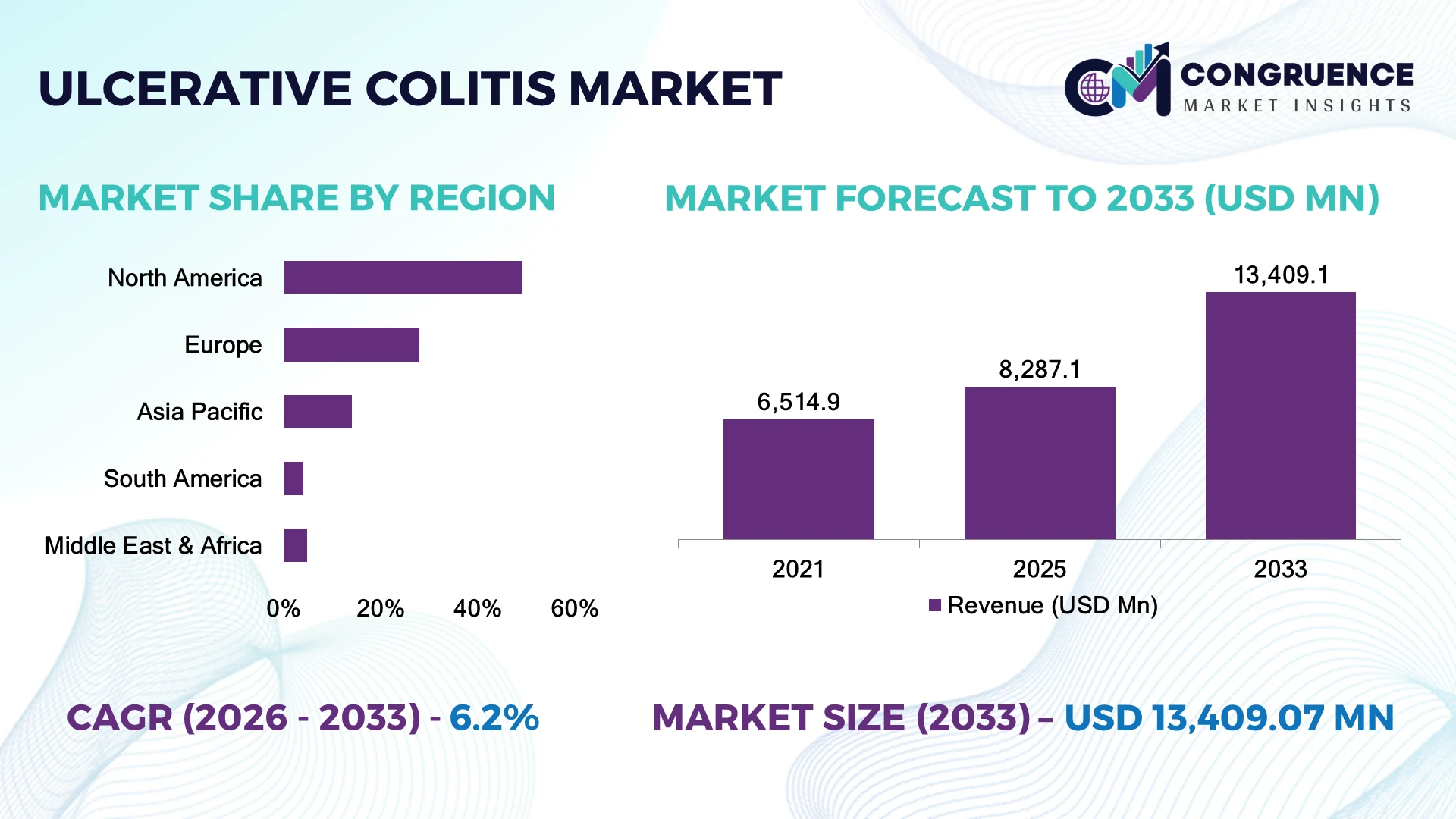
The U.S. dominates the global Ulcerative Colitis Market, contributing approximately 45–50% of global treatment spending, supported by extensive gastroenterology infrastructure and high uptake of biologics and targeted therapies. U.S. biologic utilization is substantially higher than in India, where access remains more concentrated in private and tertiary-care hospitals. Europe represents another major treatment base, while Asia-Pacific is expanding through improved diagnosis and specialty-care capacity. In 2026, subcutaneous and oral targeted therapies are gaining preference where they reduce infusion-center dependence by approximately 20–30%.
Strategically, pharmaceutical investment is shifting toward differentiated mechanisms, convenient administration, biomarker-guided treatment, and durable remission rather than conventional symptom control alone.
The Ulcerative Colitis Market is concentrated around biologics, JAK inhibitors, IL-targeted therapies, aminosalicylates, corticosteroids, and emerging precision-medicine approaches. Demand is strongest for moderate-to-severe disease management, steroid-sparing treatment, and therapies supporting sustained remission. Targeted therapies can reduce treatment-management complexity by approximately 15–25% in selected pathways. In 2026, home administration and remote monitoring are gaining importance as healthcare systems seek to reduce infusion burden and improve longitudinal disease management.
The Ulcerative Colitis Market is becoming strategically important as treatment competition shifts from conventional symptom control toward durable remission, mucosal healing, steroid avoidance, and patient-specific therapy sequencing. Pharmaceutical companies are competing through differentiated mechanisms, convenient administration, safety profiles, and evidence supporting earlier use in moderate-to-severe disease. This is increasing the strategic value of immunology pipelines and real-world treatment data.
A major market shift is the movement toward targeted therapies and digitally supported disease monitoring. Oral targeted treatments can reduce dependence on infusion-center infrastructure, while remote monitoring can improve follow-up efficiency by approximately 10–15%. North America maintains the strongest adoption of advanced therapies, whereas Europe emphasizes structured treatment pathways and value-based healthcare; India, China, and other Asian markets are expanding access through private specialty-care networks.
Over the next 2–3 years, pharmaceutical investment will increasingly focus on mechanism differentiation, biomarker-guided sequencing, subcutaneous delivery, and oral maintenance options. A practical deployment model combines gastroenterology consultations with fecal calprotectin testing, electronic symptom tracking, and remote treatment follow-up, reducing unnecessary hospital visits while supporting earlier intervention. Companies are therefore prioritizing licensing, clinical partnerships, specialty-care networks, and lifecycle management. Competitive leadership will depend on demonstrating durable clinical outcomes while making advanced therapy easier to access, administer, and monitor.
The shift toward advanced targeted therapies is the strongest structural growth driver, particularly for moderate-to-severe Ulcerative Colitis. Biologics and small-molecule therapies now account for an estimated 45–55% of treated moderate-to-severe patients in mature markets, while subcutaneous and oral regimens are expanding approximately 8–12% annually in treatment utilization. In the U.S., earlier escalation toward advanced therapies is increasing demand for differentiated mechanisms and steroid-sparing outcomes. Pharmaceutical companies are responding through IL-targeted, JAK, and next-generation immunology pipelines, alongside lifecycle extensions and alternative delivery formats. A key strategic shift is that treatment convenience increasingly influences therapy selection alongside efficacy, allowing companies with home-administration options to compete beyond clinical differentiation.
Advanced biologic and targeted therapies remain a significant affordability constraint, particularly outside high-income healthcare systems. Specialty medicines can represent 60–70% of treatment expenditure for moderate-to-severe patients receiving advanced therapy, while prior-authorization and reimbursement processes can delay treatment initiation by 10–20% in some managed-care pathways. India and other emerging markets face additional access pressure from limited specialist coverage and uneven insurance reimbursement. Biosimilar competition is improving affordability, but switching decisions remain influenced by physician confidence and patient stability. Companies are responding through patient-support programs, localized commercial partnerships, biosimilar portfolios, and differentiated dosing schedules. The non-obvious pressure is not simply drug price: fragmented reimbursement pathways can materially reduce conversion from diagnosed disease to advanced-therapy treatment.
Precision disease monitoring offers an underdeveloped opportunity as clinicians increasingly combine fecal calprotectin, endoscopic assessment, biomarkers, and digital symptom tracking to guide treatment sequencing. Remote monitoring can reduce unnecessary clinic interactions by approximately 15–25%, while earlier identification of disease activity can shorten treatment-adjustment cycles by 10–20%. The U.S., Germany, and Japan are well positioned for technology-enabled care because of established gastroenterology infrastructure and electronic health-record adoption. Pharmaceutical companies are increasingly integrating diagnostics, digital tools, and patient-support services around therapies rather than selling medicines independently. The strategic opportunity is to capture value from the treatment journey itself: companies that connect monitoring with therapy optimization can improve persistence while generating stronger real-world evidence for differentiated products.
Ulcerative Colitis requires sustained monitoring because treatment response, relapse risk, adverse events, and adherence vary considerably across patients. Approximately 20–30% of patients receiving advanced therapies can experience inadequate response or loss of response over time, increasing switching and escalation requirements. Specialist capacity is another constraint, with fragmented care pathways creating delays in endoscopy, biomarker testing, and treatment reassessment. In 2026, healthcare providers are also under pressure to integrate remote monitoring without creating additional data-management and cybersecurity burdens. Companies must therefore invest in interoperable patient platforms, longitudinal evidence generation, biomarker strategies, and physician education. The critical competitive issue is moving from episodic treatment decisions toward continuously optimized care without increasing administrative complexity for gastroenterology teams.
Oral Therapies Gain Treatment Share: Oral targeted therapies are gaining traction among eligible moderate-to-severe patients, with utilization increasing approximately 10–15% in mature treatment markets. Convenience reduces dependence on infusion infrastructure by 20–30%, while pharmaceutical companies are expanding oral lifecycle strategies and positioning JAK and emerging targeted mechanisms against injectable biologics.
Home Administration Reshapes Care: Subcutaneous biologics and self-injection programs are expanding as healthcare systems manage infusion-center capacity and workforce constraints. Home-based administration can reduce facility visits by approximately 30–50% for suitable patients and improve scheduling flexibility. Companies are investing in autoinjectors, patient training, digital adherence support, and specialty-pharmacy partnerships.
Treat-to-Target Monitoring Intensifies: Gastroenterology practices are increasingly combining symptom scores, fecal calprotectin, endoscopy, and electronic monitoring rather than relying exclusively on symptom improvement. Digital tracking can increase follow-up engagement by 15–25% and accelerate treatment reassessment by 10–20%. Therapy providers are integrating patient-support platforms to strengthen persistence and real-world evidence.
Biosimilars Reshape Biologic Economics: Biosimilar competition is increasing price pressure across established biologic classes, with discounts of approximately 20–40% versus reference products in selected markets. U.S. and European healthcare systems are expanding formulary management and switching protocols, while originator companies are emphasizing differentiated mechanisms, dosing convenience, patient services, and next-generation immunology portfolios.
Biologics Lead While Targeted Therapies Gain Momentum
Biologics represent the leading treatment type, accounting for approximately 48–52% of global spending on advanced Ulcerative Colitis therapies, supported by established efficacy, physician familiarity, and broad use in moderate-to-severe disease. Aminosalicylates remain important for mild-to-moderate disease, while corticosteroids retain a role in short-term induction but face increasing pressure from steroid-sparing treatment strategies. Small-molecule targeted therapies, particularly JAK inhibitors, are the fastest-growing category, with utilization expanding approximately 12–16% as oral administration and rapid onset appeal to patients and prescribers. Companies are responding through next-generation mechanisms, lifecycle extensions, and oral formulations.
The strategic shift is toward differentiated efficacy and administration convenience rather than simply expanding biologic portfolios. Biosimilar competition can reduce reference-product pricing by 20–40% in selected markets, increasing pressure on established biologics. Meanwhile, targeted therapies can reduce infusion dependence and improve treatment flexibility. Pharmaceutical companies are therefore prioritizing oral delivery, novel immune pathways, and combination treatment strategies to defend market position.
Moderate-to-Severe Disease Drives Advanced Therapy Demand
Treatment of moderate-to-severe Ulcerative Colitis represents the leading application, accounting for approximately 55–60% of pharmaceutical treatment demand because biologics and targeted therapies are concentrated in patients requiring escalation beyond conventional therapies. Mild-to-moderate disease remains a substantial segment, dominated by aminosalicylates and localized therapies, but treatment intensity is comparatively lower. The fastest-growing application is maintenance therapy, expanding approximately 10–14% as treat-to-target strategies emphasize sustained remission and prevention of relapse rather than episodic symptom control.
Advanced monitoring is reinforcing this transition, with biomarker and endoscopic assessment increasingly used to evaluate treatment effectiveness. Companies are expanding maintenance dosing options, subcutaneous delivery, patient-support programs, and real-world evidence generation. In contrast, acute flare management remains clinically important but is more episodic. The business implication is a shift toward longer-duration treatment relationships, making persistence, adherence, safety, and convenient administration increasingly important competitive variables.
Specialty Gastroenterology Centers Anchor Advanced Care
Specialty gastroenterology practices and hospitals represent the leading end-user group, accounting for approximately 65–70% of advanced Ulcerative Colitis treatment activity because they provide endoscopy, infusion services, multidisciplinary assessment, and access to complex immunology therapies. Specialty clinics and outpatient infusion networks are the fastest-growing organized care channel, expanding approximately 10–13% as biologic administration and disease monitoring move beyond traditional hospital settings. Primary-care providers remain important for diagnosis and referral but generally manage fewer advanced-therapy patients.
U.S. and European providers increasingly favor integrated care pathways combining gastroenterologists, specialty pharmacies, laboratory testing, and remote monitoring. Outpatient administration can reduce hospital-based treatment visits by approximately 20–30% for suitable patients, while centralized specialty-pharmacy services improve medication coordination. Pharmaceutical companies are targeting these channels through provider education, patient-support programs, digital adherence platforms, and specialty-pharmacy partnerships. The competitive priority is increasingly to control the full treatment pathway rather than simply secure prescription volume.
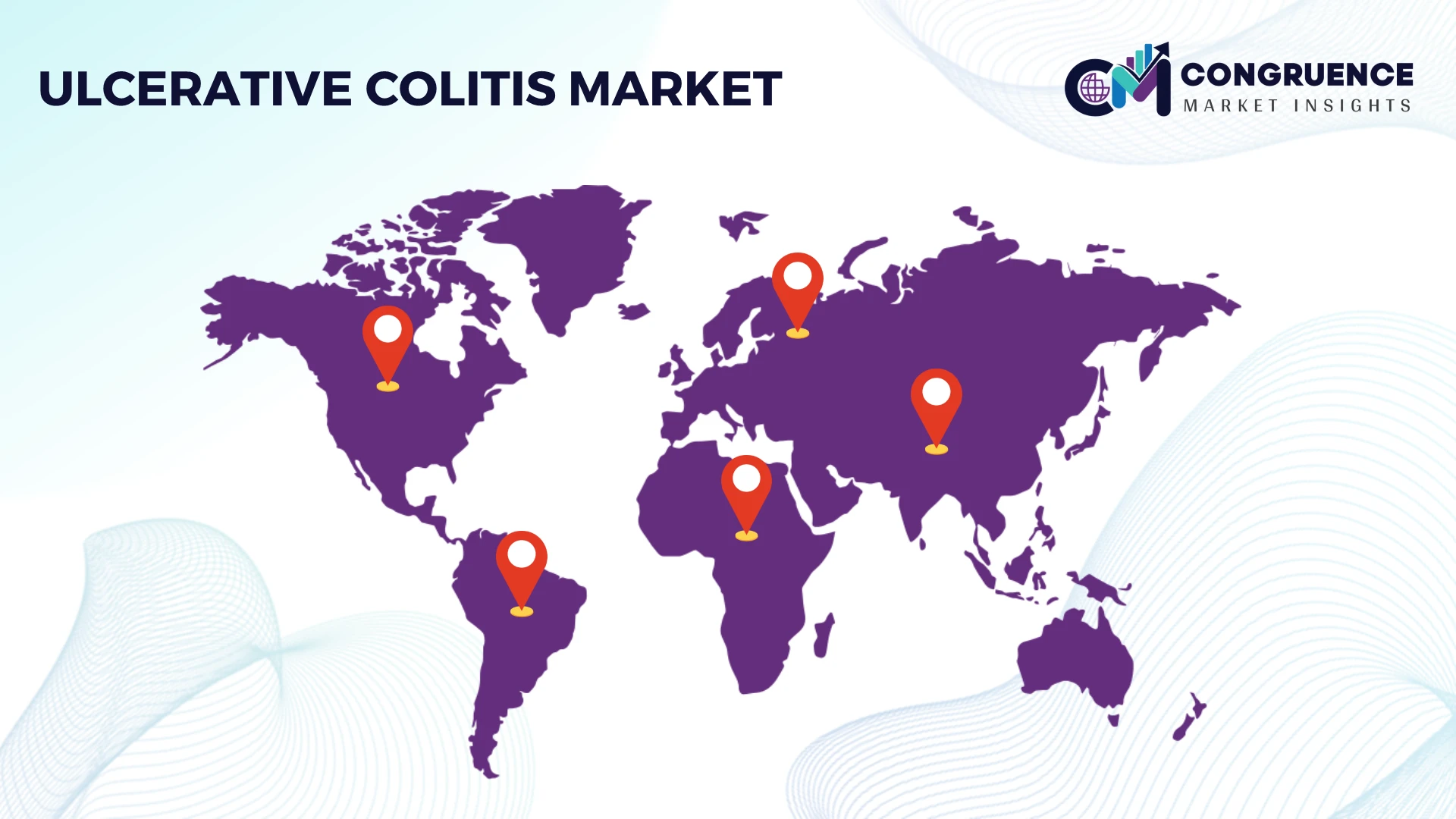
North America accounted for the largest market share at 49.2% in 2025 however, Asia-Pacific is expected to register the fastest growth, expanding at a CAGR of 7.1% between 2026 and 2033.
Advanced therapy penetration and specialty-care infrastructure reinforce U.S. leadership
North America remains the largest Ulcerative Colitis treatment market, supported by high biologic penetration, extensive gastroenterology networks, specialty pharmacies, and strong reimbursement infrastructure. The U.S. represents more than 85% of regional treatment activity, with advanced therapies accounting for approximately 50–55% of moderate-to-severe treatment. Subcutaneous biologics and oral targeted therapies are increasingly reducing dependence on infusion facilities, while fecal-calprotectin testing and treat-to-target monitoring strengthen treatment optimization. Pharmaceutical companies continue expanding immunology portfolios through licensing, lifecycle management, and specialty-pharmacy partnerships. Canada is adopting similar treatment technologies but at a more measured pace because of centralized reimbursement processes. The strategic priority is increasingly differentiated treatment sequencing rather than simply expanding patient volumes.
United States Market Outlook:
The U.S. combines the world's deepest gastroenterology infrastructure with rapid adoption of biologics, JAK inhibitors, and emerging targeted therapies. More than 1 million Americans live with ulcerative colitis, creating a substantial treatment base for advanced therapies and long-term disease monitoring. Academic medical centers and specialist networks are increasingly integrating endoscopy, biomarkers, electronic records, and remote follow-up. Pharmaceutical companies are prioritizing U.S. launches because specialty-care density and sophisticated reimbursement infrastructure support faster uptake of differentiated therapies.
Treat-to-target care strengthens demand for durable remission
Europe represents approximately 27–29% of global Ulcerative Colitis treatment activity, supported by established gastroenterology systems in Germany, the U.K., France, Italy, and Spain. Biosimilars have materially increased competitive pressure across established biologic categories, with selected products achieving 20–40% price reductions versus reference therapies. Healthcare systems are simultaneously expanding objective monitoring through endoscopy, biomarkers, and structured treatment pathways. Germany maintains strong access to advanced therapies, while the U.K. emphasizes cost-effectiveness and centralized treatment protocols. Pharmaceutical companies are responding with differentiated mechanisms, subcutaneous formulations, and evidence packages demonstrating long-term remission and reduced steroid dependence.
Germany Market Outlook:
Germany is a strategically important European market because of its extensive specialist network, hospital infrastructure, and established access to advanced immunology therapies. Gastroenterology practices increasingly use biologic and targeted treatments alongside objective disease monitoring, supporting earlier therapy adjustment. Biosimilar adoption is also reshaping procurement economics and increasing pressure on originator products. Pharmaceutical companies are therefore emphasizing novel mechanisms, administration convenience, and clinical differentiation rather than competing solely through established biologic brands.
Diagnosis expansion and private specialty care broaden treatment access
Asia-Pacific is the fastest-expanding Ulcerative Colitis treatment market as diagnosis improves and specialist gastroenterology capacity increases in China, India, Japan, South Korea, and Australia. The region accounts for approximately 13–15% of global treatment activity, with biologic penetration still substantially below North American levels. This creates significant headroom for advanced therapies as diagnosis and reimbursement improve. India and China are strengthening tertiary gastroenterology infrastructure, while Japan maintains comparatively mature adoption of targeted therapies. Pharmaceutical companies are expanding through local commercialization partnerships, patient-access programs, and lower-cost formulations. The non-obvious opportunity is earlier diagnosis, which can expand the treated population before patients progress to severe disease.
India Market Outlook:
India is becoming increasingly important because private hospitals and specialty gastroenterology centers are expanding access to advanced diagnostics and immunology therapies in Mumbai, Delhi, Bengaluru, Hyderabad, and Chennai. Biologic utilization remains concentrated among urban and higher-income patients, leaving substantial access headroom. Domestic pharmaceutical capabilities also support biosimilar development and localized manufacturing, potentially improving affordability. Companies are combining specialist partnerships, patient-support programs, and differentiated pricing strategies to broaden access beyond premium private hospitals.
Brazil-led specialty infrastructure supports gradual therapy modernization
South America represents approximately 5–7% of global Ulcerative Colitis treatment activity, with Brazil accounting for the largest share because of its population scale, specialist infrastructure, and comparatively developed private healthcare system. Argentina, Colombia, and Chile provide additional specialty-care capacity, although access to advanced therapies varies considerably. Biologic and targeted-therapy utilization remains concentrated in major metropolitan centers, where gastroenterology specialists and diagnostic facilities are more accessible. Brazil's private sector is increasingly adopting biosimilars and structured disease-monitoring pathways, while public systems remain more cost-sensitive. Pharmaceutical companies are responding through local partnerships, patient-access initiatives, and differentiated commercial strategies that balance advanced therapy adoption with reimbursement constraints.
Brazil Market Outlook:
Brazil is the region's principal treatment market, supported by large public and private healthcare networks and concentrated specialist capacity in São Paulo, Rio de Janeiro, Brasília, and Belo Horizonte. Advanced therapies are increasingly incorporated into specialist treatment pathways, while biosimilars are improving affordability within constrained healthcare budgets. Private gastroenterology centers are also expanding diagnostic capabilities, including endoscopy and laboratory monitoring. Pharmaceutical companies increasingly rely on local distribution partnerships and patient-support programs to improve therapy persistence and geographic access.
Healthcare modernization improves access to advanced inflammatory-disease care
Middle East & Africa accounts for approximately 5–6% of global Ulcerative Colitis treatment activity, with Saudi Arabia, the UAE, Israel, and South Africa providing the strongest specialty-care infrastructure. Saudi Arabia and the UAE are investing heavily in tertiary hospitals, digital health, and specialized gastroenterology services, while private providers increasingly introduce biologics and targeted therapies. Advanced treatment penetration remains uneven, with affordability and specialist availability limiting access in several African markets. Selected private centers are expanding remote consultations and centralized medication-management programs. Pharmaceutical companies are responding through distributor partnerships, local market-access strategies, and specialty-care collaborations, while governments increasingly prioritize chronic-disease infrastructure and digital patient management.
Saudi Arabia Market Outlook:
Saudi Arabia is emerging as a strategically important market through healthcare modernization and substantial investment in specialized clinical infrastructure. Riyadh and Jeddah concentrate advanced gastroenterology services, including biologic treatment, endoscopy, and multidisciplinary inflammatory bowel disease management. Digital health integration is strengthening remote follow-up and medication coordination, while private healthcare expansion is broadening access to specialty services. Pharmaceutical companies are prioritizing partnerships with major hospital groups and specialty providers to improve advanced-therapy access and establish stronger long-term treatment pathways.
AbbVie, Takeda, Johnson & Johnson, Pfizer, and Eli Lilly compete as global leaders, while regional pharmaceutical companies challenge them through biosimilar pricing and localized access. The top five players collectively account for approximately 45–50% of advanced ulcerative colitis therapy sales. Competition centers on clinical efficacy, administration convenience, safety, pricing, and treatment persistence. Subcutaneous delivery can reduce infusion-related facility requirements by 20–30%, while biosimilars can create 20–40% price pressure. Leaders are expanding through indication extensions, lifecycle management, licensing, and specialty-pharmacy partnerships. Johnson & Johnson and Lilly are emphasizing IL-23 differentiation and convenient administration, while Takeda strengthens established biologic positioning through flexible delivery. The competitive shift is moving from conventional biologic scale toward mechanism differentiation, oral or self-administered therapies, and measurable remission outcomes. High clinical-development costs, regulatory requirements, physician relationships, and payer access remain significant barriers. Winning requires differentiated efficacy, convenient delivery, competitive economics, and integrated patient-support infrastructure.
Ulcerative colitis treatment technology is shifting toward targeted immune modulation, subcutaneous delivery, and objective disease monitoring. IL-23 inhibitors, JAK inhibitors, therapeutic drug monitoring, fecal-calprotectin testing, and electronic symptom tracking are increasingly integrated into specialist pathways. Digital monitoring can improve follow-up efficiency by 10–15%, while biomarker-led reassessment can shorten treatment-adjustment cycles by 10–20%.
Subcutaneous autoinjectors and prefilled pens are gaining adoption because they reduce dependence on infusion infrastructure and improve administration flexibility. Fully subcutaneous regimens can cut facility-based administration requirements by roughly 20–30% for suitable patients versus infusion-led pathways. Electronic patient-reported outcomes and remote monitoring can improve engagement by approximately 10–15%. Compared with paper-heavy follow-up, integrated digital pathways can reduce administrative handling by 15–20%, benefiting large gastroenterology networks and specialty-pharmacy partners.
From 2026–2028, competitive advantage will increasingly depend on combining drug innovation with diagnostics, adherence technology, and patient-support infrastructure. AI-assisted treatment stratification could improve identification of patients needing escalation by 5–10%, while connected monitoring platforms strengthen longitudinal evidence generation and enable earlier intervention when symptoms or inflammatory markers deteriorate between scheduled specialist visits. This strengthens payer negotiations and portfolio differentiation.
April 2026 Johnson & Johnson advanced pediatric IBD positioning after Stelara gained U.S. approval for ulcerative colitis in patients aged two years and older. The expansion broadens eligible treatment populations and strengthens lifecycle value across inflammatory bowel disease. Source: jnj.comU.S. Food and Drug Administration
October 2025 Eli Lilly secured U.S. approval for a single-injection monthly Omvoh maintenance regimen in ulcerative colitis, replacing two injections. The dosing simplification strengthens convenience, supports home administration, and differentiates Lilly within targeted biologic treatment pathways for providers. Source: lilly.comEli Lilly and Company
September 2025 Johnson & Johnson received U.S. approval for subcutaneous induction of Tremfya in ulcerative colitis, creating a fully subcutaneous regimen. The change expands self-administration flexibility and increases competitive pressure on biologics requiring intravenous induction during treatment initiation. Source: jnj.comJohnson & Johnson Investor Relations
April 2024 Takeda expanded Entyvio’s U.S. availability to both intravenous and subcutaneous maintenance administration across inflammatory bowel disease. The single-dose pen supports home treatment and gives clinicians greater administration flexibility for long-term ulcerative colitis management and patient convenience. Source: takeda.com Takeda
The report covers Ulcerative Colitis by type, including biologics, small-molecule targeted therapies, aminosalicylates, corticosteroids, and other treatment categories; by application across mild-to-moderate disease, moderate-to-severe disease, induction, and maintenance; and by end-user across hospitals, specialty gastroenterology centers, clinics, and other treatment providers. Regional coverage includes North America, Europe, Asia-Pacific, South America, and Middle East & Africa.
The analysis evaluates biologic and targeted-therapy adoption, biosimilar penetration, subcutaneous delivery, oral therapies, biomarker-based monitoring, endoscopic assessment, digital patient management, and specialty-pharmacy integration. Quantitative indicators include approximately 45–50% concentration of advanced-therapy activity among leading companies and 20–30% potential reduction in facility-based administration through suitable self-administered therapies. The report supports investment planning, geographic expansion, portfolio positioning, partnership decisions, competitive benchmarking, and strategic market direction through 2026–2033.
| Report Attribute/Metric | Report Details |
|---|---|
|
Market Revenue in 2025 |
USD 8,287.1 Million |
|
Market Revenue in 2033 |
USD 13,409.1 Million |
|
CAGR (2026 - 2033) |
6.2% |
|
Base Year |
2025 |
|
Forecast Period |
2026 - 2033 |
|
Historic Period |
2021 - 2025 |
|
Segments Covered |
By Type
By Application
By End-User
|
|
Key Report Deliverable |
Revenue Forecast, Growth Trends, Market Dynamics, Segmental Overview, Regional and Country-wise Analysis, Competition Landscape |
|
Region Covered |
North America, Europe, Asia-Pacific, South America, Middle East, Africa |
|
Key Players Analyzed |
AbbVie Inc., Takeda Pharmaceutical Company Limited, Johnson & Johnson, Pfizer Inc., Eli Lilly and Company, Bristol Myers Squibb Company, Roche Holding AG, Novartis AG, Amgen Inc., UCB S.A., Gilead Sciences, Inc., Celltrion Inc., Sandoz Group AG |
|
Customization & Pricing |
Available on Request (10% Customization is Free) |




