
Reports
The Global Teeth Whitening Market was valued at USD 893.0 Million in 2025 and is anticipated to reach a value of USD 1,343.7 Million by 2033 expanding at a CAGR of 5.24% between 2026 and 2033. Growth is being driven by rising cosmetic dentistry procedures, wider adoption of peroxide-free whitening formulations, and rapid expansion of direct-to-consumer oral care brands across developed and emerging economies.
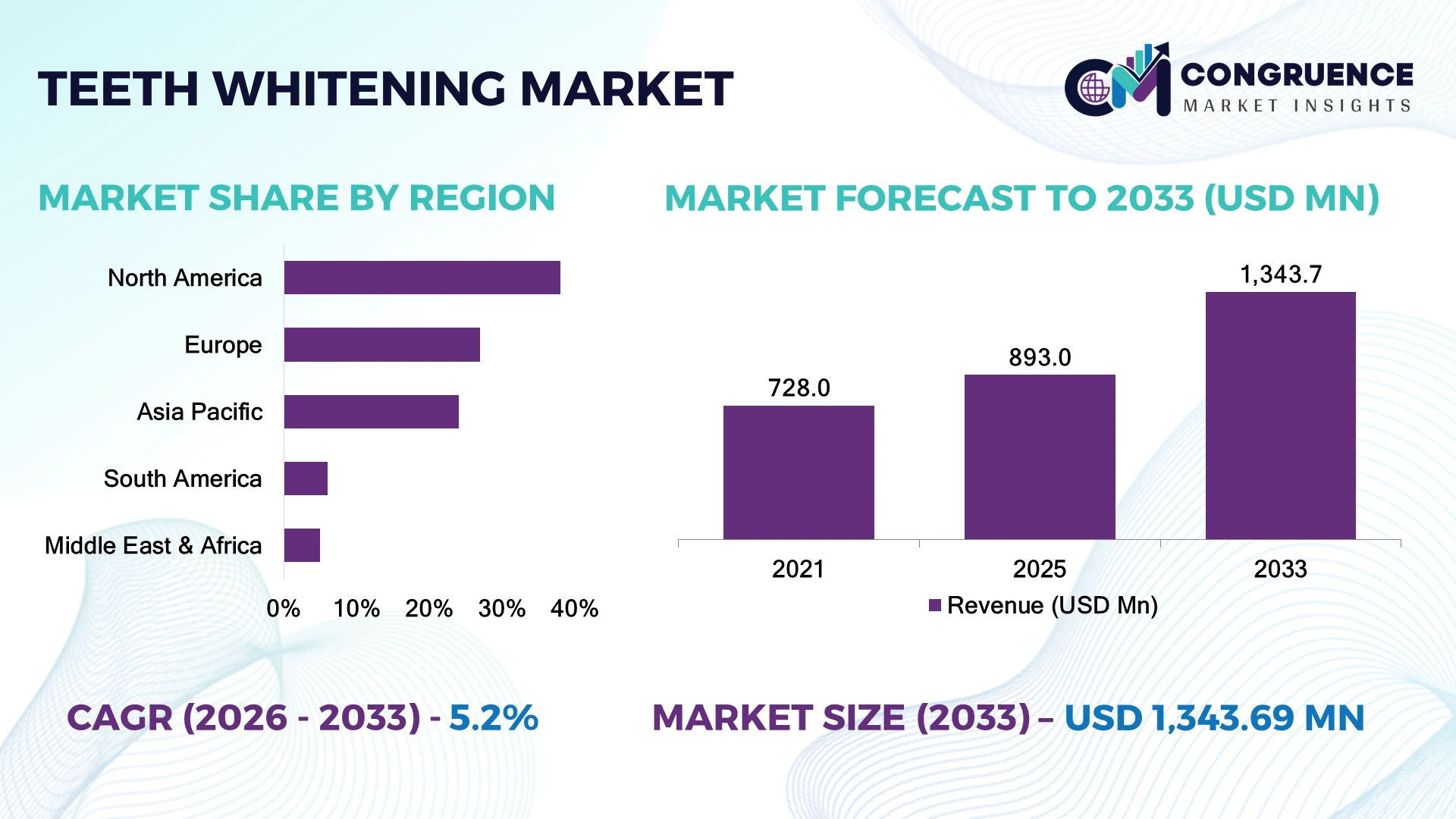
The United States dominates the global teeth whitening market with an estimated 34% share, supported by more than 200,000 practicing dental professionals, strong cosmetic dentistry penetration, and high consumer spending on aesthetic oral care. Over 65% of adults have used at least one whitening product category, while digital oral-care subscriptions continue expanding. Compared with Germany, where professional whitening adoption remains concentrated in urban dental clinics, the U.S. benefits from broader retail distribution and higher e-commerce penetration. Continued investments in premium whitening technologies and dentist-supervised treatments reinforce its leadership position despite evolving consumer safety regulations.
Strategic implication companies prioritizing clinically validated formulations, omnichannel distribution, and premium aesthetic positioning are securing stronger competitive differentiation and customer retention.
Market Size & Growth: USD 893.0 Million in 2025, projected to reach USD 1,343.7 Million by 2033, supported by expanding cosmetic dentistry adoption and advanced whitening formulations.
Top Growth Drivers: Professional whitening procedures (+18%), e-commerce oral care sales (+22%), and premium aesthetic dental treatments (+15%) are accelerating market expansion.
Short-Term Forecast: By 2028, treatment delivery efficiency is expected to improve by 20% through LED-assisted whitening systems and digital consultation models.
Emerging Technologies: AI-powered smile assessment, peroxide-free biomimetic whitening agents, and smart LED whitening kits are improving treatment precision and user compliance.
Regional Leaders: North America (USD 470 Million), Europe (USD 310 Million), and Asia-Pacific (USD 290 Million) lead adoption through cosmetic dentistry expansion, retail innovation, and digital health integration.
Consumer/End-User Trends: Nearly 62% of whitening product buyers prefer at-home solutions, while online oral-care purchases have increased by over 25% since 2022.
Pilot/Case Example: In 2024, several dental chains deploying LED whitening systems reported treatment session reductions of approximately 30% while maintaining patient satisfaction levels.
Competitive Landscape: The top five companies control nearly 42% of market activity, led by Colgate-Palmolive, Procter & Gamble, Unilever, Ultradent Products, and Philips Oral Healthcare.
Regulatory & ESG Impact: Enhanced product safety requirements have reduced high-concentration peroxide usage by nearly 12%, encouraging safer consumer formulations.
Investment & Funding: More than USD 250 Million in product innovation, manufacturing expansion, and strategic partnerships has been directed toward premium oral-care categories.
Innovation & Future Outlook: Next-generation whitening strips, personalized treatment algorithms, and subscription-based oral-care ecosystems are reshaping long-term competitive strategies.
Teeth whitening products continue gaining traction across cosmetic dentistry clinics, pharmacies, and digital retail platforms as consumers prioritize aesthetic oral health. Product innovation is increasingly centered on peroxide-free ingredients, enamel-protection technologies, and LED-enhanced treatment systems. Nearly 40% of new product launches now emphasize sensitivity reduction. Manufacturers are also strengthening regional sourcing and regulatory compliance capabilities, creating a more resilient and quality-focused industry environment while setting the stage for broader strategic market expansion.
The teeth whitening market has evolved into a strategic segment of the broader oral care ecosystem as aesthetic dentistry becomes a competitive differentiator for clinics, consumer brands, and healthcare providers. Companies are increasingly leveraging digital consultations, subscription-based oral-care programs, and personalized treatment pathways to strengthen customer engagement. Regulatory scrutiny surrounding whitening agents is also encouraging a shift toward clinically validated and safer formulations.
Technology innovation is reshaping operational performance across both professional and consumer channels. Modern LED-assisted whitening systems can reduce treatment duration by nearly 25% compared with conventional chairside procedures while improving treatment consistency. In the United States, high retail penetration and direct-to-consumer sales support large-scale deployment, whereas South Korea is gaining momentum through advanced cosmetic dentistry technologies and premium oral-care innovation. This contrast highlights different competitive pathways based on consumer behavior and technology adoption.
Recent deployment examples include dental service organizations integrating digital smile assessment tools to improve treatment recommendations and conversion rates. Manufacturers are responding through partnerships with dental networks, targeted product launches, and regional manufacturing investments. Over the next two to three years, expanding digital engagement, product personalization, and safety-focused innovation will increasingly determine market leadership, making operational agility and brand credibility critical competitive advantages.
Cosmetic dentistry has become a structural growth engine for the teeth whitening market as patient preferences increasingly shift toward aesthetic oral treatments. More than 55% of cosmetic dental consultations now include whitening-related discussions, while premium whitening procedures have recorded adoption increases exceeding 18% in major urban markets. The rapid growth of dental service organizations in the United States and South Korea has improved treatment accessibility and patient acquisition. Rising social-media-driven appearance awareness and digital smile assessment technologies are further accelerating procedure volumes. In response, companies are expanding professional product portfolios, investing in LED-enhanced systems, and forming partnerships with dental clinic networks. A notable strategic insight is that whitening treatments increasingly function as entry-point services, enabling providers to cross-sell higher-value cosmetic dental procedures and strengthen long-term patient retention.
Product safety regulations remain a significant structural limitation, particularly for formulations containing higher concentrations of peroxide-based whitening agents. More than 20 countries maintain strict concentration thresholds, while compliance-related reformulation costs have increased by approximately 10–15% for some manufacturers. Regulatory differences between the United States, European countries, and parts of Asia create product standardization challenges and increase operational complexity. These restrictions can delay product launches, limit formulation flexibility, and reduce economies of scale. To mitigate these pressures, manufacturers are diversifying ingredient sourcing, investing in peroxide-free alternatives, and localizing product development strategies. A key operational insight is that companies with robust regulatory expertise and adaptable formulation platforms are achieving faster market entry and reducing compliance-related disruptions across multiple jurisdictions.
The emergence of personalized oral-care solutions presents a substantial opportunity for market participants. Nearly 45% of consumers express preference for customized dental care recommendations, while digital oral-health platforms have expanded user engagement by over 30% in several developed markets. AI-driven smile analysis, connected whitening devices, and subscription-based treatment programs are creating differentiated customer experiences. Japan and South Korea are actively integrating digital diagnostics into cosmetic dentistry workflows, improving treatment accuracy and customer satisfaction. Companies are accelerating R&D investments, collaborating with dental technology providers, and expanding digital health ecosystems to capture these opportunities. A non-obvious strategic advantage lies in the ability to combine whitening products with broader preventive oral-care services, creating recurring customer relationships and stronger lifetime value rather than relying solely on one-time product sales.
Ensuring consistent whitening outcomes across professional clinics, retail products, and direct-to-consumer channels remains a major execution challenge. Consumer surveys indicate that nearly 28% of users discontinue whitening treatments due to sensitivity concerns or inconsistent results. Product performance variations between supervised and self-administered treatments can affect customer trust and brand reputation. The increasing complexity of omnichannel distribution further complicates quality control and customer education efforts. Companies must invest in clinical validation, standardized treatment protocols, and digital support tools to improve user outcomes. Advanced markets such as the United States are already emphasizing evidence-based product claims and post-treatment monitoring. A critical strategic insight is that long-term competitiveness will depend less on product availability and more on the ability to deliver predictable, safe, and repeatable whitening experiences across every customer touchpoint.
Smart LED Whitening Expansion LED-assisted whitening systems are rapidly moving from premium clinics into mainstream dental networks. Treatment times have declined by nearly 25%, while patient throughput has improved by approximately 18% in high-volume practices. Digital shade-matching tools are now used in over 30% of advanced cosmetic consultations. Companies are scaling device partnerships and integrating diagnostic software to improve treatment consistency and operational efficiency.
Peroxide-Free Formula Acceleration Regulatory scrutiny around high-concentration whitening agents has increased demand for alternative formulations. Peroxide-free product launches grew by roughly 22% during the past two years, while sensitivity-related consumer complaints declined by nearly 15% among newer formulations. Manufacturers are restructuring product portfolios, expanding clinical validation programs, and increasing investment in enamel-protection technologies to strengthen brand differentiation.
Direct-To-Consumer Channel Growth Online oral-care platforms continue reshaping purchasing behavior. Subscription-based whitening programs have increased customer retention rates by approximately 20%, while digital consultations have reduced customer acquisition costs by nearly 12%. U.S.-based oral-care brands are expanding fulfillment capabilities and automating customer engagement workflows. A notable shift is the use of behavioral analytics to personalize treatment recommendations and improve repeat purchase frequency.
Premium Cosmetic Dentistry Positioning Whitening treatments are increasingly packaged alongside broader aesthetic dental services. Cross-selling conversion rates have improved by nearly 28% in integrated dental practices, while premium treatment package adoption has risen by approximately 17%. Labor shortages in specialized cosmetic dentistry are driving workflow automation and standardized treatment protocols. Companies are expanding training partnerships and investing in clinical support technologies to maintain service quality at scale.
Whitening strips remain the leading segment, accounting for approximately 36% of market demand due to affordability, retail availability, and ease of use. Their scalability across pharmacies, supermarkets, and e-commerce platforms makes them the preferred choice for mass-market consumers. Whitening toothpastes continue to hold a significant position with nearly 28% share, supported by daily-use convenience and broad brand penetration. Manufacturers are increasingly combining whitening and enamel-protection benefits to strengthen customer retention and product differentiation.
Professional whitening products represent the fastest-growing segment as consumers seek faster and more predictable outcomes. Adoption of clinic-grade gels and LED-compatible whitening systems has increased by more than 20% across major cosmetic dentistry markets. Whitening pens and advanced gel formulations are also gaining traction among younger consumers due to portability and targeted application. Companies are expanding premium product portfolios, forming dental partnerships, and investing in clinical efficacy studies. As investment priorities shift toward higher-performance solutions, product innovation is increasingly focused on treatment speed, sensitivity reduction, and long-term whitening durability.
At-home whitening applications lead the market with an estimated 58% share, driven by convenience, lower treatment costs, and strong online retail penetration. Consumers increasingly prefer whitening strips, gels, and LED kits that can be used without clinic appointments. Product accessibility and digital marketing effectiveness continue to support high-volume adoption. Companies are expanding direct-to-consumer distribution channels and introducing personalized treatment options to strengthen engagement and repeat purchases.
Professional in-office whitening is the fastest-growing application segment, supported by rising demand for rapid aesthetic enhancement and predictable treatment outcomes. Treatment adoption has increased by nearly 18% among cosmetic dentistry patients seeking immediate results. Hybrid whitening programs that combine clinic procedures with take-home maintenance products are becoming increasingly common. Meanwhile, cosmetic dental maintenance applications continue evolving through subscription models and digital monitoring tools. Companies are scaling clinic partnerships, integrating digital consultation workflows, and improving treatment standardization. Demand is becoming operationally critical in premium dental practices where whitening increasingly serves as a gateway service for broader cosmetic procedures.
Dental clinics represent the dominant end-user group with approximately 48% market share, supported by procedure volume, professional treatment capabilities, and access to advanced whitening technologies. High patient trust and clinical supervision continue to concentrate demand within organized dental networks. Large clinic chains are increasingly adopting digital diagnostics and standardized whitening protocols, improving operational consistency and treatment conversion rates. Hospitals maintain a smaller but strategically relevant presence, particularly in integrated oral-health service environments.
Individual consumers constitute the fastest-growing end-user segment as digital commerce, subscription models, and home-use technologies improve accessibility. Consumer purchases of whitening products have expanded by more than 20% through online channels, supported by increasing interest in aesthetic self-care. Beauty and cosmetic service providers are also strengthening their position by offering complementary whitening-related services where regulations permit. Companies are responding through targeted product customization, flexible pricing strategies, influencer-led marketing, and ecosystem partnerships. Future demand is steadily shifting toward digitally engaged consumers who prioritize convenience, personalization, and ongoing oral-care maintenance rather than single-purchase treatments.
North America accounted for the largest market share at 38% in 2025 however, Asia-Pacific is expected to register the fastest growth, expanding at a CAGR of 6.8% between 2026 and 2033.
North America represents the largest concentration of teeth whitening demand, supported by advanced cosmetic dentistry infrastructure, high consumer spending on aesthetic treatments, and strong retail distribution networks. The region accounts for approximately 38% of global market activity, with the United States driving the majority of professional whitening procedures and premium product sales. Dental service organizations continue expanding whitening treatment portfolios through digital consultations, AI-assisted smile assessments, and standardized treatment protocols. More than 30% of large cosmetic dental practices have integrated digital shade-matching technologies to improve treatment consistency and patient engagement. Strategic partnerships between oral-care brands and dental networks are strengthening market penetration while improving product accessibility through both clinical and consumer channels.
United States Market Outlook: The United States remains the operational center of the global teeth whitening industry due to its extensive cosmetic dentistry ecosystem, strong consumer awareness, and advanced oral-care innovation capabilities. More than 200,000 dental professionals support widespread deployment of whitening treatments across independent practices and multi-location dental organizations. Direct-to-consumer oral-care brands continue expanding subscription models and digital engagement platforms. The country also leads in clinical research activity and commercialization of LED-assisted whitening technologies, creating a competitive advantage in product development, patient adoption, and premium treatment positioning.
Europe accounts for approximately 27% of global teeth whitening activity and is characterized by strong regulatory oversight, premium oral-care consumption, and high product quality standards. Market development is increasingly influenced by stricter whitening ingredient regulations, encouraging manufacturers to accelerate peroxide-free and sensitivity-focused product innovation. Professional whitening services remain concentrated in Germany, the United Kingdom, and France, while pharmacy-led distribution continues supporting consumer product sales. Product reformulation initiatives have expanded significantly as companies adapt to evolving compliance requirements. Cross-border partnerships between oral-care manufacturers and dental associations are also strengthening consumer education and treatment standardization across key markets.
Germany Market Outlook: Germany serves as the region’s most influential market due to its advanced dental care infrastructure, strong manufacturing base, and emphasis on clinically validated oral-health solutions. The country hosts numerous dental technology providers and premium oral-care manufacturers that actively invest in research and product development. More than 70% of dental practices utilize digital diagnostic tools, supporting greater treatment precision and patient consultation efficiency. Germany's regulatory discipline and technology-focused dental ecosystem continue reinforcing its leadership in professional whitening adoption and next-generation oral-care innovation.
Asia-Pacific accounts for nearly 24% of global market participation and represents the fastest-evolving operational landscape for teeth whitening products and services. Rapid urbanization, expanding middle-class populations, and rising cosmetic dentistry awareness are accelerating demand across China, Japan, South Korea, and India. E-commerce channels have become critical distribution engines, accounting for a growing share of whitening product purchases. Cosmetic dental clinics are expanding rapidly in major metropolitan areas, while local manufacturers are increasing production capacity to meet rising demand. Several oral-care companies have expanded regional manufacturing operations by more than 15% during the past two years to improve supply responsiveness and reduce logistics complexity.
China Market Outlook: China is the region’s most strategically significant market due to its large consumer base, expanding dental clinic infrastructure, and rapidly growing digital commerce ecosystem. Online oral-care product sales continue increasing through major e-commerce platforms, while cosmetic dentistry adoption is strengthening among younger urban consumers. Domestic manufacturers are investing heavily in whitening strips, LED whitening devices, and premium oral-care products. The combination of manufacturing scale, digital retail leadership, and rising consumer spending on personal appearance positions China as a key center for future product deployment and industry expansion.
South America accounts for approximately 6% of global teeth whitening activity, with growth supported by increasing cosmetic dentistry awareness and improving access to private dental services. Brazil and Argentina continue driving regional demand through expanding dental clinic networks and growing consumer interest in aesthetic procedures. Whitening treatments are increasingly being bundled with broader cosmetic dental offerings, improving patient acquisition and service utilization. Infrastructure limitations and uneven access to advanced dental technologies remain challenges in some markets; however, private-sector investments continue improving treatment availability. Several regional dental groups have expanded cosmetic treatment offerings by more than 12% during recent years, reflecting stronger consumer engagement with elective oral-care services.
Brazil Market Outlook: Brazil represents the dominant market within South America due to its large dental workforce, strong cosmetic dentistry culture, and well-developed private healthcare sector. The country has one of the highest concentrations of dental professionals globally, supporting extensive deployment of whitening procedures and aesthetic dental services. Digital marketing and social-media influence continue strengthening consumer demand for appearance-focused treatments. Ongoing investment in private dental infrastructure and premium treatment offerings positions Brazil as the region’s primary center for cosmetic oral-care innovation and service delivery.
The Middle East & Africa region accounts for roughly 5% of global market activity and is increasingly influenced by private healthcare investment, premium dental clinic expansion, and healthcare modernization initiatives. Demand is concentrated in Gulf countries where aesthetic healthcare services continue gaining importance among affluent consumer groups. Dental providers are expanding cosmetic treatment portfolios while adopting advanced whitening systems and digital patient management platforms. Healthcare infrastructure upgrades and rising medical tourism activity are strengthening service availability in several key markets. Recent private-sector investments have increased cosmetic dentistry capacity by approximately 10% across major urban healthcare centers, supporting higher treatment accessibility and operational efficiency.
Saudi Arabia Market Outlook: Saudi Arabia has emerged as the region’s most influential market due to substantial healthcare modernization efforts, expanding private dental networks, and growing consumer spending on aesthetic healthcare services. Cosmetic dentistry clinics continue increasing their investment in advanced treatment technologies and patient experience enhancements. Large urban centers are witnessing stronger adoption of premium whitening procedures, supported by healthcare infrastructure development and digital health integration. The country's focus on private healthcare expansion and modernization is creating favorable conditions for long-term deployment of advanced oral-care solutions and cosmetic dental services.
The Teeth Whitening Market is characterized by competition between global oral-care leaders such as Procter & Gamble, Colgate-Palmolive, Unilever, Philips Oral Healthcare, and Ultradent Products, and regional cosmetic dentistry brands competing through niche formulations and localized distribution. The top five players collectively account for approximately 42% of market activity, creating a moderately consolidated structure. Competition is centered on technology performance, treatment speed, brand credibility, and omnichannel reach rather than price alone. LED-assisted whitening systems improve treatment efficiency by nearly 25%, while premium whitening products command price premiums exceeding 15% in developed markets. Companies are strengthening positions through product innovation, dentist partnerships, direct-to-consumer platforms, and supply-chain optimization. Global brands leverage retail scale and marketing power, while professional whitening specialists compete through clinical validation and practitioner loyalty. The current competitive shift favors science-backed formulations and personalized whitening solutions. Regulatory compliance, consumer trust, and clinical efficacy remain key entry barriers. Winning requires differentiated technology, strong dental channel relationships, proven treatment outcomes, and scalable consumer engagement capabilities.
Colgate-Palmolive Company
Unilever PLC
Philips Oral Healthcare
Ultradent Products Inc.
Church & Dwight Co., Inc.
SmileDirectClub
White Glo
Supersmile LLC
KöR Whitening
Beaming White
Prestige Consumer Healthcare Inc.
Go Smile
Snow Cosmetics LLC
Technology innovation is redefining treatment delivery, product performance, and customer engagement across the teeth whitening ecosystem. LED-assisted whitening systems have become mainstream in professional settings, reducing treatment duration by approximately 25% while improving procedural consistency. Digital shade-analysis tools are now deployed in nearly 30% of advanced cosmetic dental practices, supporting more accurate treatment planning and patient communication. These technologies enhance clinic productivity while improving treatment predictability and patient satisfaction.
Emerging technologies are increasingly focused on sensitivity reduction and treatment personalization. New peroxide-free biomimetic formulations reduce post-treatment sensitivity by nearly 15% compared with conventional alternatives. AI-enabled smile assessment platforms support personalized treatment recommendations and have improved consultation conversion rates by approximately 20% in digitally integrated dental networks. Compared with traditional visual assessments, digital diagnostic workflows provide greater consistency and faster treatment customization, creating a meaningful operational advantage for technologically advanced providers.
Disruptive innovation is shifting competition toward connected oral-care ecosystems. Smart whitening devices, subscription-based treatment management, and integrated consumer engagement platforms are gaining traction among premium brands. Companies with strong digital capabilities benefit through higher retention and recurring product usage. Between 2026 and 2028, broader adoption of AI-assisted diagnostics, connected whitening devices, and personalized treatment pathways is expected to strengthen competitive differentiation, making early technology deployment increasingly important for long-term market leadership.
January 2025 – Ultradent Products launched Opalescence™ Home Advanced prefilled whitening trays featuring UltraFit™ technology and injection-molded gel distribution. The product delivers whitening results of up to 4–5 shades lighter, improving at-home treatment consistency while expanding the company’s professional-grade consumer portfolio. Source: ultradent.com
March 2025 – Colgate-Palmolive introduced the latest Colgate Optic White Whitening Pen following more than 80 rounds of testing. The redesigned system improves application precision and user experience, strengthening Colgate’s position in the fast-growing direct-to-consumer whitening segment. Source: colgatepalmolive.com
October 2025 – Ultradent Products unveiled a comprehensive rebrand of its Opalescence™ whitening portfolio. The professional whitening franchise has now transformed over 100 million smiles worldwide, reinforcing brand leadership while improving product family alignment across clinical and consumer channels. Source: ultradent.com
2026 – Opalescence™ Whitening expanded its consumer product lineup with new whitening categories including mouthwash and advanced form-fitting whitening strips. The expansion supports broader consumer adoption and strengthens cross-category penetration for the world’s leading professional whitening franchise. Source: opalescence.com
The Teeth Whitening Market Report provides comprehensive analysis of industry structure, competitive positioning, technology evolution, and demand trends across the global oral-care ecosystem. The study evaluates key product categories including whitening strips, whitening toothpastes, professional whitening products, gels, and whitening pens. It assesses adoption patterns across at-home whitening, professional in-office procedures, and cosmetic dental maintenance applications while examining purchasing behavior among dental clinics, consumers, hospitals, and other end-user groups.
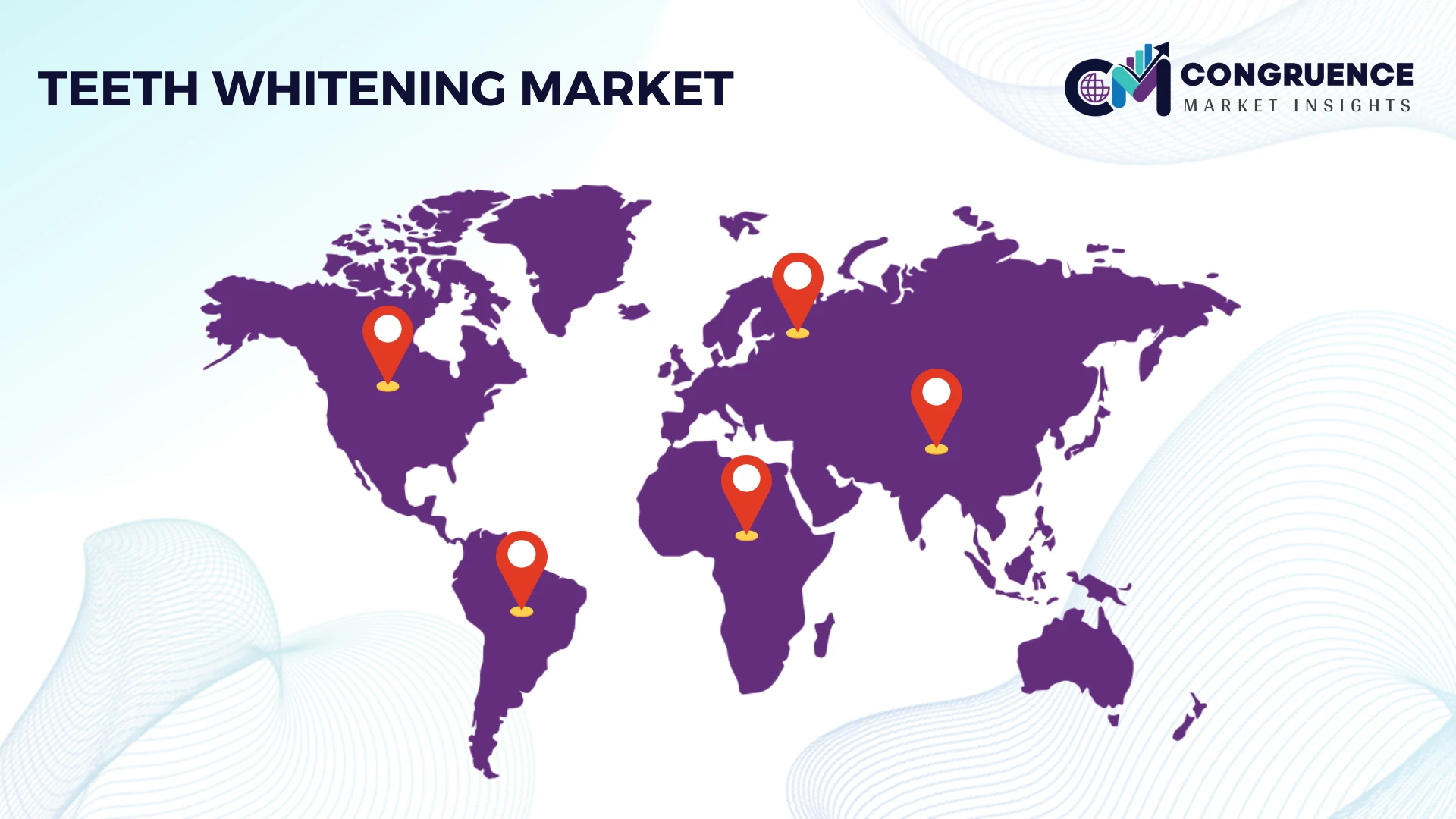
The report covers North America, Europe, Asia-Pacific, South America, and the Middle East & Africa, highlighting deployment intensity, technology adoption, and operational market dynamics. Analysis includes digital diagnostics, LED-assisted whitening systems, peroxide-free formulations, and emerging personalized treatment technologies. More than 40% of market activity remains concentrated among leading global brands, making competitive strategy and innovation critical evaluation areas. The report supports investment planning, expansion decisions, partnership strategies, and long-term competitive positioning by identifying operational trends, adoption shifts, and strategic opportunities shaping industry direction between 2026 and 2033.
| Report Attribute / Metric | Details |
|---|---|
| Market Revenue (2025) | USD 893.0 Million |
| Market Revenue (2033) | USD 1,343.7 Million |
| CAGR (2026–2033) | 5.24% |
| Base Year | 2025 |
| Forecast Period | 2026–2033 |
| Historic Period | 2021–2025 |
| Segments Covered |
By Type
By Application
By End-User
|
| Key Deliverables | Revenue Forecast; Market Trends; Growth Drivers & Restraints; Technology Insights; Segmentation Analysis; Regional Insights; Competitive Landscape; Regulatory & ESG Overview; Recent Developments |
| Regions Covered | North America; Europe; Asia-Pacific; South America; Middle East & Africa |
| Companies Profiled | Procter & Gamble (Crest); Colgate-Palmolive Company; Unilever PLC; Philips Oral Healthcare; Ultradent Products Inc.; Church & Dwight Co., Inc.; SmileDirectClub; White Glo; Supersmile LLC; KöR Whitening; Beaming White; Prestige Consumer Healthcare Inc.; Go Smile; Snow Cosmetics LLC |
| Customization & Pricing | Available on Request (10% Customization Free) |




