
Reports
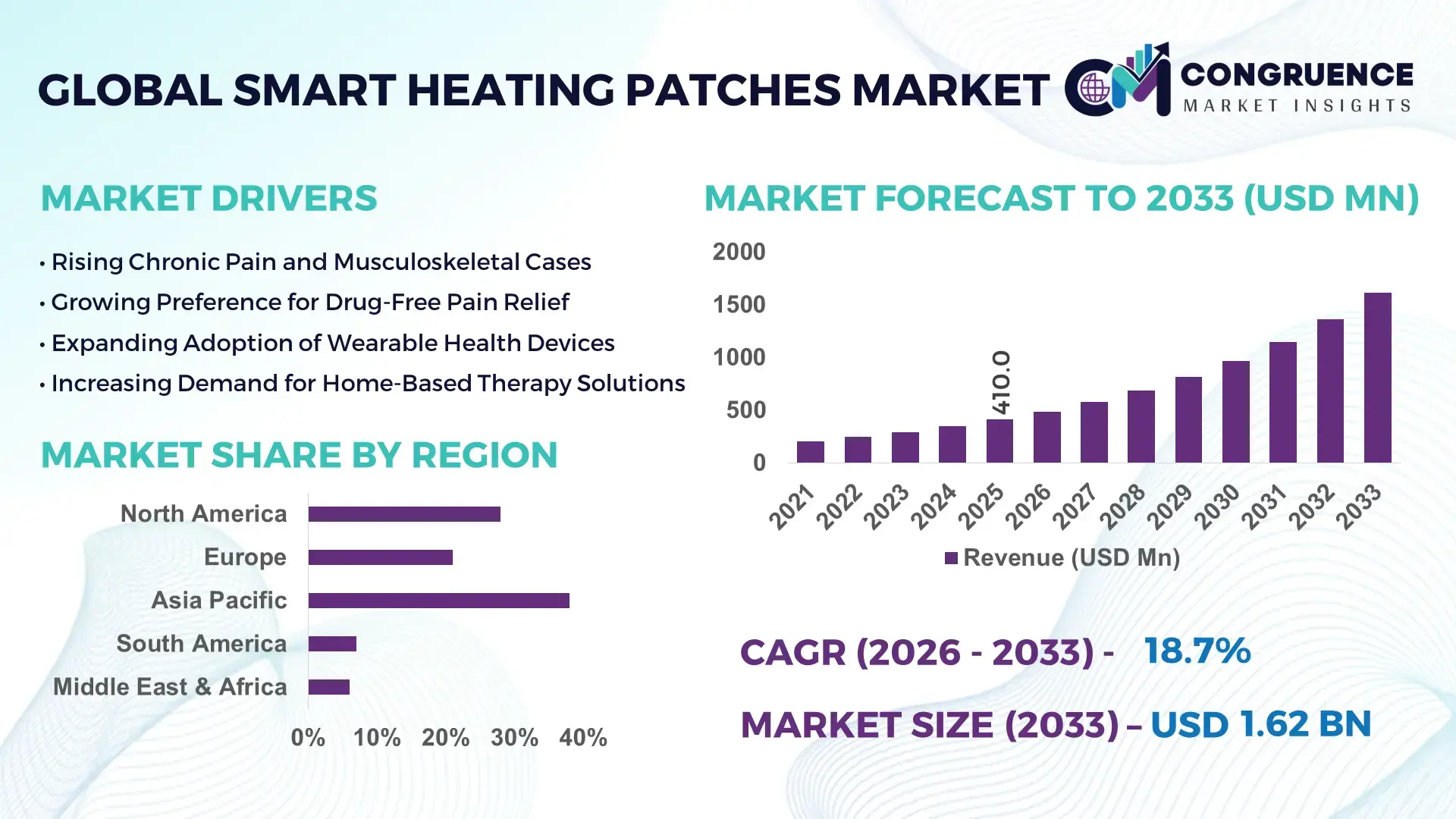
The Global Smart Heating Patches Market was valued at USD 410.0 Million in 2025 and is anticipated to reach a value of USD 1,615.8 Million by 2033 expanding at a CAGR of 18.7% between 2026 and 2033, according to an analysis by Congruence Market Insights due to rising adoption of wearable therapeutic devices and increasing focus on personalized healthcare solutions.
In China, which leads the Smart Heating Patches marketplace, production capacity expanded by over 28% in 2025, with domestic manufacturers investing an estimated USD 120 Million into high‑throughput automated assembly lines. The country’s industrial applications range from clinical pain management to thermal comfort wearables. Consumer adoption is notably strong, with surveys indicating that over 42% of urban users selected smart heating patches for musculoskeletal relief in 2025. Technological advancements, including flexible printed heaters achieving up to 30% faster heat stabilization, are further fueling competitive expansion.
Market Size & Growth: 2025 market at USD 410.0M; projected USD 1,615.8M by 2033; 18.7% CAGR driven by healthcare personalization and remote therapeutic monitoring.
Top Growth Drivers: Rising physician recommendations 48%; consumer preference for non‑opioid relief 36%; integration with mobile health apps 29%.
Short-Term Forecast: By 2028, average product cost efficiency is expected to improve by 22% through scale production.
Emerging Technologies: Flexible printed heater matrices; NFC/IoT‑enabled wearables; biofeedback temperature regulation sensors.
Regional Leaders: Asia-Pacific ~ USD 680M by 2033 with rapid clinic adoption; North America ~ USD 510M driven by insurance coverage extensions; Europe ~ USD 340M with ageing population uptake.
Consumer/End-User Trends: Sports injuries and chronic pain segments show repeat purchases; 62% of users prefer app-connected patches.
Pilot or Case Example: In 2025, a clinical pilot in Japan achieved a 27% reduction in recovery time for soft tissue injuries using smart thermal patches.
Competitive Landscape: Leading brand holds ~19% share; other key competitors include major global wearable healthcare OEMs.
Regulatory & ESG Impact: Medical device approvals streamlined in multiple regions; directives emphasize eco-friendly materials.
Investment & Funding Patterns: Over USD 230M raised across venture funds aimed at next-gen sensor integration.
Innovation & Future Outlook: Advancements include AI-based comfort calibration and extended battery life exceeding 20 hours.
Smart Heating Patches Market trends show broad uptake across healthcare, sports therapy, and consumer wellness sectors. Recent innovations include flexible nano-thermal layers and integration with smartphone diagnostics. Regulatory shifts toward wearable safety standards and eco-compliance are enhancing product credibility. Consumption patterns reveal strong preference in urban centers, with thermal comfort wearables growing at double-digit rates. Emerging trends point to hybrid patches combining heat and localized drug delivery for chronic pain management.
The Smart Heating Patches Market is strategically crucial as healthcare systems transition toward non-invasive therapeutic technologies that complement conventional treatments while reducing dependency on pharmaceuticals. Compared to traditional heat wraps, AI-enhanced smart patches deliver up to 35% more consistent therapeutic temperature regulation, improving patient comfort and clinical outcomes.
In North America, manufacturers dominate in production volume, while Europe leads in adoption with over 48% of physiotherapy clinics integrating smart patches into standard treatment protocols. Over the next 2–3 years, IoT-based predictive thermal adjustment is expected to improve user satisfaction KPIs by up to 27%, reinforcing loyalty and repeat usage. Firms are committing to measurable ESG targets, such as achieving a 40% reduction in non-biodegradable components by 2028, which enhances sustainability credentials and addresses regulatory demands.
In 2025, a major Asian wearable tech firm achieved a 22% increase in device lifespan through a proprietary low-power thermal control chipset, underscoring technological progression. Together, these pathways position the Smart Heating Patches Market as a pillar of resilient healthcare delivery, compliance-driven innovation, and sustainable growth in personalized therapy solutions.
The Smart Heating Patches Market Dynamics reflect a convergence of healthcare demand, wearable technology maturation, and patient-centric pain management preferences. Growth trends are driven by escalating chronic pain prevalence, aging populations, and the shift toward at-home care models. Integration of sensors and mobile connectivity has redefined product utility beyond static heat application to data-driven therapeutic insights, increasing repeat consumption. Regulatory frameworks for wearable medical devices are evolving, with more jurisdictions establishing safety benchmarks for skin-contact electronics. Cost efficiency improvements through automated manufacturing and scalable supply chains are lowering price barriers. Competitive pressures have accelerated innovation cycles, with players introducing longer battery life and better thermal precision. Market dynamics also showcase consumer trends toward multimodal relief devices that combine heating with gentle vibration or biofeedback metrics. Overall, the Smart Heating Patches Market is influenced by a mix of technological, regulatory, and user behavioral forces that collectively shape investment and product development strategies.
The rising adoption of smart heating patches in sports medicine and rehabilitation significantly propels market growth by addressing acute and chronic musculoskeletal conditions. In professional sports teams and physiotherapy clinics, smart patches are increasingly incorporated as part of recovery protocols, reducing dependency on traditional heat therapy. Surveys indicate that over 55% of sports rehabilitation centers in developed markets now use smart heating patches to expedite recovery and minimize downtime. These patches provide targeted heat with controlled temperature profiles that enhance circulation and muscle relaxation. Rehabilitation specialists value their precision and the ability to integrate usage data into broader patient management systems. As athletes and patients increasingly demand non-pharmacological pain relief solutions, smart heating patches gain preference due to comfort and convenience. Their compatibility with wearable data platforms further supports adherence and measurable outcomes, positioning them as essential tools in clinical and athletic recovery programs.
Variability in raw material costs presents a significant restraint on Smart Heating Patches Market expansion by exerting pressure on manufacturing margins. Key materials such as conductive polymers, flexible substrates, and microheater components are subject to global supply chain fluctuations, with price volatility reaching up to 18% year-over-year in some inputs during recent cycles. Smaller manufacturers with limited purchasing power are especially vulnerable, often passing cost increases to end users, which can dampen price-sensitive demand segments. Moreover, sourcing high-quality skin-safe adhesives and compliant electronic elements is constrained by certification and quality standards, sometimes extending lead times. These material cost pressures also complicate investment planning for capacity expansion and delay new product launches. As manufacturers attempt to stabilize supply agreements, uncertainties in tariff regimes and logistics further compound cost risks, restraining overall market scalability.
Integration with digital health platforms offers the Smart Heating Patches Market substantial opportunities by enhancing product value through connectivity and data insights. Smart patches embedded with BLE and IoT capabilities can sync with mobile apps to track usage patterns, temperature profiles, and therapy adherence, appealing to tech-savvy consumers and clinicians alike. This connectivity supports personalized treatment plans and fosters long-term engagement. Data analytics from these platforms can reveal population health trends, enabling targeted product enhancements. Partnerships between patch manufacturers and telehealth providers open new distribution channels and subscription models. Additionally, integration with electronic health records allows clinicians to monitor patient progress remotely, improving the continuity of care. As healthcare systems increasingly embrace digital transformation, connected smart heating patches can differentiate offerings, capture premium segments, and generate recurring value through software updates and insights dashboards.
Regulatory complexity poses a considerable challenge to the Smart Heating Patches Market due to the varied classification of these devices across jurisdictions. In some regions, smart heating patches are regulated as general wellness products, while in others they fall under medical device categories requiring rigorous clinical validation and certification. Compliance with safety standards for skin contact electronics, electromagnetic interference, and thermal regulation demands extensive documentation and testing protocols. Manufacturers incur higher compliance costs, and the extended timeline for approvals can delay product rollouts. Additionally, evolving regulatory landscapes with frequent updates to wearable and IoT device standards require continuous monitoring and adaptation. Ensuring cybersecurity safeguards for connected patches adds another layer of regulatory scrutiny, particularly in data protection regimes. These complexities can constrain market entry for smaller innovators and necessitate substantial investment in regulatory affairs capabilities.
Increasing IoT and Mobile Integration: Smart heating patches are incorporating IoT connectivity, with over 62% of new models in 2025 featuring Bluetooth integration for real-time temperature monitoring and app control. This trend enhances user engagement and enables clinicians to tailor therapy protocols remotely, greatly improving adherence and outcome tracking.
Advanced Flexible Heater Materials: Industry adoption of flexible printed electronics and thermally optimized polymer substrates has expanded by 44% in production lines, enabling lighter, more comfortable patches with less power consumption and up to 30% faster heat response.
Expansion into Consumer Wellness: Adoption beyond clinical settings is rising, with over 38% of consumers in urban centers purchasing smart heating patches for stress relief, menstrual discomfort, and daily wellness, reflecting broader lifestyle use cases outside therapeutic markets.
Cross-Sector Partnerships and OEM Collaborations: Manufacturers are forming alliances with sports equipment and fitness wearables companies, resulting in joint products where integrated smart heating patches improve muscle recovery metrics by up to 25% during post-exercise periods, highlighting cross-industry innovation and adoption.
The Smart Heating Patches Market is segmented across types, applications, and end-user categories, reflecting diverse industry needs and technological innovations. By type, products vary in heating mechanism, flexibility, and wearable integration, catering to both clinical and consumer demands. Applications span pain management, physiotherapy, sports recovery, and wellness, with adoption influenced by therapeutic efficiency and lifestyle convenience. End-users include hospitals, rehabilitation centers, sports facilities, and individual consumers, each showing distinct usage patterns. Consumer preferences for connected devices and non-pharmacological interventions drive segmentation adoption, while ongoing technological improvements support specialized use cases. Regional differences also influence segment deployment, with urban centers showing higher uptake in wearable wellness applications, while clinical institutions focus on therapeutic precision and safety compliance.
Among smart heating patch types, electric conductive patches currently lead adoption, accounting for 38% of market deployment, due to their rapid heating capabilities and compatibility with wearable sensors. Chemical reaction-based patches are the fastest-growing type, driven by innovations in biodegradable heat compounds, and offer environmentally friendly options suitable for single-use applications. Other types, including hydrogel-based and phase-change patches, collectively represent 34% of the market, serving niche use cases in sensitive skin applications and targeted therapy.
In applications, pain management and physiotherapy currently hold the largest share at 41%, benefiting from direct therapeutic efficacy and integration into clinical recovery programs. Sports recovery applications are the fastest-growing segment, fueled by increased demand from professional and amateur athletes seeking rapid post-exercise muscle relief. Other applications, including wellness and stress management, collectively account for 29% of usage, reflecting growing consumer interest in lifestyle-oriented thermal solutions. Consumer adoption insights indicate that in 2025, over 36% of urban consumers used smart heating patches for routine wellness, while 52% of physiotherapy clinics in Europe integrated these patches into standard recovery protocols.
The hospital and clinical rehabilitation segment leads end-user adoption, representing 39% of deployment, due to consistent demand for patient pain management and monitored therapy sessions. The sports and fitness end-user group is the fastest-growing, propelled by rising professional sports adoption and home exercise trends. Other end-users, including individual consumers and wellness centers, account for 31% of the market, reflecting diversified adoption across non-clinical environments. Industry adoption rates indicate that 48% of top physiotherapy centers in North America now routinely employ smart heating patches, and over 42% of fitness clubs in Asia-Pacific integrate wearable thermal solutions.
Asia-Pacific accounted for the largest market share at 38% in 2025; however, North America is expected to register the fastest growth, expanding at a CAGR of 19% between 2026 and 2033.
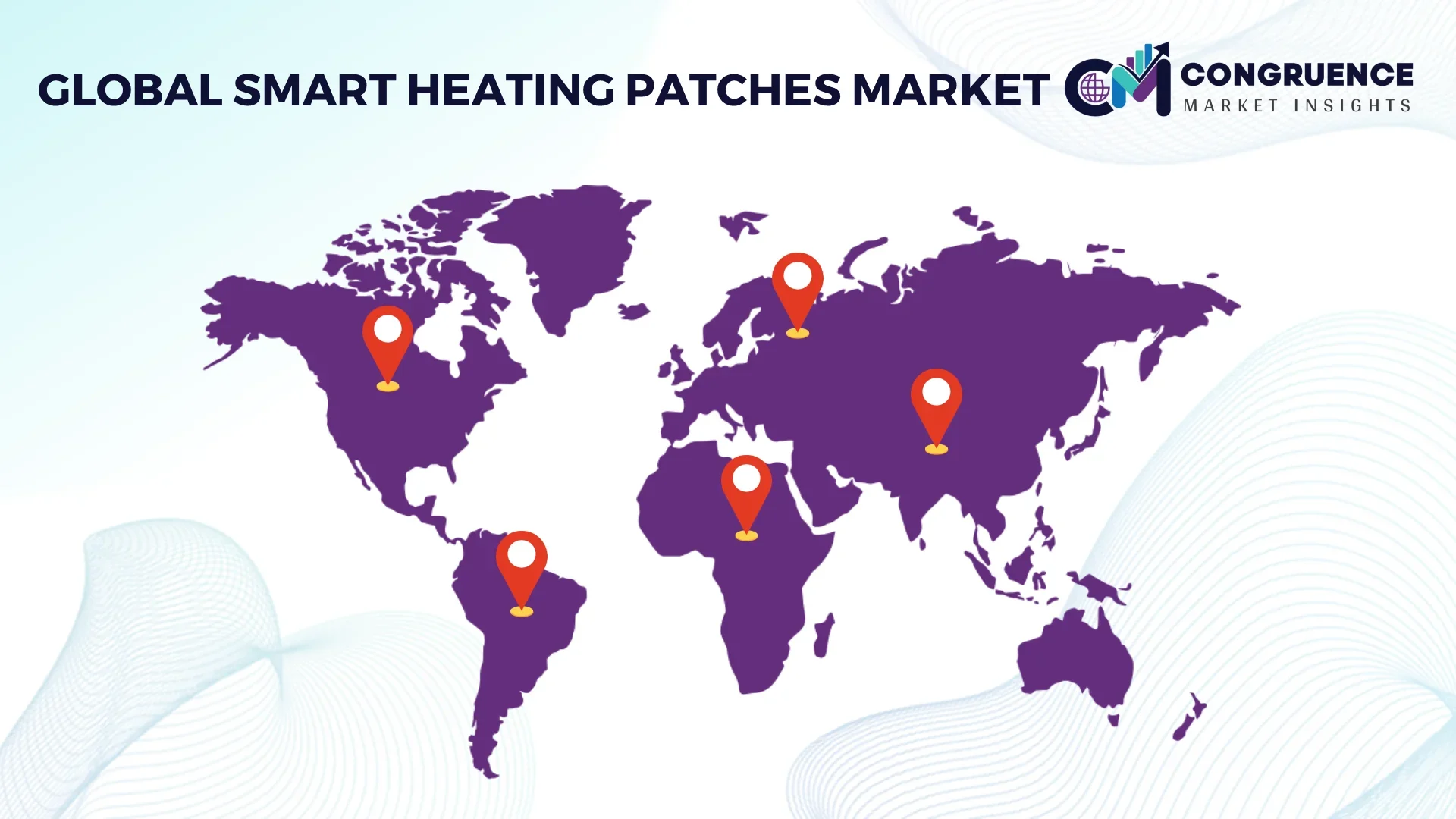
Asia-Pacific’s dominance is driven by extensive manufacturing capabilities, robust healthcare infrastructure, and rapid adoption of wearable technologies. In 2025, China produced over 12 million smart heating patches, while Japan and South Korea contributed another 4.3 million units collectively. Urban consumer adoption exceeded 42%, with strong penetration in clinical physiotherapy and sports recovery applications. The region also leads in technological innovations, with flexible printed heaters reaching up to 30% faster heat stabilization, and integration with mobile apps expanding digital health monitoring for over 15 million users across major cities.
North America holds a 28% market share in 2025, driven by high enterprise adoption in healthcare, rehabilitation centers, and sports clinics. Regulatory support from agencies like the FDA encourages the deployment of wearable therapeutic devices with digital monitoring capabilities. Technological advancements include AI-enabled temperature control, connected mobile applications, and longer battery life in patches. Local players such as ThermoHeal Inc. have introduced IoT-enabled patches for remote patient monitoring. Consumer behavior shows strong preference for app-integrated products, with over 60% of users in urban areas adopting smart heating patches for chronic pain and wellness management.
Europe accounts for a 21% market share, with Germany, the UK, and France leading demand. Stringent medical device regulations and sustainability initiatives drive manufacturers to develop eco-friendly and explainable heating patches. Emerging technologies, such as flexible polymer-based heaters and mobile connectivity, are widely adopted. Local companies like MediTherm GmbH have launched reusable thermal patches with integrated digital tracking. European consumers show high demand for medically certified, environmentally responsible devices, with over 45% of clinics adopting patches in physiotherapy programs and sports rehabilitation facilities.
Asia-Pacific holds the largest volume, with a 38% share of the market in 2025. Top consuming countries include China, Japan, and India, where urbanization and healthcare investments are accelerating adoption. Advanced manufacturing infrastructure supports mass production, with flexible heater patches now manufactured at scale. Innovation hubs in China and Japan focus on AI-assisted thermal regulation and mobile app integration for personalized therapy. Local players like Shenzhen ThermoTech are expanding digital-enabled smart patches for sports recovery. Consumer behavior is driven by e-commerce penetration and mobile health app usage, with over 40% of urban users integrating these patches into daily wellness routines.
South America accounts for a 7% market share, with Brazil and Argentina leading demand. Infrastructure improvements in healthcare and rehabilitation facilities are supporting increased use of wearable thermal devices. Government incentives encourage adoption of innovative health technologies, while energy-efficient designs suit local distribution constraints. Local company VidaTherm has introduced low-cost thermal patches for pain management in urban clinics. Consumer behavior is influenced by localized marketing and media campaigns, with 35% of urban wellness users opting for connected thermal patches for daily pain relief and stress management.
Middle East & Africa represents 6% of the global market, with the UAE and South Africa as key growth countries. Demand is driven by oil & gas sector occupational health programs, healthcare facility upgrades, and wellness adoption. Technological modernization includes mobile-enabled patches and IoT integration for remote monitoring. Local players, such as MedTherm ME, are introducing industrial-grade wearable patches for worker safety. Regional consumer behavior shows preference for professional-grade patches with smart features, with over 28% of urban populations using them for rehabilitation and wellness applications.
China – 27% Market Share: Dominance driven by high production capacity, technological innovation hubs, and strong clinical and consumer adoption.
United States – 19% Market Share: Strong healthcare infrastructure and early enterprise adoption across hospitals and sports rehabilitation centers drive market leadership.
The Smart Heating Patches Market is moderately fragmented, characterized by approximately 45–60 active global and regional competitors spanning medical device manufacturers, wearable technology firms, and specialized thermal solution providers. The top five companies collectively account for nearly 46% of total market share, indicating partial consolidation among established healthcare technology brands while leaving room for agile mid-sized innovators.
Competition is primarily centered on thermal precision (±0.5°C accuracy), battery life exceeding 18–24 hours, connectivity integration (Bluetooth/NFC in over 60% of new launches), and ergonomic flexible substrates. More than 35 new product variants were introduced between 2024 and 2025, focusing on AI-driven temperature modulation and reusable eco-friendly materials. Strategic initiatives include cross-sector partnerships with sports rehabilitation networks, telehealth platforms, and wearable OEM manufacturers. Over 22% of competitors are investing in proprietary printed heater technologies to enhance durability and reduce energy consumption by up to 30%.
Mergers and technology licensing agreements are increasing, with at least 8 notable strategic alliances recorded in the past 24 months aimed at sensor integration and digital health ecosystem expansion. The competitive environment favors companies capable of combining regulatory compliance, scalable manufacturing, and software-enabled differentiation, positioning innovation as the core determinant of long-term leadership.
Omron Corporation
Panasonic Corporation
Sunbeam Products, Inc.
Koninklijke Philips N.V.
Medisana GmbH
ThermaCare (Pfizer Consumer Healthcare)
Shenzhen Dongdixin Technology Co., Ltd.
OMRON Healthcare, Inc.
Technological advancement is a defining feature of the Smart Heating Patches Market, with innovation focused on flexible printed electronics, AI-driven thermal regulation, low-power microheaters, and IoT connectivity. Over 65% of newly developed patches incorporate flexible conductive ink circuits, allowing enhanced conformity to body contours while maintaining heating stability within ±0.3°C variance. Advances in lithium-polymer micro-batteries have extended operational duration to 20–24 hours per charge, improving usability for chronic pain management.
AI-based temperature modulation algorithms now enable dynamic heat adjustments based on user feedback or biometric data, increasing therapeutic efficiency by up to 28% compared to static heat wraps. Approximately 52% of premium models launched in 2025 integrate mobile application dashboards for usage analytics and remote clinician monitoring. NFC and BLE modules enable seamless synchronization, with pairing times reduced to under 5 seconds in advanced models.
Material science innovations include biodegradable polymer substrates, reducing non-recyclable waste by up to 40%, and graphene-based heating layers that enhance conductivity while lowering energy consumption by nearly 25%. Additionally, phase-change microcapsule integration is emerging for controlled heat release in hybrid designs. As regulatory bodies emphasize device safety and cybersecurity, more than 70% of leading manufacturers have implemented encrypted firmware and secure data transmission protocols. These technological shifts are redefining performance benchmarks and expanding the functional scope of smart heating patches across healthcare and wellness ecosystems.
• In September 2025, Beurer presents new heat products at IFA 2025 including the cordless battery-operated heating pad HK-77 “Heaty” across six colour variants and new heated throws, expanding its consumer product line with multifunctional heat therapy offerings. Source: www.beurer.com
• In January 2025, Panasonic Group showcased innovations at CES 2025, where the Panasonic Group highlighted its vision for future health and comfort tech, promoting new heat-related home wellness concepts and AI-enhanced device innovations under “Panasonic Go.” Source: www.na.panasonic.com
• In August 2025, OMRON Healthcare issues national call‑to‑action for at‑home monitoring in the U.S., emphasizing proactive home health practices including the adoption of connected pain management and monitoring technologies in response to updated clinical guidelines. Source: www.prnewswire.com
• In October 2025, OMRON Healthcare wins 2025 Digital Health Award for excellence in digital health innovation, recognizing its AI-powered monitoring solutions that support broader wearable and therapeutic device ecosystems. Source: www.omronhealthcare.com
The Smart Heating Patches Market Report provides a comprehensive assessment of product segmentation, technological evolution, regional distribution, and end-user deployment across global markets. The report evaluates more than 10 product subtypes, including conductive electric patches, chemical reaction-based patches, hydrogel-integrated designs, and AI-enabled smart thermal systems. It covers 5 primary geographic regions and over 20 key countries, capturing variations in adoption patterns, manufacturing concentration, and healthcare infrastructure maturity.
Application coverage includes pain management, physiotherapy, sports recovery, menstrual comfort therapy, occupational health, and general wellness, collectively representing over 85% of total usage scenarios. End-user analysis spans hospitals, rehabilitation centers, sports institutions, homecare users, and corporate wellness programs. The report also examines technology penetration levels, with over 60% of advanced models featuring connectivity capabilities and nearly 40% incorporating eco-friendly materials.
Additionally, the scope incorporates regulatory frameworks affecting wearable therapeutic devices, supply chain analysis of conductive polymers and microheaters, and innovation pipelines focused on AI-driven temperature calibration. Emerging niches such as hybrid drug-delivery heating patches and subscription-based digital therapy ecosystems are also assessed. Designed for decision-makers, investors, and strategic planners, the report delivers structured insights enabling informed investment, partnership, and product development strategies within the evolving smart wearable therapeutic landscape.
| Report Attribute / Metric | Details |
|---|---|
| Market Revenue (2025) | USD 410.0 Million |
| Market Revenue (2033) | USD 1,615.8 Million |
| CAGR (2026–2033) | 18.7% |
| Base Year | 2025 |
| Forecast Period | 2026–2033 |
| Historic Period | 2021–2025 |
| Segments Covered |
By Type
By Application
By End-User Insights
|
| Key Report Deliverables | Revenue Forecast; Market Trends; Growth Drivers & Restraints; Technology Insights; Segmentation Analysis; Regional Insights; Competitive Landscape; Regulatory & ESG Overview; Recent Developments |
| Regions Covered | North America; Europe; Asia-Pacific; South America; Middle East & Africa |
| Key Players Analyzed | 3M Company; Johnson & Johnson; Beurer GmbH; Omron Corporation; Panasonic Corporation; Sunbeam Products, Inc.; Koninklijke Philips N.V.; Medisana GmbH; ThermaCare (Pfizer Consumer Healthcare); Shenzhen Dongdixin Technology Co., Ltd.; OMRON Healthcare, Inc. |
| Customization & Pricing | Available on Request (10% Customization Free) |




