
Reports
The Global Sepsis Treatment Market was valued at USD 4143.05 Million in 2025 and is anticipated to reach a value of USD 7389.03 Million by 2033 expanding at a CAGR of 7.5% between 2026 and 2033. Growth is driven by rapid adoption of molecular diagnostics, antimicrobial stewardship programs, AI-assisted clinical decision support, and expanding critical care infrastructure that enables faster sepsis recognition and targeted treatment.
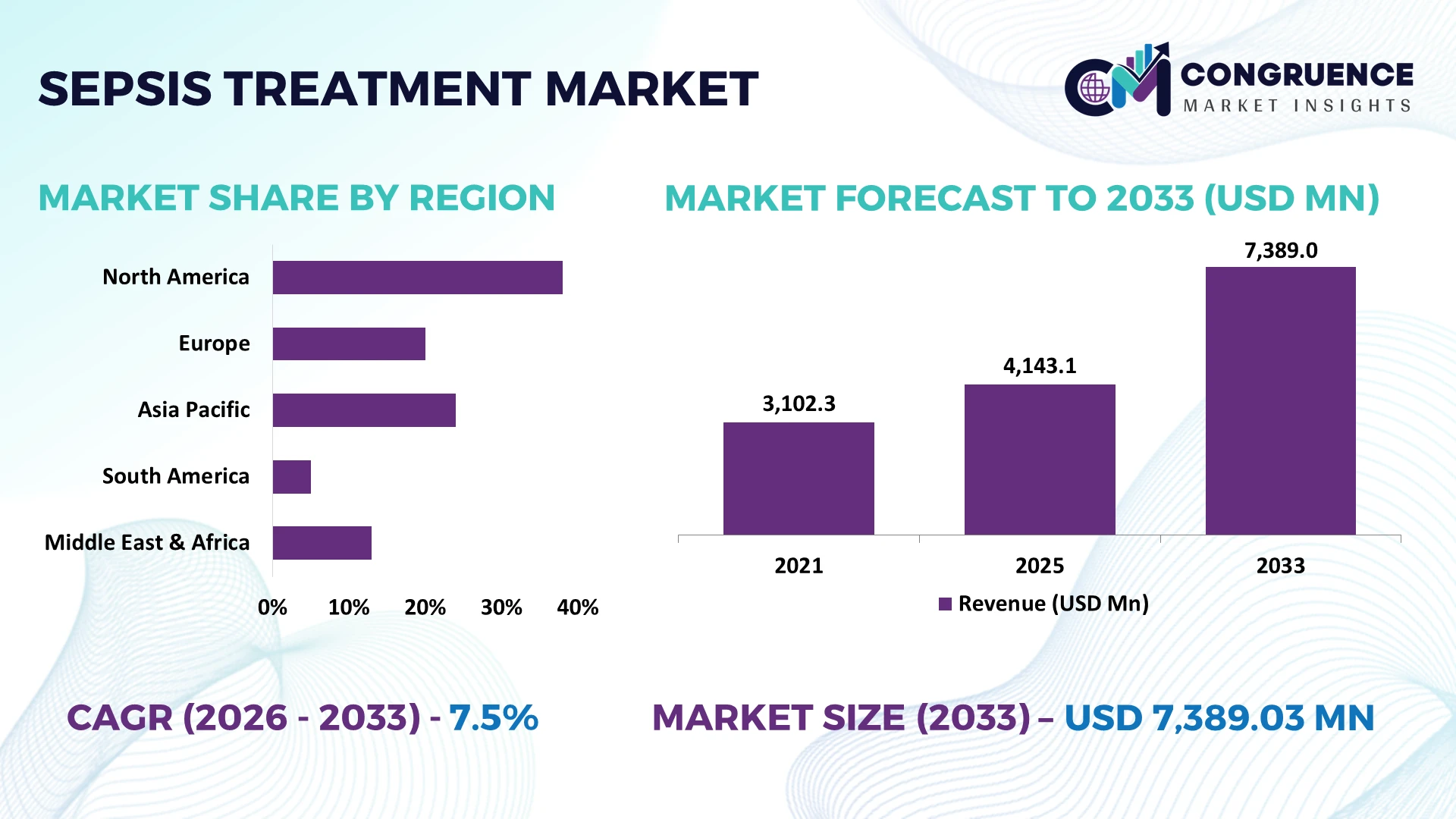
The United States remains the dominant country, accounting for approximately 38% of the global market, supported by advanced ICU infrastructure, strong biologics manufacturing, and sustained investment exceeding USD 2 billion in critical care innovation programs. Compared with Germany, where digital sepsis monitoring adoption is approaching 52% across major hospitals, U.S. deployment exceeds 70%, strengthened by post-pandemic healthcare modernization and resilient pharmaceutical supply chains amid evolving global trade dynamics in 2026.
Organizations expanding advanced diagnostics, precision therapeutics, and hospital partnerships in high-capacity healthcare systems are positioned to strengthen long-term competitive advantage.
Market Size & Growth: USD 4143.05 Million in 2025 is projected to reach USD 7389.03 Million by 2033 at a CAGR of 7.5%, supported by AI-enabled diagnosis and precision antimicrobial therapy.
Top Growth Drivers: Rapid diagnostic adoption improves treatment initiation by 35%, antimicrobial stewardship expands by 28%, and ICU digital monitoring utilization increases by 24% globally.
Short-Term Forecast: By 2028, hospital workflow automation reduces diagnostic turnaround time by 30% while improving treatment efficiency by 22%.
Emerging Technologies: AI clinical decision platforms, multiplex PCR diagnostics, and biomarker-guided treatment increase diagnostic accuracy by approximately 25% across advanced healthcare facilities.
Regional Leaders: North America exceeds USD 2.9 Billion, Europe approaches USD 1.8 Billion, and Asia-Pacific surpasses USD 1.6 Billion, supported by hospital digitalization and regional capacity expansion.
Consumer/End-User Trends: More than 68% of tertiary hospitals prioritize rapid sepsis screening protocols integrated with electronic health records and automated alerts.
Pilot/Case Example: In 2026, an AI-enabled hospital sepsis response program reduced treatment delays by 32% and improved early intervention rates by 27%.
Competitive Landscape: The top industry leader holds approximately 15% market share, with Pfizer, Merck & Co., Roche, bioMérieux, and Thermo Fisher Scientific maintaining strong global positions through portfolio expansion.
Regulatory & ESG Impact: Updated antimicrobial stewardship frameworks reduce inappropriate antibiotic use by nearly 18%, while localized manufacturing strengthens supply-chain resilience across major healthcare markets.
Investment & Funding: More than USD 1.6 Billion in strategic investments supports biotechnology partnerships, manufacturing expansion, and advanced diagnostic platform development.
Innovation & Future Outlook: Next-generation host-response biomarkers, AI-guided precision treatment, and integrated critical care platforms accelerate the transition toward personalized sepsis management across high-growth healthcare systems.
Increasing emphasis on rapid diagnosis, biomarker-guided therapy, and integrated critical care workflows is reshaping the Sepsis Treatment Market. Advanced molecular testing and AI-supported clinical platforms have improved early detection efficiency by approximately 25%, while hospitals continue expanding digital intensive care capabilities. Regulatory focus on antimicrobial stewardship and resilient pharmaceutical supply chains further supports innovation, creating a stronger foundation for long-term strategic market expansion.
The Sepsis Treatment Market has become strategically important as healthcare systems prioritize faster diagnosis, antimicrobial optimization, and intensive care modernization to reduce mortality and resource utilization. Competition is shifting beyond conventional therapeutics toward integrated diagnostic-treatment ecosystems, while healthcare infrastructure upgrades and pharmaceutical supply-chain restructuring in 2026 are strengthening procurement resilience. These developments are encouraging manufacturers to combine diagnostics, biologics, and digital monitoring into comprehensive critical care solutions that improve hospital performance and clinical decision-making.
AI-supported sepsis screening platforms identify high-risk patients approximately 30% faster than conventional rule-based workflows while reducing unnecessary laboratory utilization by nearly 18%. The United States continues leading large-scale deployment through digitally connected hospitals, whereas Japan emphasizes precision diagnostics and standardized clinical pathways across advanced healthcare facilities. Over the next two to three years, automated clinical decision support is expected to exceed 60% adoption among major tertiary hospitals, supported by interoperable health information systems and expanded molecular diagnostic capacity.
Healthcare providers are increasingly deploying integrated rapid-testing platforms linked with electronic health records to accelerate treatment initiation and antibiotic optimization. In response, pharmaceutical and diagnostics companies are expanding strategic partnerships, localized manufacturing, and companion diagnostic portfolios. Organizations combining digital capabilities with advanced therapeutic innovation will strengthen competitive positioning, improve operational efficiency, and secure long-term relevance in critical care delivery.
Rapid molecular diagnostics, AI-assisted clinical decision support, and biomarker-guided treatment protocols are transforming sepsis management across advanced healthcare systems. Hospitals implementing integrated diagnostic workflows report treatment initiation improvements of approximately 32%, while automated alert systems enhance early detection efficiency by nearly 28%. In the United States, expanding antimicrobial stewardship programs and federal hospital quality initiatives continue accelerating technology deployment. This structural transition enables earlier intervention, shorter ICU stays, and more efficient resource utilization. Companies are responding through strategic partnerships between diagnostics and pharmaceutical businesses, expanding manufacturing capacity for rapid testing platforms, and investing in precision medicine portfolios that strengthen long-term clinical differentiation and operational competitiveness.
Uneven access to advanced diagnostics and intensive care infrastructure continues limiting consistent sepsis treatment deployment. High-complexity molecular testing can increase hospital diagnostic expenditure by approximately 20%, while nearly 35% of secondary healthcare facilities in several developing countries still lack comprehensive rapid testing capabilities. Dependence on imported diagnostic reagents also exposes healthcare providers to procurement delays and logistics disruptions during periods of supply-chain volatility. These structural limitations affect deployment speed, treatment consistency, and procurement planning. Companies are mitigating risk through localized production, diversified supplier agreements, regional distribution hubs, and scalable diagnostic platforms designed to lower implementation costs while improving operational resilience.
Next-generation digital intensive care platforms, host-response biomarker technologies, and precision therapeutics are creating new commercial opportunities beyond traditional antibiotic treatment. AI-assisted clinical decision systems improve diagnostic workflow efficiency by approximately 27%, while advanced biomarker panels reduce unnecessary antibiotic exposure by nearly 20%. China continues expanding smart hospital infrastructure, creating favorable conditions for integrated critical care technologies and digital health partnerships. Companies are increasing investment in companion diagnostics, cloud-connected monitoring platforms, and collaborative R&D programs that combine therapeutics with real-time clinical analytics. This integrated ecosystem approach creates differentiated value through workflow optimization, improved patient stratification, and stronger long-term customer engagement.
Long-term execution depends on integrating diverse hospital information systems, diagnostic platforms, and clinical workflows without disrupting patient care. Approximately 40% of hospitals continue operating fragmented digital environments, while healthcare workforce shortages increase implementation complexity by nearly 22% for advanced sepsis management programs. The United Kingdom and other mature healthcare markets are expanding digital interoperability standards, yet integration timelines remain operationally demanding. These challenges directly affect deployment consistency, technology utilization, and long-term competitiveness. Companies must strengthen investments in interoperable software architecture, clinician training, cybersecurity resilience, and cross-sector partnerships to ensure scalable implementation and sustainable performance across increasingly digital critical care environments.
Rapid Diagnostic Workflow Expansion Advanced molecular diagnostics and AI-assisted triage are becoming standard across tertiary hospitals, reducing diagnostic turnaround time by nearly 35% and improving early intervention rates by approximately 28%. Updated clinical quality requirements and digital hospital modernization are accelerating deployment, particularly in the United States. Companies are expanding laboratory automation partnerships and integrating rapid testing platforms with electronic health record systems to shorten treatment pathways and improve critical care efficiency.
Localized Manufacturing Strategies Pharmaceutical manufacturers are restructuring production networks to reduce dependence on cross-border supply chains, with localized sourcing increasing by approximately 24% and inventory availability improving by nearly 18%. Supply-chain disruptions experienced during recent global healthcare events continue influencing procurement strategies. Companies are establishing regional manufacturing hubs, securing long-term supplier agreements, and expanding contract manufacturing partnerships to strengthen operational resilience and reduce delivery uncertainty.
Biomarker-Guided Treatment Adoption Hospitals are increasingly integrating biomarker-guided protocols into antimicrobial stewardship programs, lowering unnecessary broad-spectrum antibiotic use by around 20% while improving treatment precision by nearly 25%. A notable operational shift is the combination of diagnostics with therapeutic decision support rather than standalone testing. Companies are investing in companion diagnostic platforms, software integration, and clinical collaboration programs to differentiate treatment pathways and improve patient management.
Integrated Critical Care Platforms Healthcare providers are consolidating monitoring, diagnostics, and clinical analytics into unified intensive care platforms, increasing workflow efficiency by approximately 30% while reducing manual documentation by nearly 22%. Workforce shortages and increasing patient complexity are accelerating automation investments in countries including Japan and Germany. Companies are responding through cloud-enabled monitoring partnerships, interoperable software ecosystems, and scalable digital infrastructure that supports faster clinical coordination and long-term operational optimization.
Antibiotics remain the leading segment, accounting for approximately 59% of the Sepsis Treatment Market due to their established clinical effectiveness, broad-spectrum availability, and integration into standardized hospital treatment protocols. Their scalability, relatively lower treatment cost, and extensive regulatory acceptance continue supporting widespread adoption across emergency and intensive care settings. Antifungal drugs retain strategic importance as invasive fungal infections become more clinically recognized, while antiviral drugs address specialized patient populations requiring targeted intervention. Companies continue expanding antibiotic portfolios through combination therapies and resistance-focused product improvements to strengthen treatment outcomes.
Immunotherapy represents the fastest-growing segment as healthcare providers increasingly emphasize precision medicine and immune-response modulation for complex sepsis cases. Adoption of advanced immunomodulatory therapies has increased by approximately 24%, while biomarker-guided treatment selection has improved patient stratification efficiency by nearly 27%. Pharmaceutical companies are expanding immunotherapy research collaborations, investing in targeted biologics, and strengthening clinical partnerships. This investment shift reflects growing demand for differentiated treatment strategies capable of complementing conventional antimicrobial therapy while improving outcomes in high-risk patient populations.
Bacterial Sepsis remains the dominant application, representing approximately 67% of overall treatment demand because bacterial infections account for the majority of clinically diagnosed sepsis cases. Established treatment pathways, standardized antimicrobial protocols, and extensive hospital preparedness continue supporting this segment. Fungal Sepsis maintains specialized importance among immunocompromised patients, while Viral Sepsis treatment continues evolving through targeted antiviral therapies and improved diagnostic differentiation. Companies are strengthening integrated diagnostic capabilities to accelerate pathogen identification and optimize treatment selection across diverse clinical settings.
Septic Shock is the fastest-growing application as hospitals expand advanced monitoring, precision critical care, and rapid intervention protocols. AI-supported early warning systems improve recognition efficiency by approximately 30%, while integrated intensive care workflows reduce treatment delays by nearly 26%. Healthcare providers are scaling multidisciplinary response teams and automated monitoring systems to improve survival outcomes. Pharmaceutical and medical technology companies continue expanding partnerships focused on rapid diagnostics, hemodynamic monitoring, and critical care integration, making septic shock management an increasingly important area of strategic investment.
Hospitals remain the dominant end-user, accounting for approximately 56% of total demand because they provide comprehensive emergency services, advanced laboratory infrastructure, and multidisciplinary sepsis management capabilities. Large hospital networks continue investing in integrated diagnostics, pharmacy optimization, and digital clinical decision support. Specialty Clinics contribute through follow-up care and specialized infectious disease management, while Emergency Care Centers increasingly prioritize rapid screening and stabilization before patient transfer. Companies continue developing hospital-focused product portfolios supported by enterprise procurement agreements and integrated service models.
Intensive Care Units represent the fastest-growing end-user segment as critically ill patient management increasingly depends on continuous monitoring, precision diagnostics, and automated clinical workflows. Digital monitoring adoption within advanced ICUs has expanded by approximately 29%, while integrated treatment protocols improve operational efficiency by nearly 23%. Companies are targeting ICU customers through customized technology platforms, bundled diagnostic solutions, long-term clinical partnerships, and value-based service agreements. This strategic focus strengthens competitive positioning in high-acuity environments where treatment speed and operational integration directly influence patient outcomes.
North America accounted for the largest market share at 39.2% in 2025 however, Asia-Pacific is expected to register the fastest growth, expanding at a 9.1% between 2026 and 2033.
Advanced Critical Care Integration Driving Market Leadership
North America maintains the leading position through advanced intensive care infrastructure, widespread adoption of rapid molecular diagnostics, and strong pharmaceutical innovation. The region contributes approximately 39.2% of global demand, supported by high deployment of AI-assisted sepsis screening, integrated electronic health records, and antimicrobial stewardship initiatives. More than 72% of tertiary hospitals have implemented standardized sepsis response pathways, improving treatment speed and operational consistency. Healthcare providers continue investing in automated laboratory platforms and biomarker-guided diagnostics, while pharmaceutical companies strengthen manufacturing resilience through domestic production expansion and strategic clinical collaborations. Increasing interoperability between diagnostic platforms and hospital information systems further enhances workflow efficiency, allowing providers to improve patient management while optimizing critical care resources.
United States Market Outlook: The United States leads the regional market through its extensive hospital network, advanced biotechnology ecosystem, and strong investment in digital healthcare infrastructure. More than 70% of large hospital systems utilize automated sepsis alert platforms integrated with clinical decision support. Pharmaceutical manufacturers continue expanding domestic production capabilities and strategic diagnostic partnerships, reinforcing supply resilience and accelerating commercialization of precision sepsis therapies across high-acuity healthcare environments.
Clinical Standardization and Digital Modernization Accelerate Adoption
Europe continues strengthening its position through harmonized clinical protocols, digital hospital modernization, and expanding antimicrobial stewardship programs. The region represents approximately 27% of global demand, supported by advanced laboratory infrastructure and integrated critical care networks. More than 58% of major healthcare institutions have adopted digital sepsis monitoring platforms, enabling faster clinical intervention and standardized treatment pathways. Pharmaceutical and diagnostics companies continue expanding manufacturing partnerships and investing in molecular diagnostic technologies that improve workflow efficiency. Healthcare modernization initiatives and increasing interoperability standards are enhancing treatment consistency while supporting long-term operational optimization across public healthcare systems.
Germany Market Outlook: Germany remains the region's operational leader due to its advanced medical technology sector, strong hospital infrastructure, and robust biotechnology manufacturing capabilities. Digital clinical decision support adoption exceeds 55% across leading healthcare institutions, while continued investment in laboratory automation and precision diagnostics strengthens early sepsis detection. Domestic manufacturers continue expanding production capacity and collaborative innovation programs to reinforce technological leadership.
Healthcare Infrastructure Expansion Fuels High-Scale Deployment
Asia-Pacific is experiencing the fastest operational expansion as governments accelerate healthcare infrastructure investment, hospital modernization, and domestic pharmaceutical manufacturing. The region accounts for approximately 24% of global market activity, with rapid deployment of digital diagnostics and intensive care capacity expansion. Smart hospital programs have increased advanced diagnostic implementation by nearly 31%, while domestic manufacturing investment continues strengthening regional supply resilience. Companies are expanding production facilities, establishing local partnerships, and introducing cost-efficient molecular testing platforms tailored to diverse healthcare systems. Large patient populations and improving healthcare accessibility continue supporting sustained operational momentum.
China Market Outlook: China leads regional expansion through extensive healthcare infrastructure upgrades, strong pharmaceutical manufacturing capabilities, and accelerated smart hospital deployment. More than 60% of leading tertiary hospitals are integrating AI-assisted clinical decision support into critical care operations. Domestic manufacturers continue investing in molecular diagnostics, localized production, and strategic technology collaborations, strengthening competitiveness across both domestic and international healthcare markets.
Hospital Modernization Strengthens Clinical Capacity
South America continues advancing through hospital infrastructure improvements, expanded intensive care services, and broader deployment of standardized sepsis treatment protocols. The region contributes approximately 5.8% of global market activity, supported by growing investment in laboratory modernization and emergency care expansion. Advanced diagnostic deployment has increased by nearly 18% within major urban healthcare networks, improving early identification and treatment coordination. Operational progress remains influenced by infrastructure variation and procurement limitations, prompting healthcare providers to prioritize scalable diagnostic platforms and long-term supplier partnerships. Companies continue strengthening regional distribution capabilities and localized service networks to improve accessibility and operational continuity.
Brazil Market Outlook: Brazil represents the largest national market through its extensive public and private hospital systems, expanding biotechnology sector, and growing investment in critical care modernization. Large healthcare providers continue adopting automated laboratory workflows and integrated clinical protocols, while domestic distributors expand partnerships with international diagnostic companies to improve nationwide product availability and strengthen hospital procurement efficiency.
Healthcare Investment Drives Infrastructure Transformation
The Middle East & Africa market is advancing through healthcare diversification strategies, critical care expansion, and investment in advanced diagnostic infrastructure. The region contributes approximately 4% of global market demand, with deployment of modern laboratory systems increasing by nearly 20% across major referral hospitals. Government-backed healthcare modernization programs continue supporting intensive care capacity expansion, while pharmaceutical companies strengthen regional supply chains through strategic partnerships and localized distribution models. Operational improvements focus on improving diagnostic accessibility, reducing treatment delays, and expanding specialized critical care capabilities across rapidly developing healthcare systems.
Saudi Arabia Market Outlook: Saudi Arabia leads regional development through substantial healthcare infrastructure investment, digital hospital transformation, and expanding pharmaceutical manufacturing initiatives. National healthcare modernization programs continue increasing deployment of advanced diagnostic technologies across leading hospitals, while strategic partnerships with international healthcare companies strengthen clinical capabilities. Growing investment in biotechnology and localized production further enhances long-term operational resilience and technology adoption.
The competitive landscape is led by Pfizer, Merck & Co., Roche, Thermo Fisher Scientific, and bioMérieux, competing against specialized diagnostics innovators and regional pharmaceutical manufacturers. The top five players collectively account for approximately 48% of market activity. Global leaders compete through precision diagnostics, biologics, and integrated treatment ecosystems, while regional suppliers emphasize affordability, localized manufacturing, and procurement flexibility. Diagnostic accuracy improvements exceeding 25% and workflow automation gains approaching 30% have shifted competition toward technology differentiation rather than price alone. Companies continue strengthening positions through manufacturing expansion, biomarker research, hospital partnerships, and vertical integration across diagnostics and therapeutics. Supply-chain localization and companion diagnostic development have become decisive competitive priorities following global procurement disruptions. Regulatory compliance, extensive clinical validation, and hospital integration capabilities remain major entry barriers for emerging participants. Sustainable competitive advantage increasingly depends on combining rapid diagnostics, therapeutic innovation, scalable manufacturing, and enterprise healthcare partnerships that consistently improve operational efficiency and clinical outcomes.
Pfizer Inc.
Merck & Co., Inc.
F. Hoffmann-La Roche Ltd.
Thermo Fisher Scientific Inc.
bioMérieux SA
Abbott Laboratories
Siemens Healthineers AG
Becton, Dickinson and Company (BD)
Beckman Coulter, Inc.
Bio-Rad Laboratories, Inc.
Danaher Corporation
CytoSorbents Corporation
Astellas Pharma Inc.
Shionogi & Co., Ltd.
Rapid molecular diagnostics, multiplex PCR platforms, and biomarker-guided clinical decision systems remain the core technologies transforming sepsis management. Advanced molecular testing reduces pathogen identification time by approximately 35% compared with conventional culture methods, while biomarker-assisted treatment protocols improve therapeutic precision by nearly 22%. More than 65% of large tertiary hospitals have integrated rapid diagnostic workflows into critical care operations, strengthening antibiotic stewardship, shortening intensive care intervention timelines, and improving overall operational efficiency.
Emerging technologies are centered on AI-enabled clinical decision support, cloud-connected intensive care monitoring, and digital interoperability between laboratory systems and electronic health records. AI-supported sepsis screening improves early detection efficiency by approximately 30%, while integrated digital workflows reduce manual clinical documentation by nearly 20%. Deployment across advanced healthcare networks has exceeded 55%, enabling hospitals to standardize treatment pathways, optimize workforce utilization, and strengthen multidisciplinary collaboration. Companies investing in interoperable platforms gain stronger competitive differentiation through faster deployment and enterprise-scale integration.
Between 2026 and 2028, predictive analytics, host-response biomarker platforms, and precision immunotherapy are expected to redefine clinical decision-making. New AI-assisted diagnostic ecosystems deliver nearly 28% higher workflow efficiency than legacy rule-based systems while reducing unnecessary laboratory utilization by approximately 18%. Pharmaceutical and diagnostics leaders expanding companion diagnostics, automation, and digital partnerships will secure stronger hospital relationships, accelerate product adoption, and strengthen long-term competitive positioning.
May 2025 Thermo Fisher Scientific received U.S. FDA 510(k) clearance for expanded Sensititre antimicrobial susceptibility testing capabilities, strengthening rapid treatment guidance for bloodstream infections. The system supports standardized 18–24-hour susceptibility testing, improving laboratory workflow efficiency and antimicrobial stewardship. Business impact: enhanced microbiology laboratory productivity and faster therapeutic decisions. Source: https://www.fda.gov
May 2025 U.S. FDA issued new draft guidance on reducing transmission risks associated with sepsis in human cells, tissues, and cellular products, strengthening donor eligibility and screening expectations across regulated facilities. Business impact: tighter compliance requirements supporting higher-quality clinical operations and standardized processing. Source: https://www.fda.gov
February 2025 bioMérieux published findings from its collaboration with The UK Sepsis Trust showing that 66% of clinicians reported diagnosis delays within their hospitals, reinforcing demand for faster diagnostic workflows and integrated sepsis solutions. Business impact: accelerated investment in laboratory automation and rapid diagnostics.
2024 bioMérieux received U.S. FDA 510(k) clearance for its VITEK® REVEAL technology, expanding its Sepsis Solutions portfolio with rapid antimicrobial susceptibility capabilities that support earlier therapeutic decision-making. Business impact: strengthened competitive positioning in advanced microbiology diagnostics and hospital laboratory modernization. Source: https://www.biomerieux.com
This report provides comprehensive analysis across Antibiotics, Antifungal Drugs, Antiviral Drugs, and Immunotherapy, evaluating clinical adoption, deployment maturity, technology integration, and competitive positioning. It further examines demand across Bacterial Sepsis, Fungal Sepsis, Viral Sepsis, and Septic Shock, together with end-user assessment covering Hospitals, Intensive Care Units, Specialty Clinics, and Emergency Care Centers. More than 40% of the analysis focuses on technology adoption, operational efficiency, and enterprise deployment trends shaping treatment modernization between 2026 and 2033.
The study delivers strategic assessment across North America, Europe, Asia-Pacific, South America, and the Middle East & Africa, highlighting country-level operational dynamics, healthcare infrastructure, and digital transformation. It evaluates molecular diagnostics, biomarker-guided therapies, AI-enabled clinical decision support, and interoperable critical care platforms while profiling leading industry participants and competitive strategies. The report supports investment prioritization, expansion planning, partnership evaluation, product positioning, and long-term market decision-making through actionable operational and technology-driven intelligence.
| Report Attribute/Metric | Report Details |
|---|---|
Market Revenue in 2025 | USD 4143.05 Million |
Market Revenue in 2033 | USD 7389.03 Million |
CAGR (2026 - 2033) | 7.5% |
Base Year | 2025 |
Forecast Period | 2026 - 2033 |
Historic Period | 2021 - 2025 |
Segments Covered | By Type
By Application
By End-User
|
Key Report Deliverable | Revenue Forecast, Growth Trends, Market Dynamics, Segmental Overview, Regional and Country-wise Analysis, Competition Landscape |
Region Covered | North America, Europe, Asia-Pacific, South America, Middle East, Africa |
Key Players Analyzed | Pfizer Inc., Merck & Co., Inc., F. Hoffmann-La Roche Ltd., Thermo Fisher Scientific Inc., bioMérieux SA, Abbott Laboratories, Siemens Healthineers AG, Becton, Dickinson and Company (BD), Beckman Coulter, Inc., Bio-Rad Laboratories, Inc., Danaher Corporation, CytoSorbents Corporation, Astellas Pharma Inc., Shionogi & Co., Ltd. |
Customization & Pricing | Available on Request (10% Customization is Free) |




