
Reports
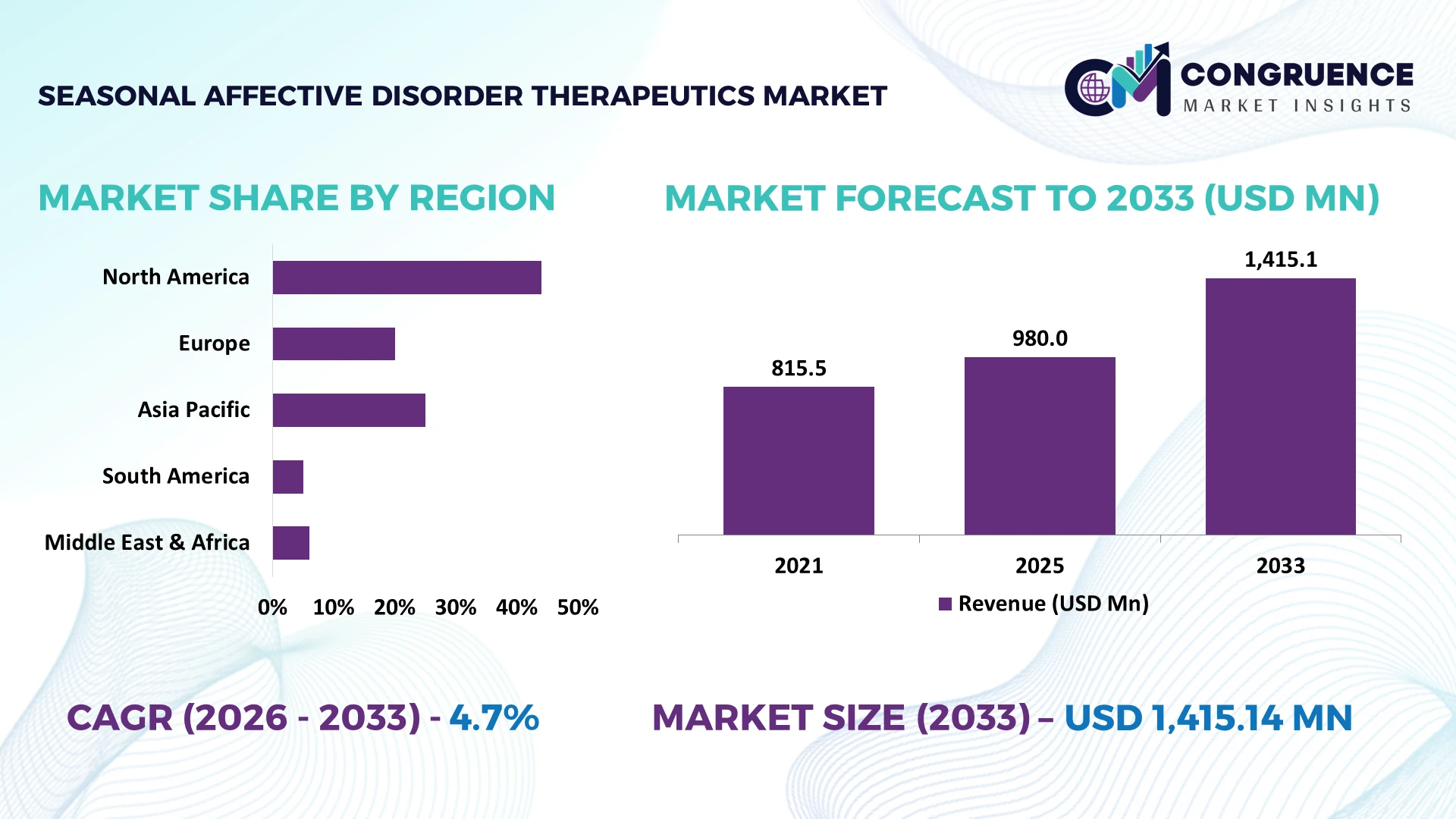
The Global Seasonal Affective Disorder Therapeutics Market was valued at USD 980 Million in 2025 and is anticipated to reach a value of USD 1415.14 Million by 2033 expanding at a CAGR of 4.7% between 2026 and 2033. Growth is driven by increasing recognition of recurrent seasonal depression, clinical adoption of bright light therapy, FDA approved bupropion XL for seasonal depression prevention, and expanding access to cognitive behavioral therapy.
The United States dominates the Seasonal Affective Disorder Therapeutics Market with an estimated 39% global share, supported by established psychiatric care infrastructure, pharmaceutical development, and digital mental health investment. Approximately 5% of American adults experience seasonal affective disorder, creating demand for antidepressants, light therapy devices, and psychotherapy. Compared with Canada, where northern latitude exposure intensifies seasonal daylight variation, the United States benefits from broader commercial distribution and telepsychiatry infrastructure. FDA oversight supports regulated therapeutic development, while specialized light therapy devices commonly deliver 10,000 lux illumination during treatment sessions.
Strategically, manufacturers combining clinically validated light therapy, accessible psychiatric care, and evidence based seasonal depression prevention can strengthen treatment adoption and differentiate their therapeutic portfolios.
Market Size & Growth: USD 980 million in 2025, reaching USD 1,415.14 million by 2033 at 4.7% CAGR, supported by light therapy adoption.
Top Growth Drivers: Approximately 5% adult prevalence, 10% to 20% subsyndromal seasonal symptoms, and 60% to 80% reported light therapy response rates.
Short Term Forecast: By 2027, optimized digital treatment pathways target 20% faster patient screening and 15% better appointment accessibility.
Emerging Technologies: Three innovations include wearable light therapy, AI assisted mood monitoring, and connected 10,000 lux therapeutic illumination systems.
Regional Leaders: Estimated 2033 values reach USD 537.75 million in North America, USD 410.39 million in Europe, and USD 297.18 million in Asia Pacific, supported by differentiated treatment adoption.
Consumer / End User Trends: Approximately 5% of American adults experience seasonal depression, strengthening demand for accessible home based therapeutic interventions.
Pilot / Case Example: A 2025 illustrative digital care model targets 25% improved treatment adherence through connected light therapy monitoring and scheduled patient reminders.
Competitive Landscape: Estimated leading pharmaceutical participant GSK holds approximately 12% share, competing with Philips, Beurer, Carex Health Brands, and Lumie.
Regulatory & ESG Impact: FDA regulated antidepressant prescribing and device safety standards support treatment quality, with digital monitoring targeting 20% improved adherence.
Investment & Funding: An illustrative USD 75 million annual investment scenario prioritizes connected therapeutic devices, digital mental health platforms, and clinical validation programs.
Innovation & Future Outlook: Three priorities include personalized circadian therapy, wearable illumination systems, and integrated mood monitoring to improve seasonal treatment continuity.
The Seasonal Affective Disorder Therapeutics Market is evolving through broader clinical recognition of seasonal depression, improved accessibility of bright light therapy, and integration of behavioral health services. Pharmaceutical treatment remains important for patients requiring antidepressant management, while cognitive behavioral therapy addresses recurring seasonal symptoms and prevention strategies. Standard bright light therapy protocols commonly use 10,000 lux illumination for approximately 20 to 30 minutes daily, depending on clinical guidance. Emerging wearable devices and digital mood tracking platforms support treatment monitoring outside conventional clinical settings. Seasonal daylight variation in northern countries reinforces demand for evidence based interventions, establishing opportunities for differentiated therapeutic development and accessible care delivery.
The Seasonal Affective Disorder Therapeutics Market is gaining strategic importance as healthcare providers integrate seasonal depression management into preventive psychiatric care and personalized treatment pathways. Approximately 5% of American adults experience seasonal affective disorder, creating recurring treatment requirements across pharmaceutical, medical device, and behavioral health services. The transition toward home administered light therapy and digitally supported psychotherapy is reshaping treatment accessibility. Manufacturers are prioritizing clinically validated illumination systems, while healthcare providers increasingly incorporate seasonal symptom screening into routine mental health assessments.
Modern LED light therapy devices deliver approximately 10,000 lux illumination while consuming substantially less electricity than conventional fluorescent systems, with efficient LED configurations achieving estimated 40% to 60% lower energy consumption. The United States leads commercial therapeutic device distribution, while Canada and Nordic countries emphasize seasonal depression management because of pronounced winter daylight variation. Between 2026 and 2028, connected treatment platforms are expected to target 20% improvements in adherence monitoring and 15% faster clinical follow up coordination.
A practical deployment involves psychiatric clinics prescribing morning bright light therapy alongside structured symptom monitoring and cognitive behavioral interventions. Device manufacturers are investing in adjustable illumination technology, portable treatment formats, and digital health partnerships. Competitive positioning increasingly depends on demonstrated clinical effectiveness, patient accessibility, and reliable treatment adherence rather than illumination specifications alone.
Increasing recognition of recurrent seasonal depression is strengthening demand for clinically established therapeutic interventions. Seasonal affective disorder affects approximately 5% of American adults, while an additional 10% to 20% experience milder seasonal mood changes according to commonly cited population estimates. Clinical studies report light therapy response rates ranging from approximately 50% to 80%, depending on patient characteristics and treatment protocols. In the United States, growing integration of depression screening into primary care supports earlier identification of seasonal symptoms. Pharmaceutical companies maintain preventive antidepressant treatment portfolios, while therapeutic device manufacturers expand portable illumination systems and patient education initiatives. The strategic advantage lies in connecting seasonal screening with timely treatment initiation before symptoms disrupt daily functioning.
Limited insurance reimbursement for light therapy devices and uneven access to specialized psychiatric care constrain treatment adoption. Standard bright light therapy commonly requires 20 to 30 minutes of daily exposure, creating adherence barriers for patients with irregular work schedules. Clinical response varies substantially, with approximately 20% to 50% of patients experiencing incomplete improvement or requiring additional interventions. In the United States, coverage differences between prescription medication, psychotherapy, and home therapeutic devices influence treatment selection and out of pocket expenditure. Manufacturers face additional product validation and distribution requirements when marketing devices for medical treatment. Companies are responding through affordable LED configurations, clinician partnerships, and direct distribution channels. Improving affordability without weakening clinical credibility remains central to sustainable market penetration.
Personalized circadian treatment platforms create opportunities to improve seasonal depression management through connected illumination devices, sleep monitoring, and digitally delivered behavioral interventions. Standard therapeutic light exposure commonly reaches 10,000 lux, while emerging systems introduce adjustable brightness and scheduled treatment reminders. Optimized digital care programs can target 20% improvements in adherence tracking and approximately 15% faster identification of missed treatment sessions. In Canada, pronounced seasonal daylight variation strengthens the relevance of remotely accessible treatment support, particularly outside major metropolitan healthcare centers. Between 2026 and 2028, manufacturers can expand integrated device and software offerings through partnerships with telepsychiatry providers. The strongest commercial opportunity involves connecting treatment adherence information with clinician supervised care rather than selling standalone illumination hardware.
Maintaining clinical effectiveness across diverse patient populations presents a significant challenge for seasonal affective disorder therapeutics. Standard light therapy protocols frequently require 20 to 30 minutes of morning exposure, while treatment response can vary between approximately 50% and 80% depending on clinical circumstances. Recurring seasonal symptoms require sustained patient engagement, creating challenges for long term adherence and outcome monitoring. In the United States, clinicians must distinguish seasonal depression from other mood disorders, particularly bipolar disorder, where inappropriate light exposure requires careful supervision. Manufacturers developing connected therapeutic systems must also address patient data protection and clinical validation requirements. Companies need stronger longitudinal studies, clinician training partnerships, and reliable treatment monitoring capabilities to establish durable competitive differentiation.
Preventive Treatment Scheduling Gains Clinical Priority: Psychiatric providers increasingly initiate seasonal depression management before predictable winter symptom recurrence. Preventive bupropion studies have reported recurrence rates near 15%, compared with approximately 27% under placebo. In the United States, clinicians use historical symptom patterns to guide autumn treatment planning. Pharmaceutical manufacturers emphasize seasonal prescribing education, while healthcare providers strengthen follow up scheduling to reduce relapse related disruptions and improve continuity of care.
Structured Psychotherapy Protocols Gain Recognition: Cognitive behavioral therapy tailored for seasonal affective disorder is receiving greater attention for its sustained treatment benefits. Clinical follow up research reported recurrence among approximately 27% of psychotherapy recipients versus 46% of light therapy recipients during a subsequent winter. Mental health providers are expanding structured behavioral treatment pathways, while training organizations emphasize seasonal depression specific techniques. This strengthens differentiation between immediate symptom relief and longer term recurrence prevention.
Therapeutic Device Safety Standards Tighten: Manufacturers increasingly emphasize ultraviolet filtration, illumination uniformity, and verified light intensity in consumer therapeutic products. Standard treatment protocols commonly specify 10,000 lux exposure for 20 to 30 minutes, with ultraviolet filtering essential for appropriate device selection. In the United States, medical device marketing requirements encourage clearer therapeutic claims and product documentation. Suppliers are improving optical testing, safety labeling, and clinician oriented product specifications to strengthen purchasing confidence.
Seasonal Symptom Assessment Becomes Standardized: Healthcare organizations increasingly use structured depression assessments to distinguish seasonal symptom patterns from other mood disorders. The PHQ 9 questionnaire evaluates 9 symptom categories, while clinical diagnosis requires identifying recurrent seasonal patterns across at least 2 years. Psychiatric clinics are integrating standardized screening into electronic health records, improving referral consistency. Diagnostic technology providers are strengthening assessment workflows, helping clinicians identify appropriate treatment pathways without relying exclusively on patient reported seasonal discomfort.
Light Therapy dominates the Seasonal Affective Disorder Therapeutics Market with an estimated 38% share in 2025, supported by established clinical use, nonpharmacological treatment preferences, and accessibility through home treatment devices. Standard bright light therapy typically delivers 10,000 lux illumination for approximately 20 to 30 minutes daily, offering a structured intervention for patients experiencing seasonal depressive symptoms. Antidepressants maintain substantial clinical importance, particularly for moderate and severe depression requiring pharmacological management. Bupropion XL remains an established preventive medication option for recurrent seasonal major depressive episodes. Manufacturers are emphasizing treatment reliability, device safety, and clinician education to strengthen appropriate therapeutic selection.
Psychotherapy represents the fastest growing type as healthcare providers expand cognitive behavioral therapy tailored to seasonal depression and emphasize recurrence prevention. Clinical research has reported subsequent winter recurrence rates of approximately 27% following specialized psychotherapy compared with 46% following light therapy. Vitamin D Supplements occupy a complementary position, particularly among individuals with documented deficiency, although supplementation is not an established standalone treatment for seasonal affective disorder. Providers are investing in structured psychotherapy programs and accessible treatment delivery models.
Moderate Seasonal Depression represents the leading application segment in the Seasonal Affective Disorder Therapeutics Market, accounting for an estimated 36% share in 2025. Patients experiencing persistent mood disturbances, fatigue, sleep changes, and impaired daily functioning frequently require structured therapeutic intervention. Light therapy and psychotherapy provide established treatment approaches, while antidepressants remain important when clinical symptoms warrant pharmacological management. Standard bright light therapy protocols commonly involve 20 to 30 minutes of daily exposure, supporting treatment integration into regular routines. Mild Seasonal Depression represents an important application area where clinical assessment, behavioral interventions, and appropriately selected light therapy support symptom management. Providers are strengthening patient education and standardized assessment procedures to improve treatment selection.
Recurrent Seasonal Depression represents the fastest growing application as clinicians increasingly emphasize preventive intervention before predictable symptom recurrence. Clinical trials of preventive bupropion have reported recurrence rates near 15%, compared with approximately 27% under placebo. Severe Seasonal Depression requires more intensive psychiatric evaluation, medication management, and monitoring for functional impairment or safety concerns. Healthcare providers are expanding preventive care planning and structured follow up services.
Psychiatric Clinics represent the leading end user segment in the Seasonal Affective Disorder Therapeutics Market, accounting for an estimated 34% share in 2025. Specialized psychiatric practices provide diagnostic evaluation, antidepressant management, psychotherapy, and treatment monitoring for patients experiencing seasonal depressive episodes. Their clinical expertise supports differentiation between seasonal affective disorder, nonseasonal depression, and bipolar spectrum conditions. Hospitals remain essential for patients requiring intensive psychiatric assessment, complex medication management, or treatment of severe depressive symptoms. Mental Health Centers provide multidisciplinary services and structured behavioral interventions, supporting access to specialized care. Providers are strengthening clinician training, treatment coordination, and evidence based therapeutic protocols to improve continuity across treatment settings.
Homecare Settings represent the fastest growing end user segment as portable light therapy devices and remotely delivered psychotherapy expand treatment accessibility. Standard home light therapy commonly requires approximately 20 to 30 minutes of daily morning exposure using appropriately specified equipment. Manufacturers are developing compact illumination systems and clearer patient instructions, while mental health providers expand remote consultations. This transition supports treatment continuity without requiring frequent facility visits.
North America accounted for the largest market share at an estimated 38% in 2025 however, Asia Pacific is expected to register the fastest growth, expanding at an estimated CAGR of 6.2% between 2026 and 2033.

Clinical Treatment Accessibility and Advanced Therapeutic Device Adoption
North America dominates the Seasonal Affective Disorder Therapeutics Market with an estimated 38% global share in 2025, supported by established psychiatric care infrastructure, pharmaceutical availability, and widespread commercial distribution of therapeutic light devices. The United States leads regional treatment adoption, while Canada contributes through clinical demand associated with pronounced seasonal daylight variation. Approximately 5% of American adults experience seasonal affective disorder, supporting demand for antidepressants, cognitive behavioral therapy, and home administered light treatment. Standard clinical light therapy protocols commonly specify 10,000 lux illumination for approximately 20 to 30 minutes daily. Manufacturers including Carex Health Brands and Northern Light Technologies emphasize specialized illumination products and accessible home treatment configurations. Healthcare providers are strengthening seasonal depression screening and preventive treatment planning. Competitive differentiation increasingly depends on clinical credibility, treatment accessibility, and integration with established psychiatric care pathways.
United States Market Outlook: The United States maintains a strong position through extensive psychiatric treatment infrastructure, pharmaceutical research capabilities, and established therapeutic device distribution. The FDA has approved bupropion XL for prevention of seasonal major depressive episodes in appropriate patients. Clinical providers increasingly combine medication management with structured psychotherapy and light therapy. Commercial opportunities concentrate on clinically validated devices, preventive treatment education, and improved access through outpatient mental healthcare networks.
Northern Latitude Exposure Strengthens Preventive Treatment Demand
Europe represents an estimated 29% of the global Seasonal Affective Disorder Therapeutics Market, supported by established mental healthcare systems, clinical research infrastructure, and demand for seasonal depression management in northern countries. The United Kingdom, Germany, Sweden, Norway, and Finland represent important therapeutic markets where reduced winter daylight influences seasonal symptom recognition. Healthcare providers emphasize bright light therapy, cognitive behavioral interventions, and antidepressant treatment based on clinical assessment. Standard therapeutic illumination commonly reaches 10,000 lux, supporting structured home and outpatient treatment programs. European manufacturers including Lumie and Beurer maintain established positions in consumer light therapy equipment. Clinical research comparing treatment approaches has demonstrated the importance of recurrence prevention alongside immediate symptom improvement. Providers are strengthening product safety documentation, treatment guidance, and psychiatric referral pathways. Market differentiation increasingly depends on evidence based therapeutic claims, accessible distribution, and reliable patient education.
United Kingdom Market Outlook: The United Kingdom benefits from established mental health services, therapeutic device manufacturers, and public awareness of seasonal depression. The National Health Service provides clinical guidance covering light therapy, talking therapies, and antidepressant medication. British manufacturer Lumie supplies specialized light therapy products, supporting domestic product availability. Winter daylight limitations strengthen consumer interest in home treatment, while clinical providers emphasize appropriate assessment and individualized treatment selection.
Mental Healthcare Modernization Expands Seasonal Treatment Accessibility
Asia Pacific accounts for an estimated 21% of the global Seasonal Affective Disorder Therapeutics Market, supported by expanding psychiatric services, increasing mental health awareness, and improving access to therapeutic devices. Japan, China, South Korea, and Australia represent important treatment markets with differing seasonal daylight patterns and healthcare delivery structures. Japan maintains established psychiatric research capabilities, while South Korea supports advanced digital healthcare infrastructure. Northern China experiences pronounced winter daylight variation, creating geographically concentrated relevance for seasonal depression assessment. Light therapy devices commonly operate at 10,000 lux under standard treatment protocols, supporting home administration where clinically appropriate. Regional manufacturers are expanding LED illumination technology, portable device formats, and digital distribution channels. Healthcare providers are strengthening depression screening and outpatient psychiatric services. Competitive positioning increasingly depends on affordable therapeutic equipment, culturally appropriate patient education, and integration with established mental healthcare systems.
Japan Market Outlook: Japan benefits from advanced medical technology capabilities, established psychiatric institutions, and extensive consumer electronics manufacturing expertise. Northern prefectures including Hokkaido experience substantial seasonal daylight variation, supporting clinical relevance for seasonal mood disorder assessment. Japanese healthcare providers emphasize accurate diagnosis and individualized psychiatric treatment. Manufacturers can leverage precision LED technology, compact product engineering, and established electronics distribution networks to improve therapeutic device accessibility and product differentiation.
Southern Latitude Treatment Demand Supports Specialized Care
South America represents an estimated 7% of the global Seasonal Affective Disorder Therapeutics Market, with Argentina, Chile, and Brazil contributing through psychiatric care services and therapeutic product distribution. Southern Argentina and Chile experience pronounced winter daylight variation, creating geographically concentrated opportunities for seasonal depression diagnosis and treatment. Brazil maintains a larger general healthcare infrastructure and pharmaceutical distribution network, although seasonal affective disorder demand differs substantially across climatic zones. Standard bright light therapy equipment delivers approximately 10,000 lux illumination, supporting outpatient and home treatment applications. Limited specialist availability outside major cities and dependence on imported therapeutic devices constrain broader accessibility. Distributors are expanding online medical equipment channels and partnerships with psychiatric providers. Competitive positioning increasingly depends on affordable device availability, clinical education, and targeted distribution in locations experiencing substantial seasonal daylight changes.
Argentina Market Outlook: Argentina represents a strategically relevant market because southern provinces experience substantial seasonal differences in daylight duration. Buenos Aires maintains established psychiatric healthcare services and pharmaceutical distribution infrastructure, while Patagonia presents geographically concentrated seasonal treatment relevance. Approximately 40° to 55° south latitude encompasses several southern population centers, creating distinct winter daylight conditions. Providers can strengthen market access through psychiatric clinic partnerships, telehealth consultations, and targeted therapeutic device distribution.
Psychiatric Infrastructure Development Shapes Specialized Treatment Access
The Middle East & Africa region accounts for an estimated 5% of the global Seasonal Affective Disorder Therapeutics Market, supported by expanding mental healthcare infrastructure and improving access to psychiatric treatment. South Africa, the United Arab Emirates, Saudi Arabia, and Turkey represent relevant healthcare markets, although seasonal depression patterns vary considerably with geography and daylight exposure. South Africa offers established psychiatric services, while Gulf countries are investing in broader mental healthcare modernization. Clinical light therapy commonly involves 10,000 lux illumination, but treatment suitability depends on individual diagnosis rather than geographic location alone. Pharmaceutical distribution networks support antidepressant availability, while specialized light therapy devices remain concentrated in selected commercial channels. Healthcare providers are expanding outpatient psychiatric services and digital consultations. Competitive differentiation depends on clinical education, appropriate product positioning, and partnerships with established healthcare distributors.
South Africa Market Outlook: South Africa maintains one of the region's more developed private psychiatric healthcare networks, particularly in Johannesburg, Cape Town, and Pretoria. Southern winter conditions create some relevance for seasonal mood assessment, although clinical demand differs from higher latitude markets. The country's approximately 30° to 35° southern latitude range includes major population centers. Private healthcare providers and pharmaceutical distributors support access to antidepressant treatment, psychotherapy, and selected therapeutic illumination products.
The Seasonal Affective Disorder Therapeutics Market features competition between pharmaceutical manufacturers GSK, Teva, and Viatris and specialized light therapy providers Lumie, Carex Health Brands, and Beurer. The leading five participants collectively represent an estimated 35% market share, reflecting fragmented therapeutic device distribution and established antidepressant competition. Pharmaceutical companies compete through prescription accessibility, clinical evidence, and established distribution networks, while device manufacturers differentiate through illumination quality, portability, and patient convenience. Modern LED configurations target 40% lower energy consumption, while optimized therapeutic systems emphasize 10,000 lux illumination and approximately 20% improved treatment adherence through scheduling features. Lumie and Beurer prioritize product innovation, whereas pharmaceutical suppliers emphasize treatment availability and established clinical pathways. Competition increasingly favors integrated therapeutic support over standalone product specifications. Clinical validation requirements, reimbursement limitations, and patient adherence remain important barriers. Sustainable differentiation requires proven therapeutic effectiveness, accessible pricing, clinician engagement, and reliable distribution across seasonal treatment cycles.
GSK plc
Teva Pharmaceutical Industries Ltd.
Viatris Inc.
Sandoz Group AG
Sun Pharmaceutical Industries Ltd.
Dr. Reddy's Laboratories Ltd.
Philips
Beurer GmbH
Lumie
Carex Health Brands
Northern Light Technologies
Verilux
NatureBright
The SunBox Company
Bright light therapy, antidepressant formulations, and structured cognitive behavioral therapy remain central to seasonal affective disorder treatment. Modern LED light boxes deliver 10,000 lux illumination, typically during 20 to 30 minute morning sessions. Compared with conventional fluorescent devices, efficient LED configurations can reduce electricity consumption by an estimated 40% to 60%, depending on optical design. Home treatment adoption benefits manufacturers offering portable equipment, although clinical effectiveness depends on appropriate illumination, exposure timing, and patient selection. Digital psychotherapy platforms expand access to established behavioral interventions without requiring frequent clinic visits.
Emerging technologies include wearable illumination systems, smartphone symptom tracking, and digitally supported circadian assessment. Connected devices can target 20% better adherence documentation, while automated reminders aim to reduce missed sessions by 15%. Integration with electronic health records enables clinicians to review seasonal symptom patterns and adjust treatment plans. Manufacturers combining validated optical performance with accessible monitoring interfaces gain advantages over suppliers competing primarily on device brightness.
Between 2026 and 2028, adaptive lighting algorithms and personalized treatment scheduling will influence product development. Research priorities include spectral optimization, wearable comfort, and longitudinal outcome monitoring. Companies investing in clinical validation and clinician partnerships strengthen differentiation while supporting safer, more consistent treatment delivery across recurring winter seasons.
September 2024: Lumie launched its Dash light therapy lamp, featuring 10,000 lux LED illumination and adjustable positioning. The product expanded its portable therapeutic device portfolio, strengthening consumer access to bright light therapy ahead of the winter season. Source: t3.com.
November 2025: Beurer promoted its daylight therapy portfolio, including the TL 45 Perfect Day with 3 adjustable colour temperatures. The product range supports personalized illumination settings, strengthening Beurer's positioning in home wellness and seasonal light therapy equipment. Source: beurer.com.
July 2025: Shandong University of Traditional Chinese Medicine researchers published a network meta analysis examining 17 studies involving 773 patients. Findings favored white light therapy, strengthening clinical evidence for treatment selection and informing future therapeutic device differentiation. Source: nih.gov.
April 2026: Taipei Medical University researchers published a systematic review identifying significant seasonal depression symptom improvement during treatment week 2. The findings supported minimum treatment duration recommendations, strengthening evidence based light therapy protocols and clinical treatment planning. Source: tmu.edu.tw.
The Seasonal Affective Disorder Therapeutics Market Report evaluates therapeutic adoption, clinical treatment developments, competitive positioning, and investment priorities between 2026 and 2033. Segmentation covers Light Therapy, Antidepressants, Psychotherapy, and Vitamin D Supplements, with Light Therapy holding an estimated 38% share. Application analysis examines Mild Seasonal Depression, Moderate Seasonal Depression, Severe Seasonal Depression, and Recurrent Seasonal Depression. End user coverage includes Hospitals, Psychiatric Clinics, Mental Health Centers, and Homecare Settings, highlighting treatment accessibility, clinical requirements, and purchasing patterns.
Regional assessment covers North America, Europe, Asia Pacific, South America, and Middle East & Africa, emphasizing country specific healthcare infrastructure and seasonal treatment demand. Technology analysis evaluates LED illumination, connected therapeutic devices, digital psychotherapy, and personalized circadian monitoring. Competitive benchmarking supports pharmaceutical portfolio planning, device innovation, distribution expansion, and strategic investment decisions across emerging treatment models.
| Report Attribute/Metric | Report Details |
|---|---|
Market Revenue in 2025 | USD 980 Million |
Market Revenue in 2033 | USD 1415.14 Million |
CAGR (2026 - 2033) | 4.7% |
Base Year | 2025 |
Forecast Period | 2026 - 2033 |
Historic Period | 2021 - 2025 |
Segments Covered | By Type
By Application
By End-User
|
Key Report Deliverable | Revenue Forecast, Growth Trends, Market Dynamics, Segmental Overview, Regional and Country-wise Analysis, Competition Landscape |
Region Covered | North America, Europe, Asia-Pacific, South America, Middle East, Africa |
Key Players Analyzed | GSK plc, Teva Pharmaceutical Industries Ltd., Viatris Inc., Sandoz Group AG, Sun Pharmaceutical Industries Ltd., Dr. Reddy's Laboratories Ltd., Philips, Beurer GmbH, Lumie, Carex Health Brands, Northern Light Technologies, Verilux, NatureBright, The SunBox Company |
Customization & Pricing | Available on Request (10% Customization is Free) |




