
Reports
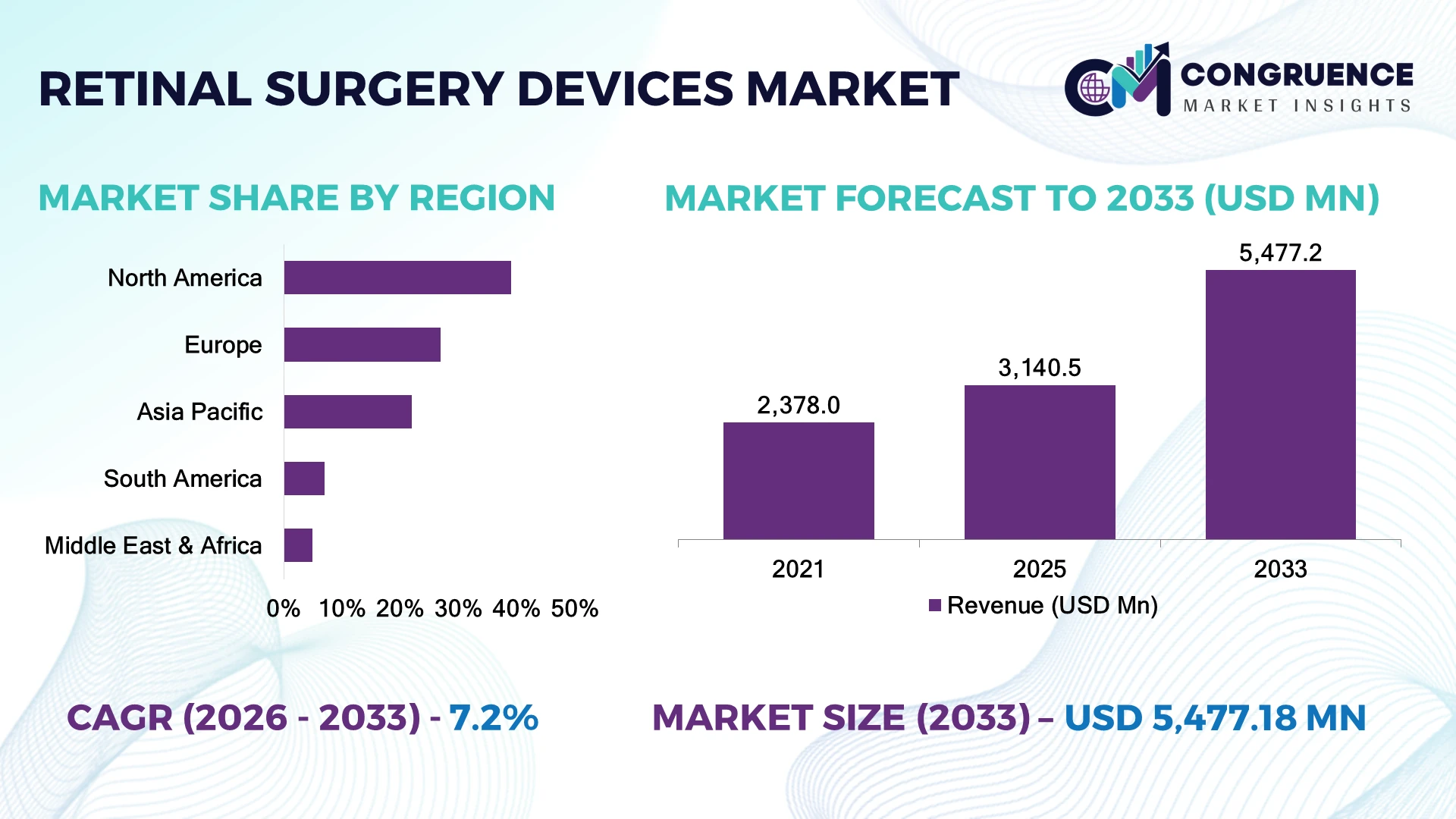
The Global Retinal Surgery Devices Market was valued at USD 3,140.5 Million in 2025 and is anticipated to reach a value of USD 5,477.2 Million by 2033 expanding at a CAGR of 7.2% between 2026 and 2033. Growth is being driven by rising vitreoretinal procedure volumes, aging-related retinal disorders, adoption of minimally invasive instrumentation, and increasing use of high-precision visualization systems.
The United States remains the dominant country market, supported by advanced ophthalmic hospitals, high retinal specialist density, and rapid uptake of digitally assisted surgical platforms; U.S. facilities account for a substantially larger installed technology base than emerging markets such as India. Approximately 30% of U.S. ophthalmic practices use advanced digital visualization or imaging workflows, reinforcing technology-led purchasing.
Strategic priority is shifting toward integrated visualization, disposable instrumentation, and precision-guided retinal procedures rather than standalone device replacement.
Market Size & Growth: USD 3,140.5 million in 2025 to USD 5,477.2 million by 2033 at 7.2% CAGR, driven by retinal disease prevalence and minimally invasive surgery.
Top Growth Drivers: Aging population 34%; diabetic eye disease 27%; minimally invasive procedures 21%.
Short-Term Forecast: By 2028, advanced visualization adoption is projected to improve surgical workflow efficiency by 10–15%.
Emerging Technologies: 3D digital visualization, OCT-guided surgery, AI-assisted imaging, and robotic microsurgical platforms are reshaping precision workflows.
Regional Leaders: North America is projected near USD 1.9 billion, Europe near USD 1.3 billion, and Asia-Pacific near USD 1.5 billion by 2033.
Consumer/End-User Trends: Approximately 40% of leading tertiary eye centers are prioritizing integrated visualization and disposable instrumentation upgrades.
Pilot/Case Example: Digital 3D visualization workflows have demonstrated approximately 15% faster surgical setup and improved ergonomic positioning.
Competitive Landscape: Alcon leads premium retinal surgery technologies, competing with Bausch + Lomb, Carl Zeiss Meditec, Topcon, and Johnson & Johnson.
Regulatory & ESG Impact: Reusable-device optimization and lower-waste surgical consumables can reduce procedure-related material waste by 10–20%.
Investment & Funding: More than USD 500 million in ophthalmic technology investment is supporting imaging, surgical robotics, and precision-device development.
Innovation & Future Outlook: AI-enabled OCT guidance, automated fluidics, smart vitrectomy systems, and connected surgical platforms will shift competition toward integrated precision ecosystems.
Retinal Surgery Devices are increasingly concentrated around vitrectomy systems, retinal forceps, illumination systems, fluidics, visualization platforms, and tamponade technologies. Demand is strengthening for smaller-gauge instruments and digitally enhanced visualization, with premium minimally invasive systems targeting 10–15% faster procedural workflows. In 2026, hospitals are also prioritizing equipment interoperability and disposable supply continuity as ophthalmic surgical capacity expands.
Retinal surgery devices are becoming strategically important because procedure precision, operating-room productivity, and visualization quality increasingly determine hospital competitiveness. Aging populations and diabetes-related retinal complications are expanding surgical caseloads, while hospitals are replacing fragmented equipment with integrated vitrectomy, illumination, fluidics, and visualization platforms. This favors suppliers capable of delivering complete procedural ecosystems rather than isolated instruments.
Technology is also changing the economics of retinal surgery. Modern 3D digital visualization can reduce surgeon dependence on conventional microscope positioning and improve workflow efficiency by approximately 10–15% in optimized operating environments. North America continues to lead premium technology adoption, while India, China, and Southeast Asian markets are expanding installed surgical capacity through tertiary eye-care infrastructure and private hospital investment.
From 2026 to 2028, manufacturers are prioritizing smaller-gauge instrumentation, integrated OCT visualization, automated fluidics, AI-assisted image interpretation, and connected surgical systems. A high-volume retinal center deploying standardized disposable instrumentation and digital visualization can reduce setup variability while improving operating-room throughput. Companies are therefore increasing R&D partnerships, surgeon-led product development, and regional distribution capacity. Competitive advantage will increasingly depend on combining precision, interoperability, procedural efficiency, and reliable consumables supply.
Increasing retinal procedure complexity is accelerating adoption of small-gauge vitrectomy, advanced illumination, and digitally assisted visualization. Approximately 35% of retinal procedures in advanced ophthalmic centers increasingly use minimally invasive instrumentation, while digital visualization adoption is approaching 30% in technology-intensive facilities. In the United States, hospitals are upgrading surgical platforms to improve visualization and surgeon ergonomics as outpatient ophthalmic capacity expands. Manufacturers are responding with integrated fluidics, illumination, and visualization systems rather than standalone instruments. The non-obvious shift is that hospitals increasingly evaluate devices through procedure-level productivity rather than unit price, creating stronger demand for platforms that reduce setup variability and support faster instrument exchange.
Premium retinal surgery platforms face substantial capital and consumables costs, limiting deployment across price-sensitive hospitals. Advanced visualization and integrated vitrectomy systems can carry acquisition premiums of 20–35% over conventional configurations, while disposable instrumentation can represent 15–25% of procedure expenditure in high-volume settings. India and other emerging markets also face uneven access to specialized retinal surgeons and tertiary ophthalmic infrastructure. Hospitals consequently delay platform upgrades or prioritize modular equipment. Manufacturers are countering these constraints through tiered product portfolios, distributor partnerships, leasing models, and locally assembled components. The strategic pressure point is consumables economics: suppliers that secure predictable pricing and multi-year contracts can protect installed-base expansion while reducing hospitals’ procurement volatility.
AI-assisted OCT interpretation, intraoperative imaging, automated fluidics, and connected surgical platforms create an opportunity to improve procedural consistency. AI-supported image analysis can reduce interpretation workload by approximately 20–30% in selected ophthalmic workflows, while automated fluidics can improve pressure-control consistency by 5–10%. China and India offer particularly attractive expansion pathways as private eye-care networks add tertiary retinal capabilities. Manufacturers are investing in software-device integration, surgeon partnerships, and interoperable imaging ecosystems rather than isolated AI features. A distinctive opportunity lies in mid-tier hospitals: modular platforms that combine advanced visualization with lower capital requirements can broaden adoption without requiring full operating-room replacement, giving suppliers a scalable route into underserved surgical centers.
Retinal surgery increasingly depends on coordinated visualization, fluidics, illumination, imaging, and disposable instrumentation, creating integration complexity across operating rooms. Approximately 15–20% of surgical workflow delays in technology-intensive environments can stem from equipment setup, calibration, or interoperability issues, while specialist training requirements remain significant. In the United States, cybersecurity and connected-device requirements are also becoming more relevant as surgical systems exchange imaging and operational data. Companies must invest in standardized interfaces, simulation-based surgeon training, remote diagnostics, and secure software architecture. The critical long-term issue is not device availability but consistent utilization: suppliers that simplify multi-platform workflows and shorten learning curves will sustain stronger hospital retention and defend installed-base economics.
Digital Visualization Becomes Standardized: 3D digital visualization is moving from premium differentiation toward routine adoption in advanced retinal centers, with utilization approaching 30% in technology-intensive facilities. The shift reduces dependence on conventional microscope ergonomics and supports collaborative viewing. Manufacturers are integrating visualization directly with vitrectomy platforms, improving workflow continuity and strengthening platform-based purchasing.
Smaller-Gauge Surgery Gains Ground: 25-gauge and 27-gauge instrumentation continues replacing larger-gauge configurations in suitable procedures, with minimally invasive approaches representing roughly 35% of procedures at advanced centers. Smaller instruments reduce incision size and support faster postoperative recovery. Companies are expanding disposable portfolios and refining cutter performance, while hospitals prioritize standardized instrument sets to simplify procurement.
Connected Systems Reshape Workflow: Approximately 20% of advanced ophthalmic facilities are increasing integration between surgical visualization, imaging, fluidics, and digital records. Interoperability is becoming an operational purchasing criterion rather than a software feature. Manufacturers are developing connected ecosystems and remote-support capabilities, while hospitals consolidate equipment around fewer integrated platforms to reduce setup variability and technical downtime.
AI Moves Into Surgical Support: AI-assisted retinal image analysis is increasingly entering preoperative planning and diagnostic workflows, with selected systems targeting 20–30% reductions in image-review workload. The 2026 transition is toward workflow augmentation rather than autonomous surgery. Companies are pairing AI with OCT and visualization platforms, creating differentiated software layers that improve clinician productivity without replacing surgeon-led decision-making.
Vitrectomy systems are estimated to hold the leading position at approximately 38% of the global retinal surgery devices market, reflecting their broad use across retinal detachment, diabetic retinopathy, macular hole, and membrane procedures. Their dominance comes from integrated cutting, aspiration, infusion, and fluidics capabilities, reducing the need for multiple standalone platforms. Small-gauge systems are strengthening within this segment, with 25-gauge configurations accounting for roughly 55% of surgeon preferences in selected complex retinal procedures. The fastest-growing type is 27-gauge instrumentation, supported by minimally invasive workflows and improved postoperative profiles, although procedure time remains a consideration.
Retinal lasers, surgical instruments, illumination systems, and visualization platforms retain important positions, particularly in specialized procedures. Digital visualization is gaining strategic importance as hospitals shift investment from basic equipment toward integrated operating-room ecosystems. Manufacturers are responding through smaller-gauge product development, integrated fluidics, advanced cutters, and partnerships with surgical centers, making platform interoperability an increasingly important purchasing criterion.
A 2025 Vitreo Retina Society-India survey of 289 surgeons found 56% preferred 25-gauge vitrectomy systems and 42% preferred 23-gauge systems for selected high-myopia procedures, demonstrating the continuing shift toward small-gauge retinal surgery.
Retinal detachment is estimated to represent approximately 34% of retinal surgery device demand, making it the leading application because treatment frequently requires vitrectomy, illumination, laser, tamponade, and specialized instrumentation. Its equipment intensity creates concentrated purchasing among high-volume vitreoretinal centers. Macular hole and epiretinal membrane procedures collectively account for an estimated 25%, supported by growing use of precision membrane-peeling instruments and small-gauge systems.
Diabetic retinopathy represents the fastest-expanding surgical application, with demand strengthened by diabetes prevalence and increasing access to tertiary retinal care. Approximately 20–25% of advanced retinal centers are expanding capabilities for complex diabetic and tractional cases. Macular disorders and other retinal conditions remain strategically relevant, particularly where OCT and widefield imaging influence surgical planning. Companies are therefore integrating visualization, fluidics, and imaging rather than selling isolated devices, strengthening recurring consumables demand and increasing the value of installed platforms.
The 2025 Vitreo Retina Society-India survey reported that 65.44% of surgeons preferred laser to the retinal break during vitrectomy for retinal detachment with superior breaks and less than Grade B proliferative vitreoretinopathy, highlighting procedure-specific technology preferences.
Hospitals are estimated to account for approximately 58% of retinal surgery device demand, supported by higher procedure volumes, specialist availability, operating-room infrastructure, and purchasing capacity for integrated vitrectomy and visualization platforms. Specialty ophthalmic hospitals represent the fastest-growing end-user group, with adoption expanding roughly 10–12% annually as dedicated retina centers invest in advanced imaging, small-gauge instrumentation, and digitally assisted surgery.
Ambulatory surgical centers are gaining relevance where retinal procedures can be standardized and performed with shorter recovery pathways, while specialty clinics remain important for diagnostic-to-surgical referral networks. Hospitals prioritize comprehensive platforms and service contracts, whereas specialized centers increasingly emphasize compact systems, disposable instrumentation, and workflow efficiency. Manufacturers are adapting through modular configurations, distributor partnerships, surgeon training programs, and bundled consumables. The competitive opportunity is shifting toward equipment ecosystems that can scale from major tertiary hospitals to high-throughput specialty eye-care facilities without compromising procedural precision.
A 2025 systematic review of augmented and virtual reality in retinal care identified expanding applications across surgical training, intraoperative guidance, and treatment, reinforcing the strategic importance of digitally enabled retinal workflows.
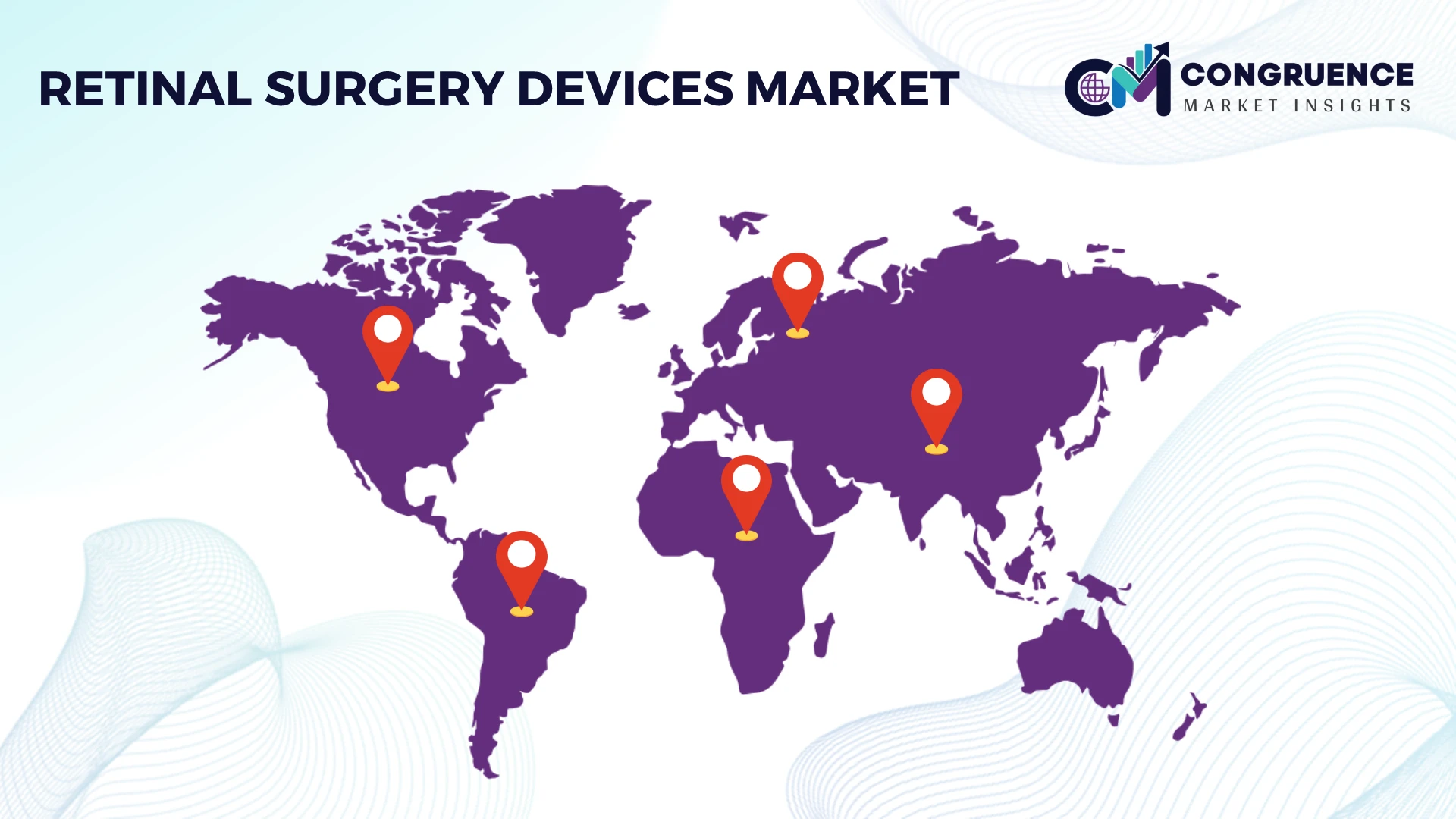
North America accounted for the largest market share at 39% in 2025 however, Asia-Pacific is expected to register the fastest growth, expanding at a CAGR of 9.1% between 2026 and 2033.
Advanced Vitreoretinal Platforms Reinforce Procedure-Centered Leadership
North America holds approximately 39% of the global retinal surgery devices market, supported by high-volume ophthalmic centers, sophisticated ambulatory surgery infrastructure, and rapid adoption of visualization and microsurgical platforms. The United States represents the region’s principal demand center, with substantial utilization of vitrectomy systems, retinal lasers, surgical microscopes, and disposable instrumentation. More than 60% of advanced retinal procedures in major U.S. centers increasingly rely on integrated visualization, illumination, and fluidics capabilities, strengthening demand for premium platforms. Canada contributes through specialized ophthalmology networks and public-sector modernization. Manufacturers are prioritizing integrated systems, surgeon-training programs, and hospital partnerships to defend premium positioning. The strategic advantage increasingly rests on workflow integration rather than standalone device performance.
United States Market Outlook: The United States remains the dominant national market because of its concentration of tertiary eye-care hospitals, ophthalmic specialists, and technology-intensive surgical centers. Approximately 70% of high-complexity retinal procedures are concentrated in specialized facilities, supporting recurring demand for advanced vitrectomy platforms, disposable surgical packs, and high-resolution visualization technologies. Strong private healthcare investment reinforces replacement and upgrade cycles.
Precision Surgery and Hospital Modernization Drive Premium Adoption
Europe represents approximately 27% of the global retinal surgery devices market, with Germany, the United Kingdom, France, and Italy forming the principal demand centers. Hospital modernization, aging patient populations, and stronger adoption of minimally invasive ophthalmic procedures are shifting procurement toward integrated surgical platforms. Germany maintains particularly strong utilization of advanced ophthalmic equipment, while the United Kingdom emphasizes efficiency and procedure throughput within capacity-constrained surgical networks. Around 45% of major ophthalmic centers are prioritizing equipment upgrades involving visualization, fluidics, or digital imaging. Manufacturers are responding with modular platforms, ergonomic systems, and energy-efficient equipment aligned with hospital procurement requirements. The region’s competitive differentiator is increasingly procedure efficiency combined with lifecycle cost control.
Germany Market Outlook: Germany leads European demand through its dense network of specialist hospitals, ophthalmic clinics, and medical-device manufacturing capabilities. Approximately 50% of advanced ophthalmic surgical centers maintain dedicated vitreoretinal capabilities, creating consistent demand for high-performance vitrectomy systems, surgical microscopes, lasers, and disposable components. Manufacturers benefit from Germany’s strong clinical engineering ecosystem and established physician-training infrastructure.
High Procedure Volumes Accelerate Technology Adoption
Asia-Pacific is becoming the fastest-expanding market as China, Japan, India, South Korea, and Australia increase ophthalmic surgical capacity. The region accounts for approximately 22% of global demand, while India and China are driving incremental procedure volumes through hospital expansion and specialist-network development. More than 35% of newly equipped ophthalmic centers in major Asian markets are incorporating digital visualization or advanced vitrectomy capabilities. Japan emphasizes premium precision systems, whereas India and China combine high-volume surgery with cost-sensitive procurement. Companies are responding through localized distribution, regional manufacturing, surgeon education, and value-engineered systems. The strongest opportunity lies in converting high patient volumes into standardized, technology-enabled surgical workflows.
China Market Outlook: China represents the region’s most strategically significant market due to expanding tertiary hospitals, ophthalmic specialty centers, and domestic medical-device manufacturing. More than 40% of newly upgraded ophthalmology facilities in major urban healthcare networks are incorporating advanced surgical visualization or vitreoretinal capabilities. Localized manufacturing and procurement policies are encouraging suppliers to establish domestic partnerships and strengthen after-sales service networks.
Specialist-Center Expansion Broadens Access to Retinal Surgery
South America represents approximately 7% of global retinal surgery device demand, with Brazil accounting for the largest share through its extensive private hospital network and concentration of ophthalmic specialists. Argentina and Colombia provide secondary growth centers as specialized eye-care facilities expand. Approximately 30% of major ophthalmic centers are concentrated in metropolitan healthcare hubs, creating uneven equipment availability between large cities and peripheral areas. Budget constraints favor modular systems, reusable components, and value-oriented procurement, while premium centers continue investing in advanced visualization and vitrectomy platforms. Manufacturers are strengthening distributor partnerships and localized technical support to reduce service delays. The key commercial opportunity is improving equipment utilization outside established metropolitan surgical centers.
Brazil Market Outlook: Brazil dominates South American demand because of its large healthcare system, extensive private ophthalmology network, and concentration of specialist surgical facilities. Approximately 55% of advanced retinal procedures are performed through major metropolitan centers, particularly São Paulo and Rio de Janeiro. Suppliers are targeting these hubs with premium equipment while expanding distributor coverage to secondary cities where surgical capacity remains comparatively limited.
Healthcare Infrastructure Investment Reshapes Premium Device Demand
Middle East & Africa accounts for approximately 5% of the global retinal surgery devices market, with demand concentrated in the Gulf states, South Africa, and selected North African healthcare hubs. Saudi Arabia and the United Arab Emirates are accelerating hospital modernization and specialist-care investment, creating stronger demand for advanced vitreoretinal platforms, surgical microscopes, and digital visualization. More than 30% of newly developed premium ophthalmology facilities in major Gulf healthcare hubs are incorporating advanced surgical technologies. South Africa remains an important specialist-care center for the wider continent. Companies are competing through distributor networks, hospital partnerships, training programs, and premium equipment deployment. Gulf infrastructure investment is shifting the market from basic equipment replacement toward technology-intensive surgical capacity.
Saudi Arabia Market Outlook: Saudi Arabia represents the strongest Middle Eastern opportunity because healthcare modernization is expanding specialist surgical infrastructure and private hospital capacity. Approximately 35% of major ophthalmology facilities in leading healthcare hubs are undergoing technology upgrades or capacity expansion. Suppliers with integrated surgical platforms, local service capabilities, and clinician-training programs are best positioned to secure institutional procurement contracts.
The market pits Alcon, Bausch + Lomb, and Carl Zeiss Meditec against Topcon, NIDEK, IRIDEX, and specialized retinal-device suppliers, with global platform leaders competing against regional cost-focused manufacturers. The top five players collectively command approximately 55% of market value, creating moderate concentration. Technology determines roughly 45% of purchasing decisions, while workflow efficiency influences about 30% and price competitiveness 25%. Alcon is strengthening its position through integrated vitreoretinal platforms, while ZEISS combines DORC surgical systems with digital diagnostics and visualization. Bausch + Lomb competes through established vitrectomy systems and disposable instrumentation, whereas IRIDEX and NIDEK emphasize laser-focused specialization. The competitive shift is moving from standalone instruments toward connected surgical ecosystems, predictive servicing, and integrated visualization. High clinical validation requirements, regulatory clearance, surgeon training, and installed-base switching costs constrain new entrants. Winning requires superior procedural efficiency, reliable consumables, integrated workflows, and a strong service network rather than low pricing alone.
Alcon Inc.
Bausch + Lomb
Carl Zeiss Meditec AG
Topcon Corporation
NIDEK CO., LTD.
IRIDEX Corporation
Lumenis Ltd.
Ellex Medical Lasers
Leica Microsystems GmbH
Geuder AG
BVI Medical
MedOne Surgical
OCULUS Optikgeräte GmbH
Oertli Instrumente AG
Digital visualization, intelligent fluidics, high-speed vitrectomy, and intraoperative OCT are reshaping retinal surgery by integrating visualization, cutting, pressure control, and procedural monitoring. Advanced 3D visualization improves surgical viewing efficiency by approximately 10–15%, while intelligent fluidics can reduce intraoperative pressure variability by around 10%. Adoption is strongest in tertiary ophthalmic centers upgrading legacy microscopes and vitrectomy consoles.
The clearest technology shift is from conventional optical microscopes toward digitally connected visualization. Alcon’s HYPERVIT 30K reaches 30,000 cuts per minute, while its UNITY platform demonstrated a 16% overall workflow-efficiency improvement versus CONSTELLATION in a 179-case study. Integrated platforms therefore deliver measurable operating-room throughput advantages over fragmented legacy configurations. Premium hospital networks benefit first because higher procedure volumes justify faster equipment utilization and standardized consumable ecosystems.
Between 2026 and 2028, AI-assisted imaging, intraoperative OCT, connected surgical analytics, and predictive service capabilities will increasingly converge into retina workflows. ZEISS is integrating diagnostics, digital tools, visualization, and DORC vitreoretinal surgery, while Alcon is expanding UNITY deployment. Companies investing now gain stronger installed-base retention, higher procedure throughput, and differentiated surgeon experience as procurement shifts toward integrated technology ecosystems.
April 2025 Alcon launched UNITY VCS, integrating HYPERVIT 30K and Intelligent Fluidics; the platform delivers 30,000 cuts per minute, strengthening high-throughput vitreoretinal surgery and accelerating upgrades from legacy consoles. Source: alcon.com (Alcon)
August 2025 Carl Zeiss Meditec expanded its retina portfolio with DORC EVA NEXUS and TDC VELOCE, adding high-speed cutting and SMART IOP capabilities to improve procedural control and integrated workflow performance. Source: zeiss.com (Zeiss)
May 2026 Alcon reported first-quarter sales of $2.7 billion, up 10% year over year, with UNITY among the launches driving momentum, reinforcing investment in next-generation ophthalmic surgical platforms. Source: alcon.com (Alcon)
April 2026 Carl Zeiss Meditec announced further integration of its anterior and posterior surgery businesses and evaluated a future manufacturing site in India, targeting greater efficiency and regional production resilience. Source: zeiss.com (Zeiss)
The Retinal Surgery Devices Market Report covers product categories including vitrectomy machines and packs, retinal laser equipment, surgical instruments, and other retinal surgery devices, alongside applications such as diabetic retinopathy, retinal detachment, epiretinal membrane, macular hole, and related retinal disorders. End-user analysis encompasses hospitals, specialty eye clinics, ambulatory surgical facilities, and other healthcare settings. The study evaluates established and emerging technologies including high-speed vitrectomy, digital 3D visualization, intraoperative OCT, intelligent fluidics, laser systems, and connected surgical platforms.
Geographic coverage spans North America, Europe, Asia-Pacific, South America, and Middle East & Africa, with country-level analysis of deployment intensity, healthcare infrastructure, specialist capacity, and technology adoption. Competitive assessment covers major manufacturers, product positioning, partnerships, installed-base strategies, and innovation priorities. The report supports investment planning, market-entry decisions, capacity expansion, competitive positioning, technology prioritization, and strategic planning through 2033.
| Report Attribute/Metric | Report Details |
|---|---|
|
Market Revenue in 2025 |
USD 3,140.5 Million |
|
Market Revenue in 2033 |
USD 5,477.2 Million |
|
CAGR (2026 - 2033) |
7.2% |
|
Base Year |
2025 |
|
Forecast Period |
2026 - 2033 |
|
Historic Period |
2021 - 2025 |
|
Segments Covered |
By Type
By Application
By End-User
|
|
Key Report Deliverable |
Revenue Forecast, Growth Trends, Market Dynamics, Segmental Overview, Regional and Country-wise Analysis, Competition Landscape |
|
Region Covered |
North America, Europe, Asia-Pacific, South America, Middle East, Africa |
|
Key Players Analyzed |
Alcon Inc., Bausch + Lomb, Carl Zeiss Meditec AG, Topcon Corporation, NIDEK CO., LTD., IRIDEX Corporation, Lumenis Ltd., Ellex Medical Lasers, Leica Microsystems GmbH, Geuder AG, BVI Medical, MedOne Surgical, OCULUS Optikgeräte GmbH, Oertli Instrumente AG |
|
Customization & Pricing |
Available on Request (10% Customization is Free) |




