
Reports
The Global Radiopharmaceuticals Market was valued at USD 980.0 Million in 2025 and is anticipated to reach a value of USD 1,722.0 Million by 2033 expanding at a CAGR of 7.3% between 2026 and 2033. Growth is being driven by rising adoption of targeted radioligand therapies, expanding PET imaging utilization, and increased isotope production capacity across oncology and neurology applications.
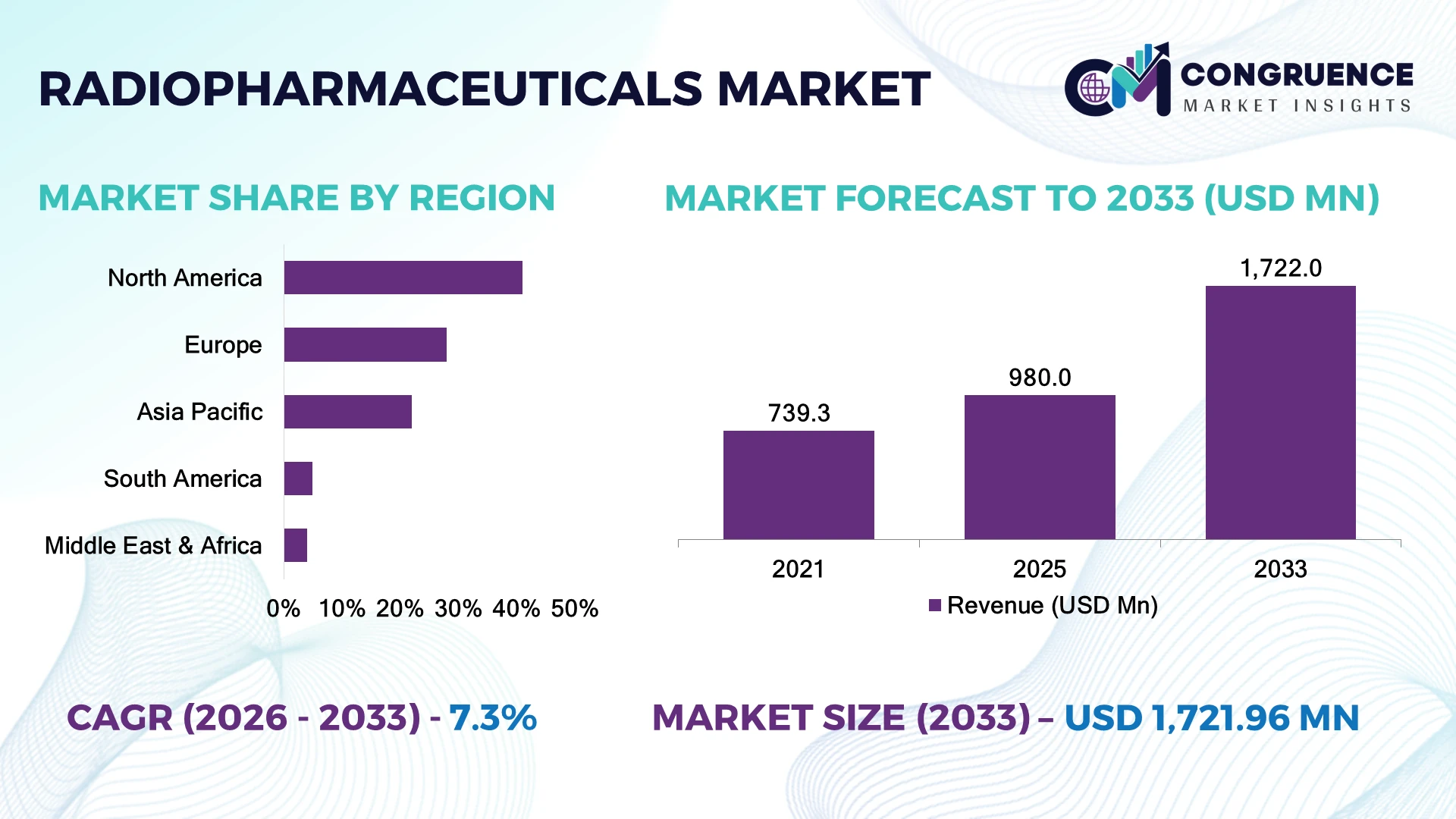
The United States dominates the global radiopharmaceuticals landscape with approximately 41% market share, supported by over 2,300 PET imaging centers, large-scale isotope production infrastructure, and strong oncology research investments exceeding USD 1 billion annually. Germany remains a key European hub with advanced nuclear medicine networks, while U.S. PET scan utilization rates are nearly 35% higher than many developed markets. The ongoing expansion of domestic isotope supply chains following geopolitical disruptions has strengthened national production resilience and accelerated deployment across major healthcare systems.
Strategic implication Companies with secure isotope sourcing, integrated manufacturing capabilities, and radioligand therapy portfolios are positioned to capture the highest-value clinical opportunities.
Market Size & Growth: USD 980.0 million in 2025 progressing toward USD 1,722.0 million by 2033, supported by expanding radioligand therapy adoption and isotope production investments.
Top Growth Drivers: Oncology imaging demand (+28%), radioligand therapy utilization (+22%), and PET scan procedure growth (+18%).
Short-Term Forecast: By 2028, radiotracer production efficiency is expected to improve by nearly 15% through automation and advanced synthesis systems.
Emerging Technologies: AI-assisted image interpretation, automated radiopharmaceutical manufacturing, and next-generation alpha-emitting isotopes are accelerating commercialization.
Regional Leaders: North America (~USD 400 million), Europe (~USD 290 million), and Asia-Pacific (~USD 210 million) lead through infrastructure expansion and clinical adoption.
Consumer/End-User Trends: More than 60% of advanced oncology centers now integrate molecular imaging into treatment planning workflows.
Pilot/Case Example: In 2024, automated dose preparation projects reduced radiopharmacy processing times by approximately 25%.
Competitive Landscape: The top player holds roughly 16% share; key participants include Novartis, GE HealthCare, Curium, Cardinal Health, and Lantheus.
Regulatory & ESG Impact: Domestic isotope programs reduced certain import dependencies by nearly 20% while improving supply security.
Investment & Funding: More than USD 2 billion has been directed toward isotope facilities, partnerships, and radioligand therapy expansion initiatives.
Innovation & Future Outlook: Alpha therapies, precision diagnostics, and integrated theranostic platforms are reshaping long-term competitive strategies.
Radiopharmaceuticals are becoming essential tools across oncology, cardiology, and neurology care pathways as healthcare systems prioritize precision diagnostics and targeted therapies. Recent innovations in alpha-emitting isotopes, automated synthesis modules, and theranostic platforms have improved clinical workflow efficiency by nearly 20%. Expanding domestic isotope production programs and strengthened regulatory pathways are creating new opportunities across emerging healthcare markets, setting the stage for broader strategic industry transformation.
Radiopharmaceuticals are emerging as a strategic healthcare segment because they directly connect diagnosis and therapy within a single precision-medicine framework. The market is attracting significant investment from pharmaceutical manufacturers, nuclear medicine providers, and healthcare infrastructure operators seeking differentiated oncology treatment pathways. At the same time, isotope supply-chain restructuring has become a priority as governments and industry participants seek to reduce reliance on limited international production sources.
Technology modernization is accelerating competitive differentiation. Automated radiopharmaceutical production systems can reduce preparation time by approximately 25% compared with traditional manual workflows while improving dose consistency and operational efficiency. The United States continues to lead in commercial deployment and clinical trials, whereas countries such as Germany and Japan are advancing specialized isotope production and molecular imaging capabilities. Over the next two to three years, theranostic treatment adoption is expected to expand significantly across major cancer centers as clinical evidence and reimbursement support strengthen.
A practical example is the expansion of dedicated radioligand therapy manufacturing facilities near treatment networks to improve delivery reliability for short-life isotopes. Companies are increasing investments in isotope production assets, strategic partnerships, and localized distribution infrastructure. Organizations that secure integrated supply chains, strengthen clinical collaborations, and accelerate theranostic innovation will establish durable competitive advantages and long-term relevance in precision healthcare delivery.
Precision oncology is reshaping radiopharmaceutical adoption as healthcare providers increasingly use molecular imaging and targeted radionuclide therapies to improve treatment accuracy. More than 65% of newly approved radiopharmaceutical development programs are focused on oncology indications, while PET imaging utilization has increased by over 20% in leading cancer centers during the past five years. The rapid expansion of theranostic treatment models is strengthening demand for diagnostic-therapeutic isotope combinations. In the United States, public and private investments in domestic isotope production have accelerated following supply-chain vulnerabilities exposed by geopolitical disruptions. This shift improves treatment availability and supports clinical scalability. Companies are responding through isotope facility expansion, radioligand partnerships, and acquisition strategies aimed at controlling manufacturing and distribution. A key strategic insight is that integrated oncology ecosystems now influence purchasing decisions as strongly as product performance itself.
Limited isotope production capacity remains a significant structural barrier across the radiopharmaceutical value chain. Nearly 70% of certain medical isotopes originate from a small number of production facilities, creating concentration risk and delivery volatility. Transportation delays can affect up to 15% of short-half-life radiopharmaceutical shipments due to strict timing requirements and regulatory controls. Emerging markets face additional constraints because nuclear medicine infrastructure penetration remains below 40% of major urban healthcare networks. These limitations directly impact treatment scheduling, operational efficiency, and commercial scalability. Companies are mitigating risks through localized production investments, long-term supply agreements, and diversified sourcing strategies. A critical operational insight is that isotope security increasingly functions as a competitive differentiator, influencing provider confidence and long-term contract opportunities.
The next wave of market expansion is centered on alpha-emitting therapies and integrated theranostic platforms capable of delivering highly targeted treatment with reduced collateral tissue exposure. Clinical development activity involving alpha-based isotopes has increased by more than 30% in recent years, while precision imaging-guided treatment planning has improved patient selection efficiency by approximately 25%. Countries including Canada and Australia are expanding isotope innovation ecosystems through research collaborations and production initiatives. Artificial intelligence integration into molecular imaging workflows is further enhancing diagnostic accuracy and operational productivity. Companies are positioning aggressively through R&D alliances, isotope licensing agreements, and dedicated manufacturing investments. A non-obvious opportunity lies in community oncology networks, where decentralized theranostic delivery models can unlock substantial untapped treatment volumes while reducing patient travel burdens.
Long-term market expansion depends on the ability to scale specialized infrastructure, workforce expertise, and coordinated delivery systems. Nuclear medicine physician shortages exceed 20% in several developed healthcare markets, while advanced radiopharmacy staffing requirements continue to rise. Approximately 30% of healthcare providers report challenges integrating radiopharmaceutical workflows with existing oncology treatment pathways. The increasing complexity of regulatory compliance, isotope handling, and treatment logistics creates additional operational pressure. Unlike supply constraints, this challenge relates to execution capacity and sustainable deployment. Companies must invest in workforce development, digital workflow platforms, and healthcare provider partnerships to maintain treatment consistency. A key strategic insight is that organizations capable of building end-to-end clinical delivery ecosystems will secure stronger market positioning than those focused solely on product innovation.
Theranostic Platform Expansion Accelerates Radioligand therapy integration is reshaping operational workflows across oncology networks, with theranostic procedure volumes increasing by nearly 24% and treatment planning efficiency improving by approximately 18%. Cancer centers are consolidating diagnostic imaging and therapeutic delivery within unified care pathways to reduce patient handoff delays. In response, manufacturers are expanding dedicated radioligand production facilities and forming clinical partnerships to support synchronized imaging-treatment ecosystems, improving scheduling reliability and utilization rates.
Domestic Isotope Production Prioritized Supply-chain resilience has become a central industry focus as healthcare providers seek alternatives to concentrated isotope supply networks. Domestic isotope output capacity has increased by roughly 20%, while reliance on imported isotopes has declined by nearly 15% in several developed healthcare markets. Regulatory support for local production infrastructure is accelerating deployment. Companies are investing in cyclotron networks, localized manufacturing hubs, and long-term procurement agreements to improve delivery certainty and reduce operational disruptions.
Automation Reshapes Radiopharmacy Operations Automated dose preparation systems are reducing radiopharmacy processing times by approximately 25% while improving dose consistency by more than 15%. Labor shortages and growing treatment complexity are driving adoption of robotic dispensing, digital workflow management, and remote quality monitoring technologies. Healthcare operators are deploying integrated production platforms to increase throughput, lower manual intervention requirements, and strengthen compliance performance across high-volume nuclear medicine facilities.
Alpha-Emitter Development Intensifies Development programs involving alpha-emitting isotopes have expanded by more than 30%, reflecting a shift toward highly targeted treatment approaches. Clinical deployment readiness has improved as manufacturing processes become more standardized and isotope availability expands. Companies are restructuring R&D portfolios, securing production partnerships, and increasing investment in specialized isotope infrastructure. A notable emerging trend is the growing focus on rare cancer indications, where precision-targeted therapies can achieve differentiated clinical outcomes and premium treatment positioning.
Diagnostic radiopharmaceuticals remain the dominant segment, accounting for approximately 62% of total market demand. Their leadership is supported by widespread PET and SPECT imaging utilization, established reimbursement pathways, and integration into routine oncology, cardiology, and neurology workflows. More than 70% of molecular imaging procedures rely on diagnostic radiotracers, making them critical for disease detection and treatment planning. Their scalability, established production networks, and broad clinical acceptance continue to reinforce market dominance across developed healthcare systems. Therapeutic radiopharmaceuticals represent the fastest-growing segment as radioligand therapies gain traction in precision oncology. Adoption has increased by nearly 22% as healthcare providers seek targeted treatment alternatives with improved clinical specificity. Demand for alpha- and beta-emitting therapies is strengthening investment activity across manufacturing and isotope supply chains. Companies are expanding therapeutic portfolios, pursuing licensing agreements, and increasing production capacity to support growing clinical deployment. The market is increasingly shifting from standalone imaging toward integrated diagnostic-therapeutic solutions, influencing long-term investment priorities and competitive positioning.
Oncology remains the leading application segment with approximately 68% market share due to increasing use of molecular imaging and targeted radionuclide therapies across multiple cancer indications. High procedure volumes, growing precision medicine adoption, and expanding theranostic treatment pathways have strengthened demand concentration. PET imaging utilization in oncology settings has increased by more than 20% over recent years, supporting both diagnosis and treatment monitoring. The segment continues to benefit from extensive clinical evidence and established integration within cancer care pathways. Neurology is the fastest-growing application area as advanced imaging agents improve detection of neurodegenerative disorders. Adoption rates have increased by approximately 18%, supported by greater focus on early disease identification and precision diagnostics. Cardiology remains strategically relevant through myocardial perfusion imaging, while research applications continue expanding as new radiotracers enter development. Companies are responding through product diversification, expanded clinical studies, and imaging platform integration. Demand is becoming increasingly operationally critical in specialized healthcare centers where diagnostic accuracy directly influences treatment decisions.
Hospitals represent the largest end-user segment, accounting for approximately 56% of overall demand due to extensive imaging infrastructure, multidisciplinary treatment capabilities, and high patient throughput. Large healthcare systems maintain integrated nuclear medicine departments capable of supporting both diagnostic and therapeutic procedures. More than 65% of radiopharmaceutical administrations occur within hospital environments where specialized equipment and trained personnel are readily available. This infrastructure concentration continues to support strong purchasing power and sustained utilization. Specialty cancer centers are the fastest-growing end-user group, with adoption increasing by nearly 20% as radioligand therapies become more widely available. Diagnostic imaging centers also remain important participants through expanding PET and SPECT service offerings, while academic and research institutions support innovation and clinical validation activities. Companies are targeting these segments through customized service agreements, isotope supply partnerships, and workflow optimization solutions. Competitive positioning increasingly depends on the ability to support specialized treatment ecosystems rather than simply supplying radiopharmaceutical products.
North America accounted for the largest market share at 41% in 2025 however, Asia-Pacific is expected to register the fastest growth, expanding at a CAGR of 8.9% between 2026 and 2033.
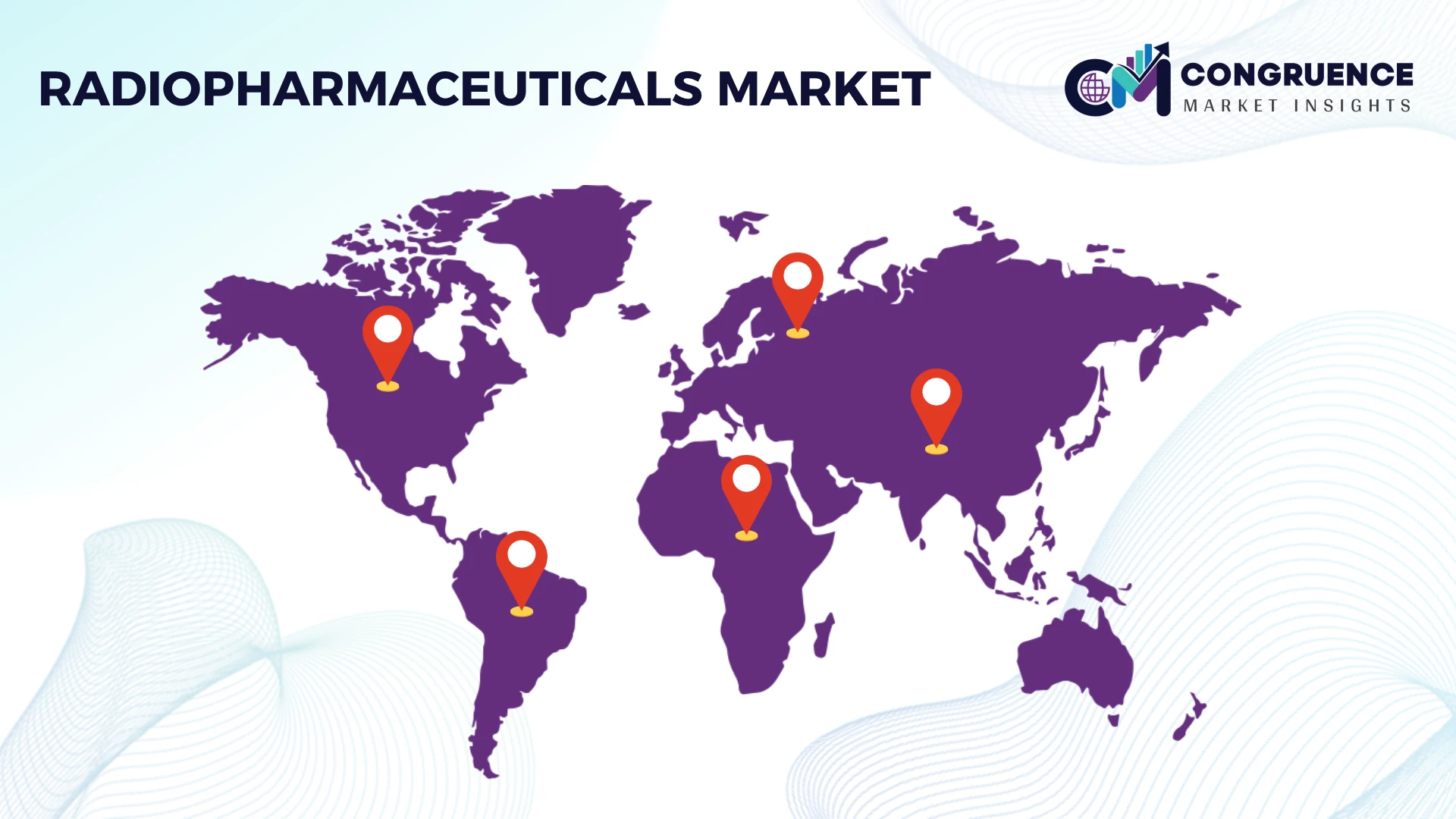
North America maintains its leadership position through advanced nuclear medicine infrastructure, strong radioligand therapy adoption, and extensive isotope production capabilities. The region represents approximately 41% of global market activity, supported by a dense network of PET imaging centers, specialized cancer treatment facilities, and vertically integrated supply chains. Healthcare providers are increasingly adopting theranostic treatment models that combine diagnostic imaging and targeted radionuclide therapy within unified care pathways. Recent investments in domestic isotope production and cyclotron expansion have improved supply resilience and reduced operational bottlenecks. Automation within radiopharmacies is also increasing, with workflow efficiency improvements exceeding 20% in high-volume facilities. Strategic partnerships between pharmaceutical developers and healthcare networks continue to strengthen deployment capacity, accelerating treatment accessibility and improving patient throughput across major oncology programs.
United States Market Outlook: The United States remains the operational center of the regional market due to its extensive nuclear medicine infrastructure, strong clinical trial ecosystem, and advanced isotope manufacturing network. More than 2,300 PET imaging facilities support widespread molecular diagnostics deployment, while leading healthcare institutions continue expanding radioligand therapy programs. Federal initiatives focused on isotope supply independence have accelerated domestic production investments. Pharmaceutical companies are strengthening partnerships with cancer centers and research institutions to improve treatment availability, optimize logistics, and support commercialization of next-generation theranostic platforms.
Europe accounts for approximately 28% of global market activity and benefits from a highly developed nuclear medicine ecosystem supported by established healthcare infrastructure and research collaboration. The region is characterized by strong adoption of molecular imaging technologies and growing deployment of targeted radionuclide therapies. Regulatory harmonization and modernization initiatives are improving cross-border clinical development and accelerating access to innovative treatment solutions. Production facilities across key European markets continue expanding isotope processing capabilities to support increasing procedural volumes. Deployment of automated radiopharmacy systems has improved operational consistency by nearly 15% across major healthcare networks. Strategic collaboration among hospitals, isotope suppliers, and pharmaceutical manufacturers is strengthening supply continuity while enhancing treatment accessibility throughout the region.
Germany Market Outlook: Germany serves as the region’s most strategically significant market due to its extensive nuclear medicine infrastructure, advanced manufacturing capabilities, and strong clinical research environment. The country operates one of Europe's largest networks of molecular imaging facilities and continues investing in isotope production modernization. Adoption of precision oncology solutions remains particularly strong, supported by leading university hospitals and specialized cancer treatment centers. Growing integration of theranostic approaches is further strengthening Germany’s position as a key innovation and deployment hub within the European radiopharmaceutical landscape.
Asia-Pacific represents approximately 22% of global market activity and is rapidly strengthening its position through healthcare modernization, rising oncology care investments, and expanding nuclear medicine capabilities. Large-scale deployment of PET imaging systems and radiopharmaceutical production infrastructure is improving access to advanced diagnostic and therapeutic procedures. The region has experienced more than 25% growth in installed molecular imaging capacity over recent years as healthcare systems prioritize precision medicine initiatives. Expanding domestic isotope manufacturing capabilities are reducing reliance on imports while improving supply reliability. Healthcare providers are increasingly investing in integrated cancer treatment networks, enabling broader adoption of theranostic workflows. Market participants continue establishing regional production hubs and strategic partnerships to address growing clinical demand.
China Market Outlook: China leads regional development through significant investments in healthcare infrastructure, isotope production, and precision oncology programs. The country has expanded its network of PET imaging facilities substantially and continues strengthening domestic radiopharmaceutical manufacturing capabilities. Government-backed healthcare modernization initiatives are accelerating clinical deployment of advanced nuclear medicine technologies. Local enterprises are partnering with international developers to enhance technology transfer, improve manufacturing efficiency, and expand access to targeted radionuclide therapies across major metropolitan healthcare systems.
South America accounts for approximately 5% of global market activity and is experiencing increasing adoption of molecular imaging and targeted radionuclide therapies within specialized healthcare settings. Growth is supported by rising cancer diagnosis rates, expanding access to advanced imaging technologies, and gradual modernization of nuclear medicine infrastructure. However, infrastructure concentration within major urban centers continues to influence deployment patterns. Investments in radiopharmacy capabilities and isotope logistics networks are improving treatment accessibility across leading healthcare markets. Strategic collaborations between healthcare providers and technology suppliers are helping optimize operational efficiency while expanding procedural capacity. Continued infrastructure development remains essential for supporting broader regional deployment.
Brazil Market Outlook: Brazil represents the largest market within South America due to its extensive healthcare network, expanding nuclear medicine capabilities, and strong concentration of specialized oncology centers. The country continues investing in imaging infrastructure and radiopharmaceutical distribution systems to improve procedural accessibility. Growing adoption of PET imaging and targeted treatment approaches is increasing demand for advanced radiotracers. Healthcare providers are strengthening partnerships with domestic and international suppliers to improve isotope availability and support expanding precision medicine programs across key urban healthcare hubs.
The Middle East & Africa region accounts for approximately 4% of global market activity and is steadily advancing through healthcare modernization initiatives, infrastructure investments, and increasing focus on specialized oncology care. Governments are prioritizing advanced diagnostic capabilities and precision treatment programs as part of broader healthcare transformation strategies. New nuclear medicine facilities and imaging centers are expanding deployment capacity across key markets. Investment in healthcare infrastructure has increased significantly, supporting the introduction of advanced radiopharmaceutical technologies and improving patient access. Strategic partnerships with international healthcare providers and technology companies are strengthening operational capabilities while accelerating workforce development and clinical expertise.
Saudi Arabia Market Outlook: Saudi Arabia leads regional market development through substantial healthcare investment, infrastructure expansion, and national healthcare transformation programs. The country is increasing deployment of advanced imaging technologies and specialized oncology treatment centers as part of long-term modernization objectives. Nuclear medicine capabilities continue expanding through hospital development projects and strategic international collaborations. Healthcare operators are investing in workforce training, technology acquisition, and clinical integration initiatives to strengthen precision medicine delivery and establish the country as a regional center for advanced cancer care services.
The competitive landscape is led by Novartis, GE HealthCare, Curium, Lantheus, and Cardinal Health, with the top five players collectively controlling approximately 58% of market activity. Competition primarily occurs between global radioligand therapy leaders and regional isotope suppliers, while integrated healthcare technology providers compete against specialized radiopharmaceutical innovators. Technology leadership, isotope access, and supply-chain reliability have become more influential than price alone. Companies with secured isotope networks achieve delivery reliability above 99%, while automated radiopharmacy systems improve operational efficiency by nearly 20% and reduce preparation time by approximately 25%. Market participants are expanding manufacturing footprints, acquiring radiopharmaceutical assets, establishing isotope partnerships, and pursuing vertical integration strategies to secure production continuity. The competitive shift is moving toward control of isotope supply, theranostic platforms, and localized manufacturing infrastructure. High regulatory requirements, specialized production facilities, and isotope sourcing constraints create substantial entry barriers. Winning requires integrated isotope access, scalable manufacturing, clinical partnerships, and rapid commercialization of next-generation theranostic solutions.
GE HealthCare Technologies Inc.
Curium Pharma
Lantheus Holdings, Inc.
Cardinal Health, Inc.
Siemens Healthineers AG
Bracco Imaging S.p.A.
Bayer AG
Eckert & Ziegler SE
Telix Pharmaceuticals Limited
NorthStar Medical Radioisotopes, LLC
SHINE Technologies, LLC
Jubilant Radiopharma
ITM Isotope Technologies Munich SE
Radiopharmaceutical technology is rapidly advancing through the convergence of theranostics, automation, and isotope innovation. Current deployment is centered on PET-based molecular imaging and targeted radionuclide therapies, with adoption exceeding 70% across major oncology-focused nuclear medicine centers. Automated synthesis modules and robotic dose-dispensing systems are improving production efficiency by approximately 20% while reducing manual handling requirements by nearly 30%. These technologies strengthen operational consistency and support higher patient throughput in specialized treatment networks.
Emerging technologies are focused on alpha-emitting isotopes, AI-assisted image interpretation, and integrated theranostic platforms. Alpha-targeted therapies demonstrate significantly higher cellular destruction efficiency than conventional beta-emitting approaches, while AI-supported image analysis improves lesion detection accuracy by roughly 15%. Adoption of advanced digital workflow systems has surpassed 40% among leading radiopharmacies. Companies with strong isotope manufacturing capabilities and integrated software platforms gain measurable advantages through faster treatment planning, reduced operational complexity, and stronger supply-chain coordination.
Between 2026 and 2028, next-generation actinium-based therapies, decentralized isotope production, and cloud-connected radiopharmacy systems will reshape competitive dynamics. Compared with traditional manual radiopharmacy workflows, fully automated production environments deliver approximately 25% faster processing and improved dose consistency. Organizations investing now in isotope security, AI-enabled imaging, and scalable theranostic infrastructure will secure stronger clinical positioning, accelerate deployment capacity, and strengthen long-term market differentiation.
December 2024 – GE HealthCare announced the acquisition of the remaining 50% stake in Nihon Medi-Physics, strengthening its radiopharmaceutical footprint in Japan and improving access to next-generation molecular imaging products. The transaction increased ownership to 100%, enhancing regional commercialization capabilities and strategic control. Source: www.gehealthcare.com
January 2025 – Lantheus announced the acquisition of Life Molecular Imaging for an upfront payment of USD 350 million, expanding its Alzheimer's disease radiodiagnostic portfolio. The move added a globally commercialized F-18 PET imaging agent and strengthened the company’s radiopharmaceutical development pipeline. Source: www.investor.lantheus.com
November 2025 – Novartis opened a new 10,000-square-foot radioligand therapy manufacturing facility in California. The site became the company’s third U.S. radioligand production location and supports an on-time delivery performance exceeding 99.9%, improving treatment availability across western U.S. markets. Source: www.novartis.com
October 2024 – GE HealthCare joined the €25.3 million Thera4Care consortium, collaborating with 29 partners to accelerate theranostics adoption across Europe. The initiative strengthens precision oncology deployment, expands clinical access, and supports development of advanced diagnostic-therapeutic workflows.
This report provides comprehensive coverage of the global radiopharmaceuticals market across diagnostic and therapeutic product categories, major clinical applications, and key end-user segments. The analysis evaluates adoption trends across oncology, cardiology, neurology, and emerging precision medicine applications while assessing deployment patterns within hospitals, imaging centers, specialty cancer facilities, and research institutions. Regional evaluation spans North America, Europe, Asia-Pacific, South America, and the Middle East & Africa, capturing market positioning, infrastructure readiness, and operational dynamics.
The report also examines technology evolution including theranostics, alpha-emitting isotopes, automated radiopharmacy systems, artificial intelligence-enabled imaging, and isotope production modernization. More than half of market activity is concentrated among leading multinational participants, while specialized innovators continue influencing competitive differentiation. Strategic insights cover supply-chain resilience, manufacturing expansion, partnership activity, regulatory developments, and investment priorities. The analysis supports business planning, market entry evaluation, capacity expansion decisions, competitive benchmarking, and long-term positioning strategies across the 2026–2033 outlook period.
| Report Attribute / Metric | Details |
|---|---|
| Market Revenue (2025) | USD 980.0 Million |
| Market Revenue (2033) | USD 1,722.0 Million |
| CAGR (2026–2033) | 7.3% |
| Base Year | 2025 |
| Forecast Period | 2026–2033 |
| Historic Period | 2021–2025 |
| Segments Covered |
By Type
By Application
By End-User
|
| Key Deliverables | Revenue Forecast; Market Trends; Growth Drivers & Restraints; Technology Insights; Segmentation Analysis; Regional Insights; Competitive Landscape; Regulatory & ESG Overview; Recent Developments |
| Regions Covered | North America; Europe; Asia-Pacific; South America; Middle East & Africa |
| Companies Profiled | Novartis AG; GE HealthCare Technologies Inc.; Curium Pharma; Lantheus Holdings, Inc.; Cardinal Health, Inc.; Siemens Healthineers AG; Bracco Imaging S.p.A.; Bayer AG; Eckert & Ziegler SE; Telix Pharmaceuticals Limited; NorthStar Medical Radioisotopes, LLC; SHINE Technologies, LLC; Jubilant Radiopharma; ITM Isotope Technologies Munich SE |
| Customization & Pricing | Available on Request (10% Customization Free) |




