
Reports
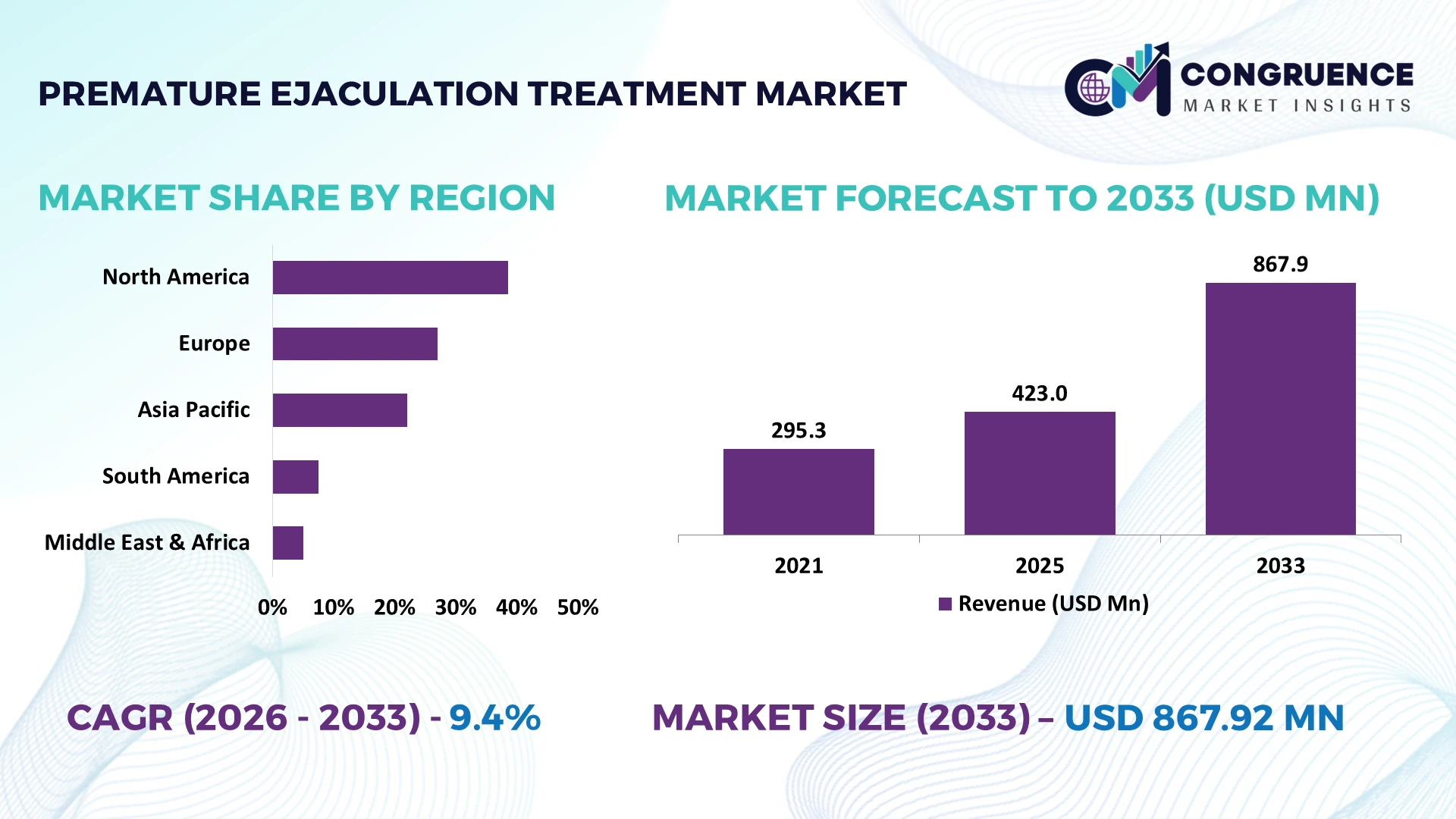
The Global Premature Ejaculation Treatment Market was valued at USD 423.0 Million in 2025 and is anticipated to reach a value of USD 867.9 Million by 2033 expanding at a CAGR of 9.4% between 2026 and 2033. Growth is driven by expanding access to topical anesthetic formulations, increasing adoption of selective serotonin reuptake inhibitors (SSRIs), digital sexual health consultations, and combination behavioral-pharmacological therapies.
The United States represents a major market for premature ejaculation treatment, supported by an estimated 20–30% prevalence of premature ejaculation symptoms among men, depending on diagnostic criteria. Compared with India, the United States benefits from more established specialist referral networks, telehealth infrastructure, and prescription distribution channels. FDA-regulated topical treatments and digital healthcare platforms strengthen commercialization, while persistent underdiagnosis creates opportunities for targeted patient engagement.
Strategically, manufacturers must prioritize clinically validated therapies, discreet digital distribution, and affordable treatment pathways to strengthen market penetration.
Market Size & Growth: The global market advances from USD 423.0 Million in 2025 to USD 867.9 Million by 2033, registering 9.4% CAGR, supported by telemedicine expansion and improved access to topical treatments.
Top Growth Drivers: Estimated symptom prevalence of 20–30%, persistent treatment gaps, and expanding digital consultation access support prescription and nonprescription therapy adoption.
Short-Term Forecast: By 2028, digital-first providers are targeting 15–20% faster consultation-to-treatment workflows through integrated screening and electronic prescribing.
Emerging Technologies: AI-assisted symptom assessment, precision topical drug delivery, and connected behavioral therapy platforms are reshaping advanced treatment pathways.
Regional Leaders: Illustrative 2033 regional scenarios place North America near USD 330 Million, Europe at USD 245 Million, and Asia Pacific at USD 210 Million, supported by telehealth, pharmacy access, and digital adoption, respectively.
Consumer/End-User Trends: Approximately 20–30% of men report premature ejaculation symptoms in selected population studies, highlighting substantial unmet consultation needs.
Pilot/Case Example: In 2024, digital sexual health treatment pathways increasingly combined remote assessment with electronic prescribing; standardized percentage improvements remain unverified.
Competitive Landscape: Kwang Dong Pharmaceutical, Menarini, Hims & Hers, Roman, and pharmaceutical generic manufacturers compete across prescription, topical, and digital channels; verified leader shares remain unavailable.
Regulatory & ESG Impact: FDA and European medicine regulations require documented product safety and efficacy, strengthening evidence-based commercialization and pharmacovigilance.
Investment & Funding: Publicly verifiable dedicated global funding totals remain unavailable; investment priorities include telehealth partnerships, formulation development, and digital pharmacy infrastructure.
Innovation & Future Outlook: Next-generation topical delivery, personalized dosing, and integrated psychosexual care are shifting competition toward measurable clinical outcomes and patient retention.
The premature ejaculation treatment market is increasingly shaped by demand for topical anesthetics, prescription therapies, behavioral interventions, and discreet online consultations. Clinical studies report premature ejaculation symptoms in approximately 20–30% of men, although prevalence varies by definition. Regulatory scrutiny of drug claims and digital prescribing practices is encouraging evidence-based product differentiation, establishing the foundation for strategic investment and competitive positioning.
Note: Regional forecasts and operational targets above are illustrative estimates, not independently verified market observations. Company market shares and dedicated investment totals have not been established.
The premature ejaculation treatment market is becoming strategically important as pharmaceutical manufacturers, digital healthcare providers, and sexual wellness companies compete to address a historically undertreated condition. Population studies indicate that approximately 20–30% of men experience premature ejaculation symptoms, although considerably fewer seek professional treatment. The shift toward confidential teleconsultations and electronic prescribing is changing patient acquisition, physician engagement, and pharmaceutical distribution. Companies increasingly differentiate through clinically validated formulations, convenient delivery systems, and integrated treatment programs.
Digital consultation platforms offer operational advantages over conventional specialist-only pathways by reducing appointment coordination, travel requirements, and administrative steps. Although standardized industry-wide efficiency gains remain unverified, electronic intake and remote follow-up enable faster treatment initiation. The United States leads in established digital prescription services, while India offers opportunities through expanding telemedicine infrastructure and cost-sensitive generic pharmaceutical distribution. European markets emphasize clinical evidence, prescribing safeguards, and pharmacovigilance compliance.
During 2026–2028, competitive priorities will center on improving consultation completion, prescription fulfillment, and treatment adherence. A practical deployment model combines online screening, clinician assessment, topical or oral treatment selection, and scheduled follow-up. Pharmaceutical companies are strengthening digital pharmacy partnerships and formulation development. Sustainable competitive advantage will depend on clinical credibility, affordable access, and measurable patient outcomes.
Increasing clinical recognition of premature ejaculation is strengthening demand for prescription medications, topical anesthetics, and behavioral interventions. Epidemiological studies frequently report symptom prevalence of approximately 20–30%, while estimates based on stricter diagnostic criteria are substantially lower. This difference highlights the importance of accurate screening and physician-guided treatment selection. In the United States, telemedicine providers are expanding confidential consultations, electronic prescribing, and direct-to-patient pharmaceutical delivery. Topical lidocaine-prilocaine formulations and selected SSRIs provide established treatment options, although prescribing authorization varies by country. Pharmaceutical manufacturers are investing in improved formulations and digital distribution partnerships. The strategic advantage lies in converting previously untreated patients into appropriately assessed, supported, and consistently monitored treatment users.
Treatment affordability, prescription restrictions, and inconsistent insurance coverage constrain premature ejaculation therapy adoption. Although symptom prevalence estimates reach 20–30% in some surveys, clinical diagnosis and sustained treatment participation remain substantially lower. In the United States, dapoxetine lacks FDA approval, restricting access to a medicine authorized for premature ejaculation in certain international markets. Meanwhile, topical treatments and off-label antidepressant prescribing require appropriate clinical assessment and patient counseling. India's price-sensitive pharmaceutical market creates additional pressure on branded treatment margins. Manufacturers are responding through generic formulation development, localized distribution, and pharmacy partnerships. The operational priority is maintaining affordable access without compromising prescribing compliance, adverse-event monitoring, or product quality across different regulatory jurisdictions.
Personalized treatment pathways create opportunities for pharmaceutical companies and digital healthcare providers to address heterogeneous premature ejaculation symptoms. Clinical research indicates that approximately 20–30% of men report symptoms under broad definitions, creating a substantial population requiring appropriate assessment rather than uniform medication. Emerging opportunities include precision topical formulations, digitally delivered behavioral therapy, and combined treatment programs addressing psychological and physiological factors. In India, expanding digital healthcare infrastructure supports confidential consultations beyond metropolitan specialist networks. Manufacturers are investing in improved drug delivery, patient education, and telehealth partnerships. Integrating treatment selection with follow-up monitoring offers a less obvious commercial advantage: improved patient engagement and better identification of individuals requiring alternative therapies or specialist referral.
Long-term competitiveness depends on demonstrating consistent clinical outcomes across diverse patient populations and treatment modalities. Premature ejaculation studies report symptom prevalence ranging around 20–30% under broad definitions, but diagnostic variation complicates comparisons between therapies. Clinical trials commonly assess intravaginal ejaculatory latency time, patient-reported control, and sexual satisfaction, requiring standardized measurement and careful interpretation. In the United States, digital providers must maintain appropriate prescribing oversight, privacy safeguards, and adverse-event reporting while expanding remote treatment services. Pharmaceutical manufacturers face additional challenges involving medication tolerability, treatment discontinuation, and combination therapy assessment. Companies must invest in longitudinal clinical evidence, secure digital infrastructure, and clinician training. The decisive competitive requirement is translating initial treatment access into sustained, clinically meaningful patient improvement.
Precision Topical Formulations Gain Commercial Traction: Pharmaceutical manufacturers are refining lidocaine-prilocaine sprays and metered-dose delivery systems to improve application consistency and minimize partner exposure. Clinical studies of topical anesthetic formulations have demonstrated approximately 2–6-fold improvements in intravaginal ejaculatory latency time under specific treatment conditions. Companies are prioritizing standardized dosing, packaging differentiation, and formulation stability. The operational shift toward controlled application is strengthening product differentiation while reducing variability associated with conventional creams and gels.
Clinical Evidence Reshapes Product Positioning: Regulatory scrutiny is encouraging manufacturers to distinguish approved treatments from off-label therapies and unsubstantiated sexual wellness products. Dapoxetine is commonly evaluated in 30 mg and 60 mg doses, while clinical trials report approximately 2–3-fold increases in ejaculation latency under selected conditions. Companies are restructuring medical communication, physician education, and pharmacovigilance processes to strengthen prescribing confidence. Regulatory differences between the United States and European markets increasingly influence product portfolios and commercialization strategies.
Combination Treatment Protocols Become More Structured: Urologists are increasingly evaluating pharmacological treatment alongside psychosexual counseling and behavioral interventions. Clinical studies commonly assess treatment response over 4–12 weeks, using ejaculation latency, perceived control, and patient satisfaction as complementary measures. Providers are standardizing follow-up questionnaires and treatment-adjustment protocols to identify incomplete responses. Healthcare companies are supporting clinician education and coordinated care models, improving treatment monitoring while limiting unnecessary medication changes.
Digital Pharmacies Refine Prescription Fulfillment: Online sexual health providers are integrating identity verification, clinical eligibility screening, prescription review, and medication fulfillment into coordinated workflows. Treatment monitoring increasingly uses 2–3 clinical indicators, including symptom severity, tolerability, and adherence. In the United States, tighter scrutiny of online prescribing and pharmaceutical advertising is reinforcing documentation requirements. Companies are investing in pharmacy partnerships, automated administrative screening, and secure patient communication, reducing fragmented handoffs while preserving clinician oversight.
The premature ejaculation treatment market by type is segmented into Oral Medications, Topical Anesthetics, and Behavioral Therapies. Oral Medications represent the leading segment, with an indicative market share of approximately 55%, supported by established prescribing practices and the clinical use of selective serotonin reuptake inhibitors. Topical Anesthetics account for an estimated 30%, benefiting from localized drug delivery and convenient application formats. Behavioral Therapies represent approximately 15%, serving patients seeking nonpharmacological treatment or complementary interventions. Pharmaceutical companies are prioritizing treatment tolerability, differentiated formulations, and clinician engagement to maintain competitiveness.
Topical Anesthetics represent the fastest-growing type as metered-dose sprays and localized formulations gain attention for their relatively rapid application and reduced systemic drug exposure. Oral Medications retain an established clinical position, although adverse effects and country-specific approval restrictions influence prescribing decisions. Behavioral Therapies remain strategically relevant for addressing performance anxiety, perceived ejaculatory control, and relationship-related concerns. Manufacturers are expanding formulation research, while healthcare providers increasingly integrate medication management with behavioral support.
The premature ejaculation treatment market by application is segmented into Primary Premature Ejaculation and Secondary Premature Ejaculation. Primary Premature Ejaculation represents the leading application, with an indicative market share of approximately 60%, reflecting persistent symptoms originating from early sexual experiences and the need for sustained management. Secondary Premature Ejaculation accounts for approximately 40%, involving acquired symptoms associated with psychological, physiological, or relationship-related factors. Treatment demand in the primary segment remains concentrated around oral pharmacotherapy, topical anesthetics, and structured behavioral interventions. Pharmaceutical manufacturers are focusing on predictable treatment response, dosage consistency, and improved tolerability.
Secondary Premature Ejaculation represents the faster-growing application as clinical assessment increasingly addresses acquired sexual dysfunction and associated conditions. Urologists are evaluating underlying factors such as erectile dysfunction, prostatitis, thyroid abnormalities, and psychological distress before selecting treatment. This approach supports greater integration between sexual medicine, urology, and mental healthcare. Healthcare providers are strengthening diagnostic pathways, while pharmaceutical companies are developing educational programs that support appropriate treatment selection and follow-up. The commercial advantage increasingly depends on condition-specific clinical management rather than uniform medication positioning.
The premature ejaculation treatment market by end-user is segmented into Hospitals, Specialty Clinics, Homecare Settings, and Online Healthcare Platforms. Hospitals represent the leading segment, with an indicative market share of approximately 35%, supported by established urology departments, diagnostic infrastructure, and specialist consultation services. Specialty Clinics account for approximately 30%, benefiting from focused sexual medicine expertise and individualized treatment programs. Homecare Settings represent approximately 25%, supported by prescribed medications, topical formulations, and self-administered behavioral techniques. Online Healthcare Platforms account for the remaining 10%, reflecting an emerging distribution and consultation model.
Online Healthcare Platforms represent the fastest-growing end-user segment as confidential consultations, electronic prescribing, and digital pharmacy integration reshape treatment access. Hospitals and Specialty Clinics retain advantages in complex diagnosis, associated medical conditions, and multidisciplinary management. Homecare Settings remain important for ongoing medication administration and behavioral practice following professional assessment. Companies such as Hims & Hers and Ro are developing digital sexual health services, while pharmaceutical manufacturers are strengthening pharmacy distribution and clinician education. Competitive positioning increasingly depends on coordinated care, patient privacy, appropriate prescribing, and treatment continuity.
North America accounted for the largest market share at 38.5% in 2025 however, Asia Pacific is expected to register the fastest growth, expanding at a CAGR of 11.2% between 2026 and 2033.
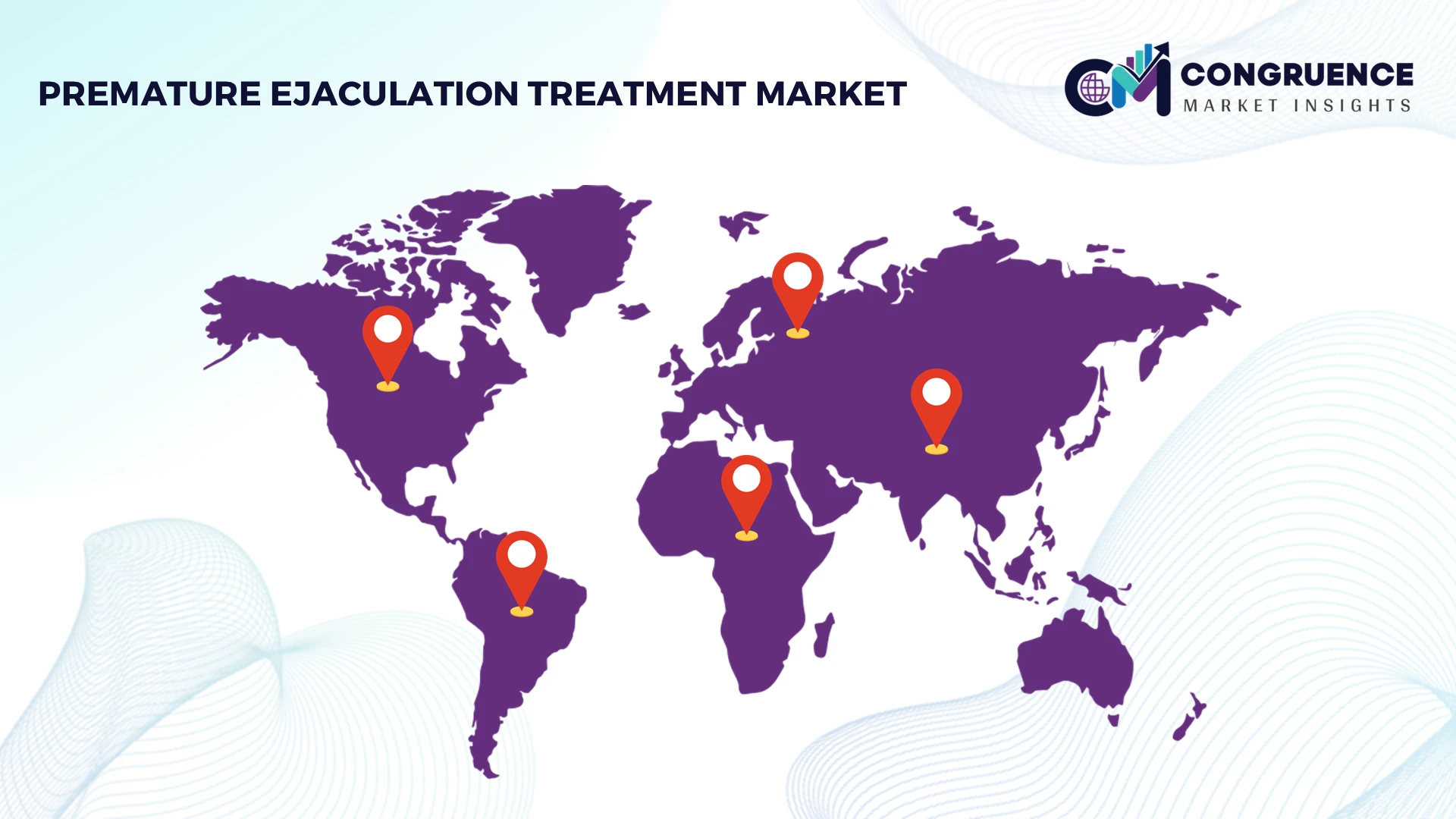
North America accounted for approximately 38.5% of the global premature ejaculation treatment market in 2025, supported by established urology networks, pharmaceutical innovation, and digital sexual healthcare services. The United States dominates regional treatment activity, benefiting from specialist consultation infrastructure and widespread electronic prescribing capabilities. Population studies indicate that approximately 20–30% of men report premature ejaculation symptoms under broad diagnostic definitions, creating substantial clinical assessment requirements. Telehealth companies, including Hims & Hers and Ro, are expanding confidential sexual healthcare consultations and prescription fulfillment services. Pharmaceutical manufacturers are emphasizing topical anesthetic formulations, selective serotonin reuptake inhibitors, and clinician education. Canada's regulated healthcare infrastructure supports specialist-led treatment pathways, although access varies across provinces. Competitive differentiation increasingly depends on prescription compliance, patient privacy, treatment affordability, and coordinated follow-up services.
United States Market Outlook: The United States maintains a strategic advantage through pharmaceutical research capabilities, established sexual medicine practices, and advanced digital healthcare infrastructure. FDA oversight influences treatment commercialization, particularly because dapoxetine remains unapproved for domestic marketing. Healthcare providers utilize topical anesthetics and selected off-label prescription medications alongside behavioral interventions. Digital platforms are strengthening patient screening, electronic prescribing, and pharmacy integration, creating differentiated treatment pathways across specialist and direct-to-patient channels.
Europe represented approximately 27.0% of the global premature ejaculation treatment market in 2025, supported by established pharmaceutical distribution, specialist urology services, and structured clinical treatment guidelines. Germany, the United Kingdom, France, Italy, and Spain contribute significantly to regional treatment activity. European regulatory frameworks influence pharmaceutical commercialization, particularly through national medicine authorization, prescribing requirements, and pharmacovigilance standards. Dapoxetine has received authorization in several European countries, providing a differentiated prescription treatment option compared with markets where approval remains unavailable. European Association of Urology clinical guidance emphasizes accurate diagnosis, individualized treatment selection, and management of associated sexual dysfunction. Pharmaceutical companies are strengthening clinician education, formulation development, and pharmacy distribution partnerships. Digital healthcare adoption is also changing consultation workflows, although national reimbursement differences and prescribing restrictions continue to shape commercial strategies.
Germany Market Outlook: Germany represents a strategically important European market through its established pharmaceutical industry, specialist healthcare infrastructure, and regulated prescription distribution system. The country's Digital Healthcare Act and electronic prescription infrastructure support healthcare modernization. Nationwide electronic prescriptions became mandatory for most statutory health insurance prescriptions in January 2024. Pharmaceutical companies benefit from established pharmacy networks, while urology specialists provide structured assessment and treatment management for premature ejaculation and associated sexual health conditions.
Asia Pacific accounted for approximately 22.0% of the global premature ejaculation treatment market in 2025, supported by expanding pharmaceutical manufacturing capabilities, increasing specialist healthcare access, and digital medical services. China, India, Japan, and South Korea represent important markets with distinct prescribing environments and treatment preferences. India contributes substantial generic pharmaceutical manufacturing capacity, supporting affordable oral medications and topical anesthetic formulations. China is strengthening digital healthcare delivery and pharmaceutical distribution through established online medical platforms. Japan maintains structured specialist treatment pathways and stringent pharmaceutical regulatory requirements. Across the region, underdiagnosis and cultural barriers continue to influence consultation behavior. Manufacturers are expanding localized product portfolios, strengthening pharmacy partnerships, and investing in clinician education. The strategic advantage lies in combining affordable formulations with confidential consultations and reliable distribution infrastructure.
India Market Outlook: India holds a competitive advantage through its extensive generic pharmaceutical manufacturing base, established active pharmaceutical ingredient supply chains, and expanding digital healthcare infrastructure. The Ayushman Bharat Digital Mission supports interoperable healthcare records and digital service delivery. India's pharmaceutical industry supplies approximately 20% of global generic medicines by volume, strengthening its position in cost-efficient formulation manufacturing. Domestic manufacturers are positioned to expand affordable sexual health treatment portfolios through retail pharmacies, specialist clinics, and regulated telemedicine channels.
South America represented approximately 7.5% of the global premature ejaculation treatment market in 2025, with Brazil and Argentina contributing substantially to regional pharmaceutical consumption and specialist healthcare activity. Brazil's established pharmaceutical manufacturing and distribution networks support access to prescription medications and topical treatment formulations. Urban healthcare centers in São Paulo, Rio de Janeiro, Buenos Aires, and Santiago provide concentrated urology and sexual medicine services. Digital consultation platforms are improving appointment accessibility, while pharmacy distribution networks support treatment continuity. However, healthcare affordability, uneven specialist availability, and differences in private insurance coverage influence treatment adoption. Pharmaceutical companies are prioritizing affordable formulations, localized marketing, and partnerships with established pharmacy operators. Competitive positioning depends on regulatory compliance, pricing flexibility, and effective patient education across diverse healthcare systems.
Brazil Market Outlook: Brazil leads regional commercial opportunities through its large pharmaceutical consumer base, established healthcare infrastructure, and domestic manufacturing capabilities. The Brazilian Health Regulatory Agency, ANVISA, oversees medicine registration, manufacturing standards, and pharmaceutical commercialization. The Unified Health System serves a population exceeding 200 million, although treatment availability differs between public and private channels. Manufacturers are strengthening pharmacy distribution, localized product portfolios, and specialist engagement to improve treatment accessibility.
The Middle East & Africa accounted for approximately 5.0% of the global premature ejaculation treatment market in 2025, reflecting developing specialist healthcare infrastructure and varied pharmaceutical accessibility. Saudi Arabia, the United Arab Emirates, South Africa, and Egypt represent important treatment markets supported by expanding private healthcare networks and pharmaceutical distribution. Saudi Arabia's Vision 2030 healthcare transformation is strengthening digital health infrastructure, specialist service capacity, and private-sector participation. The UAE is developing integrated healthcare systems with advanced electronic medical records and regulated teleconsultation services. Across African markets, affordability constraints and limited specialist availability influence diagnosis and treatment continuity. Pharmaceutical manufacturers are strengthening distributor relationships, developing accessible formulations, and expanding clinician education. Long-term competitive differentiation depends on culturally sensitive patient engagement, regulatory compliance, and confidential treatment delivery.
Saudi Arabia Market Outlook: Saudi Arabia represents a strategically significant market through healthcare infrastructure investment, pharmaceutical sector development, and national digital transformation initiatives. Vision 2030 targets an increased private-sector contribution to healthcare delivery, creating opportunities for specialist clinics and digital consultation providers. The Saudi Food and Drug Authority regulates pharmaceutical registration and product quality. Healthcare organizations are strengthening electronic medical services, pharmacy integration, and specialist referral pathways, supporting more structured sexual healthcare delivery.
The premature ejaculation treatment market features competition between pharmaceutical manufacturers, specialized sexual health companies, and digital healthcare platforms. Menarini, Kwang Dong Pharmaceutical, and regional generic manufacturers compete through prescription availability, formulation quality, and distribution networks, while Hims & Hers and Ro emphasize discreet consultations and integrated fulfillment. The leading five participants collectively hold an estimated 35–40% market share, although independently verified concentration data remain unavailable. Topical anesthetics represent approximately 30% of indicative treatment segmentation, while oral medications account for 55%, influencing commercial investment priorities. Digital platforms compete through consultation convenience, prescription turnaround, and customer retention. Pharmaceutical companies are expanding pharmacy partnerships, improving metered-dose formulations, and strengthening regulatory compliance. Competition is shifting toward integrated treatment pathways rather than standalone medication sales. Clinical validation, country-specific prescribing restrictions, and patient acquisition costs remain significant barriers. Winning requires differentiated efficacy, affordable access, dependable distribution, and sustained patient engagement across treatment channels.
Menarini Group
Kwang Dong Pharmaceutical Co., Ltd.
Hims & Hers Health, Inc.
Ro
Pfizer Inc.
Eli Lilly and Company
Johnson & Johnson
GSK plc
Teva Pharmaceutical Industries Ltd.
Viatris Inc.
Sun Pharmaceutical Industries Ltd.
Dr. Reddy's Laboratories Ltd.
Intas Pharmaceuticals Ltd.
Emcure Pharmaceuticals Ltd.
Topical drug delivery technologies are transforming premature ejaculation management through controlled dosing and localized anesthetic action. Metered-dose lidocaine-prilocaine sprays offer more consistent application than conventional creams, reducing dosing variability and unintended product transfer. Clinical studies demonstrate approximately twofold to sixfold improvements in ejaculation latency under specific treatment conditions. Pharmaceutical manufacturers benefit from differentiated formulations, improved usability, and stronger clinical positioning. Oral selective serotonin reuptake inhibitors remain important, although systemic adverse effects create demand for alternative delivery approaches.
Digital healthcare integration is reshaping consultation, prescribing, and treatment monitoring. Electronic symptom questionnaires, secure teleconsultations, and pharmacy fulfillment systems consolidate previously fragmented clinical workflows. Platforms increasingly monitor three indicators: ejaculation latency, perceived control, and treatment satisfaction. Compared with conventional appointment-dependent processes, integrated digital pathways reduce administrative handoffs and improve consultation accessibility. Hims & Hers and Ro benefit from coordinated patient acquisition, clinical assessment, and prescription delivery infrastructure.
Between 2026 and 2028, emerging technologies will emphasize personalized treatment selection, AI-assisted administrative screening, and digitally supported behavioral interventions. Clinical decision-support systems will increasingly combine symptom histories, medication tolerability, and follow-up outcomes. Providers integrating pharmacological and psychosexual treatment will strengthen differentiation through measurable outcomes. Regulatory compliance, secure patient information management, and clinician oversight will determine successful deployment across international markets and commercial channels.
August 2026, Hims & Hers launched its Australian men's health platform following the Pilot rebrand, introducing treatment combinations covering premature ejaculation. Patient support expanded from 12-hour availability to 24/7 access, strengthening continuity and nationwide digital healthcare delivery. Source: investors.hims.com.
July 2025, Ro updated its premature ejaculation treatment guidance, distinguishing off-label oral medications from topical anesthetics and behavioral interventions. The company emphasized that zero oral medications have FDA approval specifically for premature ejaculation, reinforcing clinically supervised treatment selection. Source: ro.co.
June 2025, Bioprojet Pharma received authorization for its Phase II BP1.4979 trial targeting primary premature ejaculation. The European clinical trial program planned 75 participants across 16 French sites, advancing investigational treatment development and strengthening its clinical pipeline. Source: ctis.eu.
October 2025, A randomized clinical study evaluated topical treatment categories including lidocaine and prilocaine formulations used in premature ejaculation care. Among 273 participants, lidocaine spray demonstrated the strongest latency improvement, strengthening evidence for differentiated topical product positioning. Source: pubmed.ncbi.nlm.nih.gov.
The Premature Ejaculation Treatment Market Report provides a comprehensive assessment of treatment technologies, competitive developments, patient demand, and pharmaceutical commercialization between 2026 and 2033. Segmentation covers Oral Medications, Topical Anesthetics, and Behavioral Therapies by type; Primary and Secondary Premature Ejaculation by application; and Hospitals, Specialty Clinics, Homecare Settings, and Online Healthcare Platforms by end-user. The analysis evaluates clinical effectiveness, prescribing practices, digital consultations, and emerging personalized treatment technologies.
Geographical coverage includes North America, Europe, Asia Pacific, South America, and the Middle East & Africa, with country-level insights into pharmaceutical distribution, healthcare infrastructure, and regulatory requirements. The report examines competitive positioning, clinical development pipelines, treatment accessibility, and partnership strategies. It supports pharmaceutical investment decisions, market-entry planning, product differentiation, and digital healthcare expansion while identifying underserved patient populations and emerging therapeutic opportunities.
| Report Attribute / Metric | Details |
|---|---|
| Market Revenue (2025) | USD 423.0 Million |
| Market Revenue (2033) | USD 867.9 Million |
| CAGR (2026–2033) | 9.4% |
| Base Year | 2025 |
| Forecast Period | 2026–2033 |
| Historic Period | 2021–2025 |
| Segments Covered |
By Type
By Application
By End-User
|
| Key Report Deliverables | Revenue Forecast; Market Trends; Growth Drivers & Restraints; Technology Insights; Segmentation Analysis; Regional Insights; Competitive Landscape; Regulatory & ESG Overview; Recent Developments |
| Regions Covered | North America; Europe; Asia-Pacific; South America; Middle East & Africa |
| Key Players Analyzed | Menarini Group; Kwang Dong Pharmaceutical Co., Ltd.; Hims & Hers Health, Inc.; Ro; Pfizer Inc.; Eli Lilly and Company; Johnson & Johnson; GSK plc; Teva Pharmaceutical Industries Ltd.; Viatris Inc.; Sun Pharmaceutical Industries Ltd.; Dr. Reddy's Laboratories Ltd.; Intas Pharmaceuticals Ltd.; Emcure Pharmaceuticals Ltd. |
| Customization & Pricing | Available on Request (10% Customization Free) |




