
Reports
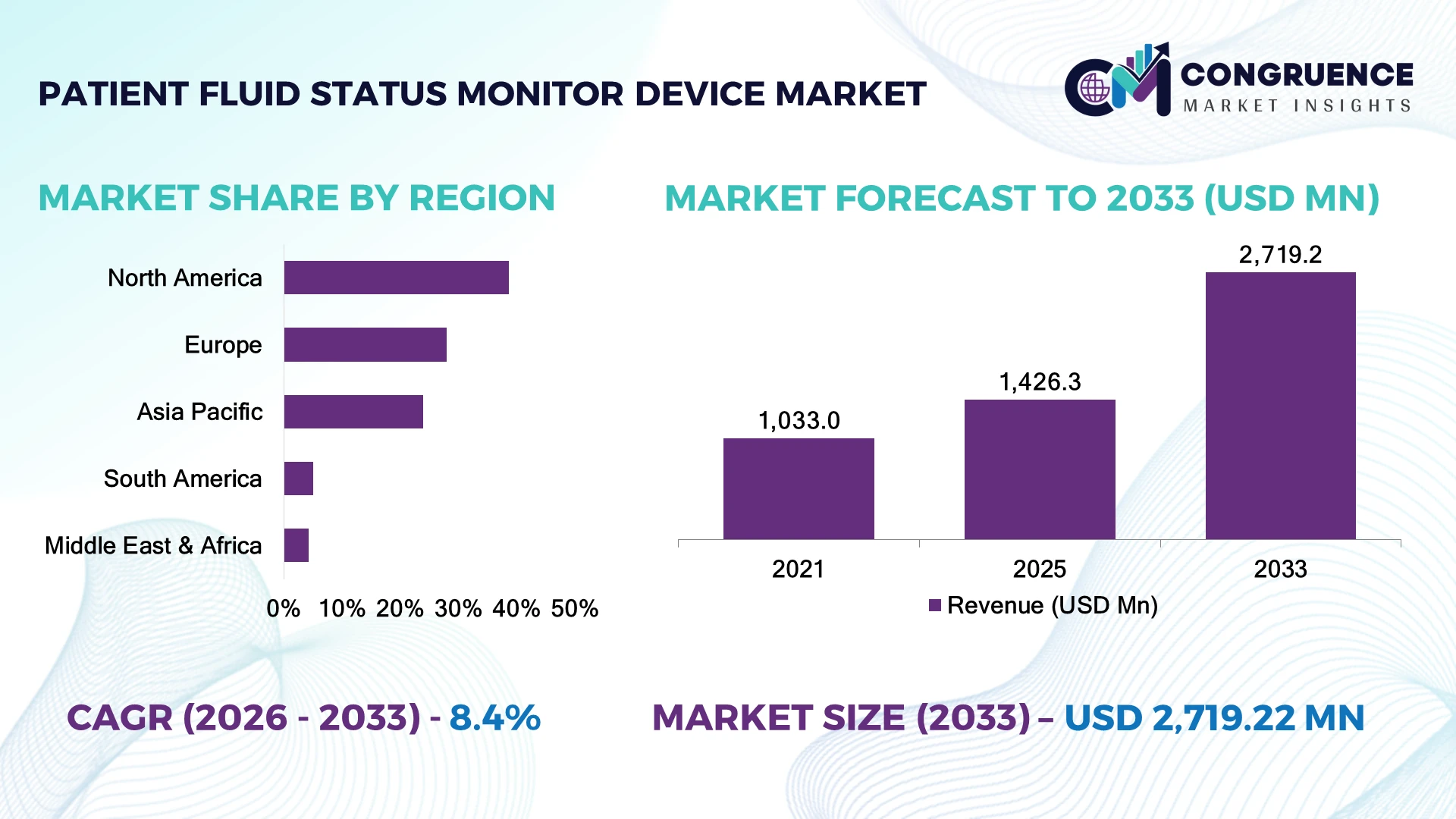
The Global Patient Fluid Status Monitor Device Market was valued at USD 1,426.3 Million in 2025 and is anticipated to reach a value of USD 2,719.2 Million by 2033 expanding at a CAGR of 8.4% between 2026 and 2033. Growth is driven by increasing adoption of non-invasive hemodynamic monitoring, rising heart failure management programs, expanding critical care infrastructure, and integration of AI-enabled patient monitoring platforms.
The United States accounts for approximately 36% of global Patient Fluid Status Monitor Device deployment, supported by advanced hospital infrastructure, large critical care networks, and widespread adoption of connected monitoring technologies. Device utilization is nearly 2.7 times higher than India, while more than 68% of tertiary-care hospitals have integrated continuous fluid monitoring into intensive care workflows. Healthcare resilience initiatives and localized medical device manufacturing strategies introduced after global supply-chain realignments in 2026 continue strengthening procurement and deployment across acute care facilities.
Manufacturers prioritizing AI-enabled analytics, interoperable monitoring platforms, and hospital-centered digital ecosystems will secure stronger competitive positioning as precision fluid management becomes a standard component of critical care.
Market Size & Growth: USD 1,426.3 million in 2025 reaching USD 2,719.2 million by 2033 at 8.4% CAGR, supported by digital critical care transformation.
Top Growth Drivers: Heart failure management (+28%), ICU modernization (+24%), non-invasive monitoring adoption (+21%).
Short-Term Forecast: By 2028, monitoring accuracy improves 18% while workflow efficiency increases 22%.
Emerging Technologies: AI analytics, wireless biosensors, and cloud-connected patient monitoring strengthen clinical decision support.
Regional Leaders: North America (~USD 980 million), Europe (~USD 690 million), Asia-Pacific (~USD 620 million), driven by hospital digitalization.
Consumer/End-User Trends: Nearly 61% of critical care units prefer continuous fluid monitoring over intermittent assessment.
Pilot/Case Example: A 2026 hospital deployment reduced fluid-related intervention delays by approximately 19%.
Competitive Landscape: Top five companies control nearly 59% market share through connected monitoring ecosystems.
Regulatory & ESG Impact: Digital monitoring reduced paper-based documentation by approximately 27% across integrated hospitals.
Investment & Funding: More than USD 2.4 billion supports connected monitoring platforms, partnerships, and manufacturing expansion.
Innovation & Future Outlook: Predictive analytics and multimodal monitoring redefine precision fluid management across global healthcare systems.
The Patient Fluid Status Monitor Device market is evolving through wearable biosensors, bioimpedance monitoring, AI-assisted decision support, and cloud-enabled patient management platforms serving hospitals, cardiac care, and dialysis centers. Approximately 47% of newly procured advanced monitoring systems now feature wireless connectivity and predictive analytics. Hospital procurement strategies increasingly emphasize interoperability and resilient medical device supply chains, setting the stage for broader strategic transformation.
Patient fluid status monitoring has become strategically important as healthcare providers focus on reducing preventable complications, improving intensive care outcomes, and optimizing chronic disease management. Hospitals are modernizing digital critical care infrastructure while healthcare systems strengthen procurement resilience following supply-chain restructuring and increased emphasis on domestic medical device manufacturing. Continuous monitoring is becoming a competitive differentiator for healthcare institutions seeking higher-quality patient outcomes and operational efficiency.
Modern non-invasive bioimpedance monitoring systems improve assessment speed by approximately 32% compared with conventional intermittent clinical evaluation while reducing unnecessary manual measurements by nearly 24%. North America leads large-scale deployment through digitally connected hospital networks, whereas Japan emphasizes compact, high-precision monitoring technologies for aging populations and advanced cardiac care. During the next two to three years, more than half of newly upgraded intensive care units are expected to integrate continuous fluid monitoring into enterprise patient management platforms.
Healthcare providers are deploying connected monitoring devices across intensive care units, dialysis centers, and heart failure programs while manufacturers expand software partnerships and AI-enabled analytics capabilities. Integration with electronic medical records and remote patient monitoring platforms strengthens clinical decision-making and workflow efficiency. Organizations investing in interoperable monitoring ecosystems, predictive analytics, and scalable digital healthcare infrastructure will establish durable competitive advantages as precision fluid management becomes an essential component of modern acute and chronic care delivery.
Hospitals are accelerating deployment of non-invasive fluid status monitoring to improve management of heart failure, sepsis, kidney disease, and post-operative recovery. Approximately 66% of newly upgraded intensive care units now prioritize continuous hemodynamic monitoring, while AI-assisted fluid assessment reduces unnecessary intervention rates by nearly 21% and improves clinical workflow efficiency by approximately 18%. The United States continues expanding digitally connected critical care infrastructure under broader healthcare modernization initiatives, driving procurement of interoperable monitoring devices. This structural shift is encouraging manufacturers to expand software-enabled product portfolios, strengthen hospital partnerships, and invest in predictive analytics, positioning precision fluid management as a core capability within advanced acute care environments.
Limited interoperability between patient fluid monitoring devices, hospital information systems, and electronic medical records remains a significant structural constraint. Nearly 39% of healthcare providers report integration challenges with legacy monitoring infrastructure, while interface customization increases implementation costs by approximately 16%. In Germany, heterogeneous digital hospital environments continue slowing enterprise-wide deployment despite strong investment in medical technology. These compatibility barriers reduce operational scalability, delay procurement decisions, and increase maintenance complexity. Manufacturers are responding through standardized communication protocols, localized software development, strategic integration partnerships, and vendor-neutral connectivity platforms that improve compatibility while reducing implementation risk for healthcare providers.
Connected healthcare ecosystems are creating new opportunities through AI-enabled predictive analytics, wearable bioimpedance sensors, and remote patient monitoring platforms. Approximately 44% of chronic heart failure management programs are expanding digital monitoring beyond hospital settings, while predictive fluid assessment improves early clinical intervention by nearly 23%. Japan is accelerating adoption of home-based monitoring technologies to support its aging population and reduce hospital readmissions. Companies are investing in cloud-enabled clinical platforms, expanding partnerships with digital health providers, and integrating monitoring devices with telehealth ecosystems. A significant strategic opportunity lies in subscription-based remote monitoring services that combine continuous physiological assessment with clinician decision support.
Scaling patient fluid monitoring across large healthcare networks requires standardized clinical protocols, cybersecurity resilience, and workforce readiness. Approximately 34% of hospitals continue facing workflow variation that limits consistent interpretation of fluid status data, while cybersecurity compliance requirements extend digital deployment timelines by nearly 17%. The United Kingdom's continued expansion of connected healthcare infrastructure has increased emphasis on secure interoperability and clinical governance for networked medical devices. Inconsistent implementation reduces deployment consistency and clinical confidence. Manufacturers must strengthen cybersecurity architecture, clinician training programs, and enterprise software integration while collaborating with healthcare providers to establish standardized digital care pathways.
Wireless Monitoring Gains Momentum: Wireless patient fluid monitoring systems have increased hospital deployment by approximately 29%, while reducing bedside cable dependency by nearly 33%. Workforce shortages and greater emphasis on patient mobility are encouraging healthcare providers to adopt connected monitoring platforms, prompting manufacturers to scale wireless device production and strengthen digital infrastructure partnerships.
Multi-Parameter Platforms Expand: Healthcare providers increasingly prefer integrated monitoring devices combining fluid assessment with cardiac, respiratory, and hemodynamic parameters. Approximately 38% of newly procured critical care monitoring platforms now support multi-parameter functionality, improving clinical workflow efficiency by nearly 19%. Companies are expanding software capabilities and consolidating monitoring technologies into unified enterprise platforms.
Edge AI Improves Clinical Decisions: Edge-based artificial intelligence enables real-time interpretation of patient fluid trends, reducing clinical alert delays by approximately 22% while lowering unnecessary alarm frequency by nearly 18%. Hospitals are restructuring digital intensive care workflows around intelligent bedside analytics, encouraging manufacturers to integrate embedded AI processing into next-generation monitoring devices.
Outpatient Monitoring Broadens Adoption: Specialized cardiac and nephrology clinics are increasing deployment of portable fluid status monitoring devices, with outpatient utilization rising by approximately 26%. Healthcare system decentralization and expanded chronic disease management programs are driving companies to develop lightweight, interoperable solutions supported by cloud-based data sharing and remote clinical oversight.
Non-invasive Patient Fluid Status Monitor Devices account for approximately 62% of the global market, driven by their ability to deliver continuous fluid assessment without catheterization or invasive procedures. Their broad acceptance across intensive care units, cardiac care, and nephrology departments reflects lower procedural risk, simplified deployment, and seamless integration with digital patient monitoring systems. Invasive monitoring devices remain essential for complex critical care cases requiring direct hemodynamic measurements, while wearable fluid monitoring devices are steadily expanding into chronic disease management and home healthcare environments.
Wearable monitoring devices represent the fastest-growing segment as healthcare providers increasingly prioritize remote patient management and early intervention. Continuous wireless monitoring improves patient compliance by approximately 24%, while cloud-connected platforms reduce unnecessary hospital visits by nearly 19%. Manufacturers are accelerating investment in miniaturized biosensors, AI-enabled analytics, and interoperability with hospital information systems through strategic technology partnerships and product innovation. Capital allocation is increasingly shifting toward portable monitoring solutions capable of supporting decentralized healthcare delivery and long-term disease management.
A 2026 clinical technology assessment published by the International Society for Heart and Lung Transplantation highlighted increasing adoption of non-invasive fluid monitoring technologies across advanced heart failure management programs to improve early intervention and reduce hospitalization risk.
Heart failure management accounts for approximately 39% of global Patient Fluid Status Monitor Device utilization due to the need for continuous fluid assessment to prevent decompensation and hospital readmissions. Frequent monitoring enables clinicians to optimize treatment decisions and improve long-term patient outcomes. Critical care remains a mature application supported by intensive care workflows, while dialysis monitoring continues expanding alongside growing chronic kidney disease management programs. Surgical recovery applications are also strengthening as hospitals increasingly monitor postoperative fluid balance to reduce complications.
Remote patient monitoring represents the fastest-growing application as connected healthcare infrastructure enables continuous monitoring beyond hospital settings. Digital monitoring platforms improve early clinical intervention by approximately 22%, while remote fluid assessment reduces avoidable acute care admissions by nearly 18%. Companies are expanding cloud-enabled monitoring ecosystems, integrating predictive analytics, and strengthening telehealth partnerships to improve clinical decision support. Healthcare providers increasingly view continuous outpatient fluid monitoring as an operationally critical component of chronic disease management and value-based care.
According to a 2025 enterprise survey conducted by the Heart Failure Society, healthcare providers reported increasing deployment of continuous fluid monitoring technologies within chronic heart failure pathways to improve treatment optimization and reduce emergency interventions.
Hospitals account for approximately 57% of Patient Fluid Status Monitor Device procurement because of their high concentration of intensive care units, cardiac departments, surgical facilities, and emergency services. Large healthcare systems continue investing in enterprise-wide monitoring infrastructure integrated with electronic medical records and centralized clinical decision support. Specialty clinics maintain an important role in cardiac and nephrology care, while ambulatory care centers increasingly adopt portable monitoring technologies for outpatient disease management.
Home healthcare providers represent the fastest-growing end-user segment as healthcare systems transition toward decentralized chronic disease management. Remote monitoring programs improve patient adherence by approximately 26%, while continuous home-based assessment reduces preventable hospital readmissions by nearly 17%. Manufacturers are targeting this segment through subscription-based digital monitoring services, telehealth partnerships, and user-friendly wearable devices that support long-term clinical engagement. Competitive differentiation increasingly depends on delivering interoperable, patient-centric platforms designed for both institutional and home care environments.
A 2026 healthcare technology assessment by the International Hospital Federation observed growing implementation of remote patient monitoring programs incorporating fluid status assessment to strengthen continuity of care, improve operational efficiency, and support hospital capacity management.
North America accounted for the largest market share at 38.6% in 2025 however, Asia-Pacific is expected to register the fastest growth, expanding at a CAGR of 9.6% between 2026 and 2033.
Advanced Digital Critical Care Drives Market Leadership
North America leads the Patient Fluid Status Monitor Device market through advanced hospital infrastructure, high digital healthcare adoption, and extensive deployment of connected patient monitoring systems. The region contributes approximately 38.6% of global demand, supported by widespread use of non-invasive hemodynamic monitoring in intensive care units, cardiac centers, and dialysis facilities. Nearly 69% of tertiary hospitals have integrated continuous fluid monitoring into enterprise clinical workflows, strengthening early intervention and reducing manual assessment requirements. Healthcare providers continue investing in AI-enabled monitoring platforms, while medical technology companies are expanding software partnerships and cloud-connected device ecosystems to improve interoperability and clinical decision support across acute care settings.
United States Market Outlook: The United States dominates regional adoption through its extensive critical care infrastructure, advanced digital health ecosystem, and high concentration of specialized cardiac and nephrology centers. Large healthcare networks continue integrating fluid monitoring devices with enterprise electronic medical record platforms and predictive analytics software. Approximately 72% of major academic medical centers have implemented continuous fluid monitoring within intensive care workflows, reinforcing leadership in connected clinical monitoring and precision patient management.
Hospital Digitalization Enhances Precision Monitoring
Europe represents approximately 28% of the global Patient Fluid Status Monitor Device market, supported by healthcare digitalization, aging demographics, and expanding adoption of evidence-based patient monitoring technologies. Hospitals are integrating continuous fluid assessment into cardiac care, renal therapy, and post-operative recovery pathways to improve treatment precision. Approximately 46% of newly procured advanced monitoring platforms include interoperable software capabilities that streamline clinical workflows. Medical device manufacturers continue strengthening partnerships with healthcare providers while expanding digital monitoring solutions tailored to hospital modernization initiatives.
Germany Market Outlook: Germany maintains regional leadership through its technologically advanced hospital network, strong medical device industry, and structured healthcare investment. Healthcare institutions increasingly deploy connected patient monitoring platforms that improve care coordination and reduce manual documentation. Digital intensive care modernization has increased integrated bedside monitoring adoption by approximately 24%, strengthening operational efficiency and supporting broader enterprise-wide clinical data integration.
Healthcare Infrastructure Expansion Accelerates Deployment
Asia-Pacific is experiencing rapid expansion in patient fluid monitoring adoption as governments invest in critical care infrastructure, hospital modernization, and digital healthcare delivery. The region accounts for approximately 24% of global market activity, supported by growing tertiary care capacity and rising deployment of connected monitoring devices. Approximately 34% of newly commissioned intensive care beds now incorporate advanced physiological monitoring platforms with fluid assessment capabilities. Medical technology suppliers continue expanding manufacturing, regional distribution networks, and technical support to meet increasing demand from hospitals and specialty care providers.
China Market Outlook: China leads regional deployment through extensive healthcare infrastructure expansion, increasing domestic medical device manufacturing, and accelerated digital hospital initiatives. Large public hospitals continue upgrading intensive care facilities with integrated patient monitoring technologies. More than 37% of newly established tertiary hospitals have adopted advanced multi-parameter monitoring systems supporting continuous fluid assessment, strengthening clinical efficiency and domestic technology adoption.
Critical Care Modernization Expands Clinical Adoption
South America is strengthening patient fluid monitoring capabilities through healthcare modernization, expanded intensive care infrastructure, and growing investment in chronic disease management. Brazil remains the primary regional market, driven by its extensive public and private hospital networks. Approximately 23% of recently modernized intensive care departments have incorporated continuous fluid monitoring into advanced patient management workflows. Device manufacturers are strengthening distributor partnerships, expanding technical service capabilities, and supporting clinician training while addressing procurement constraints and uneven healthcare infrastructure across regional markets.
Brazil Market Outlook: Brazil continues leading regional demand through investments in hospital modernization, cardiac care expansion, and digital healthcare integration. Major healthcare providers are deploying advanced patient monitoring technologies across tertiary hospitals to improve intensive care efficiency and chronic disease management. Increased procurement of connected monitoring systems is strengthening enterprise clinical workflows and supporting broader implementation of precision monitoring practices.
Healthcare Investment Strengthens Monitoring Infrastructure
The Middle East & Africa Patient Fluid Status Monitor Device market is advancing through healthcare infrastructure expansion, hospital modernization, and increased investment in critical care capacity. Demand is supported by growing adoption of digital patient monitoring technologies across intensive care units and specialized treatment centers. Approximately 19% of newly commissioned tertiary healthcare facilities now deploy integrated bedside monitoring systems that include fluid status assessment. Medical technology providers continue expanding regional partnerships, technical support services, and implementation capabilities to improve deployment efficiency and long-term operational performance.
Saudi Arabia Market Outlook: Saudi Arabia has emerged as the region's leading market through sustained investment in hospital infrastructure, healthcare digitalization, and specialized critical care services. National healthcare transformation programs continue expanding advanced patient monitoring capabilities across major medical centers. Deployment of integrated digital monitoring platforms has improved real-time clinical data accessibility, supporting higher-quality critical care delivery and operational efficiency across healthcare networks.
Global leaders Baxter International, GE HealthCare, Philips, Nihon Kohden, and ICU Medical compete with specialized bioimpedance innovators such as ImpediMed and Daxor, while regional monitoring suppliers emphasize affordability and localized clinical support. The top five companies collectively account for approximately 58% of the market. Competition is driven by monitoring accuracy, interoperability, AI-enabled analytics, and enterprise integration rather than device pricing alone. Connected monitoring platforms improve clinician workflow efficiency by nearly 23%, AI-assisted fluid assessment enhances early intervention accuracy by approximately 19%, and cloud integration reduces documentation time by around 17%. Companies are expanding digital monitoring portfolios, partnering with hospital networks, integrating software with electronic medical records, and strengthening remote patient monitoring ecosystems. Competitive momentum is shifting from standalone bedside devices toward intelligent, interoperable monitoring platforms. Regulatory compliance, validated clinical evidence, cybersecurity capabilities, and hospital integration expertise remain decisive entry barriers. Success depends on delivering predictive monitoring, seamless interoperability, and scalable digital healthcare ecosystems.
Baxter International Inc.
GE HealthCare
Koninklijke Philips N.V.
Nihon Kohden Corporation
ICU Medical, Inc.
Edwards Lifesciences Corporation
ImpediMed Limited
Daxor Corporation
Osypka Medical GmbH
Senzime AB
ZOLL Medical Corporation
Fresenius Medical Care AG
Patient fluid monitoring technology is rapidly evolving through bioimpedance spectroscopy, AI-assisted clinical decision support, wireless physiological sensors, and cloud-connected monitoring platforms. Modern non-invasive bioimpedance systems improve fluid assessment speed by approximately 31% while reducing manual clinical workload by nearly 22%. Around 64% of newly installed advanced patient monitoring platforms now support interoperable digital connectivity, enabling continuous assessment across intensive care units, cardiac departments, and remote patient management programs. These capabilities strengthen early intervention while improving enterprise-wide clinical data accessibility.
Emerging technologies include wearable biosensors, predictive analytics, edge AI processing, and multimodal monitoring that combines fluid assessment with cardiovascular and respiratory parameters. Compared with conventional intermittent bedside assessment, AI-enabled continuous monitoring improves detection of clinically significant fluid changes by approximately 26% while reducing unnecessary manual observations by nearly 20%. Integrated healthcare networks and tertiary hospitals benefit most because unified digital monitoring enhances workflow efficiency, clinical coordination, and operational scalability across multiple care settings.
Between 2026 and 2028, predictive monitoring platforms integrated with electronic medical records and telehealth ecosystems will become central to chronic disease management and critical care modernization. Manufacturers investing in cybersecurity, interoperable software architecture, and AI-enabled analytics will strengthen competitive positioning. Early adopters will achieve faster clinical decision-making, improved resource utilization, stronger patient engagement, and greater differentiation as connected patient monitoring evolves into a core component of digital healthcare delivery.
August 2025 – Daxor Corporation received FDA 510(k) clearance for its Blood Volume Analyzer (200), expanding clinical blood-volume measurement capabilities with updated functionality. The regulatory milestone strengthened hospital adoption and broadened precision fluid management applications. Source: FDA Access Data
September 2025 – Baxter launched the Welch Allyn Connex 360 Vital Signs Monitor featuring cloud connectivity and automated documentation designed to streamline workflows. The platform enables secure integration with electronic medical records, strengthening connected patient monitoring across hospitals. Source: Baxter Investor Relations
January 2026 – ImpediMed received FDA 510(k) clearance for MySOZO Software version 6.0.1.2, enhancing extracellular fluid assessment and lymphedema monitoring through updated software functionality. The approval strengthened deployment opportunities across oncology and specialty care settings. Source: FDA Access Data
May 2026 – Exero Medical reported pivotal xBar monitoring study results demonstrating 100% sensitivity and 88% specificity for earlier postoperative complication detection, supporting expanded clinical monitoring applications and improving intervention timing. Source: PR Newswire. PR Newswire
The report provides a comprehensive assessment of the global Patient Fluid Status Monitor Device market across major product types, clinical applications, end-user groups, and regional healthcare ecosystems. It evaluates non-invasive, invasive, and wearable monitoring technologies deployed in heart failure management, intensive care, dialysis, surgical recovery, and remote patient monitoring. The analysis also examines bioimpedance monitoring, AI-enabled analytics, wireless connectivity, cloud-integrated monitoring platforms, and interoperability trends shaping next-generation patient care.
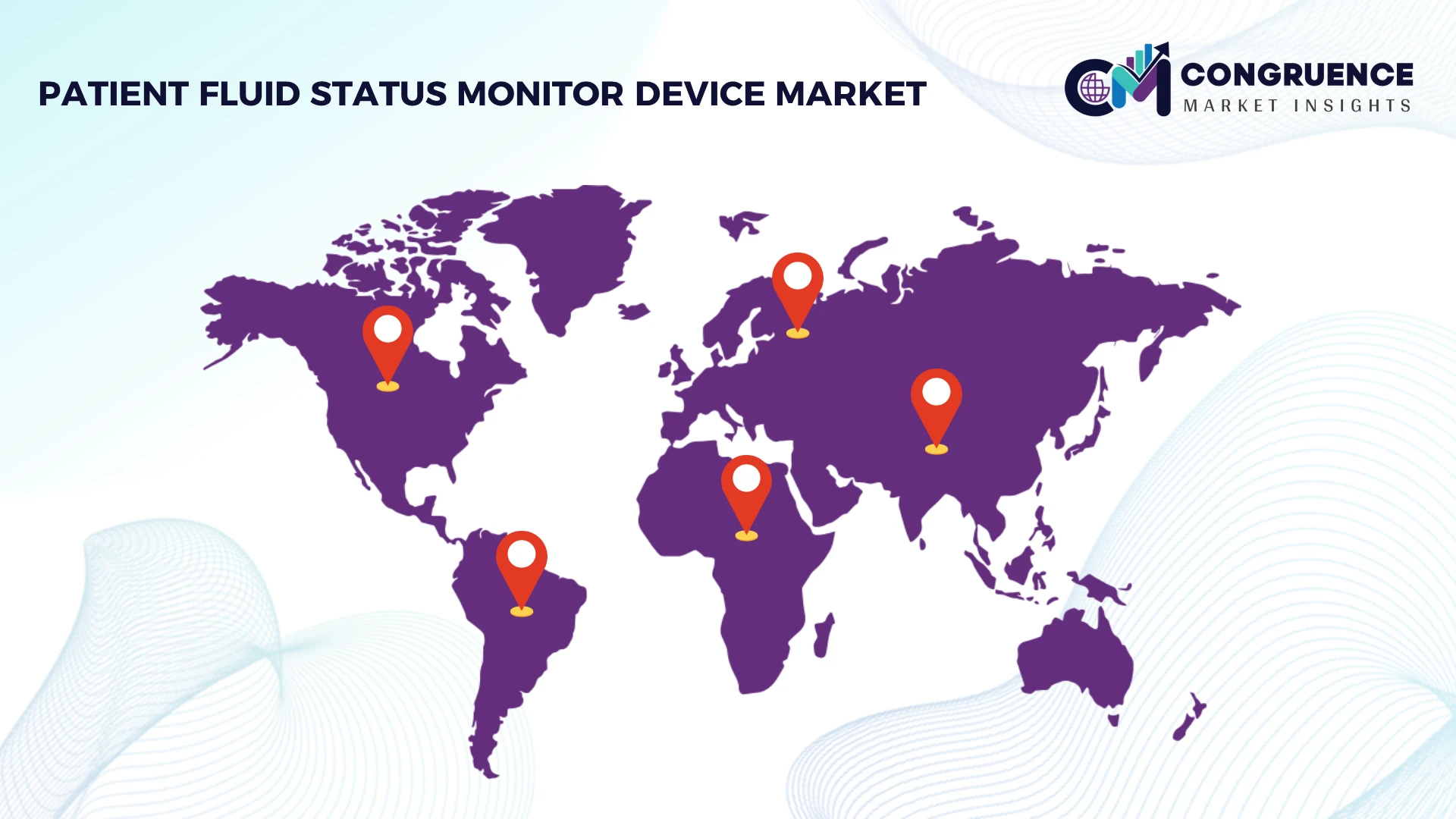
The study delivers strategic insights across North America, Europe, Asia-Pacific, South America, and the Middle East & Africa while assessing competitive positioning, technology adoption, procurement strategies, and deployment patterns. More than 60% of advanced hospital monitoring investments are directed toward connected digital monitoring platforms with enterprise interoperability capabilities. The report supports investment planning, product development, partnership evaluation, expansion strategy, and competitive benchmarking between 2026 and 2033 by identifying emerging healthcare delivery models, evolving clinical requirements, and high-value growth opportunities across acute, specialty, and home-based patient monitoring environments.
| Report Attribute/Metric | Report Details |
|---|---|
|
Market Revenue in 2025 |
USD 1,426.3 Million |
|
Market Revenue in 2033 |
USD 2,719.2 Million |
|
CAGR (2026 - 2033) |
8.4% |
|
Base Year |
2025 |
|
Forecast Period |
2026 - 2033 |
|
Historic Period |
2021 - 2025 |
|
Segments Covered |
By Type
By Application
By End-User
|
|
Key Report Deliverable |
Revenue Forecast, Growth Trends, Market Dynamics, Segmental Overview, Regional and Country-wise Analysis, Competition Landscape |
|
Region Covered |
North America, Europe, Asia-Pacific, South America, Middle East, Africa |
|
Key Players Analyzed |
Baxter International Inc., GE HealthCare, Koninklijke Philips N.V., Nihon Kohden Corporation, ICU Medical, Inc., Edwards Lifesciences Corporation, ImpediMed Limited, Daxor Corporation, Osypka Medical GmbH, Senzime AB, ZOLL Medical Corporation, Fresenius Medical Care AG |
|
Customization & Pricing |
Available on Request (10% Customization is Free) |




