
Reports
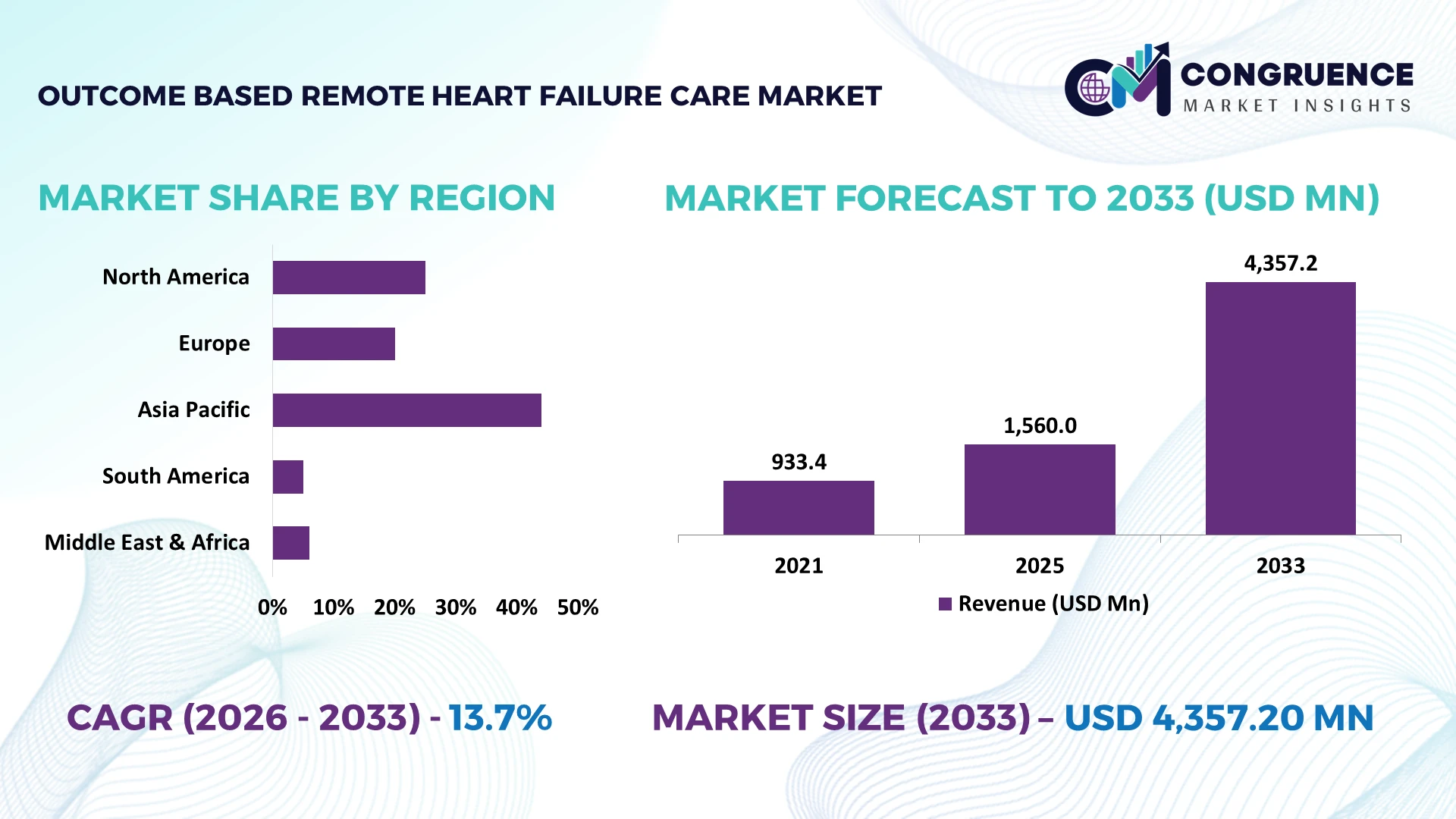
The Global Outcome-Based Remote Heart Failure Care Market was valued at USD 1560 Million in 2025 and is anticipated to reach a value of USD 4357.2 Million by 2033 expanding at a CAGR of 13.7% between 2026 and 2033. Growth is driven by Medicare remote physiologic monitoring reimbursement, expanding value-based cardiac care contracts, implantable pulmonary artery pressure monitoring, and AI-assisted early detection of heart failure deterioration.
The United States leads commercialization through advanced cardiac monitoring infrastructure, Medicare reimbursement pathways, and hospital-led disease management programs. Approximately 6.7 million American adults live with heart failure, creating substantial demand for remote intervention. The CHAMPION trial demonstrated a 28% reduction in heart failure hospitalizations at six months using pulmonary artery pressure-guided management. Compared with Germany, where statutory health insurance supports structured digital care pathways, the United States offers established remote monitoring billing codes and broader integration of implantable hemodynamic monitoring into specialist care.
Strategically, providers should prioritize reimbursement-aligned monitoring platforms, clinically validated hospitalization reduction, and partnerships connecting cardiology practices with home-based care teams.
Market Size & Growth: USD 1,560 million in 2025, reaching USD 4,357.2 million by 2033 at 13.7% CAGR, supported by reimbursement-linked remote cardiac monitoring.
Top Growth Drivers: Clinical evidence demonstrates 28% fewer heart failure hospitalizations, 43% lower hospitalization rates in selected optimized treatment cohorts, and 57% lower mortality in reported cohorts.
Short-Term Forecast: By 2028, an indicative 3-year implementation scenario targets 15% faster clinical alert review through automated triage and centralized monitoring teams.
Emerging Technologies: AI-driven deterioration prediction, implantable pulmonary artery sensors, and voice biomarkers are advancing across 3 remote cardiac monitoring approaches.
Regional Leaders: Indicative 2033 allocations place North America at USD 2,004.3 million, Europe at USD 1,089.3 million, and Asia-Pacific at USD 871.4 million, reflecting reimbursement maturity, telemonitoring integration, and digital health expansion.
Consumer/End-User Trends: Medicare introduced monitoring codes covering 2–15 days of transmitted data in 2026, expanding reimbursement options for shorter monitoring periods.
Pilot/Case Example: The CHAMPION clinical trial enrolled 550 patients and demonstrated 28% fewer heart failure hospitalizations at six months with pressure-guided management.
Competitive Landscape: Abbott leads implantable pulmonary artery monitoring; its overall market share remains unverified. Medtronic, Boston Scientific, Philips, and FIRE1 compete across connected cardiac care technologies.
Regulatory & ESG Impact: Medicare's 2026 reimbursement framework recognizes 10-minute monitoring management periods, supporting more flexible clinical staffing and remote care delivery.
Investment & Funding: FIRE1 secured USD 120 million in January 2025 to advance implantable heart failure monitoring and pivotal clinical trials.
Innovation & Future Outlook: Abbott's CardioMEMS clinical evidence includes a 7-point improvement in Kansas City Cardiomyopathy Questionnaire scores, reinforcing patient-reported outcomes as performance indicators.
The Outcome-Based Remote Heart Failure Care Market is shifting from passive vital-sign collection toward clinically actionable monitoring and measurable reductions in hospitalization. Implantable pulmonary artery pressure sensors, connected weight scales, and AI-supported risk assessment enable earlier identification of worsening congestion and more timely medication adjustment. Abbott's CardioMEMS evidence includes a 43% reduction in heart failure hospitalizations in selected treatment cohorts, demonstrating the potential value of hemodynamic-guided care. The introduction of additional Medicare monitoring codes in 2026 strengthens operational flexibility for American providers, while European innovators advance wearable and voice-based technologies. These developments establish the foundation for outcome-linked reimbursement and scalable cardiac care delivery.
Outcome-based remote heart failure care is becoming strategically important as healthcare systems shift from episodic treatment toward continuous monitoring tied to measurable clinical outcomes. Approximately 6.7 million American adults live with heart failure, creating substantial pressure on hospitals managing recurrent admissions. Medicare's evolving remote monitoring reimbursement framework supports this transition, encouraging cardiology practices to integrate connected devices, structured clinical workflows, and accountable care arrangements into routine disease management.
Implantable pulmonary artery pressure monitoring demonstrates a measurable advantage over conventional symptom-based follow-up. The CHAMPION trial reported 28% fewer heart failure hospitalizations at six months with pressure-guided management. United States providers benefit from established reimbursement pathways, while Germany emphasizes structured telemedical care through statutory insurance arrangements. Between 2026 and 2028, providers are prioritizing automated alert triage, electronic health record integration, and standardized monitoring protocols to improve intervention timing and clinical productivity.
Abbott's CardioMEMS system provides a practical deployment example, transmitting pulmonary artery pressure measurements to clinicians for medication adjustment before overt deterioration. Meanwhile, FIRE1 is advancing implantable monitoring technology through clinical development, strengthening competition around actionable physiological measurements. Healthcare organizations are expanding partnerships between device suppliers, cardiologists, and home-based care teams. Competitive advantage increasingly depends on documented hospitalization reduction, efficient clinical workflows, and sustainable reimbursement alignment.
Reducing preventable heart failure admissions is a primary driver of remote monitoring investment. The CHAMPION trial demonstrated a 28% reduction in heart failure hospitalizations at six months and a 37% reduction over approximately 15 months with pulmonary artery pressure-guided management. These outcomes establish measurable clinical value beyond routine vital-sign collection. In the United States, Medicare reimbursement mechanisms support remote physiologic monitoring and structured clinical management. Hospitals are integrating implantable sensors, connected monitoring devices, and specialist-led intervention pathways to identify congestion before symptomatic deterioration. Abbott continues developing its CardioMEMS ecosystem, while healthcare providers strengthen cardiology and home-care coordination. The strategic advantage lies in converting earlier physiological signals into timely treatment decisions that reduce avoidable inpatient utilization.
Remote heart failure care faces structural limitations from reimbursement eligibility, patient connectivity, and fragmented healthcare information systems. In the United States, approximately 7% of adults reported not using the internet in 2023, highlighting a persistent digital access barrier. Medicare's remote monitoring requirements also distinguish between device data collection and clinical management, creating documentation and billing complexity. The CHAMPION trial's 28% hospitalization reduction demonstrates clinical potential but does not eliminate the operational costs of delivering monitoring services. Providers must finance devices, patient onboarding, data connectivity, and clinical review capacity. Healthcare organizations are addressing these constraints through cellular-enabled equipment, centralized monitoring teams, and reimbursement-focused workflow redesign. Suppliers offering simplified integration and reliable patient connectivity strengthen their commercial positioning.
Combining hemodynamic measurements, connected weight monitoring, and predictive analytics creates opportunities for more individualized heart failure management. The CHAMPION trial demonstrated 37% fewer heart failure hospitalizations during extended follow-up, while selected pressure-guided care studies have reported hospitalization reductions exceeding 40%. These findings support investment in platforms that translate multiple physiological signals into prioritized clinical interventions. In Ireland, FIRE1 is advancing implantable monitoring technology focused on continuous cardiovascular assessment. Between 2026 and 2028, developers are prioritizing automated risk stratification, longitudinal patient dashboards, and integration with electronic health records. Healthcare providers are strengthening partnerships with device manufacturers and digital health companies to improve clinical decision support. The strongest opportunity lies in identifying actionable deterioration while minimizing unnecessary clinician review.
Scaling outcome-based remote heart failure programs requires reliable alert interpretation, clinical staffing, and validated decision-support algorithms. Approximately 6.7 million American adults live with heart failure, creating substantial potential monitoring workloads. The CHAMPION trial's 28% hospitalization reduction depended on structured clinical intervention rather than passive data collection, highlighting the importance of operational execution. Medicare's 2026 monitoring framework introduces additional billing pathways, increasing the need for accurate documentation and workflow coordination. Providers must distinguish clinically significant deterioration from routine physiological variability while protecting sensitive patient information. Device manufacturers are investing in signal processing, interoperable data platforms, and clinical validation studies. Healthcare organizations must establish escalation protocols, specialist oversight, and measurable response standards. Sustainable competitiveness depends on translating monitoring data into consistent interventions without overwhelming clinical teams.
Reimbursement Workflows Become More Granular: Medicare's 2026 remote monitoring framework introduces billing pathways for 2–15 days of transmitted physiological data and shorter clinical management periods. American cardiology practices are updating documentation systems, device reporting workflows, and staff allocation. Monitoring vendors are adapting billing integrations to improve reimbursement accuracy and reduce administrative workload across recurring patient management cycles.
Implantable Monitoring Moves Beyond Pressure: FIRE1 is advancing its Cordella heart failure monitoring platform through clinical development, following a USD 120 million financing round in January 2025. Its inferior vena cava sensor measures 1 additional hemodynamic dimension beyond conventional pulmonary artery pressure monitoring. The company is strengthening clinical trial infrastructure and specialist partnerships to establish differentiated monitoring capabilities.
Patient-Reported Outcomes Gain Commercial Weight: Cardiac care programs increasingly combine hospitalization measures with functional health assessments. Abbott's CardioMEMS clinical evidence includes a 7-point improvement in Kansas City Cardiomyopathy Questionnaire scores. Providers are integrating patient-reported assessments into 2 operational workflows: clinical follow-up and contract performance evaluation. Device manufacturers are expanding outcome reporting capabilities to demonstrate value beyond physiological data transmission.
Remote Care Platforms Prioritize Interoperability: United States healthcare organizations are consolidating device measurements, medication records, and clinical alerts into unified monitoring dashboards. Integration commonly connects 3 information streams: physiological measurements, electronic health records, and clinician intervention logs. Philips and other connected care suppliers are strengthening platform interoperability, enabling standardized reporting and reducing duplicated documentation across hospital and outpatient cardiology teams.
Remote Patient Monitoring Leads Connected Cardiac Care
Remote Patient Monitoring represents the leading type, with an indicative 46% market share in 2025, reflecting established device infrastructure, reimbursement mechanisms, and continuous physiological surveillance capabilities. This allocation is an analyst estimate rather than an independently verified market measurement. Hospitals and cardiology practices use connected weight scales, blood pressure monitors, and implantable hemodynamic sensors to identify clinical deterioration between appointments. Telehealth-Based Care accounts for approximately 31%, supported by virtual consultations, medication reviews, and structured follow-up appointments.
Hybrid Care Models represent the fastest-growing type, with an indicative 23% share, combining remote monitoring, virtual assessment, and scheduled in-person intervention. This approach supports continuity of care while preserving physical examination and specialist escalation when necessary. American healthcare organizations are integrating remote monitoring platforms with electronic health records and centralized clinical teams. Device suppliers are strengthening interoperability, automated reporting, and clinical decision support. Investment priorities increasingly favor platforms supporting measurable outcomes across multiple care settings rather than isolated monitoring services.
Symptom Monitoring Anchors Clinical Management Programs
Symptom Monitoring represents the leading application, with an indicative 34% market share in 2025, supported by routine assessment of breathlessness, edema, fatigue, and changes in functional status. This distribution is an analyst estimate rather than verified application-level expenditure. Medication Management accounts for approximately 27%, reflecting the importance of guideline-directed therapy optimization, treatment adherence, and remote dose adjustment. Healthcare providers are integrating structured patient questionnaires with connected physiological measurements to improve clinical assessment between scheduled consultations.
Early Deterioration Detection represents the fastest-growing application, holding an indicative 22% share, as providers prioritize identification of worsening congestion before emergency presentation. Post-Discharge Monitoring contributes approximately 17%, addressing care transitions following hospitalization. American cardiology programs are expanding automated alert prioritization, medication reconciliation, and specialist escalation workflows. Monitoring vendors are improving clinical dashboards and configurable notification thresholds. The commercial emphasis is shifting toward measurable intervention effectiveness, with healthcare purchasers evaluating platforms according to actionable alerts, clinical workload, and hospitalization outcomes.
Hospitals Lead Outcome-Based Monitoring Deployment
Hospitals represent the leading end-user segment, with an indicative 41% market share in 2025, reflecting their responsibility for acute heart failure treatment, discharge planning, and readmission management. This share is an analyst estimate rather than verified procurement data. Cardiology Clinics account for approximately 29%, supported by specialist-led medication adjustment, hemodynamic monitoring, and longitudinal disease management. Hospital-based programs typically emphasize coordinated discharge pathways, while cardiology clinics prioritize ongoing clinical assessment and intervention.
Accountable Care Organizations represent the fastest-growing end-user segment, with an indicative 18% share, driven by performance-linked care arrangements and incentives to reduce avoidable utilization. Home Healthcare Providers contribute approximately 12%, supporting patient onboarding, device education, and monitoring adherence. American healthcare organizations are expanding partnerships between hospitals, specialist practices, and home-based care teams. Technology suppliers are developing configurable clinical dashboards, outcome reporting tools, and interoperable device platforms. Competitive positioning increasingly depends on supporting coordinated intervention workflows and demonstrating measurable improvements in patient management efficiency.
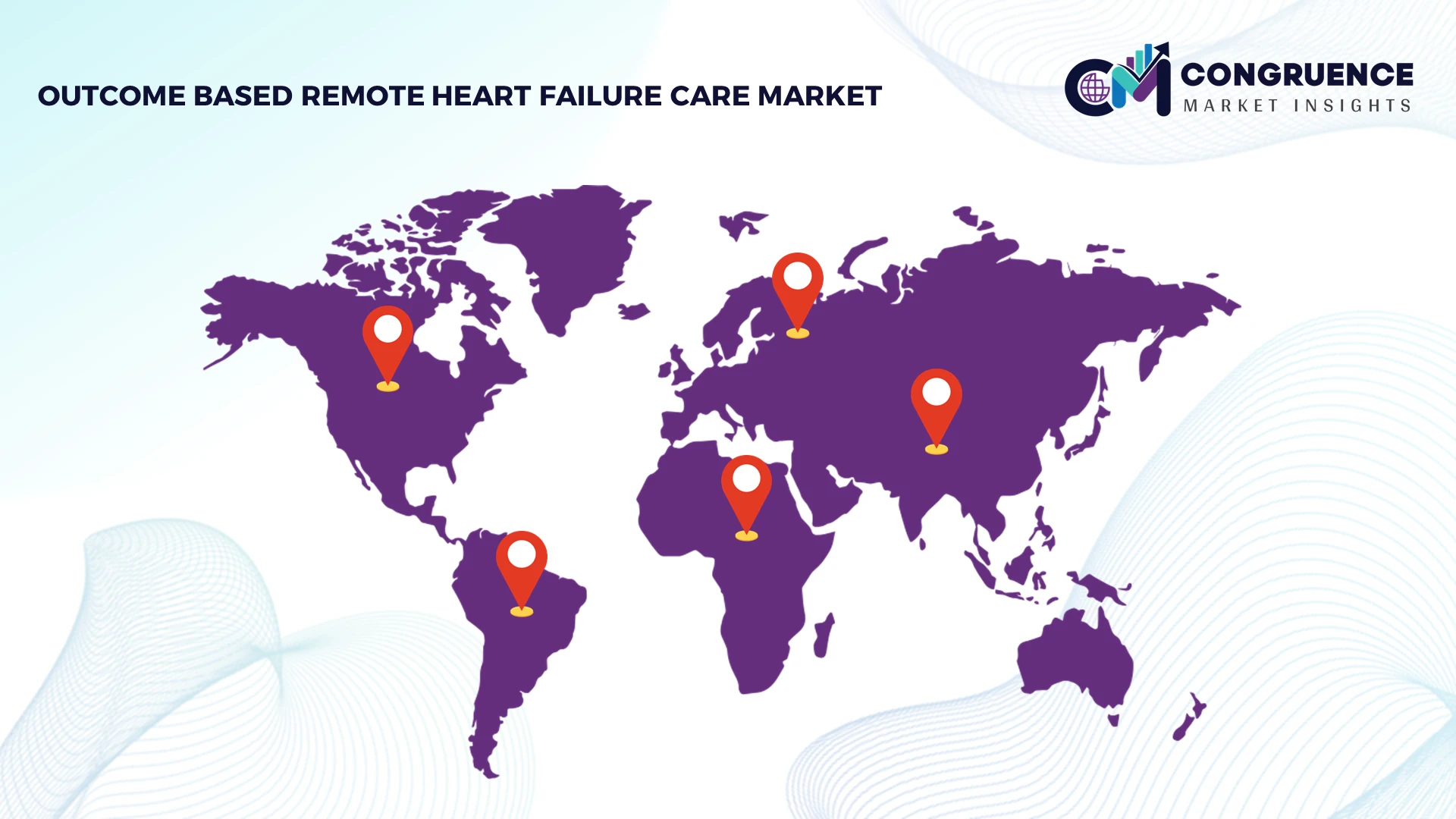
North America accounted for the largest market share at an estimated 46% in 2025 however, Asia-Pacific is expected to register the fastest growth, expanding at an estimated CAGR of 16.2% between 2026 and 2033.
Reimbursement Integration Strengthens Connected Cardiac Care Delivery
North America represents an estimated 46% of global Outcome-Based Remote Heart Failure Care Market activity, supported by established reimbursement pathways, advanced cardiac monitoring technologies, and integrated healthcare delivery networks. The United States dominates regional adoption through Medicare remote physiologic monitoring coverage and specialist-led heart failure programs. Approximately 6.7 million American adults live with heart failure, creating substantial requirements for longitudinal clinical surveillance. Abbott's CardioMEMS platform supports pulmonary artery pressure-guided management, while hospital systems integrate connected devices with electronic health records. Canada's publicly funded healthcare systems emphasize telemonitoring programs and coordinated chronic disease management. American providers increasingly evaluate remote care platforms according to hospitalization reduction, patient engagement, and clinical intervention efficiency. Device manufacturers are expanding partnerships with cardiology practices and hospital networks to strengthen deployment, reimbursement alignment, and clinical workflow integration.
United States Market Outlook: The United States maintains leadership through advanced implantable monitoring technologies, established specialist infrastructure, and value-based reimbursement programs. The Medicare Shared Savings Program included 476 accountable care organizations serving approximately 11.2 million assigned beneficiaries in 2025. This performance-oriented healthcare infrastructure supports demand for measurable patient outcomes. Healthcare organizations are strengthening remote monitoring workflows, clinical escalation protocols, and interoperability between monitoring platforms and electronic health records.
Structured Telemedicine Programs Advance Integrated Heart Failure Management
Europe accounts for an estimated 25% of global demand, supported by public healthcare infrastructure, digital health policies, and established cardiology networks. Germany leads regional deployment through structured telemedical care pathways and statutory health insurance arrangements. The German Federal Joint Committee recognizes telemonitoring for selected heart failure patients, enabling coordinated management between cardiology specialists and primary care physicians. The United Kingdom contributes through National Health Service virtual ward programs and remote monitoring initiatives. France and the Netherlands support additional adoption through digital healthcare integration and chronic disease management. European providers emphasize clinically validated technologies, data protection compliance, and standardized patient selection. Technology suppliers are strengthening partnerships with hospitals and public healthcare organizations to improve device interoperability, clinical documentation, and monitoring workflows. Reimbursement consistency remains a critical differentiator across national healthcare systems.
Germany Market Outlook: Germany benefits from established cardiology infrastructure, statutory insurance coverage, and recognized telemonitoring pathways for eligible heart failure patients. The TIM-HF2 clinical trial enrolled 1,571 patients and demonstrated improved outcomes through structured remote patient management. German healthcare organizations are integrating daily physiological measurements with telemedical centers and physician-led intervention protocols. Suppliers offering validated monitoring technologies and compatible clinical workflows are positioned to support nationwide implementation.
Digital Healthcare Infrastructure Accelerates Remote Cardiac Monitoring
Asia-Pacific represents an estimated 20% of global market activity, supported by expanding digital healthcare infrastructure, large cardiovascular patient populations, and increasing hospital technology adoption. China leads regional scale through extensive hospital networks, connected medical device manufacturing, and telemedicine platforms. India contributes significant demand through cardiac specialty hospitals, mobile healthcare applications, and expanding digital health infrastructure. Japan and South Korea emphasize advanced medical technologies, population aging, and structured chronic disease management. India's Ayushman Bharat Digital Mission surpassed 700 million Ayushman Bharat Health Account registrations by 2024, demonstrating substantial progress in digital health identity infrastructure. Regional healthcare providers are strengthening remote consultation systems, connected monitoring capabilities, and electronic medical record integration. Technology companies are developing mobile-first platforms and affordable monitoring equipment to address differences in healthcare access and specialist availability.
China Market Outlook: China offers significant deployment potential through extensive cardiovascular care infrastructure, domestic medical device manufacturing, and expanding internet hospital services. The country has more than 330 million people living with cardiovascular diseases, creating substantial requirements for scalable chronic disease management. Hospitals are integrating remote consultation platforms with connected diagnostic devices and specialist follow-up services. Domestic technology suppliers benefit from manufacturing scale, mobile connectivity, and established digital healthcare ecosystems.
Hospital Telemonitoring Programs Address Specialist Access Gaps
South America accounts for an estimated 5% of global demand, supported by expanding telemedicine services, cardiovascular disease management initiatives, and increasing digital healthcare adoption. Brazil leads regional activity through extensive hospital networks, private healthcare providers, and public telehealth programs. The country's Unified Health System supports digital healthcare initiatives intended to improve specialist access across geographically dispersed populations. Argentina and Chile contribute additional demand through hospital-based cardiac monitoring and remote consultation services. Regional healthcare providers face reimbursement fragmentation, uneven broadband availability, and limited specialist coverage outside major metropolitan areas. These constraints encourage adoption of mobile-enabled monitoring systems and centralized clinical review models. Technology suppliers are strengthening partnerships with hospitals and local healthcare distributors to improve device availability, technical support, and integration with existing patient management systems.
Brazil Market Outlook: Brazil maintains a leading position through its large healthcare system, established cardiology centers, and expanding digital health services. The country has more than 200 million residents, creating substantial requirements for geographically accessible cardiovascular care. São Paulo's specialist hospitals provide infrastructure for advanced monitoring and clinical research. Healthcare organizations are prioritizing connected patient follow-up, teleconsultation, and coordinated care pathways to reduce dependence on repeated hospital visits.
Healthcare Digitalization Expands Remote Monitoring Infrastructure
Middle East & Africa represents an estimated 4% of global demand, supported by healthcare modernization, expanding specialist services, and investment in digital medical infrastructure. Saudi Arabia and the United Arab Emirates lead regional adoption through hospital digitalization and national healthcare transformation initiatives. Saudi Arabia's Vision 2030 healthcare reforms emphasize integrated care delivery, digital services, and improved management of chronic conditions. The country's Seha Virtual Hospital connects more than 200 hospitals, demonstrating substantial virtual healthcare infrastructure. South Africa contributes demand through private hospital networks and specialized cardiovascular services. Regional providers are investing in connected monitoring equipment, electronic health records, and remote consultation capabilities. Uneven specialist availability and infrastructure disparities influence deployment strategies, encouraging partnerships between healthcare organizations, telecommunications providers, and medical technology companies to extend monitoring beyond major hospitals.
Saudi Arabia Market Outlook: Saudi Arabia benefits from government-backed healthcare transformation, expanding digital infrastructure, and established specialist hospital networks. The Health Sector Transformation Program supports coordinated care models and greater integration of virtual services. Seha Virtual Hospital provides a foundation for remote specialist collaboration across geographically dispersed healthcare facilities. Technology suppliers are targeting interoperable monitoring platforms, clinical decision support, and partnerships with hospital groups to support scalable cardiovascular disease management.
The Outcome-Based Remote Heart Failure Care Market features competition between implantable monitoring specialists Abbott and FIRE1, medical technology groups Medtronic and Boston Scientific, and connected care provider Philips. The leading five suppliers hold an indicative combined 41% market share, although independently verified concentration data remains unavailable. Abbott differentiates through CardioMEMS pulmonary artery pressure monitoring, supported by clinical evidence demonstrating 28% fewer heart failure hospitalizations at six months. FIRE1 advances alternative hemodynamic sensing, while Philips competes through connected care platforms and hospital integration capabilities. Medtronic and Boston Scientific leverage established cardiac device portfolios and clinical relationships. Competition increasingly centers on actionable physiological data, reimbursement compatibility, interoperability, and measurable patient outcomes. Manufacturers are expanding clinical studies, specialist partnerships, and digital monitoring capabilities. Regulatory approval, clinical validation, and integration costs create substantial entry barriers. Competitive leadership requires proven hospitalization reduction, efficient clinical workflows, and sustainable deployment economics.
Abbott Laboratories
Medtronic plc
Boston Scientific Corporation
Koninklijke Philips N.V.
FIRE1
Biotronik SE & Co. KG
GE HealthCare Technologies Inc.
Siemens Healthineers AG
ResMed Inc.
Teladoc Health, Inc.
Biofourmis
Implicity
Story Health
Eko Health, Inc.
Current technologies combine connected weight scales, blood pressure monitors, implantable pulmonary artery sensors, and clinician dashboards. Abbott's CardioMEMS platform enables daily hemodynamic assessment before overt congestion develops. Compared with conventional symptom-based follow-up, pressure-guided management reduced heart failure hospitalizations by 28% at six months in the CHAMPION trial. Clinical deployment includes specialist monitoring programs across American hospitals, supporting earlier medication adjustment, fewer admissions, and stronger performance under outcome-linked care contracts.
Emerging technologies integrate machine learning, wearable biosensors, automated alert prioritization, and electronic health record interoperability. Multimodal systems combine physiological measurements with medication histories and patient-reported symptoms to identify deterioration patterns. Selected pressure-guided studies report hospitalization reductions exceeding 40%, although benefits depend on clinical protocols. Germany's structured telemonitoring programs demonstrate adoption beyond individual hospital pilots. Device manufacturers and digital health providers are strengthening partnerships around interoperable dashboards, reducing fragmented clinical workflows and supporting more consistent patient surveillance.
Disruptive innovation centers on implantable venous pressure sensing, predictive digital biomarkers, and automated clinical decision support. FIRE1 is advancing inferior vena cava monitoring, creating competition with established pulmonary artery technologies. Between 2026 and 2028, developers are prioritizing validated algorithms, personalized alert thresholds, and integrated intervention records. Providers gaining actionable signals without excessive false alerts achieve stronger clinical productivity, while suppliers demonstrating reproducible outcomes secure procurement advantages in value-based healthcare delivery models.
October 2026: Abbott received FDA approval for CardioGuide HF App enhancements, enabling CardioMEMS patients to access pulmonary artery pressure readings and personalized medication updates through smartphones. The 2 capabilities strengthen patient engagement and support physician-directed treatment between appointments. Source: abbott.mediaroom.com
January 2025: FIRE1 secured USD 120 million in financing and announced FDA Breakthrough Device Designation for its Norm heart failure management system. The investment supports pivotal clinical evaluation of implantable fluid monitoring technology, strengthening development and regulatory readiness. Source: enterprise-ireland.com
April 2025: University of Michigan Health reported 59% fewer hospitalizations among high-risk patients following participation in a home monitoring program. Connected devices and clinician support enabled daily assessment, demonstrating operational benefits for hospital avoidance and coordinated care delivery. Source: uofmhealth.org
September 2025: Australia's NSW Agency for Clinical Innovation reported results from a heart failure monitoring program involving 108 patients. All-cause admissions declined 37%, while hospital bed days fell 41%, demonstrating improved utilization through structured remote clinical surveillance. Source: nsw.gov.au
The Outcome-Based Remote Heart Failure Care Market Report examines industry developments between 2026 and 2033, covering Remote Patient Monitoring, Telehealth-Based Care, and Hybrid Care Models. Application analysis includes Medication Management, Symptom Monitoring, Post-Discharge Monitoring, and Early Deterioration Detection. End-user coverage evaluates Hospitals, Cardiology Clinics, Home Healthcare Providers, and Accountable Care Organizations, with an indicative 41% share attributed to hospitals. The assessment examines clinical effectiveness, reimbursement structures, technology integration, and patient management efficiency.
Regional coverage spans North America, Europe, Asia-Pacific, South America, and Middle East & Africa, comparing healthcare infrastructure, digital adoption, and specialist availability. Technology analysis addresses implantable hemodynamic sensors, connected monitoring devices, predictive analytics, and interoperable clinical platforms. Competitive evaluation supports investment planning, supplier selection, geographic expansion, and outcome-based service development.
| Report Attribute/Metric | Report Details |
|---|---|
Market Revenue in 2025 | USD 1560 Million |
Market Revenue in 2033 | USD 4357.2 Million |
CAGR (2026 - 2033) | 13.7% |
Base Year | 2025 |
Forecast Period | 2026 - 2033 |
Historic Period | 2021 - 2025 |
Segments Covered | By Type
By Application
By End-User
|
Key Report Deliverable | Revenue Forecast, Growth Trends, Market Dynamics, Segmental Overview, Regional and Country-wise Analysis, Competition Landscape |
Region Covered | North America, Europe, Asia-Pacific, South America, Middle East, Africa |
Key Players Analyzed | Abbott Laboratories, Medtronic plc, Boston Scientific Corporation, Koninklijke Philips N.V., FIRE1, Biotronik SE & Co. KG, GE HealthCare Technologies Inc., Siemens Healthineers AG, ResMed Inc., Teladoc Health, Inc., Biofourmis, Implicity, Story Health, Eko Health, Inc. |
Customization & Pricing | Available on Request (10% Customization is Free) |




