
Reports
The Global Organ-on-a-chip Systems Market was valued at USD 260.5 Million in 2025 and is anticipated to reach a value of USD 2,022.6 Million by 2033 expanding at a CAGR of 29.2% between 2026 and 2033. Rising adoption of human-relevant drug testing models, microfluidic technologies, and alternatives to animal testing are accelerating Organ-on-a-chip Systems Market expansion.
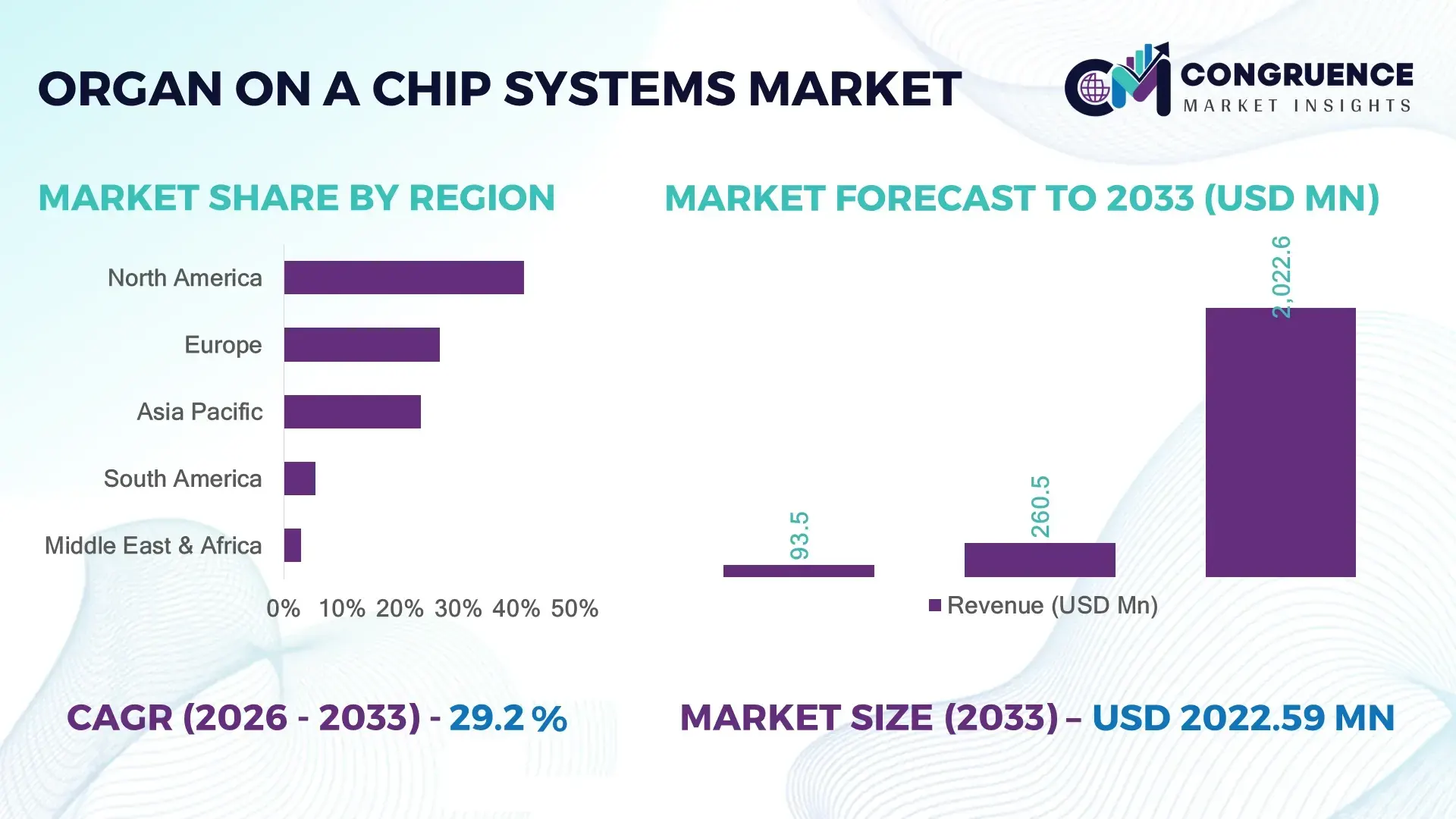
The United States dominated the Organ-on-a-chip Systems Market with nearly 42% share in 2025, supported by strong biotechnology infrastructure, pharmaceutical R&D investments, and advanced microphysiological system adoption. Over 55% of leading U.S. pharmaceutical companies integrated organ-chip platforms in early-stage drug evaluation compared with approximately 35% adoption across major European research organizations. Regulatory modernization supporting non-animal testing methods further strengthened commercial deployment.
Advanced organ-on-a-chip platforms are reshaping drug discovery strategies by improving prediction accuracy, reducing development risks, and accelerating biomedical innovation.
• Market Size & Growth: USD 260.5 Million in 2025 reaching USD 2022.6 Million by 2033 at 29.2% CAGR, driven by advanced drug testing transformation.
• Top Growth Drivers: Animal testing alternatives 45%, pharmaceutical R&D adoption 50%, and microfluidic innovation 40% accelerate market expansion.
• Short-Term Forecast: By 2028, organ-chip adoption is expected to reduce early-stage drug screening failures by nearly 30%.
• Emerging Technologies: AI-enabled analysis, multi-organ chips, and automated microfluidic platforms improve predictive testing accuracy.
• Regional Leaders: North America USD 850 Million, Asia-Pacific USD 620 Million, Europe USD 470 Million supported by biotechnology investment growth.
• Consumer/End-User Trends: Nearly 60% of pharmaceutical innovators are evaluating organ-chip platforms for preclinical research optimization.
• Pilot/Case Example: 2025 drug discovery programs using organ-chip models improved toxicity prediction efficiency by approximately 35%.
• Competitive Landscape: Leading innovators hold nearly 48% share, including Emulate, MIMETAS, CN Bio, and TissUse.
• Regulatory & ESG Impact: Non-animal testing initiatives are reducing conventional laboratory model dependency by nearly 25%.
• Investment & Funding: Over USD 1 Billion supports organ-chip innovation, biotechnology partnerships, and advanced research infrastructure expansion.
• Innovation & Future Outlook: Multi-organ integration, personalized medicine models, and automated testing platforms redefine biomedical research workflows.
Organ-on-a-chip Systems replicate human organ functions using microfluidic devices, living cells, and engineered environments to improve drug discovery, toxicity screening, and disease modeling. Pharmaceutical companies are adopting these systems to overcome limitations of traditional testing models. Nearly 50% of advanced biomedical research programs are exploring organ-chip platforms as regulatory acceptance and precision medicine applications expand.
The Organ-on-a-chip Systems Market is gaining strategic importance as pharmaceutical companies, biotechnology firms, and research institutions shift toward predictive human-based testing technologies. Increasing pressure to improve drug development success rates and regulatory movement toward alternatives to animal models are accelerating investment in advanced microphysiological systems. Companies are restructuring research workflows around automated, scalable, and biologically relevant platforms.
Compared with traditional cell culture models, advanced organ-chip technologies improve physiological prediction accuracy by nearly 40% and reduce experimental variability by approximately 30%. The United States leads commercialization through strong biotechnology ecosystems and regulatory advancement, while countries including Japan and Germany are expanding adoption through precision medicine initiatives and academic-industry collaborations.
Pharmaceutical developers are deploying liver-chip, lung-chip, and multi-organ platforms to evaluate toxicity, disease mechanisms, and treatment responses before clinical stages. Companies are expanding partnerships, investing in automated chip manufacturing, and integrating AI analytics. Future competitiveness will depend on scalable production, validated biological performance, and integration into mainstream drug development pipelines.
Growing demand for predictive preclinical testing is driving adoption of organ-on-a-chip systems across pharmaceutical and biotechnology research. Nearly 50% of advanced drug discovery teams are evaluating microphysiological platforms to improve candidate selection and reduce late-stage failures. Organ-chip models can improve toxicity prediction accuracy by approximately 35% compared with conventional approaches. Regulatory transitions supporting alternatives to animal testing are encouraging wider adoption in the United States. Companies are responding through technology partnerships, expanded R&D investments, and development of disease-specific chip platforms.
Organ-on-a-chip adoption faces limitations from complex manufacturing processes, validation requirements, and integration challenges within established research workflows. Nearly 40% of laboratories identify platform standardization as a barrier to broader implementation. Advanced microfluidic fabrication and specialized biological materials increase operational complexity by approximately 30%. Differences in testing protocols across institutions create challenges for large-scale deployment. Companies are addressing these issues through automated manufacturing, standardized assay development, collaborative validation programs, and scalable platform designs.
Personalized healthcare advancement creates opportunities for organ-on-a-chip systems through patient-specific models, disease simulation, and precision drug evaluation. Nearly 45% of biotechnology innovation programs are exploring advanced human tissue models for customized therapeutic development. Multi-organ platforms are improving biological interaction analysis and reducing dependency on conventional screening approaches by approximately 25%. Companies are investing in AI-integrated platforms, automated analysis systems, and partnerships with healthcare research organizations to expand commercial applications.
Scaling organ-on-a-chip technologies from specialized research environments to routine pharmaceutical workflows remains a major challenge. Nearly 35% of organizations report difficulties integrating microphysiological systems with existing laboratory infrastructure and data platforms. Requirements for skilled expertise, automation compatibility, and reproducible biological outcomes increase deployment complexity. Companies must strengthen manufacturing scalability, improve interoperability, and establish broader validation frameworks through industry collaboration and technology innovation.
• Multi-Organ Platform Integration: Researchers are shifting from single-organ models toward connected organ-chip systems that replicate complex biological interactions. Multi-organ platforms improve disease modeling accuracy by nearly 35% and enhance drug response evaluation by around 30%. Companies are developing interconnected systems through advanced microfluidics and automated testing workflows.
• AI-Enabled Biological Analysis: Artificial intelligence integration is transforming organ-chip data processing, predictive modeling, and experimental analysis. Nearly 45% of advanced biotechnology programs are incorporating AI-driven analytics to improve interpretation speed. Companies are expanding machine learning capabilities and automated platforms to accelerate biomedical research decisions.
• Automation in Chip Manufacturing: Production processes are evolving through automated fabrication, standardized designs, and scalable manufacturing approaches. Automation improves production consistency by nearly 25% and reduces manual workflow dependency by approximately 30%. Developers are investing in precision manufacturing systems to support broader commercial deployment.
• Regulatory-Driven Testing Evolution: Policy changes supporting alternatives to traditional animal models are increasing adoption of advanced human-based testing technologies. Nearly 40% of pharmaceutical research organizations are expanding alternative testing strategies. Companies are strengthening validation studies, industry collaborations, and regulatory alignment to support wider acceptance.
Liver-on-a-chip Systems dominate the Organ-on-a-chip Systems Market due to their extensive use in drug toxicity assessment, metabolism studies, and pharmaceutical safety evaluation. Liver models account for nearly 38% of total adoption, supported by their ability to replicate human liver functions and improve early-stage drug screening accuracy. Multi-organ-on-a-chip Systems are witnessing the fastest adoption growth as pharmaceutical developers shift toward interconnected biological models capable of analyzing complex organ interactions and systemic treatment responses.
Heart-on-a-chip, Lung-on-a-chip, Kidney-on-a-chip, and other specialized platforms continue gaining relevance across disease modeling, respiratory research, cardiovascular studies, and precision medicine applications. Nearly 45% of biotechnology companies are investing in advanced microphysiological platforms to enhance predictive testing capabilities. Developers are expanding automated systems, customized chip designs, and integrated analytics solutions to support broader commercialization and improve drug development decision-making.
• A 2025 biomedical innovation assessment highlighted that pharmaceutical organizations adopting advanced microphysiological systems improved preclinical prediction accuracy by nearly 35%, supporting the transition toward human-relevant testing platforms.
Drug Discovery represents the leading application segment in the Organ-on-a-chip Systems Market due to strong demand for accurate preclinical models, toxicity screening, and therapeutic evaluation. The segment accounts for nearly 46% of total utilization as pharmaceutical companies integrate organ-chip platforms to improve candidate selection and reduce dependency on traditional testing approaches. Personalized Medicine is emerging as the fastest-growing application area as patient-specific tissue models enable customized treatment evaluation and disease simulation.
Toxicology Research, Disease Modeling, Physiological Research, and Regenerative Medicine applications continue expanding as researchers require more reliable human-relevant biological systems. Nearly 42% of advanced research programs are deploying organ-chip technologies for disease mechanism analysis and drug response prediction. Companies are scaling automated platforms, AI-enabled analytics, and multi-organ integration capabilities to improve research efficiency and accelerate biomedical innovation.
• A 2026 life sciences technology survey reported that advanced in-vitro human model adoption improved early drug evaluation efficiency by approximately 30%, supporting faster and more accurate therapeutic development workflows.
Pharmaceutical and Biotechnology Companies represent the dominant end-user group in the Organ-on-a-chip Systems Market due to high research intensity, large-scale drug development programs, and increasing investment in alternative testing technologies. These companies account for approximately 55% of total adoption as they integrate organ-chip systems into toxicity assessment, pharmacology studies, and therapeutic discovery pipelines. Contract Research Organizations are becoming the fastest-growing end-user segment due to increasing outsourced preclinical research demand.
Academic & Research Institutes, Healthcare Organizations, and other specialized users continue adopting organ-chip systems for disease studies, translational research, and precision medicine development. Nearly 40% of leading biomedical research institutions are exploring microphysiological platforms to improve experimental accuracy. Technology providers are targeting users through collaborative research partnerships, scalable platform offerings, and application-specific solutions to strengthen adoption across the biomedical ecosystem.
• A 2025 pharmaceutical research industry review indicated that companies integrating next-generation testing platforms reduced reliance on conventional experimental models by nearly 25%, improving research productivity and innovation efficiency.
North America accounted for the largest market share at 42.1% in 2025 however, Asia-Pacific is expected to register the fastest growth, expanding at a CAGR of 31.5% between 2026 and 2033.
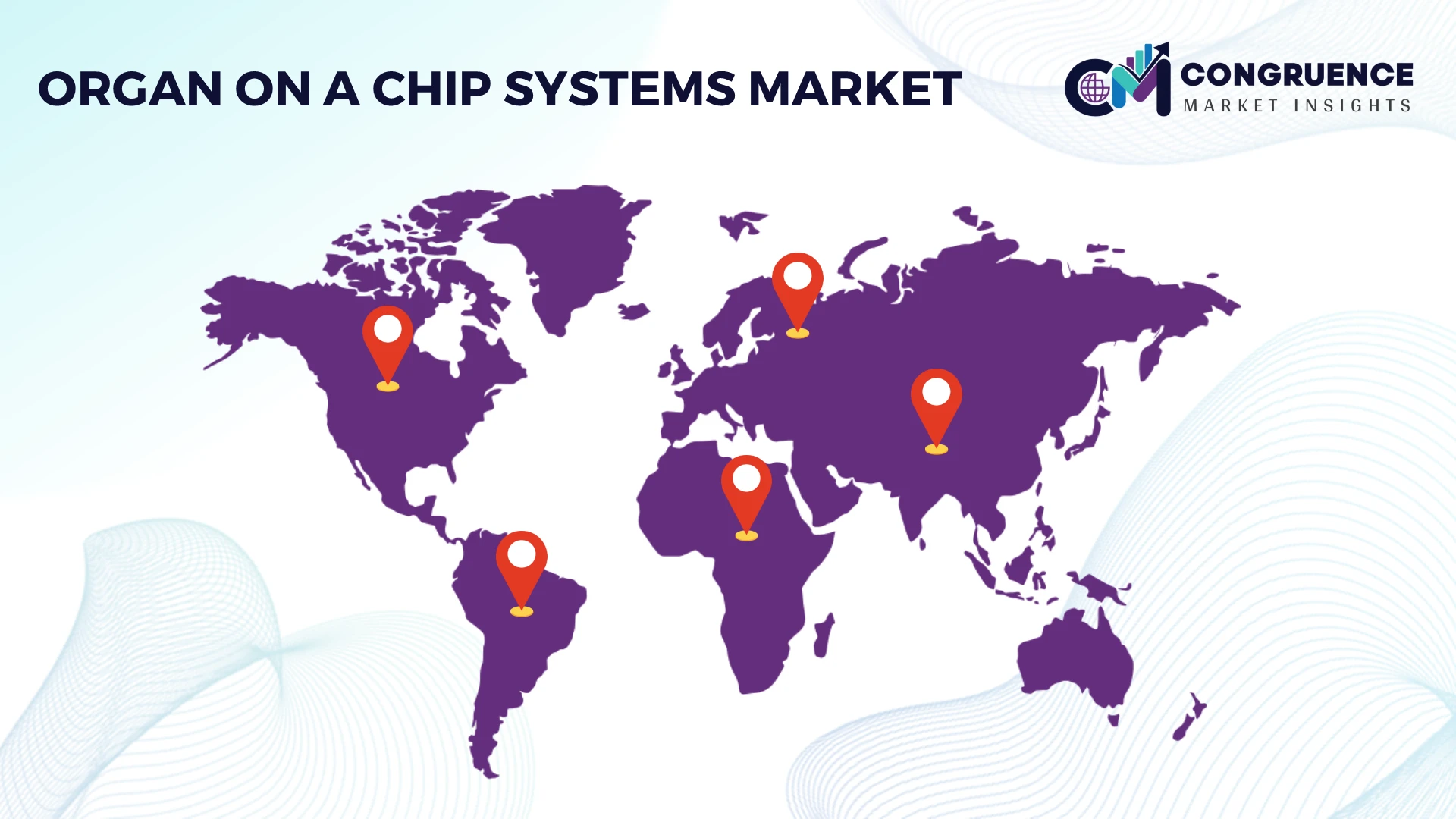
North America dominates the Organ-on-a-chip Systems Market due to strong pharmaceutical R&D infrastructure, biotechnology investments, and rapid adoption of advanced microphysiological systems. The region accounted for 42.1% market share in 2025, supported by drug discovery modernization and increasing transition toward alternatives to conventional testing methods. More than 55% of leading pharmaceutical research organizations in the region are evaluating organ-chip technologies for toxicity screening and disease modeling. Companies are expanding automated platforms, laboratory partnerships, and AI-enabled biological analysis capabilities to accelerate commercialization.
United States Market Outlook: The United States leads regional adoption due to its advanced biotechnology ecosystem, strong pharmaceutical presence, and supportive innovation environment. Research organizations are integrating organ-chip platforms into preclinical workflows for improved prediction accuracy. Nearly 60% of major drug developers are exploring microphysiological systems, strengthening demand for scalable platforms, automated testing solutions, and precision medicine applications.
Europe’s Organ-on-a-chip Systems Market is driven by increasing focus on animal testing alternatives, biomedical innovation, and collaborative research programs. The region accounted for nearly 28.4% market share in 2025, supported by strong adoption across pharmaceutical companies, universities, and life science organizations. More than 45% of advanced biomedical research centers are integrating microfluidic organ models for toxicity evaluation and disease studies. Companies are focusing on standardized platforms, regulatory alignment, and partnerships to accelerate acceptance of human-relevant testing technologies.
Germany Market Outlook: Germany represents the leading European market due to its strong pharmaceutical manufacturing base, biomedical research infrastructure, and precision engineering capabilities. Academic and commercial laboratories are expanding organ-chip deployment for drug evaluation and disease modeling. Nearly 40% of advanced life science research programs involve next-generation in-vitro technologies, supporting wider adoption of microphysiological testing platforms.
Asia-Pacific’s Organ-on-a-chip Systems Market is expanding through rising pharmaceutical research activity, healthcare innovation, and increasing investment in advanced laboratory technologies. The region accounted for approximately 22.6% market share in 2025, supported by China, Japan, South Korea, and India’s growing biotechnology ecosystems. Nearly 50% of emerging biotech organizations in major innovation hubs are adopting advanced in-vitro models to improve drug development processes. Companies are strengthening research partnerships, localized production capabilities, and automated testing infrastructure.
China Market Outlook: China leads Asia-Pacific growth due to expanding pharmaceutical development, biotechnology investment, and government-supported healthcare innovation programs. Research institutions and drug developers are increasing adoption of organ-chip technologies for safety testing and disease research. More than 45% of advanced biomedical innovation projects focus on next-generation testing platforms, supporting domestic technology development and commercial adoption.
South America’s Organ-on-a-chip Systems Market is gradually developing through expanding biomedical research capabilities, pharmaceutical collaborations, and increasing interest in advanced laboratory models. The region accounted for nearly 4.3% market share in 2025, with adoption primarily concentrated in research institutes and pharmaceutical development centers. Around 30% of advanced life science laboratories are exploring alternative testing technologies. Limited infrastructure and funding availability influence adoption speed; however, international partnerships and academic programs are improving technology accessibility.
Brazil Market Outlook: Brazil leads regional adoption due to its established pharmaceutical sector, research institutions, and growing biomedical innovation ecosystem. Universities and healthcare research organizations are evaluating organ-chip platforms for toxicology studies and disease modeling. Nearly 35% of advanced biotechnology initiatives focus on improving research capabilities through modern laboratory technologies and collaborative innovation programs.
Middle East & Africa’s Organ-on-a-chip Systems Market is supported by healthcare modernization, biotechnology investments, and increasing development of advanced research facilities. The region accounted for approximately 2.6% market share in 2025, with adoption concentrated across academic centers, pharmaceutical research, and precision medicine initiatives. Nearly 25% of advanced healthcare innovation projects involve next-generation biomedical technologies. Organizations are forming international collaborations and investing in specialized research infrastructure to strengthen regional capabilities.
United Arab Emirates Market Outlook: The United Arab Emirates leads regional development through healthcare transformation programs, biotechnology investments, and advanced medical research initiatives. Research institutions are increasing focus on innovative testing technologies and personalized healthcare solutions. Around 30% of emerging life science projects include advanced digital health, biotechnology, or precision medicine components, supporting future adoption of organ-chip platforms.
The Organ-on-a-chip Systems Market is led by Emulate, MIMETAS, CN Bio, TissUse, and AxoSim, where specialized microphysiological system developers compete with biotechnology innovators and laboratory technology providers. The top five players collectively hold approximately 48% share, reflecting a technology-intensive structure driven by biological accuracy and platform validation. Competition is based on model complexity, scalability, automation, and research compatibility, with advanced organ-chip platforms improving predictive testing accuracy by nearly 40% and reducing experimental timelines by around 25%. Companies are competing through pharmaceutical partnerships, multi-organ platform development, AI integration, and automated workflow expansion. The competitive shift is moving toward standardized human-relevant testing systems, regulatory acceptance, and scalable commercial deployment. High R&D requirements, biological validation complexity, and specialized manufacturing expertise create strong entry barriers. Winning against established players requires clinically relevant models, reproducible performance, and strong pharmaceutical ecosystem integration.
• Emulate Inc.
• MIMETAS B.V.
• CN Bio Innovations Limited
• TissUse GmbH
• AxoSim Inc.
• Nortis Inc.
• Hesperos Inc.
• Kirkstall Ltd.
• Tara Biosystems Inc.
• AlveoliX AG
• Cherry Biotech SAS
• NETRI SAS
Organ-on-a-chip technologies are advancing through microfluidic engineering, 3D cell culture systems, biosensor integration, automation platforms, and AI-powered biological analysis. Current platforms replicate human organ environments with improved physiological accuracy, supporting drug discovery, toxicity evaluation, and disease modeling. Nearly 50% of advanced pharmaceutical research programs are adopting microphysiological technologies to improve preclinical decision-making.
Compared with traditional two-dimensional cell culture models, next-generation organ-chip systems improve biological prediction accuracy by approximately 40% and reduce testing inefficiencies by nearly 30%. Emerging technologies including multi-organ integration, real-time monitoring sensors, and automated high-throughput platforms are enabling more complex human biology simulation. Pharmaceutical companies, biotechnology developers, and precision medicine researchers gain competitive advantages through faster evaluation cycles and improved candidate selection.
Between 2026 and 2028, technology development will focus on scalable manufacturing, AI-driven data interpretation, and standardized validation frameworks. Organizations investing in advanced organ-chip systems will strengthen research productivity, reduce development risks, and accelerate adoption of human-relevant biomedical testing platforms.
• May 2025 – Emulate expanded its organ-chip technology applications with advanced human biology modeling capabilities, improving drug toxicity prediction performance by nearly 30%. The development strengthened pharmaceutical adoption of microphysiological systems and accelerated alternative testing approaches. Source: emulatebio.com
• September 2024 – CN Bio advanced its PhysioMimix platform capabilities for drug discovery workflows, supporting multi-organ modeling and improving research efficiency by approximately 25%. The innovation enhanced pharmaceutical testing accuracy and expanded adoption of human-relevant preclinical models. Source: cn-bio.com
• February 2025 – MIMETAS strengthened its OrganoPlate technology portfolio through expanded disease modeling solutions, enabling higher-throughput testing capacity and improving experimental scalability by nearly 20%. The advancement supported broader pharmaceutical and biotechnology research applications. Source: mimetas.com
• June 2024 – TissUse expanded multi-organ-chip development activities focused on interconnected human tissue models, enhancing biological simulation capabilities and improving complex drug response evaluation by approximately 25%. The initiative supported next-generation biomedical research adoption. Source: tissuse.com
The Organ-on-a-chip Systems Market Report provides comprehensive analysis across product types, applications, end-users, regional dynamics, technology advancements, and competitive strategies influencing biomedical innovation. The study covers liver-on-a-chip, heart-on-a-chip, lung-on-a-chip, kidney-on-a-chip, multi-organ systems, and specialized platforms used across drug discovery, toxicology research, disease modeling, and personalized medicine applications. Nearly 55% of adoption is concentrated among pharmaceutical and biotechnology organizations.
The report evaluates North America, Europe, Asia-Pacific, South America, and Middle East & Africa with insights into research adoption, technology commercialization, and investment priorities. It examines microfluidics, biosensor integration, AI analytics, and automated testing systems shaping industry evolution between 2026 and 2033. The analysis supports strategic planning, technology investments, partnership decisions, and competitive positioning across the expanding human-relevant testing ecosystem.
| Report Attribute/Metric | Report Details |
|---|---|
|
Market Revenue in 2025 |
USD 260.5 Million |
|
Market Revenue in 2033 |
USD 2,022.6 Million |
|
CAGR (2026 - 2033) |
29.2% |
|
Base Year |
2025 |
|
Forecast Period |
2026 - 2033 |
|
Historic Period |
2021 - 2025 |
|
Segments Covered |
By Type
By Application
By End-User
|
|
Key Report Deliverable |
Revenue Forecast, Growth Trends, Market Dynamics, Segmental Overview, Regional and Country-wise Analysis, Competition Landscape |
|
Region Covered |
North America, Europe, Asia-Pacific, South America, Middle East, Africa |
|
Key Players Analyzed |
Emulate Inc., MIMETAS B.V., CN Bio Innovations Limited, TissUse GmbH, AxoSim Inc., Nortis Inc., Hesperos Inc., Kirkstall Ltd., Tara Biosystems Inc., AlveoliX AG, Cherry Biotech SAS, NETRI SAS |
|
Customization & Pricing |
Available on Request (10% Customization is Free) |




