
Reports
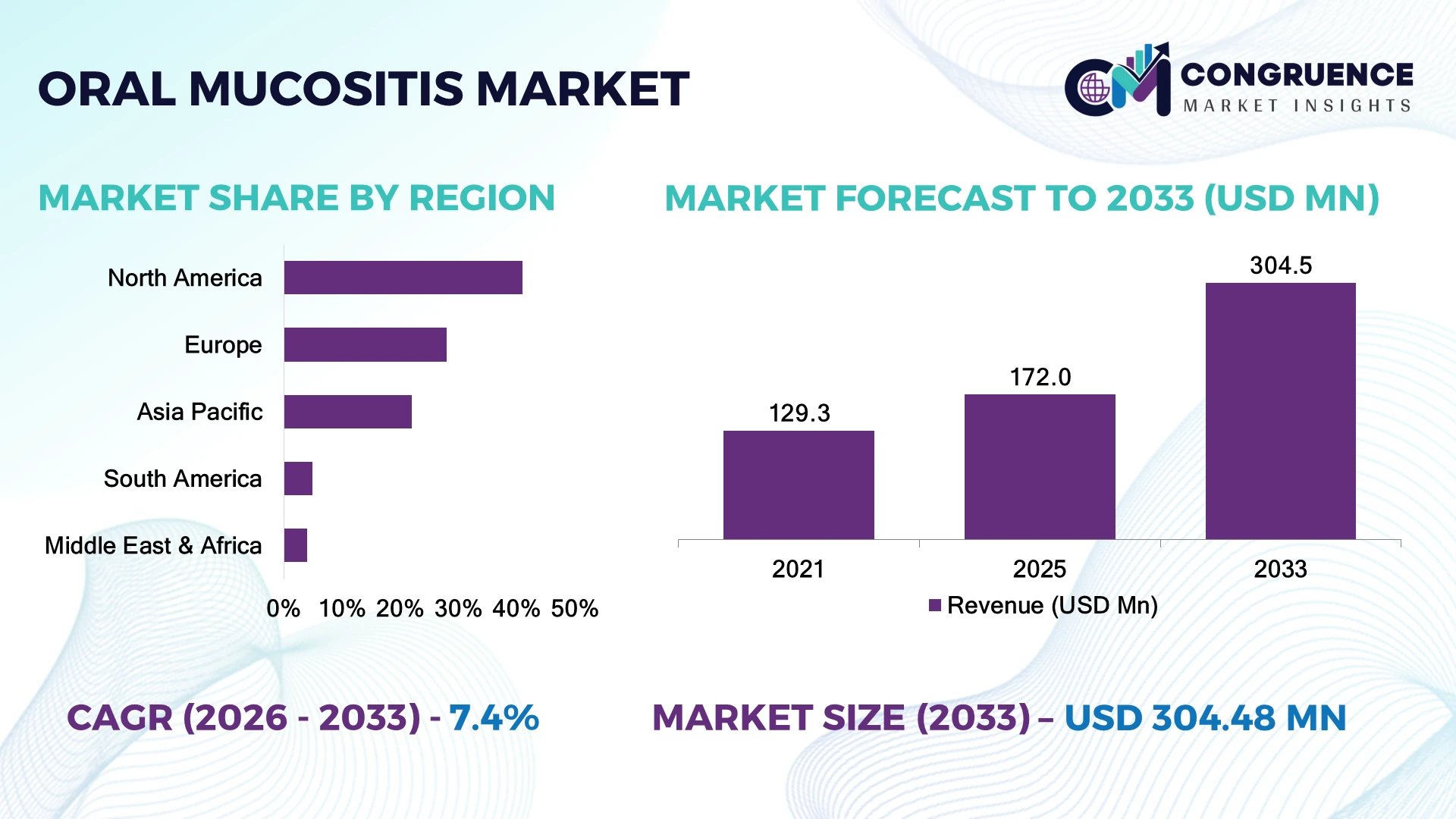
The Global Oral Mucositis Market was valued at USD 172.0 Million in 2025 and is anticipated to reach a value of USD 304.5 Million by 2033 expanding at a CAGR of 7.4% between 2026 and 2033. Growth is being propelled by rising global cancer treatment volumes, wider adoption of targeted oncology therapies, and increasing integration of supportive care protocols across hospital oncology networks.
The United States dominates the market with approximately 38% share, supported by over 2,000 accredited cancer treatment centers, strong reimbursement coverage, and rapid adoption of advanced oral care interventions. In comparison, China accounts for nearly 16% of demand, driven by expanding oncology infrastructure and more than 4.8 million new cancer cases annually. Following post-pandemic healthcare investments and oncology capacity expansion initiatives, U.S. utilization rates for preventive mucositis management exceed 65%, compared with approximately 42% in China, highlighting a significant treatment maturity gap.
Strategic implication companies that align supportive oncology portfolios with hospital-based cancer care pathways are positioned to secure stronger clinical adoption and long-term market influence.
Market Size & Growth: USD 172.0 Million in 2025 reaching USD 304.5 Million by 2033, driven by expanding oncology supportive-care adoption and advanced treatment protocols.
Top Growth Drivers: Cancer treatment volumes (+18%), targeted therapy utilization (+24%), and hospital supportive-care integration (+21%) remain key accelerators.
Short-Term Forecast: By 2028, treatment pathway efficiency is projected to improve by 15% through standardized mucositis management programs.
Emerging Technologies: AI-assisted symptom monitoring, low-level laser therapy, and precision oral-care platforms are improving clinical outcomes by over 20%.
Regional Leaders: North America (~USD 115 Million), Europe (~USD 72 Million), and Asia Pacific (~USD 64 Million) lead through oncology infrastructure expansion.
Consumer/End-User Trends: More than 60% of oncology centers now implement proactive oral mucositis assessment protocols.
Pilot/Case Example: In 2024, laser-based mucositis prevention programs reduced severe oral lesions by nearly 35% in selected oncology networks.
Competitive Landscape: Top players hold approximately 48% share; major participants include Soligenix, Galera Therapeutics, Helsinn, Pfizer, and Amgen.
Regulatory & ESG Impact: Updated supportive-care guidelines improved treatment compliance by approximately 17% across major oncology centers.
Investment & Funding: Over USD 450 Million has been directed toward oncology supportive-care innovation, partnerships, and clinical development initiatives.
Innovation & Future Outlook: Next-generation biologics, digital patient monitoring, and personalized supportive therapies are reshaping competitive strategies.
Oral mucositis management is becoming a critical component of modern oncology care, particularly across chemotherapy, radiotherapy, and hematopoietic stem cell transplantation settings. Advanced laser-based therapies, targeted anti-inflammatory agents, and digital symptom-monitoring platforms are improving treatment outcomes. Nearly 30% of oncology centers have expanded preventive care programs, while evolving clinical guidelines and healthcare quality metrics continue to reinforce adoption across integrated cancer treatment networks, creating a strong foundation for strategic market development.
Oral mucositis is evolving from a supportive-care concern into a strategic component of oncology treatment optimization. Healthcare providers increasingly recognize that effective mucositis management improves treatment adherence, reduces hospitalization events, and lowers unplanned care utilization. As cancer incidence continues to rise globally, hospitals and oncology networks are integrating preventive oral-care pathways into standard treatment protocols. Simultaneously, regulatory bodies are placing greater emphasis on patient quality-of-life outcomes and supportive-care performance metrics.
Technology adoption is reshaping clinical workflows. Low-level laser therapy has demonstrated up to 30% reductions in severe mucositis occurrence compared with conventional symptomatic treatment approaches while reducing intervention-related resource utilization. The United States leads in deployment through established oncology networks and reimbursement frameworks, whereas China is scaling rapidly through oncology infrastructure modernization and specialized cancer-care investments. Over the next two to three years, adoption of standardized preventive-care pathways is expected to expand by more than 20% among major oncology centers.
Healthcare companies are responding through clinical collaborations, oncology-focused partnerships, and expansion of supportive-care portfolios. Several providers are integrating digital symptom-monitoring platforms with treatment management systems to improve intervention timing and patient outcomes. Organizations that establish strong positions within oncology care ecosystems will gain meaningful competitive advantages through improved clinical value, stronger provider relationships, and long-term relevance in cancer care delivery.
Rising cancer treatment activity is the primary structural driver accelerating oral mucositis management adoption. Nearly 40% of patients receiving chemotherapy and up to 80% of head-and-neck radiotherapy patients experience some degree of oral mucosal damage, creating sustained demand for preventive interventions. Supportive-care compliance programs have improved treatment continuity by approximately 18% across leading oncology centers. Increasing use of targeted therapies and combination oncology regimens has further elevated focus on adverse-event management. In the United States, major cancer networks are expanding supportive-care investments alongside oncology service growth. Pharmaceutical and healthcare companies are responding through clinical partnerships, laser-therapy innovation, and specialized oral-care product development. A key strategic insight is that treatment adherence improvement has become as important as therapeutic efficacy in oncology value-based care models.
Limited reimbursement consistency and uneven healthcare infrastructure remain significant barriers to broader adoption. Approximately 35% of oncology patients in developing healthcare systems lack access to standardized mucositis prevention programs, while treatment costs can be 20–30% higher in specialized cancer centers than in general hospitals. In several emerging economies, dependence on imported supportive-care technologies exposes providers to supply-chain disruptions and procurement delays. These constraints directly affect scalability and treatment standardization. Healthcare organizations are mitigating risks through regional distribution partnerships, localized manufacturing initiatives, and expanded procurement contracts. A notable operational insight is that provider adoption frequently depends more on reimbursement certainty than on clinical effectiveness alone, creating a significant commercialization challenge for innovative therapies.
The next phase of market expansion is being driven by precision supportive-care strategies and digital oncology integration. AI-enabled symptom-monitoring systems have improved early intervention rates by nearly 25%, while predictive patient-risk stratification models can reduce severe mucositis events by more than 20%. Japan and South Korea are advancing digital oncology ecosystems that combine patient monitoring with supportive-care management. Emerging policy frameworks encouraging patient-centered cancer care are also strengthening adoption. Companies are increasing investment in biomarker-guided therapies, digital health partnerships, and integrated oncology platforms. A non-obvious opportunity lies in reducing treatment interruptions rather than solely treating symptoms, creating measurable operational benefits for providers and stronger economic value propositions for healthcare systems.
Long-term market expansion depends on overcoming implementation and workflow integration challenges. Clinical practice variations remain significant, with treatment protocol differences exceeding 30% across oncology institutions. Nearly 25% of healthcare facilities report difficulties integrating supportive-care technologies into existing oncology workflows. Workforce training gaps and inconsistent clinical documentation standards further complicate deployment. As digital monitoring solutions become more prevalent, interoperability requirements between oncology management systems and patient-care platforms are increasing. Companies must invest in clinician education, data integration capabilities, and evidence-generation programs to support broader adoption. A critical strategic insight is that sustainable market leadership will depend less on product availability and more on the ability to embed supportive-care solutions seamlessly within oncology treatment ecosystems.
AI-Enabled Symptom Monitoring Expansion Oncology providers are increasingly deploying digital symptom-tracking platforms to identify oral mucositis earlier in treatment cycles. More than 28% of large cancer centers have integrated remote patient monitoring tools, while symptom reporting compliance has improved by nearly 22%. The transition toward digital oncology workflows is reducing intervention delays and improving care coordination. Companies are responding through software partnerships, cloud-based patient engagement platforms, and integrated supportive-care analytics solutions.
Laser Therapy Protocol Standardization Low-level laser therapy adoption is accelerating as hospitals seek consistent preventive-care outcomes. Clinical deployment across specialized oncology facilities has expanded by approximately 25% since 2024, with severe lesion incidence reductions frequently exceeding 30%. Updated supportive-care recommendations and increasing pressure to reduce treatment interruptions are driving implementation. Providers are scaling dedicated treatment programs, while device manufacturers are expanding training partnerships and oncology-focused service networks to support standardized deployment.
Supportive Care Supply Localization Healthcare systems are strengthening procurement resilience following oncology supply-chain disruptions experienced in recent years. Approximately 18% of supportive-care product sourcing has shifted toward regional manufacturing and diversified supplier networks. Hospitals are increasingly prioritizing inventory continuity and treatment availability over single-source procurement models. In response, pharmaceutical companies are restructuring distribution strategies, expanding local packaging operations, and establishing long-term supply agreements to improve operational reliability and reduce fulfillment risk.
Integrated Oncology Care Pathways Multidisciplinary cancer-care models are becoming a core operational trend. More than 60% of major oncology centers now incorporate preventive oral-care assessments into treatment planning, while coordinated care pathways have reduced treatment-related complications by nearly 15%. A non-obvious shift is the growing alignment between supportive-care performance metrics and hospital quality benchmarks. Companies are investing in oncology ecosystem partnerships, clinical education programs, and workflow integration initiatives that strengthen provider adoption and improve long-term patient management.
Chemotherapy-induced oral mucositis remains the leading segment, accounting for approximately 48% of the market due to the broad use of cytotoxic therapies across multiple cancer types. High treatment volumes, predictable incidence rates, and established supportive-care protocols reinforce its dominance. Radiotherapy-induced oral mucositis follows closely, particularly in head-and-neck oncology, where incidence rates frequently exceed 70% among treated patients. Healthcare providers continue prioritizing preventive management because treatment interruptions can directly affect clinical outcomes and resource utilization.
Hematopoietic stem cell transplantation-induced oral mucositis is emerging as the fastest-growing segment, supported by expanding transplant procedures and intensive conditioning regimens. This category is experiencing adoption gains of nearly 20% in specialized oncology institutions. Other causes, including targeted therapies and immunotherapy-associated complications, are gaining strategic relevance as cancer treatment modalities diversify. Companies are increasing investment in specialized supportive-care products, clinical partnerships, and precision intervention programs targeting high-risk patient populations. The shift in investment priorities reflects growing recognition that effective mucositis management contributes directly to treatment continuity and patient outcomes.
Cancer therapy-induced mucositis management represents the largest application segment with approximately 58% share, reflecting the concentration of demand within chemotherapy-driven oncology care pathways. Hospitals and cancer treatment centers prioritize this application because effective symptom control helps maintain treatment adherence and reduce unplanned care utilization. Radiation-induced mucositis management remains a significant application area, particularly in specialized head-and-neck oncology programs where treatment-related oral complications are common.
Supportive care management is the fastest-growing application segment as healthcare providers increasingly integrate preventive interventions into standard oncology workflows. Adoption of structured supportive-care programs has increased by roughly 20%, while digital symptom-monitoring deployment has improved early intervention rates by approximately 25%. Hematopoietic stem cell transplant applications continue expanding due to rising transplant activity and the need for specialized care protocols. Companies are responding through workflow integration, digital health partnerships, and expanded supportive-care portfolios that align with comprehensive oncology treatment models. Demand is increasingly shifting from reactive symptom treatment toward proactive management strategies that improve operational efficiency and clinical consistency.
Hospitals remain the dominant end-user segment, representing approximately 55% of total demand due to their central role in chemotherapy administration, radiotherapy delivery, and supportive-care management. Large oncology hospitals benefit from integrated treatment infrastructure, multidisciplinary clinical teams, and centralized procurement systems, making them the primary channel for oral mucositis interventions. Cancer treatment centers represent the second-largest segment and continue expanding as specialized oncology care becomes more concentrated within dedicated facilities.
Cancer treatment centers are also the fastest-growing end-user category, supported by increasing patient volumes, advanced oncology capabilities, and wider adoption of preventive-care protocols. Demand growth within these facilities exceeds 18% in several major healthcare markets. Research institutes maintain strategic importance through clinical development and supportive-care innovation, while home-care settings are gradually gaining traction through digital monitoring and outpatient oncology programs. Companies are strengthening positions through oncology partnerships, customized treatment solutions, value-based pricing strategies, and ecosystem-focused expansion initiatives. Competitive positioning is increasingly tied to the ability to support both institutional oncology networks and evolving outpatient care models.
North America accounted for the largest market share at 41.0% in 2025 however, Asia-Pacific is expected to register the fastest growth, expanding at a 8.6% CAGR between 2026 and 2033.
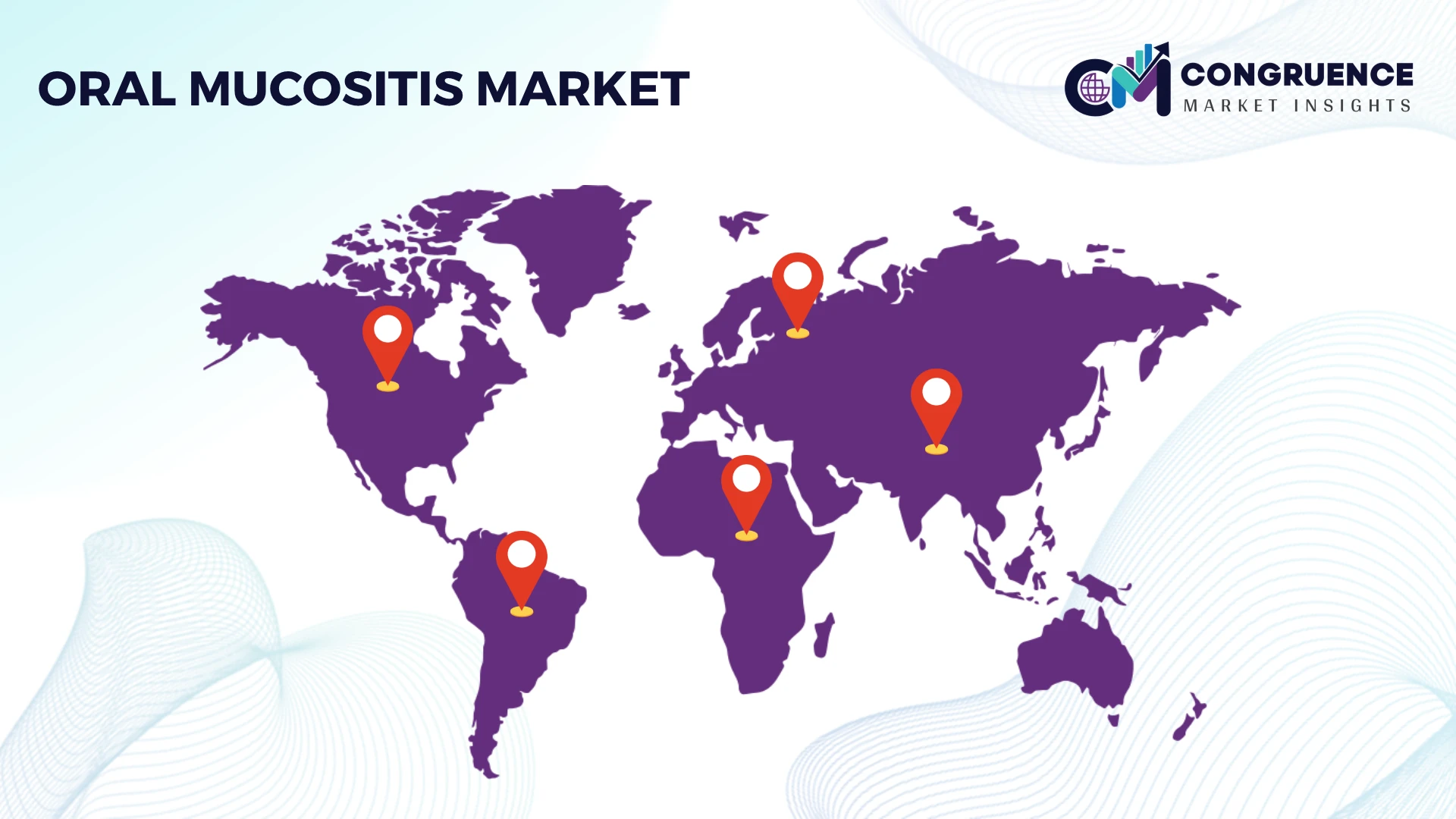
North America maintains the leading position in the oral mucositis market, supported by extensive oncology treatment infrastructure, high adoption of preventive supportive-care protocols, and strong integration of evidence-based cancer management pathways. The region accounts for approximately 41% of global demand, with deployment concentrated across large hospital systems, academic cancer centers, and specialized oncology networks. Increasing use of targeted therapies and immuno-oncology treatments has strengthened the need for structured mucositis management programs. More than 60% of major oncology facilities have implemented standardized oral toxicity assessment protocols as part of treatment planning. Strategic collaborations between healthcare providers, pharmaceutical companies, and digital health firms are accelerating deployment of patient-monitoring solutions and preventive-care technologies. Operational focus has shifted from symptom management toward treatment continuity optimization, improving care quality and reducing therapy disruptions.
United States Market Outlook: The United States represents the largest national market due to its extensive cancer-care infrastructure, strong reimbursement framework, and concentration of oncology innovation. More than 2,000 accredited cancer treatment centers support widespread implementation of supportive-care pathways. The country also leads in low-level laser therapy deployment, digital symptom-monitoring adoption, and clinical research activity. Strong collaboration between healthcare systems, oncology networks, and biotechnology companies continues to accelerate integration of advanced supportive-care solutions. Increasing emphasis on value-based healthcare models further strengthens demand for interventions that improve treatment adherence and patient outcomes.
Europe accounts for approximately 28% of global market activity, supported by mature healthcare systems, strong oncology research capabilities, and broad adoption of standardized supportive-care guidelines. The region benefits from extensive integration of oral toxicity management into multidisciplinary cancer treatment pathways. Healthcare modernization initiatives and expanding oncology infrastructure continue to improve access to preventive interventions. Several national healthcare systems have strengthened supportive-care quality benchmarks, encouraging wider implementation of evidence-based mucositis management programs. More than 55% of large oncology institutions utilize structured oral-care assessment frameworks during cancer treatment. Industry participants are expanding clinical collaborations and educational programs to support guideline adherence and improve consistency across treatment settings. Operational efficiency and patient quality-of-life outcomes remain central priorities for healthcare providers throughout the region.
Germany Market Outlook: Germany serves as the strategic center of the European market due to its advanced oncology infrastructure, strong clinical research ecosystem, and extensive network of specialized cancer centers. The country supports high utilization of preventive supportive-care protocols and remains a leading location for oncology-related clinical studies. More than 70 certified comprehensive cancer centers contribute to broad implementation of standardized treatment pathways. Germany's focus on evidence-based medicine, healthcare digitalization, and oncology innovation provides a strong foundation for continued advancement of oral mucositis management solutions across institutional care settings.
Asia-Pacific accounts for approximately 22% of global demand and represents the most dynamic operational environment for oral mucositis management. Rapid expansion of cancer treatment capacity, increasing healthcare investments, and rising adoption of supportive oncology services are transforming market conditions. Large-scale oncology infrastructure development in China, India, Japan, and South Korea is increasing access to preventive-care interventions. Several healthcare systems have expanded oncology treatment capacity by more than 20% over recent years, creating greater demand for supportive-care solutions. Providers are integrating standardized oral-care management into broader cancer treatment frameworks to improve treatment continuity and patient outcomes. Pharmaceutical companies and healthcare technology providers are increasing partnerships, localized manufacturing activities, and distribution networks to strengthen regional presence and support growing deployment requirements.
China Market Outlook: China represents the largest market within Asia-Pacific due to its extensive oncology patient population, expanding healthcare infrastructure, and significant investment in cancer-care modernization. The country records more than 4 million new cancer cases annually, creating substantial demand for supportive-care interventions. National healthcare reforms continue to improve treatment accessibility while major hospital networks increasingly adopt standardized mucositis management protocols. Growing domestic pharmaceutical capabilities and expanding clinical research activity are supporting broader availability of advanced supportive-care products and technologies across urban and regional healthcare systems.
South America accounts for approximately 5% of global market activity, with demand concentrated in major urban healthcare centers and national cancer treatment institutions. Increasing cancer incidence and gradual expansion of oncology infrastructure are strengthening adoption of supportive-care services. Healthcare providers are placing greater emphasis on reducing treatment interruptions and improving patient management outcomes. Several countries have expanded public oncology investment programs and upgraded specialized treatment facilities, supporting broader implementation of oral-care protocols. However, uneven healthcare access and budget constraints continue to influence deployment consistency. Companies are responding through regional partnerships, distributor expansion strategies, and targeted educational initiatives designed to improve clinical awareness and treatment standardization. Market development remains closely linked to healthcare modernization and institutional oncology investment priorities.
Brazil Market Outlook: Brazil is the leading market in South America due to its large healthcare system, extensive oncology treatment network, and growing investment in cancer-care services. Major metropolitan regions host advanced oncology centers that increasingly incorporate supportive-care programs into treatment pathways. The country continues to expand specialized cancer-care capacity and strengthen access to preventive interventions. Public-private healthcare collaboration is improving clinical training, treatment availability, and patient management standards, supporting wider adoption of oral mucositis management solutions across both public and private healthcare sectors.
The Middle East & Africa region accounts for approximately 4% of global market activity and is undergoing significant healthcare transformation driven by cancer-care investments and infrastructure modernization programs. Demand is concentrated within Gulf countries and major urban healthcare hubs where advanced oncology services are expanding rapidly. Governments and healthcare providers are investing in specialized cancer treatment facilities, digital healthcare capabilities, and multidisciplinary oncology programs. Several large hospital projects and oncology expansion initiatives have increased treatment capacity across key markets. Adoption of supportive-care protocols is improving as providers align with international treatment standards and quality benchmarks. Industry participants are strengthening regional partnerships and expanding commercial operations to support healthcare modernization efforts and improve access to advanced supportive-care technologies.
Saudi Arabia Market Outlook: Saudi Arabia is the most strategically significant market within the region due to its substantial healthcare investment programs, oncology infrastructure expansion, and focus on advanced medical services. The country continues to develop specialized cancer treatment centers and integrate modern supportive-care practices into clinical workflows. National healthcare transformation initiatives are accelerating adoption of digital health systems, multidisciplinary oncology care models, and evidence-based treatment protocols. Strong government-backed healthcare modernization efforts, combined with increasing cancer-care capacity, position Saudi Arabia as a key regional hub for advanced oral mucositis management and oncology support services.
The oral mucositis market is characterized by competition between clinical-stage innovators such as Soligenix and Galera Therapeutics, supportive-care specialists including Helsinn, and diversified oncology companies such as Amgen and Pfizer that compete through broader cancer-care portfolios. The top five participants collectively control approximately 48% of market influence, driven by clinical evidence, oncology relationships, and treatment integration capabilities. Competition centers on therapeutic efficacy, treatment-duration reduction, provider adoption speed, and distribution reach. Leading candidates have demonstrated up to 50–56% reductions in severe oral mucositis duration, while digital supportive-care platforms improve intervention timing by nearly 20%. Companies are competing through Phase III development programs, oncology-center partnerships, portfolio expansion, and commercialization alliances. The competitive shift is moving from symptomatic relief products toward mechanism-based therapies and integrated supportive-care solutions. Regulatory evidence requirements and oncology-network access remain major entry barriers. Winning requires strong clinical differentiation, provider integration, reimbursement alignment, and scalable oncology ecosystem partnerships.
Galera Therapeutics, Inc.
Helsinn Healthcare SA
Pfizer Inc.
Amgen Inc.
Daewoong Pharmaceutical Co., Ltd.
BrainCool AB
Monopar Therapeutics Inc.
EpicentRx, Inc.
Oragenics, Inc.
Camurus AB
BioAlliance Pharma
Innovation Pharmaceuticals Inc.
Current technology development is centered on low-level laser therapy (LLLT), advanced oral barrier formulations, and digital symptom-monitoring systems. LLLT has demonstrated reductions exceeding 30% in severe lesion occurrence compared with conventional symptomatic management, while structured digital monitoring improves early intervention rates by approximately 25%. More than 35% of advanced oncology centers now utilize technology-supported supportive-care workflows. These tools improve treatment continuity, reduce unplanned interventions, and strengthen provider adherence to supportive-care protocols.
Emerging technologies are shifting toward biomarker-guided risk stratification, AI-enabled patient monitoring, and mechanism-based immunomodulatory therapies. Compared with traditional reactive treatment approaches, predictive monitoring platforms improve symptom-detection efficiency by nearly 20% and enable faster clinical responses. Large oncology networks and specialized cancer centers benefit most because integrated workflows reduce care variability and improve operational consistency. Pharmaceutical developers are also advancing targeted therapies designed to address underlying inflammatory pathways rather than solely managing symptoms.
Between 2026 and 2028, competitive advantage will increasingly depend on combining therapeutics, digital monitoring, and precision supportive-care models. Adoption of integrated oncology management platforms is expected to exceed 45% among major cancer centers. Companies investing in interoperable technologies, AI-supported patient management, and evidence-based preventive interventions will strengthen provider relationships, improve treatment adherence, and secure stronger positioning within evolving oncology care ecosystems.
January 2025 – Soligenix advanced commercialization planning for SGX942 (dusquetide) following analysis of Phase III oral mucositis data. The program demonstrated a 56% reduction in median severe oral mucositis duration, strengthening partnership discussions and reinforcing its differentiated mechanism in supportive oncology care. Source: soligenix.com
March 2025 – Kura Oncology expanded oncology development capabilities and reported multiple late-stage clinical milestones across its cancer portfolio. The company highlighted potential access to an addressable population exceeding 200,000 patients, supporting broader oncology ecosystem partnerships and infrastructure expansion. Source: ir.kuraoncology.com
November 2025 – Kura Oncology and Kyowa Kirin secured U.S. regulatory approval for KOMZIFTI in AML. Clinical data showed approximately 21% complete or near-complete remission, enhancing Kura’s oncology market position and strengthening future supportive-care collaboration opportunities. Source: Reuters
2025 – Soligenix continued strategic evaluation of combined Phase II and III SGX942 datasets to support future development and partnership expansion. Clinical findings indicated approximately 50% reduction in severe oral mucositis duration among protocol-compliant patients, reinforcing long-term competitive positioning in supportive oncology therapeutics. Source: soligenix.com pipeline update
This report provides a comprehensive assessment of the oral mucositis market across treatment type, application area, end-user category, and regional demand patterns. Coverage includes chemotherapy-induced, radiotherapy-induced, and stem-cell transplantation-associated oral mucositis management, along with key applications spanning cancer therapy management, supportive care programs, and specialized oncology treatment pathways. The analysis evaluates adoption patterns across hospitals, cancer treatment centers, research institutions, and emerging outpatient care environments.
The study examines market activity across North America, Europe, Asia-Pacific, South America, and the Middle East & Africa, highlighting deployment concentration, technology adoption trends, and competitive positioning. More than 60% of advanced oncology centers now utilize structured supportive-care pathways, reflecting increasing operational importance. The report further assesses low-level laser therapy, digital patient-monitoring platforms, AI-enabled supportive-care tools, and next-generation therapeutic innovations. Strategic insights support investment prioritization, expansion planning, partnership evaluation, competitive benchmarking, and long-term decision-making for stakeholders operating within the evolving oncology supportive-care ecosystem through 2033.
| Report Attribute / Metric | Details |
|---|---|
| Market Revenue (2025) | USD 172.0 Million |
| Market Revenue (2033) | USD 304.5 Million |
| CAGR (2026–2033) | 7.4% |
| Base Year | 2025 |
| Forecast Period | 2026–2033 |
| Historic Period | 2021–2025 |
| Segments Covered |
By Type
By Application
By End-User
|
| Key Deliverables | Revenue Forecast; Market Trends; Growth Drivers & Restraints; Technology Insights; Segmentation Analysis; Regional Insights; Competitive Landscape; Regulatory & ESG Overview; Recent Developments |
| Regions Covered | North America; Europe; Asia-Pacific; South America; Middle East & Africa |
| Companies Profiled | Soligenix, Inc.; Galera Therapeutics, Inc.; Helsinn Healthcare SA; Pfizer Inc.; Amgen Inc.; Daewoong Pharmaceutical Co., Ltd.; BrainCool AB; Monopar Therapeutics Inc.; EpicentRx, Inc.; Oragenics, Inc.; Camurus AB; Innovation Pharmaceuticals Inc. |
| Customization & Pricing | Available on Request (10% Customization Free) |




