Global Ocular Melanoma Market Report Overview
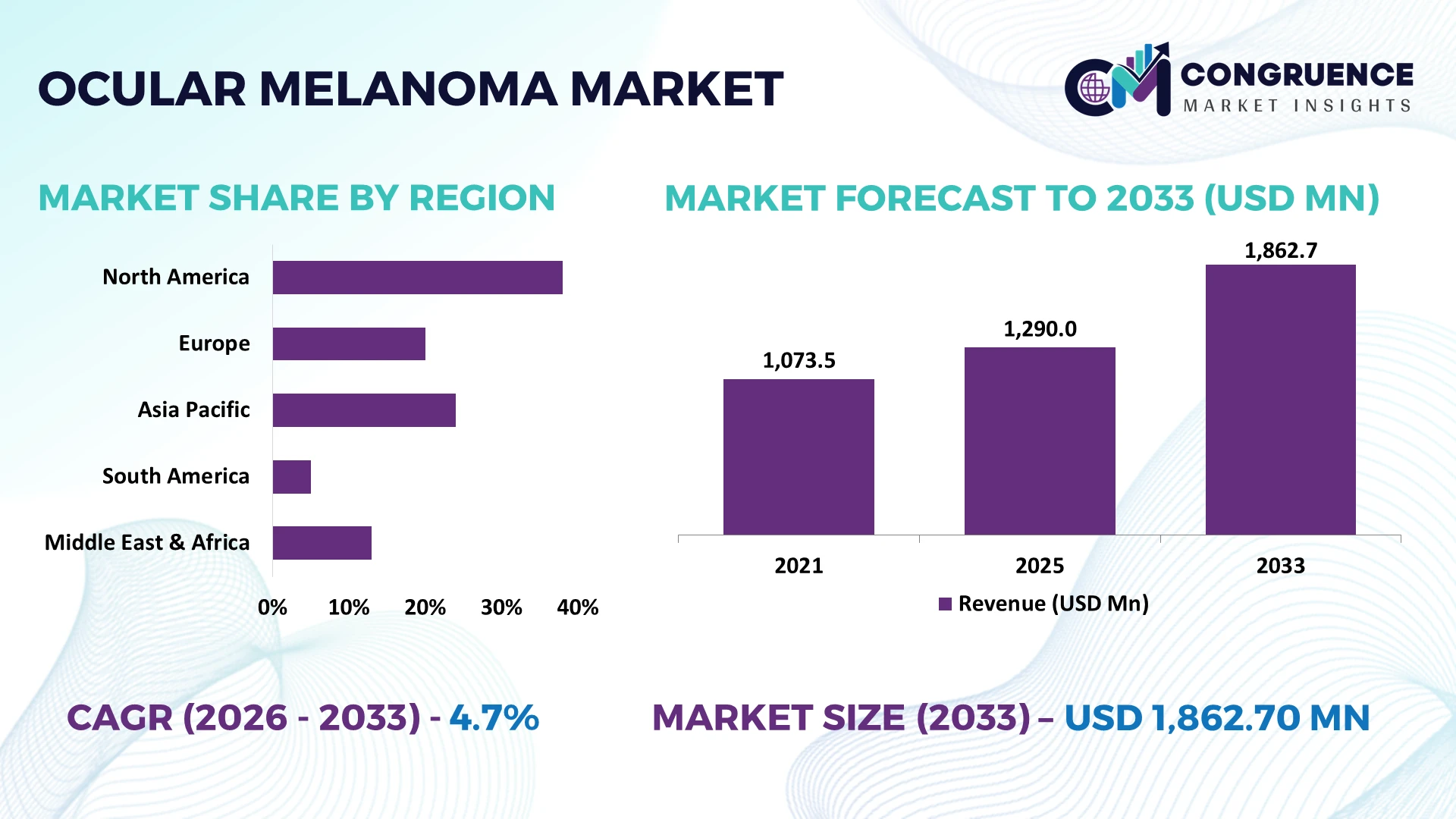
The Global Ocular Melanoma Market was valued at USD 1290 Million in 2025 and is anticipated to reach a value of USD 1862.7 Million by 2033 expanding at a CAGR of 4.7% between 2026 and 2033. Growth is driven by the adoption of molecular prognostic testing, plaque brachytherapy, and tebentafusp immunotherapy for HLA-A*02:01 positive adults with unresectable or metastatic uveal melanoma.
The United States dominates the advanced ocular melanoma treatment landscape through its oncology infrastructure, specialized ophthalmic centers, and access to targeted immunotherapies. Uveal melanoma accounts for approximately 85% of primary ocular melanomas, while around 50% of patients eventually develop metastatic disease. US regulatory approval of tebentafusp in 2022 strengthened treatment availability compared with countries facing slower reimbursement decisions. The American oncology ecosystem combines genomic profiling, proton beam therapy, and clinical trials, supporting treatment innovation and specialized pharmaceutical investment.
Strategically, manufacturers should prioritize molecular diagnostics and immunotherapy access, addressing the approximately 50% metastatic progression risk and the HLA-A*02:01 eligibility requirement.
Key Highlights of the Global Ocular Melanoma Market
-
Market Size & Growth: USD 1,290 million in 2025, reaching USD 1,862.7 million by 2033 at 4.7% CAGR, supported by precision oncology and immunotherapy adoption.
-
Top Growth Drivers: Three clinical indicators include 32% lower mortality hazard with tebentafusp, 46% disease control, and 71% two-year survival among early ctDNA clearers.
-
Short-Term Forecast: By 2028, molecular profiling and biomarker-guided treatment will expand, targeting the 32% mortality hazard reduction demonstrated in clinical trials.
-
Emerging Technologies: Three advances include AI-assisted retinal imaging, circulating tumor DNA monitoring, and protein kinase C inhibitors for targeted ocular melanoma treatment.
-
Regional Leaders: Indicative 2033 planning allocations are North America USD 782.3 million, Europe USD 633.3 million, and Asia-Pacific USD 335.3 million, emphasizing immunotherapy, proton therapy, and diagnostic expansion, respectively.
-
Consumer/End-User Trends: Specialized oncology centers increasingly emphasize HLA testing; tebentafusp demonstrated 27% three-year survival versus 18% with comparator treatments.
-
Pilot/Case Example: A 2023 published Phase III follow-up involving 378 patients demonstrated median survival of 21.6 months versus 16.9 months.
-
Competitive Landscape: Immunocore leads approved TCR bispecific therapy; key participants include IDEAYA Biosciences, Servier, Delcath Systems, and Aura Biosciences.
-
Regulatory & ESG Impact: FDA biomarker-restricted eligibility supports precision prescribing; treatment-related discontinuation was 2% with tebentafusp versus 5% among controls.
-
Investment & Funding: The 2025 IDEAYA and Servier licensing agreement included USD 210 million upfront and up to USD 320 million in milestones.
-
Innovation & Future Outlook: Next-generation PKC inhibitors and liquid biopsies strengthen personalized care; five-year tebentafusp survival reached 16% versus 8% with controls.
The global ocular melanoma market is increasingly shaped by specialized diagnostic pathways, targeted therapeutics, and integrated ophthalmology-oncology services. Clinical priorities include early choroidal tumor detection, metastatic surveillance, and biomarker-guided treatment selection. Advanced molecular profiling identifies high-risk patients, while circulating tumor DNA testing strengthens response monitoring. Clinical evidence demonstrating a 32% reduction in mortality hazard with tebentafusp reinforces investment in precision immunotherapy. Meanwhile, transatlantic pharmaceutical licensing agreements are expanding commercialization pathways. These developments position treatment accessibility, companion diagnostics, and differentiated clinical outcomes as central considerations for strategic market positioning.
What Is the Strategic Relevance and Future Pathways of the Ocular Melanoma Market?
The ocular melanoma market is becoming strategically important as precision oncology transforms treatment selection, pharmaceutical investment, and specialized cancer care delivery. Approximately 50% of patients with uveal melanoma eventually develop metastatic disease, creating substantial clinical demand for earlier risk stratification and effective systemic therapies. The FDA approval of tebentafusp established a biomarker restricted treatment pathway, shifting competitive priorities toward HLA genotyping, molecular diagnostics, and specialized immunotherapy infrastructure. Pharmaceutical companies are increasingly aligning drug development with companion testing capabilities and clinical trial networks.
Technological differentiation is reshaping clinical economics. In a pivotal trial, tebentafusp achieved 73% one year overall survival compared with 59% for investigator selected therapy, representing a 14 percentage point improvement. The United States leads commercial immunotherapy deployment, while the United Kingdom maintains specialized ocular oncology expertise through established referral centers. India's expanding molecular diagnostic infrastructure presents opportunities for localized testing partnerships and specialist training.
During 2026–2028, investment priorities will emphasize circulating tumor DNA monitoring, targeted kinase inhibitors, and integrated patient referral pathways. Immunocore's tebentafusp commercialization demonstrates how biomarker testing and treatment delivery operate together. Companies developing targeted therapies are strengthening pharmaceutical partnerships and clinical trial recruitment networks. Competitive advantage will depend on combining validated survival benefits, efficient patient identification, and consistent access to specialist care.
Ocular Melanoma Market Dynamics
DRIVER:
Precision Immunotherapy and Biomarker Guided Treatment Adoption
The transition toward biomarker guided oncology is accelerating treatment innovation in ocular melanoma. Uveal melanoma represents approximately 85% of primary ocular melanoma cases, while nearly 50% of affected patients develop metastatic disease. Tebentafusp demonstrated 73% one year overall survival compared with 59% under investigator selected treatment, establishing a measurable clinical advantage. The FDA's 2022 approval for HLA-A*02:01 positive metastatic uveal melanoma introduced a defined molecular eligibility pathway into routine oncology practice. Immunocore has expanded specialist commercialization capabilities, while pharmaceutical developers are investing in T cell receptor therapeutics and companion diagnostics. Integrating HLA testing with oncology referrals reduces patient identification delays and strengthens treatment center productivity, creating a competitive advantage for providers offering coordinated precision oncology services.
RESTRAINT:
Restricted Treatment Eligibility and Specialized Care Infrastructure
Limited biomarker eligibility and intensive treatment delivery requirements constrain ocular melanoma therapy accessibility. Tebentafusp requires HLA-A*02:01 positivity, restricting treatment to a genetically defined patient population. Clinical trials reported rash in 83% of treated patients, pyrexia in 76%, and treatment discontinuation in 2%. Although discontinuation remained low, early adverse event monitoring increases specialist staffing and inpatient observation requirements. In the United States, the first three tebentafusp infusions require at least 16 hours of hospital monitoring, creating operational pressure on smaller oncology facilities. Providers are addressing these limitations through centralized infusion programs, standardized toxicity management, and partnerships with molecular diagnostic laboratories. Improving referral coordination is essential for expanding access without disproportionately increasing treatment delivery costs.
OPPORTUNITY:
Neoadjuvant Targeted Therapy and Eye Preservation Innovation
Neoadjuvant protein kinase C inhibition creates an opportunity to shift ocular melanoma treatment from immediate invasive intervention toward organ preserving therapy. IDEAYA Biosciences reported ocular tumor shrinkage in approximately 80% of patients receiving darovasertib in updated Phase II findings. Tumor reduction of at least 20% occurred in 57.8% of evaluable patients, while 66% of the plaque brachytherapy cohort achieved reduced planned radiation exposure to critical ocular structures. The FDA's Breakthrough Therapy Designation supports continued development of darovasertib for selected primary uveal melanoma patients. IDEAYA and Servier are advancing clinical development and commercialization collaboration. Integrating neoadjuvant treatment with radiation planning creates opportunities for specialist centers to differentiate services through eye preservation, visual function protection, and personalized treatment sequencing.
CHALLENGE:
Long-Term Metastatic Surveillance and Clinical Integration Complexity
Maintaining consistent outcomes across specialized ocular oncology networks remains a significant execution challenge. Uveal melanoma develops distant metastases in approximately 25–31% of patients within five years, with liver involvement occurring in around 90% of metastatic cases. Even with tebentafusp, three year overall survival reached 27%, highlighting persistent disease management complexity. In the United Kingdom, specialist ocular oncology centers must coordinate ophthalmologists, hepatobiliary oncologists, molecular pathology teams, and imaging services across referral networks. Integrating circulating tumor DNA monitoring with conventional surveillance introduces additional validation, data interpretation, and clinical workflow requirements. Pharmaceutical developers and hospitals must invest in standardized molecular reporting, multidisciplinary training, and longitudinal patient registries. Reliable surveillance integration will determine whether precision therapies translate into consistent real-world outcomes and durable competitive differentiation.
Ocular Melanoma Market Latest Trends
-
Radiotherapy Planning Becomes More Precise: Image-guided plaque brachytherapy increasingly combines ultrasound measurements, three-dimensional dosimetry, and individualized radiation positioning. COMS protocols commonly prescribe 85 Gy to the tumor apex, while treatment planning accounts for tumor thickness and proximity to critical ocular structures. Specialist centers are upgrading imaging and treatment planning workflows to improve dose conformity, reduce unnecessary radiation exposure, and standardize clinical quality across ophthalmic oncology teams.
-
Liver-Directed Treatment Gains Commercial Traction: Delcath Systems is expanding HEPZATO KIT deployment following FDA approval for selected patients with unresectable hepatic metastases. In the FOCUS study, objective response reached 36.3%, while disease control approached 73.6%. Hospitals are establishing multidisciplinary perfusion teams and dedicated treatment pathways, increasing demand for specialized interventional oncology infrastructure and procedure-based services.
-
Genomic Prognostic Testing Shapes Surveillance: DecisionDx-UM classifies patients into molecular risk groups using a 15-gene expression profile, supporting differentiated follow-up schedules. Published validation studies reported approximately 95% three-year metastasis-free survival for Class 1 patients versus 47% for Class 2 patients. Castle Biosciences and specialist ophthalmology practices are integrating genomic results into surveillance planning, improving imaging resource allocation.
-
Clinical Trial Networks Expand Internationally: Pharmaceutical developers are strengthening multicenter recruitment for rare ocular malignancies through centralized pathology review and standardized imaging assessments. Uveal melanoma incidence remains approximately 5–6 cases per million annually, while metastatic disease develops in nearly 50% of patients. Coordinated trials across the United States and Europe improve recruitment efficiency, accelerate protocol execution, and support broader geographic commercialization planning.
Segmentation Analysis
By Type
Choroidal Melanoma Dominates Clinical Treatment Demand
Choroidal melanoma represents the leading anatomical segment of the ocular melanoma market, accounting for approximately 85–90% of uveal melanoma cases. Its dominance reflects the concentration of malignant ocular tumors within the choroid, requiring specialized imaging, plaque brachytherapy, proton beam irradiation, and surgical intervention. Uveal melanoma functions as the broader disease category encompassing choroidal, iris, and ciliary body tumors, rather than an independent anatomical segment. Approximately 5–10% of uveal melanomas originate in the ciliary body, where delayed detection increases treatment complexity. Manufacturers are prioritizing high-resolution ophthalmic ultrasound and radiation planning systems to address these clinical requirements.
Conjunctival melanoma represents a smaller but strategically important segment, with increasing emphasis on molecular characterization and targeted treatment research. Iris melanoma accounts for approximately 3–5% of uveal melanoma cases and generally benefits from earlier visual detection. Companies are developing differentiated diagnostic platforms for anterior and posterior ocular tumors. Investment priorities increasingly reflect anatomical complexity, metastatic risk, and specialized treatment requirements rather than patient volume alone.
- The American Academy of Ophthalmology's 2025 clinical education resources reinforce the importance of anatomical classification in ocular melanoma management. Choroidal tumors account for most uveal melanoma diagnoses, supporting continued investment in posterior segment imaging and specialized radiation treatment infrastructure.
By Application
Tumor Treatment Leads Clinical Resource Allocation
Tumor Treatment represents the leading application segment, with an indicative 45% share of ocular melanoma treatment and diagnostic expenditure, reflecting the specialized infrastructure required for plaque brachytherapy, proton therapy, and surgical procedures. Diagnosis and Screening remains essential for initial tumor identification through fundus photography, optical coherence tomography, and ultrasonography. Approximately 85% of uveal melanomas arise in the choroid, reinforcing demand for posterior segment diagnostic equipment. Treatment providers are investing in integrated imaging and radiation planning capabilities to improve procedural accuracy and clinical coordination.
Metastatic Disease Management is positioned as the fastest-expanding application, supported by specialized immunotherapy and liver-directed treatment services. Nearly 50% of uveal melanoma patients eventually develop metastatic disease, creating substantial requirements for systemic therapy and multidisciplinary oncology care. Post-Treatment Monitoring is also gaining operational importance as risk-adapted surveillance protocols increasingly incorporate hepatic imaging and molecular prognostic information. Companies are developing integrated oncology workflows, while hospitals prioritize coordinated treatment pathways that reduce fragmented care and improve specialist resource utilization.
- In 2025, the National Cancer Institute's treatment guidance continued to distinguish localized ocular tumor management from metastatic disease treatment. This clinical separation supports dedicated investment in radiation oncology, systemic therapeutics, and long-term surveillance capabilities across specialist institutions.
By End-User
Ophthalmology Hospitals Lead Specialized Treatment Infrastructure
Ophthalmology Hospitals represent the leading end-user segment, with an indicative 40% share of ocular melanoma clinical service expenditure, supported by concentrated surgical capabilities, advanced diagnostic equipment, and specialist ophthalmic oncology teams. These institutions manage complex tumor assessments, plaque brachytherapy, and treatment planning requiring coordinated clinical expertise. Uveal melanoma incidence of approximately 5–6 cases per million annually favors centralized referral systems over widespread deployment across smaller facilities. Equipment manufacturers consequently prioritize institutional procurement agreements, imaging integration, and long-term technical support contracts.
Cancer Specialty Centers represent the fastest-expanding end-user segment as metastatic ocular melanoma management becomes increasingly dependent on systemic immunotherapy and multidisciplinary care. Approximately 50% of uveal melanoma patients develop metastatic disease, strengthening demand for oncology infusion services and specialized monitoring. Eye Clinics maintain an important role in initial lesion detection and referral coordination, while Academic and Research Institutions support clinical trials, molecular characterization, and experimental treatment development. Companies are expanding specialist partnerships and adapting service models to institutional capabilities, strengthening competitive positioning through integrated clinical support.
- In 2025, the National Cancer Institute's designated cancer center network comprised 73 institutions across the United States. This infrastructure provides an established foundation for multidisciplinary oncology research, clinical trial recruitment, and referral pathways supporting rare malignancies, including ocular melanoma.
Region-Wise Market Insights
North America accounted for the largest market share at an estimated 42% in 2025 however, Asia-Pacific is expected to register the fastest growth, expanding at a CAGR of an estimated 6.2% between 2026 and 2033.
North America Ocular Melanoma Market
Precision Oncology Infrastructure and Specialized Treatment Leadership
North America holds an estimated 42% of the global ocular melanoma market, supported by specialized ophthalmic oncology networks, advanced radiation facilities, and established pharmaceutical commercialization infrastructure. The United States leads regional adoption of molecular diagnostics, immune-based therapeutics, and liver-directed interventions. FDA approval of tebentafusp in 2022 established a treatment pathway for HLA-A*02:01 positive metastatic uveal melanoma, while the 2023 authorization of HEPZATO KIT expanded liver-directed treatment options. Clinical evidence demonstrating 73% one-year overall survival with tebentafusp versus 59% with comparator treatment reinforces institutional investment in specialist oncology services. Canadian academic hospitals contribute through ocular oncology research, proton therapy access, and multidisciplinary referral programs. Companies prioritize US clinical partnerships, specialized infusion networks, and treatment center accreditation to strengthen commercialization efficiency and patient access.
United States Market Outlook: The United States benefits from FDA accelerated regulatory pathways, established pharmaceutical distribution systems, and extensive clinical research capabilities. The National Cancer Institute supports a network of 73 designated cancer centers, providing infrastructure for rare cancer research and clinical trial recruitment. Immunocore, IDEAYA Biosciences, and Delcath Systems are advancing differentiated treatment approaches, strengthening the country's position in precision ocular oncology and specialized therapeutic commercialization.
Europe Ocular Melanoma Market
Centralized Oncology Networks and Advanced Radiation Treatment
Europe represents an estimated 30% of global ocular melanoma market activity, characterized by centralized specialist treatment networks and advanced radiotherapy capabilities. The United Kingdom, Germany, France, and the Netherlands maintain established ophthalmic oncology programs integrating tumor imaging, molecular pathology, and multidisciplinary cancer management. The European Medicines Agency authorized tebentafusp in 2022, strengthening access to biomarker-guided metastatic uveal melanoma treatment across participating healthcare systems. European ocular oncology centers increasingly integrate proton beam irradiation, plaque brachytherapy, and genomic prognostic testing into standardized clinical pathways. Cross-border clinical research collaboration supports recruitment for rare malignancies, while reimbursement negotiations influence treatment adoption and pharmaceutical market access. Manufacturers are strengthening hospital partnerships and clinical evidence generation to navigate national procurement requirements, improve specialist referral coordination, and differentiate advanced treatment offerings.
United Kingdom Market Outlook: The United Kingdom maintains a highly concentrated ocular oncology service structure through specialist centers in Liverpool, London, and Sheffield. The National Health Service supports coordinated referral pathways, while the Liverpool Ocular Oncology Centre contributes to clinical research and treatment standardization. Proton beam therapy facilities at Clatterbridge strengthen organ-preserving treatment capabilities, positioning the country as an important center for specialist clinical expertise and therapeutic evaluation.
Asia-Pacific Ocular Melanoma Market
Expanding Specialist Capacity and Diagnostic Technology Adoption
Asia-Pacific accounts for an estimated 19% of global ocular melanoma market activity, with China, Japan, India, and Australia contributing distinct clinical and technology capabilities. China is expanding tertiary ophthalmology services and oncology research infrastructure, while Japan emphasizes advanced diagnostic imaging and specialized cancer treatment. Regional disease characteristics create differentiated requirements because Asian populations exhibit lower uveal melanoma incidence than predominantly European ancestry populations. Hospitals are investing in optical coherence tomography, ocular ultrasonography, and molecular pathology capabilities to strengthen early tumor classification. Australia contributes established ocular oncology research and specialist treatment expertise. Pharmaceutical companies are prioritizing country-specific clinical development strategies and diagnostic partnerships to address differences in patient genetics, reimbursement structures, and treatment availability. Centralized referral models remain essential for maintaining specialist expertise across geographically dispersed populations.
China Market Outlook: China offers substantial clinical infrastructure through major ophthalmology institutions, including the Zhongshan Ophthalmic Center and Beijing Tongren Hospital. The country's population exceeds 1.4 billion, creating significant absolute demand for specialist eye disease evaluation despite relatively low uveal melanoma incidence. Domestic imaging manufacturers and hospital research programs are strengthening diagnostic capabilities, while clinical partnerships support localized molecular testing and treatment development.
South America Ocular Melanoma Market
Specialist Referral Expansion and Oncology Service Integration
South America represents an estimated 5% of global ocular melanoma market activity, with Brazil and Argentina concentrating specialized ophthalmic oncology capabilities. Major urban hospitals provide ocular ultrasonography, tumor surgery, plaque brachytherapy, and metastatic cancer management, while smaller healthcare facilities depend on referral arrangements. Brazil's public healthcare system supports broad oncology service access, although specialist equipment availability and geographic distribution create treatment delivery disparities. Private hospitals are expanding advanced diagnostic services and multidisciplinary oncology programs to address complex ocular malignancies. Pharmaceutical access remains influenced by regulatory approvals, reimbursement decisions, and imported specialty medicines. Healthcare providers are prioritizing centralized diagnostic assessment, hospital partnerships, and referral coordination to improve utilization of existing treatment infrastructure. Companies entering the region benefit from localized distribution agreements and specialist physician training rather than widespread independent facility deployment.
Brazil Market Outlook: Brazil maintains the region's largest healthcare delivery infrastructure, supported by institutions such as A.C.Camargo Cancer Center and Hospital das Clínicas in São Paulo. The Brazilian health regulator ANVISA governs pharmaceutical registration and medical device approvals. Specialist oncology providers are strengthening molecular pathology capabilities and multidisciplinary treatment coordination, while metropolitan hospital concentration creates opportunities for targeted equipment deployment and pharmaceutical distribution partnerships.
Middle East & Africa Ocular Melanoma Market
Healthcare Modernization and Concentrated Oncology Investment
The Middle East & Africa accounts for an estimated 4% of global ocular melanoma market activity, with advanced treatment infrastructure concentrated in Saudi Arabia, the United Arab Emirates, Israel, and South Africa. Saudi Arabia's healthcare transformation initiatives are strengthening specialized oncology capacity, digital referral systems, and advanced diagnostic services. Israel maintains established ocular oncology expertise and clinical research capabilities, while South Africa provides specialist ophthalmology services through major academic hospitals. Access to proton therapy, molecular profiling, and advanced systemic treatments remains uneven across the region, increasing dependence on centralized institutions and international clinical partnerships. Healthcare investors are prioritizing tertiary hospital modernization, specialist workforce development, and integrated cancer care networks. Medical technology companies are pursuing institutional procurement agreements and local service partnerships to improve equipment maintenance, clinical training, and treatment continuity.
Saudi Arabia Market Outlook: Saudi Arabia's Vision 2030 healthcare transformation supports expansion of specialist oncology infrastructure and clinical service integration. King Faisal Specialist Hospital & Research Centre provides advanced cancer treatment and research capabilities, supporting complex multidisciplinary care. The Kingdom's Health Sector Transformation Program emphasizes digital healthcare systems and service accessibility, creating procurement opportunities for advanced ophthalmic imaging, molecular diagnostics, and specialized oncology equipment.
Market Competition Landscape
The ocular melanoma market combines specialist therapeutics, precision diagnostics, and procedure-based technologies. Immunocore competes in systemic immunotherapy, while IDEAYA Biosciences and Aura Biosciences pursue differentiated investigational approaches. Delcath Systems targets liver-dominant metastatic disease, whereas Castle Biosciences competes through prognostic testing. An indicative top-five combined share of 35% reflects a planning assumption, not independently audited company sales. Competitive differentiation follows clinical evidence: tebentafusp delivered 73% one-year survival against 59% for comparator therapy, while HEPZATO KIT demonstrated a 36.3% objective response rate in its pivotal study. Developers are securing specialist center partnerships, investing in biomarker identification, and expanding clinical trial footprints. The competitive shift favors integrated testing, treatment selection, and referral execution over standalone product promotion. Rare disease recruitment, complex reimbursement, and specialized administration create formidable entry barriers. Winning requires clinically validated differentiation, reliable patient access, and coordinated commercialization across ophthalmology and oncology treatment networks.
Companies Profiled in the Ocular Melanoma Market Report
Technology Insights for the Ocular Melanoma Market
Current ocular melanoma technologies combine high-resolution ultrasonography, optical coherence tomography, plaque brachytherapy, and molecular prognostic testing. Gene expression profiling separates uveal melanoma into metastatic risk categories, with published three-year metastasis-free survival estimates near 95% for Class 1 versus 47% for Class 2 patients. This differentiation supports surveillance scheduling and improves specialist resource allocation. Hospitals integrating diagnostic imaging with radiation planning gain procedural consistency and reduce fragmented clinical workflows.
Emerging technologies emphasize circulating tumor DNA analysis, personalized immunotherapy, and liver-directed drug delivery. Tebentafusp demonstrated 73% one-year survival compared with 59% using investigator-selected treatment, a 14 percentage point improvement over conventional systemic therapy. HLA-A*02:01 testing determines treatment eligibility, making molecular laboratory integration commercially important. Delcath's hepatic perfusion technology achieved a 36.3% objective response rate, strengthening specialized interventional oncology services and institutional treatment differentiation.
Disruptive development focuses on protein kinase C inhibition, AI-assisted tumor characterization, and integrated longitudinal monitoring. During 2026–2028, companies will prioritize validated imaging algorithms, biomarker-linked trials, and coordinated treatment pathways. Specialist hospitals benefit from faster patient stratification, while pharmaceutical developers gain more precise recruitment capabilities. Competitive advantage increasingly depends on combining molecular evidence, therapeutic innovation, and reproducible clinical outcomes.
Recent Developments in the Global Ocular Melanoma Market
-
October 2025: IDEAYA Biosciences presented Phase II darovasertib results at ESMO, reporting ocular tumor shrinkage in 83% of evaluable patients. The findings strengthened its eye-preservation development strategy and supported continued advancement of registration-enabling clinical programs. Source: ideayabio.com
-
April 2026: Immunocore presented five-year KIMMTRAK survival findings at AACR, demonstrating 16% overall survival versus 8% with comparator treatment. The results reinforced tebentafusp's clinical differentiation and strengthened its positioning within first-line metastatic uveal melanoma treatment pathways. Source: immunocore.com
-
June 2026: Aura Biosciences completed enrollment of 108 patients in its Phase III CoMpass trial evaluating belzupacap sarotalocan for early choroidal melanoma. This milestone advanced its registration strategy for a potential frontline vision-preserving treatment and established the study's primary endpoint timeline. Source: aurabiosciences.com
-
February 2026: Castle Biosciences disclosed approximately 80% adoption of DecisionDx-UM among newly diagnosed US uveal melanoma patients in its corporate presentation. The reported penetration strengthened its molecular prognostic testing position and demonstrated established integration within specialist ophthalmology diagnostic workflows nationwide. Source: sec.gov
Scope of the Ocular Melanoma Market Report
The Ocular Melanoma Market Report examines clinical technologies, therapeutic innovation, competitive positioning, and treatment infrastructure across 2026–2033. Segmentation covers uveal, conjunctival, iris, ciliary body, and choroidal melanoma; diagnosis and screening, tumor treatment, metastatic disease management, and post-treatment monitoring; and ophthalmology hospitals, cancer specialty centers, eye clinics, and academic institutions. Regional coverage includes North America, Europe, Asia-Pacific, South America, and the Middle East & Africa, with country-level assessment of regulatory access, specialist capacity, and technology adoption.
The report evaluates molecular prognostic testing, immunotherapy, targeted kinase inhibitors, plaque brachytherapy, and emerging liquid biopsy applications. With approximately 50% of uveal melanoma patients developing metastatic disease, analysis prioritizes treatment differentiation, referral infrastructure, pharmaceutical partnerships, and unmet clinical needs to guide investment allocation, geographic expansion, and competitive strategy.
Ocular Melanoma Market Report Summary
| Report Attribute/Metric | Report Details |
|---|
Market Revenue in 2025 | USD 1290 Million |
Market Revenue in 2033 | USD 1862.7 Million |
CAGR (2026 - 2033) | 4.7% |
Base Year | 2025 |
Forecast Period | 2026 - 2033 |
Historic Period | 2021 - 2025 |
Segments Covered | By TypeBy ApplicationMetastatic Disease Management Post-Treatment Monitoring
By End-UserAcademic and Research Institutions
|
Key Report Deliverable | Revenue Forecast, Growth Trends, Market Dynamics, Segmental Overview, Regional and Country-wise Analysis, Competition Landscape |
Region Covered | North America, Europe, Asia-Pacific, South America, Middle East, Africa |
Key Players Analyzed | Immunocore Holdings plc, IDEAYA Biosciences, Inc., Delcath Systems, Inc., Aura Biosciences, Inc., Castle Biosciences, Inc., Servier, Bristol Myers Squibb Company, Merck & Co., Inc., Novartis AG, Elekta AB, Eckert & Ziegler SE, Carl Zeiss Meditec AG, Roche Holding AG, AstraZeneca plc |
Customization & Pricing | Available on Request (10% Customization is Free) |





