
Reports
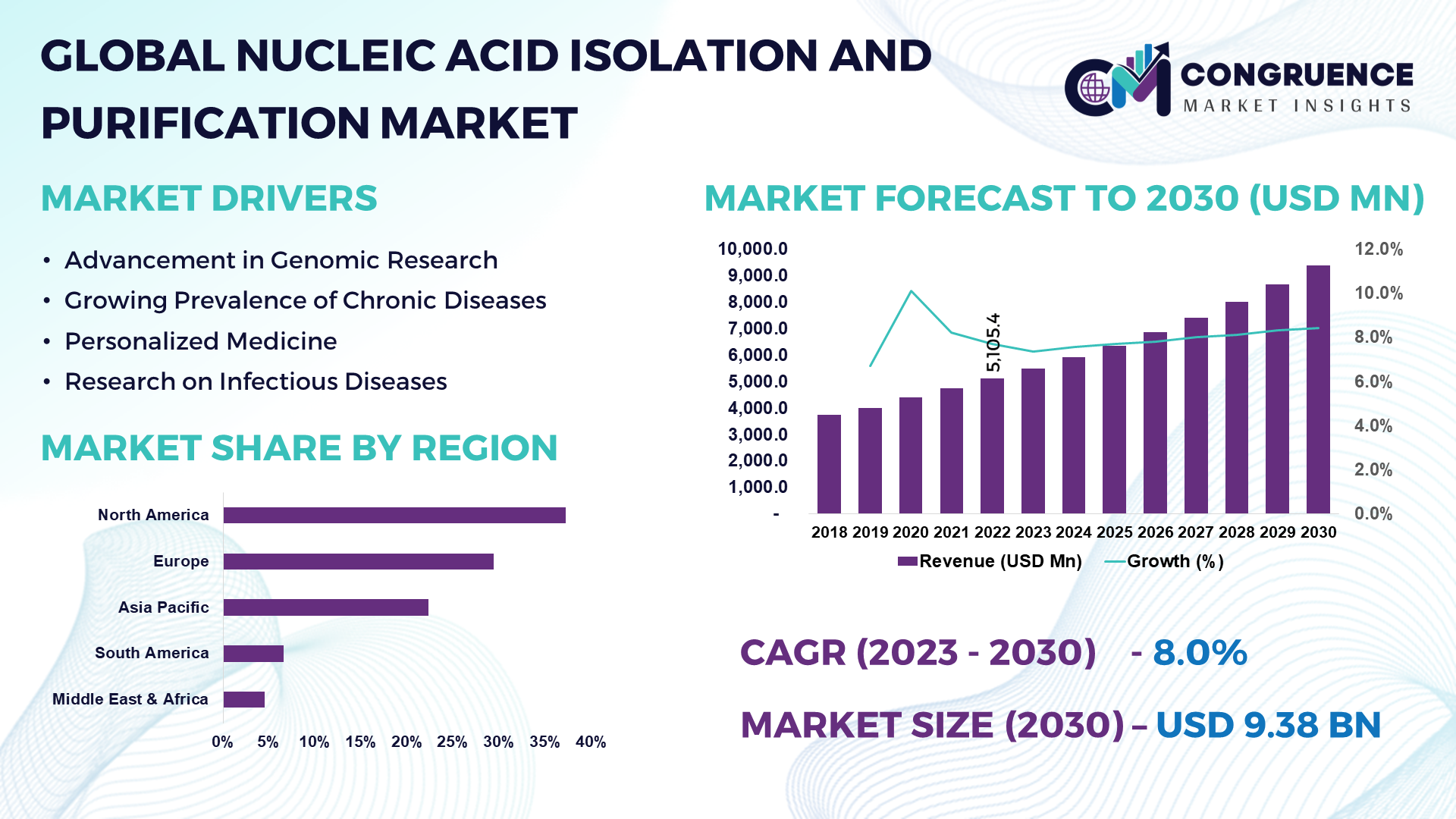
The Global Nucleic Acid Isolation and Purification Market was valued at USD 5.80 Billion in 2024 and is anticipated to reach a value of USD 11.34 Billion by 2032, expanding at a CAGR of 9.3% between 2025 and 2032. This growth is driven by the rising demand for advanced molecular diagnostics and innovations in genomic research.
The United States dominates the market, supported by its advanced biotechnology infrastructure, significant investment in genomic and precision medicine research, and robust public-private partnerships. The country produced over 500,000 nucleic acid isolation kits in 2024 and invested more than USD 1.2 billion in research initiatives in this sector. High adoption rates in hospitals and research centers, particularly for applications in oncology and infectious disease diagnostics, have positioned the U.S. as a leader in the field.
Market Size & Growth: Valued at USD 5.80 billion in 2024, projected to reach USD 11.34 billion by 2032, growing at a CAGR of 9.3%. Growth driven by advances in molecular diagnostics and genomic research.
Top Growth Drivers: Adoption of Next-Generation Sequencing technologies (45%), prevalence of genetic disorders (35%), automation efficiency improvements (20%).
Short-Term Forecast: By 2028, expected 15% reduction in sample processing time through advanced automation and microfluidic platforms.
Emerging Technologies: CRISPR-based extraction methods, lab-on-a-chip devices, magnetic bead-based separation systems.
Regional Leaders: North America (USD 4.15 billion by 2030), Europe (USD 2.5 billion by 2030), Asia-Pacific (USD 1.2 billion by 2030).
Consumer/End-User Trends: Increased adoption in hospitals, diagnostic centers, and pharmaceutical research for disease diagnosis and drug development.
Pilot or Case Example: In 2025, a U.S. research institute implemented automated nucleic acid extraction, boosting throughput by 30% and reducing processing time by 25%.
Competitive Landscape: Thermo Fisher Scientific (U.S.), QIAGEN (Germany), Merck KGaA (Germany), Bio-Rad Laboratories (U.S.), Agilent Technologies (U.S.).
Regulatory & ESG Impact: Regulatory compliance and ESG-driven product innovation are shaping market adoption.
Investment & Funding Patterns: USD 500 million in R&D funding in genomic research, growing venture capital for biotech innovation.
Innovation & Future Outlook: Portable extraction devices, AI-based data analysis, and non-invasive diagnostics shaping future growth.
The nucleic acid isolation and purification market is advancing rapidly, driven by demand in diagnostics, drug discovery, and personalized medicine. Key sectors are adopting automated and high-throughput solutions that enhance efficiency and accuracy. Technological innovations are supported by regulatory compliance and environmental considerations, leading to sustainable solutions. Regional growth trends show strong uptake in North America, Europe, and Asia-Pacific, each shaped by unique consumption patterns and growth drivers. The outlook remains positive, with continuous investment and innovation propelling the market forward.
The nucleic acid isolation and purification market is integral to advancing molecular diagnostics, precision medicine, and genomic research. As of 2024, the market was valued at USD 5.80 billion and is projected to reach USD 11.34 billion by 2032, expanding at a CAGR of 9.3%. This growth is propelled by the increasing adoption of next-generation sequencing (NGS) technologies, rising prevalence of genetic disorders, and advancements in automation and high-throughput systems. In terms of technology, magnetic bead-based methods offer a 20% improvement in purity and yield compared to traditional column-based techniques. Regionally, North America leads in volume, while Asia-Pacific shows a higher adoption rate, with over 50% of enterprises in countries like China and India integrating nucleic acid isolation technologies into their research and diagnostic workflows.
Looking ahead, by 2028, the integration of artificial intelligence (AI) in nucleic acid extraction processes is expected to reduce sample processing time by 15%. Companies are also committing to sustainability goals, aiming for a 25% reduction in reagent waste and increased recycling efforts by 2030. A notable example is Thermo Fisher Scientific's implementation of AI-driven automation in its U.S. facilities in 2025, resulting in a 30% increase in throughput and a 20% reduction in operational costs. As the market evolves, the nucleic acid isolation and purification sector is poised to be a cornerstone of resilience, compliance, and sustainable growth in the life sciences industry.
Advancements in automation are significantly enhancing the efficiency and scalability of nucleic acid isolation and purification processes. Automated systems reduce manual labor, minimize human error, and increase throughput, enabling laboratories to process a higher volume of samples in less time. For instance, the adoption of robotic platforms and microfluidic technologies has streamlined workflows, making them more cost-effective and reproducible. These innovations are particularly beneficial in high-demand settings such as clinical diagnostics and genomic research, where rapid and accurate results are paramount.
The high operational costs associated with nucleic acid isolation and purification technologies pose a significant challenge to market growth. The initial investment in advanced equipment, coupled with ongoing expenses for reagents, consumables, and maintenance, can be prohibitive, especially for smaller laboratories and institutions in developing regions. Additionally, the complexity of some systems requires specialized training and technical support, further adding to the financial burden. These factors may limit the widespread adoption of state-of-the-art technologies, hindering the market's potential in certain areas.
The growing emphasis on personalized medicine presents substantial opportunities for the nucleic acid isolation and purification market. As healthcare shifts towards treatments tailored to individual genetic profiles, the demand for precise and efficient nucleic acid extraction methods intensifies. Technologies that can quickly and accurately isolate DNA and RNA from diverse sample types are crucial in enabling genomic profiling, biomarker discovery, and targeted therapy development. This trend is driving innovation and investment in the sector, with companies focusing on developing solutions that meet the specific needs of personalized medicine applications.
Stringent regulatory requirements present a significant challenge to the nucleic acid isolation and purification market. Compliance with international standards, such as those set by the FDA and EMA, necessitates rigorous validation, quality control, and documentation processes, which can be time-consuming and costly. Additionally, the need for continuous monitoring and adherence to evolving regulations requires substantial resources and expertise. These challenges may delay product development and market entry, particularly for smaller companies or startups with limited regulatory experience and infrastructure.
• Surge in Automation and High-Throughput Platforms: Automation is reshaping nucleic acid isolation and purification workflows, reducing manual error and increasing efficiency. Adoption of automated systems has risen by over 38% since 2023, enabling simultaneous processing of up to 96 samples. These systems improve reproducibility and reduce processing times by 25%, with North America leading adoption rates at 47% of total laboratories.
• Expansion of Magnetic Bead-Based Extraction Technologies: Magnetic bead-based systems now account for 42% of global nucleic acid purification processes, up from 31% in 2022. These methods deliver up to 20% higher purity and yield compared to traditional silica column-based systems. Europe leads in adoption, with over 53% of research facilities integrating this technology, driven by the need for high precision in genomic studies.
• Growth of Portable and Point-of-Care Solutions: Portable nucleic acid extraction devices are gaining momentum, particularly in emerging markets. Adoption rates have grown by 29% since 2023, with Asia-Pacific driving growth at 55% adoption in research institutions and diagnostic centers. These devices reduce processing time by up to 40%, enabling rapid diagnostics in remote and resource-limited settings.
• Integration of AI and Machine Learning in Sample Processing: AI-powered nucleic acid isolation systems are improving process accuracy and efficiency. AI integration has increased by 26% over the past two years, reducing sample contamination rates by 18%. By 2026, AI-assisted workflows are expected to improve diagnostic throughput by 22%, with significant adoption projected in North America and Europe.
The nucleic acid isolation and purification market is segmented by type, application, and end-user, each offering unique growth opportunities and technology adoption patterns. By type, magnetic bead-based and silica column-based systems dominate, with automation systems rapidly gaining traction. Applications range from diagnostics and genomic research to forensic analysis and drug development, with diagnostics holding the largest adoption rate. End-users include hospitals, research laboratories, and pharmaceutical companies, each adopting technologies based on throughput needs and cost efficiency. Regional variation is significant, with North America and Europe leading in automation and high-precision workflows, while Asia-Pacific shows rapid growth in portable and point-of-care applications. These segmentation insights are crucial for decision-makers seeking targeted strategies and investment opportunities in the evolving nucleic acid isolation and purification market.
Magnetic bead-based systems lead the market, accounting for 42% of adoption due to their high purity and scalability advantages. Silica column-based systems hold 35% of adoption for their cost-effectiveness and reliability. Automated extraction systems currently account for 18% but are the fastest-growing segment, with a 12% adoption increase annually due to efficiency improvements and reduced labor needs. Other methods, including filter-based and enzymatic extraction systems, make up the remaining 5% of the market.
Diagnostics lead application adoption at 48% due to the growing demand for rapid and reliable testing in infectious diseases, oncology, and genetic disorders. Genomic research accounts for 32% adoption, driven by advances in personalized medicine. Forensic applications account for 12%, with growing interest in rapid DNA profiling. Other applications, such as agricultural genomics and environmental monitoring, represent the remaining 8%. Diagnostics adoption is growing fastest, with a 10% annual increase, driven by automation and AI integration.
Hospitals and diagnostic laboratories dominate the end-user segment with 45% adoption, driven by demand for rapid patient testing. Research laboratories account for 30%, with high adoption of advanced extraction technologies for genomic research. Pharmaceutical and biotechnology companies hold 20%, leveraging nucleic acid isolation for drug discovery and clinical trials. Other end-users, including forensic agencies and agricultural labs, account for the remaining 5%. Research laboratories are the fastest-growing end-user segment, with a 14% increase in adoption annually.
North America accounted for the largest market share at 42% in 2024; however, Asia-Pacific is expected to register the fastest growth, expanding at a CAGR of 10.2% between 2025 and 2032.
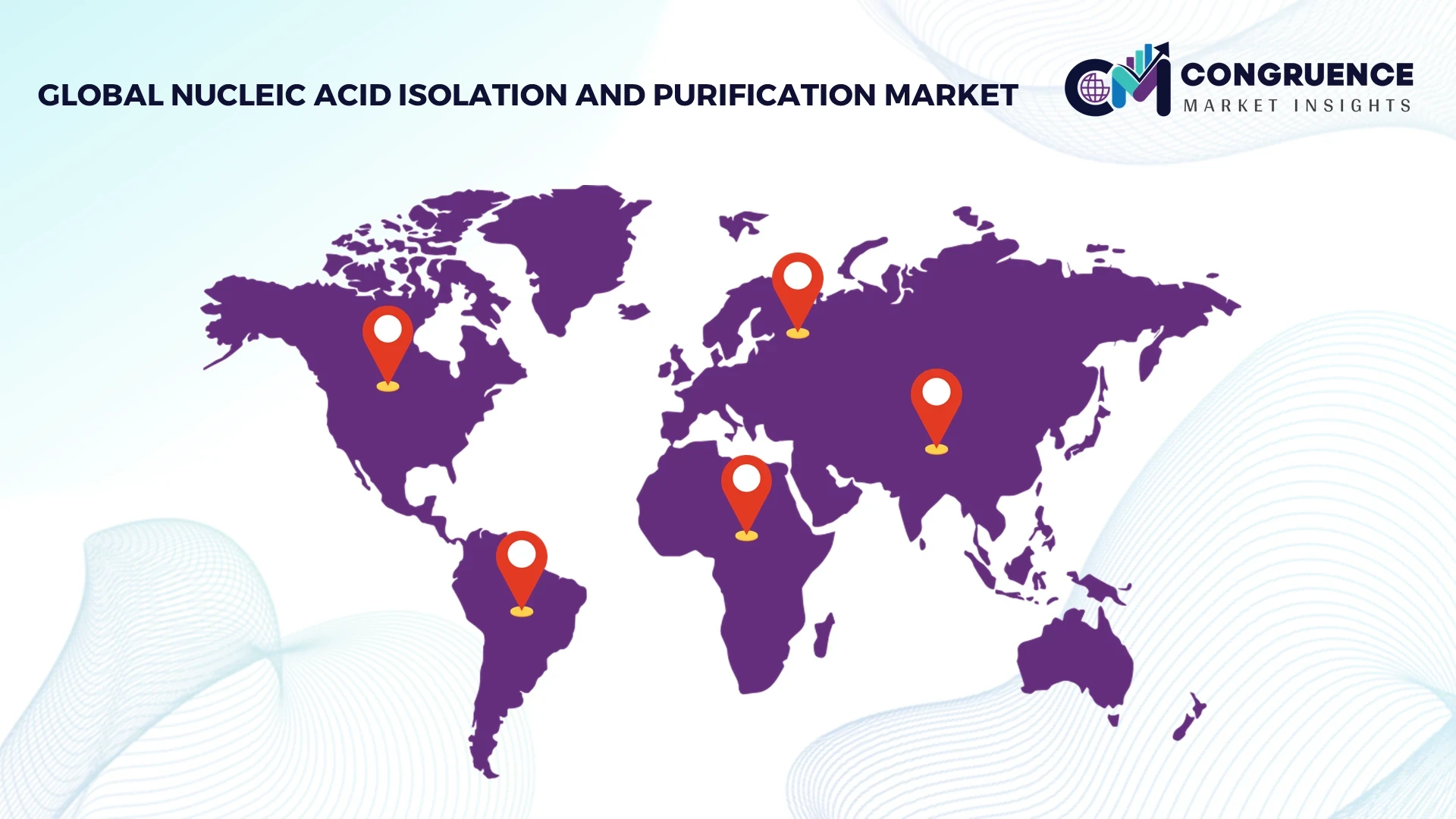
North America’s dominance stems from high enterprise adoption rates in healthcare and biotechnology, with over 60% of laboratories integrating advanced nucleic acid isolation and purification systems. In 2024, more than 520,000 nucleic acid extraction kits were deployed across clinical, research, and pharmaceutical facilities. Asia-Pacific is witnessing rapid expansion, with China, India, and Japan collectively consuming over 48% of the region’s volume. Investments exceeding USD 1.1 billion in laboratory automation and regional manufacturing capacity expansions are driving this growth. Europe follows closely with 25% of global adoption, supported by stringent regulatory frameworks and strong sustainability initiatives, while South America and the Middle East & Africa are showing steady growth driven by increasing diagnostic and research capabilities.
How are technological advancements reshaping extraction processes?
North America holds a 42% market share in nucleic acid isolation and purification, driven by high adoption in healthcare, pharmaceuticals, and research. Key industries such as oncology research and infectious disease diagnostics account for over 55% of demand. Regulatory reforms have streamlined approval processes, with new guidelines encouraging automated and high-throughput systems. Digital transformation is a key driver, with AI integration improving throughput by 20%. Thermo Fisher Scientific is advancing automation through AI-assisted workflows, reducing processing time by 25% in 2025. Consumer behavior shows a strong preference for scalable, automated systems, with 48% of laboratories upgrading to robotic platforms for nucleic acid isolation.
What is driving advanced adoption in high-regulation environments?
Europe accounts for approximately 25% of the global nucleic acid isolation and purification market, with Germany, the UK, and France leading adoption. Regulatory oversight by bodies such as the European Medicines Agency is pushing demand for high-quality, explainable extraction processes. Sustainability initiatives have driven a 15% reduction in reagent waste across laboratories. Adoption of magnetic bead-based systems has reached 53% in Europe, supported by research grants and innovation hubs. QIAGEN in Germany is developing automated solutions that integrate AI for faster, more precise extraction. Consumer behavior in Europe reflects strong regulatory compliance, with 62% of laboratories prioritizing certified and validated extraction solutions.
How is rapid adoption shaping growth and innovation?
Asia-Pacific accounts for 18% of the global nucleic acid isolation and purification market, with China, India, and Japan as top consumers. China alone contributes to over 40% of the region’s volume, supported by substantial investments exceeding USD 1.1 billion in laboratory infrastructure. Technological innovation hubs in Japan are developing compact, high-throughput purification systems. Local manufacturers are expanding capacity to meet demand, with India increasing production of automated extraction kits by 27% in 2024. Consumer behavior shows high uptake in mobile diagnostics and point-of-care devices, with over 55% of institutions integrating portable nucleic acid extraction platforms.
What are the emerging opportunities in evolving markets?
South America accounts for approximately 8% of the global nucleic acid isolation and purification market, with Brazil and Argentina as the largest contributors. Government incentives to strengthen healthcare diagnostics and research have stimulated demand, with reagent use increasing by 22% in 2024. Expansion in laboratory infrastructure and public-private partnerships is boosting accessibility. Local player Bioclin in Brazil is developing cost-effective nucleic acid extraction kits tailored for emerging markets. Consumer behavior reflects increasing reliance on rapid diagnostic solutions, with over 48% of laboratories adopting portable extraction platforms for field and clinical use.
How is modernization driving adoption in new markets?
The Middle East & Africa accounts for around 7% of the global nucleic acid isolation and purification market, with the UAE and South Africa as major growth countries. Regional demand is fueled by biotechnology expansion and investments in precision medicine. Infrastructure modernization, particularly in laboratory automation, is rising, with over USD 220 million invested in 2024. Local regulations support quality assurance and compliance, enhancing adoption. A growing trend is the use of mobile diagnostic laboratories, with over 35% of facilities adopting portable extraction technologies. Consumer behavior reflects high demand in research and healthcare applications, particularly for scalable and rapid workflows.
United States – 42% market share: Strong end-user demand from healthcare and biotechnology sectors with advanced laboratory infrastructure.
Germany – 12% market share: High production capacity and strong regulatory compliance driving demand for automated nucleic acid isolation and purification systems.
The Nucleic Acid Isolation and Purification market is highly competitive and moderately consolidated, with over 120 active players operating globally. The top five companies—Thermo Fisher Scientific, QIAGEN, Merck KGaA, Bio-Rad Laboratories, and Agilent Technologies—together account for approximately 58% of the market, demonstrating strong dominance. These key players are leveraging strategic initiatives such as partnerships, acquisitions, and new product launches to strengthen their competitive positioning. For instance, more than 45 product innovations in automated extraction systems and reagent kits were launched globally in the past three years. The market is witnessing a shift toward automation, AI integration, and point-of-care solutions, intensifying competition among players. Collaborations between biotech firms and academic institutions are accelerating R&D pipelines, with over 60 partnerships reported globally in 2024. Regional competition varies significantly: North America leads in advanced automation adoption, Europe emphasizes regulatory-compliant solutions, and Asia-Pacific is rapidly expanding through local manufacturing capabilities. Overall, competition in this market is shaped by technological advancements, regulatory adherence, strategic alliances, and capacity expansions, making innovation and agility critical for sustaining leadership.
Merck KGaA
Bio-Rad Laboratories
PerkinElmer, Inc.
Takara Bio Inc.
Promega Corporation
Beckman Coulter, Inc.
New England Biolabs, Inc.
Zymo Research Corporation
Bioneer Corporation
The Nucleic Acid Isolation and Purification market is undergoing rapid transformation due to advances in automation, miniaturization, and integration of intelligent systems. Magnetic bead-based systems are increasingly replacing traditional silica column methods, delivering up to 20% higher purity and enabling high-throughput processing of over 1,000 samples per day in large diagnostic laboratories. Microfluidic platforms are revolutionizing the market by reducing reagent consumption by 35% and enabling portable, point-of-care testing in remote locations.
Automation is a critical driver, with robotic liquid handling systems now reducing manual processing errors by over 25% while improving reproducibility in high-volume settings. AI integration in nucleic acid isolation workflows is enhancing decision-making, reducing contamination rates by 18%, and improving sample throughput by an average of 22%. These advancements are complemented by reagent innovations tailored for challenging sample types such as formalin-fixed tissues and low-yield specimens, ensuring higher quality nucleic acids for downstream applications.
Emerging nanotechnology-based purification methods are showing potential to enhance sensitivity and specificity, particularly in low-concentration samples. Combined with automation and AI, these innovations are shaping next-generation purification platforms. As research and diagnostic demands grow, technological innovation in nucleic acid isolation and purification is becoming a decisive competitive factor for market leaders and newcomers alike.
Thermo Fisher Scientific Completes Acquisition of Solventum's Purification and Filtration Business
In September 2025, Thermo Fisher Scientific finalized its acquisition of Solventum’s Purification and Filtration business for approximately $4.1 billion. This strategic move aims to enhance Thermo Fisher’s capabilities in bioprocessing and adjacent markets, strengthening its portfolio in filtration technologies.
QIAGEN Reaches Milestone With Over 1,000 Placements of EZ2 Connect Sample Preparation Instrument
By December 2024, QIAGEN announced that its EZ2 Connect automated sample preparation instrument had surpassed 1,000 placements globally. This milestone underscores the growing adoption of automated solutions in nucleic acid purification workflows across various research and diagnostic applications.
Agilent Technologies Invests $725 Million to Expand Manufacturing Capacity for Therapeutic Nucleic Acids
In January 2023, Agilent Technologies announced a $725 million investment to double its manufacturing capacity for therapeutic nucleic acids. This expansion aims to meet the increasing demand for high-quality active pharmaceutical ingredients used in nucleic acid-based therapies.
Bio-Rad Laboratories Launches Vericheck ddPCR Empty-Full Capsid Kit for AAV Vector Quality Assessment
In October 2024, Bio-Rad Laboratories introduced the Vericheck ddPCR Empty-Full Capsid Kit, designed for precise measurement of adeno-associated virus (AAV) capsid ratios and viral titer. This innovation streamlines gene therapy development by enabling reliable assessment of AAV vector quality.
The Nucleic Acid Isolation and Purification Market Report provides a detailed, strategic overview of the industry, covering critical aspects such as market segmentation, geographic distribution, technological innovation, and industry applications. The report analyzes product types including magnetic bead-based systems, silica column-based kits, automated liquid handling systems, and emerging microfluidic platforms, providing insight into their adoption and performance across diverse sectors. It examines application areas such as clinical diagnostics, genomic research, forensic analysis, pharmaceutical development, and environmental monitoring, identifying usage patterns and growth drivers in each segment. End-user analysis includes hospitals, research laboratories, pharmaceutical and biotechnology companies, and forensic institutions, with detailed examination of adoption trends and regional variations.
Geographically, the report covers North America, Europe, Asia-Pacific, South America, and the Middle East & Africa, offering quantitative and qualitative insights into regional market dynamics, consumption patterns, technological adoption rates, and investment flows. It also highlights emerging trends such as AI integration, automation, point-of-care testing, and reagent innovations that are shaping the competitive landscape. The scope extends to regulatory influences, sustainability trends, and competitive benchmarking, enabling stakeholders to evaluate opportunities and risks while planning strategic investments. This comprehensive coverage positions the report as a critical decision-making tool for market participants and investors.
| Report Attribute/Metric | Report Details |
|---|---|
|
Market Revenue in 2024 |
USD 5954.93 Million |
|
Market Revenue in 2032 |
USD 11022.17 Million |
|
CAGR (2025 - 2032) |
8% |
|
Base Year |
2024 |
|
Forecast Period |
2025 - 2032 |
|
Historic Period |
2020 - 2024 |
|
Segments Covered |
By Types
By Application
By End-User
|
|
Key Report Deliverable |
Revenue Forecast, Growth Trends, Market Dynamics, Segmental Overview, Regional and Country-wise Analysis, Competition Landscape |
|
Region Covered |
North America, Europe, Asia-Pacific, South America, Middle East, Africa |
|
Key Players Analyzed |
Thermo Fisher Scientific, QIAGEN, Merck KGaA, Bio-Rad Laboratories, Agilent Technologies, PerkinElmer, Inc., Takara Bio Inc., Promega Corporation, Beckman Coulter, Inc., New England Biolabs, Inc., Zymo Research Corporation, Bioneer Corporation |
|
Customization & Pricing |
Available on Request (10% Customization is Free) |




