
Reports
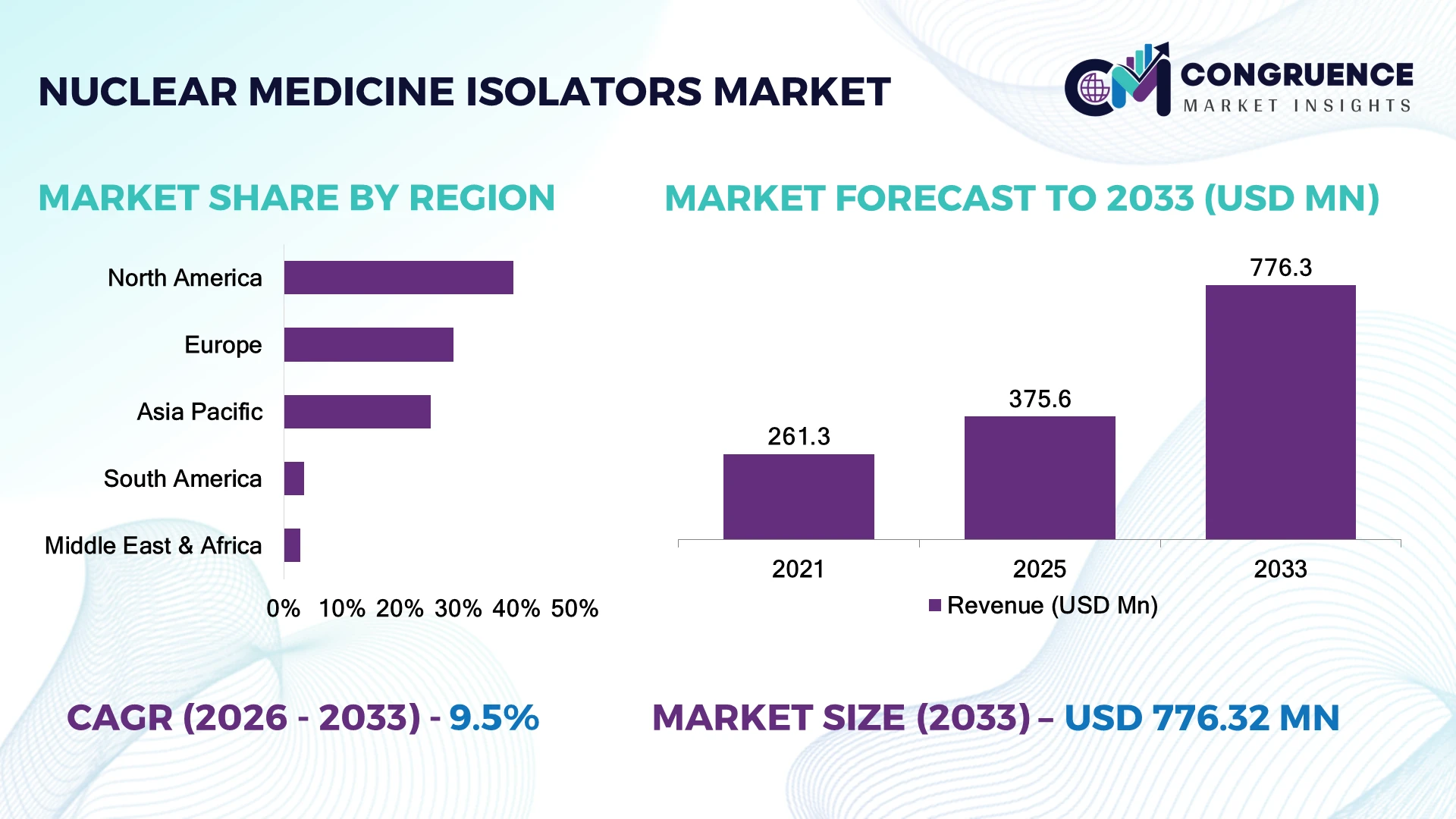
The Global Nuclear Medicine Isolators Market was valued at USD 375.6 Million in 2025 and is anticipated to reach a value of USD 776.3 Million by 2033 expanding at a CAGR of 9.5% between 2026 and 2033. Growth is driven by rising radiopharmaceutical production, expansion of theranostics programs, and stricter aseptic processing requirements for PET and SPECT isotope preparation.
The United States leads the global market with approximately 34% share, supported by expanding radiopharmaceutical manufacturing capacity, over 2,300 PET imaging centers, and continued investment in targeted radionuclide therapies. Compared with Germany, where centralized production dominates, U.S. healthcare networks increasingly deploy decentralized dose preparation systems, improving workflow efficiency by nearly 28%. Continued healthcare resilience initiatives following global isotope supply-chain disruptions have accelerated domestic infrastructure investment and automated containment technologies.
Strategic investment increasingly favors integrated isolator platforms combining radiation shielding, robotic handling, and digital process monitoring for high-throughput nuclear medicine facilities.
Market Size & Growth: USD 375.6 Million in 2025, reaching USD 776.3 Million by 2033 at 9.5% CAGR, driven by expanding radiopharmaceutical manufacturing.
Top Growth Drivers: Theranostics +31%, PET imaging +24%, automated aseptic processing +21%.
Short-Term Forecast: By 2028, dose preparation time declines 18% through automated isolator workflows.
Emerging Technologies: Robotics, AI-assisted monitoring, and digital environmental control improve operational precision.
Regional Leaders: North America, Europe, and Asia-Pacific lead deployment with expanding isotope production infrastructure.
Consumer/End-User Trends: More than 62% of new radiopharmacy installations specify closed isolator systems.
Pilot/Case Example: 2026 hospital modernization reduced operator radiation exposure by approximately 27%.
Competitive Landscape: Top suppliers collectively control nearly 58% through advanced containment technologies.
Regulatory & ESG Impact: Automated containment lowers contamination events by nearly 20% while supporting compliance.
Investment & Funding: More than USD 900 Million supports radiopharmaceutical manufacturing expansion and cleanroom modernization.
Innovation & Future Outlook: Remote diagnostics and robotic dispensing strengthen advanced nuclear medicine operations globally.
Nuclear Medicine Isolators are becoming essential across hospital radiopharmacies, commercial radiopharmaceutical manufacturing, and research facilities as targeted radionuclide therapies expand. Automated dispensing systems and integrated environmental monitoring improve workflow consistency by approximately 25%, while growing domestic isotope production following global supply-chain realignment strengthens demand for advanced containment technologies, setting the foundation for broader strategic market transformation.
Nuclear medicine isolators have become strategic infrastructure for healthcare providers, radiopharmaceutical manufacturers, and research institutions seeking safer, higher-throughput production of radioactive medicines. Expansion of targeted radionuclide therapies, decentralized radiopharmacy models, and stricter aseptic manufacturing standards are reshaping investment priorities. Supply-chain diversification following isotope availability disruptions has accelerated regional production facilities equipped with advanced containment technologies.
Modern robotic isolators improve operator productivity by approximately 30% compared with conventional manual hot-cell workflows while reducing contamination risk through automated material handling and continuous environmental monitoring. North America leads high-value clinical deployment through integrated radiopharmacy networks, whereas Asia-Pacific is expanding manufacturing capacity rapidly to support increasing domestic radiopharmaceutical production. More than 60% of newly commissioned facilities now incorporate digitally monitored isolator platforms designed for multi-isotope processing and workflow traceability.
A practical example is centralized radiopharmaceutical production facilities deploying robotic dispensing isolators that shorten batch preparation cycles while improving operator safety. Manufacturers are expanding modular product portfolios, strengthening service partnerships, and integrating remote equipment diagnostics to support growing clinical demand. Organizations investing in intelligent containment systems today will strengthen regulatory readiness, operational efficiency, and long-term competitiveness as precision nuclear medicine becomes a core component of modern healthcare.
Rapid expansion of theranostics programs and radiopharmaceutical manufacturing is accelerating demand for advanced nuclear medicine isolators. More than 65% of newly commissioned radiopharmacy facilities now specify automated aseptic containment systems, while robotic dispensing improves operator productivity by approximately 30% and lowers radiation exposure by nearly 25%. The United States continues expanding domestic isotope production under healthcare infrastructure initiatives, encouraging hospitals and commercial radiopharmacies to modernize hot-cell environments. This structural shift increases demand for integrated shielding, automated dispensing, and digital environmental monitoring. Equipment manufacturers are responding through modular isolator platforms, strategic collaborations with radiopharmaceutical producers, and investments in intelligent process validation, enabling faster installation while supporting higher production consistency and regulatory compliance.
High installation costs and dependence on radioisotope availability continue limiting broader deployment, particularly for mid-sized healthcare facilities. Complete isolator installations can increase initial capital expenditure by more than 35%, while specialized shielding components account for nearly 20% of equipment costs. Periodic shortages of medical isotopes, particularly during reactor maintenance or logistics disruptions, reduce production utilization and delay return on investment. Complex cleanroom integration further extends commissioning timelines, affecting operational scalability. Manufacturers are mitigating these constraints through localized component sourcing, standardized modular designs, long-term equipment service agreements, and flexible financing programs that reduce upfront investment while improving lifecycle economics for radiopharmacy operators.
AI-assisted process control, robotic dose dispensing, and digital quality monitoring present significant opportunities for next-generation nuclear medicine isolators. Automated workflow integration can reduce manual intervention by approximately 40% while increasing batch consistency by nearly 22%. Countries including China and Saudi Arabia are expanding nuclear medicine infrastructure, creating demand for scalable containment systems supporting domestic radiopharmaceutical production. Smart predictive maintenance and remote equipment diagnostics are emerging as value-added differentiators for manufacturers seeking recurring service revenues. Companies are investing in modular automation, cloud-connected monitoring platforms, and strategic partnerships with isotope producers to deliver integrated radiopharmacy ecosystems that improve productivity without proportionally increasing staffing requirements.
Integrating nuclear medicine isolators with hospital information systems, radiopharmacy software, dispensing automation, and regulatory documentation remains a major execution challenge. Around 32% of implementation timelines are extended because of validation requirements, facility customization, and multidisciplinary commissioning. Japan and Germany increasingly require highly standardized qualification procedures before operational approval, extending deployment schedules for complex installations. Workforce shortages involving radiopharmacists, nuclear engineers, and validation specialists further constrain implementation consistency. Manufacturers must invest in standardized digital interfaces, remote commissioning support, operator training, and interoperable automation platforms to maintain competitiveness while reducing deployment complexity across expanding precision medicine infrastructure.
Robotic Dose Preparation Expansion Automated dispensing systems are replacing manual preparation across high-volume radiopharmacies. Robotic workflows reduce operator radiation exposure by approximately 28% while improving preparation consistency by nearly 24%. Hospitals increasingly standardize robotic isolator installations to support growing theranostic procedures, prompting manufacturers to expand automation capabilities and integrated software platforms for faster clinical throughput.
Digital Environmental Monitoring Integration Continuous monitoring of pressure, particle counts, and environmental conditions is becoming standard within advanced isolators. Nearly 68% of newly installed systems now incorporate digital environmental validation, reducing manual compliance activities by about 30%. Regulatory expectations for electronic batch documentation encourage suppliers to integrate intelligent monitoring, cloud reporting, and predictive maintenance into containment equipment.
Modular Radiopharmacy Infrastructure Growth Healthcare providers increasingly prefer modular isolator platforms that shorten installation schedules by nearly 20% while supporting future production expansion. Expansion of domestic isotope manufacturing in countries including the United States and China has accelerated demand for scalable radiopharmacy infrastructure. Manufacturers respond with configurable shielding modules, standardized utilities, and flexible production layouts supporting multiple radionuclides.
Multi-Isotope Production Capability Modern facilities increasingly process multiple therapeutic and diagnostic isotopes within integrated containment environments. Advanced isolator configurations improve equipment utilization by approximately 26% while reducing production changeover time by nearly 18%. Companies are redesigning containment architecture, automated transfer systems, and workflow software to support diversified radiopharmaceutical portfolios without compromising aseptic processing or radiation safety.
Lead-shielded isolators accounted for approximately 58% of the market in 2025, leading due to their superior radiation protection, compatibility with high-activity isotopes, and suitability for routine radiopharmaceutical compounding. Their ability to integrate automated dispensing systems and aseptic processing within a single containment environment makes them the preferred solution for hospitals and commercial radiopharmacies. Stainless steel hot cells remain essential for high-volume production, while flexible containment systems retain niche applications in research and low-dose environments.
Automated lead-shielded isolators are also the fastest-growing type as theranostics expansion and higher patient volumes increase demand for standardized workflows. Nearly 42% of newly installed systems now include robotic dispensing or digital monitoring capabilities, while modular configurations reduce installation time by around 18%. Manufacturers are expanding modular product portfolios, integrating remote diagnostics, and collaborating with radiopharmaceutical equipment suppliers to deliver turnkey containment platforms. Investment priorities continue shifting toward automation-ready shielding solutions capable of supporting diversified isotope production with improved operational efficiency.
According to a 2025 International Atomic Energy Agency (IAEA) assessment, increasing deployment of theranostic radiopharmacy facilities is driving greater adoption of automated shielded isolators to strengthen radiation safety, aseptic processing, and standardized dose preparation.
Radiopharmaceutical preparation represented the largest application segment with approximately 49% market share in 2025, reflecting its central role in sterile dose compounding, isotope handling, and contamination control. Growing clinical utilization of PET and targeted radionuclide therapies has reinforced investment in high-performance containment systems. Quality control remains a mature application supporting regulatory compliance, while dispensing applications continue expanding as healthcare providers automate patient-specific dose preparation.
Theranostic dose preparation is emerging as the fastest-growing application because personalized cancer therapies require highly controlled and repeatable production workflows. Nearly 37% of new radiopharmacy investments now prioritize integrated preparation and dispensing platforms, while automated workflow adoption has improved processing efficiency by approximately 24%. Equipment suppliers are responding through software-integrated isolators, robotic filling technologies, and scalable production modules that reduce manual intervention while supporting higher throughput. Demand is increasingly concentrating on applications where operational precision directly influences clinical productivity and regulatory performance.
A 2026 enterprise survey by the Society of Nuclear Medicine and Molecular Imaging indicated that expanding theranostic programs are increasing investment in integrated radiopharmaceutical preparation and automated dispensing infrastructure across advanced healthcare facilities.
Hospitals accounted for approximately 54% of total market demand in 2025 because they perform the highest volume of nuclear medicine procedures while requiring integrated radiopharmacy infrastructure for diagnostic and therapeutic isotope preparation. Their dependence on compliant aseptic processing, radiation protection, and continuous clinical availability sustains large-scale equipment procurement. Academic research institutes maintain specialized demand for experimental isotope development, whereas pharmaceutical manufacturers increasingly adopt advanced isolators for commercial radiopharmaceutical production.
Commercial radiopharmacies represent the fastest-growing end-user segment as outsourced dose preparation expands alongside precision oncology programs. Around 39% of new infrastructure investments target centralized radiopharmacy facilities, while automated production workflows improve operational capacity by nearly 27%. Manufacturers are tailoring modular systems, lifecycle service agreements, and automation packages specifically for commercial operators while strengthening partnerships with isotope suppliers and healthcare networks. Future demand is steadily shifting toward centralized production ecosystems capable of serving multiple hospitals through standardized, high-throughput radiopharmaceutical manufacturing.
A 2025 International Atomic Energy Agency review highlighted continued expansion of centralized radiopharmacy facilities, with automated containment infrastructure becoming increasingly important for supporting growing therapeutic radionuclide production and regional healthcare networks.
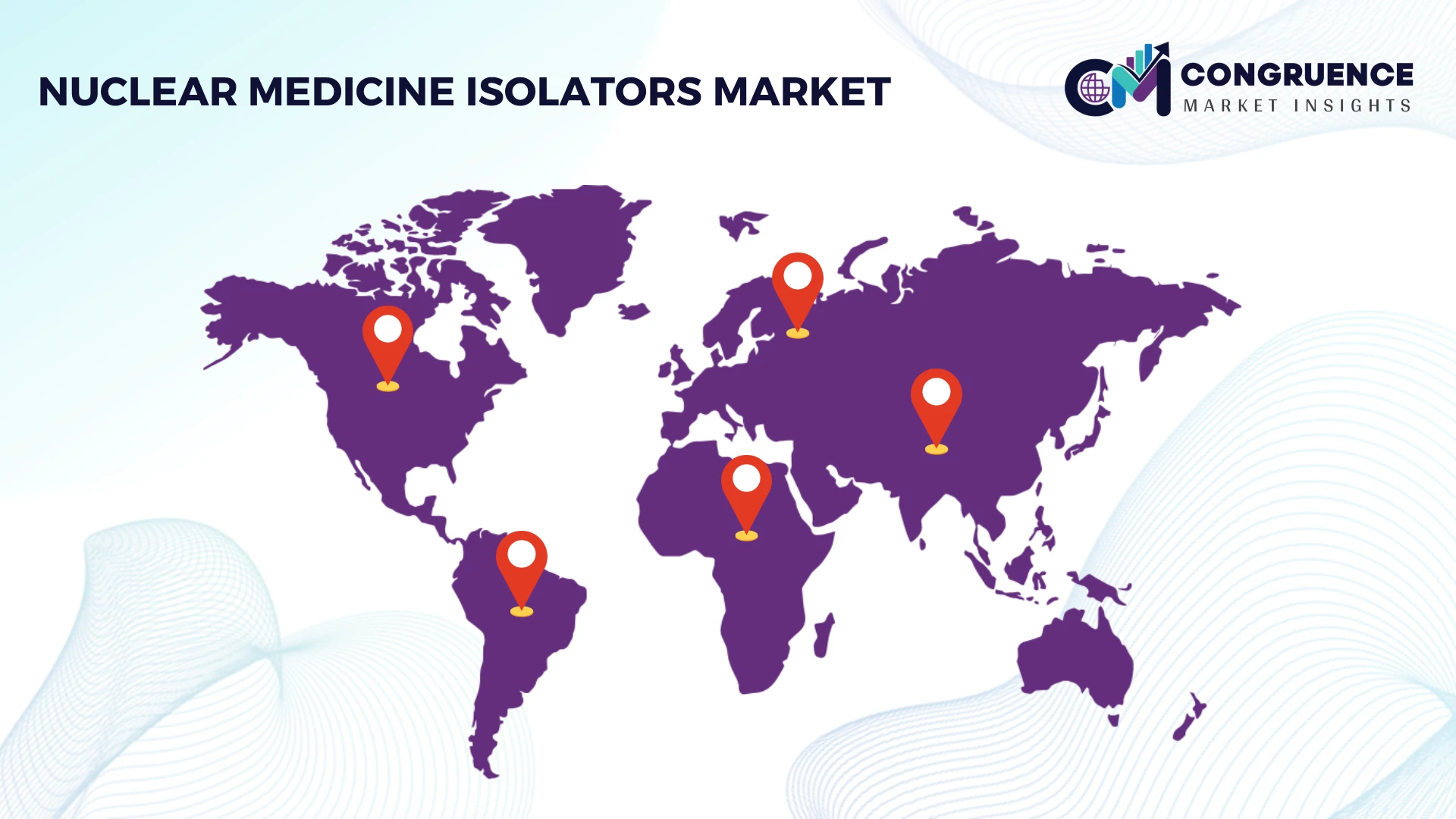
North America accounted for the largest market share at 39.4% in 2025 however, Asia-Pacific is expected to register the fastest growth, expanding at a CAGR of 10.8% between 2026 and 2033.
Advanced radiopharmacy modernization strengthens high-value procurement
North America leads the nuclear medicine isolators market through its extensive PET imaging network, expanding theranostic programs, and mature radiopharmaceutical manufacturing ecosystem. Large hospital systems, commercial radiopharmacies, and isotope producers continue replacing conventional containment systems with automated lead-shielded isolators supporting sterile preparation and radiation safety. The region contributes nearly 40% of global installations, while more than 45% of new procurement projects include integrated monitoring and automated dispensing capabilities. Continued investment in domestic isotope production and hospital infrastructure strengthens equipment replacement cycles, encouraging suppliers to expand service networks, validation support, and digital maintenance capabilities.
United States Market Outlook:
The United States remains the regional growth engine due to its extensive network of nuclear medicine departments, commercial radiopharmacies, and radiopharmaceutical manufacturers. More than 2,300 PET imaging facilities support continuous demand for advanced containment solutions, while increasing therapeutic isotope production accelerates installation of automated isolators. Healthcare providers are prioritizing compliant aseptic processing, prompting manufacturers to expand domestic production, lifecycle support, and customized shielding solutions for high-throughput radiopharmacy operations.
Regulatory compliance accelerates automated sterile processing
Europe maintains a strong market position through stringent GMP requirements, expanding theranostic adoption, and well-established nuclear medicine infrastructure. Pharmaceutical manufacturers and hospital radiopharmacies increasingly deploy closed isolator systems to improve contamination control and radiation protection. Approximately 34% of newly commissioned radiopharmacy upgrades incorporate automated handling technologies, while modernization initiatives across major healthcare institutions continue strengthening replacement demand. Equipment suppliers are emphasizing modular platforms, remote validation capabilities, and standardized compliance features to support operational efficiency across both clinical and commercial environments.
Germany Market Outlook:
Germany represents the region's largest market due to its advanced pharmaceutical manufacturing base, extensive PET diagnostic network, and strong radiopharmaceutical research ecosystem. High investment in precision oncology continues supporting procurement of automated nuclear medicine isolators for hospital and commercial facilities. Domestic engineering expertise also enables integration of customized containment systems that improve workflow consistency while supporting increasing therapeutic isotope production capacity.
Expanding isotope infrastructure drives large-scale deployment
Asia-Pacific is emerging as the fastest-growing market as governments strengthen nuclear medicine capacity, domestic isotope production, and advanced cancer treatment infrastructure. China, Japan, South Korea, and India continue investing in new radiopharmacy facilities supporting diagnostic and therapeutic applications. Nearly 40% of recently announced regional nuclear medicine infrastructure projects include advanced containment systems as part of integrated facility planning. Equipment manufacturers are expanding regional manufacturing, technical support centers, and local partnerships to address rising procurement across both public and private healthcare networks.
China Market Outlook:
China dominates regional demand through rapid expansion of nuclear medicine hospitals, cyclotron installations, and radiopharmaceutical manufacturing investments. Large healthcare infrastructure programs continue increasing deployment of automated shielding technologies, while domestic equipment manufacturers strengthen production capabilities for high-performance isolators. Growing localization initiatives also improve equipment availability and reduce procurement lead times for expanding hospital networks.
Healthcare modernization supports specialized radiopharmacy growth
South America is experiencing gradual expansion as governments invest in oncology services, PET imaging infrastructure, and radiopharmaceutical preparation capabilities. Brazil, Argentina, and Chile continue strengthening nuclear medicine services despite uneven infrastructure development across the region. More than 30% of recently upgraded nuclear medicine centers now include enhanced containment systems designed for safer isotope handling. Suppliers increasingly compete through localized technical support, modular installations, and flexible service agreements that improve equipment accessibility while addressing operational constraints.
Brazil Market Outlook:
Brazil remains the largest regional market owing to its expanding hospital network, established nuclear research institutions, and increasing utilization of PET imaging. Continuous investment in cancer treatment infrastructure supports procurement of advanced nuclear medicine isolators for centralized radiopharmacy operations. Local partnerships between healthcare providers and equipment suppliers are improving installation capability, operator training, and long-term maintenance support across major metropolitan healthcare centers.
Strategic healthcare investment expands advanced nuclear medicine capability
The Middle East & Africa market is progressing through sustained investment in specialized oncology hospitals, nuclear medicine departments, and precision healthcare infrastructure. Gulf countries continue deploying advanced radiopharmacy facilities supporting diagnostic imaging and radionuclide therapies, while African markets focus on foundational capacity expansion. Around 28% of recently commissioned nuclear medicine projects in leading Gulf healthcare systems include integrated isolator installations. Manufacturers are strengthening regional distribution, technical partnerships, and validation services to support long-term infrastructure modernization.
Saudi Arabia Market Outlook:
Saudi Arabia leads regional adoption through substantial investment in advanced healthcare infrastructure and specialized oncology centers under ongoing healthcare transformation initiatives. Expansion of nuclear medicine services and radiopharmaceutical preparation facilities is increasing procurement of automated lead-shielded isolators. National healthcare modernization programs also encourage technology transfer, workforce development, and high-standard aseptic processing that strengthens long-term demand for advanced containment equipment.
Competition is led by Comecer, Tema Sinergie, Von Gahlen, Biodex Medical Systems, and Telstar, with global containment specialists competing against regional radiopharmacy equipment manufacturers and custom engineering firms. The top five suppliers collectively control approximately 63% of market activity, supported by proprietary shielding technologies, GMP-compliant designs, and long-standing hospital relationships. Competition centers on automation capability, radiation protection performance, lifecycle validation, and project execution speed rather than price alone. Automated dispensing integration improves workflow efficiency by nearly 28%, while modular isolator designs reduce installation time by approximately 22%. Leading companies strengthen positions through turnkey radiopharmacy projects, software integration, strategic partnerships, and vertical integration across shielding, dispensing, and monitoring systems. The competitive landscape is shifting toward fully automated theranostic production platforms as hospitals demand standardized, high-throughput operations. Regulatory validation, engineering expertise, and after-sales qualification remain significant entry barriers. Winning requires integrated automation, proven compliance, rapid customization, and comprehensive lifecycle service supporting complex nuclear medicine workflows.
Comecer S.p.A.
Tema Sinergie S.p.A.
Von Gahlen International Inc.
Biodex Medical Systems, Inc.
Telstar
Getinge AB
Trasis SA
Eckert & Ziegler SE
Nuclear Shields B.V.
COMECER Asia Ltd.
Felcon Ltd.
Esco Pharma
NuAire, Inc.
Germfree Laboratories, Inc.
Automation is redefining nuclear medicine isolators through robotic dispensing, intelligent dose calibration, and integrated environmental monitoring. Nearly 48% of newly commissioned radiopharmacy installations incorporate automated dispensing modules, reducing manual handling while improving preparation consistency by approximately 24%. Remote diagnostics and predictive maintenance platforms shorten service response times by nearly 18%, enabling higher equipment availability and improved operational continuity across hospital radiopharmacies.
Modern Class A lead-shielded isolators with integrated robotic systems outperform conventional manual hot-cell workflows by improving processing efficiency by approximately 30% while reducing operator radiation exposure by nearly 25%. Around 44% of new procurement projects now specify software-connected workflow management, electronic batch documentation, and real-time contamination monitoring. Integrated digital platforms particularly benefit commercial radiopharmacies and high-volume cancer centers requiring standardized production, traceability, and regulatory compliance with minimal workflow interruption.
Between 2026 and 2028, artificial intelligence-assisted workflow optimization, digital twins for equipment diagnostics, and modular theranostic production cells are expected to accelerate adoption. Manufacturers investing in software-enabled containment systems, cloud-based performance analytics, and flexible automation architectures will strengthen competitive positioning as healthcare providers prioritize scalable production, shorter validation cycles, and multi-isotope processing capabilities. Organizations adopting these technologies early will achieve greater operational resilience, faster commissioning, and higher production efficiency.
February 2024 Comecer introduced its SmartGuard modular environmental radiation monitoring platform for nuclear medicine departments, enabling continuous real-time monitoring with modular architecture supporting facility-wide deployment and improved operational safety. Business impact: strengthened integrated radiopharmacy infrastructure offerings. Source: Comecer News
October 2024 Comecer showcased an advanced radiopharmaceutical dispenser alongside integrated DoseIT, SmartGuard, and workflow management solutions during EANM 2024, expanding digital radiopharmacy automation capabilities for hospital users. Business impact: accelerated adoption of connected containment platforms. Source: Comecer
April 2025 Comecer highlighted THECLA Class A shielded isolator with full laminar airflow and integrated dispensing technology during the Danish Radiochemistry Meeting, supporting sterile radiopharmaceutical processing. Business impact: reinforced leadership in automated theranostic dispensing solutions. Source: Comecer Events
2026 Tema Sinergie continued expanding integrated theranostic production platforms by combining automated dispensing, shielding, and digital workflow technologies for high-throughput radiopharmacy facilities. Business impact: strengthened turnkey project execution for advanced nuclear medicine laboratories. Source: Company information.
This report provides comprehensive analysis of the nuclear medicine isolators market across equipment types, clinical applications, end-user categories, and major geographic regions between 2026 and 2033. It evaluates lead-shielded isolators, dispensing systems, synthesis cells, and related containment technologies supporting radiopharmaceutical production, quality control, and theranostic workflows. The assessment incorporates operational adoption patterns, automation penetration, deployment distribution, procurement priorities, and competitive positioning across more than 12 major industry participants.
The study further examines regional infrastructure development, hospital modernization, commercial radiopharmacy expansion, and technological innovation shaping future demand. It highlights automation integration, digital workflow management, radiation safety systems, and modular containment platforms while identifying strategic investment opportunities, partnership trends, and evolving procurement models. The report enables stakeholders to strengthen market entry strategies, optimize product portfolios, benchmark competitors, and prioritize long-term expansion in high-value nuclear medicine ecosystems.
| Report Attribute/Metric | Report Details |
|---|---|
|
Market Revenue in 2025 |
USD 375.6 Million |
|
Market Revenue in 2033 |
USD 776.3 Million |
|
CAGR (2026 - 2033) |
9.5% |
|
Base Year |
2025 |
|
Forecast Period |
2026 - 2033 |
|
Historic Period |
2021 - 2025 |
|
Segments Covered |
By Type
By Application
By End-User
|
|
Key Report Deliverable |
Revenue Forecast, Growth Trends, Market Dynamics, Segmental Overview, Regional and Country-wise Analysis, Competition Landscape |
|
Region Covered |
North America, Europe, Asia-Pacific, South America, Middle East, Africa |
|
Key Players Analyzed |
Comecer S.p.A., Tema Sinergie S.p.A., Von Gahlen International Inc., Biodex Medical Systems, Inc., Telstar, Getinge AB, Trasis SA, Eckert & Ziegler SE, Nuclear Shields B.V., COMECER Asia Ltd., Felcon Ltd., Esco Pharma, NuAire, Inc., Germfree Laboratories, Inc. |
|
Customization & Pricing |
Available on Request (10% Customization is Free) |




