
Reports
The Global NiTi Alloy Medical Device Market was valued at USD 5,613.0 Million in 2025 and is anticipated to reach a value of USD 12,128.6 Million by 2033 expanding at a CAGR of 10.11% between 2026 and 2033. Growth is driven by rising adoption of minimally invasive cardiovascular and neurovascular procedures that increasingly rely on superelastic NiTi components for precision navigation, durability, and shape-memory performance.
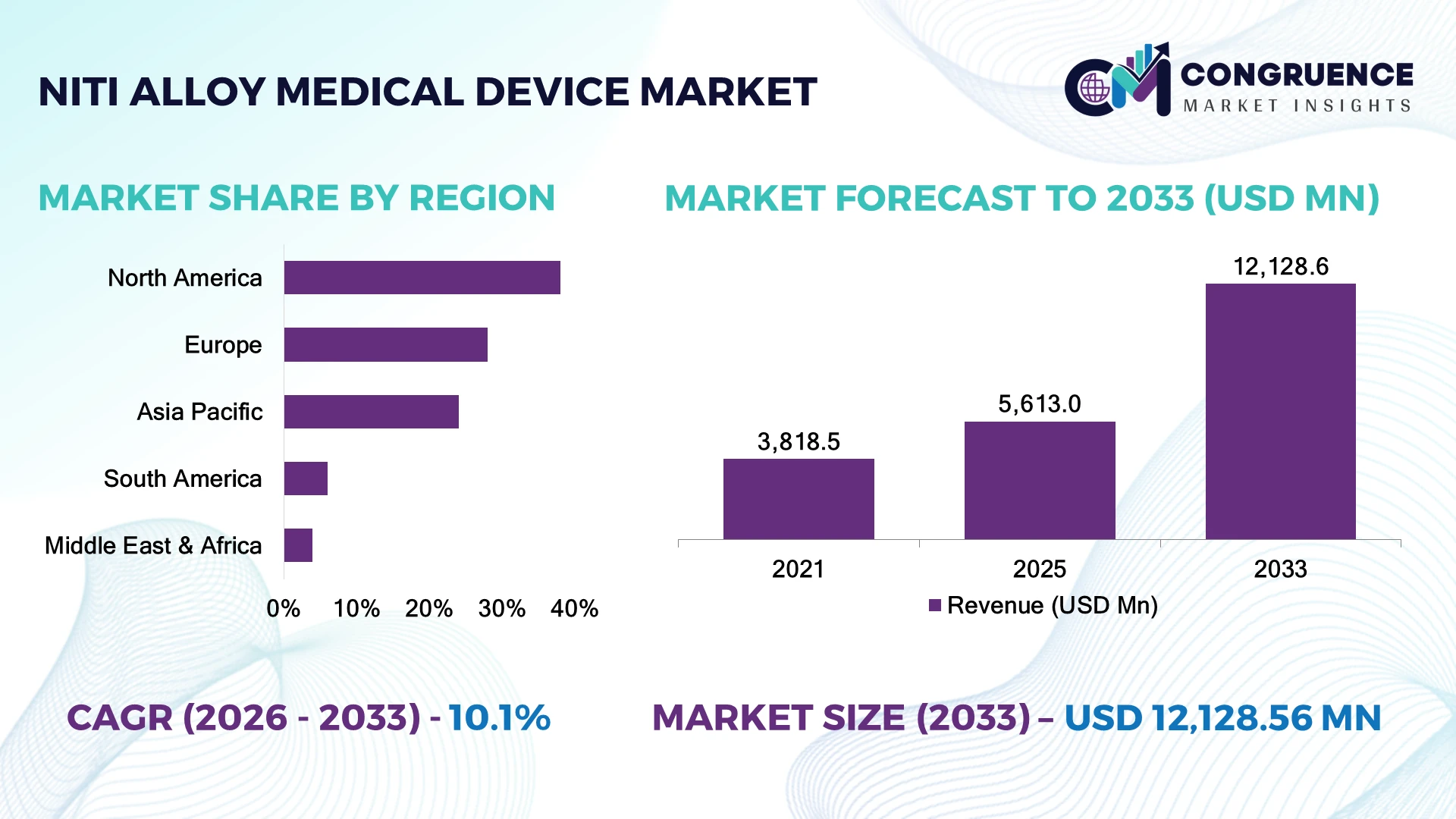
The United States dominates the global NiTi alloy medical device market with approximately 36% share, supported by over USD 4 billion in annual cardiovascular device innovation spending and widespread use across stents, guidewires, and orthopedic implants. Germany remains a leading European manufacturing hub, while the U.S. performs nearly 40% more minimally invasive vascular procedures than Germany. Ongoing healthcare modernization, reshoring initiatives, and post-pandemic supply-chain diversification continue strengthening domestic production capabilities and advanced device adoption.
Strategic implication Companies securing material sourcing, advanced processing capabilities, and regulatory-ready product pipelines will capture the highest-value clinical applications.
Market Size & Growth: USD 5,613.0 Million in 2025 reaching USD 12,128.6 Million by 2033, supported by expanding minimally invasive procedure volumes and advanced implant adoption.
Top Growth Drivers: Cardiovascular interventions (+18%), neurovascular procedures (+15%), and orthopedic implant demand (+12%) are accelerating market expansion.
Short-Term Forecast: By 2028, advanced NiTi processing technologies are expected to reduce component defects by nearly 20% and improve manufacturing efficiency by 15%.
Emerging Technologies: Laser-cut stents, additive manufacturing, and next-generation shape-memory alloys are improving device precision and clinical outcomes.
Regional Leaders: North America (~USD 4.4 Billion), Europe (~USD 3.1 Billion), and Asia-Pacific (~USD 2.8 Billion) lead through innovation, localized manufacturing, and healthcare infrastructure expansion.
Consumer/End-User Trends: More than 65% of advanced vascular procedures now utilize NiTi-enabled devices due to flexibility and fatigue resistance advantages.
Pilot/Case Example: In 2024, multiple smart-manufacturing programs improved NiTi component yield rates by over 12% while reducing processing waste.
Competitive Landscape: Top manufacturers collectively control nearly 45% market share, led by Medtronic, Boston Scientific, Abbott, Terumo, and Cook Medical.
Regulatory & ESG Impact: Advanced recycling and material-efficiency programs reduced production scrap by approximately 10% across several manufacturing facilities.
Investment & Funding: More than USD 1.2 Billion has been directed toward capacity expansion, strategic partnerships, and advanced medical materials development.
Innovation & Future Outlook: Next-generation bioresorbable hybrids, AI-assisted device design, and localized supply chains are strengthening long-term competitiveness.
NiTi alloy medical devices remain central to cardiovascular, peripheral vascular, neurovascular, and orthopedic treatment pathways due to their unique combination of flexibility, fatigue resistance, and shape-memory behavior. Recent innovations include ultra-thin stent architectures, precision laser processing, and additive manufacturing techniques that improve device performance by nearly 15%. Growing localization efforts in medical manufacturing and stricter quality compliance frameworks are also reshaping supply-chain strategies, creating new opportunities across emerging healthcare markets and advanced intervention platforms.
NiTi alloy medical devices are becoming strategically important because they sit at the intersection of advanced materials engineering and minimally invasive healthcare delivery. Hospitals, device manufacturers, and investors increasingly prioritize technologies that improve procedural precision while reducing recovery times. The market is also benefiting from supply-chain restructuring initiatives in the United States and Europe aimed at strengthening domestic medical manufacturing capabilities and reducing dependence on concentrated material processing networks.
From a technology perspective, NiTi-based self-expanding stents can deliver up to 25% greater flexibility and fatigue resistance than conventional stainless-steel alternatives, improving long-term device performance in complex vascular environments. The United States leads in clinical deployment and product commercialization, while China continues expanding manufacturing capacity and material-processing capabilities. Over the next two to three years, adoption of laser-processed and digitally designed NiTi components is expected to increase by more than 15% across high-value intervention categories.
A practical example is the expansion of advanced catheter and stent production facilities that integrate automated inspection systems to improve quality consistency and reduce defect rates. Companies are strengthening partnerships with material suppliers, expanding localized manufacturing footprints, and increasing investment in next-generation implant platforms. Organizations that combine material expertise, regulatory readiness, and scalable production capabilities will secure stronger competitive positioning and long-term market relevance.
The increasing shift toward minimally invasive treatment procedures is the primary catalyst for NiTi alloy medical device adoption. More than 70% of new vascular intervention products now incorporate NiTi-based components because of superior elasticity and shape-memory performance. Cardiovascular procedure volumes have increased by approximately 12% over the last five years, while neurovascular interventions have expanded by nearly 15%. Regulatory support for advanced treatment pathways and hospital investments in catheter-based procedures continue accelerating deployment. In response, manufacturers are expanding precision laser-cutting facilities, increasing automation investments, and strengthening clinical partnerships. A notable strategic insight is that device differentiation is increasingly determined by material performance rather than device geometry alone, elevating NiTi processing expertise into a critical competitive advantage.
The market faces structural constraints due to the highly specialized nature of NiTi alloy production and processing. More than 60% of advanced medical-grade NiTi processing capacity remains concentrated among a limited number of suppliers, creating sourcing vulnerabilities. Raw material and processing costs can fluctuate by 10–15% depending on energy prices and manufacturing utilization rates. Regulatory qualification requirements also extend validation timelines by approximately 20% compared with conventional metallic materials. These constraints directly affect scalability and procurement planning for device manufacturers. Companies are mitigating risks through long-term supply agreements, regional sourcing strategies, and investments in localized processing capabilities. A key operational insight is that supply security increasingly influences purchasing decisions as much as product performance specifications.
Significant opportunities are emerging through additive manufacturing, micro-fabrication technologies, and digitally optimized implant architectures. Advanced manufacturing techniques can reduce material waste by nearly 20% while improving production precision by more than 15%. China and India are expanding healthcare manufacturing ecosystems, creating favorable environments for localized device production and technology transfer. The growing adoption of AI-assisted engineering tools is accelerating design optimization and shortening development cycles. Companies are increasing R&D spending, pursuing university collaborations, and establishing innovation centers focused on next-generation cardiovascular and orthopedic devices. A less obvious opportunity lies in patient-specific implant production, where customized NiTi structures can improve procedural outcomes while reducing inventory complexity across healthcare systems.
Maintaining consistent quality and performance standards across expanding production networks remains a significant long-term challenge. Medical device recalls associated with manufacturing deviations can increase compliance costs by more than 20%, while advanced workforce shortages in precision metallurgy exceed 15% in several industrial markets. Increasing regulatory scrutiny around traceability, validation, and performance documentation adds further complexity. Unlike supply-related restraints, this challenge centers on execution and scalability as production volumes rise. Companies must invest in automated inspection systems, digital quality management platforms, and workforce development programs to sustain competitiveness. A critical strategic insight is that future market leaders will be distinguished not only by innovation but by their ability to replicate high-precision manufacturing outcomes consistently across multiple global facilities.
Automated Precision Manufacturing Expansion Advanced laser-cutting and automated inspection systems are becoming standard across NiTi device production lines. Automated quality-control deployment has increased by nearly 28% since 2024, while defect detection accuracy improved by approximately 18%. Manufacturers are reducing manual intervention, shortening validation cycles, and improving throughput. In response to skilled-labor shortages in Germany and the United States, companies are expanding smart-factory investments and integrating digital process monitoring to maintain production consistency.
Localized Material Supply Networks Medical device manufacturers are restructuring procurement strategies to reduce dependence on concentrated alloy-processing hubs. Local sourcing initiatives have expanded by roughly 22%, while average supply lead times have declined by nearly 15%. Regulatory emphasis on supply resilience and post-pandemic sourcing discipline are accelerating regional production partnerships. Companies are securing multi-year contracts, increasing inventory visibility, and establishing secondary processing facilities to improve operational continuity.
Ultra-Thin Device Architecture Adoption Demand for lower-profile stents and guidewires is accelerating as clinicians prioritize navigation efficiency and procedural precision. New-generation designs have reduced component thickness by nearly 12% while improving flexibility by approximately 20%. The shift is lowering procedure complexity and expanding treatment eligibility for difficult anatomies. Manufacturers are increasing investment in advanced metallurgy, simulation-driven design platforms, and precision fabrication technologies to strengthen product differentiation.
Digital Design Workflow Integration AI-assisted engineering and virtual prototyping are transforming development workflows across NiTi device portfolios. Prototype development timelines have decreased by nearly 25%, while design iteration cycles have improved by approximately 30%. A non-obvious outcome is the reduction of material waste during early-stage validation programs. Companies are expanding software partnerships, integrating digital twins into product development, and accelerating regulatory documentation processes to improve commercialization speed.
Stents represent the leading segment, accounting for approximately 42% of the NiTi alloy medical device market. Their dominance stems from widespread deployment in cardiovascular and peripheral vascular interventions where superelasticity, fatigue resistance, and self-expansion capabilities are critical. High procedural volumes, established reimbursement pathways, and continuous design refinements support sustained demand. Guidewires hold a significant position due to their essential role in minimally invasive procedures, while orthopedic implants maintain stable adoption through durability and biomechanical performance advantages. Guidewires are the fastest-growing type segment, supported by rising neurovascular and complex catheter-based procedures. Adoption has increased by nearly 14% across advanced intervention centers, while demand for precision navigation systems has expanded by approximately 16%. Inferior vena cava filters and specialized NiTi implant products continue serving targeted clinical applications. Manufacturers are prioritizing thinner profiles, enhanced surface treatments, and integrated device platforms. Investment activity increasingly favors cardiovascular and neurovascular product portfolios, reflecting a broader shift toward procedure efficiency and clinical precision.
Cardiovascular applications lead the market with an estimated 48% share, reflecting extensive use of NiTi-based stents, guidewires, and structural intervention devices. Demand concentration remains strongest in coronary and peripheral vascular treatment pathways where device flexibility and shape-memory characteristics directly influence procedural outcomes. Hospitals continue expanding catheterization capabilities, and advanced vascular programs have increased utilization of NiTi-enabled devices by approximately 18%. Orthopedic applications remain important due to implant durability and biomechanical adaptability.Neurovascular applications represent the fastest-growing segment as stroke intervention programs and complex aneurysm treatments expand globally. Utilization across specialized neurovascular centers has increased by nearly 17%, while demand for highly navigable devices has risen by approximately 15%. Urology and dental applications continue gaining traction through specialized treatment pathways and improved device miniaturization. Manufacturers are expanding production capacity, strengthening physician training programs, and developing application-specific product lines to address evolving procedural requirements.
Hospitals dominate the market with approximately 64% share due to their concentration of cardiovascular, neurovascular, and orthopedic procedures. Large hospital systems benefit from integrated surgical infrastructure, specialized clinical teams, and high procedure volumes, creating sustained demand for advanced NiTi devices. Procurement activity remains concentrated among tertiary-care institutions, while device utilization rates have increased by nearly 13% in high-volume intervention centers. Specialty clinics continue expanding their role in targeted treatment pathways. Ambulatory Surgical Centers (ASCs) are the fastest-growing end-user segment, supported by increasing migration of minimally invasive procedures outside traditional inpatient settings. Procedure volumes at ASCs have risen by approximately 16%, while treatment turnaround efficiency improved by nearly 12%. Specialty clinics and research institutions maintain strategic relevance through focused clinical programs and product evaluation activities. Manufacturers are responding with customized product portfolios, value-based pricing strategies, physician partnerships, and dedicated training ecosystems designed for outpatient care environments.
North America accounted for the largest market share at 38% in 2025 however, Asia-Pacific is expected to register the fastest growth, expanding at a CAGR of 11.8% between 2026 and 2033.
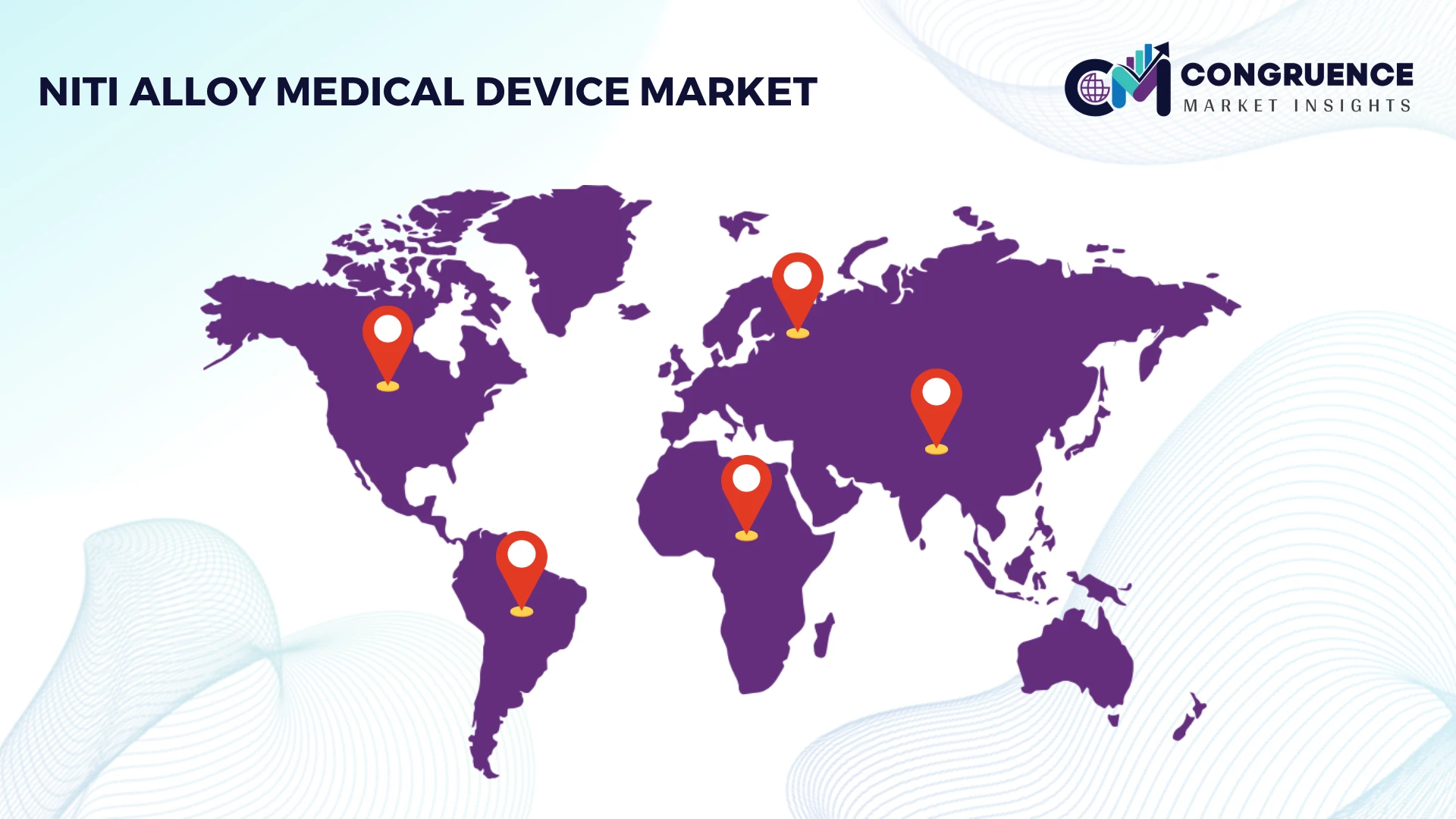
North America maintains the leading position in the NiTi alloy medical device market due to its concentration of cardiovascular intervention programs, advanced device manufacturers, and high adoption of minimally invasive procedures. The region accounts for approximately 38% of global demand, supported by extensive deployment of NiTi-based stents, guidewires, and neurovascular devices. Healthcare providers continue expanding catheter-based treatment capabilities, while manufacturers are investing in automated precision manufacturing and advanced metallurgical processing. More than 70% of newly launched vascular intervention platforms in the region incorporate next-generation NiTi components. Strategic collaborations between medical technology companies and healthcare systems are accelerating clinical validation and product commercialization. Increasing localization of critical material processing capabilities is also strengthening supply-chain resilience and reducing operational risk.
United States Market Outlook: The United States serves as the primary innovation and deployment hub for NiTi alloy medical devices, supported by strong clinical infrastructure, advanced manufacturing capacity, and regulatory expertise. The country performs one of the world's highest volumes of minimally invasive cardiovascular procedures, creating sustained demand for high-performance NiTi components. More than 60% of regional advanced vascular device development activity is concentrated in the U.S. Companies continue expanding precision manufacturing facilities, strengthening physician-training programs, and investing in next-generation neurovascular and structural heart technologies to reinforce competitive positioning.
Europe represents a major center for NiTi alloy medical device production and innovation, accounting for approximately 28% of global market activity. Strong engineering expertise, established medical technology clusters, and advanced healthcare systems continue supporting demand across cardiovascular, orthopedic, and neurovascular applications. The region is increasingly focused on manufacturing efficiency, quality standardization, and supply-chain security. Medical device companies have expanded investments in automated inspection technologies, improving production consistency by nearly 18% across several facilities. Continued emphasis on product traceability and clinical performance validation is encouraging manufacturers to accelerate digital quality-management adoption. Strategic partnerships between research institutions and device developers are further strengthening product innovation pipelines and specialized material-processing capabilities.
Germany Market Outlook: Germany remains the most influential European market due to its highly developed medical technology industry, precision engineering expertise, and manufacturing infrastructure. The country hosts numerous specialized device producers and advanced materials processors that support regional supply chains. Nearly 30% of European medical technology manufacturing activity is linked to German industrial clusters. Companies are investing in automation, laser-processing technologies, and advanced implant development while leveraging strong export networks and technical talent to strengthen global competitiveness.
Asia-Pacific is emerging as the fastest-expanding regional market due to rapid healthcare infrastructure development, growing intervention volumes, and increasing domestic manufacturing capabilities. The region accounts for approximately 24% of global market activity and continues strengthening its role in medical device production. Expansion of specialized cardiovascular and neurovascular treatment centers is increasing demand for advanced NiTi-based devices. Manufacturing investments across major industrial hubs have increased by nearly 20% over recent years, supporting production scale and supply-chain diversification. Companies are expanding local processing capabilities, establishing regional partnerships, and increasing technology-transfer initiatives to improve product accessibility and operational efficiency.
China Market Outlook: China represents the most strategically significant market in Asia-Pacific due to its manufacturing scale, healthcare modernization efforts, and growing device innovation ecosystem. The country continues expanding domestic production capacity for advanced intervention devices while strengthening regulatory frameworks that support local technology development. More than 40% of the region's medical device manufacturing output is associated with Chinese production networks. Domestic and international companies are increasing investment in precision processing, clinical research, and localized supply chains to capitalize on expanding procedural volumes and technology adoption.
South America is steadily strengthening its position in the NiTi alloy medical device market through expanding healthcare access, modernization initiatives, and increasing adoption of minimally invasive treatment pathways. The region contributes approximately 6% of global demand, with growth concentrated in major urban healthcare systems. Hospitals are upgrading intervention capabilities and expanding access to advanced cardiovascular procedures. Recent infrastructure investments have increased specialized treatment capacity by nearly 12% in leading healthcare centers. While import dependency and procurement constraints remain operational challenges, manufacturers are improving market access through distributor partnerships, physician training programs, and localized service networks. Demand is increasingly shifting toward higher-performance devices that support procedural efficiency and improved patient outcomes.
Brazil Market Outlook: Brazil leads the regional market due to its large healthcare network, growing intervention volumes, and concentration of specialized medical facilities. The country continues investing in cardiovascular and neurovascular treatment infrastructure, creating favorable conditions for advanced device adoption. More than half of South America's high-volume intervention procedures are conducted within Brazilian healthcare institutions. Manufacturers are expanding commercial partnerships, strengthening clinical education programs, and improving distribution capabilities to address rising demand for technologically advanced treatment solutions.
The Middle East & Africa market is experiencing gradual transformation through healthcare modernization programs, infrastructure investment, and expansion of advanced treatment capabilities. The region accounts for approximately 4% of global market activity and is increasingly prioritizing specialized cardiovascular and neurovascular care services. Government-backed healthcare development initiatives are supporting the deployment of advanced intervention technologies and modern treatment facilities. Several healthcare systems have expanded specialized procedure capacity by nearly 15% through new infrastructure projects and technology acquisitions. Device manufacturers are responding through strategic partnerships, regional distribution expansion, and clinical training investments designed to strengthen adoption and operational readiness.
Saudi Arabia Market Outlook: Saudi Arabia represents the most strategically important market within the region due to large-scale healthcare investments, hospital modernization initiatives, and increasing adoption of advanced medical technologies. The country continues expanding specialized cardiovascular treatment infrastructure while supporting greater localization of healthcare capabilities. More than 35% of regional advanced intervention investments are concentrated within Saudi healthcare projects. Medical technology companies are prioritizing partnerships, training programs, and long-term market development strategies to align with the country's healthcare transformation objectives and growing demand for high-performance medical devices.
The NiTi alloy medical device market is led by Medtronic, Boston Scientific, Abbott, Terumo, and Cook Medical, which collectively control approximately 52% of global market activity. Competition primarily occurs between global intervention specialists and regional device manufacturers, while vertically integrated OEMs increasingly compete against component-focused suppliers through control of design, processing, and clinical validation. Technology performance remains the primary battleground, with advanced NiTi platforms delivering up to 20% higher fatigue resistance and nearly 15% better navigation performance than legacy designs. Manufacturing efficiency has also become critical, as automated production systems reduce defect rates by approximately 18%. Leading players are expanding precision manufacturing capacity, securing long-term material supply agreements, and forming physician-training partnerships to strengthen adoption. The competitive landscape is shifting toward supply-chain control, advanced metallurgy expertise, and platform-based product ecosystems. Regulatory qualification, specialized processing know-how, and clinical evidence create significant entry barriers. Winning requires material innovation, scalable manufacturing, strong clinical relationships, and dependable supply security.
Boston Scientific Corporation
Abbott Laboratories
Terumo Corporation
Cook Medical
B. Braun SE
Biotronik SE & Co. KG
MicroPort Scientific Corporation
Merit Medical Systems, Inc.
Penumbra, Inc.
Teleflex Incorporated
Cordis
Stryker Corporation
Acandis GmbH
Current technology development is centered on advanced superelastic NiTi alloys, precision laser processing, and automated quality-control systems. More than 65% of newly introduced vascular intervention platforms utilize enhanced NiTi processing techniques to improve flexibility and fatigue resistance. Automated inspection technologies have reduced manufacturing defects by approximately 18%, while precision laser-cutting has improved dimensional consistency by nearly 15%. These capabilities allow manufacturers to accelerate regulatory qualification and improve production reliability across high-volume device portfolios.
Emerging technologies include additive manufacturing, AI-assisted device design, and digital-twin simulation platforms. Compared with conventional development workflows, virtual design validation can reduce prototype cycles by approximately 25% and shorten engineering timelines by nearly 30%. Adoption of simulation-driven design has surpassed 40% among leading intervention-device developers. Companies with strong computational engineering capabilities gain faster product iteration, lower development costs, and stronger differentiation in cardiovascular and neurovascular applications.
Between 2026 and 2028, patient-specific implant design, smart manufacturing integration, and next-generation surface engineering technologies are expected to reshape competitive positioning. Advanced surface treatments have demonstrated up to 12% improvement in biocompatibility performance compared with conventional finishing methods. Manufacturers investing early in digital engineering ecosystems, automated production networks, and customized device architectures will secure stronger operational efficiency, faster commercialization, and sustained leadership in premium intervention markets.
March 2024 – Boston Scientific received U.S. FDA approval for the AGENT™ Drug-Coated Balloon, the first coronary drug-coated balloon approved in the U.S. Clinical data demonstrated a 49% reduction in target-vessel heart attack risk, strengthening the company’s interventional cardiology portfolio and expanding treatment options for in-stent restenosis. Source: www.news.bostonscientific.com
October 2024 – Abbott continued commercialization of its Esprit™ BTK System, a dissolvable scaffold technology for chronic limb-threatening ischemia. The platform combines vessel support with drug delivery and represents a first-of-its-kind treatment approach, enhancing long-term vessel restoration strategies in peripheral interventions. Source: www.time.com
April 2025 – Abbott Medical received regulatory approval for revisions supporting the Esprit™ BTK post-approval study program. The expanded clinical framework strengthens long-term evidence generation and supports broader physician adoption across below-the-knee vascular interventions. Source: www.accessdata.fda.gov
July 2025 – Abbott Medical secured approval for a manufacturing process optimization within the Esprit™ BTK platform, removing an in-process moisture inspection step and streamlining production workflows. The change improves operational efficiency while supporting scalable manufacturing and future global deployment strategies.
This report provides comprehensive coverage of the global NiTi alloy medical device market across major product categories, clinical applications, end-user groups, and regional markets. The analysis evaluates stents, guidewires, orthopedic implants, filters, and related NiTi-based technologies used across cardiovascular, neurovascular, orthopedic, and specialty intervention procedures. More than 60% of current demand is concentrated in minimally invasive treatment pathways, making procedural innovation and material performance key areas of assessment. The report also examines deployment patterns across hospitals, ambulatory surgical centers, specialty clinics, and research institutions.
The study delivers detailed regional analysis covering North America, Europe, Asia-Pacific, South America, and the Middle East & Africa, while evaluating manufacturing trends, supply-chain developments, technology adoption, and competitive positioning. Strategic insights include material-processing innovation, automation adoption, localization initiatives, digital engineering integration, and emerging intervention technologies. The report supports investment evaluation, market-entry planning, partnership development, capacity expansion decisions, and competitive benchmarking for stakeholders operating across the 2026–2033 planning horizon.
| Report Attribute / Metric | Details |
|---|---|
| Market Revenue (2025) | USD 5,613.0 Million |
| Market Revenue (2033) | USD 12,128.6 Million |
| CAGR (2026–2033) | 10.11% |
| Base Year | 2025 |
| Forecast Period | 2026–2033 |
| Historic Period | 2021–2025 |
| Segments Covered |
By Type
By Application
By End-User
|
| Key Deliverables | Revenue Forecast; Market Trends; Growth Drivers & Restraints; Technology Insights; Segmentation Analysis; Regional Insights; Competitive Landscape; Regulatory & ESG Overview; Recent Developments |
| Regions Covered | North America; Europe; Asia-Pacific; South America; Middle East & Africa |
| Companies Profiled | Medtronic plc; Boston Scientific Corporation; Abbott Laboratories; Terumo Corporation; Cook Medical; B. Braun SE; Biotronik SE & Co. KG; MicroPort Scientific Corporation; Merit Medical Systems, Inc.; Penumbra, Inc.; Teleflex Incorporated; Cordis; Stryker Corporation; Acandis GmbH |
| Customization & Pricing | Available on Request (10% Customization Free) |




