
Reports
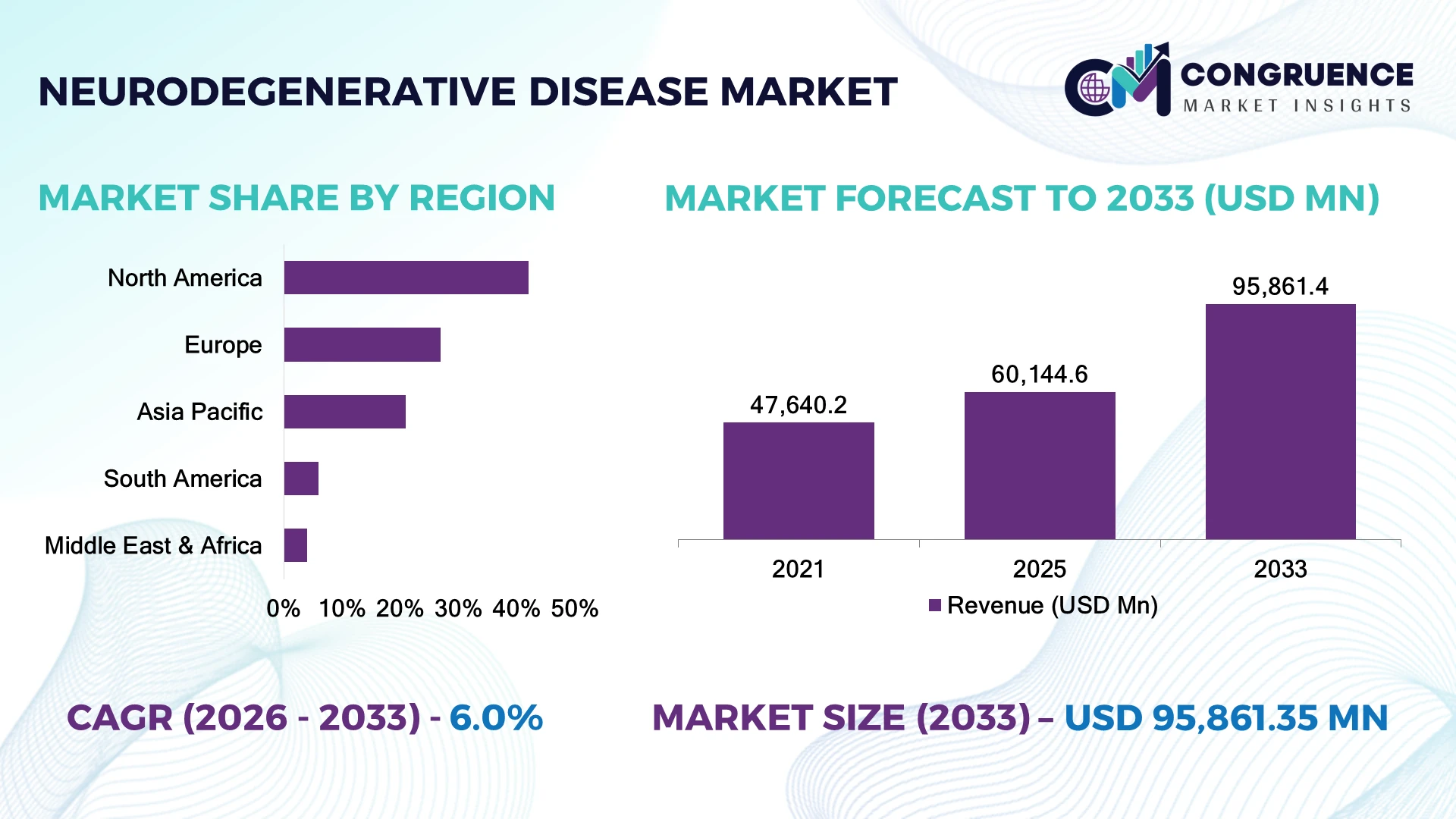
The Global Neurodegenerative Disease Market was valued at USD 60,144.6 Million in 2025 and is anticipated to reach a value of USD 95,861.4 Million by 2033 expanding at a CAGR of 6.0% between 2026 and 2033. Growth is being accelerated by disease-modifying Alzheimer’s therapies, biomarker-led diagnosis, RNA and gene-therapy pipelines, and increasing investment in earlier-stage intervention.
The United States remains the dominant country-level market, accounting for approximately 19.6% of global neurodegenerative disease activity in 2025, supported by advanced clinical infrastructure, pharmaceutical R&D, and rapid adoption of disease-modifying therapies. More than 6.5 million Americans live with Alzheimer’s disease, while nearly 90,000 new Parkinson’s diagnoses occur annually. Japan and China are expanding access to advanced diagnostics and therapies, but U.S. commercialization remains structurally deeper.
The Russia-Ukraine conflict has also reinforced pharmaceutical supply-chain diversification and regional manufacturing resilience across critical medicines and clinical inputs.
Strategically, companies that combine disease-modifying pipelines with scalable diagnostics, biomarker infrastructure, and regional commercialization capabilities will capture the greatest value from the neurodegenerative disease market.
Market Size & Growth: USD 60.14 billion in 2025 to USD 95.86 billion by 2033 at 6.0% CAGR, driven by disease-modifying therapies and biomarker-enabled diagnosis.
Top Growth Drivers: Alzheimer’s represents 43%, North America 42%, and oral therapies 62% of respective 2025 market structures, highlighting treatment concentration and commercial maturity.
Short-Term Forecast: By 2028, blood-based biomarker triage can reduce PET utilization substantially, with modeling indicating up to 86% lower PET/CSF use in selected diagnostic pathways.
Emerging Technologies: AI patient selection, plasma p-tau217 testing, RNA therapeutics, and gene-delivery platforms are moving from research toward clinical deployment.
Regional Leaders: North America represents about USD 40.3 billion at the 2025 share structure, Europe about USD 26.8 billion, and Asia-Pacific about USD 24.0 billion; Asia-Pacific is accelerating diagnostic and therapeutic adoption.
Consumer/End-User Trends: More than 57 million people live with dementia globally, with nearly 10 million new cases annually, increasing demand for earlier diagnosis and chronic disease management.
Pilot/Case Example: A 2025 AI-driven Alzheimer’s trial analysis reduced modeled clinical-trial sample requirements by 22% while maintaining 90% statistical power, demonstrating a direct pathway to lower development costs.
Competitive Landscape: Biogen, Eli Lilly, Roche, Eisai, and AbbVie compete across disease-modifying therapies, biomarkers, and neurological pipelines, with Alzheimer’s accounting for roughly 43% of disease-specific market value.
Regulatory & ESG Impact: Updated 2026 dementia guidance identifies up to 45% of dementia risk as potentially modifiable, strengthening investment in prevention, early detection, and lower-burden care pathways.
Investment & Funding: NIH’s FY2026 Alzheimer’s and related-dementias research framework identifies approximately USD 3.98 billion in total resources, including USD 445 million for new and evolving research initiatives.
Innovation & Future Outlook: The strategic shift is moving from symptom management toward biomarker-defined, disease-modifying, precision interventions supported by AI, RNA, gene, and cell-therapy platforms.
The Neurodegenerative Disease Market is shifting toward earlier intervention, measurable disease biology, and precision treatment rather than symptom control alone. Alzheimer’s accounts for approximately 60–70% of dementia cases, making biomarker development and disease-modifying therapies particularly important. The 2025 U.S. clearance of a blood-based Alzheimer’s diagnostic further supports decentralization of testing and reduced dependence on PET imaging.
The Neurodegenerative Disease Market is becoming strategically important because therapeutic competition is moving from established symptomatic medicines toward disease modification, precision diagnostics, and targeted biological intervention. More than 57 million people live with dementia globally, while nearly 10 million new cases occur annually, creating substantial pressure on healthcare systems and strengthening the commercial rationale for earlier diagnosis and intervention.
Diagnostic technology is changing the economics of care. Plasma biomarker pathways can reduce diagnostic costs by 34–79% versus PET in modeled Japanese healthcare scenarios, while AI-driven clinical-trial selection has demonstrated a 22% reduction in required sample size without sacrificing statistical power. These improvements favor developers that integrate diagnostics, patient stratification, and clinical development rather than treating them as separate workflows.
Over the next 2–3 years, investment will increasingly target blood biomarkers, digital monitoring, RNA therapeutics, and precision trial infrastructure. NIH reported 495 active Alzheimer’s and related-dementia clinical trials at the end of FY2024, including more than 225 therapeutic intervention studies. Companies are therefore expanding biomarker partnerships, strengthening specialty-care networks, and building differentiated delivery platforms. Competitive positioning will depend increasingly on connecting diagnosis, patient selection, treatment, and longitudinal monitoring into a scalable neurodegenerative care pathway.
The shift toward disease-modifying treatment is strengthening investment across Alzheimer’s and Parkinson’s pipelines. Alzheimer’s represents approximately 43% of the neurodegenerative disease market, while disease-modifying therapies are moving from clinical validation toward broader commercial deployment. In the United States, more than 6.5 million people live with Alzheimer’s disease, creating a substantial addressable population for earlier intervention. FDA clearance of blood-based Alzheimer’s diagnostics in 2025 is also reducing dependence on specialized imaging pathways. Pharmaceutical companies are responding through biomarker partnerships, specialty-care networks, and expanded manufacturing for antibody therapies. The non-obvious advantage is that diagnostic-treatment integration allows developers to identify eligible patients earlier while improving clinical-trial recruitment and commercialization efficiency.
Neurodegenerative therapies face substantial affordability and infrastructure constraints, particularly when advanced diagnostics, infusion administration, and longitudinal monitoring are required. Disease-modifying Alzheimer’s therapies can involve annual treatment costs exceeding USD 25,000 before ancillary diagnostic and monitoring expenses, while PET imaging can cost several thousand dollars per examination. In lower-resource healthcare systems, limited specialist availability and diagnostic infrastructure constrain adoption even when therapies receive regulatory approval. Japan and several European markets are expanding reimbursement pathways and biomarker testing to reduce dependence on expensive imaging, while pharmaceutical companies are developing subcutaneous delivery and decentralized diagnostic models. The strategic constraint is not only drug pricing: fragmented diagnostic capacity can prevent otherwise eligible patients from reaching treatment, limiting commercial scalability.
Blood-based biomarkers represent a significant opportunity to decentralize neurodegenerative disease diagnosis and reduce diagnostic bottlenecks. Plasma p-tau217 and related biomarkers can achieve diagnostic accuracy above 90% in selected Alzheimer’s cohorts, while modeled diagnostic pathways indicate that biomarker-first strategies can reduce PET and cerebrospinal-fluid utilization by more than 70%. The United States is moving rapidly toward clinical adoption, while Japan and European healthcare systems are evaluating cost-efficient diagnostic pathways. Companies are investing in assay platforms, laboratory partnerships, companion diagnostics, and AI-supported patient stratification. A particularly valuable opportunity lies in integrating biomarkers with primary-care workflows: earlier identification can expand the treatment-eligible population without requiring proportional expansion of specialist imaging capacity.
Neurodegenerative drug development remains constrained by heterogeneous disease biology, lengthy clinical endpoints, and complex patient stratification. Alzheimer’s trials can require thousands of participants and extended follow-up, while approximately 30–40% of screened candidates can be excluded because of biomarker, comorbidity, or eligibility criteria. Digital biomarkers and AI-assisted trial recruitment are addressing these inefficiencies, but interoperability between hospital records, imaging systems, laboratory data, and wearable devices remains inconsistent. Companies must invest in standardized data architectures, decentralized trial capabilities, and biomarker validation to improve development productivity. The non-obvious challenge is scalability after approval: successful therapies still require infusion capacity, monitoring infrastructure, trained neurologists, and longitudinal data systems, making healthcare-system readiness as important as drug efficacy.
Blood Testing Enters Routine Pathways: Plasma-based Alzheimer’s biomarkers are moving closer to routine diagnostic workflows, with selected p-tau217 assays demonstrating diagnostic accuracy above 90%. The 2025 U.S. regulatory clearance of a blood-based test is accelerating laboratory adoption and reducing reliance on PET or cerebrospinal-fluid testing. Pharmaceutical companies are increasingly pairing biomarker platforms with therapeutic development to identify treatment-eligible patients earlier.
Subcutaneous Delivery Gains Attention: Administration models are shifting as manufacturers seek to reduce infusion-center dependency associated with monoclonal antibody therapies. Subcutaneous formulations can reduce administration time by more than 50% compared with conventional infusion workflows in applicable settings. This transition is particularly relevant for U.S. specialty-care networks, where companies are developing delivery partnerships and expanding home- or outpatient-based treatment models.
AI Reshapes Trial Recruitment: AI-assisted patient identification is increasingly being used to screen electronic health records, imaging data, and cognitive assessments. Recent trial modeling has demonstrated approximately 22% reductions in required sample sizes while maintaining statistical power. Developers are integrating machine learning into recruitment and endpoint analysis to shorten study timelines, improve cohort quality, and reduce operational expenditure.
Remote Monitoring Becomes Clinical Infrastructure: Wearables, smartphone assessments, and digital cognitive testing are expanding longitudinal monitoring beyond clinic visits. Digital tools can capture substantially more frequent behavioral and motor measurements than periodic assessments, improving visibility into disease progression. Companies are forming technology partnerships with healthcare providers to integrate remote measurements into clinical workflows, while cybersecurity and data-standardization requirements increasingly shape platform selection.
Alzheimer’s disease is the leading neurodegenerative disease type, accounting for approximately 42% of the global market in 2025. Its dominance reflects the large diagnosed population, expanding disease-modifying treatment options, and substantial investment in amyloid and tau-targeted therapies. Parkinson’s disease follows as a major established segment, while ALS and Huntington’s disease remain smaller but increasingly innovation-intensive categories. Parkinson’s is the fastest-growing major disease segment as continuous-delivery therapies, digital monitoring, and disease-modifying candidates expand the treatment pipeline. Approximately 55% of neurodegenerative therapeutics are still represented by small molecules, demonstrating the continuing importance of mature pharmacological approaches.
The strategic shift is toward biologics, RNA therapies, and precision treatment. Gene and cell therapies remain comparatively small but are attracting disproportionate R&D investment, while RNA-based approaches are expanding the pipeline for genetically defined disorders. Companies are therefore balancing established oral portfolios with antibody, RNA, and advanced-therapy programs to reduce dependence on mature symptomatic treatments. The commercial implication is clear: scale remains concentrated in Alzheimer’s, but pipeline differentiation increasingly comes from Parkinson’s, ALS, and genetically targeted indications.
In 2025, the U.S. Alzheimer’s population reached approximately 7.2 million people aged 65 and older, with 11% of Americans in that age group living with Alzheimer’s dementia, reinforcing the scale behind the leading disease segment.
Therapeutics represent the leading application within the neurodegenerative disease market, accounting for approximately 59% of the combined therapeutics and diagnostics market structure in 2025. The segment benefits from established symptomatic medicines alongside newly commercialized disease-modifying therapies. Diagnostics, however, represent the faster-changing application as blood biomarkers, molecular assays, AI-supported imaging, and digital neurological assessments address capacity constraints in conventional diagnosis. Imaging diagnostics still represented approximately 58% of neurodegenerative diagnostics activity in 2025, demonstrating the installed-base strength of PET and MRI, while in-vitro diagnostics are expanding as healthcare systems seek less invasive alternatives.
The operational shift is particularly visible in Alzheimer’s care. Companies are integrating diagnostic platforms with therapeutic eligibility pathways, specialty clinics, and laboratory networks rather than selling tests independently. In 2025, the FDA-cleared Lumipulse blood test demonstrated 91.7% positive predictive agreement and 97.3% negative predictive agreement against PET or CSF reference methods. This strengthens the business case for decentralized testing and increases the value of diagnostic partnerships around disease-modifying therapies.
Labcorp made the FDA-cleared Lumipulse Alzheimer’s blood test available nationwide in August 2025, demonstrating how laboratory networks are converting regulatory clearance into broader diagnostic access and integrating biomarker testing into routine clinical workflows.
Hospitals are the dominant end-user, accounting for approximately 57% of the neurodegenerative disease market in 2025. Their position reflects concentration of neurological diagnosis, advanced imaging, infusion administration, multidisciplinary care, and monitoring for high-complexity therapies. Specialty neurology clinics represent the next major buyer group and are gaining importance as treatment pathways become more biomarker-driven. Diagnostic laboratories and research organizations remain smaller but strategically important, particularly for molecular testing and clinical-trial infrastructure. Home-care and remote-monitoring models represent the fastest-changing end-user channel as digital assessments and decentralized care become more practical.
The distinction between hospital and specialist-clinic demand is becoming increasingly important. Hospitals retain an infrastructure advantage for intravenous biologics and advanced imaging, whereas specialist networks can provide more focused patient management and faster adoption of emerging diagnostic workflows. Companies are responding through laboratory partnerships, specialty-care distribution, digital monitoring collaborations, and provider education. The strategic opportunity is to build integrated care pathways rather than relying exclusively on hospital-based commercialization, particularly as blood biomarkers reduce diagnostic dependence on specialized imaging.
A 2025 systematic review identified 42 studies evaluating 26 distinct digital health technologies for Parkinson’s disease, including 11 wearable sensors and 15 non-wearable systems, demonstrating increasing clinical-research adoption of technology-enabled neurological monitoring.
North America accounted for the largest market share at 42.0% in 2025 however, Asia-Pacific is expected to register the fastest growth, expanding at a CAGR of 7.1% between 2026 and 2033.
Disease-modifying therapies and biomarker infrastructure reshape U.S. neurology
North America remains the largest neurodegenerative disease market, accounting for approximately 42.0% of global demand in 2025. The United States drives regional concentration through its pharmaceutical R&D base, specialist neurology infrastructure, advanced imaging capacity, and rapid commercialization of disease-modifying Alzheimer’s therapies. More than 7 million Americans aged 65 and older are living with Alzheimer’s disease, creating substantial demand for diagnosis, infusion services, biomarker testing, and longitudinal monitoring. The 2025 FDA clearance of a blood-based Alzheimer’s diagnostic is accelerating movement toward decentralized testing and reducing reliance on PET or cerebrospinal-fluid pathways. Pharmaceutical companies are simultaneously expanding specialty-care networks and diagnostic partnerships. The key regional advantage is the integration of drug development, clinical trials, diagnostics, reimbursement infrastructure, and commercialization within a single healthcare ecosystem.
United States Market Outlook: The United States remains the primary global commercialization hub for neurodegenerative therapies. Approximately 11% of Americans aged 65 and older live with Alzheimer’s dementia, supporting a large treatment-eligible population as biomarker-led diagnosis expands. The country also hosts a substantial concentration of neurological clinical trials and biotechnology companies, enabling rapid translation of antibody therapies, RNA platforms, digital biomarkers, and precision diagnostics into clinical practice.
Integrated care policy accelerates diagnostics and long-term management
Europe combines mature neurological infrastructure with increasingly coordinated national strategies for dementia, Parkinson’s disease, and related disorders. Germany recorded approximately 1.4 million diagnosed dementia cases among people aged 40 and older in 2022, while France launched a national 2025–2030 neurodegenerative disease strategy backed by dedicated healthcare funding. European systems are increasingly emphasizing earlier diagnosis, multidisciplinary care, and equitable access to emerging therapies. The region is also strengthening biomarker capacity as disease-modifying treatments increase requirements for patient selection and monitoring. Companies are responding through clinical partnerships, diagnostic networks, and localized evidence-generation programs. The strategic opportunity lies in integrating innovative therapies into public-health systems without creating excessive specialist or infrastructure burdens.
Germany Market Outlook: Germany represents a major European healthcare and pharmaceutical hub, supported by extensive statutory health insurance coverage, specialist neurological services, and strong clinical-research capabilities. In 2022, dementia affected approximately 2.8% of Germans aged 40 and older, rising to 6.9% among those aged 65 and above. Pharmaceutical companies are using Germany’s structured healthcare system and research infrastructure for clinical development, patient identification, and evidence generation.
Aging populations and precision diagnostics expand treatment capacity
Asia-Pacific is the fastest-evolving major market as Japan, China, South Korea, and Australia strengthen neurological diagnostics and specialized treatment infrastructure. Japan faces particularly strong demographic pressure, while China combines a large aging population with rapidly expanding biotechnology and hospital capacity. Japan’s healthcare system is increasingly incorporating biomarker-based Alzheimer’s assessment, while China is expanding domestic drug-development capabilities and clinical research. In 2025, Japan’s population aged 65 and older represented approximately 29% of the total population, reinforcing long-term demand for dementia and Parkinson’s management. Companies are responding through local clinical partnerships, diagnostic-laboratory expansion, and regional commercialization agreements. The key advantage is the combination of large patient pools with accelerating adoption of advanced neurological technologies.
Japan Market Outlook: Japan is the region’s most structurally mature neurodegenerative-care market, supported by its exceptionally aged population and sophisticated universal healthcare infrastructure. Around 29% of the population was aged 65 or older in 2025, creating substantial demand for dementia diagnostics, chronic neurological management, rehabilitation, and caregiver-support services. Pharmaceutical and diagnostic companies are prioritizing biomarker-based assessment and treatment pathways that can reduce pressure on specialist services while maintaining clinical oversight.
Brazil expands formal pathways while access gaps remain material
South America is developing a larger neurodegenerative disease treatment ecosystem, with Brazil accounting for the greatest concentration of healthcare infrastructure, pharmaceutical activity, and diagnosed patient management. Brazil’s public healthcare system supports large-scale treatment access, while private hospitals and specialist networks increasingly provide advanced neurological diagnostics. A 2025 Brazilian healthcare assessment found that estimated Alzheimer’s cases substantially exceeded existing treatment capacity, highlighting a significant infrastructure gap. Brazil also updated its Alzheimer’s clinical protocol in November 2025, strengthening the formal framework for diagnosis and treatment. Companies are responding through specialist partnerships, diagnostic expansion, and locally adapted care models. The central commercial opportunity is improving patient identification and treatment continuity rather than simply adding high-cost therapies.
Brazil Market Outlook: Brazil is the region’s most important country-level market because of its population scale, established pharmaceutical distribution network, and nationwide public healthcare infrastructure. The Ministry of Health updated its Alzheimer’s clinical protocol in November 2025, strengthening standardized treatment pathways. Companies expanding diagnostic partnerships and specialist coverage can address the gap between disease prevalence and current treatment capacity, particularly outside major southeastern healthcare centers.
Precision medicine and specialist infrastructure drive market modernization
Middle East & Africa is moving toward more specialized neurodegenerative care as Gulf healthcare systems invest in precision medicine, advanced diagnostics, and neurological treatment capacity. Saudi Arabia, the United Arab Emirates, Israel, and Turkey are emerging as important clinical and technology hubs. A 2026 regional meta-analysis estimated pooled dementia prevalence at 12.16% across selected Middle Eastern and North African populations, with Saudi Arabia at 8.34%. In 2025, Saudi Arabia approved lecanemab as its first Alzheimer’s disease-modifying treatment, while Abu Dhabi integrated APOE E4 testing into pharmacogenomics reports. Companies are responding through hospital partnerships, biomarker deployment, precision-medicine programs, and localized commercialization. The market is shifting from symptom management toward biomarker-informed treatment selection.
Saudi Arabia Market Outlook: Saudi Arabia has become a strategically important market following its 2025 approval of lecanemab for eligible Alzheimer’s patients, establishing access to a disease-modifying therapy. The country has approximately 130,000 Alzheimer’s patients according to national health information, creating a meaningful addressable population. Vision 2030 healthcare modernization is supporting expansion of specialist services, digital health infrastructure, and advanced diagnostics, giving pharmaceutical and diagnostic companies a stronger platform for regional commercialization.
Biogen, Eisai, Eli Lilly, Roche, and Novartis compete at the disease-modifying therapy level, while specialized players such as UCB, Lundbeck, and Denali target Parkinson’s, Huntington’s, and genetically defined disorders. The top five account for approximately 62% of branded-market revenue, indicating strong concentration around portfolios and commercial infrastructure. Competition centers on clinical efficacy, biomarker integration, treatment convenience, and pipeline speed; blood-based diagnostics can reduce PET or CSF utilization by more than 70% in modeled pathways, while subcutaneous delivery can substantially reduce administration burden. Players are expanding trials, forming biotech alliances, acquiring delivery platforms, and integrating diagnostics with therapeutics. The competitive shift is moving from symptomatic drugs toward disease modification supported by biomarkers and brain-delivery technologies. High R&D costs, lengthy trials, regulatory complexity, and specialist infrastructure create entry barriers. Winning requires differentiated biology, validated biomarkers, scalable commercialization, and treatment pathways that reduce clinical friction while producing outcomes for patients, providers, and payers.
Biogen Inc.
Eisai Co., Ltd.
Eli Lilly and Company
F. Hoffmann-La Roche Ltd.
Novartis AG
AbbVie Inc.
UCB S.A.
H. Lundbeck A/S
Amneal Pharmaceuticals, Inc.
Mitsubishi Tanabe Pharma Corporation
PTC Therapeutics, Inc.
Ionis Pharmaceuticals, Inc.
Denali Therapeutics Inc.
AC Immune SA
Blood-based biomarkers, AI-assisted imaging, digital cognitive testing, and adaptive deep-brain stimulation are reshaping neurodegenerative disease management. Plasma p-tau217 and p-tau181 assays are moving diagnosis upstream, with leading tests demonstrating accuracy above 90% in selected populations. Compared with PET-led pathways, biomarker-first workflows can reduce imaging and cerebrospinal-fluid procedures by more than 70% in modeled pathways. Roche’s 2026 pTau217 clearance also enables deployment across more than 4,500 U.S. laboratory instruments, strengthening decentralized testing.
AI is moving from research support into clinical development and patient monitoring. Machine-learning models improve cohort identification, imaging interpretation, and trial recruitment, with selected studies reporting approximately 20% reductions in required trial sample sizes. Wearables and smartphone assessments add continuous motor and cognitive measurements, improving monitoring frequency several-fold versus periodic clinic visits. Large pharmaceutical developers with integrated diagnostics and clinical networks benefit most because they can connect biomarkers with treatment selection.
From 2026–2028, disruptive technologies will center on brain-penetrant delivery, RNA therapeutics, gene-targeted interventions, and adaptive neurostimulation. Advanced delivery platforms seek higher central nervous system exposure than conventional antibodies, while adaptive stimulation continuously adjusts therapy to neural signals. Companies integrating diagnostics, therapeutics, and digital monitoring will gain speed, evidence quality, and patient reach, making technology integration a competitive requirement.
May 2026 Biogen discontinued BIIB122 development in idiopathic Parkinson’s disease after Phase 2b LUMA missed primary and secondary endpoints. Peripheral LRRK2 inhibition exceeded 90%, redirecting resources toward genetically defined Parkinson’s programs and sharpening pipeline selection commercially and operationally. Source: biogen.com
January 2026 Eisai and Biogen advanced a subcutaneous lecanemab autoinjector application in China. The 500-mg formulation is designed for once-weekly home administration versus biweekly hospital infusion, potentially reducing infusion-center burden and expanding treatment accessibility across eligible patients initially. Source: eisai.com
August 2026 Roche received FDA clearance for Elecsys pTau217, a blood test supporting Alzheimer’s amyloid assessment across primary and specialty care. The test can leverage more than 4,500 installed cobas laboratory instruments in the United States, accelerating decentralized diagnostic deployment. Source: roche.com
May 2025 FDA cleared Fujirebio’s Lumipulse plasma ratio test, the first marketed blood-based diagnostic for Alzheimer’s disease. In 499 patients, 91.7% of positive results and 97.3% of negative results agreed with PET or CSF reference assessments clinically. Source: fda.gov
The Neurodegenerative Disease Market Report covers Alzheimer’s disease, Parkinson’s disease, amyotrophic lateral sclerosis, Huntington’s disease, and other major neurodegenerative disorders across therapeutics, diagnostics, monitoring, and disease-management applications. Segmentation evaluates disease type, treatment modality, route of administration, application, and end-user groups, including hospitals, specialty neurology clinics, diagnostic laboratories, research organizations, and home-care settings.
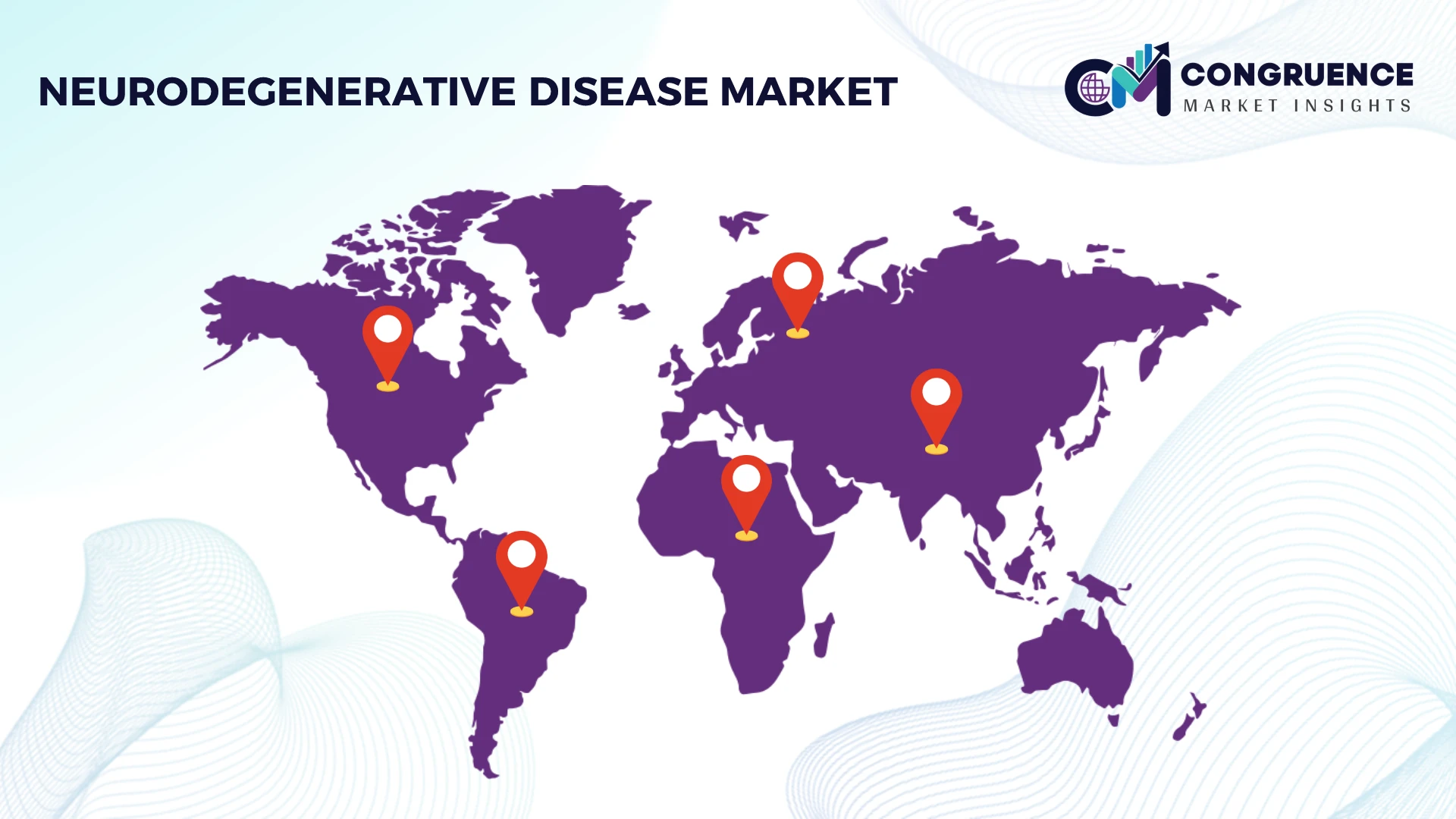
Regional coverage spans North America, Europe, Asia-Pacific, South America, and Middle East & Africa, with country-level assessment of treatment access, clinical infrastructure, biomarker adoption, pharmaceutical activity, and healthcare modernization. Technology analysis covers blood-based biomarkers, AI-assisted diagnosis, digital monitoring, adaptive neurostimulation, RNA therapeutics, gene therapy, and brain-delivery platforms. Competitive coverage profiles major pharmaceutical and biotechnology participants and evaluates pipeline depth, partnerships, regulatory progress, commercialization, and deployment models. The report supports investment planning, market-entry decisions, capacity expansion, portfolio prioritization, and competitive positioning through 2033.
| Report Attribute/Metric | Report Details |
|---|---|
|
Market Revenue in 2025 |
USD 60,144.6 Million |
|
Market Revenue in 2033 |
USD 95,861.4 Million |
|
CAGR (2026 - 2033) |
6% |
|
Base Year |
2025 |
|
Forecast Period |
2026 - 2033 |
|
Historic Period |
2021 - 2025 |
|
Segments Covered |
By Type
By Application
By End-User
|
|
Key Report Deliverable |
Revenue Forecast, Growth Trends, Market Dynamics, Segmental Overview, Regional and Country-wise Analysis, Competition Landscape |
|
Region Covered |
North America, Europe, Asia-Pacific, South America, Middle East, Africa |
|
Key Players Analyzed |
Biogen Inc., Eisai Co., Ltd., Eli Lilly and Company, F. Hoffmann-La Roche Ltd., Novartis AG, AbbVie Inc., UCB S.A., H. Lundbeck A/S, Amneal Pharmaceuticals, Inc., Mitsubishi Tanabe Pharma Corporation, PTC Therapeutics, Inc., Ionis Pharmaceuticals, Inc., Denali Therapeutics Inc., AC Immune SA |
|
Customization & Pricing |
Available on Request (10% Customization is Free) |




