
Reports
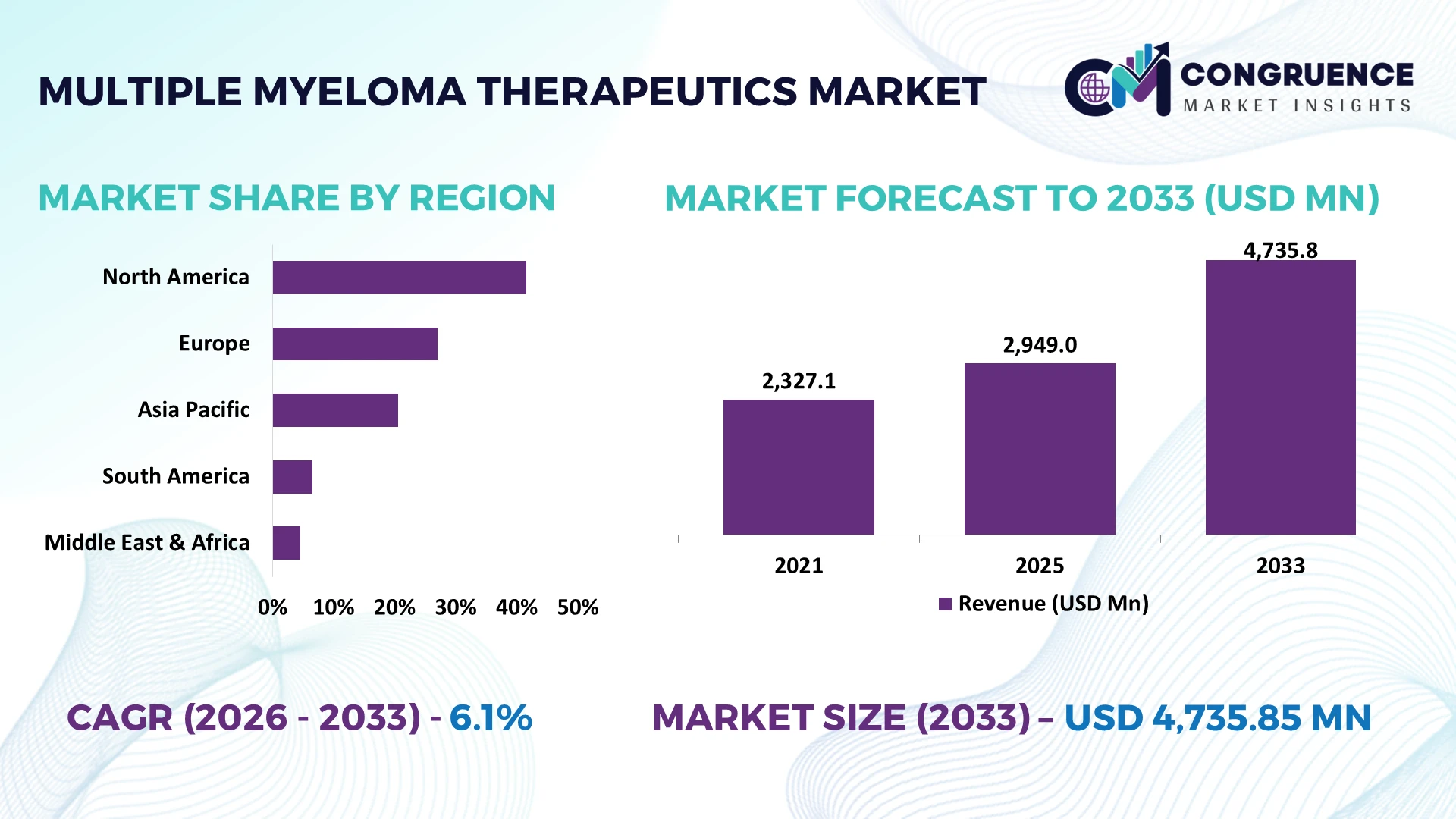
The Global Multiple Myeloma Therapeutics Market was valued at USD 2,949.0 Million in 2025 and is anticipated to reach a value of USD 4,735.8 Million by 2033 expanding at a CAGR of 6.1% between 2026 and 2033. Growth is driven by expanding adoption of BCMA-targeted immunotherapies, CAR-T cell treatments, bispecific antibodies, and precision oncology regimens that improve progression-free survival and treatment sequencing.
The United States dominates the global multiple myeloma therapeutics landscape, supported by approximately 36,000 annual new diagnoses and extensive cellular therapy infrastructure. The FDA's 2024 expansion of CAR-T treatment indications accelerated earlier-line adoption, while more than 70% of eligible patients in pivotal studies achieved deep responses. Compared with India, the United States maintains substantially greater access to advanced immunotherapy manufacturing and specialized treatment centers.
Strategically, manufacturers must prioritize earlier-line treatment approvals, scalable cell therapy production, and hospital partnerships to secure competitive advantages in precision hematology.
Market Size & Growth: USD 2,949.0 Million in 2025, reaching USD 4,735.8 Million by 2033 at 6.1% CAGR, supported by BCMA-targeted immunotherapy adoption.
Top Growth Drivers: CAR-T response rates exceeding 70%, bispecific antibody response rates above 60%, and 5-year survival approaching 62% strengthen treatment adoption.
Short-Term Forecast: By 2028, outpatient bispecific antibody administration is positioned to reduce inpatient treatment requirements by an estimated 15–20%.
Emerging Technologies: BCMA CAR-T therapies, GPRC5D-targeted bispecific antibodies, and AI-assisted minimal residual disease monitoring advance precision treatment.
Regional Leaders: Illustrative 2033 allocations place North America near USD 2.1 billion, Europe at USD 1.3 billion, and Asia Pacific at USD 1.0 billion, supported by immunotherapy expansion.
Consumer/End-User Trends: More than 70% response rates in selected heavily pretreated populations strengthen specialist adoption of advanced immunotherapies.
Pilot/Case Example: The 2024 CARTITUDE-4 trial reported approximately 59% lower disease progression or death risk with cilta-cel versus standard treatment.
Competitive Landscape: Johnson & Johnson, Bristol Myers Squibb, Sanofi, Pfizer, and GSK compete across a concentrated advanced therapeutics portfolio; individual market shares remain unverified.
Regulatory & ESG Impact: FDA approvals in 2024 expanded CAR-T access, while specialized manufacturing increases cold-chain and treatment-center requirements.
Investment & Funding: Bristol Myers Squibb's USD 4.1 billion RayzeBio acquisition strengthened oncology investment, although it was not specific to myeloma therapeutics.
Innovation & Future Outlook: Next-generation trispecific antibodies, dual-target CAR-T platforms, and personalized sequencing strategies target deeper responses and reduced relapse.
The Multiple Myeloma Therapeutics Market is transitioning toward immune-directed treatment pathways, with growing clinical utilization of CAR-T therapies, bispecific antibodies, and combination regimens. Response rates exceeding 70% in selected CAR-T studies reinforce demand for specialized hematology services. FDA label expansions and increasingly complex treatment logistics are reshaping manufacturer investment priorities, establishing treatment accessibility and clinical differentiation as central strategic considerations.
Multiple myeloma therapeutics have become strategically important as pharmaceutical companies compete to control earlier treatment lines, develop differentiated immunotherapy portfolios, and establish specialized treatment infrastructure. The transition from conventional chemotherapy toward targeted immunomodulators, proteasome inhibitors, CAR-T therapies, and bispecific antibodies is transforming clinical pathways. FDA regulatory expansions during 2024 accelerated competition around treatment sequencing, while manufacturers increasingly prioritize cellular manufacturing capacity and hospital integration.
Advanced BCMA-directed CAR-T therapies have demonstrated response rates exceeding 70% in selected clinical populations, compared with substantially lower response rates historically observed with conventional salvage regimens. This clinical differentiation strengthens demand for specialized manufacturing and monitoring capabilities. The United States leads advanced cellular therapy deployment, supported by established transplant networks, while Germany and France emphasize reimbursement-supported access. India and China are expanding hematology infrastructure, although treatment affordability and specialist availability remain significant adoption considerations.
Between 2026 and 2028, manufacturers are expected to expand outpatient bispecific antibody programs, automate cell-processing workflows, and improve treatment-center coordination. Johnson & Johnson and Bristol Myers Squibb illustrate this transition through investment in immunotherapy development and clinical partnerships. Competitive leadership increasingly depends on treatment durability, manufacturing reliability, and the ability to integrate advanced therapies into routine hematology practice.
BCMA-directed immunotherapies are transforming multiple myeloma treatment by delivering deeper responses among patients previously exposed to multiple drug classes. Clinical studies have reported overall response rates exceeding 70% for selected CAR-T therapies, while certain bispecific antibodies demonstrate response rates above 60%. The United States recorded approximately 36,000 new multiple myeloma diagnoses annually, reinforcing the importance of effective relapse management. FDA approvals expanding CAR-T eligibility in 2024 accelerated earlier-line treatment integration and intensified competition between cellular therapies and antibody-based platforms. Bristol Myers Squibb and Johnson & Johnson are strengthening clinical development, manufacturing infrastructure, and specialist-center partnerships. The strategic advantage increasingly belongs to manufacturers capable of delivering durable responses while simplifying treatment administration.
Advanced multiple myeloma therapeutics face significant commercialization constraints because cellular therapies require specialized manufacturing, conditioning regimens, and prolonged clinical monitoring. In the United States, CAR-T product list prices can exceed USD 400,000 per treatment, excluding hospitalization and supportive care. Clinical studies also report cytokine release syndrome in more than 70% of patients receiving certain cellular therapies, increasing monitoring requirements. India's treatment accessibility remains constrained by specialist-center concentration and reimbursement limitations, while European health systems impose stringent health technology assessments. Manufacturers are responding through outcomes-based reimbursement discussions, improved manufacturing yields, and decentralized treatment partnerships. Commercial scalability depends increasingly on reducing total treatment expenditure rather than lowering drug acquisition prices alone.
Earlier-line treatment adoption presents substantial opportunities for manufacturers developing BCMA-directed therapies, GPRC5D-targeted antibodies, and next-generation cellular platforms. The CARTITUDE-4 trial demonstrated approximately 59% lower progression or death risk with cilta-cel compared with standard therapy, strengthening the clinical rationale for earlier intervention. Selected bispecific antibody regimens have achieved response rates above 60% in heavily pretreated populations. China's expanding cellular therapy development ecosystem creates opportunities for localized manufacturing, clinical collaborations, and differentiated treatment platforms. Companies are investing in dual-target CAR-T technologies, subcutaneous antibody formulations, and outpatient administration protocols. A particularly attractive opportunity lies in combining advanced immunotherapies with measurable residual disease monitoring to optimize treatment duration and improve resource utilization.
Scaling advanced multiple myeloma therapeutics requires coordinated cell collection, manufacturing, quality assurance, specialist administration, and long-term safety monitoring. Autologous CAR-T production commonly requires several weeks, creating operational challenges for patients with rapidly progressing disease. Cytokine release syndrome occurs in more than 70% of recipients in certain CAR-T studies, while severe infections and prolonged cytopenias complicate post-treatment management. The United States faces capacity pressures across specialized treatment centers, whereas India must expand trained hematology and cellular therapy workforces. Manufacturers are addressing these challenges through automated cell processing, improved production scheduling, and hospital training partnerships. Sustainable competitiveness depends on reducing vein-to-vein turnaround time, strengthening clinical coordination, and maintaining consistent treatment quality across expanding delivery networks.
Risk-Adapted Maintenance Regimens Gain Traction: Hematologists are increasingly incorporating minimal residual disease (MRD) testing into post-transplant monitoring and maintenance decisions. Next-generation sequencing assays detect malignant cells at sensitivities approaching 10⁻⁶, while selected clinical studies report MRD-negative rates exceeding 60% with intensive combination regimens. US oncology networks are standardizing molecular testing workflows, prompting diagnostic companies and pharmaceutical manufacturers to strengthen laboratory partnerships. The operational advantage lies in identifying patients requiring intensified surveillance rather than applying uniform monitoring schedules.
Subcutaneous Formulations Reshape Treatment Delivery: Pharmaceutical manufacturers are replacing prolonged intravenous infusions with simplified subcutaneous administration. Daratumumab injections generally require 3–5 minutes, compared with several hours for initial intravenous infusions, substantially reducing infusion-chair occupancy. Treatment centers can consequently improve scheduling capacity and nursing resource allocation. Johnson & Johnson and competing developers are expanding injectable formulations and administration-support programs, strengthening outpatient hematology service efficiency.
Real-World Evidence Influences Treatment Sequencing: Clinical teams are increasingly using registry-based outcomes to evaluate treatment durability, adverse events, and sequencing effectiveness. Five-year relative survival for multiple myeloma approaches 62% in US population statistics, while approximately 36,000 new diagnoses annually sustain demand for longitudinal monitoring. Manufacturers are expanding real-world evidence collaborations to identify treatment gaps across older and comorbid populations, improving evidence generation for reimbursement negotiations and formulary decisions.
Specialized Infection Management Becomes Essential: Immunotherapy programs are restructuring supportive-care protocols as prolonged immunosuppression increases infection-related treatment interruptions. Selected bispecific antibody studies report infections in more than 60% of recipients, with severe infections affecting approximately 20–30%. Hospitals are expanding immunoglobulin replacement assessment, vaccination planning, and infectious disease coordination. Pharmaceutical companies are strengthening physician education and safety-monitoring programs, making supportive-care infrastructure an increasingly important determinant of treatment-center capacity.
Monoclonal antibodies represent a leading segment of the Multiple Myeloma Therapeutics Market, supported by widespread daratumumab adoption in newly diagnosed and relapsed disease. An indicative market allocation places monoclonal antibodies at approximately 35.0% in 2025, reflecting their integration into multidrug treatment regimens and established clinical reimbursement pathways. Immunomodulatory drugs remain essential for maintenance therapy, while proteasome inhibitors retain significant utilization in induction and combination treatment. CAR-T cell therapies represent the fastest-expanding category, supported by clinical response rates exceeding 70% in selected heavily pretreated populations. Their adoption is shifting investment toward specialized manufacturing, cellular processing, and treatment-center partnerships.
Histone deacetylase inhibitors maintain a limited role because of tolerability considerations and competing therapeutic alternatives, while other therapies support selected clinical pathways. Johnson & Johnson and Bristol Myers Squibb are prioritizing immunotherapy differentiation, production capacity, and earlier-line clinical development. The commercial transition increasingly favors treatments combining durable disease control with manageable administration requirements.
Targeted therapy represents the leading application within the Multiple Myeloma Therapeutics Market, with an indicative 2025 share of approximately 42.0%, supported by established proteasome inhibitor and immunomodulatory treatment protocols. These regimens remain central to first-line induction, maintenance, and relapsed disease management because they integrate effectively with antibody-based combinations. Immunotherapy represents the fastest-expanding application as CAR-T cells and bispecific antibodies gain clinical acceptance. Selected BCMA-directed therapies demonstrate response rates exceeding 70%, strengthening their position in treatment sequencing. Chemotherapy continues to support conditioning and selected salvage regimens, while stem cell transplantation remains important for eligible patients.
Radiation therapy maintains a focused role in managing painful skeletal lesions and localized complications. Hospitals are increasingly coordinating targeted therapy, immunotherapy, and transplantation through multidisciplinary hematology programs. Pharmaceutical manufacturers are expanding combination-regimen research, treatment-center training, and clinical evidence generation. Investment priorities are shifting toward immunotherapy integration and improved treatment sequencing rather than standalone cytotoxic approaches.
Hospitals represent a leading end-user segment of the Multiple Myeloma Therapeutics Market, with an indicative 2025 global share of approximately 46.0%, reflecting their concentration of hematology specialists, infusion infrastructure, transplantation services, and complex toxicity management capabilities. Specialty clinics represent a rapidly expanding segment as subcutaneous antibody administration and outpatient treatment protocols reduce dependence on inpatient facilities. Selected bispecific antibody therapies achieve response rates exceeding 60%, encouraging specialist clinics to strengthen immunotherapy delivery capabilities. Homecare settings support oral maintenance therapies and selected monitoring activities, while academic and research institutes remain central to clinical trials and therapeutic innovation.
Hospitals retain operational advantages in managing CAR-T administration, cytokine release syndrome, and intensive supportive care. Specialty clinics are strengthening partnerships with hospital networks to coordinate patient referrals, monitoring, and treatment continuity. Pharmaceutical companies are responding through clinician education, distribution partnerships, and specialized patient-support programs. Competitive positioning increasingly depends on reliable treatment access, outpatient integration, and coordinated management of complex hematological conditions.
North America accounted for the largest market share at 41.5% in 2025 however, Asia-Pacific is expected to register the fastest growth, expanding at a CAGR of 8.4% between 2026 and 2033.
North America dominated the Multiple Myeloma Therapeutics Market with approximately 41.5% share in 2025, supported by extensive hematology infrastructure, advanced cellular therapy manufacturing, and established oncology reimbursement systems. The United States leads regional treatment adoption through widespread utilization of proteasome inhibitors, immunomodulatory agents, monoclonal antibodies, and BCMA-directed therapies. FDA approvals expanding CAR-T eligibility in 2024 strengthened earlier-line treatment integration and accelerated clinical investment. Canada contributes through publicly funded cancer programs, specialized transplantation centers, and expanding access to innovative hematology treatments. Manufacturers including Bristol Myers Squibb and Johnson & Johnson are strengthening production networks, clinical partnerships, and treatment-center coordination. Increasing emphasis on minimal residual disease monitoring and personalized treatment sequencing is reshaping therapeutic protocols. Regional competitive advantages increasingly depend on manufacturing reliability, specialist availability, and efficient integration of advanced immunotherapies into established oncology networks.
United States Market Outlook: The United States maintains a strong competitive position through pharmaceutical innovation, extensive clinical trial networks, and specialized cellular therapy facilities. Approximately 36,000 new multiple myeloma cases are diagnosed annually, supporting sustained demand for advanced treatment options. The country's regulatory framework facilitates accelerated development of breakthrough therapies, while academic institutions and biotechnology companies are advancing dual-target CAR-T platforms, bispecific antibodies, and precision hematology diagnostics.
Europe represented approximately 27.0% of the global Multiple Myeloma Therapeutics Market in 2025, supported by established oncology infrastructure, comprehensive healthcare coverage, and increasing adoption of targeted immunotherapies. Germany, France, the United Kingdom, and Italy anchor regional demand through specialized hematology departments and transplantation networks. European Medicines Agency approvals are facilitating broader clinical integration of BCMA-directed CAR-T therapies and bispecific antibodies, although country-specific reimbursement assessments influence deployment timelines. Germany and France maintain strong clinical research capabilities, while the United Kingdom emphasizes evidence-based treatment evaluation through NICE. Pharmaceutical manufacturers are expanding hospital collaborations, real-world evidence programs, and treatment-access initiatives to strengthen commercial penetration. The transition toward subcutaneous antibody administration is improving outpatient treatment efficiency. Competitive differentiation increasingly centers on reimbursement alignment, treatment durability, and the ability to demonstrate meaningful clinical benefits within publicly funded healthcare systems.
Germany Market Outlook: Germany holds a strategically important position through its extensive hospital infrastructure, specialized hematology centers, and established pharmaceutical research ecosystem. The country's network of more than 30 university medical centers supports clinical investigation, transplantation services, and advanced oncology treatment. German hematology institutions are integrating molecular diagnostics and immune-directed therapies into treatment pathways, while statutory health insurance coverage provides an established framework for evaluating innovative therapeutic interventions.
Asia-Pacific accounted for approximately 20.5% of the global Multiple Myeloma Therapeutics Market in 2025, supported by expanding oncology infrastructure, pharmaceutical manufacturing capabilities, and increasing investment in cellular immunotherapies. China dominates regional manufacturing momentum through domestic biotechnology development, clinical trial expansion, and growing availability of targeted hematology treatments. Japan maintains advanced pharmaceutical research capabilities and established reimbursement pathways for innovative cancer therapies, while India is expanding specialized oncology facilities and affordable treatment access. China's National Medical Products Administration has supported domestic CAR-T commercialization, strengthening competition between local developers and multinational manufacturers. Pharmaceutical companies are increasing localized production, licensing partnerships, and clinical research collaborations to reduce supply dependencies. Regional investment priorities increasingly emphasize treatment affordability, manufacturing scalability, and specialist workforce development. These structural improvements position Asia-Pacific as an important center for next-generation multiple myeloma therapeutic innovation.
China Market Outlook: China is strengthening its competitive position through domestic CAR-T development, expanding biopharmaceutical manufacturing, and increasing clinical research activity. The country has authorized multiple domestically developed cellular therapies, supporting commercialization experience and manufacturing localization. Biotechnology companies are investing in automated cell-processing systems, BCMA-targeted treatment platforms, and hospital partnerships. National pharmaceutical innovation policies and expanding specialist oncology networks are reinforcing China's role in advanced hematology treatment development.
South America represented approximately 6.5% of the global Multiple Myeloma Therapeutics Market in 2025, reflecting developing oncology infrastructure and increasing demand for modern hematological treatments. Brazil accounts for the largest regional treatment concentration, supported by established cancer hospitals, pharmaceutical distribution networks, and growing clinical research activity. Argentina and Chile contribute through specialized hematology services and increasing adoption of immunomodulatory drugs and monoclonal antibodies. Access to advanced cellular therapies remains uneven because of reimbursement limitations, manufacturing dependencies, and concentration of specialized facilities in major metropolitan areas. Pharmaceutical manufacturers are strengthening distribution partnerships, patient-access programs, and hospital collaborations to improve treatment availability. Regional healthcare modernization is gradually expanding diagnostic capabilities and treatment continuity. Commercial success increasingly depends on balancing innovative therapeutic availability with affordability, reimbursement negotiations, and dependable pharmaceutical supply chains across fragmented healthcare systems.
Brazil Market Outlook: Brazil leads regional multiple myeloma treatment activity through its extensive healthcare network, established pharmaceutical industry, and specialized oncology institutions. The Unified Health System serves more than 200 million residents, providing a broad foundation for hematology service development. Institutions such as the University of São Paulo and major cancer centers support clinical research, transplantation services, and advanced treatment evaluation. Regulatory oversight by ANVISA influences innovative therapy adoption and commercialization strategies.
The Middle East & Africa accounted for approximately 4.5% of the global Multiple Myeloma Therapeutics Market in 2025, supported by expanding specialist healthcare investment and modernization of oncology treatment infrastructure. Saudi Arabia and the United Arab Emirates lead advanced treatment adoption through hospital expansion, international healthcare partnerships, and increasing investment in precision medicine. Israel contributes through biotechnology research, clinical innovation, and specialized hematology services, while South Africa maintains established oncology institutions serving broader regional treatment requirements. Limited reimbursement coverage, uneven diagnostic infrastructure, and specialist workforce shortages constrain advanced therapeutic accessibility across several African markets. Pharmaceutical manufacturers are strengthening hospital partnerships, clinical training initiatives, and regional distribution networks. Investment in molecular diagnostics and cellular therapy capabilities is gradually improving treatment readiness. Regional competitive positioning increasingly depends on infrastructure development, workforce specialization, and sustainable access to innovative hematology medicines.
Saudi Arabia Market Outlook: Saudi Arabia is emerging as a strategic market through healthcare transformation initiatives under Vision 2030 and expanding investment in specialized oncology infrastructure. The Health Sector Transformation Program supports modernization of hospital services, digital healthcare systems, and advanced treatment capabilities. Institutions including King Faisal Specialist Hospital & Research Centre are strengthening cellular therapy expertise, clinical research, and hematology services, creating opportunities for pharmaceutical partnerships and advanced immunotherapy deployment.
Johnson & Johnson, Bristol Myers Squibb, Sanofi, Pfizer, and GSK dominate competition across antibody therapies, immunomodulators, and cellular immunotherapies. Their combined global share is estimated at approximately 70%, reflecting concentrated intellectual property, clinical portfolios, and specialist distribution networks. Johnson & Johnson competes with Bristol Myers Squibb through BCMA therapies, while Sanofi challenges established antibody combinations with differentiated immunotherapy regimens. Selected CAR-T treatments demonstrate response rates exceeding 70%, compared with approximately 60% for certain bispecific antibodies, making durability and administration efficiency decisive differentiators. Manufacturers are expanding cellular production, licensing innovative platforms, and integrating clinical development with hospital networks. Competition increasingly shifts toward earlier treatment lines, outpatient delivery, and manufacturing reliability. Complex regulatory approvals, specialized production infrastructure, and reimbursement negotiations restrict market entry. Emerging biotechnology developers challenge established suppliers through dual-target constructs and differentiated safety profiles. Winning requires superior clinical evidence, dependable manufacturing, accessible treatment pathways, and sustained physician engagement worldwide.
Johnson & Johnson
Bristol Myers Squibb
Sanofi
Pfizer Inc.
GSK plc
Amgen Inc.
Takeda Pharmaceutical Company Limited
AbbVie Inc.
Regeneron Pharmaceuticals Inc.
Novartis AG
Roche Holding AG
Arcellx Inc.
Legend Biotech Corporation
Karyopharm Therapeutics Inc.
BCMA-directed CAR-T cell therapies and bispecific antibodies are reshaping multiple myeloma treatment through highly selective immune activation. Conventional salvage regimens historically delivered limited durable responses, whereas selected CAR-T studies demonstrate response rates exceeding 70% and meaningful improvements in progression-free survival. Bispecific antibodies targeting BCMA or GPRC5D achieve response rates above 60% in heavily pretreated populations. Johnson & Johnson and Bristol Myers Squibb benefit from established clinical networks, manufacturing expertise, and specialized treatment infrastructure supporting commercialization.
Emerging technologies include dual-target CAR-T constructs, trispecific antibodies, automated cell manufacturing, and next-generation minimal residual disease diagnostics. Molecular monitoring platforms achieve detection sensitivities approaching one malignant cell per million normal cells, improving treatment assessment beyond conventional laboratory techniques. Subcutaneous antibody delivery reduces administration from hours to minutes, improving infusion-center utilization. Pharmaceutical developers are integrating digital patient monitoring and automated manufacturing workflows to strengthen clinical coordination, reduce operational bottlenecks, and improve treatment consistency.
Between 2026 and 2028, investment priorities will increasingly emphasize faster cellular production, outpatient immunotherapy administration, and biomarker-guided treatment sequencing. Established manufacturers retain advantages in regulatory execution and distribution, while biotechnology innovators compete through differentiated constructs and streamlined production. Competitive leadership will depend on clinical durability, scalable manufacturing, and efficient integration into routine hematology practice.
October 2026 Pfizer announced positive Phase 3 MagnetisMM-32 results for ELREXFIO, reporting estimated 18-month progression-free survival of 68%. The findings strengthen its bispecific antibody portfolio and support planned regulatory submissions against established treatment regimens. Source: pfizer.com.
July 2026 Sanofi received FDA approval for subcutaneous Sarclisa Escena administered through the CirCLIQ on-body injector. The authorization covers existing intravenous indications and introduces 2 subcutaneous administration options, strengthening treatment convenience and differentiation in outpatient hematology services. Source: sanofi.com.
June 2025 Johnson & Johnson reported five-year CARTITUDE-1 follow-up findings for CARVYKTI, showing 33% of patients remained progression-free without subsequent myeloma treatment. These results strengthen the company's cellular therapy differentiation through durable clinical outcomes following a single infusion. Source: jnj.com.
December 2025 Johnson & Johnson announced updated CARTITUDE-4 findings showing 80% of treated standard-risk patients remained progression-free and treatment-free at 30 months. The findings strengthen the case for earlier CARVYKTI use and reinforce its competitive positioning in relapsed myeloma. Source: investor.jnj.com.
The Multiple Myeloma Therapeutics Market Report provides comprehensive analysis of treatment innovations, competitive dynamics, clinical adoption, and investment opportunities across 2026–2033. Segmentation covers therapeutic types, including immunomodulatory drugs, proteasome inhibitors, monoclonal antibodies, CAR-T cell therapies, and other treatments. Application analysis evaluates targeted therapy, immunotherapy, chemotherapy, transplantation, and radiation therapy, while end-user coverage includes hospitals, specialty clinics, homecare settings, and research institutions. Regional assessments examine North America, Europe, Asia-Pacific, South America, and the Middle East & Africa.
The report evaluates BCMA-directed therapies, bispecific antibodies, molecular diagnostics, and advanced cellular manufacturing technologies. Clinical response rates exceeding 70% for selected CAR-T treatments illustrate emerging therapeutic differentiation. Competitive benchmarking examines pharmaceutical pipelines, regulatory approvals, treatment accessibility, manufacturing capabilities, and strategic partnerships. These insights support investment planning, geographic expansion, portfolio optimization, and long-term competitive positioning across advanced hematology markets.
| Report Attribute / Metric | Details |
|---|---|
| Market Revenue (2025) | USD 2,949.0 Million |
| Market Revenue (2033) | USD 4,735.8 Million |
| CAGR (2026–2033) | 6.1% |
| Base Year | 2025 |
| Forecast Period | 2026–2033 |
| Historic Period | 2021–2025 |
| Segments Covered |
By Type
By Application
By End-User
|
| Key Report Deliverables | Revenue Forecast; Market Trends; Growth Drivers & Restraints; Technology Insights; Segmentation Analysis; Regional Insights; Competitive Landscape; Regulatory & ESG Overview; Recent Developments |
| Regions Covered | North America; Europe; Asia-Pacific; South America; Middle East & Africa |
| Key Players Analyzed | Johnson & Johnson; Bristol Myers Squibb; Sanofi; Pfizer Inc.; GSK plc; Amgen Inc.; Takeda Pharmaceutical Company Limited; AbbVie Inc.; Regeneron Pharmaceuticals Inc.; Novartis AG; Roche Holding AG; Arcellx Inc.; Legend Biotech Corporation; Karyopharm Therapeutics Inc. |
| Customization & Pricing | Available on Request (10% Customization Free) |




