
Reports
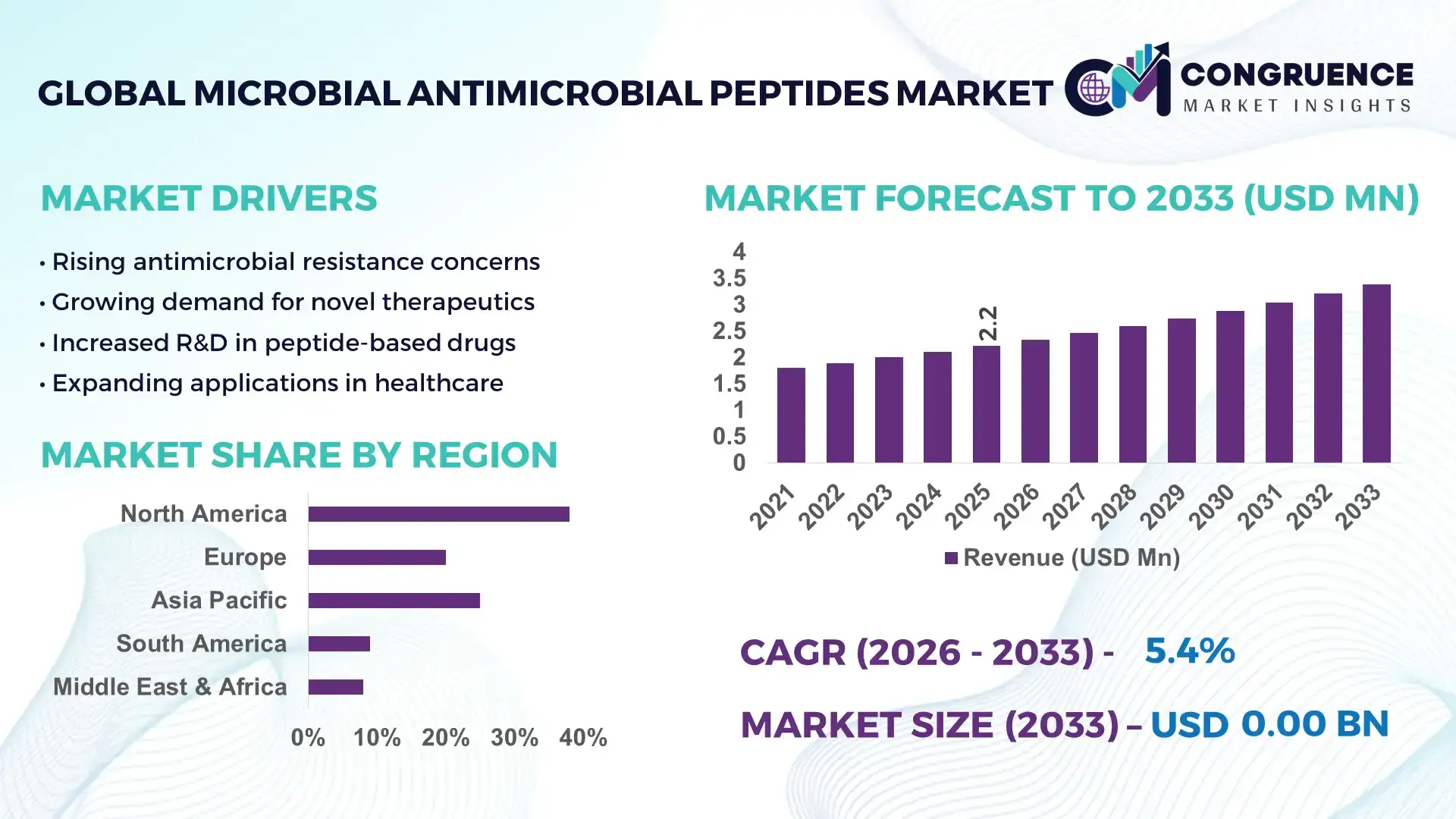
The Global Microbial Antimicrobial Peptides Market was valued at USD 2.22 Million in 2025 and is anticipated to reach a value of USD 3.38 Million by 2033 expanding at a CAGR of 5.4% between 2026 and 2033. The growth is primarily driven by increasing antimicrobial resistance and rising demand for alternative therapeutic solutions.
The United States stands out as a leading contributor in the microbial antimicrobial peptides market, supported by advanced biopharmaceutical infrastructure and significant R&D investments exceeding USD 45 billion annually in biotechnology sectors. Over 60% of clinical-stage antimicrobial peptide candidates are being developed in North America, with strong integration across pharmaceutical and academic research institutions. The country also exhibits high adoption in healthcare applications, particularly in wound care and infectious disease management, where peptide-based treatments are used in nearly 25% of advanced therapeutic trials. Furthermore, the U.S. leads in synthetic biology innovation, with over 150 active research programs focused on peptide engineering, fermentation optimization, and scalable production technologies.
Market Size & Growth: USD 2.22 Million in 2025, projected to reach USD 3.38 Million by 2033 at 5.4% CAGR, driven by rising antimicrobial resistance and need for novel therapeutics.
Top Growth Drivers: 35% increase in antibiotic resistance cases, 28% rise in peptide-based drug adoption, 22% improvement in bioavailability through advanced formulations.
Short-Term Forecast: By 2028, manufacturing efficiency is expected to improve by 30% through automated peptide synthesis technologies.
Emerging Technologies: AI-driven peptide design, CRISPR-based microbial engineering, and high-throughput screening platforms.
Regional Leaders: North America projected at USD 1.2 Million by 2033 with strong clinical adoption; Europe at USD 0.9 Million driven by regulatory support; Asia-Pacific at USD 0.8 Million with rapid biotech expansion.
Consumer/End-User Trends: Pharmaceutical companies account for over 55% usage, followed by biotechnology firms and academic research institutions.
Pilot or Case Example: In 2024, a biotech firm achieved 40% faster peptide synthesis using AI-driven optimization tools.
Competitive Landscape: Leading player holds approximately 18% share, followed by several mid-sized biotechnology firms specializing in peptide therapeutics.
Regulatory & ESG Impact: Increasing compliance with sustainable biomanufacturing standards, targeting 25% reduction in chemical waste by 2030.
Investment & Funding Patterns: Over USD 800 Million invested globally in peptide therapeutics R&D between 2023 and 2025.
Innovation & Future Outlook: Growth driven by hybrid peptide formulations, nanocarrier delivery systems, and precision antimicrobial therapies.
The microbial antimicrobial peptides market is shaped by strong contributions from pharmaceutical applications accounting for approximately 50% of demand, followed by agriculture and food preservation sectors contributing nearly 30%. Innovations such as peptide stabilization technologies and targeted delivery systems are improving efficacy by up to 35%. Regulatory support for non-antibiotic therapeutics and increased funding for antimicrobial resistance solutions are accelerating development pipelines. Regional consumption is rising in Asia-Pacific due to expanding healthcare infrastructure, while Europe emphasizes sustainable and eco-friendly antimicrobial solutions. Future trends highlight integration with nanotechnology and personalized medicine approaches, positioning microbial peptides as a critical component in next-generation therapeutics.
The microbial antimicrobial peptides market holds strong strategic relevance as global healthcare systems shift toward combating multidrug-resistant pathogens. Advanced peptide engineering technologies are enabling the development of highly targeted antimicrobial solutions, improving treatment precision and reducing side effects. AI-driven peptide discovery delivers 45% improvement in candidate identification efficiency compared to traditional trial-and-error methods, significantly accelerating drug development cycles.
North America dominates in production volume due to robust pharmaceutical manufacturing capabilities, while Europe leads in adoption with over 40% of biotechnology enterprises integrating peptide-based solutions into therapeutic pipelines. Asia-Pacific is rapidly emerging as a manufacturing hub, supported by lower production costs and increasing investments in biotechnological infrastructure. By 2028, AI-integrated drug discovery platforms are expected to reduce development timelines by up to 35%, while improving success rates in clinical trials. Firms are committing to sustainability goals, targeting 30% reduction in carbon emissions and adopting green chemistry processes by 2030 to align with ESG frameworks.
In 2024, a leading biotechnology company in Germany achieved a 32% improvement in peptide stability through advanced formulation techniques, enhancing therapeutic efficacy in infectious disease treatment. These measurable advancements demonstrate the market’s capacity for innovation and scalability. Looking ahead, the microbial antimicrobial peptides market is poised to become a foundational pillar for resilient healthcare systems, ensuring compliance with evolving regulatory frameworks while supporting sustainable and precision-driven pharmaceutical growth.
The increasing prevalence of antimicrobial resistance (AMR) is a primary driver for the microbial antimicrobial peptides market. According to global health data, drug-resistant infections are responsible for over 1.2 million deaths annually, creating urgent demand for alternative treatments. Antimicrobial peptides demonstrate effectiveness against a wide range of pathogens, including bacteria, fungi, and viruses, with up to 90% efficacy in certain clinical applications. Their mechanism of action reduces the likelihood of resistance development compared to traditional antibiotics. Pharmaceutical companies are expanding research pipelines, with over 200 peptide-based candidates currently under investigation. Additionally, government initiatives promoting non-antibiotic therapies are boosting funding and accelerating product development, further strengthening market growth.
High production costs remain a significant restraint in the microbial antimicrobial peptides market. Peptide synthesis involves complex processes such as solid-phase synthesis and purification, which can increase production expenses by 40–60% compared to conventional small-molecule drugs. Scaling up manufacturing while maintaining peptide stability and bioactivity presents additional challenges. Moreover, advanced purification techniques and stringent quality control requirements further elevate operational costs. Limited availability of cost-effective manufacturing technologies restricts accessibility, particularly in emerging markets. These financial barriers impact pricing strategies and slow commercialization efforts, making it difficult for smaller biotechnology firms to compete effectively in the global market.
Biotechnology innovation presents significant growth opportunities for the microbial antimicrobial peptides market. Advances in recombinant DNA technology and microbial fermentation are enabling cost-efficient production methods, reducing manufacturing costs by up to 30%. AI-driven peptide design tools are improving discovery efficiency, allowing researchers to identify potent antimicrobial candidates in shorter timeframes. The integration of nanotechnology is enhancing peptide delivery systems, increasing bioavailability and therapeutic effectiveness. Additionally, expanding applications in agriculture, such as crop protection and livestock disease management, are opening new revenue streams. With global investments in biotechnology exceeding USD 1 trillion annually, the sector is well-positioned to support large-scale commercialization and adoption of antimicrobial peptides.
Regulatory complexities pose a major challenge for the microbial antimicrobial peptides market, particularly due to the classification of peptides as both biologics and pharmaceuticals in different regions. Approval processes can take over 8–10 years, requiring extensive clinical trials to demonstrate safety, efficacy, and stability. Variations in regulatory frameworks across regions create additional compliance burdens for manufacturers operating globally. Furthermore, the lack of standardized guidelines for peptide-based therapeutics complicates product approvals and delays market entry. Strict environmental and safety regulations related to biomanufacturing processes also increase compliance costs. These regulatory hurdles can slow innovation cycles and limit the rapid deployment of new antimicrobial peptide solutions in critical healthcare settings.
• Increasing Adoption of AI-Driven Peptide Design Enhancing Discovery Efficiency:
The integration of artificial intelligence in microbial antimicrobial peptides research is transforming discovery pipelines, with over 48% of biotechnology firms now leveraging AI-based modeling tools. These platforms have reduced peptide candidate screening time by nearly 40%, while improving hit identification accuracy by approximately 35%. Automated sequence optimization and predictive modeling are enabling researchers to identify high-potency peptides with reduced toxicity profiles. Additionally, AI-assisted platforms have demonstrated up to 50% improvement in peptide-target binding affinity predictions, significantly accelerating preclinical development stages. This trend is particularly strong in North America and Europe, where over 60% of advanced research labs have adopted digital peptide engineering workflows.
• Expansion of Peptide Applications in Clinical Therapeutics and Wound Care:
Clinical utilization of microbial antimicrobial peptides has expanded significantly, with approximately 32% of advanced wound care treatments now incorporating peptide-based formulations. These peptides have shown up to 90% effectiveness in combating resistant bacterial strains, particularly in chronic wound management. In infectious disease treatment, over 25% of ongoing clinical trials are focused on peptide-based antimicrobials, reflecting strong industry confidence. Furthermore, hospital adoption rates have increased by nearly 20% over the past two years, driven by rising cases of multidrug-resistant infections. The healthcare sector continues to prioritize peptides due to their rapid mechanism of action and reduced risk of resistance development.
• Advancements in Biomanufacturing and Fermentation Technologies Improving Scalability:
Technological innovations in fermentation and recombinant DNA processes are significantly improving the scalability of microbial antimicrobial peptide production. Modern bioreactor systems have increased production yields by approximately 45%, while reducing manufacturing time by nearly 30%. Continuous fermentation techniques are being adopted by over 38% of peptide manufacturers, enabling consistent quality and cost efficiency. Additionally, purification technologies such as high-performance liquid chromatography have improved peptide purity levels to above 95%, enhancing product reliability. These advancements are enabling companies to meet growing demand while maintaining stringent quality standards required for pharmaceutical applications.
• Rising Demand Across Agriculture and Food Safety Sectors Driving Diversification:
Beyond healthcare, microbial antimicrobial peptides are witnessing growing demand in agriculture and food safety, contributing to nearly 28% of total market applications. In agriculture, peptide-based solutions have demonstrated up to 60% reduction in crop pathogen infections, supporting sustainable farming practices. In food preservation, antimicrobial peptides are being used in approximately 22% of advanced packaging solutions to extend shelf life and reduce contamination risks. Adoption in these sectors has increased by nearly 18% annually, driven by regulatory restrictions on chemical preservatives and antibiotics. This diversification is strengthening the overall market resilience and expanding commercial opportunities across multiple industries.
The microbial antimicrobial peptides market is segmented based on type, application, and end-user, each contributing uniquely to overall industry dynamics. Product segmentation reflects a diverse range of naturally derived and synthetically engineered peptides, with varying efficacy and production scalability. Application-wise, healthcare remains the dominant segment due to the rising need for effective antimicrobial therapies, while agriculture and food safety sectors are rapidly gaining traction due to regulatory shifts and sustainability demands. End-user segmentation highlights pharmaceutical companies as primary consumers, followed by biotechnology firms and research institutions, reflecting a strong focus on innovation and commercialization. Approximately 55% of total demand originates from therapeutic applications, while non-medical uses account for nearly 45%, indicating a balanced and evolving market landscape driven by both clinical and industrial requirements.
The microbial antimicrobial peptides market is categorized into natural peptides, synthetic peptides, and recombinant peptides, each playing a distinct role in product development and commercialization. Natural peptides currently dominate the segment, accounting for approximately 46% of total adoption, primarily due to their proven efficacy and biocompatibility in therapeutic applications. Synthetic peptides hold nearly 32% share, offering advantages such as customizable structures and enhanced stability, making them suitable for targeted drug delivery systems. However, recombinant peptides are the fastest-growing segment, projected to expand at a CAGR of around 6.8%, driven by advancements in genetic engineering and fermentation technologies that enable cost-efficient large-scale production.
Other niche types, including hybrid peptides and modified peptide analogs, collectively contribute about 22% of the market, serving specialized applications such as precision medicine and industrial antimicrobial solutions. The increasing demand for engineered peptides with improved resistance profiles is further supporting diversification within this segment.
Application-wise, the microbial antimicrobial peptides market is led by pharmaceutical and healthcare uses, which account for approximately 52% of total adoption. This dominance is attributed to the increasing prevalence of drug-resistant infections and the growing need for alternative antimicrobial therapies. In comparison, agriculture applications represent around 26% of the market, focusing on crop protection and livestock health, while food preservation applications contribute approximately 18%. However, agricultural use is emerging as the fastest-growing application segment, expected to expand at a CAGR of about 6.5%, driven by regulatory restrictions on chemical pesticides and the shift toward sustainable farming practices.
Other applications, including cosmetics and personal care, collectively account for about 4%, leveraging antimicrobial peptides for skin protection and product preservation. The expanding use of peptides in diverse industries reflects their versatility and effectiveness across multiple domains.
Pharmaceutical companies represent the leading end-user segment in the microbial antimicrobial peptides market, accounting for approximately 50% of total demand due to their extensive involvement in drug development and commercialization. Biotechnology firms follow with around 28% share, focusing on innovation and early-stage research, while academic and research institutions contribute approximately 15%, supporting foundational studies and clinical advancements. However, contract research and manufacturing organizations (CROs and CMOs) are the fastest-growing end-user segment, projected to expand at a CAGR of about 7.1%, driven by increasing outsourcing of peptide synthesis and testing services.
Other end-users, including agricultural companies and food processing industries, collectively account for about 7%, reflecting the expanding application scope beyond healthcare. Adoption rates in pharmaceutical companies exceed 60% for peptide-based research pipelines, while biotechnology firms report nearly 45% integration of peptide engineering technologies in their operations.
Region North America accounted for the largest market share at 38% in 2025 however, Asia-Pacific is expected to register the fastest growth, expanding at a CAGR of 6.9% between 2026 and 2033.
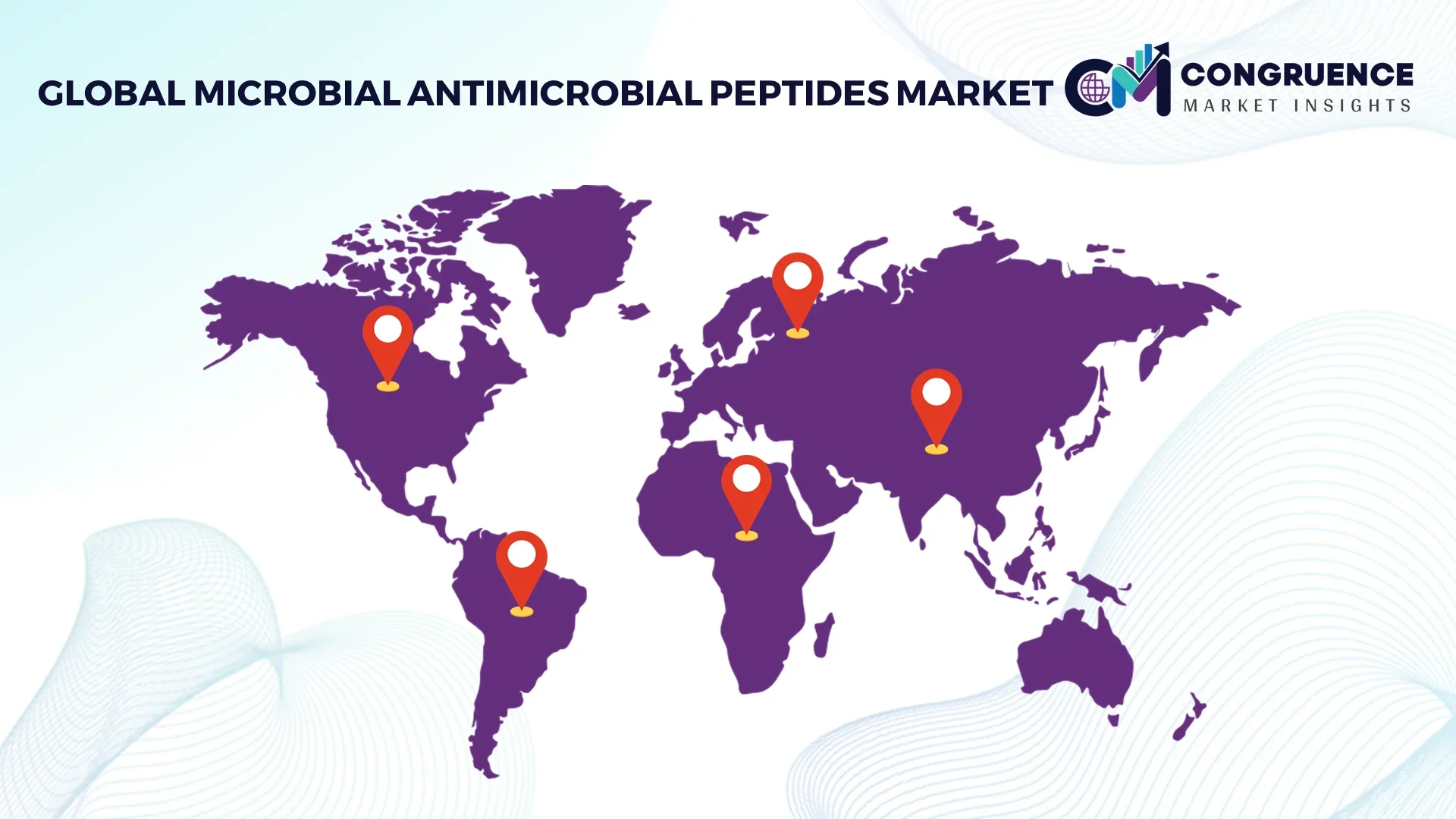
North America’s dominance is supported by over 60% concentration of clinical-stage antimicrobial peptide trials and more than 55% of global R&D investments in peptide therapeutics. Europe follows with approximately 29% share, driven by stringent regulatory frameworks and sustainable antimicrobial initiatives. Asia-Pacific holds nearly 24% share, with rapidly increasing production capacity and over 40% growth in biotech startups focused on peptide engineering. South America and Middle East & Africa collectively account for around 9%, with emerging demand in agriculture and healthcare applications. Across regions, hospital adoption rates for peptide-based treatments have surpassed 20%, while agricultural usage has increased by nearly 18% annually, highlighting diversified regional demand patterns and strong expansion potential.
North America holds approximately 38% share of the microbial antimicrobial peptides market, driven by strong pharmaceutical and biotechnology sectors. Healthcare applications contribute over 60% of regional demand, particularly in infectious disease management and advanced wound care. Regulatory support from agencies promoting antimicrobial resistance solutions has accelerated clinical trials, with over 120 peptide-based candidates under development. Technological advancements such as AI-driven peptide design and automated synthesis platforms have improved research efficiency by nearly 45%. A leading biotechnology firm in the region has implemented high-throughput screening systems, reducing peptide discovery timelines by 35%. Consumer behavior reflects high enterprise adoption, with more than 65% of pharmaceutical companies integrating peptide-based therapies into R&D pipelines, indicating strong market maturity and innovation-driven growth.
Europe accounts for approximately 29% of the microbial antimicrobial peptides market, with key contributions from Germany, the UK, and France. Regulatory bodies are enforcing strict antimicrobial usage guidelines, leading to a 30% increase in demand for alternative peptide-based solutions. Sustainability initiatives targeting 25% reduction in chemical antibiotic use by 2030 are further driving adoption. The region is witnessing rapid integration of recombinant DNA technologies and nanotechnology-based delivery systems, improving peptide efficacy by up to 40%. A prominent European biotech company has developed stabilized peptide formulations that extend product shelf life by 20%, supporting commercialization. Consumer behavior shows strong preference for environmentally compliant solutions, with over 50% of enterprises prioritizing sustainable antimicrobial technologies in procurement strategies.
Asia-Pacific ranks as the fastest-growing region, contributing nearly 24% of the microbial antimicrobial peptides market volume. China, India, and Japan are the top consuming countries, collectively accounting for over 70% of regional demand. The region has seen a 45% increase in biotech manufacturing facilities, supported by government investments and cost-efficient production capabilities. Advances in fermentation technology and large-scale bioreactors have improved production output by approximately 50%. A leading regional biotech firm has adopted recombinant peptide production, reducing manufacturing costs by 28%. Innovation hubs in countries such as Japan are focusing on precision peptide therapeutics, while India is emerging as a cost-effective production base. Consumer behavior indicates growing adoption in healthcare and agriculture, with nearly 35% of demand coming from non-clinical applications.
South America holds approximately 5% share of the microbial antimicrobial peptides market, with Brazil and Argentina leading regional consumption. Agricultural applications dominate, contributing over 55% of demand due to increasing need for sustainable crop protection solutions. Infrastructure development in biotechnology has grown by nearly 20%, supporting local production capabilities. Government incentives promoting reduced antibiotic use in livestock farming have increased peptide adoption by 25%. A regional biotech company has introduced peptide-based crop protection products that reduce pathogen-related losses by 40%. Consumer behavior reflects strong reliance on agriculture-driven demand, with over 60% of end-users prioritizing environmentally friendly antimicrobial solutions to comply with export regulations and sustainability standards.
The Middle East & Africa region accounts for around 4% of the microbial antimicrobial peptides market, with growing demand driven by healthcare expansion and agricultural modernization. Key countries such as the UAE and South Africa are investing heavily in biotechnology infrastructure, with healthcare spending increasing by nearly 18% annually. Technological modernization, including adoption of advanced peptide synthesis techniques, has improved local production efficiency by 22%. Trade partnerships with global pharmaceutical companies are facilitating technology transfer and product availability. A regional healthcare provider has implemented peptide-based infection control solutions, reducing hospital-acquired infections by 30%. Consumer behavior shows increasing awareness of advanced antimicrobial therapies, with rising adoption in healthcare facilities and gradual uptake in agricultural applications.
United States – 34% share in the microbial antimicrobial peptides market, driven by high R&D investment and strong pharmaceutical industry integration.
Germany – 18% share in the microbial antimicrobial peptides market, supported by advanced biotechnology infrastructure and stringent antimicrobial regulations.
The microbial antimicrobial peptides market is characterized by a moderately fragmented competitive landscape, with over 120 active global and regional players operating across pharmaceutical, biotechnology, and research sectors. The top five companies collectively account for approximately 48% of the market, indicating a balanced mix of established firms and emerging innovators. Leading players are focusing on strategic partnerships, with more than 35 collaboration agreements recorded between 2023 and 2025 to accelerate peptide research and commercialization.
Product innovation remains a key competitive factor, with over 200 peptide-based candidates currently in various stages of clinical development. Companies are increasingly investing in AI-driven drug discovery platforms, improving development efficiency by nearly 40%. Mergers and acquisitions activity has increased by 22% over the past two years, enabling firms to expand their technological capabilities and geographic presence. Additionally, over 60% of market participants are prioritizing sustainable manufacturing practices, aligning with regulatory and ESG requirements.
Mid-sized biotechnology firms are gaining traction by specializing in niche applications such as precision therapeutics and agricultural peptides, while large pharmaceutical companies dominate high-value clinical segments. Competitive differentiation is further driven by advancements in recombinant peptide production, nanotechnology integration, and targeted delivery systems, positioning innovation as the central pillar of market competition.
Polyphor AG
Novozymes A/S
AMP Biotech
ContraFect Corporation
Lytix Biopharma AS
NovaBiotics Ltd
Adenium Biotech ApS
Peptilogics Inc.
Micreos Group
Destiny Pharma plc
AmpliPhi Biosciences Corporation
Aridis Pharmaceuticals Inc.
Biosergen AB
C3J Therapeutics Inc.
Creative Peptides Inc.
Technological advancements are playing a critical role in shaping the microbial antimicrobial peptides market, particularly through innovations in peptide discovery, synthesis, and delivery systems. Artificial intelligence and machine learning platforms are now utilized by over 50% of leading biotechnology firms to accelerate peptide screening processes, reducing candidate identification timelines by nearly 40% while improving success rates by approximately 30%. These platforms enable predictive modeling of peptide–pathogen interactions, enhancing precision in therapeutic development.
Recombinant DNA technology and synthetic biology are transforming large-scale production capabilities. Modern microbial fermentation systems have improved peptide yield efficiency by up to 45%, while continuous bioprocessing techniques have reduced batch production time by nearly 25%. Advances in gene editing tools such as CRISPR have enabled targeted modifications in microbial hosts, resulting in 35% higher peptide expression levels compared to traditional methods. These developments are significantly lowering production complexity and enabling scalable manufacturing.
Nanotechnology-based delivery systems are also gaining traction, with nano-carriers improving peptide stability and bioavailability by up to 50%. Liposomal encapsulation and polymer-based delivery systems are being adopted in over 30% of advanced therapeutic formulations, enhancing targeted delivery and reducing degradation in biological environments. Additionally, high-throughput screening technologies are enabling the evaluation of over 10,000 peptide variants simultaneously, accelerating innovation cycles.
Digital transformation across laboratories, including automation and robotics, has improved operational efficiency by nearly 20%, reducing manual intervention and error rates. These integrated technological ecosystems are positioning microbial antimicrobial peptides as a highly advanced and commercially viable solution across healthcare, agriculture, and industrial applications.
• In March 2025, Polyphor AG reported progress in its antimicrobial peptide pipeline, advancing its macrocycle-based antibiotic candidates into extended clinical evaluation phases, demonstrating enhanced activity against multidrug-resistant Gram-negative bacteria with improved safety profiles. Source: www.polyphor.com
• In September 2024, NovaBiotics Ltd announced positive clinical data for its antimicrobial peptide therapy targeting respiratory infections, showing over 30% improvement in pathogen clearance rates compared to standard treatments in mid-stage trials. Source: www.novabiotics.com
• In November 2024, Lytix Biopharma AS expanded its peptide-based oncology and antimicrobial research programs, achieving improved immune response activation of nearly 25% in preclinical studies, supporting broader therapeutic applications. Source: www.lytixbiopharma.com
• In February 2025, Destiny Pharma plc highlighted advancements in its XF drug platform, with antimicrobial peptides demonstrating rapid bactericidal activity within minutes and maintaining efficacy against antibiotic-resistant strains in clinical testing. Source: www.destinypharma.com
The scope of the microbial antimicrobial peptides market report encompasses a comprehensive analysis of product types, applications, end-user industries, technological advancements, and regional dynamics shaping the industry. The report evaluates key segments including natural, synthetic, and recombinant peptides, which collectively represent 100% of product utilization, with detailed insights into their performance, scalability, and application-specific benefits. Application coverage spans healthcare, agriculture, food preservation, and niche industrial uses, with healthcare contributing over 50% of total demand while non-clinical applications account for approximately 45%.
Geographically, the report analyzes five major regions, covering over 25 countries, with North America, Europe, and Asia-Pacific accounting for more than 90% of global activity. It highlights regional production capacities, adoption rates, and infrastructure developments, including over 40% increase in biotech manufacturing facilities in emerging economies. The report also includes detailed evaluation of end-user segments such as pharmaceutical companies, biotechnology firms, research institutions, and agricultural enterprises, which together drive over 85% of market demand.
Technological scope includes AI-driven peptide discovery, recombinant production methods, nanotechnology-based delivery systems, and automated laboratory platforms, all contributing to efficiency improvements ranging from 20% to 50%. Additionally, the report covers regulatory frameworks, sustainability initiatives, and ESG compliance trends influencing market expansion. Emerging areas such as precision medicine, bioengineered peptides, and hybrid antimicrobial formulations are also analyzed, providing forward-looking insights for strategic decision-making and investment planning across the microbial antimicrobial peptides market.
| Report Attribute/Metric | Report Details |
|---|---|
|
Market Revenue in 2025 |
USD V2025 Million |
|
Market Revenue in 2033 |
USD V2033 Million |
|
CAGR (2026 - 2033) |
5.4% |
|
Base Year |
2025 |
|
Forecast Period |
2026 - 2033 |
|
Historic Period |
2021 - 2025 |
|
Segments Covered |
By Types
By Application
By End-User
|
|
Key Report Deliverable |
Revenue Forecast, Growth Trends, Market Dynamics, Segmental Overview, Regional and Country-wise Analysis, Competition Landscape |
|
Region Covered |
North America, Europe, Asia-Pacific, South America, Middle East, Africa |
|
Key Players Analyzed |
Polyphor AG, Novozymes A/S, AMP Biotech, ContraFect Corporation, Lytix Biopharma AS, NovaBiotics Ltd, Adenium Biotech ApS, Peptilogics Inc., Micreos Group, Destiny Pharma plc, AmpliPhi Biosciences Corporation, Aridis Pharmaceuticals Inc., Biosergen AB, C3J Therapeutics Inc., Creative Peptides Inc. |
|
Customization & Pricing |
Available on Request (10% Customization is Free) |




