
Reports
The Global Medical Ultrasound Market was valued at USD 1,143.0 Million in 2025 and is anticipated to reach a value of USD 1,780.9 Million by 2033 expanding at a CAGR of 5.7% between 2026 and 2033. Growth is driven by rising adoption of AI-enabled diagnostic imaging systems, expanding point-of-care ultrasound deployment, and increasing replacement of legacy imaging equipment across hospitals and specialty clinics.
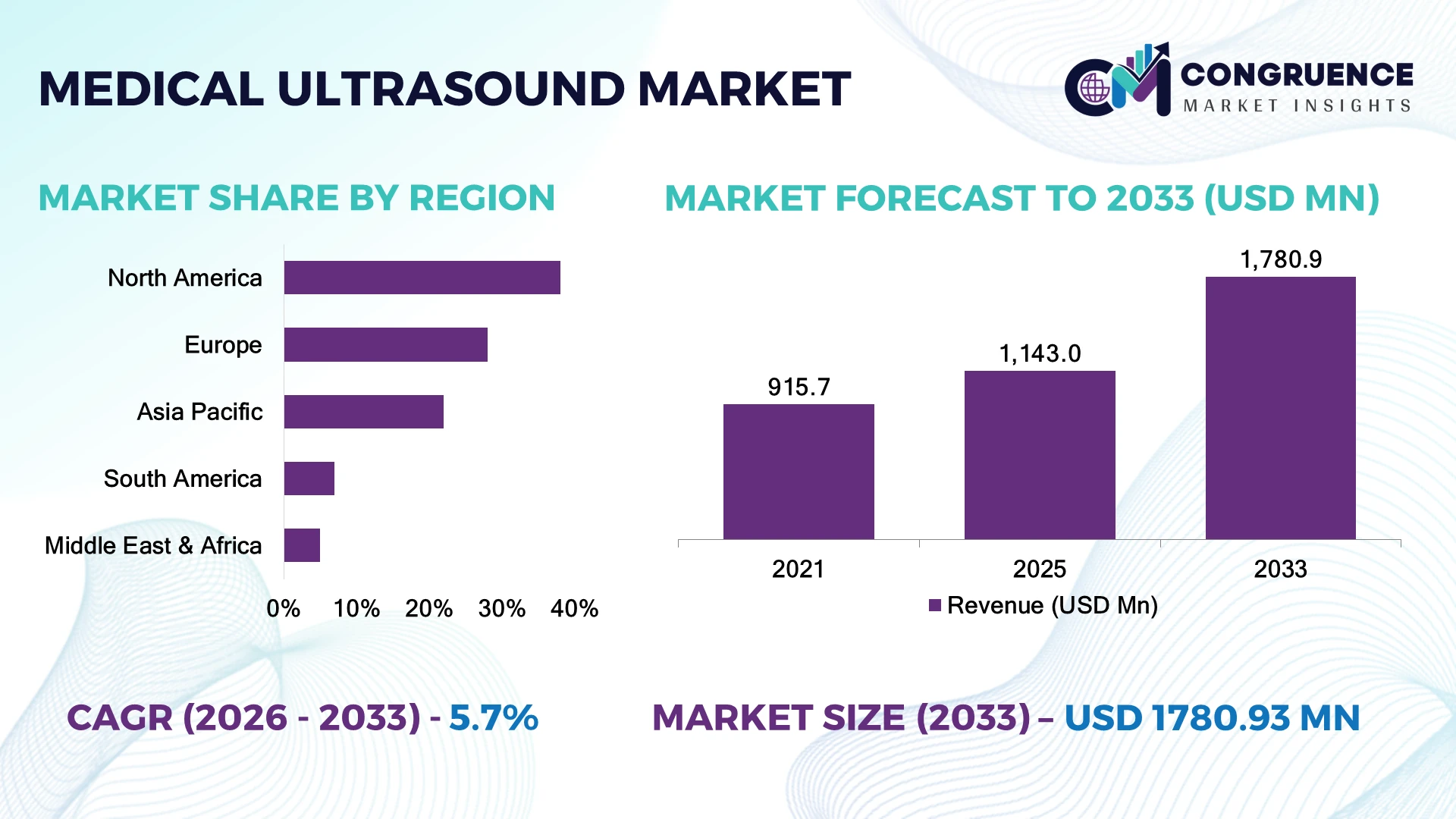
The United States leads the global market with approximately 36% share, supported by over 6,100 hospitals, continuous imaging equipment modernization, and strong adoption of AI-assisted ultrasound workflows exceeding 45% across leading healthcare networks. Compared with Germany, the U.S. deploys significantly higher portable ultrasound volumes, while public and private investments continue following the CHIPS and Science Act, strengthening domestic medical technology manufacturing and digital healthcare infrastructure.
This market strengthens competitive positioning for manufacturers investing in intelligent imaging platforms, localized production, and advanced clinical workflow integration.
Market Size & Growth: USD 1,143.0 Million in 2025, reaching USD 1,780.9 Million by 2033 at 5.7% CAGR, supported by AI-powered imaging and portable diagnostics.
Top Growth Drivers: AI-assisted diagnostics (45%), portable ultrasound adoption (38%), outpatient imaging expansion (32%).
Short-Term Forecast: By 2028, diagnostic workflow efficiency improves by nearly 25% through automated image optimization.
Emerging Technologies: AI imaging, handheld wireless ultrasound, and cloud-connected diagnostic platforms accelerate advanced clinical workflows.
Regional Leaders: North America (~USD 640 Million), Europe (~USD 420 Million), Asia-Pacific (~USD 390 Million), driven by digital healthcare expansion and hospital modernization.
Consumer/End-User Trends: More than 48% of healthcare facilities prioritize portable imaging for emergency and primary care applications.
Pilot/Case Example: In 2024, AI-assisted ultrasound deployment reduced scan interpretation time by approximately 30% in selected hospital networks.
Competitive Landscape: GE HealthCare holds nearly 24% market share alongside Siemens Healthineers, Philips, Canon Medical Systems, and Fujifilm Healthcare.
Regulatory & ESG Impact: Digital imaging initiatives lowered paper-based reporting by over 40% while supporting standardized diagnostic compliance.
Investment & Funding: More than USD 2.3 Billion has been invested globally in imaging innovation, manufacturing expansion, and strategic partnerships amid regional supply-chain diversification.
Innovation & Future Outlook: Intelligent automation, cloud-enabled diagnostics, and compact imaging systems are reshaping next-generation clinical imaging strategies.
Medical Ultrasound Market demand continues to expand across radiology, cardiology, obstetrics, emergency medicine, and point-of-care diagnostics as healthcare providers prioritize faster clinical decision-making. AI-assisted image enhancement and compact wireless devices improve diagnostic consistency, while portable system adoption has surpassed 40% in many advanced healthcare settings. Regional manufacturing expansion and medical device regulatory alignment are also strengthening equipment availability, supporting broader strategic deployment across healthcare networks.
Medical ultrasound has become a strategic technology segment as healthcare systems accelerate diagnostic decentralization, digital transformation, and infrastructure modernization. Hospitals, outpatient centers, and emergency care providers increasingly prioritize portable imaging systems that improve patient access while reducing dependence on centralized diagnostic facilities. Ongoing supply-chain diversification and regional manufacturing investments are further strengthening equipment availability and procurement resilience.
AI-enabled ultrasound platforms now deliver image acquisition and automated measurement processes up to 30% faster than conventional systems, improving workflow efficiency while reducing operator variability. North America leads in enterprise-scale deployment and AI integration, whereas Asia-Pacific records faster installation of portable and handheld systems across expanding healthcare infrastructure. Over the next two to three years, AI-supported examinations are expected to exceed 50% adoption across leading healthcare institutions, supported by broader digital imaging integration.
Healthcare providers are deploying handheld ultrasound systems in emergency departments, ambulatory clinics, and rural healthcare programs to shorten diagnosis times and improve operational efficiency. Manufacturers are expanding regional production, strengthening software partnerships, and accelerating intelligent imaging innovation, creating stronger competitive differentiation through workflow optimization, scalable deployment, and long-term clinical value.
AI-enabled image interpretation and portable ultrasound adoption are transforming diagnostic workflows across healthcare systems. More than 45% of newly installed premium ultrasound platforms now incorporate AI-assisted measurement tools, while handheld system adoption has increased by nearly 38% among emergency and primary care providers. In the United States, reimbursement support for point-of-care imaging and hospital digital modernization initiatives are accelerating equipment replacement cycles. This shift enables faster clinical decisions, improves workflow standardization, and reduces operator dependency. Leading manufacturers are expanding AI software capabilities, introducing compact wireless devices, and partnering with healthcare networks to integrate cloud-connected imaging ecosystems. A notable strategic outcome is the growing convergence of ultrasound hardware with clinical decision-support software, creating stronger customer retention through long-term platform integration rather than standalone equipment sales.
Premium ultrasound systems continue to face procurement challenges due to rising component costs and dependence on specialized semiconductor and transducer suppliers. Advanced imaging platforms remain 25–35% more expensive than conventional systems, while high-end piezoelectric component lead times have exceeded 20 weeks during recent supply disruptions. Japan remains a major supplier of precision ultrasound components, exposing manufacturers to sourcing concentration risks during logistics interruptions. These constraints delay equipment deployment, pressure hospital procurement budgets, and limit adoption among smaller healthcare facilities. Manufacturers are responding by localizing assembly operations, expanding multi-source procurement contracts, and redesigning platforms with modular architectures that simplify maintenance. Operational resilience is increasingly becoming a competitive differentiator alongside imaging performance.
Healthcare digitization is creating opportunities beyond conventional diagnostic imaging through integrated ultrasound ecosystems combining AI, cloud connectivity, and remote collaboration. More than 55% of hospitals evaluating new imaging equipment prioritize interoperability with electronic health record platforms, while AI-assisted workflow automation reduces examination time by approximately 30%. India is rapidly expanding district-level diagnostic infrastructure through public healthcare modernization programs, creating substantial demand for portable imaging technologies. Manufacturers are investing in software development, cloud-based service platforms, and partnerships with digital health providers to deliver subscription-based imaging solutions. A less obvious opportunity lies in remote specialist consultation enabled by connected ultrasound systems, allowing healthcare providers to extend expert diagnostic capabilities without expanding physical specialist infrastructure.
Successful deployment increasingly depends on workforce capability and seamless integration with hospital digital infrastructure rather than hardware availability alone. Nearly 40% of healthcare organizations identify trained ultrasound professionals as a significant operational constraint, while approximately 35% report interoperability challenges between imaging equipment and existing hospital information systems. Germany's stringent medical device cybersecurity and interoperability requirements are increasing software validation complexity for connected imaging platforms. These execution barriers slow enterprise-scale deployment and reduce consistency across multisite healthcare networks. Companies must strengthen clinician training programs, expand cybersecurity investments, collaborate with software vendors, and standardize interoperability frameworks. Organizations that combine technical innovation with implementation expertise will achieve stronger competitive positioning and more sustainable long-term adoption.
AI Workflow Automation Expansion AI-assisted imaging has become a standard capability in premium ultrasound systems, with nearly 46% of newly deployed platforms incorporating automated measurements and image optimization. Diagnostic workflow time has declined by approximately 28%, improving patient throughput and reducing operator dependency. Healthcare providers are integrating cloud-enabled imaging into enterprise systems, while manufacturers are expanding software partnerships and continuous algorithm updates to strengthen long-term platform competitiveness as digital healthcare infrastructure advances.
Handheld Ultrasound Deployment Growth Compact wireless ultrasound devices now account for nearly 34% of new point-of-care installations, supported by emergency medicine and primary care expansion. Battery efficiency has improved by approximately 25%, enabling longer clinical use outside traditional imaging departments. Workforce shortages and decentralized healthcare delivery are accelerating demand, prompting manufacturers to scale portable product portfolios, strengthen distribution networks, and introduce subscription-based software ecosystems that enhance clinical productivity without increasing infrastructure requirements.
Supply Chain Localization Strategies Medical imaging manufacturers are reducing dependence on single-country sourcing by expanding regional production and qualifying multiple component suppliers. Localized procurement has lowered average delivery times by nearly 22%, while inventory resilience has improved by approximately 18%. Companies are restructuring manufacturing footprints, increasing component standardization, and adopting digital inventory monitoring to minimize operational disruptions and improve procurement flexibility for hospitals managing replacement cycles.
Specialized Clinical Imaging Adoption Ultrasound utilization is expanding beyond conventional radiology into musculoskeletal care, interventional procedures, and critical care monitoring. More than 40% of hospitals now deploy dedicated point-of-care ultrasound protocols, while procedure-guided imaging accuracy has improved by approximately 20%. Equipment vendors are responding through specialty-specific software packages, clinician training initiatives, and integrated workflow solutions, creating differentiated value propositions for healthcare providers seeking faster diagnosis and greater procedural precision.
The market is segmented into Diagnostic Ultrasound Systems and Therapeutic Ultrasound Systems. Diagnostic Ultrasound Systems remain the leading segment with an estimated 88% market share, driven by widespread deployment across radiology, cardiology, obstetrics, vascular imaging, and emergency medicine. Their non-invasive nature, real-time visualization, and compatibility with AI-enabled image analysis make them indispensable across hospitals and diagnostic centers. More than 60% of newly installed diagnostic platforms now incorporate advanced automation features, while portable configurations represent nearly 35% of annual equipment deployments. Manufacturers continue expanding premium imaging capabilities, cloud connectivity, and handheld product portfolios to strengthen adoption across both large healthcare networks and outpatient settings. Therapeutic Ultrasound Systems represent the fastest-growing segment as clinicians increasingly adopt focused ultrasound technologies for pain management, tissue healing, physiotherapy, and targeted therapeutic applications. Improvements in treatment precision and workflow integration are accelerating investment in therapeutic platforms, particularly within rehabilitation and specialty care environments. Companies are expanding research programs, collaborating with clinical institutions, and developing multifunctional systems capable of combining imaging and therapy within integrated clinical workflows. This strategic shift reflects growing investment in diversified ultrasound applications beyond conventional diagnostic imaging.
The market is segmented into Radiology, Cardiology, Obstetrics & Gynecology, Urology, Musculoskeletal, Point-of-Care, and Others. Radiology remains the leading application segment with an estimated 33% market share, supported by its broad role in abdominal, vascular, liver, thyroid, and soft tissue examinations. High patient volumes, expanding preventive diagnostics, and integration with enterprise imaging platforms continue to reinforce its dominance. More than 58% of tertiary hospitals have standardized ultrasound as a frontline diagnostic modality before advanced imaging, while AI-assisted image optimization has improved examination efficiency by approximately 25%. Manufacturers are strengthening radiology portfolios through high-resolution imaging, cloud connectivity, and workflow automation that enhance diagnostic consistency. Point-of-Care is the fastest-growing application segment as emergency medicine, intensive care, anesthesia, and primary healthcare increasingly rely on portable imaging systems for immediate clinical decision-making. Handheld ultrasound utilization has expanded by nearly 36% across emergency departments, reducing diagnostic delays and improving bedside assessment. Cardiology and Obstetrics & Gynecology continue generating stable demand through routine echocardiography and prenatal imaging, while musculoskeletal and urology applications benefit from greater adoption in outpatient specialty clinics. Companies are expanding application-specific software, specialty transducers, and AI-enabled workflow tools to strengthen clinical adoption across diverse care environments.
The market is segmented into Hospitals, Diagnostic Imaging Centers, Ambulatory Surgical Centers, Specialty Clinics, and Others. Hospitals account for the largest share of approximately 57%, supported by extensive imaging infrastructure, high patient throughput, and multidisciplinary clinical requirements. Continuous modernization of radiology departments and integration of AI-assisted diagnostic platforms have strengthened equipment replacement activity. Nearly 62% of new premium ultrasound installations occur within hospital networks, where centralized procurement and digital workflow integration support long-term operational efficiency. Manufacturers continue prioritizing hospitals through enterprise software ecosystems, comprehensive service agreements, and advanced imaging portfolios. Specialty Clinics represent the fastest-growing end-user segment as outpatient healthcare expands and physicians increasingly adopt compact, application-focused ultrasound systems. Portable ultrasound deployment has increased by nearly 34% across specialty practices, enabling faster diagnosis while reducing patient referrals. Diagnostic Imaging Centers continue benefiting from rising preventive screening volumes, while Ambulatory Surgical Centers increasingly integrate ultrasound into minimally invasive procedures and perioperative care. Companies are responding through flexible financing models, customized product configurations, clinician training programs, and strategic distribution partnerships that improve accessibility for independent healthcare providers while strengthening competitive positioning in decentralized care settings.
North America accounted for the largest market share at 38% in 2025 however, Asia-Pacific is expected to register the fastest growth, expanding at a CAGR of 7.2% between 2026 and 2033.
North America represents the most mature medical ultrasound market, supported by advanced healthcare infrastructure, high diagnostic imaging adoption, and strong integration of artificial intelligence into clinical workflows. The region contributes approximately 38% of global demand, with the United States accounting for the majority of installations across hospitals, specialty clinics, and emergency care facilities. More than 50% of large healthcare networks have adopted AI-supported imaging tools to improve diagnostic efficiency and workflow consistency. Manufacturers are strengthening regional operations through software development, cloud-based imaging platforms, and strategic collaborations with healthcare providers. Growing investments in outpatient diagnostics and portable ultrasound systems are reshaping procurement priorities, shifting focus from standalone equipment toward connected imaging ecosystems.
United States Market Outlook: The United States remains the leading country market due to extensive hospital infrastructure, high healthcare technology spending, and strong adoption of advanced diagnostic systems. Over 6,000 hospitals operate nationwide, creating significant demand for replacement equipment and AI-enabled imaging upgrades. Domestic manufacturers and global companies are expanding software capabilities, service networks, and enterprise imaging partnerships to strengthen long-term market positioning.
Europe maintains a strong position in the medical ultrasound market due to healthcare modernization programs, advanced regulatory frameworks, and widespread adoption across public healthcare systems. The region represents nearly 28% of global demand, with Germany, the United Kingdom, and France serving as major deployment centers. Increasing emphasis on efficient healthcare delivery has accelerated demand for energy-efficient imaging systems and cloud-connected diagnostic platforms. Approximately 45% of European hospitals are prioritizing digital integration of medical imaging workflows, encouraging manufacturers to develop interoperable ultrasound solutions. Companies are expanding partnerships with healthcare institutions and investing in localized service infrastructure to meet stricter medical device compliance requirements and sustainability goals.
Germany Market Outlook: Germany leads European ultrasound adoption through its strong medical technology manufacturing base, advanced hospital infrastructure, and high emphasis on precision diagnostics. The country hosts a large concentration of medical device companies and research institutions supporting imaging innovation. More than 40% of tertiary hospitals utilize advanced ultrasound systems integrated with digital healthcare platforms, strengthening demand for next-generation diagnostic solutions.
Asia-Pacific is the fastest-transforming medical ultrasound market, driven by healthcare infrastructure expansion, rising diagnostic accessibility, and increasing manufacturing capabilities. The region contributes approximately 22% of global demand, with China, Japan, and India representing key markets. China remains a major production hub for ultrasound components and medical devices, supporting regional supply availability and export capacity. Portable ultrasound adoption has increased by nearly 35% across emerging healthcare facilities as providers seek cost-effective diagnostic solutions. Companies are expanding local manufacturing, establishing distribution partnerships, and introducing compact imaging platforms designed for diverse healthcare environments. The region’s growing focus on rural healthcare access is accelerating deployment beyond traditional hospital settings.
China Market Outlook: China holds a strategic position through large-scale medical device manufacturing, expanding hospital networks, and strong domestic technology development. The country operates more than 35,000 hospitals, creating significant demand for diagnostic equipment modernization. Local and international manufacturers are increasing production capacity, improving AI integration, and developing affordable ultrasound solutions to address diverse healthcare requirements.
South America is witnessing gradual ultrasound market development supported by healthcare accessibility programs, private hospital expansion, and increasing diagnostic capacity in urban centers. The region contributes approximately 7% of global demand, with Brazil and Argentina representing the largest adoption markets. Brazil’s expanding private healthcare sector and public diagnostic initiatives are supporting equipment upgrades, while portable ultrasound systems are improving access in underserved areas. More than 30% of new installations in emerging healthcare facilities involve compact ultrasound platforms due to lower infrastructure requirements. Manufacturers are strengthening distributor networks, offering flexible financing models, and adapting product portfolios to address affordability constraints. However, uneven healthcare infrastructure and import dependency continue influencing procurement strategies.
Brazil Market Outlook: Brazil represents the largest ultrasound market in South America due to its extensive healthcare network and growing diagnostic requirements. The country operates over 7,000 hospitals, creating demand for imaging modernization across public and private facilities. Companies are increasing regional partnerships and expanding portable ultrasound availability to improve penetration beyond major metropolitan healthcare centers.
The Middle East & Africa market is expanding through healthcare infrastructure development, medical tourism growth, and government-led modernization programs. The region accounts for approximately 5% of global demand, with the United Arab Emirates, Saudi Arabia, and South Africa leading adoption. Large-scale hospital construction projects and digital healthcare initiatives are increasing demand for advanced imaging systems, while portable ultrasound adoption is improving diagnostic accessibility. Approximately 30% of new healthcare facilities in Gulf countries incorporate advanced imaging technologies during initial infrastructure planning. Manufacturers are forming regional partnerships, establishing service centers, and expanding training programs to support clinical adoption. Supply-chain localization initiatives are also improving equipment availability across developing healthcare markets.
Saudi Arabia Market Outlook: Saudi Arabia is emerging as a strategically important ultrasound market due to healthcare transformation programs, hospital expansion, and investment in advanced medical infrastructure. The country is increasing healthcare technology deployment through modernization initiatives, with more than 500 hospitals supporting rising diagnostic equipment demand. Global manufacturers are strengthening partnerships and service capabilities to capture opportunities in this expanding healthcare ecosystem.
The Medical Ultrasound Market features intense competition between global imaging leaders such as GE HealthCare, Siemens Healthineers, Philips, Canon Medical Systems, and Fujifilm Healthcare, while regional manufacturers compete through affordability and localized service. The top five players collectively account for approximately 55% of the market, creating a concentrated but innovation-driven structure. Competition is based on AI integration, image quality, pricing, supply reliability, and workflow customization. Premium vendors differentiate through AI-enabled platforms, with automation improving diagnostic efficiency by 25–30%, while cost-focused players target emerging healthcare systems through simplified portable devices. Companies are expanding through strategic partnerships, software integration, manufacturing localization, and connected imaging ecosystems. The competitive landscape is shifting toward intelligent ultrasound platforms, where software capabilities increasingly determine market advantage. High regulatory requirements, clinical validation needs, and specialized component expertise create entry barriers. Winning requires combining advanced technology, scalable production, strong service networks, and adaptable solutions.
Siemens Healthineers
Philips
Canon Medical Systems Corporation
Fujifilm Healthcare
Samsung Medison
Esaote S.p.A.
Mindray Medical International Limited
Hologic Inc.
Konica Minolta Healthcare
Butterfly Network Inc.
Shenzhen SonoScape Medical Corp.
CHISON Medical Technologies Co., Ltd.
Clarius Mobile Health
Artificial intelligence, cloud connectivity, and automated imaging workflows are reshaping ultrasound operations. AI-assisted systems improve image interpretation speed by nearly 30% compared with conventional workflows, while automated measurements reduce operator variability by approximately 25%. More than 45% of premium ultrasound platforms now include intelligent assistance features, giving technology-focused manufacturers a competitive advantage through software-driven differentiation.
Portable and handheld ultrasound technologies are replacing traditional bulky systems in emergency care and outpatient environments. Compared with older cart-based equipment, compact wireless systems reduce deployment time by nearly 40% and improve accessibility in decentralized healthcare settings. Companies such as Butterfly Network and other portable imaging innovators benefit from demand for scalable, lower-infrastructure diagnostic solutions.
Between 2026 and 2028, connected ultrasound ecosystems, AI-guided diagnostics, and cloud-based collaboration platforms will become central investment priorities. Healthcare providers are shifting toward integrated imaging networks that support remote consultation, workflow optimization, and standardized diagnosis. Manufacturers investing in intelligent software, cybersecurity, and interoperability will gain stronger positioning as ultrasound evolves from hardware equipment into digital clinical platforms.
January 2025 GE HealthCare received FDA clearance for its enhanced Voluson Expert 22, 20, and 18 women’s health ultrasound systems featuring AI-powered tools and automation capabilities. The systems improve imaging efficiency and diagnostic confidence through advanced workflow support. Source: www.investor.gehealthcare.com
August 2025 Philips launched Transcend Plus for EPIQ CVx and Affiniti CVx cardiovascular ultrasound systems, introducing FDA-cleared AI enhancements and advanced 2D/3D imaging improvements. The innovation strengthens cardiac workflow efficiency and supports faster clinical decision-making for healthcare providers. Source: www.philips.com
July 2025 Siemens Healthineers partnered with Apollo Hospitals to advance AI-driven quantitative ultrasound research for liver disease management. The collaboration focuses on improving early detection, risk assessment, and monitoring capabilities through advanced imaging solutions across Indian healthcare networks. Source: www.siemens-healthineers.com
January 2025 Butterfly Network reported preliminary findings from a hospital study demonstrating the impact of point-of-care ultrasound adoption on clinical efficiency and patient management. The study highlighted reduced hospital resource utilization and strengthened the case for broader handheld ultrasound deployment.
The Medical Ultrasound Market Report covers comprehensive analysis across product types, including diagnostic and therapeutic ultrasound systems, along with applications spanning radiology, cardiology, obstetrics, point-of-care, musculoskeletal, and specialty diagnostics. The report evaluates demand patterns across hospitals, diagnostic imaging centers, ambulatory surgical centers, specialty clinics, and other healthcare facilities.
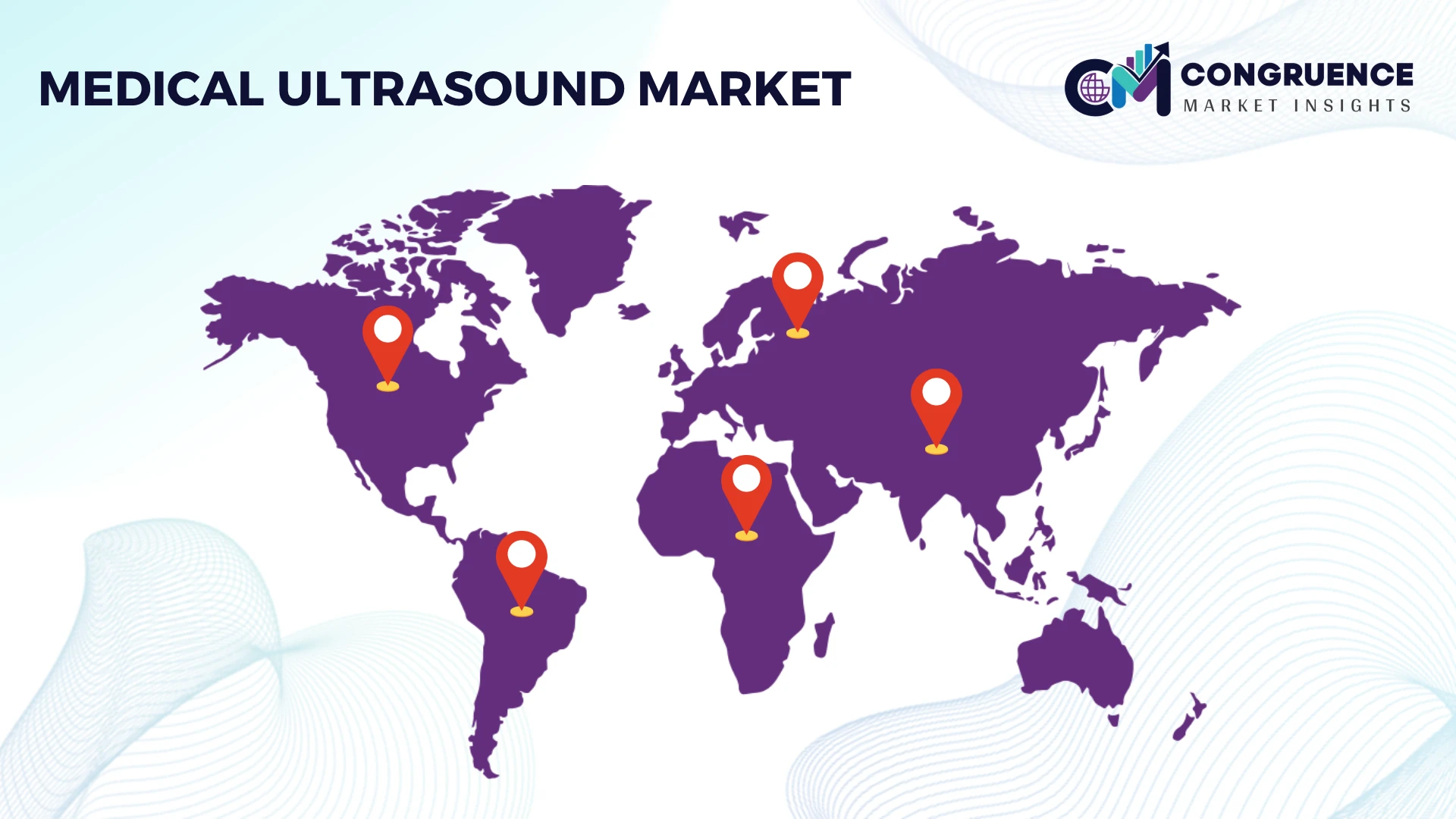
The scope includes regional assessment across North America, Europe, Asia-Pacific, South America, and Middle East & Africa, highlighting technology adoption, deployment trends, manufacturing capabilities, and competitive positioning. It examines AI integration, portable ultrasound systems, cloud-based imaging platforms, and emerging clinical applications. The analysis supports strategic decisions related to investment planning, geographic expansion, product development, partnerships, and competitive positioning from 2026 onward.
| Report Attribute / Metric | Details |
|---|---|
| Market Revenue (2025) | USD 1,143.0 Million |
| Market Revenue (2033) | USD 1,780.9 Million |
| CAGR (2026–2033) | 5.7% |
| Base Year | 2025 |
| Forecast Period | 2026–2033 |
| Historic Period | 2021–2025 |
| Segments Covered |
By Type
By Application
By End-User
|
| Key Deliverables | Revenue Forecast; Market Trends; Growth Drivers & Restraints; Technology Insights; Segmentation Analysis; Regional Insights; Competitive Landscape; Regulatory & ESG Overview; Recent Developments |
| Regions Covered | North America; Europe; Asia-Pacific; South America; Middle East & Africa |
| Companies Profiled | GE HealthCare; Siemens Healthineers; Philips; Canon Medical Systems Corporation; Fujifilm Healthcare; Samsung Medison; Esaote S.p.A.; Mindray Medical International Limited; Hologic Inc.; Konica Minolta Healthcare; Butterfly Network Inc.; Shenzhen SonoScape Medical Corp.; CHISON Medical Technologies Co., Ltd.; Clarius Mobile Health |
| Customization & Pricing | Available on Request (10% Customization Free) |




