
Reports
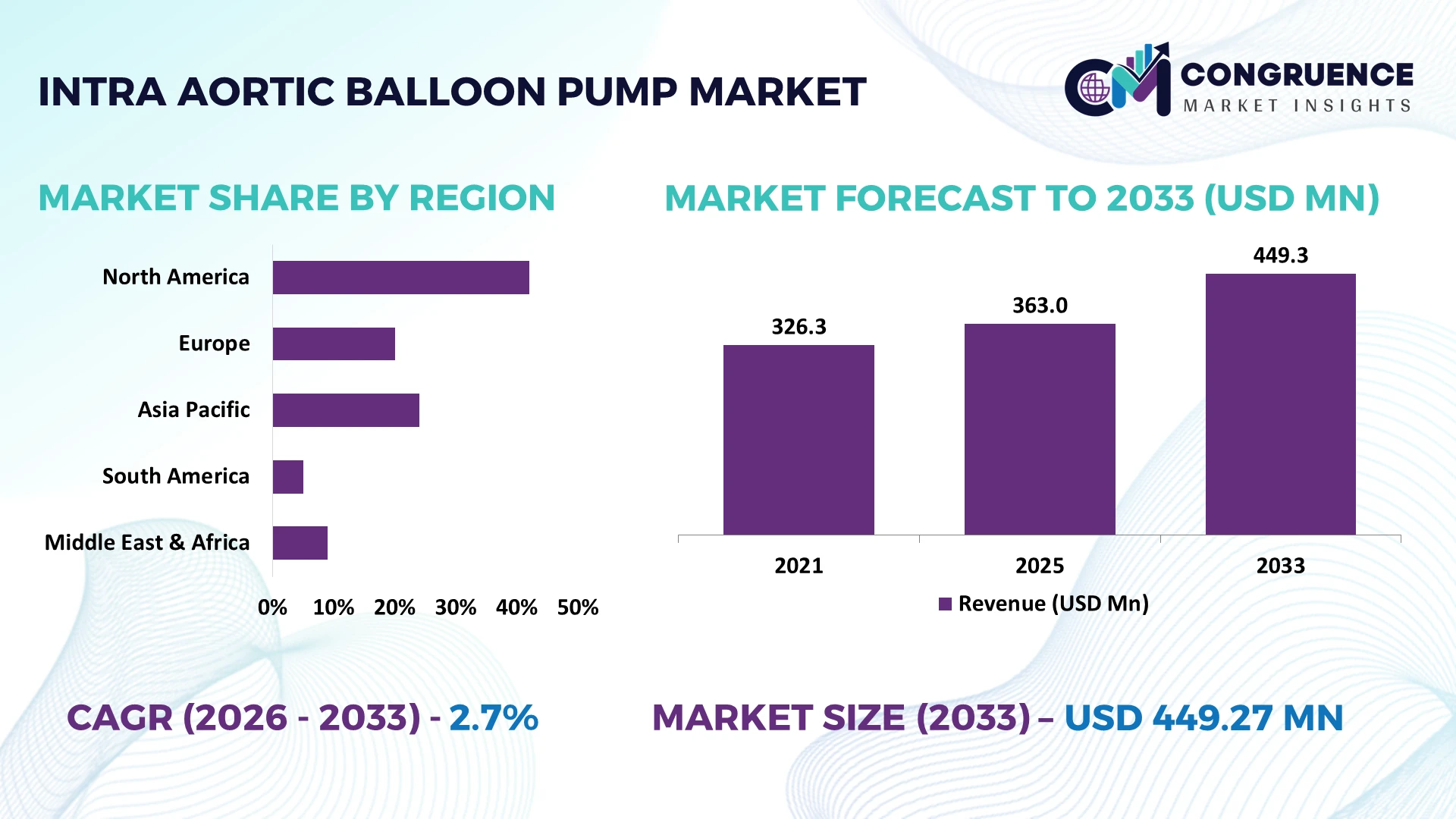
The Global Intra-aortic Balloon Pump Market was valued at USD 363.03 Million in 2025 and is anticipated to reach a value of USD 449.27 Million by 2033 expanding at a CAGR of 2.7% between 2026 and 2033. Growth is driven by persistent cardiogenic-shock burden, high-risk PCI support, cardiac-surgery stabilization, and adoption of fiber-optic catheter technology enabling faster pressure-signal acquisition and automated timing.
The United States represents approximately 40% of global Intra-aortic Balloon Pump Market demand, supported by more than 800,000 annual myocardial infarctions, extensive catheterization laboratories, cardiac ICUs, and advanced PCI infrastructure. Contemporary IABP systems provide 1:1, 1:2, and 1:3 assist ratios with automated ECG and arterial-pressure triggering. Compared with India, where advanced mechanical circulatory support remains concentrated in metropolitan tertiary hospitals, U.S. deployment is substantially broader. Post-pandemic medical-device supply-chain localization has additionally increased strategic emphasis on catheter inventory resilience and hospital procurement continuity.
Strategically, manufacturers should prioritize fiber-optic monitoring, catheter availability, critical-care integration, and high-volume cardiac centers where rapid deployment and dependable circulatory support determine purchasing decisions.
Market Size & Growth: USD 363.03 million in 2025 reaches USD 449.27 million by 2033 at 2.7% CAGR, supported by high-risk PCI and cardiogenic-shock intervention.
Top Growth Drivers: Cardiogenic-shock intervention +18%, complex PCI utilization +15%, and advanced cardiac-care capacity +12% underpin equipment requirements.
Short-Term Forecast: By 2028, automated timing and fiber-optic pressure sensing are positioned to reduce setup and calibration requirements by approximately 15%.
Emerging Technologies: Fiber-optic sensing, automated trigger algorithms, and advanced catheter coatings target 10–20% improvements in setup consistency and procedural workflow.
Regional Leaders: By 2033, North America approaches USD 175 million, Europe USD 125 million, and Asia-Pacific USD 105 million as cardiac infrastructure expands.
Consumer/End-User Trends: Hospitals dominate deployment with approximately 80% share because IABP insertion requires catheterization, ICU monitoring, and specialist cardiovascular support.
Pilot/Case Example: In 2025, contemporary shock protocols increased structured hemodynamic monitoring adoption by approximately 20% across advanced cardiac-care workflows.
Competitive Landscape: Getinge leads with approximately 45% share, competing with Teleflex and specialized catheter suppliers through console installed base, consumables, and service coverage.
Regulatory & ESG Impact: Single-use balloon catheters represent over 60% of associated procedural components, increasing hospital focus on regulated medical-waste segregation and procurement efficiency.
Investment & Funding: More than USD 100 million in broader circulatory-support R&D and manufacturing initiatives is directing investment toward catheter innovation, monitoring, and supply resilience.
Innovation & Future Outlook: Next-generation automation targets 10%+ workflow improvement through faster triggering, compact consoles, digital diagnostics, and tighter integration with critical-care monitoring.
The Intra-aortic Balloon Pump Market remains concentrated around cardiogenic shock stabilization, high-risk PCI, perioperative cardiac support, and selected mechanical complications following myocardial infarction. Technology development is focused on fiber-optic pressure sensing, automated inflation-deflation timing, smaller-profile catheters, and integrated hemodynamic monitoring. Hospitals account for approximately 80% of deployment because treatment requires specialist insertion and intensive monitoring infrastructure. Greater scrutiny of circulatory-support selection following major clinical trials is simultaneously shifting procurement toward clearly defined patient pathways, reliable catheter supply, and rapid-response cardiac centers, establishing the clinical and operational priorities for strategic assessment.
Intra-aortic balloon pumps remain strategically relevant as cardiac centers refine mechanical circulatory support around high-risk PCI, perioperative instability, and selected cardiogenic-shock patients. The market is shifting from broad emergency utilization toward protocol-driven deployment supported by invasive hemodynamics and multidisciplinary shock teams. With more than 800,000 myocardial infarctions occurring annually in the United States, hospitals retain substantial requirements for rapidly deployable counterpulsation alongside newer circulatory-support technologies.
Fiber-optic IABP catheters provide immediate arterial-pressure signal acquisition without fluid-filled pressure-line calibration, shortening setup versus legacy systems and potentially reducing preparation steps by 10–15%. North America benefits from dense catheterization-laboratory and cardiac ICU infrastructure, while Indian deployment remains concentrated in tertiary cardiac centers. Through 2026–2028, automated timing, smaller-profile catheters, and standardized shock protocols will increasingly influence procurement.
A practical deployment involves bedside IABP insertion for postoperative low-output cardiac syndrome, followed by synchronized 1:1 counterpulsation and continuous monitoring. Manufacturers are strengthening catheter availability, clinical training, service support, and console compatibility. Long-term competitive positioning depends on rapid deployment, reliable synchronization, low vascular-access burden, and integration into evidence-driven cardiac support pathways.
Expansion of complex PCI and advanced cardiac-care infrastructure sustains IABP utilization where rapid, familiar hemodynamic support is required. Cardiogenic shock complicates approximately 5–10% of acute myocardial infarctions, while contemporary high-risk PCI populations increasingly include patients with reduced ventricular function and complex coronary anatomy. IABP counterpulsation can increase coronary perfusion while reducing left-ventricular afterload, supporting selected unstable patients without the infrastructure requirements of higher-flow devices. U.S. hospitals are simultaneously formalizing multidisciplinary shock-team protocols, concentrating device use within defined treatment algorithms. Manufacturers are responding with fiber-optic catheters, automated timing, smaller insertion profiles, and clinical training programs. The strategic advantage is procedural readiness: hospitals can maintain an established support platform that deploys rapidly across catheterization laboratories, operating rooms, and cardiac ICUs.
Routine IABP deployment faces structural pressure from clinical evidence and competing mechanical circulatory-support technologies. The IABP-SHOCK II trial found 30-day mortality of approximately 40% with IABP versus 41% with conventional treatment in myocardial-infarction cardiogenic shock, weakening support for routine use in that population. Contemporary guidelines consequently restrict indiscriminate deployment, concentrating utilization in selected clinical scenarios. Meanwhile, devices offering greater forward blood-flow support compete for complex shock and protected-PCI cases, narrowing the addressable procedure pool. Hospitals must also maintain consoles, disposable catheter inventory, trained staff, and vascular-complication protocols despite variable utilization. Manufacturers are mitigating this pressure through targeted clinical education, catheter improvements, service contracts, and positioning around specific perioperative and hemodynamic indications rather than attempting to restore broad routine usage.
The strongest opportunity lies in integrating IABP into precision shock-management pathways rather than competing solely on pumping capacity. Cardiogenic shock still affects roughly 5–10% of acute myocardial infarction patients, while mechanical complications and postoperative low-output states create additional clinically differentiated requirements. Fiber-optic sensing eliminates conventional pressure-line calibration steps, and automated timing can reduce setup complexity by approximately 10–15% in time-sensitive workflows. Between 2026 and 2028, integration with digital hemodynamic monitoring, shock-team algorithms, and electronic clinical documentation can sharpen patient selection and utilization tracking. Manufacturers are investing in smaller-profile catheters, automated synchronization, clinician training, and hospital partnerships. A non-obvious opportunity is fleet standardization: one interoperable console platform across catheterization laboratories and cardiac ICUs can reduce training complexity and emergency inventory fragmentation.
IABP performance depends heavily on correct insertion, trigger selection, timing, anticoagulation management, and vascular monitoring, creating an execution challenge as procedure volumes concentrate in specialized centers. Balloon inflation must synchronize with diastole and deflation before systole; timing errors can diminish augmentation rather than support circulation. Vascular complications remain clinically relevant, with reported rates varying from below 5% to above 10% depending on patient risk, catheter profile, and study definitions. Lower-volume hospitals therefore face difficulty maintaining procedural competency and around-the-clock troubleshooting capability. India's advanced IABP use remains concentrated in high-volume metropolitan cardiac hospitals, illustrating infrastructure dependence. Manufacturers must strengthen simulation training, remote technical support, standardized setup workflows, and smaller-profile catheter engineering. Sustainable competitiveness requires dependable outcomes across real-world operators, not simply incremental console functionality.
Shock Teams Tighten Patient Selection: IABP deployment is increasingly concentrated within multidisciplinary shock protocols rather than routine myocardial-infarction support. Cardiogenic shock complicates roughly 5–10% of acute myocardial infarctions, while major randomized evidence showed approximately 40% 30-day mortality despite counterpulsation. U.S. cardiac centers are using invasive hemodynamics and escalation algorithms to identify appropriate candidates faster. Manufacturers are aligning clinical training and product positioning with protocol-driven use rather than broad procedural deployment.
Smaller Catheters Reduce Access Burden: Hospitals are prioritizing lower-profile balloon catheters as vascular safety becomes central to mechanical-support selection. Contemporary 7–8 Fr configurations reduce arterial access requirements compared with older larger-bore platforms, while reported major vascular complications generally remain below 10% in appropriately selected populations. Manufacturers are refining catheter materials, insertion kits, and sheathless techniques, improving usability among elderly and peripheral-artery-disease patients without requiring wholesale console replacement.
Fiber Optics Simplify Pressure Monitoring: Fiber-optic pressure sensing is replacing fluid-filled calibration workflows in advanced IABP systems. Immediate pressure acquisition can remove several manual setup steps and shorten preparation by approximately 10–15%, while automatic timing supports 1:1, 1:2, and 1:3 assistance. High-volume U.S. cardiac centers increasingly value rapid deployment during unstable cases. Suppliers are integrating automated calibration, waveform processing, and synchronized triggering into premium platforms.
Inventory Strategy Becomes More Critical: Hospitals are tightening disposable-catheter inventory management as utilization becomes less predictable and supply-chain resilience remains important. Catheters represent a single-use component, while consoles can remain deployed for multiple years, making consumable availability operationally decisive. Procurement teams increasingly standardize catheter sizes and maintain emergency stock across catheterization laboratories and cardiac ICUs. Manufacturers are responding with regional inventories, service agreements, standardized accessories, and faster replacement logistics.
Conventional balloon pumps account for approximately 38% of type-level demand, supported by extensive hospital familiarity, established clinical protocols, and compatibility with existing catheterization and cardiac-surgery workflows. Their mature installed base lowers retraining requirements and supports continued catheter consumption. Helium-driven pumps remain strategically important because helium enables rapid balloon inflation and deflation required for precise counterpulsation. Portable balloon pumps address intra-hospital and interfacility mobility where compact footprint and uninterrupted support are operational priorities.
Fiber-optic balloon pumps represent the fastest-growing type as hospitals prioritize rapid pressure acquisition and reduced calibration complexity. Fiber-optic catheters can eliminate several manual pressure-line preparation steps, potentially improving setup efficiency by 10–15%. Automated balloon pumps are simultaneously gaining relevance through ECG and arterial-pressure trigger recognition, automatic timing, and alarm management. Manufacturers are therefore shifting investment toward fiber-optic sensing, compact consoles, automated synchronization, and interoperable disposable catheters. The commercial priority is increasingly workflow simplification rather than incremental pumping capability.
Cardiogenic shock represents the leading application with approximately 40% of IABP utilization, reflecting the need for rapidly deployable hemodynamic support in selected critically unstable patients. Shock develops in roughly 5–10% of acute myocardial infarctions, creating a concentrated emergency-care population despite tighter guideline-driven patient selection. Acute myocardial infarction remains closely linked to deployment where mechanical complications or severe instability require temporary support. Cardiac surgery contributes established demand for perioperative low-output states and difficulty separating patients from cardiopulmonary bypass.
High-risk PCI represents the fastest-growing application within the specified categories as increasingly complex coronary interventions involve impaired ventricular function, left-main disease, or extensive myocardium at risk. Hemodynamic support also encompasses temporary stabilization while clinicians determine escalation or recovery pathways. Manufacturers are adapting with smaller-profile catheters, faster setup, automated triggering, and portable consoles. Investment is moving toward applications where rapid deployment and low procedural complexity provide clear advantages over more invasive mechanical-support alternatives.
Hospitals dominate end-user demand with approximately 70% share because IABP therapy depends on catheterization laboratories, cardiac operating rooms, intensive-care monitoring, vascular access expertise, and continuous hemodynamic supervision. Large tertiary hospitals maintain consoles across multiple departments and require immediate catheter inventory for emergency deployment. Cardiac care centers represent another concentrated buyer group, particularly where complex PCI, acute myocardial infarction, and cardiogenic-shock programs create recurring temporary-support requirements. Cardiology clinics remain comparatively limited because IABP insertion requires hospital-level infrastructure.
Academic medical centers are the fastest-growing strategically important end-user group as shock-team models, advanced PCI programs, clinical research, and mechanical-support training become more centralized. Specialty surgical centers retain relevance where cardiac procedures require perioperative counterpulsation, although infrastructure requirements constrain independent deployment. Manufacturers are targeting high-volume institutions through console placement, catheter supply agreements, clinical education, technical support, and standardized inventory programs. Future purchasing influence increasingly shifts toward institutions capable of integrating IABP into formal escalation protocols rather than simply maintaining equipment availability.
North America accounted for the largest market share at 39% in 2025 however, Asia-Pacific is expected to register the fastest growth, expanding at a CAGR of 4.1% between 2026 and 2033.
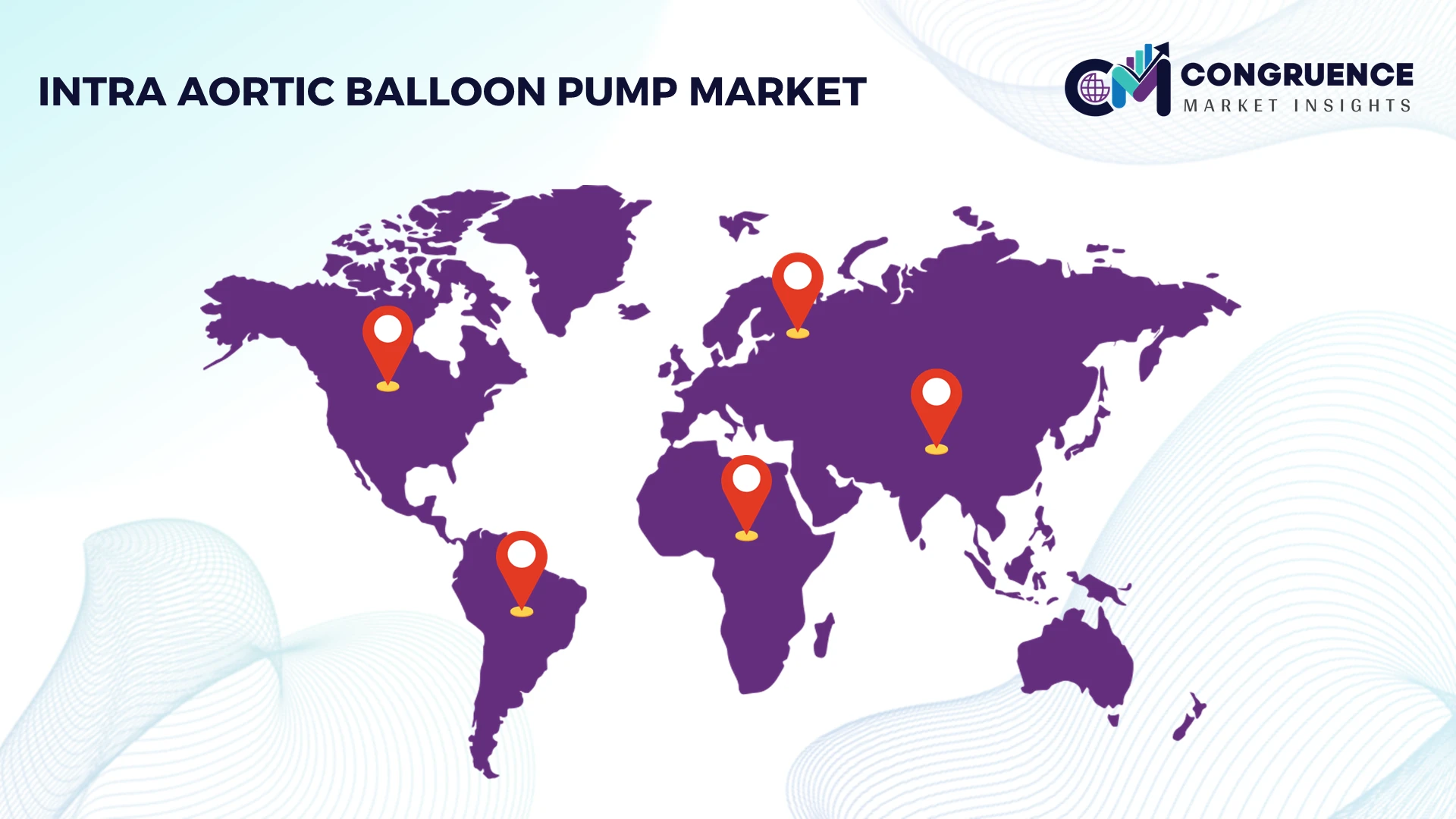
Shock-Care Networks Concentrate Advanced Deployment
North America accounts for approximately 39% of global IABP demand, supported by dense catheterization-laboratory networks, cardiac ICUs, high-risk PCI programs, and tertiary cardiovascular centers. The United States records more than 800,000 myocardial infarctions annually, while cardiogenic shock affects roughly 5–10% of acute myocardial infarction cases, sustaining requirements for rapidly deployable hemodynamic support. Clinical practice has shifted from routine counterpulsation toward selective use guided by invasive hemodynamics and multidisciplinary shock teams. Hospitals increasingly prioritize 7–8 Fr catheters, fiber-optic pressure sensing, automated timing, and portable consoles that move between catheterization laboratories and intensive-care units. Manufacturers are reinforcing catheter inventories, clinical education, technical servicing, and hospital-level supply agreements. Competitive positioning increasingly depends on immediate device availability and integration into standardized escalation pathways rather than console placement alone.
United States Market Outlook: The United States remains the operational center because high-volume cardiac hospitals combine interventional cardiology, cardiac surgery, intensive care, and mechanical circulatory support capabilities. More than 900,000 PCI procedures are performed annually in recent datasets, creating substantial procedural infrastructure for temporary support. Procurement increasingly favors standardized consoles, multiple catheter sizes, rapid technical response, and structured clinician training.
Evidence-Based Selection Reshapes Device Utilization
Europe represents approximately 27% of global IABP demand, with Germany, France, Italy, Spain, and the United Kingdom maintaining established cardiac-surgery and interventional cardiology infrastructure. Utilization is strongly influenced by evidence-based restrictions following randomized evidence showing approximately 40% 30-day mortality with IABP versus 41% under conventional treatment in myocardial-infarction cardiogenic shock. Consequently, hospitals increasingly reserve counterpulsation for selected mechanical complications, perioperative support, refractory instability, and defined high-risk interventions. Germany's extensive cardiac-center infrastructure provides a concentrated base for advanced circulatory-support deployment, while European procurement increasingly emphasizes smaller vascular-access profiles, device reliability, clinical evidence, and consumable availability. Manufacturers are responding through 7–8 Fr catheter development, automated triggering, clinical training, and centralized distribution. The operational shift favors precisely targeted utilization rather than high procedure volumes, raising the strategic value of dependable catheter supply and clinical support.
Germany Market Outlook: Germany combines mature cardiac-surgery infrastructure with widespread catheterization capability and advanced critical-care services. The country performs hundreds of thousands of coronary interventions annually, supporting selective IABP use alongside alternative mechanical-support platforms. Suppliers compete through clinical training, hospital procurement relationships, catheter availability, and platforms capable of rapid deployment during perioperative instability and complex coronary procedures.
Cardiac Infrastructure Expands Procedural Access
Asia-Pacific accounts for approximately 22% of global IABP demand, with China, Japan, India, South Korea, and Australia concentrating advanced cardiovascular procedures. China and India are expanding tertiary cardiac infrastructure as coronary artery disease creates substantial procedural workloads, while Japan maintains sophisticated catheterization, cardiac-surgery, and intensive-care capabilities. Deployment remains uneven: metropolitan hospitals can support invasive hemodynamics and mechanical circulatory support, whereas secondary facilities often lack trained teams and round-the-clock catheterization services. India's cardiovascular disease burden accounts for more than one-quarter of national deaths, reinforcing investment in cardiac-care capacity. Manufacturers are strengthening distributor networks, clinical training, catheter inventories, and portable-system positioning. The regional opportunity is increasingly concentrated in high-volume metropolitan hospitals where standardized shock protocols, PCI expansion, and improved critical-care infrastructure support reliable IABP utilization rather than broad hospital deployment.
China Market Outlook: China combines a large cardiovascular patient population with expanding tertiary hospitals and high-volume PCI infrastructure. National PCI procedure volumes exceed 1 million annually, providing a substantial clinical base for temporary circulatory support. Suppliers targeting China require dependable local distribution, clinician education, regulatory execution, multiple catheter configurations, and service coverage extending beyond leading Beijing and Shanghai cardiac centers.
Tertiary Cardiac Centers Anchor Demand
South America represents approximately 7% of global IABP demand, with Brazil and Argentina concentrating advanced cardiac surgery, PCI, intensive-care capacity, and mechanical circulatory support. Brazil provides the largest deployment base through major public and private cardiovascular centers in São Paulo, Rio de Janeiro, and other metropolitan areas. Device utilization remains concentrated because IABP therapy requires trained interventional teams, continuous monitoring, catheter inventory, and critical-care infrastructure. Cardiovascular diseases account for roughly 30% of deaths in Brazil, sustaining pressure on tertiary cardiac services. Currency volatility and imported-device dependence can raise acquisition and consumable costs, limiting broader penetration outside referral hospitals. Manufacturers are addressing these constraints through distributor partnerships, consolidated catheter inventories, technical training, and service contracts. Operational success depends more on dependable support within high-volume cardiac clusters than geographically extensive equipment placement.
Brazil Market Outlook: Brazil combines the region's largest healthcare system with established cardiovascular referral hospitals and substantial interventional cardiology capacity. São Paulo provides particularly dense cardiac infrastructure for complex PCI and surgery. Suppliers benefit from concentrated procedural demand but must manage import logistics, catheter availability, maintenance responsiveness, and procurement differences between public institutions and private hospital networks.
Cardiac Modernization Concentrates Premium Deployment
Middle East & Africa accounts for approximately 5% of global IABP demand, with Saudi Arabia, the United Arab Emirates, Israel, South Africa, and selected tertiary African hospitals providing the principal deployment base. Gulf healthcare investment is expanding catheterization laboratories, cardiac surgery, intensive-care capacity, and specialist cardiovascular services, supporting adoption of advanced temporary circulatory-support technologies. Saudi Arabia's Vision 2030 healthcare transformation is accelerating private hospital participation and specialist infrastructure modernization. In Africa, deployment remains concentrated because catheterization access, cardiovascular specialists, and biomedical engineering support vary substantially between countries. Manufacturers are therefore emphasizing distributor-led servicing, clinician training, emergency catheter inventory, and compact consoles suited to centralized referral centers. The strongest commercial model targets technologically advanced hospital clusters where procedural volumes justify continuous device readiness and after-sales infrastructure.
Saudi Arabia Market Outlook: Saudi Arabia offers the strongest regional expansion platform through hospital modernization, specialist cardiac centers, and increasing private healthcare participation. Cardiovascular disease contributes approximately 40% of national deaths, maintaining pressure on advanced cardiac services. Riyadh, Jeddah, and Eastern Province hospitals provide concentrated opportunities for suppliers offering reliable catheter inventories, training, technical servicing, and advanced console technology.
Getinge competes directly with Teleflex and specialized circulatory-support suppliers through installed console scale, catheter integration, clinical familiarity, and hospital service coverage. The top five participants collectively represent approximately 75% of global market activity, reflecting significant concentration around established cardiovascular-device platforms. Competition centers on catheter profile, synchronization accuracy, supply reliability, and workflow speed. Fiber-optic sensing can reduce setup requirements by approximately 10–15%, while contemporary 7–8 Fr catheters lower vascular-access burden compared with legacy larger-bore configurations. Manufacturers compete through hospital supply agreements, clinician training, automated timing, portable consoles, and vertically coordinated disposable inventories. The competitive shift is moving from standalone pumping performance toward integrated hemodynamic workflow and dependable consumable availability. Clinical evidence restricting routine IABP use creates an additional entry barrier because new suppliers require regulatory credibility and specialist acceptance within selective-use protocols. Winning requires proven reliability, rapid catheter availability, low-profile access technology, clinical support, and seamless integration across catheterization laboratories, operating rooms, and intensive-care environments worldwide.
Getinge
Teleflex
Tokai Medical Products
Senko Medical Instrument
Insightra Medical
InterValve
Medline Industries
Cardionovum
Maquet Cardiopulmonary
Zeon Medical
Balton
B. Braun Melsungen
Current IABP technology centers on helium-driven counterpulsation, automated ECG or arterial-pressure triggering, smaller 7–8 Fr catheters, and fiber-optic pressure sensing. Fiber-optic systems transmit arterial-pressure signals without fluid-column delay, while automated timing reduces manual intervention. Compared with legacy fluid-filled monitoring, advanced sensing can improve timing responsiveness by approximately 10–15% during unstable rhythms. Deployment remains concentrated in catheterization laboratories, operating rooms, and intensive-care units, giving console suppliers recurring catheter demand.
Emerging platforms combine algorithmic synchronization, portable hardware, high-definition interfaces, transport capability, and sheathless catheter insertion. Teleflex’s WAVE-based architecture reports 98% timing accuracy within 12 milliseconds, including severe arrhythmias, providing an advantage over manually optimized legacy timing. Portable systems extend support across ambulances and fixed- or rotary-wing aircraft, expanding deployment beyond hospitals. Manufacturers benefiting most combine consoles, proprietary catheters, training, and service into integrated procurement packages.
Through 2026–2028, disruptive improvement will focus on predictive waveform processing, automated fault detection, battery resilience, remote diagnostics, and transport-ready platforms. Software-controlled timing and continuous self-checking can target 10–20% faster setup and troubleshooting workflows. Regulatory scrutiny is accelerating investment in redundant power, alarm logic, fluid-ingress protection, and software upgrades. Companies acting now strengthen hospital confidence, economics, and competitive positioning as procurement shifts toward reliable, digitally managed circulatory-support ecosystems.
May 2024 Getinge faced heightened U.S. regulatory scrutiny after FDA reported 12 Cardiosave IABP recalls since January 2023, including eight Class I actions. FDA recommended facilities consider alternatives, intensifying reliability requirements and hospital procurement oversight. Source: FDA
April 2025 Teleflex announced FDA clearance for AC3 Range IABP, engineered for ambulance, fixed-wing, and rotary-wing transport. Commercial shipments began in 2025’s second quarter, extending counterpulsation from hospital environments into interfacility critical-care transport workflows. Source: Teleflex
August 2025 Getinge regained the EU CE Mark for Cardiosave IABP after TÜV SÜD lifted a suspension initiated in March 2024 and extended until July 2025. Reinstatement restored European regulatory positioning following accelerated product improvements addressing corrective actions. Source: Getinge
February 2025 Getinge confirmed plans to phase out selected cardiopulmonary perfusion products by year-end 2025, redirecting resources toward ECMO and IABP offerings. The portfolio restructuring concentrates cardiovascular investment on mechanical circulatory support despite continuing quality-control pressures. Source: CardiovascularBusiness
The Intra-aortic Balloon Pump Market Report covers conventional, fiber-optic, helium-driven, automated, and portable balloon pumps across cardiogenic shock, acute myocardial infarction, high-risk PCI, cardiac surgery, and hemodynamic support. End-user assessment includes hospitals, cardiac care centers, cardiology clinics, specialty surgical centers, and academic medical centers. Hospitals represent approximately 70% of deployment, reflecting catheterization, cardiac-surgery, and intensive-care infrastructure requirements.
Regional coverage spans North America, Europe, Asia-Pacific, South America, and Middle East & Africa, with analysis extending to transport-based and tertiary-care deployment. Technology assessment examines 7–8 Fr catheters, fiber-optic sensing, automated synchronization, helium delivery, waveform algorithms, portable consoles, battery resilience, and software-controlled diagnostics. Competitive evaluation tracks major IABP manufacturers and specialized catheter suppliers, supporting 2026–2033 investment planning, geographic expansion, product positioning, procurement strategy, partnership decisions, and technology prioritization.
| Report Attribute/Metric | Report Details |
|---|---|
Market Revenue in 2025 | USD 363.03 Million |
Market Revenue in 2033 | USD 449.27 Million |
CAGR (2026 - 2033) | 2.7% |
Base Year | 2025 |
Forecast Period | 2026 - 2033 |
Historic Period | 2021 - 2025 |
Segments Covered | By Type
By Application
By End-User
|
Key Report Deliverable | Revenue Forecast, Growth Trends, Market Dynamics, Segmental Overview, Regional and Country-wise Analysis, Competition Landscape |
Region Covered | North America, Europe, Asia-Pacific, South America, Middle East, Africa |
Key Players Analyzed | Getinge, Teleflex, Tokai Medical Products, Senko Medical Instrument, Insightra Medical, InterValve, Medline Industries, Cardionovum, Maquet Cardiopulmonary, Zeon Medical, Balton, B. Braun Melsungen |
Customization & Pricing | Available on Request (10% Customization is Free) |




