
Reports
The Global Infectious Immunology Market was valued at USD 9,245.0 Million in 2025 and is anticipated to reach a value of USD 15,208.7 Million by 2033 expanding at a CAGR of 6.42% between 2026 and 2033. Growth is driven by rising adoption of multiplex immunoassays, AI-enabled pathogen detection platforms, and accelerated vaccine and antibody research programs targeting emerging infectious diseases.
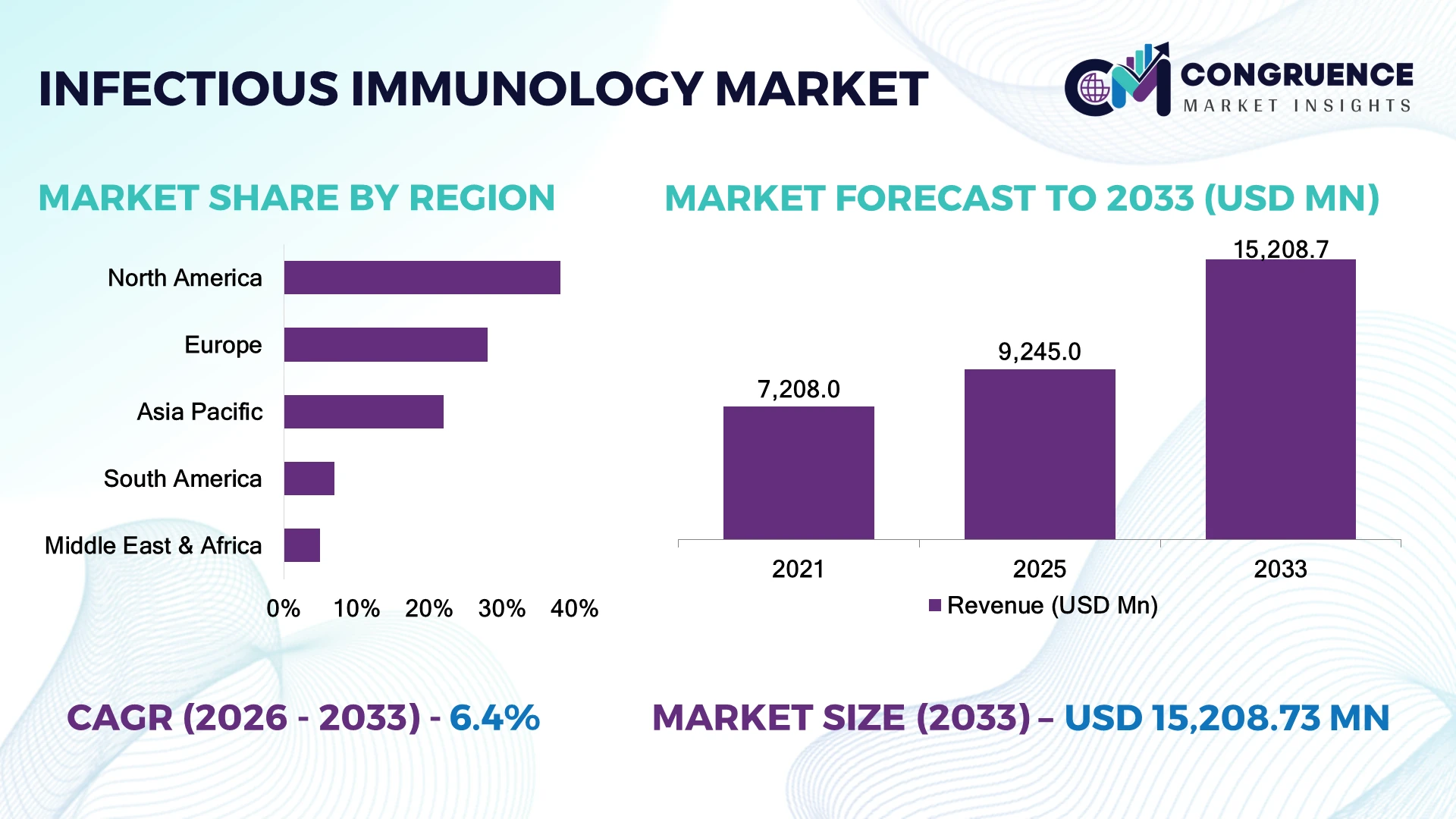
The United States dominates the market with approximately 38% share, supported by advanced biomedical infrastructure, NIH-funded infectious disease programs, and strong pharmaceutical R&D capacity exceeding USD 40 billion annually in life-science research investment. China follows with nearly 18% share, driven by domestic vaccine manufacturing expansion and biotechnology modernization. The U.S. adoption of automated immunodiagnostic systems is over 70%, compared with approximately 55% in China, reflecting different healthcare digitization levels. The COVID-19 preparedness initiatives under global health security frameworks continue shaping investments in scalable immunology platforms.
Strategic implication Companies prioritizing AI integration, decentralized diagnostics, and regional manufacturing capabilities will strengthen competitive positioning in the evolving infectious immunology ecosystem.
Market Size & Growth: Valued at USD 9.25 Billion in 2025 and projected toward USD 15.21 Billion by 2033 at 6.42% CAGR, driven by automated immunodiagnostics and advanced pathogen surveillance systems.
Top Growth Drivers: AI-based diagnostics adoption (+35%), multiplex testing penetration (+28%), and biologics research expansion (+22%) are accelerating market transformation.
Short-Term Forecast: By 2028, automated immunology workflows reduce testing turnaround time by 40% and improve laboratory efficiency by over 30%.
Emerging Technologies: AI-assisted antibody discovery, next-generation sequencing integration, and digital immunoassay platforms are reshaping infectious disease management.
Regional Leaders: North America reaches approximately USD 5.8 Billion by 2033 with precision diagnostics adoption; Asia-Pacific approaches USD 4.2 Billion with vaccine manufacturing expansion; Europe exceeds USD 3.5 Billion through regulatory-driven testing modernization.
Consumer/End-User Trends: Hospitals and diagnostic laboratories report over 60% preference for rapid immunological testing platforms over conventional methods.
Pilot/Case Example: In 2023, automated infectious disease testing deployments improved laboratory processing capacity by approximately 45% in large healthcare networks.
Competitive Landscape: Leading companies include Abbott Laboratories, F. Hoffmann-La Roche Ltd., Danaher Corporation, Siemens Healthineers, and bioMérieux, with Abbott holding an estimated 15–18% segment influence.
Regulatory & ESG Impact: Global diagnostic quality regulations increased compliance investments by nearly 25%, supporting safer testing infrastructure and sustainable laboratory practices.
Investment & Funding: Infectious disease biotechnology attracted over USD 10 Billion in global investments, with partnerships focusing on antibody platforms, vaccine innovation, and digital diagnostics.
Innovation & Future Outlook: Next-generation immune profiling, AI-driven biomarker discovery, and decentralized testing models are becoming strategic priorities for long-term market leadership.
The Infectious Immunology Market is transforming healthcare strategies through rapid diagnostics, immune-response analytics, and precision infection management. Demand is concentrated in hospitals, biotechnology companies, vaccine developers, and research institutions seeking faster pathogen identification and improved treatment decisions. Recent innovations in automated immunoassays and AI-supported immune profiling have increased diagnostic accuracy by approximately 30%. Global supply-chain restructuring after pandemic disruptions has encouraged localized manufacturing of critical testing components, creating new opportunities for regional biotechnology ecosystems and advanced healthcare infrastructure.
The Infectious Immunology Market is becoming strategically important as governments, pharmaceutical companies, and healthcare systems prioritize rapid disease identification, outbreak preparedness, and biological security. The shift toward decentralized diagnostics and localized production networks is reshaping investment priorities, particularly after global supply-chain disruptions exposed dependency risks for critical testing materials.
Advanced immunological platforms are replacing conventional laboratory workflows through measurable efficiency improvements. Automated multiplex immunoassay systems process multiple biomarkers simultaneously, reducing manual intervention by nearly 50% compared with traditional single-target testing approaches. The United States leads in technology commercialization through advanced clinical research infrastructure, while India and China are expanding deployment through cost-efficient manufacturing and biotechnology capacity.
Over the next 2–3 years, healthcare providers will increase adoption of AI-supported interpretation tools, cloud-connected diagnostic systems, and integrated surveillance platforms. Large diagnostic companies are expanding partnerships with hospitals and biotechnology firms to improve regional access and operational scalability. Companies investing in flexible manufacturing, regulatory compliance capabilities, and digital healthcare integration will achieve stronger competitive positioning as infectious disease management becomes increasingly data-driven and globally interconnected.
The adoption of AI-powered immunological diagnostics is becoming a major growth catalyst, with machine-learning-supported analysis improving diagnostic interpretation accuracy by approximately 35% and reducing reporting delays by nearly 40%. The expansion of multiplex immunoassays allows laboratories to detect multiple infectious markers through a single test, improving operational efficiency. The United States and Germany are investing heavily in automated diagnostic infrastructure following pandemic preparedness reforms. Companies are responding through AI partnerships, cloud-based platforms, and expanded laboratory automation portfolios. A key strategic shift is the movement from reactive infection testing toward predictive immune surveillance, enabling healthcare systems to identify emerging pathogens faster and optimize resource allocation.
Regulatory complexity and dependence on specialized biological components remain significant limitations for market scalability. Diagnostic manufacturers face approval timelines that can extend 20–30% longer for advanced immunology platforms compared with established testing technologies. Global shortages of specialized reagents during infectious outbreaks have affected production consistency, particularly across emerging manufacturing hubs. Companies are mitigating these pressures through supplier diversification, regional production facilities, and long-term procurement agreements. In Japan and European markets, stricter quality standards increase operational costs but improve reliability. The key business impact is higher development expenditure and slower commercialization cycles, requiring companies to balance innovation speed with compliance efficiency.
Precision immune profiling represents a major opportunity as healthcare systems move toward personalized infectious disease management. Adoption of advanced biomarker analysis platforms is increasing, with research laboratories reporting approximately 30% improvement in immune-response characterization efficiency. Emerging biotechnology hubs in India, Singapore, and South Korea are expanding investments in genomics-integrated immunology solutions. AI-driven antibody discovery platforms are reducing early research cycles by nearly 25%, creating new commercialization pathways. Companies are positioning through strategic collaborations, R&D expansion, and partnerships with academic institutions. A non-obvious opportunity lies in combining infectious immunology with digital health ecosystems, enabling continuous disease monitoring and population-level immune intelligence.
Scaling infectious immunology solutions across diverse healthcare systems remains challenging due to infrastructure gaps, interoperability issues, and workforce limitations. Approximately 40% of laboratories in developing healthcare markets still rely on partially manual diagnostic workflows, limiting adoption of advanced platforms. Cybersecurity requirements for connected diagnostic systems are also increasing as digital health integration expands. Countries such as Brazil and Indonesia face deployment challenges due to uneven laboratory networks and training requirements. Companies must address these barriers through modular technologies, workforce development programs, and localized service models. Long-term competitiveness depends on creating scalable platforms that integrate diagnostics, data analytics, and healthcare infrastructure without compromising reliability or security.
AI-Assisted Immune Analytics Expansion: Healthcare laboratories are accelerating adoption of AI-enabled infectious immunology platforms, with automated interpretation tools improving diagnostic workflow efficiency by nearly 35% and reducing manual review requirements by approximately 40%. Hospitals in the United States and Germany are integrating machine-learning algorithms into immunoassay workflows to manage rising testing complexity. Companies are responding by expanding digital diagnostic partnerships and embedding predictive analytics into laboratory systems, creating faster decision cycles and reducing operational bottlenecks.
Decentralized Testing Deployment Growth: Point-of-care immunology solutions are gaining traction as healthcare providers shift toward decentralized disease monitoring models. Adoption of portable immunodiagnostic devices has increased by nearly 30%, while connected testing platforms have improved reporting speed by more than 45% in distributed healthcare networks. Regulatory emphasis on rapid outbreak response after COVID-19 has accelerated this transition. Companies are scaling compact testing technologies and strengthening collaborations with hospitals to improve accessibility and reduce dependency on centralized laboratories.
Biomanufacturing Localization Shift: Infectious immunology companies are restructuring supply chains by expanding regional production of antibodies, reagents, and diagnostic components. Approximately 25% of major biotechnology manufacturers have increased localization initiatives to reduce geopolitical supply risks. The United States CHIPS and Science Act-linked biotechnology investments and European healthcare resilience programs are encouraging domestic manufacturing strategies. Companies are diversifying suppliers, establishing regional facilities, and increasing inventory buffers to improve continuity during infectious disease surges.
Integrated Digital Surveillance Adoption: Healthcare systems are moving toward connected immunology surveillance platforms combining laboratory data, electronic health records, and population monitoring tools. Enterprise adoption of interoperable healthcare analytics systems has increased by over 30%, improving outbreak tracking and resource planning. A non-obvious shift is the integration of immunology data with public health intelligence networks rather than standalone diagnostics. Companies are investing in cloud-based platforms and strategic healthcare partnerships to strengthen real-time infectious disease management capabilities.
Immunoassay platforms represent the leading type in the Infectious Immunology Market, accounting for approximately 52% share due to their high scalability, established laboratory integration, and cost-efficient testing capabilities. Enzyme-linked immunosorbent assays (ELISA), chemiluminescence immunoassays, and rapid antibody detection systems remain widely deployed across hospitals and diagnostic laboratories. Automated immunoassay systems have improved laboratory throughput by nearly 40% compared with conventional manual workflows, encouraging healthcare providers to upgrade testing infrastructure. Molecular-immunology hybrid platforms represent the fastest-growing type, supported by increasing demand for combined pathogen detection and immune-response analysis. Adoption of advanced multiplex systems has expanded by approximately 30% as laboratories seek higher testing capacity with fewer operational steps. Other types, including rapid diagnostic formats and specialized research immunology tools, continue serving niche applications. Companies are prioritizing automation, miniaturization, and integrated software capabilities to capture emerging demand and strengthen diagnostic portfolios.
Clinical diagnostics represent the dominant application area, contributing approximately 60% market share due to widespread use in hospitals, pathology laboratories, and infectious disease monitoring programs. Demand concentration is driven by the need for rapid detection of immune responses against bacterial, viral, and parasitic infections. Automated diagnostic workflows have reduced sample processing requirements by nearly 35%, enabling healthcare facilities to improve testing efficiency and patient management. Research and vaccine development applications are emerging as the fastest-growing segment, supported by biotechnology expansion and increased investment in antibody discovery programs. Advanced immunology research platforms have improved experimental analysis speed by approximately 25%, accelerating infectious disease studies. Other applications, including epidemiological surveillance and therapeutic monitoring, are gaining importance as healthcare systems adopt integrated disease management models. Companies are expanding research partnerships, developing high-throughput platforms, and improving software integration to address evolving diagnostic and pharmaceutical requirements.
Hospitals and diagnostic laboratories represent the leading end-user group, holding approximately 58% share due to high testing volumes, established laboratory infrastructure, and continuous infectious disease monitoring requirements. Large healthcare networks increasingly deploy automated immunology systems, with digital laboratory integration improving operational efficiency by nearly 35%. Demand is concentrated among institutions requiring reliable testing capacity, regulatory compliance, and rapid clinical decision support. Biotechnology and pharmaceutical companies represent the fastest-growing end-user segment as vaccine research, antibody development, and infectious disease therapeutics expand. Adoption of advanced immunology platforms within biotechnology facilities has increased by approximately 32%, driven by precision research requirements and accelerated product development cycles. Academic institutes and government research organizations continue contributing through infectious disease studies and surveillance programs. Companies are targeting these users through customized platforms, research collaborations, and flexible service models to expand ecosystem adoption and strengthen long-term partnerships.
North America accounted for the largest market share at 38% in 2025 however, Asia-Pacific is expected to register the fastest growth, expanding at a CAGR of 7.1% between 2026 and 2033.
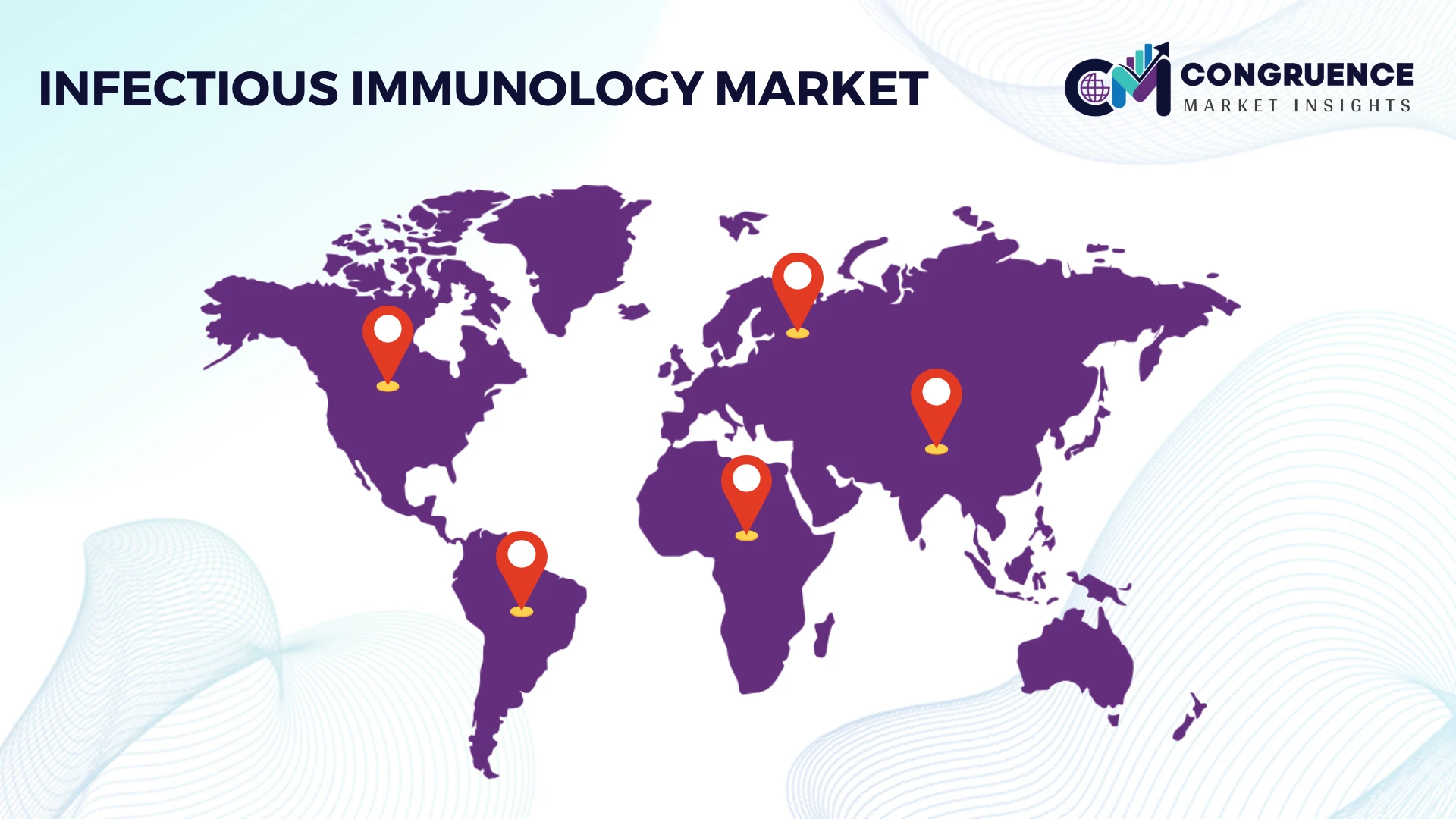
North America leads the Infectious Immunology Market due to its advanced healthcare infrastructure, strong biotechnology ecosystem, and high adoption of automated diagnostic platforms. The region contributes approximately 38% of global demand, supported by extensive hospital networks, pharmaceutical research capacity, and government-backed infectious disease preparedness programs. The United States represents the largest deployment hub, with more than 70% of major diagnostic laboratories adopting automated immunology workflows. Strategic investments in AI-powered diagnostics, laboratory robotics, and decentralized testing platforms are accelerating operational efficiency. Biotechnology companies are expanding partnerships with healthcare providers to improve pathogen surveillance capabilities and strengthen domestic supply chains for critical immunological components.
United States Market Outlook: The United States remains the primary market driver due to its advanced biomedical research infrastructure, pharmaceutical innovation base, and high healthcare technology adoption. More than 65% of large clinical laboratories utilize automated diagnostic systems, supported by strong investments in infectious disease research, vaccine development, and digital health integration. Companies are focusing on AI-enabled analysis platforms, precision immunology tools, and expanded manufacturing capacity to maintain technology leadership.
Europe maintains a strong position in infectious immunology through stringent diagnostic regulations, advanced healthcare systems, and increasing laboratory modernization initiatives. The region accounts for approximately 28% of global market activity, driven by countries such as Germany, France, and the United Kingdom. European healthcare providers are increasingly adopting automated immunoassay platforms, with laboratory digitization initiatives improving workflow efficiency by nearly 35%. Regulatory frameworks emphasizing diagnostic accuracy and healthcare resilience are encouraging investments in advanced testing infrastructure. Companies are strengthening regional production networks and forming collaborations with research institutions to improve supply reliability and accelerate infectious disease monitoring capabilities.
Germany Market Outlook: Germany represents Europe’s strongest infectious immunology hub due to its pharmaceutical manufacturing capabilities, research excellence, and advanced healthcare infrastructure. Approximately 60% of major diagnostic facilities have implemented automated laboratory solutions, supported by strong biotechnology investments and industrial partnerships. German companies are prioritizing precision diagnostics, sustainable laboratory operations, and integrated healthcare data systems to enhance competitiveness.
Asia-Pacific is becoming the fastest-expanding market due to rising healthcare investments, biotechnology manufacturing growth, and increasing infectious disease surveillance requirements. The region contributes approximately 22% of current market activity and benefits from large-scale diagnostic production capabilities in China, India, South Korea, and Japan. China has expanded domestic biotechnology manufacturing capacity, while India is strengthening affordable diagnostic production ecosystems. Adoption of automated immunology systems has increased by approximately 30% across leading healthcare networks. Companies are establishing local manufacturing facilities, expanding research partnerships, and developing cost-efficient diagnostic platforms to address growing healthcare demand.
China Market Outlook: China holds a strategic position through large-scale biotechnology manufacturing, government-supported healthcare modernization, and strong diagnostic production capabilities. The country accounts for nearly 18% of global infectious immunology demand and has significantly expanded domestic vaccine and diagnostic supply chains. Companies are increasing investments in AI-based testing platforms, laboratory automation, and locally produced immunological technologies to reduce dependence on imported components.
South America is experiencing gradual expansion in infectious immunology adoption as healthcare systems improve laboratory accessibility and strengthen disease monitoring programs. The region contributes approximately 7% of global market activity, with Brazil and Argentina representing key deployment centers. Increased investment in public healthcare infrastructure has improved access to immunological testing, while digital laboratory systems are expanding across major hospitals. Approximately 25% of healthcare facilities in leading South American markets have upgraded diagnostic capabilities through automation initiatives. Companies are addressing infrastructure limitations through partnerships, localized distribution networks, and affordable testing solutions designed for diverse healthcare environments.
Brazil Market Outlook: Brazil represents the largest infectious immunology market in South America due to its extensive healthcare network, pharmaceutical sector, and public health surveillance infrastructure. The country operates more than 6,000 hospital facilities, creating substantial demand for diagnostic technologies. Companies are focusing on expanding laboratory automation, improving regional supply availability, and developing cost-effective immunology solutions for public and private healthcare providers.
Middle East & Africa is advancing through healthcare modernization programs, biotechnology investments, and expanded infectious disease monitoring initiatives. The region contributes approximately 5% of global market demand, with adoption concentrated in Gulf countries and major African healthcare centers. Countries including Saudi Arabia and the United Arab Emirates are investing in advanced laboratory infrastructure, with healthcare modernization programs increasing diagnostic technology deployment by nearly 30%. International partnerships are improving access to automated immunology platforms and strengthening regional healthcare capabilities. Companies are expanding through strategic collaborations, localized service networks, and technology transfer initiatives to address infrastructure gaps.
Saudi Arabia Market Outlook: Saudi Arabia is emerging as the leading infectious immunology market in the Middle East due to healthcare transformation programs, investment in medical infrastructure, and biotechnology development initiatives. The country has increased healthcare technology spending substantially, supporting modernization of diagnostic laboratories across major medical centers. Companies are targeting Saudi Arabia through partnerships, advanced laboratory installations, and integrated digital healthcare solutions aligned with national healthcare transformation objectives.
The Infectious Immunology Market features competition between global diagnostics leaders, biotechnology innovators, and specialized regional testing providers. Companies such as Abbott, Roche, Danaher, and bioMérieux compete through advanced immunoassay platforms, while regional players compete through cost efficiency and localized distribution. The top five companies collectively account for approximately 45% of market influence. Competition centers on automation, testing accuracy, turnaround speed, and supply reliability, with automated platforms improving laboratory productivity by 30–40%. Global leaders are expanding through hospital partnerships, AI integration, and vertically integrated manufacturing, while emerging firms focus on affordable diagnostic solutions. The competitive landscape is shifting toward digital diagnostics, decentralized testing, and supply-chain localization following recent healthcare disruptions. High regulatory requirements, specialized research capabilities, and infrastructure investment create significant entry barriers. Winning players will require continuous innovation, scalable production, strong partnerships, and the ability to deliver faster, reliable immunology solutions across diverse healthcare systems.
F. Hoffmann-La Roche Ltd.
Danaher Corporation
bioMérieux SA
Siemens Healthineers
Thermo Fisher Scientific Inc.
Becton Dickinson and Company
Bio-Rad Laboratories
DiaSorin S.p.A.
QuidelOrtho Corporation
PerkinElmer Inc.
Merck KGaA
Artificial intelligence, automation, and digital immunology platforms are transforming infectious disease diagnostics by improving interpretation speed and laboratory productivity. AI-assisted analysis tools increase diagnostic workflow efficiency by approximately 35%, while automated immunoassay systems reduce manual processing requirements by nearly 40%. Adoption is expanding across large hospital laboratories, with more than 60% of advanced diagnostic centers integrating automated workflows.
Multiplex immunoassays and next-generation immune profiling technologies are replacing traditional single-marker testing approaches. Compared with conventional methods, multiplex platforms improve testing capacity by approximately 30% while reducing sample handling requirements. Cloud-connected laboratory systems are also enabling real-time monitoring, predictive analytics, and centralized decision support, giving global diagnostic companies a competitive advantage through faster deployment and operational visibility.
Between 2026 and 2028, disruptive technologies such as AI-driven antibody discovery, portable immunodiagnostic devices, and integrated genomic-immunology platforms will reshape market competition. Technology leaders benefit from stronger data capabilities, while cost-focused manufacturers gain opportunities through scalable point-of-care solutions. Companies acting now through automation investments, digital partnerships, and localized production strategies will achieve stronger resilience and faster innovation cycles.
January 2025 F. Hoffmann-La Roche Ltd. received FDA clearance and CLIA waiver for its cobas® liat multiplex testing panels for sexually transmitted infections. The point-of-care solution delivers PCR-based results within 20 minutes, expanding decentralized infectious disease testing and improving same-visit treatment decisions. Source: www.roche.com
April 2025 bioMérieux SA launched WATCHFIRE™, a wastewater surveillance PCR solution integrated with BIOFIRE® FILMARRAY® TORCH and FIREWORKS™ software. The platform detects 22 respiratory pathogens and strengthens population-level infectious disease monitoring through real-time pathogen trend analysis. Source: www.biomerieux.com
October 2025 F. Hoffmann-La Roche Ltd. received CE mark approval for Elecsys® Dengue Ag, a fully automated high-throughput immunoassay designed for dengue diagnosis. The test provides results in 18 minutes and supports faster laboratory workflows during infectious disease outbreaks. Source: www.roche.com
October 2025 Abbott Laboratories highlighted expansion of rapid infectious disease diagnostics through point-of-care testing initiatives supporting earlier disease identification. Abbott’s rapid diagnostic platforms deliver results within minutes, improving access to testing in decentralized healthcare environments and strengthening outbreak response capabilities.
The Infectious Immunology Market Report provides comprehensive coverage across major product types, including immunoassay platforms, rapid diagnostic solutions, molecular-immunology systems, and advanced immune profiling technologies. The report analyzes applications such as clinical diagnostics, research and vaccine development, epidemiological surveillance, and therapeutic monitoring across hospitals, biotechnology companies, pharmaceutical firms, and research institutions.
The study evaluates regional dynamics across North America, Europe, Asia-Pacific, South America, and Middle East & Africa, highlighting adoption patterns, infrastructure development, manufacturing trends, and technology integration. Coverage includes analysis of more than 10 key industry participants, automation trends, digital diagnostics adoption, and emerging opportunities through 2026–2033. The report supports strategic decisions related to investment planning, market expansion, competitive positioning, partnerships, and long-term innovation priorities within infectious disease management.
| Report Attribute / Metric | Details |
|---|---|
| Market Revenue (2025) | USD 9,245.0 Million |
| Market Revenue (2033) | USD 15,208.7 Million |
| CAGR (2026–2033) | 6.42% |
| Base Year | 2025 |
| Forecast Period | 2026–2033 |
| Historic Period | 2021–2025 |
| Segments Covered |
By Type
By Application
By End-User
|
| Key Deliverables | Revenue Forecast; Market Trends; Growth Drivers & Restraints; Technology Insights; Segmentation Analysis; Regional Insights; Competitive Landscape; Regulatory & ESG Overview; Recent Developments |
| Regions Covered | North America; Europe; Asia-Pacific; South America; Middle East & Africa |
| Companies Profiled | Abbott Laboratories; F. Hoffmann-La Roche Ltd.; Danaher Corporation; bioMérieux SA; Siemens Healthineers; Thermo Fisher Scientific Inc.; Becton Dickinson and Company; Bio-Rad Laboratories; DiaSorin S.p.A.; QuidelOrtho Corporation; PerkinElmer Inc.; Merck KGaA |
| Customization & Pricing | Available on Request (10% Customization Free) |




