
Reports
The Global In Vivo CRO Market was valued at USD 540.0 Million in 2025 and is anticipated to reach a value of USD 999.5 Million by 2033 expanding at a CAGR of 8.0% between 2026 and 2033. Growth is driven by increasing outsourcing of GLP toxicology, pharmacology, and efficacy studies alongside expanding investment in complex biologics and in vivo cell therapies.
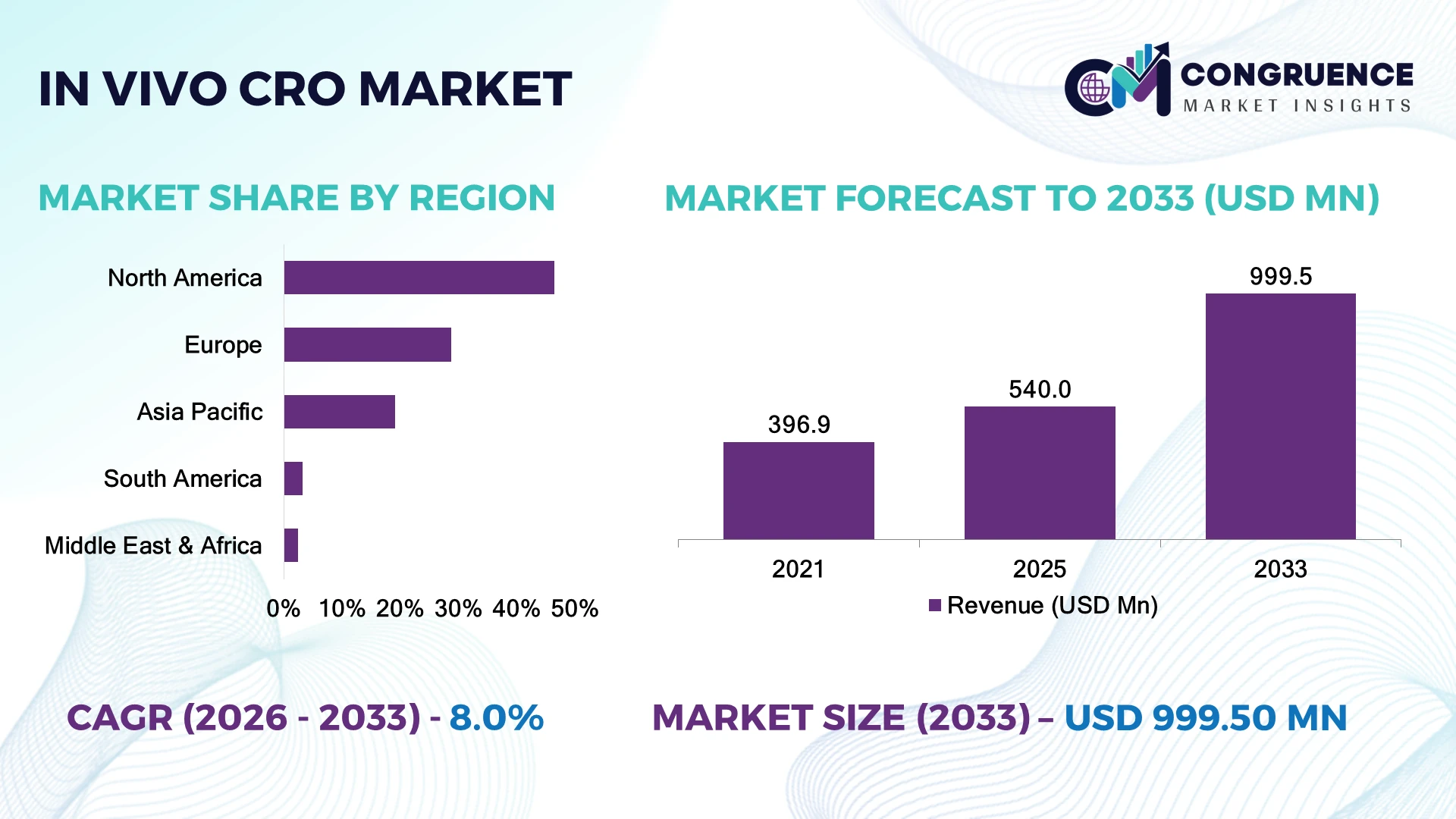
The United States dominates the global landscape, supported by approximately 46.5% of market share in North America, a dense pharmaceutical and biotechnology base, and extensive GLP research capacity. Rodent-based studies represented 82.2% of activity in 2025, while oncology accounted for 29.3%. India and China are expanding CRO capacity faster than mature U.S. operations, strengthening Asia's role in cost-efficient preclinical execution. The FDA's 2026 move toward validated alternative testing methods is reshaping study-design strategies.
Strategically, CROs with integrated GLP capabilities, specialized disease models, and regulatory-ready data infrastructure are best positioned to capture complex outsourcing programs.
Market Size & Growth: The market reaches USD 999.5 Million by 2033 from USD 540.0 Million in 2025 at an 8.0% CAGR, supported by expanding outsourced preclinical pharmacology and toxicology programs.
Top Growth Drivers: Oncology contributes 29.3%, rodent-based models 82.2%, and small molecules 62.1%, making disease-model depth and high-throughput study capacity decisive competitive factors.
Short-Term Forecast: By 2028, CROs are positioned to target 10–15% faster study turnaround through automation, centralized data systems, and standardized preclinical workflows.
Emerging Technologies: AI-assisted study design, automated animal monitoring, digital pathology, organ-on-chip platforms, and computational modeling are accelerating evidence generation and improving translational decision-making.
Regional Leaders: North America is projected at approximately USD 4.6 billion by 2033, Europe at more than USD 2.4 billion, while Asia Pacific approaches USD 2.1 billion as China and India expand specialized CRO capacity.
Consumer/End-User Trends: Pharmaceutical and biotechnology sponsors increasingly outsource specialized studies, with GLP toxicology representing 80.9% of the market and integrated service procurement gaining importance.
Pilot/Case Example: In 2024, Asgard Therapeutics secured USD 33 million for in vivo cell-therapy development, demonstrating stronger funding momentum for genetically modified therapeutic platforms.
Competitive Landscape: Charles River Laboratories maintains a leading position, competing with IQVIA, Labcorp, ICON, Crown Bioscience, and Taconic Biosciences through specialized models, global facilities, and integrated regulatory services.
Regulatory & ESG Impact: The FDA's 2026 draft guidance on new approach methodologies is accelerating validated alternatives to animal testing and increasing pressure for more human-relevant preclinical evidence.
Investment & Funding: More than USD 33 million in a single 2024 in vivo cell-therapy financing round highlights rising specialist investment, while CROs expand through partnerships, capacity additions, and technology integration.
Innovation & Future Outlook: Next-generation CRO competition is shifting toward AI-enabled pharmacology, human-relevant models, digital pathology, and integrated data platforms that improve study reproducibility and strengthen regulatory positioning.
In Vivo CRO services are increasingly concentrated around oncology, small-molecule pharmacology, GLP toxicology, and complex biologics, with rodent models still accounting for 82.2% of activity. AI-enabled monitoring, digital pathology, and higher-throughput study platforms are modernizing execution as the FDA advances new approach methodologies. This transition is pushing sponsors toward CRO partners combining validated animal models with emerging human-relevant technologies.
The In Vivo CRO Market is becoming strategically important as pharmaceutical pipelines shift toward biologics, cell therapies, and increasingly complex pharmacological programs. Sponsors are outsourcing specialized studies to reduce fixed infrastructure requirements while gaining access to validated models, GLP facilities, and regulatory expertise. With GLP toxicology representing 80.9% of activity, compliance-ready infrastructure is becoming a major purchasing criterion rather than a basic service requirement.
Technology is also changing operating economics. Automated animal monitoring and digital pathology can reduce manual assessment workloads by roughly 20–30% compared with conventional workflows, while centralized data platforms improve study traceability and cross-site consistency. North America retains the largest installed research base at 46.5% share, whereas China and India are expanding capacity through lower-cost execution, specialist models, and growing biotechnology ecosystems.
Over the next 2–3 years, leading CROs are expected to prioritize integrated study platforms capable of combining in vivo pharmacology, toxicology, bioanalysis, and computational interpretation. Companies are increasing investments in specialized facilities and strategic partnerships, particularly around cell and gene therapies. The competitive advantage will increasingly depend on combining scientific depth, regulatory readiness, operational speed, and technology-enabled data quality.
Increasing complexity in oncology, biologics, and cell-therapy development is strengthening demand for specialized in vivo research. Oncology already represents 29.3% of market activity, while small molecules account for 62.1%, creating sustained requirements for validated efficacy and pharmacology models. Investment in in vivo cell therapies is also expanding, illustrated by Asgard Therapeutics' USD 33 million financing in 2024. The FDA's 2026 focus on new approach methodologies is simultaneously encouraging CROs to combine established animal models with human-relevant technologies. Companies are responding through specialized model development, GLP facility expansion, digital pathology, and partnerships with biotechnology firms. The non-obvious advantage is integrated data interpretation: CROs that connect efficacy, toxicology, and bioanalysis can shorten sponsor decision cycles and capture larger multi-stage programs.
GLP-compliant animal research requires expensive specialized facilities, trained personnel, validated protocols, and stringent quality systems, creating significant operating pressure. GLP toxicology represents 80.9% of activity, concentrating investment requirements around highly regulated study infrastructure. Facility utilization can also fluctuate materially between therapeutic programs, while imported research materials and specialized animal models expose operators to supply-chain volatility. The United States carries a higher infrastructure-cost burden than India and China, encouraging sponsors to evaluate geographically diversified delivery models. Companies are mitigating pressure through centralized procurement, long-term supplier contracts, multi-site study allocation, and selective capacity expansion. A key operational constraint is that lower-cost execution cannot replace regulatory credibility; CROs must preserve traceability and study integrity while optimizing labor and facility economics.
AI-assisted study planning, automated animal monitoring, digital pathology, and computational modeling create an opportunity to improve research productivity without eliminating validated in vivo workflows. Automated monitoring can reduce manual observation workloads by approximately 20–30%, while digital data capture strengthens reproducibility across multi-site programs. The FDA's 2026 draft guidance on new approach methodologies further increases the strategic value of technologies capable of generating human-relevant evidence. India and China offer particularly attractive opportunities for technology-enabled capacity expansion because specialist CRO infrastructure is scaling alongside biotechnology investment. Companies are positioning through software partnerships, proprietary analytics platforms, and integrated data ecosystems. The strongest opportunity lies in hybrid research models that combine in vivo evidence with organoids, computational simulations, and other validated methodologies to improve translational confidence.
The industry's largest long-term execution challenge is maintaining consistent translational quality as studies become more specialized and technology-intensive. Rodent models still represent 82.2% of activity, creating a structural need to improve human predictivity while integrating newer models and computational methods. Advanced digital workflows can require 15–25% additional training investment during implementation, while shortages of experienced toxicologists, veterinary specialists, data scientists, and model-development experts constrain rapid scaling. In the United States, established regulatory expectations increase the burden of validating new methodologies; in India and China, expanding capacity must maintain comparable quality standards. Companies are responding through workforce development, cross-border partnerships, standardized digital protocols, and investments in interoperable research platforms. Long-term competitiveness will depend on consistent data quality across increasingly hybrid preclinical workflows.
Rodent Models Remain Central: Rodent-based models accounted for 82.2% of 2025 activity, while non-rodent studies are gaining traction for complex pharmacokinetic and safety programs. U.S. CROs are expanding specialized colonies and automated monitoring, while sponsors increasingly combine high-throughput rodent screening with targeted non-rodent validation to control study costs and improve translational consistency.
Large Molecule Workflows Expand: Small molecules represented 62.1% of activity, but large-molecule programs are becoming more prominent as cell and gene therapies, RNA platforms, and biologics require specialized immunogenicity and efficacy models. CROs are reallocating laboratory capacity toward advanced bioanalysis, humanized models, and immune-response testing, particularly across U.S. and Chinese biotechnology hubs.
Regulatory Testing Models Shift: The FDA's 2026 NAM guidance is accelerating replacement, reduction, and refinement of animal testing, with more than 90% of drugs that clear animal studies historically failing to reach approval because of human safety or efficacy issues. CROs are integrating organoids, computational toxicology, and AI models alongside conventional studies rather than treating alternative methods as standalone services.
Digital Study Execution Accelerates: Digital pathology, automated animal monitoring, and centralized data capture are moving deeper into routine CRO workflows, targeting approximately 20–30% reductions in manual assessment workloads. U.S. and Indian providers are investing in interoperable platforms and analytics partnerships, while the FDA's 2026 regulatory push is increasing the value of traceable, reproducible digital evidence.
Rodent-based models led the In Vivo CRO Market with approximately 82.2% share in 2025, supported by lower operating costs, rapid breeding cycles, extensive genetic-model availability, and scalable pharmacology workflows. Mice and rats remain the preferred platforms for oncology, CNS, metabolic, and efficacy studies, allowing CROs to process larger study volumes than specialized non-rodent programs. Non-rodent models represent a smaller share but are gaining importance where regulatory toxicology, pharmacokinetics, or species-specific safety endpoints require larger animals. Companies are therefore maintaining high-volume rodent infrastructure while selectively expanding canine, porcine, rabbit, and primate capabilities.
The strategic shift is toward hybrid model portfolios rather than replacing mature rodent platforms. Approximately 62.1% of activity is linked to small-molecule programs, sustaining rodent utilization, while large-molecule development is increasing demand for humanized and specialized models. CROs are responding through colony expansion, genetically engineered models, automated monitoring, and partnerships supporting complex biologics. The investment priority is moving from simple animal capacity toward higher-value model specialization and integrated translational data.
Oncology remains the leading application, accounting for approximately 29.3% of global In Vivo CRO activity in 2025. High study intensity across solid tumors, hematological malignancies, immuno-oncology, and targeted therapies sustains demand for xenograft, syngeneic, genetically engineered, and humanized models. CNS applications are emerging as a faster-expanding use case, driven by increasingly specialized models for epilepsy, Parkinson's disease, Alzheimer's disease, stroke, and other neurological disorders. CROs are therefore increasing disease-model specialization rather than relying solely on standardized efficacy studies.
Oncology programs also require tighter integration between efficacy, pharmacokinetics, biomarkers, and toxicology, making multi-service outsourcing increasingly important. CNS research carries higher experimental complexity but offers stronger opportunities for specialized CRO positioning. Cardiovascular, infectious-disease, diabetes, obesity, pain-management, autoimmune/inflammation, and other applications remain important for portfolio diversification. Companies are responding through automated imaging, biomarker platforms, translational analytics, and disease-specific model development. The operational implication is clear: application leadership increasingly depends on scientific depth and integrated study execution rather than animal capacity alone.
Pharmaceutical and biotechnology companies represent the dominant end-user group, supported by large preclinical pipelines, regulatory submission requirements, and increasing reliance on external specialized infrastructure. Their purchasing behavior favors CROs capable of combining pharmacology, toxicology, bioanalysis, and disease-model services under integrated programs. Academic and research institutions form a smaller but strategically important customer base, particularly for specialized disease models and translational studies. Government and regulatory organizations and medical device companies contribute additional demand where regulated safety, biocompatibility, or specialized testing is required.
Biopharmaceutical sponsors are increasingly shifting from project-by-project procurement toward broader outsourcing relationships, creating stronger demand for standardized data systems and dedicated capacity. In India, government and academic institutions are also expanding CRO utilization as research organizations outsource selected preclinical activities. Approximately 80.9% of market activity is associated with GLP toxicology, reinforcing the importance of compliance-ready infrastructure for major pharmaceutical buyers. CROs are responding with preferred-provider agreements, dedicated laboratory capacity, flexible pricing structures, and cross-border delivery models. Future competitive positioning will depend on converting specialist capabilities into long-term sponsor relationships rather than competing only on study-level pricing.
North America accounted for the largest market share at 46.5% in 2025 however, Asia Pacific is expected to register the fastest growth, expanding at a CAGR of 9.3% between 2026 and 2033.
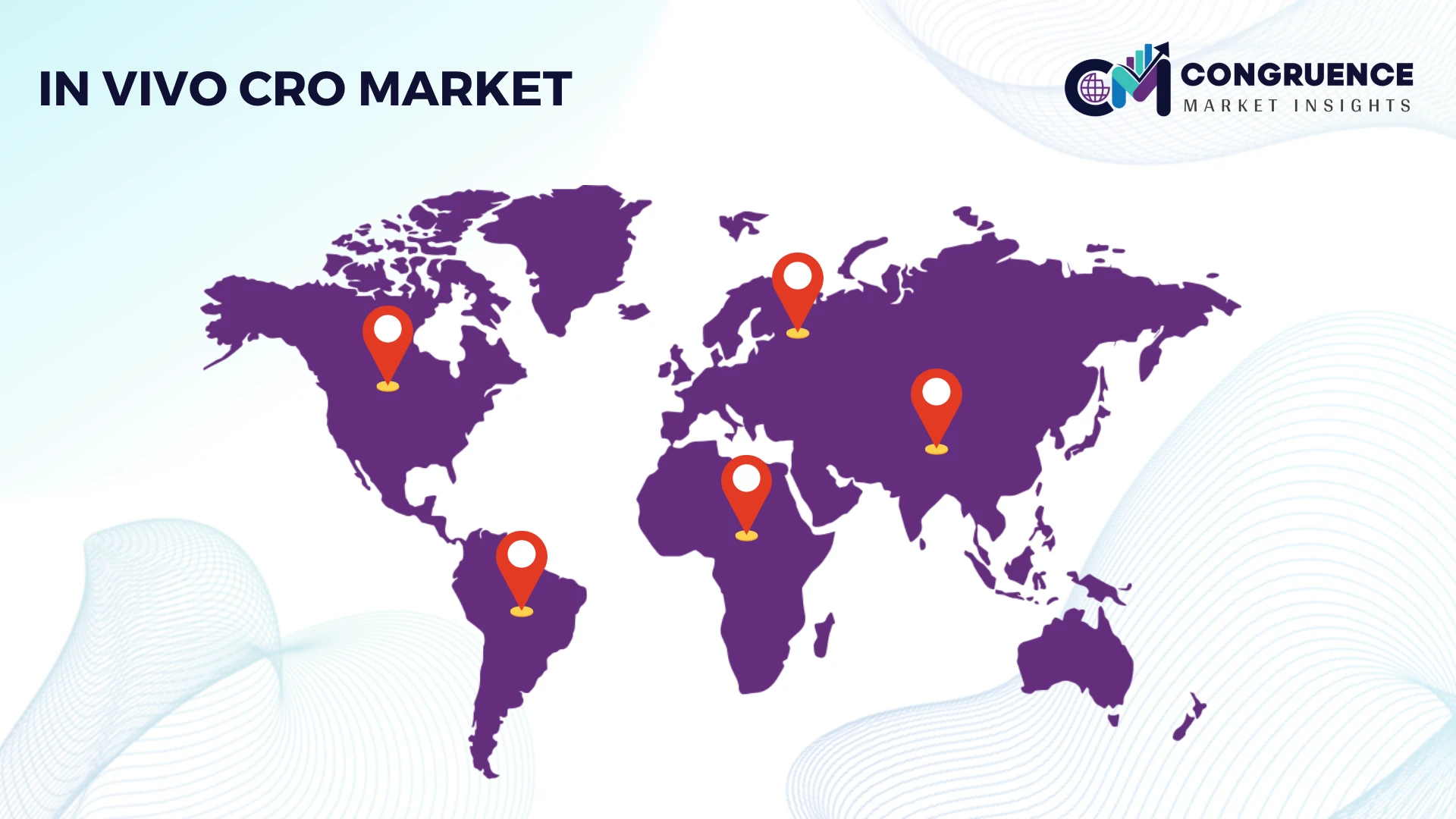
North America held 46.5% of the global In Vivo CRO Market in 2025, supported by dense pharmaceutical and biotechnology clusters, established GLP laboratories, and deep outsourcing relationships. The United States remains the primary deployment hub, with extensive capacity spanning pharmacology, toxicology, disease models, and IND-enabling programs. Large CROs are increasingly integrating automated monitoring, digital pathology, and translational biomarker platforms into established facilities. The FDA's 2025 move toward reducing animal testing and incorporating AI, organoids, and other new approach methodologies is reshaping investment priorities. Companies are responding by combining conventional in vivo capabilities with alternative testing infrastructure rather than abandoning established models. This creates a strategic advantage for providers capable of supporting both traditional regulatory programs and emerging human-relevant evidence requirements.
United States Market Outlook: The United States maintains the strongest country-level position because of its pharmaceutical R&D concentration, mature CRO infrastructure, and regulatory expertise. It accounted for roughly 40% of the global market in 2025, while major providers operate specialized facilities supporting oncology, toxicology, medical-device testing, and advanced therapeutic programs. Strong sponsor relationships continue to favor integrated, multi-service CRO procurement.
Europe represented approximately 28.7% of the global In Vivo CRO Market in 2025, supported by established pharmaceutical manufacturing, sophisticated research institutions, and strong demand for outsourced preclinical programs. Germany represents the leading national market, benefiting from a large pharmaceutical and biotechnology base and specialized CRO providers serving international sponsors. The United Kingdom remains strategically important for preclinical research, particularly through its emphasis on the 3Rs framework and alternative testing methodologies. Small-molecule programs still account for about 66% of European activity, while large-molecule studies are expanding as biologics and biosimilars reshape development pipelines. Companies are investing in advanced disease models, automated pathology, and integrated regulatory services. The region's tightening animal-welfare expectations are also encouraging CROs to develop hybrid workflows that preserve regulatory confidence while reducing unnecessary animal use.
Germany Market Outlook: Germany is Europe's strongest national market, representing approximately 5.8% of global activity in 2025. Its advantage stems from a concentrated pharmaceutical and biotechnology ecosystem, specialized contract research providers, and strong scientific infrastructure. German CROs are increasingly positioned around complex preclinical programs, advanced model systems, and regulatory-ready study execution for international pharmaceutical sponsors.
Asia Pacific accounted for approximately 19.1% of global In Vivo CRO activity in 2025 and represents the fastest-growing regional market. China and India are expanding specialized preclinical capacity as pharmaceutical companies increasingly localize research and outsource cost-sensitive programs. India generated approximately 2.8% of global activity, supported by scientific manpower, expanding CRO infrastructure, and pharmaceutical manufacturing depth. China is developing larger disease-model and biologics research capabilities, strengthening its role in complex therapeutic programs. Regional operators are investing in GLP facilities, genetically engineered models, digital data systems, and partnerships with multinational sponsors. Cost advantages remain material, with Indian outsourcing programs frequently operating 40–60% below comparable U.S. costs. The strategic shift is from basic low-cost execution toward higher-value, regulatory-compliant research services capable of supporting global development programs.
China Market Outlook: China is the leading expansion market within Asia Pacific, supported by a large pharmaceutical manufacturing base, growing biotechnology investment, and expanding specialized CRO infrastructure. Its preclinical ecosystem increasingly supports complex biologics and genetically engineered models, while national research capacity is moving toward more integrated drug-development workflows. China is projected to reach approximately USD 520.6 million by 2033, reinforcing its strategic role in regional CRO capacity.
South America represented approximately 3.2% of global In Vivo CRO activity in 2025, with Brazil serving as the principal research and pharmaceutical hub. Local demand is supported by pharmaceutical manufacturing, biotechnology development, academic research, and increasing outsourcing of preclinical programs. Brazil's expanding regulatory and research infrastructure is improving its ability to support GLP-oriented studies, although specialized model availability remains less extensive than in the United States or Europe. Pharmaceutical organizations are increasingly using local CROs for cost-sensitive programs while retaining complex global studies within multinational networks. Companies are responding through partnerships, laboratory modernization, and broader service portfolios. The non-obvious opportunity is regional integration: CROs that connect Brazilian research capacity with international regulatory and data-management standards can attract multinational programs without requiring sponsors to establish local infrastructure.
Brazil Market Outlook: Brazil represents the most strategically significant South American market because of its pharmaceutical manufacturing scale, established academic research network, and expanding preclinical capabilities. The country is expected to reach approximately USD 149.3 million by 2030. CROs are strengthening local partnerships and specialized testing capacity as pharmaceutical companies increase reliance on outsourced research services.
Middle East & Africa accounted for approximately 2.5% of global In Vivo CRO activity in 2025, with the United Arab Emirates, Saudi Arabia, Israel, and South Africa emerging as important research and healthcare hubs. Investment in modern medical infrastructure and biotechnology ecosystems is increasing the region's ability to support specialized research programs. The UAE is particularly prominent as an expansion market, combining advanced healthcare infrastructure with initiatives designed to attract international life-science companies. Regional CRO activity remains smaller than established markets, but international partnerships are increasing access to advanced preclinical capabilities. Companies are responding through cross-border collaborations, localized laboratory services, and technology-enabled research platforms. The key strategic shift is infrastructure-led: modern research facilities are being developed alongside broader biotechnology ecosystems, reducing dependence on external testing destinations for selected programs.
United Arab Emirates Market Outlook: The UAE offers the strongest infrastructure-driven opportunity in the region, supported by modern healthcare facilities, government-backed life-science development, and international research partnerships. Its CRO ecosystem benefits from relatively advanced laboratory infrastructure and strategic positioning between European and Asian pharmaceutical markets. Providers are emphasizing regulatory alignment, specialized testing, and international collaborations to build the country's role as a regional research hub.
Charles River Laboratories, Labcorp, WuXi AppTec, Crown Bioscience, and Inotiv compete as providers, while regional CROs challenge them on price. The top five players hold 36% combined share, leaving a fragmented field where scale competes with specialization. Sponsors can secure 20–35% lower study costs in India and China, while premium providers differentiate through regulatory depth, advanced models and execution speed. Digital pathology and automated monitoring deliver 15–25% workflow-efficiency gains, shifting competition toward technology-enabled throughput. Charles River is strengthening supply control through vertical integration, Labcorp is expanding advanced-therapy facilities, and WuXi AppTec is integrating in vitro and in vivo platforms. Crown Bioscience emphasizes translational oncology models, while Inotiv competes through specialized preclinical services. The competitive shift is moving from animal capacity toward integrated data, alternative methodologies, and supply resilience. High GLP infrastructure costs, specialist talent and regulatory validation remain entry barriers. Winning requires compliant capacity, differentiated models, technology, and dependable delivery.
Charles River Laboratories
Labcorp
WuXi AppTec
Crown Bioscience
Inotiv
ICON plc
Evotec SE
Eurofins Scientific
Taconic Biosciences
Pharmaron
Syngene International
QPS Holdings
Altasciences
Reaction Biology
AI-assisted study design, digital pathology, automated animal monitoring, and computational toxicology are moving from pilot projects into routine CRO workflows. Digital pathology can reduce manual image-review workloads by roughly 20–30%, while automated monitoring targets 15–25% faster observation and data capture. Adoption is strongest among large U.S. providers with integrated data platforms.
New approach methodologies are increasingly paired with conventional in vivo studies. Organoids, organ-on-chip systems, virtual control groups, and next-generation sequencing can reduce selected animal-testing requirements while improving human relevance. Compared with conventional manual pathology, AI-supported image analysis can deliver approximately 20% faster assessment, benefiting CROs with large study volumes and standardized datasets. This favors Charles River, Labcorp, Crown Bioscience, and WuXi AppTec as they combine specialized models with digital analytics.
From 2026 through 2028, technology competition will shift toward interoperable platforms linking pharmacology, toxicology, imaging, bioanalysis, and translational modeling. Cloud-based study management will reduce handoffs, while automated workflows improve reproducibility across facilities. Companies investing early gain faster protocol execution, stronger data traceability, and differentiated sponsor service. For sponsors, this reduces repeated experiments and strengthens regulatory readiness across multi-site programs. The immediate priority is integration: technology that connects established in vivo infrastructure with validated alternatives will outperform isolated digital tools.
August 2025 — Labcorp expanded its cell and gene therapy laboratory in Madison, Wisconsin, increasing its preclinical testing capacity and strengthening support from discovery through IND and clinical-trial applications. The company stated that it has helped advance more than 80% of FDA-approved cell and gene therapies. Source: labcorp.com
April 2025 — Charles River introduced expanded oncology capabilities using PDX-derived 3D tumoroids, combining human-relevant in vitro models with its existing in vivo oncology portfolio. The development strengthens translational drug-discovery workflows and supports more predictive oncology research. Source: ir.criver.com
July 2025 — WuXi AppTec reported that its in vivo pharmacology platform grew 9.4% year over year during the first half of 2025, while its integrated in vitro screening platform grew 28.9%. The company is integrating both platforms to provide one-stop drug-discovery services. Source: wuxiapptec.com
September 2025 — Crown Bioscience formed a strategic global collaboration with Medicines Discovery Catapult to create an integrated translational biology platform for radiopharmaceutical developers. The partnership expands specialized preclinical capabilities for an emerging therapeutic modality. Source: crownbio.com
The report covers the In Vivo CRO Market across type, application, end-user, and geographic dimensions. Type analysis evaluates rodent and non-rodent models; application coverage includes oncology, CNS, cardiovascular, infectious disease, diabetes and obesity, pain management, autoimmune and inflammation, and other applications. End-user assessment spans pharmaceutical and biotechnology companies, academic and research institutions, government organizations, and medical device companies.
Regional analysis covers North America, Europe, Asia Pacific, South America, and Middle East & Africa, with focus on the United States, Germany, China, India, Brazil, and the United Arab Emirates. It evaluates GLP toxicology, pharmacology, disease models, digital pathology, AI-enabled workflows, automated monitoring, organoids, and alternative methodologies. With rodent models representing 82.2% of activity and GLP toxicology 80.9%, the analysis supports capacity planning, partnership selection, geographic expansion, technology investment, competitive positioning, and decisions through 2026–2033.
| Report Attribute / Metric | Details |
|---|---|
| Market Revenue (2025) | USD 540.0 Million |
| Market Revenue (2033) | USD 999.5 Million |
| CAGR (2026–2033) | 8.0% |
| Base Year | 2025 |
| Forecast Period | 2026–2033 |
| Historic Period | 2021–2025 |
| Segments Covered | By Type
By Application
By End-User
|
| Key Deliverables | Revenue Forecast; Market Trends; Growth Drivers & Restraints; Technology Insights; Segmentation Analysis; Regional Insights; Competitive Landscape; Regulatory & ESG Overview; Recent Developments |
| Regions Covered | North America; Europe; Asia-Pacific; South America; Middle East & Africa |
| Companies Profiled | Charles River Laboratories; Labcorp; WuXi AppTec; Crown Bioscience; Inotiv; ICON plc; Evotec SE; Eurofins Scientific; Taconic Biosciences; Pharmaron; Syngene International; QPS Holdings; Altasciences; Reaction Biology |
| Customization & Pricing | Available on Request (10% Customization Free) |




