
Reports
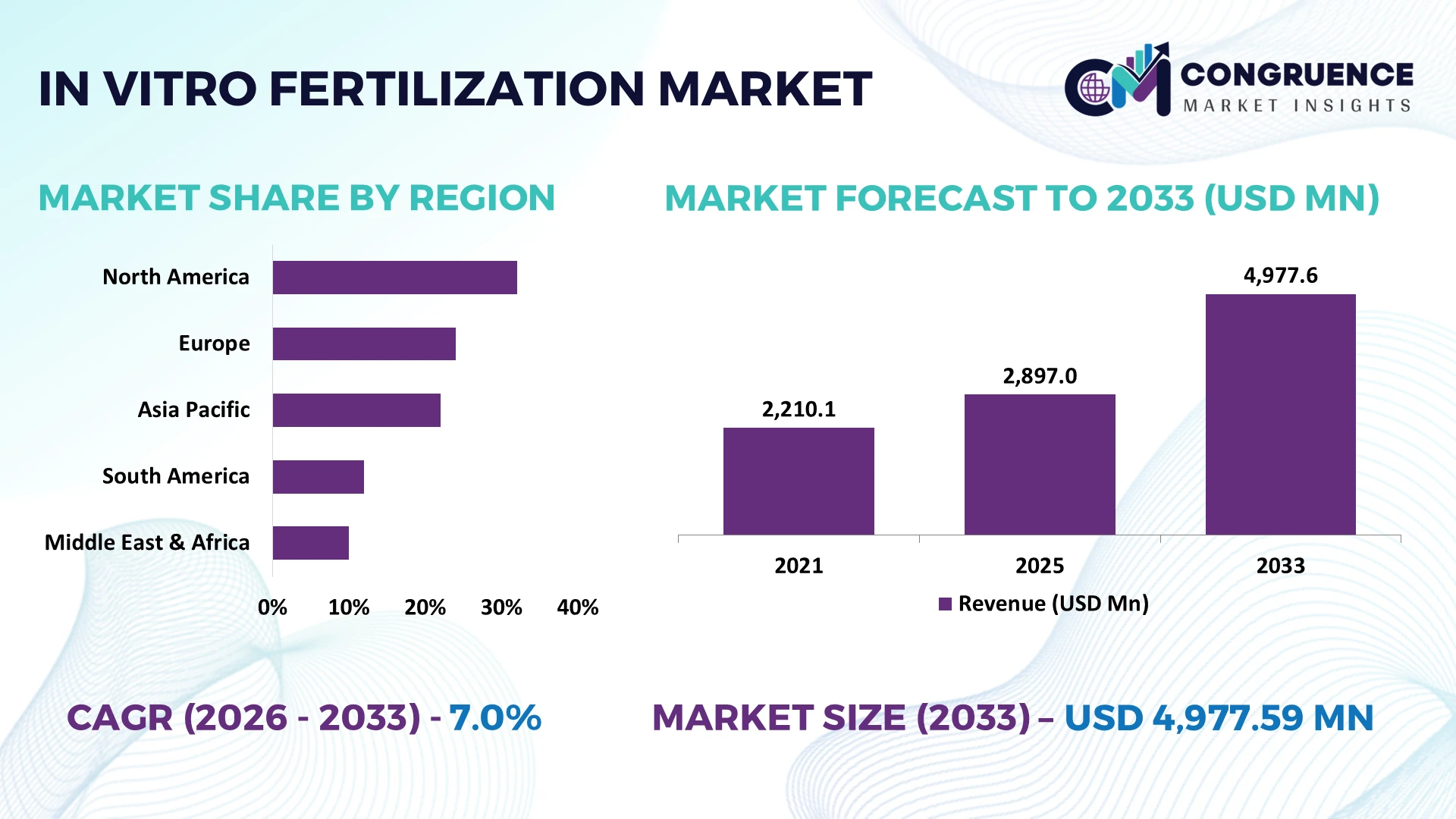
The Global In Vitro Fertilization Market was valued at USD 2,897.0 Million in 2025 and is anticipated to reach a value of USD 4,977.6 Million by 2033 expanding at a CAGR of 7% between 2026 and 2033. Growth is anchored in rising advanced maternal age, expanding frozen embryo transfer protocols, and rapid adoption of AI-assisted embryo assessment and automated embryology laboratory systems.
The United States dominates the high-value segment, recording 435,426 ART cycles across 457 clinics in 2022, with IVF accounting for approximately 2.6% of national births — a premium-treatment benchmark that India's estimated 200,000–250,000 annual cycles still cannot match on per-cycle technology intensity. India's Assisted Reproductive Technology (Regulation) Act, 2021 is formalizing clinic registration and consumable traceability, accelerating compliant laboratory investment across metropolitan and secondary cities.
The strategic implication is clear: capital must flow toward scalable laboratory infrastructure, reliable consumable supply chains, and technology differentiation that converts volume into clinical outcome advantage.
Market Size & Growth: Valued at USD 2,897.0 Million in 2025 and projected to reach USD 4,977.6 Million by 2033, driven by frozen embryo transfer adoption and advanced fertility treatment protocols.
Top Growth Drivers: Advanced maternal age (~35%), rising infertility treatment adoption (~30%), and technological advancements (~25%) form the core demand architecture.
Short-Term Forecast: By 2028, laboratory automation and standardized digital workflows will lift embryology staff productivity by approximately 10–15% at adopting facilities.
Emerging Technologies: AI-assisted embryo assessment, time-lapse incubation, and preimplantation genetic testing are redefining embryo evaluation and treatment personalization.
Regional Leaders: North America commands premium-treatment value; Europe benefits from established clinical networks and cryopreservation depth; Asia Pacific expands through fertility-clinic investment and accessible treatment models.
Consumer/End-User Trends: Approximately 43% of reported European IVF, ICSI, and frozen-transfer cycles in 2023 involved frozen embryo transfers, signaling cryopreservation's operational centrality.
Pilot/Case Example: The 2024 TILT multicentre clinical trial evaluated time-lapse imaging and found no demonstrated clinical outcome improvement over conventional embryo selection — a caution against unevidenced technology spend.
Competitive Landscape: CooperSurgical, Vitrolife, Merck KGaA, Ferring Pharmaceuticals, and Cook Medical lead, with competition centered on embryology equipment, culture media, consumables, and reproductive medicines.
Regulatory & ESG Impact: India's ART (Regulation) Act, 2021 formalized clinic and bank registration, strengthening accountability and traceability across fertility services.
Investment & Funding: Capital increasingly targets fertility-clinic networks, laboratory modernization, cryopreservation capacity, and strategic partnerships within integrated treatment ecosystems.
Innovation & Future Outlook: AI-enabled embryo evaluation, automated laboratory workflows, fertility preservation, and genetic testing are reshaping delivery and favoring technology-integrated providers.
The In Vitro Fertilization Market is witnessing concentrated demand across fertility preservation, donor-assisted procedures, and personalized reproductive medicine, with advanced cryopreservation and preimplantation genetic testing elevating laboratory capabilities. Frozen embryo transfers now represent approximately 43% of relevant European treatment cycles, underscoring cryostorage as an operational priority. India's tightening clinic registration and consumable traceability requirements are accelerating formalization and compliant infrastructure investment — a regulatory shift that rewards standardized, quality-assured laboratory networks. These dynamics set the stage for a strategic discussion on competitive positioning.
The In Vitro Fertilization Market is becoming strategically pivotal as providers compete on clinical outcomes, laboratory precision, treatment accessibility, and integrated reproductive healthcare services. Rising treatment complexity is pushing competition beyond clinic availability toward embryology expertise, advanced equipment, cryopreservation capacity, and personalized protocols. Regulatory formalization in India and infrastructure modernization across high-growth markets are restructuring how capital and capability are deployed.
Technology adoption is creating measurable operational advantages. AI-assisted embryo assessment and automated laboratory monitoring deliver up to 10-fold lower embryo observation time versus manual evaluation, improving workflow consistency and reducing labor intensity — though faster assessment does not automatically translate into higher live-birth rates, making evidence-based validation essential. The United States emphasizes advanced clinical infrastructure and genetic testing, while India attracts investment through comparatively accessible treatment models and expanding clinic networks, creating a clear scale-versus-sophistication contrast.
Over the next 2–3 years, investment priorities will center on laboratory automation, genetic testing capabilities, frozen embryo storage, and digital patient-management systems. Fertility groups expanding into Indian metropolitan and secondary cities are prioritizing standardized embryology laboratories, specialist recruitment, and equipment partnerships. Companies that combine clinical evidence, cost discipline, and reliable laboratory operations will secure stronger competitive positioning and long-term market relevance.
Increasing maternal age, delayed parenthood, and broader infertility diagnosis are strengthening demand for assisted reproductive technologies. In the United States, ART procedures reached 435,426 cycles in 2022, while IVF contributed approximately 2.6% of all national births. India performs an estimated 200,000–250,000 IVF cycles annually, reflecting substantial treatment activity. Advancements in intracytoplasmic sperm injection, frozen embryo transfers, and preimplantation genetic testing are expanding clinical options. Companies are responding through fertility-clinic expansion, embryology laboratory investment, and partnerships with reproductive medicine specialists. The strategic advantage lies in combining affordable treatment access with standardized laboratory quality and consistent clinical protocols.
High treatment expenses, repeated clinical cycles, and uneven access to specialized embryology infrastructure constrain IVF affordability and penetration. In the United States, 37.5% of ART cycles resulted in live-birth delivery in 2022, illustrating the clinical uncertainty patients weigh when budgeting for treatment. Furthermore, 85.9% of embryo transfers were single-embryo procedures, requiring precise laboratory selection and monitoring capabilities. Advanced incubators, genetic testing equipment, culture media, and cryogenic storage elevate operating expenditure. Companies are addressing these limitations through standardized laboratory procurement, treatment packages, local clinic partnerships, and improved equipment utilization. Cost control without compromising clinical quality remains a critical competitive requirement.
Cryopreservation, AI-assisted embryo evaluation, and fertility preservation offer substantial opportunities for technology-led differentiation. Frozen embryo transfers represented approximately 43% of relevant European IVF, ICSI, and frozen-transfer cycles in 2023, demonstrating the growing operational importance of embryo storage and thawing capabilities. India, with an estimated 200,000–250,000 annual IVF cycles, provides an attractive opportunity for expanding standardized laboratory networks beyond established metropolitan centers. Companies are investing in automated incubators, advanced culture media, genetic testing partnerships, and integrated cryostorage services. A particularly valuable opportunity lies in developing cost-efficient laboratory platforms that support smaller clinics without requiring the capital expenditure of fully equipped premium facilities.
Maintaining consistent treatment quality across expanding fertility networks requires specialized embryologists, validated laboratory procedures, reliable digital systems, and continuous clinical oversight. The United States recorded a 37.5% live-birth delivery rate per ART cycle in 2022, demonstrating the importance of patient characteristics and clinical protocols when evaluating performance. Europe's 2023 reporting network included 1,473 fertility centers across 36 countries, illustrating the complexity of maintaining consistent practices across multiple healthcare systems. AI integration also introduces requirements for algorithm validation, patient-data protection, and interoperability. Companies must invest in embryologist training, cybersecurity, standardized laboratory information systems, and clinical quality assurance to sustain reliable outcomes during expansion.
Frozen Transfer Protocols Reshape Lab Economics: Frozen embryo transfers accounted for nearly 43% of European IVF, ICSI, and FET cycles in 2023, with 401,483 FET cycles reported against 158,649 fresh IVF cycles . This shift forces clinics to prioritize cryostorage capacity and vitrification workflows over fresh-cycle throughput, restructuring laboratory footprints toward dedicated cryobanks in Spain and Denmark. Companies are responding through integrated cryostorage partnerships and automated inventory systems that reduce manual handling errors.
AI Triage Moves from Pilot to Procurement: Deep-learning embryo assessment reduces evaluation time to 21.3 seconds versus 208.3 seconds for manual assessment, yet the 2024 TILT multicentre trial found no clinical outcome improvement over conventional selection . Procurement committees in the United States now demand validated live-birth evidence before scaling AI deployment, slowing premium clinic adoption while accelerating uptake among cost-sensitive Indian chains seeking workflow efficiency without premium pricing.
India's ART Act Drives Consumable Traceability: India's ART (Regulation) Act, 2021 mandates registration for all ART clinics and banks, with an online National Registry Portal operationalized for state-level compliance . Smaller clinics in secondary cities face elevated compliance overhead, accelerating consolidation into standardized laboratory networks backed by equipment partnerships. Suppliers offering audit-ready documentation and validated culture media gain a defensible moat as traceability requirements tighten procurement criteria.
Single-Embryo Transfer Precision Elevates Lab Skill Demand: 85.9% of US embryo transfers in 2022 were single-embryo procedures, narrowing the margin for selection error and intensifying demand for embryologists capable of precise morphological grading . Fertility groups expanding into Indian metropolitan areas prioritize specialist recruitment and equipment partnerships that reduce dependence on individual operator judgment, including standardized digital workflows and remote mentoring platforms.
IVF with ICSI remains the dominant technique, accounting for approximately 75% of all IVF procedures performed in the United States as of recent reporting, reflecting its established role as the preferred protocol for male-factor infertility and prior fertilization failure. The segment's dominance is anchored in clinical necessity rather than elective preference, giving it structural resilience across economic cycles. Conventional IVF, by contrast, is gaining traction among cost-sensitive patient cohorts where female-factor or unexplained infertility does not mandate sperm injection, with clinics in India and Southeast Asia leveraging standard protocols to reduce per-cycle consumable expenditure.
The frozen non-donor segment has emerged as the leading procedure category, capturing 36.94% revenue share in 2025, driven by superior success rates and scheduling flexibility in frozen embryo transfer cycles. Fresh donor and frozen donor segments remain comparatively constrained by regulatory restrictions on gamete donation in several European jurisdictions, limiting their growth trajectory. Companies are responding by prioritizing culture media formulations optimized for vitrification and thaw survival, with suppliers aligning product development toward cryopreservation-compatible consumables rather than fresh-cycle reagents.
Female infertility remains the dominant application category, encompassing tubal factor, ovulatory dysfunction, endometriosis, and unexplained infertility presentations that constitute the majority of IVF treatment demand globally. The segment's scale is reinforced by the structural reality that women bear the primary clinical intervention burden in assisted reproduction, driving consistent demand for oocyte retrieval, fertilization, and embryo transfer protocols regardless of underlying diagnosis. Endometriosis-related IVF demand is expanding in the United States and Europe as diagnostic awareness improves.
Male infertility represents the fastest-growing application segment, propelled by rising sperm morphology abnormalities, oligospermia, and declining sperm motility rates documented across industrialized markets. This shift is accelerating ICSI adoption as a default rather than selective protocol, with clinics in Japan and South Korea reporting increased ICSI utilization for non-male-factor indications as a risk-mitigation strategy. Companies are adapting through ICSI-specific instrument portfolios and sperm analysis automation, positioning product development around the operational reality that male-factor diagnosis is becoming a primary entry point for IVF treatment pathways.
Fertility clinics dominate the end-user landscape, commanding the largest revenue share through specialized infrastructure, dedicated embryology laboratories, and concentrated clinical expertise that hospitals struggle to replicate at equivalent quality thresholds. This dominance is structural rather than transient: IVF success rates depend on laboratory environmental controls, embryologist experience, and cycle volume—operational variables that favor standalone or network-affiliated clinics over general hospital settings. India's private fertility chains, including Indira IVF and Nova IVF, exemplify this model, scaling standardized laboratory protocols across metropolitan and secondary city locations.
Hospitals represent the fastest-growing end-user segment, projected to register 6.23% growth as health systems integrate fertility services into broader reproductive care pathways. The expansion is driven by employer-sponsored fertility benefits in the United States and reimbursement reforms in European markets that incentivize hospital-based treatment continuity. Companies are responding through dual-channel strategies: equipment vendors offer modular laboratory configurations for hospital deployment, while consumable suppliers develop smaller-format culture media packaging suited to lower-volume hospital IVF units without compromising sterility protocols.
North America accounted for the largest market share at 32% in 2025 however, Asia-Pacific is expected to register the fastest growth, expanding at a CAGR of 12.8% between 2026 and 2033.
North America commands 32% of global IVF market value, with the United States alone recording 435,426 ART cycles across 457 clinics in 2022 and IVF contributing roughly 2.6% of national births. The region's share is underpinned not by cycle volume alone but by procedure complexity: preimplantation genetic testing, frozen embryo transfer protocols, and single-embryo transfer precision have become standard-of-care differentiators that elevate per-cycle consumable and equipment intensity. Clinic consolidation is accelerating, exemplified by US Fertility's 2023 combination with Ovation Fertility to build a national platform for best-practice standardization and patient access. Investment flows toward embryology laboratory modernization and genetic testing integration rather than greenfield clinic construction.
United States Market Outlook: The U.S. dominates North American IVF economics through regulatory maturity and commercial scale. FDA oversight of IVF drugs and devices, combined with CDC-mandated fertility clinic success rate reporting under the Fertility Clinic Success Rate and Certification Act, creates a compliance infrastructure that favors established laboratory networks over fragmented operators. The 85.9% single-embryo transfer rate intensifies demand for validated embryo selection technologies, positioning U.S. clinics as the primary procurement channel for advanced time-lapse incubation and AI-assisted assessment platforms.
Europe holds 24% of global IVF market value, with approximately 43% of reported IVF, ICSI, and frozen-transfer cycles involving frozen embryo transfers in 2023. This cryopreservation intensity is not a transient preference but an operational foundation: vitrification expertise, long-term storage infrastructure, and thaw-survival optimization have become core laboratory competencies across Spanish, Danish, and Czech fertility networks. Cross-border reproductive care remains a distinctive regional dynamic, with egg donation programs in Spain and Eastern Europe drawing patient flows that sustain high-volume laboratory utilization. Regulatory harmonization across EU member states remains uneven, but the ESHRE reporting network's coverage of 1,473 centers across 36 countries provides a clinical governance backbone that supports standardized outcome benchmarking.
Spain Market Outlook: Spain has emerged as Europe's most dynamic IVF delivery hub, combining permissive donation regulations with mature private clinic infrastructure. The country's fertility sector benefits from government support for ART treatments and sustained demand from international patients seeking egg donation and embryo adoption services. Spanish clinics are prioritizing cryostorage capacity expansion and vitrification protocol standardization to accommodate frozen transfer volumes that now exceed fresh cycles in several leading networks.
Asia-Pacific accounts for 22% of global IVF market value and represents the highest-growth operational frontier, driven by untreated demand and rapid clinic network expansion. India alone performs an estimated 200,000–250,000 IVF cycles annually across more than 2,000 clinics, yet penetration remains severely constrained at approximately 1.5–2.2% of infertile couples, compared with 16–18% in the United States. This gap defines the region's investment thesis: not saturation, but distribution failure. Male-factor infertility now accounts for 40–50% of cases in Indian clinics, with consultations rising sharply in Tier-II and Tier-III cities such as Varanasi, Gorakhpur, and Bhopal. The ART (Regulation) Act, 2021 is forcing clinic registration and consumable traceability compliance, accelerating consolidation toward standardized laboratory networks.
India Market Outlook: India's IVF market is structurally underpenetrated rather than oversaturated, with approximately 98% of infertile couples never reaching treatment. The market is estimated at $1.4 billion and is projected to grow from 200,000–250,000 annual cycles to roughly 400,000 by 2030. Male infertility-related consultations, investigations, and treatments contribute nearly 40% of overall fertility revenue at several smaller chains, creating demand for ICSI-specific consumables, advanced semen analysis, and sperm DNA fragmentation testing. Clinic chains are prioritizing Tier-II expansion and standardized embryology laboratory deployment to convert latent demand into accessible treatment capacity.
South America captures 12% of global IVF market value through a concentrated network of private fertility clinics, with Brazil and Argentina serving as the primary delivery hubs for advanced assisted reproduction. The region's growth trajectory is shaped by rising infertility awareness, delayed childbearing patterns, and expanding insurance coverage for ART procedures in select markets. However, infrastructure remains uneven: advanced embryology laboratories and cryopreservation facilities cluster in São Paulo, Buenos Aires, and Bogotá, leaving secondary cities dependent on referral pathways that constrain treatment continuity. Investment activity centers on clinic acquisitions and laboratory upgrades rather than greenfield expansion, with international fertility groups targeting established local brands to gain immediate patient access and regulatory familiarity.
Brazil Market Outlook: Brazil anchors South American IVF delivery through its private healthcare system and relatively permissive ART regulations. The country's fertility clinics serve as regional referral centers for patients from neighboring markets where advanced treatment options remain limited. Investment priorities center on cryopreservation capacity expansion and embryology laboratory modernization, with clinic networks pursuing standardized protocol deployment across metropolitan and secondary city locations to capture demand outside the primary urban centers.
The Middle East & Africa region accounts for 10% of global IVF market value and is undergoing infrastructure-led transformation, with Gulf Cooperation Council states investing in advanced fertility centers as part of broader healthcare diversification strategies. The United Arab Emirates and Saudi Arabia are positioning themselves as regional reproductive medicine hubs, combining high-acuity clinical capabilities with medical tourism infrastructure that attracts patients from markets with limited ART availability. Embryo culture media remains the leading consumable category, accounting for 35.2% of the MEA IVF market in 2025, reflecting the consumable-intensive nature of cycle delivery and the region's dependence on imported laboratory supplies. Regulatory frameworks remain variable across the region, but Gulf states are tightening clinic licensing and outcome reporting requirements, creating a compliance premium for established operators.
United Arab Emirates Market Outlook: The UAE has emerged as the Middle East's most investment-active IVF market, driven by government-backed healthcare infrastructure development and medical tourism positioning. Dubai and Abu Dhabi fertility centers are deploying advanced time-lapse incubation and preimplantation genetic testing capabilities to differentiate from lower-cost regional competitors. The country's regulatory environment permits comprehensive ART services including donor gamete programs, creating a regional referral dynamic that sustains high-volume laboratory utilization and equipment procurement activity.
The IVF market pits global technology leaders like CooperSurgical and Vitrolife against pharmaceutical giants Merck KGaA and Ferring, with regional clinic networks and cost-focused consumable suppliers competing on distinct terrain. The top five players command an estimated 45–50% combined share, reflecting a moderately consolidated structure where no single entity dominates. Competition hinges on culture media performance, embryology equipment reliability, and pharmaceutical pricing—Merck's 84% direct-to-consumer discount on its IVF drug portfolio reshapes U.S. price competition, while Ferring's reproductive medicine sales exceeding €1 billion signals pharmaceutical scale as a competitive moat. Players are pursuing vertical integration through acquisitions—CooperSurgical's ZyMōt Fertility purchase adds sperm separation technology to its portfolio—and restructuring for profitability, as Vitrolife's 6% workforce reduction targets SEK 65 million in annual savings. The competitive shift favors integrated laboratory-to-pharmacy ecosystems over standalone device sales. Entry barriers are formidable: regulatory compliance, validated clinical evidence, and embryologist expertise require years to establish. Winning demands simultaneous mastery of consumable quality, pharmaceutical access, and laboratory workflow integration—not price alone.
CooperSurgical
Vitrolife AB
Merck KGaA (EMD Serono)
Ferring Pharmaceuticals
Cook Medical
Thermo Fisher Scientific
Irvine Scientific
Genea Limited
Esco Micro
IVFtech APS
The Baker Company
Kitazato
Rocket Medical
Time-lapse incubation and AI-assisted embryo assessment represent the current operational frontier, with deep-learning models reducing observation time from 208.3 seconds to 21.3 seconds per embryo—an 89.8% efficiency gain over manual morphological grading. Adoption remains uneven: premium U.S. and European clinics deploy these systems at scale, while cost-sensitive Indian and Southeast Asian networks prioritize basic incubator capacity. The competitive benefit accrues to laboratories that integrate imaging data with electronic medical records, enabling remote embryologist oversight across multiple clinic locations.
Emerging cryopreservation automation and closed vitrification systems promise to standardize thaw-survival rates, currently variable across operators. Automated inventory platforms reduce manual handling errors by an estimated 30–40% in early deployments, directly addressing the traceability requirements imposed by India's ART (Regulation) Act. Merck's FDA fast-track filing for Pergoveris under the National Priority Voucher program signals pharmaceutical innovation accelerating alongside device automation.
Between 2026 and 2028, AI embryo ranking will shift from experimental add-on to procurement requirement, but only where validated against live-birth outcomes—the 2024 TILT trial's null result remains a cautionary benchmark. Laboratories that pair automation with rigorous clinical evidence will capture premium pricing, while undifferentiated equipment vendors face margin compression from Indian and Chinese cost-competitive alternatives.
October 2025 – Merck KGaA (EMD Serono), Secured an agreement with the U.S. government offering an 84% discount on its combined IVF drug regimen through the TrumpRx direct-purchasing platform launching January 2026, directly reshaping U.S. fertility pharmaceutical pricing and patient access economics. Source: merckgroup.com
December 2025 – Vitrolife AB, Launched a Genetic Services restructuring program targeting SEK 65 million in annualized savings through 6% workforce reduction and discontinuation of two test lines, sharpening operational focus on profitable consumable and technology segments. Source: vitrolifegroup.com
April 2025 – Ferring Pharmaceuticals, Reported Reproductive Medicine sales exceeding €1 billion for the first time in 2024, with total group revenues reaching €2.3 billion, confirming pharmaceutical scale as a durable competitive advantage in fertility treatment portfolios. Source: ferring.com
October 2025 – Ferring Pharmaceuticals, Presented RITA trial analyses at ASRM 2025 demonstrating follitropin delta achieved a 64.0% cumulative ongoing pregnancy rate in RITA-1, with age-based dosing feasibility supporting personalized ovarian stimulation protocols. Source: ferringusa.com
This report delivers comprehensive coverage of the global IVF market, spanning procedure types (ICSI, conventional IVF, frozen non-donor, donor cycles), applications (female infertility, male infertility), and end-users (fertility clinics, hospitals, research laboratories). Regional analysis encompasses North America, Europe, Asia-Pacific, South America, and the Middle East & Africa, with country-level granularity for the United States, Spain, India, Brazil, and the UAE. Technology coverage extends from culture media and consumables to time-lapse incubation, AI-assisted embryo assessment, and cryopreservation systems.
The report equips investment planning with segment-level adoption patterns—fertility clinics hold approximately 55% of end-user share, while frozen non-donor procedures command 36.94% of type revenue. Competitive profiling of thirteen key players, regulatory tracking across ART frameworks, and technology adoption benchmarks support expansion strategy and positioning decisions through 2033.
| Report Attribute / Metric | Details |
|---|---|
| Market Revenue (2025) | USD 2,897.0 Million |
| Market Revenue (2033) | USD 4,977.6 Million |
| CAGR (2026–2033) | 7.0% |
| Base Year | 2025 |
| Forecast Period | 2026–2033 |
| Historic Period | 2021–2025 |
| Segments Covered |
By Type
By Application
By End-User
|
| Key Deliverables | Revenue Forecast; Market Trends; Growth Drivers & Restraints; Technology Insights; Segmentation Analysis; Regional Insights; Competitive Landscape; Regulatory & ESG Overview; Recent Developments |
| Regions Covered | North America; Europe; Asia-Pacific; South America; Middle East & Africa |
| Companies Profiled | CooperSurgical; Vitrolife AB; Merck KGaA (EMD Serono); Ferring Pharmaceuticals; Cook Medical; Thermo Fisher Scientific; Irvine Scientific; Genea Limited; Esco Micro; IVFtech APS; The Baker Company; Kitazato; Rocket Medical |
| Customization & Pricing | Available on Request (10% Customization Free) |




