
Reports
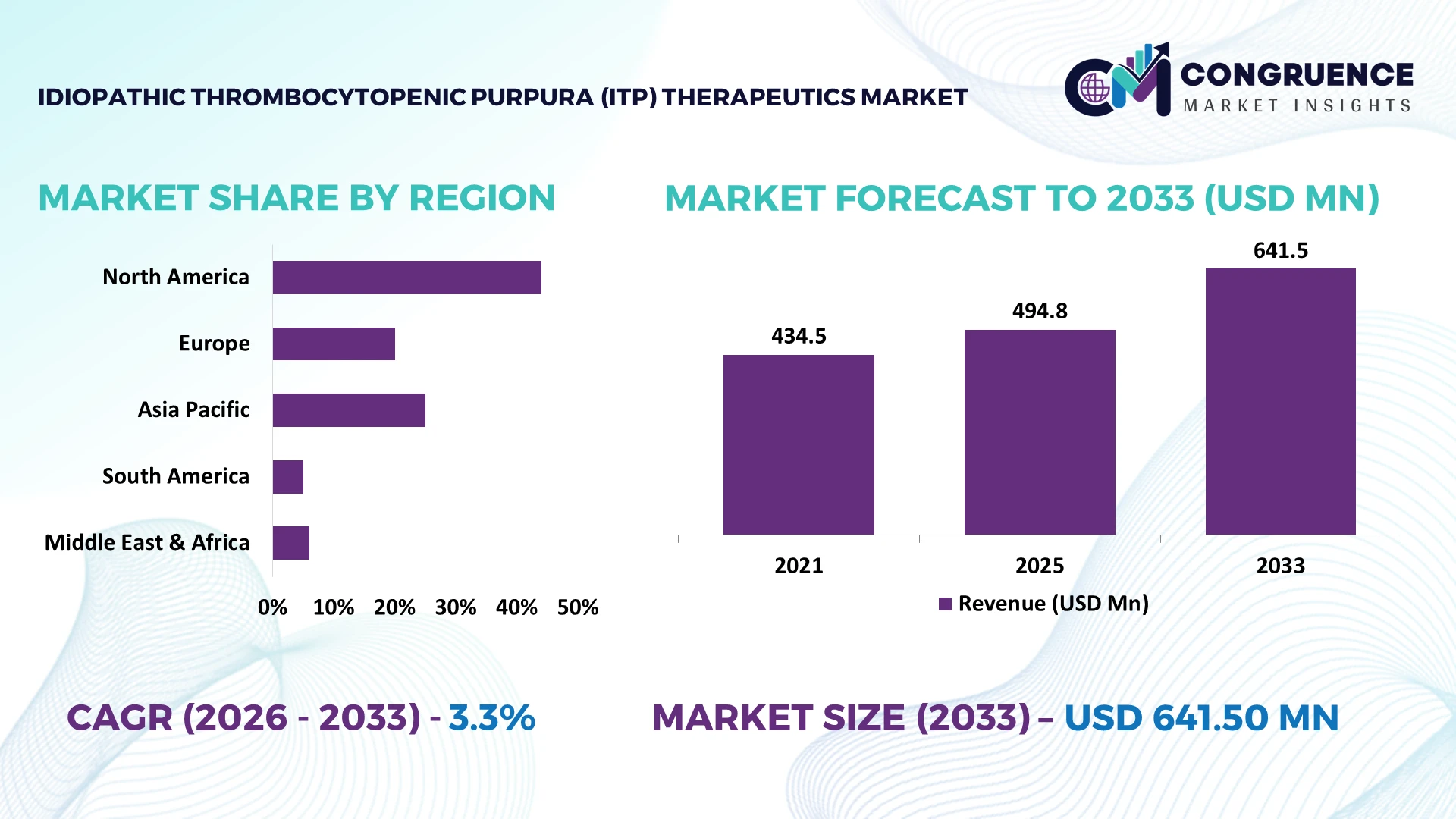
The Global Idiopathic Thrombocytopenic Purpura (ITP) Therapeutics Market was valued at USD 494.8 Million in 2025 and is anticipated to reach a value of USD 641.5 Million by 2033 expanding at a CAGR of 3.3% between 2026 and 2033. Growth is driven by increasing use of thrombopoietin receptor agonists, adoption of second-line targeted therapies, and expanded treatment options for persistent and refractory immune thrombocytopenia.
The United States represents a leading country for advanced ITP therapeutics, supported by established hematology treatment networks, specialty pharmaceutical manufacturers, and FDA-approved targeted therapies. Adult ITP incidence is estimated at 2–4 cases per 100,000 people annually, supporting sustained demand for specialized treatment. Compared with China, where domestic thrombopoietin receptor agonists play an important role, U.S. treatment pathways incorporate multiple oral and injectable agents. Clinical trials have demonstrated platelet response rates exceeding 70% with selected thrombopoietin receptor agonist regimens, reinforcing targeted treatment adoption.
Strategically, pharmaceutical manufacturers should prioritize differentiated second-line therapies and treatment accessibility, targeting durable platelet responses above 50 × 10⁹/L while reducing corticosteroid dependence.
Market Size & Growth: USD 494.8 million in 2025, reaching USD 641.5 million by 2033 at 3.3% CAGR, driven by targeted immunomodulatory treatments.
Top Growth Drivers: Three clinical drivers include 23% durable platelet response, 64% early platelet response, and 33% rescue therapy utilization with rilzabrutinib.
Short-Term Forecast: By 2027, clinical adoption will increasingly reflect the 25-percentage-point reduction in rescue medication use observed with rilzabrutinib versus placebo.
Emerging Technologies: Three approaches shape innovation: BTK inhibition, FcRn antagonism, and next-generation thrombopoietin receptor agonists.
Regional Leaders: Illustrative 2033 allocations include North America USD 244 million, Europe USD 193 million, and Asia-Pacific USD 154 million, reflecting differentiated therapy adoption.
Consumer/End-User Trends: In LUNA 3, 64% of rilzabrutinib-treated patients achieved an early platelet response, supporting oral treatment alternatives.
Pilot/Case Example: The 2025 LUNA 3 trial demonstrated 23% durable platelet response with rilzabrutinib versus 0% with placebo.
Competitive Landscape: Sanofi leads BTK innovation alongside Novartis, Amgen, Sobi, and Rigel Pharmaceuticals; verified company market shares remain unavailable.
Regulatory & ESG Impact: FDA approval in August 2025 introduced the first BTK inhibitor for ITP, with orphan drug exclusivity extending through August 2032.
Investment & Funding: Sanofi's acquisition of Principia Biopharma for approximately USD 3.7 billion strengthened its immunology pipeline, including rilzabrutinib development.
Innovation & Future Outlook: By 2028, competitive differentiation will increasingly emphasize durable platelet response, corticosteroid reduction, and oral immunomodulation across refractory ITP populations.
The Global Idiopathic Thrombocytopenic Purpura (ITP) Therapeutics Market is shifting toward targeted treatments that address immune dysregulation rather than relying exclusively on platelet stimulation or broad immunosuppression. Hematology specialists increasingly evaluate oral thrombopoietin receptor agonists, BTK inhibitors, and emerging FcRn-targeted therapies for patients requiring sustained disease control. The LUNA 3 trial demonstrated a 23% durable platelet response with rilzabrutinib compared with 0% for placebo, highlighting differentiated clinical efficacy. Regulatory approvals in the United States, Europe, and Japan are expanding therapeutic choices, positioning treatment durability, safety, and patient convenience as central strategic considerations.
The Idiopathic Thrombocytopenic Purpura (ITP) Therapeutics Market is becoming strategically important as pharmaceutical manufacturers transition from broad immunosuppression toward targeted immune modulation and sustained platelet control. The FDA's August 2025 approval of rilzabrutinib introduced a new BTK inhibitor treatment pathway, intensifying competition among thrombopoietin receptor agonists, immunomodulators, and emerging FcRn inhibitors. In the LUNA 3 trial, rilzabrutinib achieved a 23% durable platelet response compared with 0% for placebo, demonstrating clinically differentiated treatment performance.
Unlike conventional corticosteroids, which frequently require tapering because of cumulative toxicity, targeted oral therapies support longer-term treatment strategies. The United States leads advanced therapeutic commercialization, while Japan emphasizes specialized hematology treatment and China expands domestic thrombopoietin receptor agonist availability. Clinical evidence showing 64% early platelet response with rilzabrutinib highlights opportunities for treatment sequencing, particularly among patients inadequately controlled by existing therapies.
Between 2026 and 2028, pharmaceutical investment will increasingly prioritize durable response endpoints, treatment persistence, and real-world safety evidence. Sanofi's rilzabrutinib commercialization demonstrates how targeted clinical development translates into differentiated therapeutic positioning. Manufacturers are strengthening hematology partnerships, expanding patient identification programs, and developing complementary immune-targeted pipelines. Competitive leadership will depend on demonstrating meaningful clinical outcomes, predictable safety, and accessible long-term treatment pathways.
Increasing clinical adoption of thrombopoietin receptor agonists and targeted immune therapies is reshaping treatment selection for persistent and chronic ITP. The LUNA 3 trial demonstrated a 23% durable platelet response with rilzabrutinib versus 0% with placebo, while early platelet responses reached 64% among treated patients. Rescue medication utilization was approximately 33% with rilzabrutinib compared with 58% for placebo, demonstrating improved disease management in selected patients. The FDA's August 2025 approval introduced an additional oral therapeutic option for adults with persistent or chronic ITP after insufficient previous treatment. Pharmaceutical manufacturers are expanding specialist engagement, developing treatment sequencing evidence, and investing in differentiated clinical endpoints. Commercial advantage increasingly depends on reducing rescue treatment requirements and demonstrating durable disease control.
High specialty drug costs and reimbursement requirements restrict access to advanced ITP therapeutics, particularly where treatment coverage depends on prior therapy failure. In LUNA 3, approximately 23% of rilzabrutinib recipients achieved durable platelet responses, leaving 77% without the trial's primary sustained-response endpoint. Rescue medication remained necessary for approximately 33% of treated patients, highlighting continuing resource utilization. These outcomes complicate payer assessments of long-term treatment value. In the United States, specialty pharmacy authorization and step therapy requirements can delay access to newer targeted agents. Manufacturers are responding through patient assistance programs, outcomes-based evidence generation, and payer negotiations. Demonstrating reduced hospitalization, rescue therapy utilization, and corticosteroid exposure is increasingly important for securing favorable reimbursement positioning.
Emerging FcRn inhibitors offer opportunities to address pathogenic immunoglobulin G recycling, creating a differentiated mechanism from platelet production stimulation. Clinical development programs targeting FcRn-mediated antibody reduction are expanding therapeutic options for refractory ITP. Rilzabrutinib's 23% durable platelet response and 64% early platelet response demonstrate the importance of evaluating distinct clinical endpoints when positioning new immunomodulators. Additionally, approximately 33% of treated patients required rescue medication in LUNA 3, identifying persistent unmet needs. Japan's specialized hematology infrastructure provides opportunities for advanced treatment sequencing and real-world evidence generation. Pharmaceutical companies are investing in FcRn research, biomarker development, and comparative effectiveness studies. The strongest commercial opportunity lies in identifying patient subgroups most likely to benefit from specific immune-targeted mechanisms.
Long-term treatment optimization remains challenging because ITP exhibits heterogeneous immune mechanisms, fluctuating platelet counts, and variable responses across therapeutic classes. In LUNA 3, durable platelet responses occurred in 23% of rilzabrutinib-treated patients, while 64% achieved an early response, demonstrating a substantial distinction between initial improvement and sustained disease control. Approximately 33% still required rescue medication, reinforcing the need for individualized monitoring. The FDA's expanding therapeutic landscape increases expectations for comparative effectiveness, safety surveillance, and treatment sequencing evidence. Manufacturers must strengthen long-term registries, develop predictive biomarkers, and coordinate specialist education. Competitive differentiation increasingly depends on translating clinical trial responses into reproducible outcomes across heterogeneous patient populations and routine hematology practice.
Steroid Exposure Reduction Gains Priority: Hematologists are shortening corticosteroid courses to limit cumulative toxicity and treatment dependence. Current guidance generally favors treatment durations of 6 weeks or less, including tapering. Adult ITP patients with platelet counts below 30 × 10⁹/L require individualized treatment assessment. Pharmaceutical companies are strengthening clinical education and treatment sequencing programs, while specialty clinics increasingly track steroid exposure alongside platelet response. This shift places greater commercial value on treatments demonstrating sustained disease control without prolonged immunosuppression.
Oral Treatment Convenience Influences Prescribing: Oral thrombopoietin receptor agonists are reshaping outpatient medication management. Eltrombopag requires separation from polyvalent cations, including a 2-hour interval before or 4-hour interval after relevant products, while avatrombopag is administered with food. These distinct administration requirements influence adherence counseling and pharmacy workflows. Manufacturers are improving patient education, specialty pharmacy coordination, and digital adherence support, making practical treatment convenience an increasingly important differentiator.
Safety Monitoring Shapes Treatment Selection: Long-term ITP management increasingly incorporates structured monitoring for thrombosis, liver abnormalities, and treatment-related complications. Thrombopoietin receptor agonists generally target platelet counts of at least 50 × 10⁹/L rather than normalization. During dose adjustment, platelet monitoring commonly occurs weekly before transitioning to monthly assessment after stabilization. Pharmaceutical companies are refining safety communications and clinician support programs, helping hematology practices balance bleeding prevention against excessive platelet elevation.
Specialty Pharmacy Coordination Becomes Essential: Complex ITP treatment pathways are strengthening collaboration between hematologists, specialty pharmacies, and insurers. Newly diagnosed ITP covers the first 3 months, while persistent disease extends from 3 to 12 months. These classification thresholds influence treatment reassessment, authorization documentation, and continuity planning. Manufacturers are expanding reimbursement assistance and patient navigation services, while healthcare providers integrate laboratory monitoring with prescription renewal workflows to reduce administrative delays.
Thrombopoietin Receptor Agonists Lead Treatment Value
Thrombopoietin Receptor Agonists represent the leading treatment category by commercial value, supported by repeated administration, established second-line prescribing, and sustained platelet management. An indicative market share of 40–45% reflects an analytical estimate rather than independently verified segmentation data. Eltrombopag, romiplostim, and avatrombopag support treatment selection across different administration preferences. Platelet response rates exceeding 70% have been reported with selected thrombopoietin receptor agonist regimens, although outcomes vary by patient population and endpoint. Manufacturers are strengthening oral formulation portfolios, specialty pharmacy access, and treatment monitoring programs.
Thrombopoietin Receptor Agonists also remain positioned for substantial commercial expansion within the specified categories, while Immunosuppressants represent an evolving treatment segment for selected difficult-to-treat patients. Corticosteroids retain an essential initial treatment role, generally with courses limited to 6 weeks. Intravenous Immunoglobulins (IVIG) support rapid platelet increases when clinically necessary. Rituximab provides an established immunomodulatory alternative, while Anti-D Immunoglobulin serves a restricted population of eligible patients. Competitive investment increasingly emphasizes treatment persistence, safety differentiation, and clinically appropriate sequencing rather than initial prescription volume alone.
Chronic ITP Concentrates Long-Term Therapeutic Demand
Chronic ITP represents the leading application category, reflecting sustained treatment requirements among patients whose disease persists beyond 12 months. An indicative 45–50% market share is an analytical allocation rather than a verified commercial estimate. Long-term platelet management, repeated specialist consultations, and treatment switching contribute to its commercial importance. Thrombopoietin receptor agonists remain established therapeutic options, with selected studies reporting platelet response rates above 70%. Pharmaceutical manufacturers are prioritizing treatment persistence, long-term safety evidence, and specialist engagement to strengthen positioning in chronic disease management.
Refractory ITP represents a strategically important emerging application because inadequate responses to established therapies create demand for differentiated treatment mechanisms. Persistent ITP, defined between 3 and 12 months after diagnosis, represents an important treatment reassessment period. Newly Diagnosed ITP remains closely associated with corticosteroids and selected rescue therapies. In LUNA 3, rilzabrutinib demonstrated a 23% durable platelet response, highlighting unmet needs among previously treated patients. Companies are developing clinical evidence, patient identification strategies, and treatment sequencing programs to improve outcomes across increasingly complex disease presentations.
Hospitals Anchor Complex ITP Treatment Delivery
Hospitals represent the leading end-user category, supported by emergency bleeding management, diagnostic services, specialist consultation, and access to intravenous therapies. An indicative 40–45% market share reflects an analytical estimate rather than verified institutional purchasing data. Hospital-based hematology departments manage severe thrombocytopenia, treatment complications, and patients requiring coordinated clinical assessment. Platelet counts below 30 × 10⁹/L frequently trigger individualized treatment evaluation, while thresholds below 20 × 10⁹/L influence hospitalization decisions in selected newly diagnosed adults. Pharmaceutical manufacturers prioritize hospital formulary access, clinician education, and coordinated medication distribution.
Specialty Hematology Clinics represent a potentially faster-expanding end-user category as stable patients transition toward longitudinal outpatient management. These facilities coordinate platelet monitoring, treatment adjustments, and specialist follow-up. Oncology and Infusion Centers support IVIG administration, rituximab treatment, and injectable therapeutic delivery. Academic and Research Institutions contribute clinical trials, biomarker research, and comparative treatment evaluation. Manufacturers are expanding specialist partnerships, outpatient access programs, and clinical education initiatives. Competitive differentiation increasingly depends on treatment continuity, administrative efficiency, and reliable coordination between prescribing specialists and specialty pharmacies.
North America accounted for the largest estimated market share at 38% in 2025 however, Asia-Pacific is expected to register the fastest growth, expanding at a CAGR of 4.5% between 2026 and 2033.
Targeted Immunotherapy Approvals Strengthen Specialty Treatment Leadership
North America represented an estimated 38% of the global ITP therapeutics market in 2025, supported by established hematology networks, specialty pharmaceutical distribution, and advanced clinical research infrastructure. The United States dominates regional treatment innovation through FDA-approved thrombopoietin receptor agonists, immunomodulatory therapies, and expanding clinical development programs. Sanofi's August 2025 approval of rilzabrutinib introduced an oral BTK inhibitor for previously treated adults with persistent or chronic ITP. The pivotal LUNA 3 trial demonstrated a 23% durable platelet response compared with 0% for placebo, strengthening therapeutic differentiation. Canada contributes through publicly funded hematology services and specialist treatment pathways, although provincial reimbursement decisions influence access. Manufacturers are strengthening specialty pharmacy partnerships, patient assistance programs, and real-world evidence collection. Regional competition increasingly emphasizes treatment durability, regulatory positioning, and efficient access to advanced immune-targeted medicines.
United States Market Outlook: The United States benefits from established clinical trial networks, FDA regulatory expertise, and concentrated pharmaceutical research capabilities. Adult ITP incidence is estimated at 2–4 cases per 100,000 individuals annually. Amgen, Sanofi, and Rigel Pharmaceuticals maintain important positions across platelet-stimulating and immune-targeted therapies. Manufacturers are expanding hematologist education, specialty pharmacy coordination, and post-approval evidence programs to support individualized treatment selection.
Health Technology Assessment Reshapes Therapeutic Access Strategies
Europe accounted for an estimated 30% of the global ITP therapeutics market in 2025, supported by established hematology services, national reimbursement systems, and specialized pharmaceutical manufacturing. Germany, France, the United Kingdom, and Italy represent important treatment markets with distinct reimbursement and prescribing frameworks. European treatment pathways incorporate thrombopoietin receptor agonists, corticosteroids, rituximab, and selected immunosuppressive therapies. The European Union's joint clinical assessment framework began applying to new oncology medicines and advanced therapy medicinal products in January 2025, establishing a phased approach to coordinated evidence evaluation. Although ITP medicines are not automatically covered during the initial phase, the framework signals increasing emphasis on comparative clinical evidence. Pharmaceutical manufacturers are strengthening health economic evaluations, patient registry participation, and country-specific market access strategies. Competitive differentiation depends on demonstrating durable platelet control alongside manageable treatment burden.
Germany Market Outlook: Germany combines extensive specialist hematology infrastructure with structured pharmaceutical benefit assessment through the AMNOG framework. The Federal Joint Committee evaluates additional therapeutic benefit, influencing reimbursement negotiations and clinical positioning. Approximately 80–90% of Germany's population receives statutory health insurance coverage, making payer evidence central to market access. Manufacturers prioritize comparative effectiveness, treatment sequencing, and physician engagement to support adoption of differentiated ITP therapies.
Domestic Pharmaceutical Innovation Expands Treatment Accessibility
Asia-Pacific represented an estimated 24% of the global ITP therapeutics market in 2025, supported by expanding hematology services, domestic pharmaceutical manufacturing, and increasing availability of targeted medicines. China, Japan, India, and South Korea demonstrate different treatment access and commercialization models. China maintains substantial domestic development activity involving thrombopoietin receptor agonists, including hetrombopag and recombinant human thrombopoietin. Japan benefits from established specialist treatment pathways and regulatory experience with advanced hematology therapies. India emphasizes affordable pharmaceutical production and wider specialist medicine distribution. Adult ITP incidence estimates commonly range from 2 to 4 cases per 100,000 annually, although diagnosis and reporting practices differ across countries. Manufacturers are strengthening local licensing agreements, domestic production capabilities, and hospital distribution networks. Regional competitive positioning increasingly depends on affordability, regulatory approvals, and consistent specialist access.
China Market Outlook: China benefits from extensive pharmaceutical manufacturing capabilities, large hospital networks, and domestic development of platelet-stimulating therapies. Jiangsu Hengrui Pharmaceuticals developed hetrombopag, expanding treatment options within the thrombopoietin receptor agonist category. Chinese clinical studies have reported platelet response rates exceeding 70% with selected treatment regimens, depending on assessment criteria. Domestic manufacturers emphasize hospital formulary inclusion, regulatory development, and differentiated oral therapies.
Public Healthcare Procurement Shapes Specialty Medicine Access
South America accounted for an estimated 5% of the global ITP therapeutics market in 2025, with Brazil, Argentina, Chile, and Colombia representing important treatment markets. Hospital hematology departments manage initial diagnosis, bleeding complications, and complex treatment selection, while specialist outpatient services coordinate long-term platelet monitoring. Access to thrombopoietin receptor agonists depends on regulatory approvals, reimbursement arrangements, and institutional procurement. Brazil's public healthcare system serves a population exceeding 200 million, creating substantial demand for standardized treatment pathways and affordable specialty medicines. However, differences between public and private coverage influence treatment availability and prescribing practices. Pharmaceutical manufacturers are strengthening local distribution partnerships, supporting regulatory submissions, and developing patient access programs. Commercial opportunities concentrate on reliable medicine availability, hospital procurement relationships, and evidence supporting cost-effective treatment sequencing.
Brazil Market Outlook: Brazil represents a strategically important South American market because of its extensive public healthcare infrastructure and established pharmaceutical regulatory framework. ANVISA oversees medicine registration, while CONITEC evaluates technologies for incorporation into the public health system. Brazil's Unified Health System provides universal coverage, although specialized medicine access varies by treatment protocol and procurement arrangements. Manufacturers prioritize reimbursement evidence, local distribution, and specialist education.
Specialty Healthcare Investment Strengthens Hematology Treatment Infrastructure
Middle East & Africa represented an estimated 3% of the global ITP therapeutics market in 2025, with treatment activity concentrated in Saudi Arabia, the United Arab Emirates, South Africa, and selected tertiary healthcare centers. Saudi Arabia and the UAE are strengthening specialized hospital services, pharmaceutical distribution, and advanced diagnostic capabilities. South Africa combines public healthcare provision with private specialist treatment networks, creating differentiated access pathways. Chronic ITP management requires repeated platelet monitoring and individualized treatment adjustment, increasing the importance of accessible hematology services. Saudi Arabia's Vision 2030 healthcare transformation supports hospital modernization and pharmaceutical localization initiatives. Manufacturers are strengthening regional distribution partnerships, specialist education, and hospital procurement engagement. Competitive positioning depends on regulatory compliance, dependable medicine supply, and sustainable reimbursement arrangements across healthcare systems with differing specialist capacities.
Saudi Arabia Market Outlook: Saudi Arabia is strengthening advanced healthcare delivery through Vision 2030 and its Health Sector Transformation Program. The Saudi Food and Drug Authority regulates pharmaceutical registration and safety, while major tertiary hospitals provide specialized hematology services. The country's population exceeds 35 million, supporting investment in healthcare infrastructure and pharmaceutical distribution. Manufacturers are pursuing local partnerships, formulary access, and specialist engagement to improve advanced ITP treatment availability.
The global ITP therapeutics market features competition between established platelet-stimulating therapy manufacturers and developers of targeted immunomodulators. Novartis, Amgen, Sanofi, Sobi, and Rigel Pharmaceuticals compete through treatment efficacy, administration convenience, regulatory positioning, and specialist access. An indicative combined market share of 65–75% for these five companies reflects an analytical estimate rather than verified concentration data. Sanofi's rilzabrutinib demonstrated 23% durable platelet response versus 0% with placebo, while 64% achieved an early platelet response. Rescue medication utilization reached approximately 33% among treated patients, emphasizing persistent clinical needs. Manufacturers are expanding hematology partnerships, conducting comparative studies, and strengthening specialty pharmacy distribution. Competition is shifting toward differentiated mechanisms, durable outcomes, and improved treatment sequencing. Regulatory approval requirements, complex clinical endpoints, and reimbursement restrictions create substantial entry barriers. Market leadership requires compelling clinical evidence, dependable patient access, specialist confidence, and demonstrated advantages over established therapeutic alternatives across diverse healthcare systems.
Novartis AG
Amgen Inc.
Sanofi S.A.
Swedish Orphan Biovitrum AB (Sobi)
Rigel Pharmaceuticals, Inc.
AstraZeneca PLC
Takeda Pharmaceutical Company Limited
Jiangsu Hengrui Pharmaceuticals Co., Ltd.
Zydus Lifesciences Limited
Teva Pharmaceutical Industries Ltd.
Pfizer Inc.
Eisai Co., Ltd.
Chugai Pharmaceutical Co., Ltd.
Grifols, S.A.
Thrombopoietin receptor agonists remain central to advanced ITP treatment, using platelet production stimulation to improve disease control. Oral eltrombopag and avatrombopag compete with injectable romiplostim through administration convenience and individualized dosing. Selected clinical studies report platelet responses exceeding 70%, although outcomes depend on treatment history and response definitions. Electronic platelet monitoring and specialist pharmacy coordination support dose adjustments and treatment continuity. Manufacturers differentiate through dosing flexibility, safety evidence, and reduced administration burden, strengthening their positions in chronic disease management.
Emerging BTK inhibitors target immune signaling rather than directly stimulating platelet production. Rilzabrutinib achieved 23% durable platelet response versus 0% with placebo in LUNA 3, representing a 23-percentage-point improvement over the comparator. Early platelet response reached 64%, demonstrating the distinction between initial improvement and sustained disease control. FDA approval in 2025 established a commercial adoption pathway for this mechanism. Developers benefit from differentiated immunological targeting and expanded treatment sequencing options.
Disruptive approaches include FcRn inhibition, biomarker-guided therapy selection, and integrated real-world outcome monitoring. FcRn blockade aims to accelerate pathogenic immunoglobulin G clearance, addressing antibody-mediated platelet destruction. During 2026–2028, clinical development will emphasize durable responses, corticosteroid sparing, and predictive patient stratification. Companies investing in targeted immunology and longitudinal evidence generation gain competitive advantages through differentiated clinical outcomes and specialist confidence.
August 2025: Sanofi received FDA approval for Wayrilz, the first BTK inhibitor for previously treated adult ITP. LUNA 3 demonstrated 23% durable platelet response versus 0% with placebo, establishing a differentiated oral treatment option. Source: sanofi.com
July 2025: Sobi secured FDA approval for Doptelet in pediatric ITP patients aged one year and older, including oral granules for younger children. The trial achieved 27.8% durable platelet response, expanding treatment access across pediatric hematology settings. Source: globenewswire.com
June 2025: Researchers published Sanofi's LUNA 3 phase 3 findings in Blood, reporting early platelet responses in 64% of rilzabrutinib recipients versus 32% receiving placebo. Publication strengthened clinical evidence supporting treatment differentiation and specialist prescribing decisions worldwide. Source: ashpublications.org
September 2025: The FDA detailed Genzyme Corporation's Wayrilz approval, documenting a 202-patient trial conducted across 142 sites in 26 countries. This international evidence base supported regulatory assessment and expanded treatment options for previously treated adults with ITP. Source: fda.gov
The Idiopathic Thrombocytopenic Purpura (ITP) Therapeutics Market Report evaluates treatment innovation, clinical adoption, competitive positioning, and pharmaceutical commercialization between 2026 and 2033. Coverage includes six therapeutic categories, four disease-stage applications, and four end-user groups, encompassing corticosteroids, immunoglobulins, thrombopoietin receptor agonists, rituximab, immunosuppressants, and Anti-D immunoglobulin. Geographic assessment examines North America, Europe, Asia-Pacific, South America, and Middle East & Africa, emphasizing regulatory pathways, reimbursement systems, specialist access, and treatment availability.
Technology assessment covers BTK inhibition, FcRn-targeted development, oral platelet-stimulating therapies, and clinical monitoring innovations. Competitive evaluation examines pharmaceutical pipelines, clinical differentiation, licensing strategies, and specialty distribution networks. Quantitative assessment incorporates platelet response, treatment durability, and patient eligibility indicators, supporting investment planning, geographic expansion, product positioning, and commercialization decisions across established and emerging ITP treatment markets.
| Report Attribute/Metric | Report Details |
|---|---|
Market Revenue in 2025 | USD 494.8 Million |
Market Revenue in 2033 | USD 641.5 Million |
CAGR (2026 - 2033) | 3.3% |
Base Year | 2025 |
Forecast Period | 2026 - 2033 |
Historic Period | 2021 - 2025 |
Segments Covered | By Type
By Application
By End-User
|
Key Report Deliverable | Revenue Forecast, Growth Trends, Market Dynamics, Segmental Overview, Regional and Country-wise Analysis, Competition Landscape |
Region Covered | North America, Europe, Asia-Pacific, South America, Middle East, Africa |
Key Players Analyzed | Novartis AG, Amgen Inc., Sanofi S.A., Swedish Orphan Biovitrum AB (Sobi), Rigel Pharmaceuticals, Inc., AstraZeneca PLC, Takeda Pharmaceutical Company Limited, Jiangsu Hengrui Pharmaceuticals Co., Ltd., Zydus Lifesciences Limited, Teva Pharmaceutical Industries Ltd., Pfizer Inc., Eisai Co., Ltd., Chugai Pharmaceutical Co., Ltd., Grifols, S.A. |
Customization & Pricing | Available on Request (10% Customization is Free) |




