
Reports
The Global Hydrocolloid Dressing Market was valued at USD 166.0 Million in 2025 and is anticipated to reach a value of USD 249.0 Million by 2033 expanding at a CAGR of 5.2% between 2026 and 2033. Growth is driven by rising adoption of advanced wound care materials, increasing diabetic ulcer management, and preference for moisture-retentive dressings that accelerate healing outcomes.
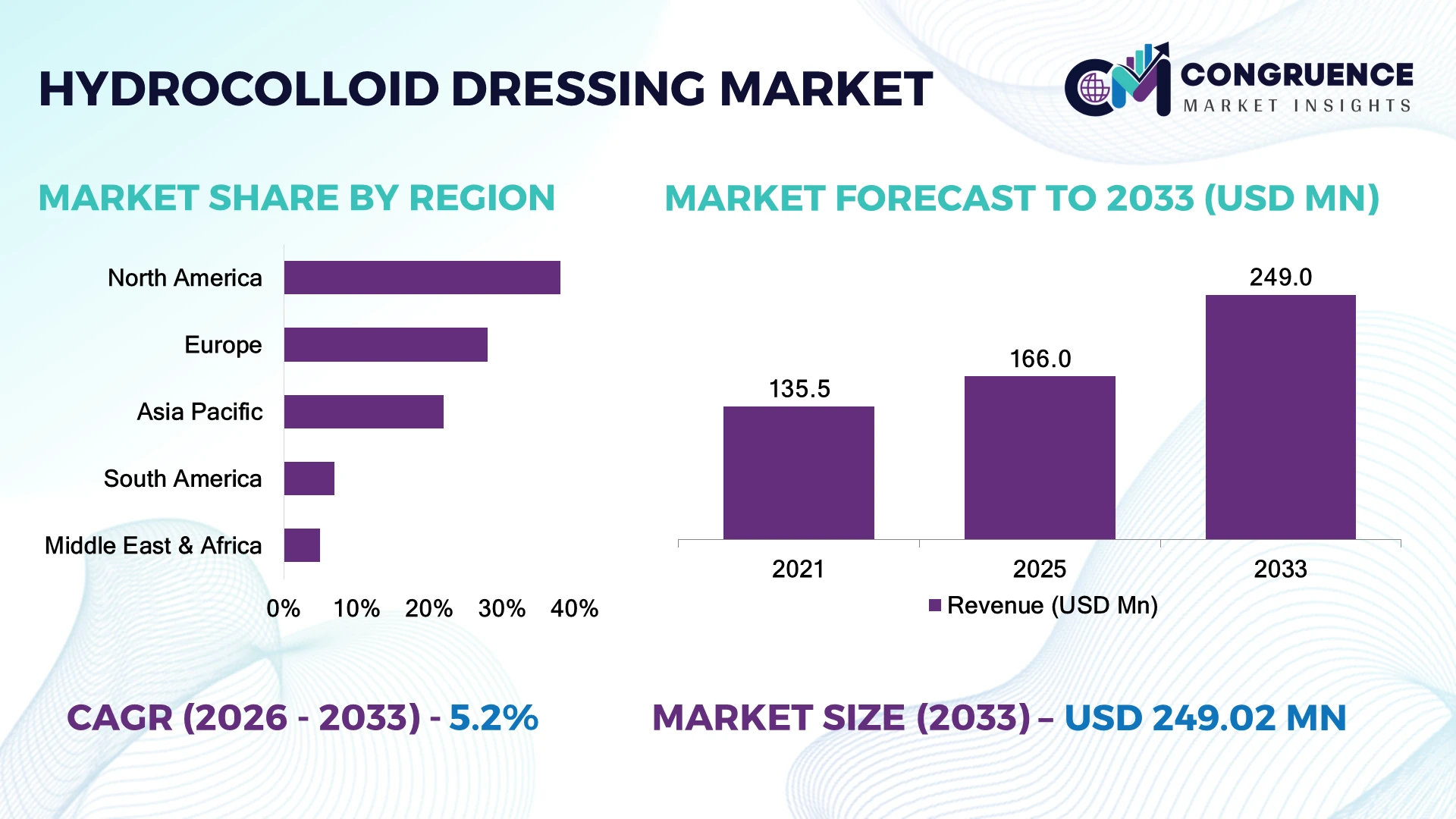
The United States dominates the hydrocolloid dressing landscape with approximately 38% market share, supported by advanced wound care infrastructure, Medicare-backed reimbursement frameworks, and strong adoption across hospitals and home-care settings. U.S. healthcare providers increasingly integrate hydrocolloid solutions with digital wound monitoring platforms, while China, accounting for nearly 18% share, is expanding domestic manufacturing capacity through healthcare modernization initiatives. The U.S. wound care sector records over 6.5 million chronic wound cases annually, creating sustained demand.
Strategic investments in localized production and clinical innovation will determine competitive positioning.
Market Size & Growth: USD 166.0 Million (2025) to USD 249.0 Million (2033), expanding at 5.2% CAGR, driven by advanced moisture-balancing wound care technologies and chronic wound management adoption.
Top Growth Drivers: Diabetes-related wounds (≈30%), surgical wounds (≈25%), and home healthcare adoption (≈20%) represent key demand contributors.
Short-Term Forecast: By 2028, hospitals are expected to improve wound management efficiency by 15–20% through digital tracking and advanced dressing protocols.
Emerging Technologies: AI-based wound assessment, antimicrobial hydrocolloid formulations, and bioactive material integration are reshaping next-generation wound care.
Regional Leaders: North America approaches USD 95 Million by 2033 with digital wound platforms; Asia-Pacific reaches nearly USD 75 Million with manufacturing expansion; Europe exceeds USD 55 Million through clinical adoption.
Consumer/End-User Trends: Home-care usage accounts for nearly 35% adoption as patients seek convenient self-management wound solutions.
Pilot/Case Example: A 2024 U.S. hospital wound-care program using advanced dressings reduced dressing-change frequency by approximately 25%.
Competitive Landscape: Leading manufacturers such as 3M, ConvaTec Group, Smith & Nephew, Coloplast, and Mölnlycke Healthcare maintain strong global positions, with leading players controlling over 40% combined share.
Regulatory & ESG Impact: Sustainable dressing materials and reduced medical waste initiatives are influencing procurement decisions, with hospitals targeting 10–15% waste reduction.
Investment & Funding: Over USD 500 Million has been directed toward advanced wound care innovation, manufacturing expansion, and healthcare technology partnerships.
Innovation & Future Outlook: Next-generation hydrocolloid dressings integrating sensors, antimicrobial agents, and personalized wound monitoring will strengthen competitive differentiation.
Hydrocolloid dressings are becoming a preferred advanced wound management solution due to their ability to maintain a controlled healing environment, reduce dressing frequency, and improve patient comfort. Product innovation is shifting toward thinner formulations, antimicrobial enhancements, and combination technologies, with approximately 35% of healthcare providers prioritizing advanced wound products over conventional gauze-based solutions. Global supply-chain restructuring and increased regulatory focus on clinical outcomes are accelerating adoption across hospitals, ambulatory centers, and home-care networks.
The hydrocolloid dressing market is gaining strategic importance as healthcare systems shift from reactive wound treatment toward outcome-based care models. Rising chronic wound prevalence, aging populations, and pressure to reduce hospital resource utilization are encouraging manufacturers to invest in advanced material science, localized production, and digital wound-management ecosystems. Regulatory emphasis on clinical effectiveness and healthcare cost optimization is accelerating procurement changes across developed markets.
Compared with traditional gauze dressings requiring frequent replacement, hydrocolloid technologies reduce dressing-change frequency by approximately 25–40% while improving moisture control and patient adherence. The United States leads in clinical deployment due to established reimbursement structures, while China and India are expanding adoption through hospital modernization and domestic manufacturing programs.
Over the next 2–3 years, companies will prioritize sensor-enabled wound monitoring, antimicrobial formulations, and strategic partnerships with healthcare providers. For example, hospitals integrating digital wound documentation with advanced dressings are improving treatment tracking and reducing operational delays. Manufacturers are responding through production expansion, R&D investments, and regional partnerships. Competitive advantage will depend on combining material innovation, supply-chain resilience, and clinically validated performance.
The increasing burden of diabetic foot ulcers, pressure injuries, and surgical wounds is accelerating hydrocolloid dressing adoption. Diabetes-related wound cases contribute nearly 30% of advanced wound care demand, while hospitals using moisture-retentive technologies report approximately 20% improvement in healing management efficiency. The United States, Japan, and Germany are expanding reimbursement support for evidence-based wound products, encouraging manufacturers to enhance product portfolios. Companies are investing in antimicrobial hydrocolloid layers, thinner adhesive designs, and partnerships with healthcare networks. A key operational shift is the movement toward outpatient and home-based wound management, reducing hospital workload while increasing demand for convenient advanced dressings.
Hydrocolloid dressing manufacturers face challenges from adhesive polymer price volatility, regulatory compliance expenses, and dependence on specialized raw materials. Production costs for medical-grade polymers and absorbent compounds have increased by approximately 10–15% due to supply-chain disruptions. European manufacturers experience additional pressure from stricter medical device compliance requirements, while emerging markets face import dependency exceeding 40% for specialized wound care materials. Companies are mitigating risks through supplier diversification, regional manufacturing facilities, and long-term procurement agreements. The primary business impact remains margin pressure, especially for manufacturers competing in price-sensitive hospital procurement environments.
Integration of digital health technologies presents new opportunities for hydrocolloid dressing manufacturers. Sensor-enabled dressings and AI-supported wound assessment platforms are expected to improve monitoring efficiency by 20–30% in clinical environments. India, Brazil, and Southeast Asian markets are creating growth opportunities through expanding healthcare infrastructure and rising chronic disease management programs. Companies are developing hybrid products combining hydrocolloid materials with antimicrobial compounds and remote monitoring capabilities. A significant opportunity lies in reducing unnecessary dressing changes through data-driven treatment decisions, enabling healthcare providers to lower operational costs while improving patient outcomes.
The market faces execution challenges related to technology integration, workforce training, and inconsistent healthcare infrastructure. Nearly 35% of healthcare facilities in developing economies continue to face limitations in adopting advanced wound management protocols due to cost and training barriers. Hospitals also require standardized digital documentation systems to maximize the value of smart dressing technologies. Companies must address these challenges through clinician education programs, regional partnerships, and simplified product designs. Long-term competitiveness will depend on balancing innovation with affordability while ensuring consistent clinical performance across developed and emerging healthcare environments.
Smart Wound Monitoring Adoption Digital wound assessment tools are gaining traction, with hospitals reporting nearly 25% improvement in monitoring accuracy and 20% faster treatment documentation. AI-enabled wound tracking platforms are being integrated with hydrocolloid solutions to optimize clinical workflows. Healthcare providers in the United States are partnering with technology firms to combine dressing performance data with electronic health records, improving operational visibility and reducing manual reporting workload.
Sustainable Material Transition Manufacturers are shifting toward eco-friendly hydrocolloid materials as healthcare organizations target 10–15% reductions in medical waste. European procurement policies emphasizing sustainability and lifecycle management are accelerating adoption of recyclable packaging and lower-waste dressing designs. Companies are restructuring supply chains by expanding bio-based material sourcing and investing in environmentally optimized manufacturing processes to meet evolving hospital purchasing standards.
Home-Care Delivery Expansion Home-based wound management is increasing, with adoption rates exceeding 35% among chronic wound patients requiring long-term care support. Remote care models are reducing hospital visits by nearly 20% while improving patient convenience. Companies are expanding direct-to-consumer channels, digital support platforms, and simplified application designs to address rising demand from aging populations and outpatient healthcare networks.
Localized Manufacturing Growth Supply-chain restructuring is driving regional production investments, with manufacturers increasing local capacity by approximately 15–20% to reduce dependency on imported medical materials. Global logistics disruptions and regulatory requirements are encouraging companies to establish manufacturing hubs closer to healthcare markets. Strategic partnerships and automation adoption are helping producers improve delivery speed, inventory control, and production consistency.
Standard hydrocolloid dressings represent the leading type segment, accounting for approximately 55% market share due to broad hospital adoption, cost efficiency, and proven moisture-management performance. Their scalability across pressure ulcers, surgical wounds, and chronic wound applications supports continued demand. Thin hydrocolloid variants are emerging as the fastest-growing category, expanding at nearly 8% adoption growth as healthcare providers prioritize patient comfort, flexibility, and reduced dressing visibility. Traditional hydrocolloid products remain important in cost-sensitive healthcare environments, while advanced formulations incorporating antimicrobial layers and enhanced absorption technologies are gaining preference in specialized wound centers. Manufacturers are increasing investments in product differentiation, with approximately 30% of new product development activities focused on improved adhesion, skin protection, and longer wear duration. Companies are responding through portfolio expansion, clinical partnerships, and localized production strategies.
Chronic wound management leads the application segment with nearly 60% market share, supported by rising diabetic foot ulcers, pressure injuries, and long-term wound treatment requirements. Hospitals and specialized wound clinics represent the largest demand centers due to their need for reliable moisture-control technologies. Surgical wound care is the fastest-growing application area, with adoption increasing by approximately 10% as healthcare providers seek efficient post-operative recovery solutions. Burn care, trauma wounds, and minor injury management continue to contribute through expanding outpatient and home-care applications. Approximately 40% of healthcare facilities are adopting advanced dressing protocols to reduce treatment complexity and improve patient outcomes. Companies are adapting by developing application-specific hydrocolloid solutions, improving packaging formats, and strengthening partnerships with hospitals and home-care providers.
Hospitals and clinics represent the leading end-user segment with approximately 65% market share due to high wound treatment volumes, established procurement systems, and dependence on clinically validated products. Large healthcare networks in the United States and Germany continue to drive adoption through advanced wound management programs. Home healthcare providers are the fastest-growing end-user group, expanding at nearly 12% adoption growth as patient care shifts toward outpatient environments. Ambulatory surgical centers, long-term care facilities, and specialty wound clinics are increasing usage as healthcare systems focus on reducing inpatient pressure and improving treatment efficiency. Around 35% of chronic wound patients are increasingly managed outside traditional hospital settings, creating new demand channels. Companies are targeting these segments through customized product sizes, training programs, distribution partnerships, and digital support services.
North America accounted for the largest market share at 38% in 2025 however, Asia-Pacific is expected to register the fastest growth, expanding at a CAGR of 6.1% between 2026 and 2033.

North America maintains a leading position due to established wound management infrastructure, high chronic disease prevalence, and strong reimbursement support for advanced medical dressings. The region contributes approximately 38% of global hydrocolloid dressing demand, with hospitals, ambulatory centers, and home-care providers representing major deployment channels. The United States drives regional consumption through large-scale adoption of evidence-based wound protocols and digital health integration. More than 60% of advanced wound care centers in major healthcare networks utilize specialized dressing technologies to improve treatment consistency. Companies are expanding manufacturing capacity, forming healthcare partnerships, and investing in smart wound monitoring solutions to strengthen operational efficiency and clinical outcomes.
United States Market Outlook: The United States remains the dominant country due to advanced healthcare infrastructure, strong medical device innovation, and widespread chronic wound management programs. Over 6 million people are affected by chronic wounds annually, supporting continuous demand for advanced dressing solutions. Manufacturers are focusing on antimicrobial hydrocolloid formulations, digital wound platforms, and hospital procurement partnerships to improve adoption across healthcare systems.
Europe represents a mature hydrocolloid dressing market supported by advanced healthcare systems, strict medical device standards, and sustainability-focused procurement practices. Countries including Germany, France, and the United Kingdom drive adoption through hospital modernization and evidence-based wound care programs. The region accounts for approximately 28% of global demand, with increasing preference for environmentally optimized medical products. European healthcare providers are integrating advanced dressings into outpatient treatment models, reducing hospital resource pressure. More than 40% of healthcare organizations are prioritizing sustainable medical supply chains, encouraging manufacturers to redesign packaging and improve material efficiency. Companies are responding through localized production, regulatory compliance investments, and partnerships with healthcare institutions.
Germany Market Outlook: Germany leads European adoption due to its advanced hospital network, medical technology expertise, and strong focus on clinical efficiency. The country’s healthcare system supports widespread use of specialized wound care products, with more than 20,000 healthcare facilities creating extensive deployment opportunities. Manufacturers are strengthening partnerships with hospitals and investing in sustainable production capabilities to align with evolving procurement priorities.
Asia-Pacific is emerging as the fastest-expanding hydrocolloid dressing market due to healthcare infrastructure development, rising chronic disease cases, and increasing domestic manufacturing capabilities. China, Japan, India, and South Korea are improving medical supply resilience through local production investments and technology adoption. The region contributes nearly 22% of current global demand, with China accounting for a significant share through large-scale healthcare manufacturing. Medical device production capacity in China has expanded by more than 15% in recent years, supporting regional supply availability. Companies are increasing investments in automated production lines, export capabilities, and affordable product portfolios to address diverse healthcare requirements across developing markets.
China Market Outlook: China holds a strategic position through its extensive medical manufacturing ecosystem, expanding hospital infrastructure, and government-supported healthcare modernization programs. The country has more than 35,000 hospitals, creating substantial demand for advanced wound management solutions. Domestic manufacturers are improving production efficiency through automation, quality certification programs, and partnerships with healthcare providers.
South America is experiencing gradual hydrocolloid dressing adoption supported by improving healthcare access, rising diabetes prevalence, and expansion of private healthcare networks. Brazil and Argentina represent the largest demand centers due to their hospital infrastructure and growing investment in advanced medical products. The region contributes approximately 7% of global demand, with adoption concentrated in urban healthcare facilities. Private hospitals are increasingly adopting advanced wound management protocols, while public healthcare systems continue facing budget limitations. Companies are addressing market challenges through regional distribution partnerships, localized inventory management, and cost-optimized product offerings. Approximately 30% of healthcare procurement growth is linked to modernization initiatives in major urban centers.
Brazil Market Outlook: Brazil leads South American demand due to its large patient population, expanding private healthcare sector, and improving medical infrastructure. The country operates more than 6,000 hospitals, supporting significant wound care product requirements. Manufacturers are strengthening distributor networks and introducing affordable hydrocolloid solutions to expand access beyond major metropolitan healthcare facilities.
The Middle East & Africa market is developing through healthcare modernization programs, hospital infrastructure expansion, and increasing investment in specialized medical care. Gulf countries are leading adoption through advanced hospital networks and government healthcare transformation initiatives. The region represents approximately 5% of global hydrocolloid dressing demand, with Saudi Arabia and the United Arab Emirates accounting for major deployment activity. Healthcare infrastructure investments across Gulf markets have increased substantially, with several new specialty hospitals incorporating advanced wound care systems. Companies are expanding distribution partnerships, establishing regional supply networks, and adapting products for diverse healthcare environments. Digital healthcare transformation is also improving wound management efficiency in leading medical facilities.
Saudi Arabia Market Outlook: Saudi Arabia is the most strategically important market due to healthcare transformation programs, expanding hospital capacity, and increasing adoption of advanced medical technologies. The country’s healthcare sector includes more than 500 hospitals, creating strong demand for specialized wound management products. Manufacturers are targeting partnerships with healthcare providers and distributors to support long-term market penetration.
The hydrocolloid dressing market features competition between global wound care leaders such as 3M, Smith & Nephew, ConvaTec, and Coloplast against regional manufacturers competing through pricing and distribution strength. Top five players collectively control approximately 45% of the market, creating a moderately consolidated structure. Competition is driven by product performance, antimicrobial technology, supply reliability, customization, and hospital procurement efficiency. Advanced manufacturers invest 8–12% of annual innovation budgets into next-generation materials, while cost-focused suppliers compete through localized production and lower manufacturing expenses. Companies are expanding through healthcare partnerships, automated production facilities, and portfolio diversification. The competitive landscape is shifting toward smart wound care integration, sustainable materials, and supply-chain control following global logistics disruptions. Entry barriers remain high due to regulatory approvals, clinical validation requirements, and established hospital relationships. Winning requires combining innovation, manufacturing agility, clinical evidence, and reliable global distribution capabilities.
Smith & Nephew
ConvaTec Group
Coloplast
Mölnlycke Health Care
Paul Hartmann AG
Cardinal Health
Medline Industries
Integra LifeSciences
Winner Medical
Hollister Incorporated
Lohmann & Rauscher
Nitto Denko Corporation
Acelity
Hydrocolloid dressing technology is advancing through antimicrobial formulations, enhanced absorption materials, and thinner adhesive structures designed for improved patient comfort. Modern hydrocolloid products integrate silver compounds, silicone adhesives, and bioactive components, improving infection-control performance by approximately 15–20% compared with conventional moisture dressings. Adoption is increasing across hospitals and specialty wound clinics as healthcare providers prioritize longer wear time and reduced dressing frequency.
Digital integration is becoming a competitive differentiator, with smart wound monitoring platforms combining sensors, imaging, and AI-based assessment tools. These technologies improve wound tracking efficiency by nearly 25% and reduce documentation workload for clinicians. Compared with traditional manual wound evaluation methods, AI-assisted monitoring enables faster clinical decisions and more consistent treatment pathways. Technology-focused manufacturers and healthcare networks gain advantages through improved workflow visibility and patient outcome management.
Between 2026 and 2028, manufacturers are expected to prioritize automated production, sustainable materials, and connected wound-care ecosystems. Companies investing in smart dressing platforms, recyclable packaging, and localized manufacturing capabilities will strengthen operational resilience. Competitive advantage will increasingly depend on combining material innovation, digital intelligence, and scalable healthcare deployment.
March 2025 — ConvaTec showcased its advanced wound care innovation pipeline at the European Wound Management Association (EWMA) 2025 conference, highlighting next-generation wound solutions focused on exudate management and hard-to-heal wounds. The initiative strengthened clinical partnerships and accelerated adoption of advanced dressing technologies across healthcare networks. Source: www.convatecgroup.com
July 2025 — ConvaTec received regulatory clearance in the US, UK, EU, and Australia for Aquacel™ ConvaFiber™, a next-generation Hydrofiber® dressing designed for chronic wounds, surgical wounds, diabetic foot ulcers, and burns. The innovation improves dressing integrity and expands advanced wound care applications globally. Source: www.convatecgroup.com
September 2025 — Coloplast introduced its Impact4 five-year strategy, combining advanced wound dressing capabilities with Kerecis technologies to strengthen innovation leadership in chronic care. The strategy includes operational improvements through Global Operations Plan 7, targeting improved efficiency and stronger supply-chain performance. Source: www.coloplast.com
October 2025 — Smith+Nephew announced clinical evidence supporting its ALLEVYN COMPLETE CARE 5-Layer Foam Dressing, demonstrating absorption of 93% of mechanical energy linked to pressure injury risks. The development strengthens the company’s advanced wound care portfolio and clinical differentiation strategy.
The Hydrocolloid Dressing Market Report covers comprehensive segmentation analysis across product types, applications, end-users, and geographic markets. The study evaluates standard and advanced hydrocolloid formulations, chronic wound care, surgical applications, hospitals, home healthcare providers, and specialty wound centers. Regional assessment includes North America, Europe, Asia-Pacific, South America, and Middle East & Africa, highlighting adoption patterns, manufacturing trends, and healthcare infrastructure developments.
The report analyzes technology advancements including antimicrobial materials, smart wound monitoring integration, sustainable packaging, and automated manufacturing processes. Covering market participants across global leaders and regional suppliers, the study provides strategic insights into competitive positioning, investment priorities, expansion opportunities, and emerging healthcare trends. The analysis supports business planning by identifying deployment shifts, innovation pathways, and strategic opportunities shaping market direction from 2026 to 2033.
| Report Attribute / Metric | Details |
|---|---|
| Market Revenue (2025) | USD 166.0 Million |
| Market Revenue (2033) | USD 249.0 Million |
| CAGR (2026–2033) | 5.2% |
| Base Year | 2025 |
| Forecast Period | 2026–2033 |
| Historic Period | 2021–2025 |
| Segments Covered |
By Type
By Application
By End-User
|
| Key Deliverables | Revenue Forecast; Market Trends; Growth Drivers & Restraints; Technology Insights; Segmentation Analysis; Regional Insights; Competitive Landscape; Regulatory & ESG Overview; Recent Developments |
| Regions Covered | North America; Europe; Asia-Pacific; South America; Middle East & Africa |
| Companies Profiled | 3M; Smith & Nephew; ConvaTec Group; Coloplast; Mölnlycke Health Care; Paul Hartmann AG; Cardinal Health; Medline Industries; Integra LifeSciences; Winner Medical; Hollister Incorporated; Lohmann & Rauscher; Nitto Denko Corporation; Acelity |
| Customization & Pricing | Available on Request (10% Customization Free) |




