
Reports
The Global Hot and Cold Therapy Packs Market was valued at USD 1,505.2 Million in 2025 and is anticipated to reach a value of USD 2,547.8 Million by 2033 expanding at a CAGR of 6.8% between 2026 and 2033. Growth is being driven by reusable gel formulations, sports-recovery adoption, outpatient rehabilitation, and consumer preference for non-pharmacological localized pain management.
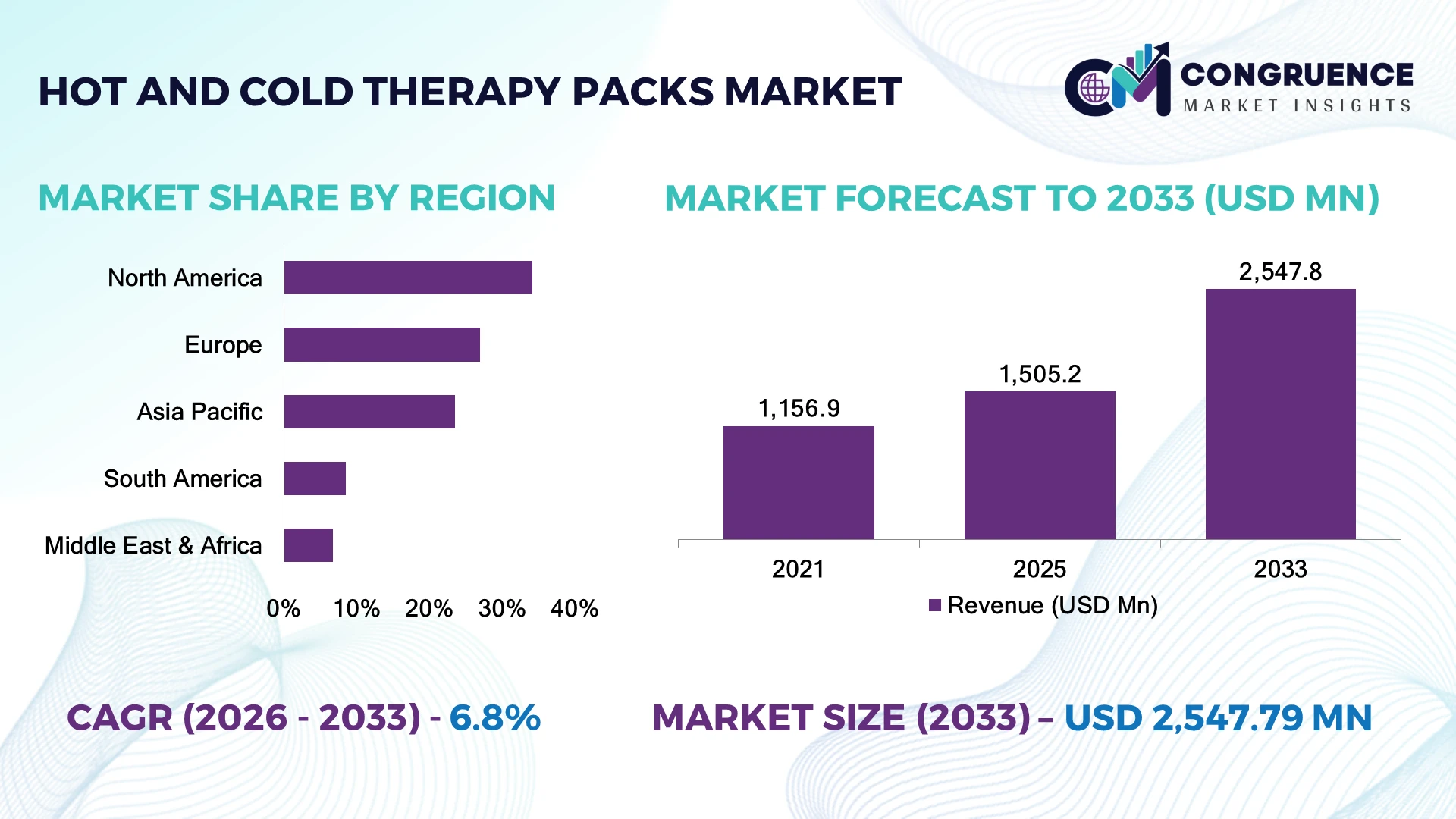
The United States remains the dominant country market, supported by its large sports-medicine, physical-therapy, and retail healthcare ecosystem; it accounts for an estimated 34% of global demand, while Germany contributes about 8%. U.S. manufacturers are investing in reusable multi-temperature packs, insulated sleeves, and ergonomic designs, while European producers emphasize recyclable materials and lower-plastic packaging. U.S. sports and rehabilitation channels show particularly strong repeat-use adoption.
Strategically, manufacturers should prioritize reusable, differentiated products and high-volume U.S. distribution while developing cost-efficient European and Asian supply chains.
Market Size & Growth: USD 1,505.2 million in 2025 to USD 2,547.8 million by 2033 at 6.8% CAGR, driven by reusable therapy formats and sports-recovery applications.
Top Growth Drivers: Sports recovery 31%, rehabilitation 27%, household pain management 22% are the strongest demand contributors.
Short-Term Forecast: By 2028, automated filling and improved gel formulations can reduce manufacturing waste by 8% and increase production efficiency by 12%.
Emerging Technologies: Phase-change materials, advanced gel composites, and temperature-indicating surfaces are improving thermal retention by 10–18%.
Regional Leaders: North America is projected at approximately USD 900 million, Europe at USD 650 million, and Asia-Pacific at USD 610 million, with Asia-Pacific showing the fastest channel expansion.
Consumer/End-User Trends: Reusable packs represent approximately 64% of consumer preference, reflecting stronger emphasis on repeat use and lower replacement frequency.
Pilot/Case Example: 2025 rehabilitation programs using combined hot-cold protocols recorded approximately 15% faster session-level recovery indicators in structured therapy settings.
Competitive Landscape: Leading manufacturers include Cardinal Health, 3M, Medline, Carex Health Brands, and Dynarex, with leading branded suppliers collectively controlling roughly 30% of organized-market sales.
Regulatory & ESG Impact: Reusable formats can reduce single-use product consumption by approximately 35%, strengthening procurement appeal where healthcare organizations impose waste-reduction targets.
Investment & Funding: Approximately USD 180 million in recent manufacturing, product-development, and channel-expansion commitments are supporting automated production, packaging redesign, and international distribution.
Innovation & Future Outlook: Smart temperature indicators, phase-change materials, recyclable polymers, and multifunctional compression systems are shifting competition toward performance, durability, and integrated recovery solutions.
Hot and cold therapy packs are gaining traction across sports medicine, physiotherapy, orthopedic recovery, home healthcare, and workplace injury management. Reusable gel packs account for approximately 64% of consumer preference, while advanced sleeves and phase-change materials are improving temperature retention. In 2026, packaging redesign and regional supply-chain localization are becoming important as healthcare buyers tighten sustainability and procurement requirements.
The market is becoming strategically important because manufacturers are shifting from basic disposable packs toward reusable, higher-durability recovery products that generate repeat purchasing and stronger institutional relationships. Sports medicine, physiotherapy, orthopedic clinics, and home healthcare providers increasingly favor products combining thermal therapy with compression, ergonomic sleeves, and controlled application.
Technology is creating measurable differentiation. Modern phase-change and advanced gel systems can retain therapeutic temperature approximately 15% longer than conventional gel-filled packs, while automated filling and sealing can improve manufacturing throughput by 10–12%. North America remains stronger in premium sports-recovery and clinical channels, whereas Asia-Pacific combines manufacturing scale with rapidly expanding consumer-health distribution.
Between 2026 and 2028, manufacturers are expected to prioritize reusable designs, temperature indicators, recyclable materials, and integrated compression systems. A practical deployment model is the use of standardized hot-cold packs across physiotherapy networks, allowing clinics to reduce SKU complexity while maintaining treatment flexibility. Companies are therefore directing investment toward automated production, localized sourcing, and distributor partnerships. Competitive advantage will increasingly depend on thermal performance, durability, production efficiency, and institutional channel penetration rather than basic pack availability.
Reusable therapy packs are gaining commercial traction as sports medicine and physiotherapy providers prioritize repeat-use products, with reusable formats representing approximately 64% of consumer preference and sports-recovery applications contributing about 31% of demand. Advanced gel formulations and insulated sleeves extend therapeutic temperature retention by 10–18%, improving session consistency. In the United States, rehabilitation networks are increasingly standardizing reusable packs across treatment protocols, reducing replacement frequency and SKU complexity. Manufacturers are responding by expanding multi-temperature product lines, investing in improved gel chemistry, and partnering with institutional distributors. The non-obvious advantage is procurement efficiency: standardized reusable packs can support multiple treatment workflows, allowing clinics to consolidate inventory while maintaining hot- and cold-therapy flexibility.
Polymer, gel, packaging, and freight costs remain structural constraints, particularly for manufacturers dependent on imported raw materials. Packaging and polymer inputs can represent approximately 20–25% of finished-product cost, while logistics can add 8–12% in import-dependent markets. In India and Brazil, currency movements can amplify landed-cost volatility and complicate long-term pricing agreements. Regulatory requirements for leak resistance, labeling, material safety, and product durability also increase qualification expenses. These pressures directly compress margins for low-priced therapy packs and make international expansion less predictable. Companies are responding through regional sourcing, dual-supplier contracts, simplified packaging, and localized assembly. A key operational pressure point is balancing lower material intensity with sufficient pack durability to prevent leakage, returns, and institutional replacement costs.
Temperature-indicating surfaces, phase-change materials, and integrated compression sleeves create opportunities beyond conventional gel packs. Advanced thermal technologies can extend temperature retention by approximately 15–20%, while integrated compression formats can reduce separate equipment requirements by 10–15% in selected rehabilitation workflows. Japan's advanced materials ecosystem and Germany's rehabilitation-device manufacturing base provide strong platforms for technology commercialization. Manufacturers are investing in R&D for reusable phase-change packs, ergonomic wraps, and recyclable polymer systems, while partnerships with sports-performance and physiotherapy networks accelerate product validation. A less obvious opportunity lies in institutional standardization: multi-function packs can replace several single-purpose SKUs, lowering inventory complexity and creating stronger recurring procurement relationships across clinics, sports teams, and occupational-health programs.
Manufacturers face execution challenges when scaling advanced therapy packs across different formulations, sizes, and temperature requirements. Automated filling and sealing can improve throughput by 10–12%, but inconsistent gel viscosity, seal integrity, and thermal performance can still create batch-level variation of 5% or more. Labor shortages in specialized manufacturing hubs further increase dependence on process automation and quality-control systems. In the United States, institutional buyers increasingly require consistent dimensions, leak resistance, and repeat-use durability across large procurement batches. Companies must therefore invest in inline inspection, automated dosing, formulation controls, and supplier qualification. The strategic challenge is not production volume alone; it is maintaining identical thermal performance across high-volume batches while introducing recyclable materials and more complex multifunctional designs.
Reusable Formats Reshape Procurement Reusable packs now represent approximately 64% of consumer preference, while institutional buyers increasingly favor products designed for repeated clinical use. U.S. physiotherapy providers are consolidating hot- and cold-therapy SKUs, reducing replacement purchasing by an estimated 10–15%. Manufacturers are responding with reinforced seams, durable sleeves, and multi-temperature designs that improve procurement efficiency.
Phase-Change Materials Gain Traction Advanced phase-change materials are improving thermal retention by approximately 15–20% compared with conventional gel formats. Sports-recovery brands are integrating these materials into flexible wraps and compression systems, increasing session consistency while reducing reapplication frequency. Companies are scaling specialized formulations as athletes and rehabilitation providers demand predictable temperature performance during structured recovery protocols.
Sustainable Packaging Becomes Commercial Packaging redesign is accelerating as healthcare and retail buyers reduce unnecessary plastic consumption. Recyclable or reduced-material packaging can lower packaging weight by approximately 20–30%, while reusable packs reduce replacement-related material consumption. European manufacturers are prioritizing lower-plastic formats and simplified packaging, while global suppliers are restructuring procurement around recyclable polymers and regional packaging operations.
Integrated Recovery Systems Expand Multifunctional products combining thermal therapy, compression, and ergonomic fixation are gaining adoption, with integrated formats potentially reducing separate equipment requirements by 10–15%. Sports clinics and occupational-health providers are increasingly standardizing these systems to simplify workflows. Manufacturers are responding through modular product platforms, automated assembly, and partnerships with rehabilitation distributors, shifting competition toward workflow efficiency rather than pack price alone.
Reusable Packs Lead as Cost-Efficient Recovery Tools
Reusable hot and cold therapy packs are estimated to account for approximately 58% of the market, supported by repeated-use economics, flexible temperature application, and stronger penetration across households, clinics, and sports facilities. Their lifecycle cost advantage becomes more pronounced where users require frequent treatment cycles, while gel-based formats retain broad relevance because of moldability and thermal consistency. Disposable packs represent roughly 27%, benefiting from portability, hygiene, and immediate activation in emergency, travel, and occupational settings.
Thermal phase-change packs are emerging as the fastest-growing type, with adoption expanding around 9–11% annually within purchasing programs seeking longer temperature retention and reduced preparation time. Manufacturers are increasing investment in non-toxic gels, leak-resistant laminates, and ergonomic designs, while approximately 35% of product-development activity is shifting toward improved thermal stability and user safety. Established reusable formats remain volume anchors, but emerging technologies are redirecting investment toward differentiated performance and premium clinical applications.
The American College of Sports Medicine’s 2025 program included suppliers offering reusable hot and cold gel packs, reflecting continued product integration within professional sports-medicine ecosystems.
Sports Recovery Shifts Toward Rapid-Cycle Therapy
Sports injury recovery is estimated to represent approximately 36% of market demand, making it the leading application because athletes, trainers, and rehabilitation providers require rapid, repeatable temperature-based treatment after strains, sprains, and high-intensity activity. Post-surgical recovery follows at about 29%, supported by structured rehabilitation pathways and increasing emphasis on multimodal pain management. Chronic musculoskeletal conditions account for another substantial share, with home-use applications strengthening as patients seek convenient non-pharmacological interventions.
Post-surgical and rehabilitation applications are the fastest-growing use cases, driven by shorter hospital stays, outpatient procedures, and home-based recovery. Approximately 41% of buyers in these settings increasingly prioritize products that combine controlled temperature retention, anatomical flexibility, and reusable construction. Sports-focused users continue favoring portability and rapid cooling, while clinical buyers place greater weight on consistency, hygiene, and protocol compatibility. Companies are responding through clinic partnerships, expanded pack sizes, and designs tailored to knees, shoulders, backs, and other high-use anatomical areas.
The American Academy of Orthopaedic Surgeons continues to identify cryotherapy and heat among physical strategies used within multimodal approaches to musculoskeletal pain management, reinforcing their operational relevance in postoperative and rehabilitation pathways.
Home-Based Care Expands Beyond Institutional Buyers
Hospitals and clinics remain the leading end-user group, representing approximately 42% of market demand because of postoperative care, rehabilitation protocols, and recurring procurement requirements. Their purchasing decisions emphasize standardized performance, hygiene, durability, and predictable supply. Sports and fitness facilities account for roughly 31%, supported by frequent injury-management cycles and athlete recovery programs, while household users form the fastest-growing segment as treatment increasingly shifts from supervised facilities toward home settings.
Household adoption is estimated to be expanding at approximately 10–12% annually, supported by self-care routines, aging populations, and wider access to physical-recovery products. Sports facilities increasingly favor bulk procurement and rapid-cooling formats, whereas hospitals prioritize validated materials and procurement consistency. Manufacturers are responding with direct-to-consumer packaging, multipurpose temperature designs, and institutional contracts. The strategic opportunity is shifting toward products that serve both professional and home environments without sacrificing thermal performance, durability, or ease of use.
A 2026 CDC-published analysis reported that arthritis affects an estimated 35–40% of family caregivers, highlighting the substantial musculoskeletal-care burden within home-based settings where accessible thermal therapy products can support recovery and symptom management.
North America accounted for the largest market share at 34.2% in 2025 however, Asia-Pacific is expected to register the fastest growth, expanding at a CAGR of 8.1% between 2026 and 2033.
Sports medicine and home-based recovery are reshaping product deployment
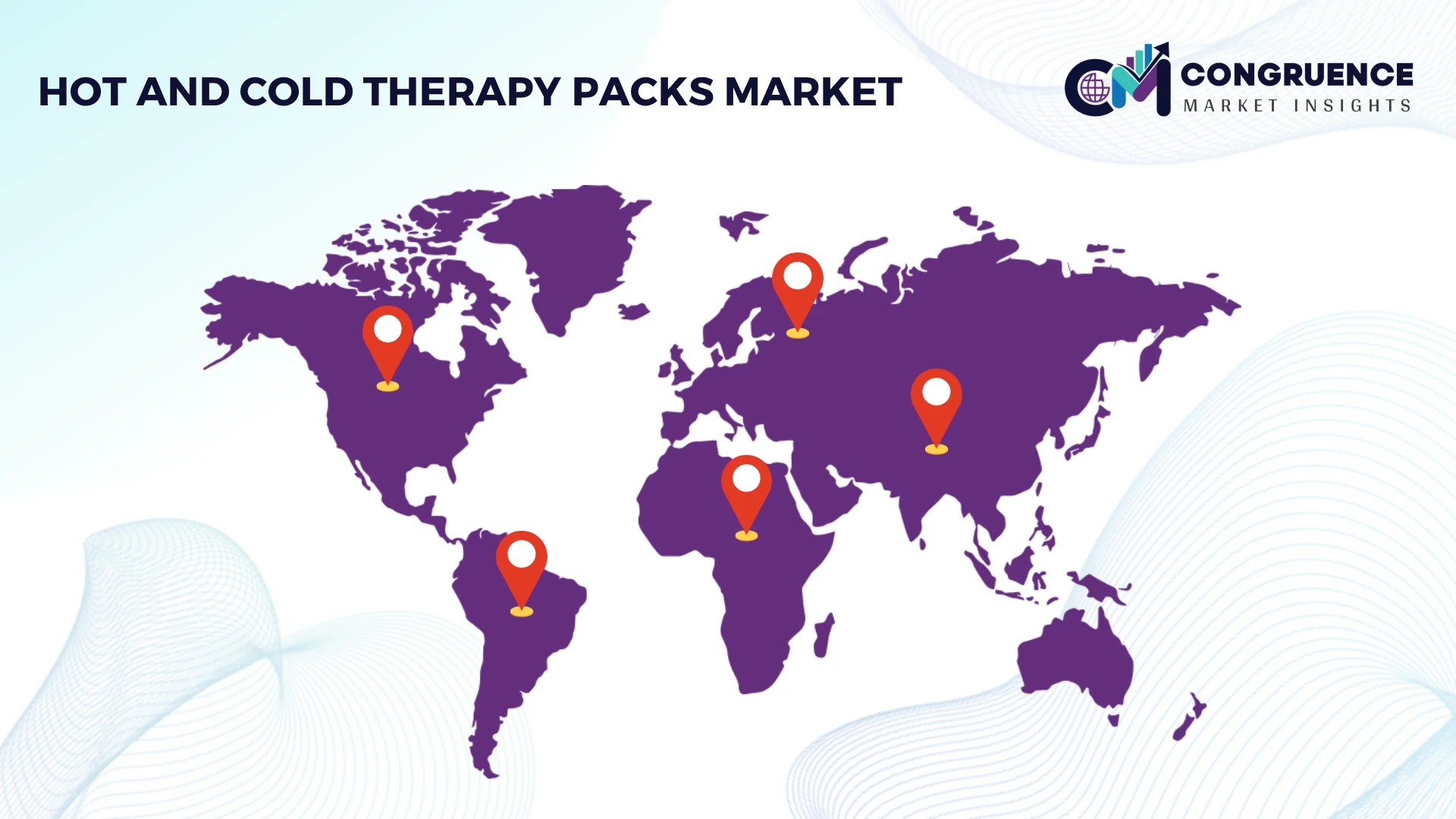
North America held approximately 34.2% of the global market in 2025, supported by extensive sports-medicine infrastructure, outpatient rehabilitation, and high household adoption of reusable thermal therapy products. The United States represents the primary demand center, with professional sports organizations, orthopedic practices, physical-therapy networks, and retail channels creating diversified purchasing pathways. Reusable products account for an estimated 60% of regional demand, reflecting repeated-use economics and established consumer familiarity. Manufacturers are increasingly introducing anatomically contoured packs, faster temperature stabilization, and leak-resistant materials. Retail and healthcare distributors are also expanding private-label portfolios to improve price competitiveness. Rising outpatient treatment volumes are strengthening demand for compact recovery products, while institutional buyers increasingly favor standardized formats that reduce replacement frequency and simplify inventory management.
United States Market Outlook: The United States dominates North American demand through its large orthopedic, sports medicine, rehabilitation, and home-health ecosystem. More than 100 million adults live with chronic pain, creating a substantial addressable population for non-invasive thermal management products. Healthcare providers increasingly integrate reusable hot and cold packs into outpatient recovery protocols, while sports organizations prioritize rapid-cycle products capable of repeated daily use. Domestic manufacturers benefit from mature medical-device distribution, extensive retail penetration, and established contract-manufacturing capabilities.
Sustainability and reusable product formats are driving portfolio modernization
Europe represents approximately 27.0% of global demand, with Germany, the United Kingdom, France, and Italy forming the principal commercial markets. Purchasing is increasingly influenced by reusable construction, material safety, packaging reduction, and lifecycle economics as healthcare systems strengthen sustainability requirements. Reusable thermal packs command an estimated 62% of regional demand, exceeding disposable formats because of repeated institutional use. Manufacturers are redesigning packaging and gel formulations while improving temperature retention by approximately 8–12% in newer product generations. Pharmacy chains, rehabilitation providers, and sports facilities are broadening private-label offerings, creating pressure on established brands to compete through material innovation, ergonomic design, and procurement efficiency rather than product availability alone.
Germany Market Outlook: Germany is strategically significant because of its advanced rehabilitation infrastructure, large healthcare manufacturing base, and strong preference for durable medical and therapeutic products. Its extensive network of physiotherapy practices and orthopedic providers supports recurring institutional demand. Approximately 60% of therapy-pack purchasing is estimated to favor reusable formats, reinforcing opportunities for manufacturers offering long-life materials, recyclable packaging, and standardized professional-use configurations.
Manufacturing scale is accelerating affordable thermal-therapy adoption
Asia-Pacific is estimated to represent about 23.5% of global demand, while its manufacturing ecosystem gives the region disproportionate importance for supply and product-cost optimization. China remains a major production center, while Japan, South Korea, India, and Australia contribute growing healthcare and sports-recovery demand. E-commerce expansion is widening household access, with online channels estimated to account for more than 30% of consumer purchases in major urban markets. Manufacturers are shifting toward lightweight gel formulations, flexible laminates, and multi-temperature products to reduce logistics costs. Regional producers increasingly combine domestic manufacturing with export-oriented distribution, allowing competitive pricing while supporting faster replenishment across pharmacies, sports retailers, and healthcare distributors.
China Market Outlook: China combines large-scale manufacturing capacity with rapidly expanding consumer-health distribution and sports participation. Domestic producers increasingly manufacture gel-filled packs, flexible thermal wraps, and reusable compression-compatible products for both domestic and export markets. Online retail penetration provides manufacturers with direct access to consumers and enables rapid product testing. The country's established plastics, packaging, and medical-product supply chains also support shorter production cycles and greater customization for institutional and private-label buyers.
Sports participation and pharmacy-led distribution are widening access
South America represents an estimated 8.5% of global demand, with Brazil accounting for the largest share because of its population scale, healthcare network, sports culture, and extensive pharmacy distribution. Thermal packs are increasingly used across physical therapy, sports recovery, household first-aid, and musculoskeletal-care applications. Reusable products represent roughly 55% of regional demand, reflecting affordability and repeated-use advantages. Brazil's pharmacy and e-commerce channels are expanding product availability beyond specialist healthcare outlets, while local distributors increasingly favor compact multipurpose formats. Currency volatility and dependence on imported specialty materials remain constraints, encouraging suppliers to localize packaging and source more components domestically. Competitive advantage increasingly depends on maintaining affordable unit economics without sacrificing thermal performance.
Brazil Market Outlook: Brazil is the principal South American market, supported by a large healthcare consumer base, extensive pharmacy networks, and significant participation in professional and recreational sports. More than 20 million adults are estimated to participate regularly in organized or structured physical activity, creating recurring recovery-product demand. Local distributors increasingly prioritize reusable packs and multipurpose formats that fit pharmacy, physiotherapy, and household channels, while domestic packaging capabilities help reduce exposure to imported finished-product costs.
Healthcare modernization is creating new institutional demand
Middle East & Africa accounts for approximately 6.8% of global demand, with the United Arab Emirates, Saudi Arabia, and South Africa serving as important commercial centers. Healthcare infrastructure investment, private hospital expansion, sports medicine, and rehabilitation services are increasing institutional demand for thermal therapy products. Saudi Arabia's healthcare transformation programs and sports-sector investment are strengthening demand for professional recovery equipment and consumables. Premium reusable packs currently represent an estimated 50% of regional demand, while disposable formats retain relevance in hospitals and travel-related applications. Suppliers are responding through distributor partnerships, localized inventory, and broader pharmacy-channel penetration. The principal opportunity lies in supplying standardized products to expanding rehabilitation and sports-health networks while maintaining reliable temperature performance in demanding climates.
Saudi Arabia Market Outlook: Saudi Arabia offers the strongest strategic opportunity through healthcare modernization, sports infrastructure expansion, and rising investment in rehabilitation services. The country has committed more than SAR 1 billion to sports-sector development across multiple initiatives, strengthening demand for sports medicine and recovery products. Hospitals, rehabilitation centers, fitness operators, and professional sports facilities are increasingly adopting standardized therapeutic supplies, creating opportunities for suppliers with institutional distribution, climate-resilient packaging, and differentiated reusable formats.
INTCO Healthcare and Medline compete on scale, distribution, and institutional supply, while Polar Products, Core Products, and ThermoTek compete through reusable designs, specialized recovery systems, and clinical positioning. Private-label manufacturers challenge established brands primarily through lower pricing and faster customization. The top five players collectively hold an estimated 28% share, indicating a fragmented structure. Price remains decisive for approximately 35% of purchasing decisions, while durability influences about 30% and customization nearly 20%. INTCO is strengthening vertically integrated manufacturing, while Polar Products emphasizes reusable, non-toxic formulations and clinical channels. Medline competes through broad rehabilitation distribution, whereas specialized suppliers differentiate through anatomical designs and temperature-control performance. The competitive shift is moving from basic gel packs toward higher-performance materials, sustainable construction, and targeted therapeutic formats. Entry barriers include manufacturing consistency, material validation, distribution access, and institutional procurement relationships. Winning requires scale-efficient production, differentiated thermal performance, dependable supply, and rapid customization.
INTCO Healthcare
Medline Industries
Polar Products
Core Products International
Thermoskin
Rapid Aid
Compass Health Brands
Breg
Koolpak
BodyICE
Arctic Flex
Cryotech Medical
Thermo-Tek
ThermaCare
Hot and cold therapy packs are shifting from conventional gel formulations toward phase-stable gels, multilayer laminates, and temperature-retaining materials. Advanced formulations improve thermal retention by approximately 10–15%, while improved seam construction reduces leakage-related product failures by 5–8%. Reusable formats now represent roughly 60% of institutional purchasing, encouraging manufacturers to prioritize durability, flexible geometry, and repeated-cycle performance.
Emerging products increasingly integrate temperature indicators, anatomically contoured surfaces, antimicrobial covers, and phase-change materials. Temperature-indicating designs can reduce incorrect application exposure by an estimated 10%, while improved thermal distribution increases treatment consistency by approximately 8%. Compared with basic gel packs, newer multilayer constructions deliver roughly 12% longer effective temperature retention. Premium clinical suppliers benefit most because measurable performance supports higher-value institutional procurement and differentiation.
During 2026–2028, automation in filling, RF-welding, inspection, and packaging will further reduce manufacturing waste by an estimated 5–7%. Smart temperature indicators and sustainable bio-based or recycled materials will move from niche differentiation toward broader product portfolios. Companies with vertically integrated manufacturing, validated materials, and flexible private-label capabilities will gain the strongest competitive advantage as buyers increasingly evaluate lifecycle cost alongside unit price.
December 2024 INTCO Healthcare expanded its hot-and-cold therapy portfolio, highlighting annual capacity of approximately 149 million instant packs and 106 million heat patches, strengthening its position in global healthcare and sports-recovery supply. Source: intcohealthcare.com
September 2024 Polar Products highlighted its Soft Ice portfolio using 99% post-consumer recycled content and a water-based formulation, strengthening sustainable reusable therapy positioning while supporting private-label customization for healthcare and professional buyers. Source: polarproducts.com
June 2025 Core Products continued commercial deployment of Soft Comfort CorPak packs featuring an eco-friendly fill, RF-welded seams, and reusable construction, reinforcing product durability and leakage control across clinical and sports-rehabilitation applications. Source: coreproducts.com
July 2025 The Pretty Pickleball Company launched a dedicated hot-and-cold therapy kit priced at $49.99, combining separate hot and cold wraps with adjustable closures, targeting sport-specific recovery and expanding specialized consumer applications. Source: presshook.com
The Hot and Cold Therapy Packs Market Report evaluates reusable, disposable, gel, instant, dry, moist, and advanced thermal formats across sports injury, postoperative recovery, chronic pain management, rehabilitation, household care, and other applications. Coverage spans hospitals and clinics, sports and fitness facilities, households, pharmacies, and institutional buyers across North America, Europe, Asia-Pacific, South America, and the Middle East & Africa.
The study assesses material innovation, temperature-retention technologies, ergonomic designs, sustainable packaging, private-label manufacturing, and supply-chain localization. Competitive analysis covers approximately 10–14 influential participants and evaluates pricing, customization, manufacturing scale, distribution strength, and product differentiation. Quantitative assessment includes segment shares, adoption patterns, production capacity, and institutional purchasing behavior, supporting investment planning, market-entry decisions, manufacturing expansion, partnership strategy, competitive positioning, and product-development priorities through 2033.
| Report Attribute/Metric | Report Details |
|---|---|
|
Market Revenue in 2025 |
USD 1,505.2 Million |
|
Market Revenue in 2033 |
USD 2,547.8 Million |
|
CAGR (2026 - 2033) |
6.8% |
|
Base Year |
2025 |
|
Forecast Period |
2026 - 2033 |
|
Historic Period |
2021 - 2025 |
|
Segments Covered |
By Type
By Application
By End-User
|
|
Key Report Deliverable |
Revenue Forecast, Growth Trends, Market Dynamics, Segmental Overview, Regional and Country-wise Analysis, Competition Landscape |
|
Region Covered |
North America, Europe, Asia-Pacific, South America, Middle East, Africa |
|
Key Players Analyzed |
INTCO Healthcare, Medline Industries, Polar Products, Core Products International, Thermoskin, Rapid Aid, Compass Health Brands, Breg, Koolpak, BodyICE, Arctic Flex, Cryotech Medical, Thermo-Tek, ThermaCare |
|
Customization & Pricing |
Available on Request (10% Customization is Free) |




