Global Holter ECG Market Report Overview
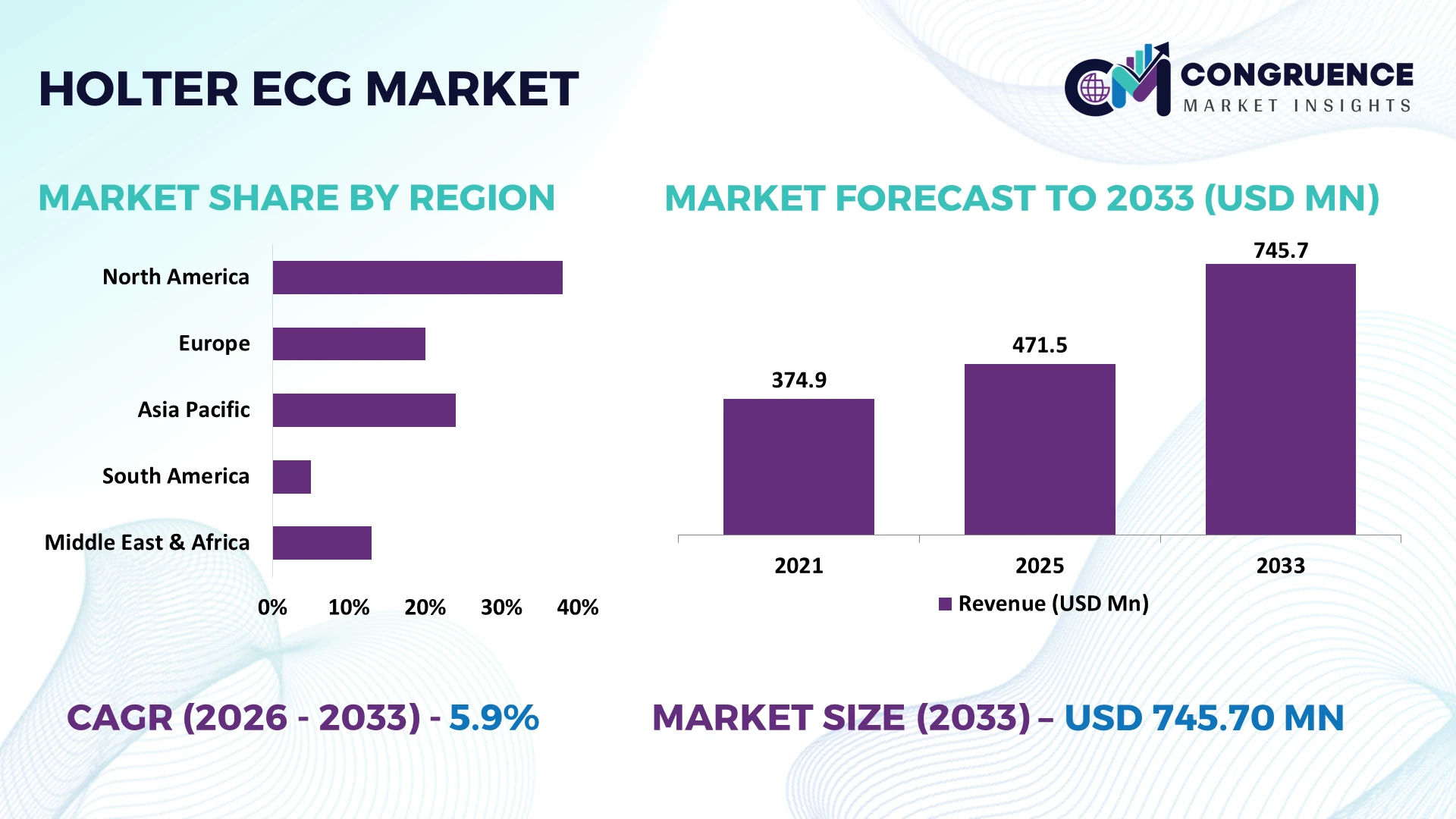
The Global Holter ECG Market was valued at USD 471.47 Million in 2025 and is anticipated to reach a value of USD 745.7 Million by 2033 expanding at a CAGR of 5.9% between 2026 and 2033. Growth is driven by increasing atrial fibrillation detection, aging populations, outpatient cardiac diagnostics, and adoption of AI-assisted ambulatory ECG monitoring systems.
The United States leads advanced Holter ECG adoption through established cardiology networks, ambulatory diagnostic services, and FDA-regulated medical device innovation. Approximately 6.1 million Americans have atrial fibrillation, while adults aged 65 and older represent more than 18% of the population. Compared with India's expanding but more fragmented ambulatory monitoring infrastructure, the United States benefits from Medicare reimbursement pathways and specialized cardiac monitoring providers. Companies including iRhythm Technologies, Philips, and Boston Scientific are advancing extended monitoring, automated arrhythmia detection, and connected diagnostic workflows.
Strategically, the 6.1 million atrial fibrillation patient population and growing elderly demographic strengthen investment priorities around diagnostic accuracy, scalable ECG interpretation, and outpatient monitoring capacity.
Key Highlights of the Global Holter ECG Market
-
Market Size & Growth: USD 471.47 million in 2025, reaching USD 745.7 million by 2033 at 5.9% CAGR, supported by ambulatory cardiac diagnostics.
-
Top Growth Drivers: Adults aged 65+ represent over 18% of Americans, atrial fibrillation affects 2%–3% of adults, and extended monitoring improves detection.
-
Short-Term Forecast: By 2028, automated ECG analysis targets 20%–30% shorter interpretation workflows, strengthening outpatient diagnostic productivity.
-
Emerging Technologies: Three advances include AI arrhythmia classification, wireless ECG patches, and cloud-based monitoring platforms integrating automated clinical reporting.
-
Regional Leaders: Indicative 2033 allocations place North America at USD 276 million, Europe at USD 194 million, and Asia-Pacific at USD 201 million, reflecting connected monitoring adoption.
-
Consumer/End-User Trends: Traditional 24–48-hour Holter testing increasingly complements 7–14-day wearable ECG monitoring for intermittent arrhythmia assessment.
-
Pilot/Case Example: A 2018 randomized study found 14-day ECG patches detected atrial fibrillation in 3.9% of participants versus 0.9% with delayed monitoring.
-
Competitive Landscape: Philips, GE HealthCare, iRhythm Technologies, Schiller, and Bittium compete through monitoring duration, diagnostic software, and clinical integration.
-
Regulatory & ESG Impact: FDA-cleared ambulatory ECG systems support monitoring periods reaching 14 days, increasing diagnostic coverage beyond conventional 48-hour testing.
-
Investment & Funding: USD 50 million in dedicated manufacturing expansion would support wearable sensor production, cloud infrastructure, and automated ECG analysis capabilities.
-
Innovation & Future Outlook: Next-generation systems combine 3-lead recording, AI-assisted classification, and continuous remote workflows to strengthen diagnostic scalability.
The Holter ECG Market is shifting toward longer monitoring periods, automated arrhythmia analysis, and decentralized cardiac diagnostics. Hospitals and cardiology clinics continue using conventional multilead recorders for detailed rhythm assessment, while ambulatory monitoring providers increasingly deploy adhesive ECG patches and cloud-based interpretation platforms. Clinical evidence demonstrates that extended monitoring identifies intermittent arrhythmias missed during shorter recordings. Wearable ECG devices supporting 7–14 days of continuous recording provide substantially longer observation than conventional 24-hour Holter systems. FDA device clearance requirements and reimbursement structures influence product commercialization, encouraging manufacturers to prioritize validated algorithms, patient comfort, and integration with electronic health records.
What Is the Strategic Relevance and Future Pathways of the Holter ECG Market?
Holter ECG monitoring is becoming strategically important as cardiology providers shift from hospital-centered diagnostics toward outpatient rhythm surveillance and digitally integrated care. Atrial fibrillation affects millions of patients globally, creating demand for reliable detection of intermittent cardiac abnormalities. Healthcare providers are restructuring diagnostic workflows around wearable recorders, centralized interpretation services, and electronic health record integration. This transition increases monitoring accessibility while strengthening competition among medical device manufacturers, diagnostic service providers, and clinical software developers.
Conventional Holter monitors typically record 24–48 hours of cardiac activity, whereas extended wearable systems capture 7–14 days, providing up to sevenfold longer monitoring than standard 48-hour testing. The United States leads in commercial monitoring services and reimbursement infrastructure, while European healthcare systems emphasize clinical validation and regulated device integration. India presents opportunities through expanding cardiology facilities and decentralized diagnostic networks. Manufacturers are differentiating through patient comfort, recording reliability, and automated ECG analysis.
During 2026–2028, investment priorities will include AI-assisted rhythm classification, cloud-based reporting, and integration with outpatient care pathways. Cardiology practices increasingly use adhesive ECG patches to investigate intermittent palpitations and suspected atrial fibrillation. Companies including Philips, iRhythm Technologies, and GE HealthCare are strengthening connected monitoring capabilities. Competitive advantage will depend on clinically validated detection, efficient interpretation, and seamless diagnostic workflows.
Holter ECG Market Dynamics
DRIVER:
Rising Arrhythmia Detection and Ambulatory Diagnostic Adoption
Increasing detection of atrial fibrillation and other cardiac rhythm disorders is strengthening demand for ambulatory ECG monitoring. Atrial fibrillation affects approximately 2%–3% of adults, with prevalence rising substantially among older populations. In the United States, adults aged 65 and older represent more than 18% of the population, increasing the clinical relevance of prolonged rhythm surveillance. Extended ECG monitoring improves detection of intermittent arrhythmias compared with conventional short-duration recordings. Hospitals and cardiology practices are integrating wearable monitoring into outpatient diagnostic pathways, reducing dependence on inpatient observation. Companies including iRhythm Technologies and Philips are developing connected ECG platforms and automated interpretation capabilities. The strategic advantage lies in expanding diagnostic coverage without proportionately increasing hospital-based monitoring infrastructure.
RESTRAINT:
Reimbursement Complexity and Diagnostic Infrastructure Disparities
Holter ECG adoption faces constraints from reimbursement differences, diagnostic service costs, and uneven access to specialized cardiac interpretation. Traditional monitoring generally covers 24–48 hours, while extended patch systems support 7–14 days, creating distinct reimbursement and workflow requirements. In the United States, Medicare coverage and coding distinctions influence provider selection between conventional Holter monitoring and longer ambulatory recording services. A 10% reduction in reimbursement per examination would require approximately 11.1% additional procedure volume to maintain equivalent reimbursement receipts, assuming unchanged service mix. Smaller clinics face additional costs for software integration, electrode supplies, and trained interpretation personnel. Manufacturers are responding through reusable recorder designs, subscription-based analysis platforms, and partnerships with diagnostic service providers. Commercial scalability depends on aligning device capabilities with payment structures and clinical capacity.
OPPORTUNITY:
AI-Enabled ECG Interpretation and Decentralized Cardiac Diagnostics
Artificial intelligence creates opportunities to improve Holter ECG interpretation efficiency and extend diagnostic services beyond specialist hospitals. Continuous monitoring generates approximately 100,000 heartbeats daily at typical resting heart rates, creating substantial data review requirements. Automated algorithms identify candidate arrhythmia episodes, allowing clinicians to prioritize abnormal recordings rather than manually reviewing complete datasets. A 20% reduction in interpretation time would increase theoretical reporting capacity by 25% when staffing and other workflow constraints remain unchanged. India's expanding telemedicine infrastructure provides opportunities for centralized ECG interpretation serving geographically dispersed clinics. Manufacturers are developing cloud-connected recorders, automated rhythm classification, and electronic health record interfaces. The competitive opportunity extends beyond hardware sales toward integrated diagnostic services combining monitoring, analysis, and clinical reporting.
CHALLENGE:
Algorithm Validation and Long-Term Diagnostic Data Security
Scaling connected Holter ECG systems requires consistent algorithm performance, secure data transmission, and reliable integration with clinical information systems. A 14-day recording produces seven times more monitoring duration than a conventional 48-hour examination, increasing data management and interpretation requirements. Even a 1% false-positive rate applied to 10,000 analyzed rhythm events would generate 100 incorrect alerts, demonstrating the importance of clinically appropriate validation metrics. FDA-regulated software updates and cybersecurity expectations create additional responsibilities for manufacturers operating connected diagnostic platforms. Hospitals must integrate ECG findings with patient records while protecting sensitive cardiovascular information. Companies are investing in representative training datasets, clinician-supervised algorithm validation, encrypted cloud infrastructure, and interoperable reporting systems. Long-term competitiveness depends on diagnostic reliability, manageable alert volumes, and secure clinical deployment.
Holter ECG Market Latest Trends
-
Multiday ECG Recording Gains Clinical Preference: Cardiology providers are expanding monitoring beyond conventional 24–48-hour examinations to 7–14-day recording protocols for intermittent symptoms. A 14-day examination captures seven times the observation period of a 48-hour test. Manufacturers are improving electrode adhesion, battery management, and patient instructions to maintain signal quality. Longer recording windows improve diagnostic coverage but increase the importance of efficient device turnaround and patient compliance.
-
Reusable Recorder Designs Improve Fleet Economics: Diagnostic centers are standardizing rechargeable Holter recorders to reduce repeated hardware procurement. Conventional devices support 3, 5, or 12 recording channels, allowing providers to match equipment complexity with clinical requirements. Manufacturers are improving battery durability, electrode connectors, and cleaning compatibility. A recorder completing 20 examinations annually spreads acquisition costs across more procedures, strengthening equipment utilization where scheduling and maintenance workflows remain consistent.
-
Motion Artifact Management Receives Greater Attention: Ambulatory recordings increasingly capture patients during unrestricted daily activities, exposing ECG signals to movement interference. Standard sampling frequencies of 250–500 Hz generate substantial waveform datasets requiring consistent signal quality. Manufacturers are refining electrode interfaces, motion filtering, and automated quality checks to reduce unreadable recording intervals. The operational benefit comes from fewer repeat examinations and more reliable interpretation, particularly among physically active patients.
-
Structured Reporting Supports Faster Clinical Handoffs: Hospitals are standardizing Holter reports around rhythm summaries, episode timestamps, and clinically relevant waveform excerpts. A 24-hour recording at 250 Hz produces approximately 21.6 million samples per channel, making efficient information presentation essential. Philips and GE HealthCare emphasize workflow integration and standardized diagnostic reporting. Structured outputs reduce manual transcription requirements and improve communication between diagnostic technicians, cardiologists, and referring physicians.
Segmentation Analysis
By Type
Three-Channel Monitors Anchor Routine Ambulatory Testing
3-Channel Monitors represent the leading type, with an indicative 40%–45% share of the global Holter ECG market. Their established position reflects routine ambulatory rhythm assessment, relatively straightforward electrode placement, and compatibility with standard cardiology reporting workflows. Three-channel configurations provide multiple ECG views without the electrode burden associated with more complex recording systems. Their compact architecture supports outpatient deployment and efficient equipment utilization. Manufacturers emphasize dependable signal acquisition, lightweight recorders, and straightforward software interfaces to strengthen adoption among cost-sensitive diagnostic providers.
Wireless Monitors represent the fastest advancing type as healthcare providers prioritize patient mobility, simplified data transfer, and connected recording workflows. Selected wireless systems support monitoring periods extending to 14 days, compared with conventional 24–48-hour examinations. 5-Channel Monitors provide additional recording perspectives for specialized diagnostic requirements, while 12-Channel Monitors support more comprehensive waveform assessment where clinically appropriate. Companies including Philips, Schiller, and Bittium are refining wireless connectivity, recording reliability, and diagnostic software integration. Investment priorities increasingly favor adaptable platforms that support both established Holter examinations and connected ambulatory monitoring services.
- The American Heart Association's 2025 cardiovascular statistics update identified atrial fibrillation as a major cardiovascular burden, reinforcing the clinical importance of ambulatory rhythm assessment. Recording configurations increasingly reflect diagnostic objectives, patient tolerance, and monitoring duration.
By Application
Arrhythmia Detection Leads Diagnostic Utilization
Arrhythmia Detection represents the leading application, with an indicative 40%–45% share of the global Holter ECG market. Demand originates from evaluation of palpitations, unexplained dizziness, suspected conduction abnormalities, and intermittent rhythm disturbances. Continuous ECG recording captures transient events that standard resting examinations frequently miss. Conventional Holter systems provide 24–48 hours of rhythm surveillance, supporting routine diagnostic pathways in hospitals and outpatient cardiology practices. Manufacturers are improving automated episode identification, waveform visualization, and structured reporting to strengthen clinical interpretation efficiency.
Atrial Fibrillation Monitoring represents the fastest advancing application, supported by aging populations and increasing attention to previously undiagnosed rhythm abnormalities. Atrial fibrillation affects approximately 2%–3% of adults, with substantially higher prevalence among older individuals. Cardiac Ischemia Detection remains relevant where ambulatory ST-segment assessment is clinically indicated, while Heart Rate Monitoring supports evaluation of rate variability, bradycardia, and tachycardia patterns. Companies including iRhythm Technologies and GE HealthCare are advancing rhythm analysis software and extended recording capabilities. Competitive differentiation depends on reliable event classification, clinically useful reports, and compatibility with established cardiology workflows.
- The American Heart Association's 2025 Heart Disease and Stroke Statistics report highlights the continuing clinical burden of atrial fibrillation and other rhythm disorders. This supports investment in validated ambulatory monitoring and clinically interpretable ECG analysis.
By End-User
Hospitals Dominate Established Cardiac Diagnostic Infrastructure
Hospitals represent the leading end-user category, with an indicative 45%–50% share of the global Holter ECG market. Their position reflects established cardiology departments, specialist interpretation capabilities, and integration with broader cardiovascular diagnostic services. Hospital-based monitoring supports evaluation of complex arrhythmias, post-treatment rhythm assessment, and coordinated specialist referrals. Conventional Holter examinations generally record 24–48 hours of ECG activity, enabling standardized diagnostic scheduling and established clinical reporting. Manufacturers prioritize compatibility with hospital information systems, reliable multichannel recording, and centralized diagnostic software.
Ambulatory Care Centers represent the fastest advancing end-user category as cardiovascular testing increasingly shifts toward scheduled outpatient services. Cardiology Clinics maintain substantial demand through specialist consultations and recurring diagnostic evaluations, while Diagnostic Centers focus on equipment utilization and efficient examination processing. Extended wearable systems supporting 7–14 days of recording strengthen decentralized testing capabilities. Companies including Philips, Schiller, and Bittium are targeting these providers through compact recorders, simplified patient setup, and integrated interpretation platforms. Purchasing decisions increasingly emphasize workflow efficiency, equipment utilization, and diagnostic service scalability.
- The American College of Cardiology's 2025 clinical discussions emphasize appropriate ambulatory ECG selection according to symptom frequency and suspected arrhythmia characteristics. This supports differentiated equipment procurement across hospitals, specialist clinics, and outpatient diagnostic providers.
Region-Wise Market Insights
North America accounted for the largest indicative market share at 37% in 2025 however, Asia-Pacific is expected to register the fastest growth, expanding at an indicative CAGR of 7.4% between 2026 and 2033.

North America Holter ECG Market
Advanced Ambulatory Diagnostics and Connected Cardiac Monitoring Leadership
North America represents an indicative 37% share of the global Holter ECG market, supported by established cardiology infrastructure, specialized ambulatory monitoring providers, and advanced medical device commercialization. The United States dominates regional adoption through hospital cardiology departments, independent diagnostic testing facilities, and connected monitoring services. Canada contributes established cardiovascular care networks and increasing utilization of outpatient diagnostic technologies. Approximately 6.1 million Americans have atrial fibrillation, reinforcing the importance of accessible rhythm monitoring. Regional manufacturers emphasize wireless ECG recorders, automated arrhythmia analysis, and integration with electronic health records. Companies including iRhythm Technologies, Philips, and GE HealthCare are strengthening ambulatory monitoring portfolios and diagnostic software capabilities. Medicare reimbursement frameworks influence equipment selection and service delivery, encouraging providers to prioritize validated monitoring technologies, efficient reporting workflows, and clinically actionable cardiac rhythm assessments.
United States Market Outlook: The United States maintains the strongest regional position through extensive specialist networks, FDA-regulated medical device development, and established ambulatory diagnostic reimbursement pathways. Adults aged 65 and older represent more than 18% of the national population, creating substantial demand for cardiac rhythm assessment. Commercial monitoring providers offer extended ECG recording, centralized interpretation, and electronic clinical reporting. Manufacturers are advancing wearable sensor design, automated rhythm classification, and integrated diagnostic services to strengthen provider productivity.
Europe Holter ECG Market
Regulated Digital Cardiology and Outpatient Diagnostic Modernization
Europe represents an indicative 26% share of the global Holter ECG market, supported by established cardiovascular care systems, medical technology manufacturing, and regulated diagnostic device adoption. Germany, the United Kingdom, France, and Italy maintain significant hospital cardiology infrastructure and ambulatory diagnostic services. European medical device regulations emphasize clinical evidence, performance evaluation, and postmarket surveillance, shaping manufacturer commercialization strategies. Conventional multichannel Holter monitoring remains important for routine cardiac assessment, while wearable recorders are expanding outpatient diagnostic options. Companies including Schiller, Bittium, and Philips develop compact ECG systems and integrated interpretation platforms for clinical environments. The European Union's Medical Device Regulation strengthens requirements for device traceability and software validation. Manufacturers are responding through enhanced quality management, standardized reporting interfaces, and clinically validated monitoring solutions designed for diverse national healthcare procurement systems.
Germany Market Outlook: Germany is a major European market through its extensive hospital network, established cardiology services, and strong medical device engineering capabilities. Approximately 23% of Germany's population is aged 65 or older, supporting sustained requirements for cardiovascular diagnostics. Healthcare providers employ ambulatory ECG recording for arrhythmia evaluation and treatment monitoring. German diagnostic facilities prioritize validated software, dependable multichannel acquisition, and interoperability with hospital information systems.
Asia-Pacific Holter ECG Market
Expanding Cardiology Infrastructure and Affordable Monitoring Deployment
Asia-Pacific represents an indicative 25% share of the global Holter ECG market, supported by expanding cardiovascular diagnostic infrastructure, increasing outpatient services, and growing medical device manufacturing capabilities. China dominates regional equipment production and hospital procurement, while Japan maintains advanced cardiac monitoring technology and specialist care infrastructure. India contributes expanding diagnostic networks and demand for cost-effective ambulatory ECG equipment. China's population aged 65 and older exceeds 220 million, creating substantial requirements for cardiovascular assessment and chronic disease management. Regional manufacturers are developing compact recorders, wireless data transfer capabilities, and automated ECG interpretation software. Companies including Nihon Kohden and regional medical technology suppliers are strengthening diagnostic portfolios and distribution networks. Competitive differentiation increasingly depends on affordable equipment, reliable recording performance, and scalable deployment across geographically dispersed healthcare facilities.
China Market Outlook: China maintains a strategically important position through its extensive hospital infrastructure, domestic medical device manufacturing, and expanding cardiovascular diagnostic services. The country operates more than 38,000 hospitals, creating a substantial institutional base for ambulatory ECG equipment deployment. Domestic manufacturers are advancing digital Holter recorders, multichannel acquisition systems, and integrated ECG analysis software. Hospital modernization and regional healthcare infrastructure investment support broader access to rhythm monitoring technologies.
South America Holter ECG Market
Urban Cardiology Networks Strengthen Diagnostic Equipment Demand
South America represents an indicative 7% share of the global Holter ECG market, supported by urban hospital networks, cardiovascular specialist services, and expanding outpatient diagnostic facilities. Brazil dominates regional equipment demand through established private healthcare providers and public hospital infrastructure. Argentina, Chile, and Colombia contribute additional demand through cardiology clinics and diagnostic centers. Brazil's population exceeds 200 million, creating a substantial patient base for cardiovascular assessment. Regional providers continue using conventional 24–48-hour Holter examinations while gradually integrating digital recording and automated reporting capabilities. Medical device import requirements and uneven specialist distribution influence procurement decisions. Manufacturers and distributors are strengthening local technical support, equipment maintenance services, and hospital partnerships. Commercial success depends on affordable acquisition costs, reliable diagnostic performance, and accessible clinical interpretation infrastructure.
Brazil Market Outlook: Brazil is the leading regional market through its extensive hospital infrastructure, specialist cardiology services, and established medical device distribution networks. The country's Unified Health System serves a population exceeding 200 million, while private healthcare providers maintain substantial diagnostic capacity. Holter monitoring supports evaluation of suspected arrhythmias and cardiac treatment outcomes. Equipment suppliers prioritize local regulatory registration, Portuguese-language software, and dependable after-sales support to strengthen adoption.
Middle East & Africa Holter ECG Market
Specialist Healthcare Expansion and Diagnostic Infrastructure Modernization
The Middle East & Africa region represents an indicative 5% share of the global Holter ECG market, supported by hospital modernization, cardiovascular care investment, and increasing availability of ambulatory diagnostic services. Saudi Arabia and the United Arab Emirates are expanding specialist healthcare infrastructure, while South Africa maintains established cardiology networks and private diagnostic providers. Saudi Arabia's Health Sector Transformation Program supports modernization of healthcare delivery and digital clinical services. Regional hospitals increasingly adopt computerized ECG systems, centralized reporting, and connected diagnostic platforms. Equipment procurement emphasizes reliability, clinician training, and integration with existing hospital information systems. Manufacturers are strengthening distributor relationships and regional technical support to address equipment maintenance requirements. Adoption remains concentrated in urban healthcare centers, making specialist accessibility and diagnostic service coverage important operational considerations.
Saudi Arabia Market Outlook: Saudi Arabia is a strategically important market through its healthcare modernization initiatives, expanding specialist hospitals, and investment in digital clinical infrastructure. The Kingdom's Vision 2030 program supports broader healthcare access and improved service delivery. Cardiology departments increasingly prioritize digital diagnostic equipment and integrated patient records. Suppliers offering reliable Holter monitoring, Arabic-compatible reporting workflows, and regional technical support are positioned to serve expanding cardiovascular diagnostic networks.
Market Competition Landscape
Philips, GE HealthCare, iRhythm Technologies, Schiller, and Nihon Kohden compete through diagnostic accuracy, device connectivity, and established cardiology distribution networks. Their combined market share is indicatively estimated at 40%–45%, reflecting competition from specialized ambulatory monitoring providers and regional equipment manufacturers. Philips and GE HealthCare emphasize integrated clinical workflows, while iRhythm differentiates through extended wearable monitoring and centralized analysis services. Schiller and Nihon Kohden compete through multichannel recording reliability and established hospital relationships. Conventional Holter systems provide 24–48 hours of monitoring, whereas advanced wearable devices extend recording to 7–14 days. Manufacturers are investing in automated arrhythmia classification, compact hardware, and cloud-based diagnostic reporting. Competition increasingly shifts toward software performance, patient adherence, and interpretation efficiency. Regulatory validation, clinical evidence, and interoperability create substantial entry barriers.
Companies Profiled in the Holter ECG Market Report
Technology Insights for the Holter ECG Market
Current Holter ECG technologies combine multichannel digital recorders, automated waveform analysis, and ambulatory data management. Conventional systems capture 24–48 hours of cardiac activity, while extended wearable monitors record continuously for 7–14 days. Compared with traditional 48-hour monitoring, a 14-day system provides 600% longer observation, improving opportunities to identify intermittent arrhythmias. Three-channel recorders remain practical for routine rhythm assessment, whereas 12-channel systems provide broader electrical perspectives when clinically indicated. Hospitals benefit from standardized acquisition and reporting workflows.
Emerging technologies integrate machine learning classification, wireless synchronization, and cloud-based ECG interpretation. Algorithms prioritize suspected atrial fibrillation, pauses, and ventricular arrhythmias for clinician review. Continuous recording at 250 Hz produces approximately 21.6 million samples per channel daily, making automated data organization operationally important. Secure electronic health record interfaces reduce transcription requirements and improve diagnostic coordination. Specialist clinics gain scalable interpretation workflows without proportionate increases in administrative workload.
Disruptive developments include adaptive artifact suppression, personalized rhythm analytics, and integrated remote monitoring platforms. During 2026–2028, manufacturers will prioritize algorithm validation, cybersecurity, and wearable comfort. Suppliers combining reliable electrodes, clinically interpretable software, and flexible monitoring durations will strengthen competitive positioning as outpatient cardiac diagnostics become increasingly decentralized.
Recent Developments in the Global Holter ECG Market
-
August 2026: Bittium launched Faros Pro and EasyFlex, enabling continuous ECG recording for up to 30 days. The device supports 21 days per charge, strengthening long-duration arrhythmia assessment and expanding the company's international ambulatory monitoring portfolio. Source: cision.com
-
September 2025: Philips partnered with Optum Healthcare, extending its ePatch Holter and mobile cardiac telemetry services to 3.4 million members across 22 American states. The agreement expands reimbursed outpatient monitoring access and simplifies specialist referrals. Source: dicardiology.com
-
May 2025: iRhythm Technologies commercially launched its Zio ECG Recording and Analysis System in Japan, delivering up to 14 days of continuous monitoring. The introduction expands AI-assisted arrhythmia detection beyond conventional Holter recording and strengthens international commercialization. Source: investors.irhythmtech.com
-
November 2024: SCHILLER highlighted the launch of medilogFD, its 12-lead Holter ECG system featuring atrial fibrillation detection using P-wave analysis. The innovation strengthens comprehensive ambulatory cardiac assessment and expands the company's diagnostic portfolio for specialist applications. Source: schiller.ch
Scope of the Holter ECG Market Report
The Holter ECG Market Report examines ambulatory cardiac monitoring technologies, diagnostic applications, equipment procurement, and competitive strategies between 2026 and 2033. Type segmentation covers 3-Channel Monitors, 5-Channel Monitors, 12-Channel Monitors, and Wireless Monitors. Application analysis includes Arrhythmia Detection, Atrial Fibrillation Monitoring, Cardiac Ischemia Detection, and Heart Rate Monitoring. End-user coverage evaluates Hospitals, Cardiology Clinics, Diagnostic Centers, and Ambulatory Care Centers. Technology assessment compares conventional 24–48-hour recording with extended wearable systems supporting up to 14 days of continuous monitoring.
Geographic analysis covers North America, Europe, Asia-Pacific, South America, and the Middle East & Africa. The report evaluates AI-assisted ECG interpretation, wireless connectivity, cloud-based reporting, and clinical interoperability. Competitive benchmarking examines device innovation, regulatory compliance, distribution partnerships, and outpatient service models, supporting investment planning, geographic expansion, and long-term market positioning.
Holter ECG Market Report Summary
| Report Attribute/Metric | Report Details |
|---|
Market Revenue in 2025 | USD 471.47 Million |
Market Revenue in 2033 | USD 745.7 Million |
CAGR (2026 - 2033) | 5.9% |
Base Year | 2025 |
Forecast Period | 2026 - 2033 |
Historic Period | 2021 - 2025 |
Segments Covered | By TypeBy ApplicationAtrial Fibrillation Monitoring Cardiac Ischemia Detection
By End-User |
Key Report Deliverable | Revenue Forecast, Growth Trends, Market Dynamics, Segmental Overview, Regional and Country-wise Analysis, Competition Landscape |
Region Covered | North America, Europe, Asia-Pacific, South America, Middle East, Africa |
Key Players Analyzed | Koninklijke Philips N.V., GE HealthCare Technologies Inc., iRhythm Technologies, Inc., SCHILLER AG, Nihon Kohden Corporation, Bittium Corporation, Spacelabs Healthcare, Fukuda Denshi Co., Ltd., OSI Systems, Inc., EDAN Instruments, Inc., BPL Medical Technologies, Cardioline S.p.A., AliveCor, Inc., Norav Medical Ltd. |
Customization & Pricing | Available on Request (10% Customization is Free) |





