
Reports
The Global Gold Nanoparticles Market was valued at USD 630.0 Million in 2025 and is anticipated to reach a value of USD 1,280.4 Million by 2033 expanding at a CAGR of 9.27% between 2026 and 2033. Growth is primarily driven by expanding use of gold nanoparticles in targeted drug delivery, rapid diagnostic assays, cancer therapeutics, and high-sensitivity biosensing platforms.
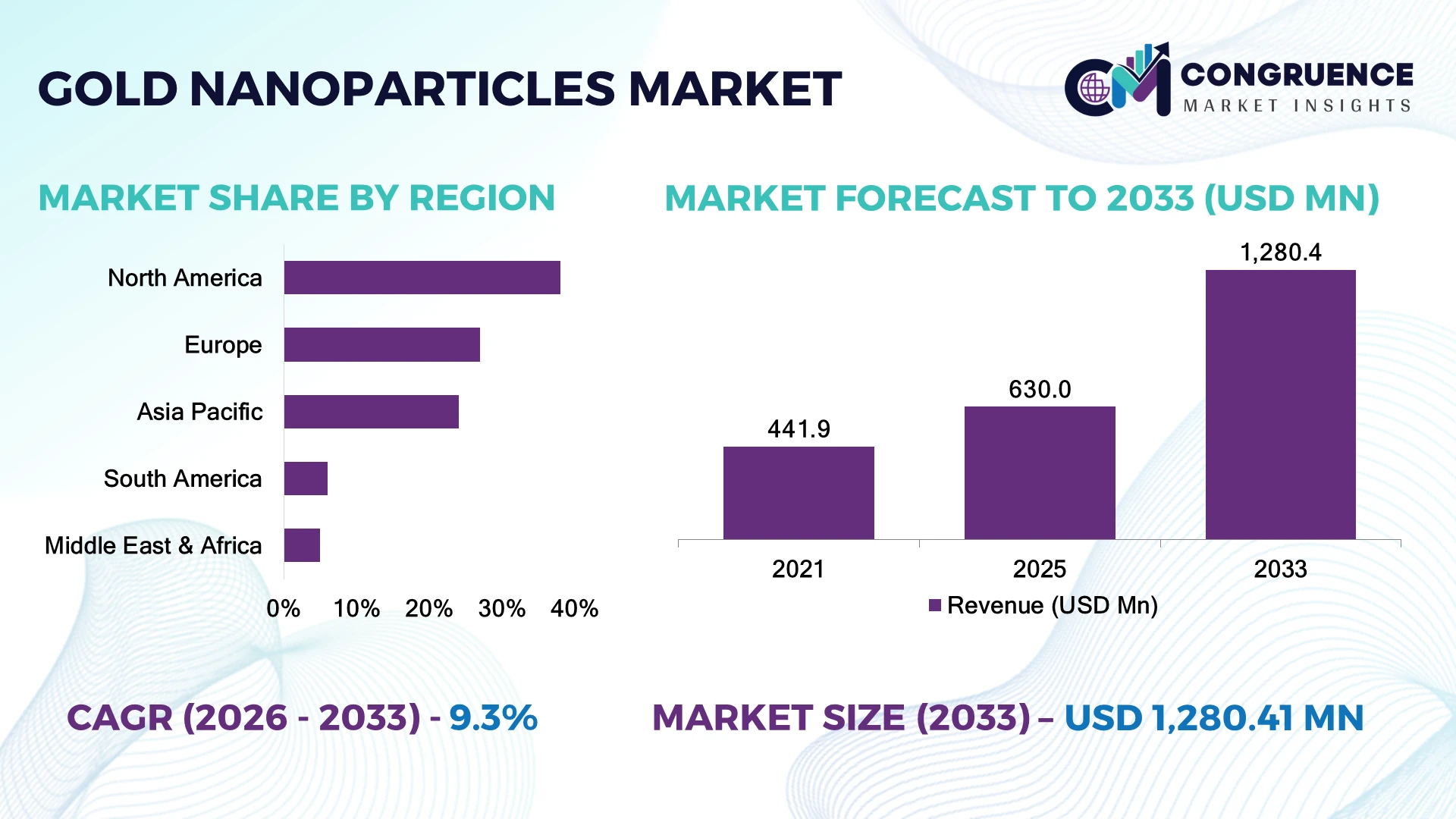
The United States dominates the global gold nanoparticles landscape with approximately 34% market share, supported by more than USD 2.5 billion in annual nanotechnology-related federal research funding and strong adoption across biotechnology, oncology, and diagnostics industries. Over 45% of advanced nanoparticle-based clinical research programs are concentrated in the U.S., compared with nearly 22% in Germany. Continued investment in precision medicine and biomedical innovation reinforces the country’s leadership in commercial deployment and technology commercialization.
Strategic implication companies prioritizing healthcare-grade nanoparticle manufacturing, clinical validation partnerships, and scalable production capabilities are positioned to capture the highest-value opportunities.
Market Size & Growth: USD 630.0 Million in 2025, reaching USD 1,280.4 Million by 2033, supported by precision diagnostics, targeted therapeutics, and advanced biosensing adoption.
Top Growth Drivers: Cancer diagnostics adoption (+28%), nanoparticle-enabled drug delivery expansion (+24%), and rapid point-of-care testing demand (+21%) continue accelerating market penetration.
Short-Term Forecast: By 2028, nanoparticle-enabled diagnostic platforms are expected to improve detection sensitivity by nearly 30% while reducing testing turnaround time by 20%.
Emerging Technologies: AI-assisted nanomedicine design, surface-functionalized nanoparticles, and next-generation photothermal therapies are improving targeting accuracy by more than 25%.
Regional Leaders: North America exceeds USD 430 Million, Europe approaches USD 290 Million, and Asia-Pacific surpasses USD 340 Million by forecast end, driven by biotech expansion and healthcare modernization.
Consumer/End-User Trends: More than 55% of new nanoparticle research projects target oncology applications, while diagnostic laboratories report over 18% growth in nanoparticle assay utilization.
Pilot/Case Example: In 2024, a nanoparticle-assisted cancer detection initiative demonstrated approximately 35% higher biomarker detection accuracy compared with conventional testing methods.
Competitive Landscape: The leading participant holds nearly 12% market share, while key competitors include Cytodiagnostics, nanoComposix, BBI Solutions, Tanaka Holdings, and Nanopartz.
Regulatory & ESG Impact: Enhanced nanomaterial quality standards reduced manufacturing variability by nearly 15%, strengthening clinical reliability and regulatory compliance.
Investment & Funding: More than USD 1.8 billion in public and private nanotechnology investments support capacity expansion, strategic partnerships, and translational research programs.
Innovation & Future Outlook: Advanced multifunctional nanoparticles, personalized therapeutics, and integrated diagnostic platforms are driving the next phase of high-value healthcare innovation.
Gold nanoparticles are increasingly embedded in molecular diagnostics, oncology research, lateral flow assays, and precision therapeutics. Surface-engineering innovations have improved biomolecular binding efficiency by nearly 25%, enhancing diagnostic performance and treatment targeting. Supply-chain localization initiatives across healthcare manufacturing hubs are improving material availability and production resilience. Expanding integration with personalized medicine programs is creating new commercial pathways and setting the stage for deeper strategic market transformation.
Gold nanoparticles have evolved from a specialized research material into a strategic technology platform supporting modern diagnostics, precision medicine, and advanced biomedical engineering. Their growing role in disease detection, therapeutic targeting, and biosensor development is reshaping competitive dynamics across healthcare and life sciences industries. Increased regulatory focus on early disease detection and personalized treatment pathways is accelerating commercial adoption and investment activity.
Compared with conventional diagnostic labeling technologies, gold nanoparticle-based detection systems can improve assay sensitivity by 20–35% while reducing sample processing requirements. This performance advantage is strengthening their position in rapid diagnostics and molecular testing applications. The United States remains a leader in commercialization and clinical deployment, while China is rapidly scaling manufacturing capacity and research output, creating a distinct contrast between innovation leadership and production scale.
Over the next two to three years, healthcare providers are expected to expand nanoparticle-enabled testing programs by more than 20%, particularly in oncology and infectious disease diagnostics. Companies are responding through research collaborations, manufacturing investments, and clinical validation partnerships. Organizations that establish integrated development ecosystems and secure healthcare-focused supply networks will strengthen competitive positioning and gain long-term operational advantages.
The accelerating adoption of precision diagnostics and targeted oncology solutions remains the strongest structural driver for gold nanoparticles. More than 55% of emerging nanoparticle research programs focus on cancer detection and treatment applications, while nanoparticle-enhanced assays demonstrate up to 35% higher detection sensitivity than conventional methods. The U.S. and Japan continue expanding investments in precision medicine initiatives, increasing demand for clinically validated nanoparticle platforms. This shift directly improves diagnostic accuracy, treatment personalization, and healthcare efficiency. In response, manufacturers are expanding GMP-certified production facilities, forming biotechnology partnerships, and investing in surface-functionalization technologies. A key strategic insight is that companies capable of combining scalable manufacturing with clinical-grade quality control are securing stronger positions in high-value healthcare segments.
Manufacturing consistency remains a major limitation across the gold nanoparticles value chain. Batch-to-batch variability can exceed 10% in specialized formulations, while purification and characterization processes account for nearly 25% of production costs. Regulatory agencies increasingly require tighter quality validation, extending commercialization timelines for healthcare applications. Dependence on specialized raw materials and advanced laboratory infrastructure further constrains scalability, particularly in emerging manufacturing markets. These challenges directly affect operational efficiency and profitability for suppliers serving regulated industries. To reduce exposure, companies are implementing automated production systems, diversifying sourcing networks, and establishing long-term supply agreements. An important operational insight is that manufacturing standardization has become as critical to market competitiveness as technological innovation.
Emerging nanomedicine platforms are creating substantial opportunities beyond traditional diagnostics. Functionalized gold nanoparticles have demonstrated targeting efficiency improvements exceeding 30% in advanced therapeutic research, while personalized medicine programs continue expanding across major healthcare systems. China and South Korea are increasing investments in translational nanotechnology initiatives, supporting faster commercialization pathways. Integration with AI-driven drug discovery and smart delivery systems is enabling more precise treatment development and reducing research cycles. Companies are strengthening competitive positions through university collaborations, intellectual property expansion, and specialized R&D investments. A non-obvious opportunity lies in combining diagnostic and therapeutic functionality within a single nanoparticle platform, creating differentiated clinical and commercial value.
Long-term success depends on overcoming deployment and validation challenges associated with clinical integration. Regulatory approval timelines for advanced nanoparticle-enabled healthcare products can be 20–40% longer than conventional alternatives due to additional safety and efficacy requirements. More than 60% of development-stage nanoparticle programs require extensive validation studies before large-scale deployment. Healthcare providers also face integration complexity when incorporating new diagnostic technologies into existing laboratory workflows. These barriers affect deployment consistency and slow commercial expansion despite strong technical performance. Companies must address these challenges through larger clinical datasets, digital quality-monitoring systems, and cross-sector partnerships. The strategic challenge is no longer proving scientific capability but demonstrating scalable, repeatable, and regulator-ready implementation across healthcare ecosystems.
Advanced Diagnostic Workflow Integration Gold nanoparticle-enabled assays are being embedded into clinical testing workflows, improving biomarker detection rates by 25–35% and reducing processing time by nearly 20%. More than 40% of newly developed rapid diagnostic platforms now incorporate nanoparticle-based signal enhancement. Regulatory emphasis on early disease detection is accelerating deployment, while companies are expanding diagnostic partnerships and scaling manufacturing capacity to support growing laboratory adoption.
Surface Engineering Optimization Strategies Functionalized nanoparticle formulations have increased targeting precision by over 30% and improved binding efficiency by approximately 25% in advanced biomedical applications. Nearly 50% of new product development programs now focus on customized surface chemistries. This shift is improving performance consistency and reducing validation cycles. Suppliers are investing in proprietary coating technologies, automation systems, and collaborative research programs to strengthen differentiation and improve commercialization speed.
Localized Manufacturing Network Expansion Supply-chain resilience has become a priority following raw-material disruptions and geopolitical trade pressures. More than 35% of leading producers have expanded regional production footprints, while localized sourcing initiatives have reduced procurement lead times by approximately 15%. Companies are restructuring supplier networks and establishing long-term material agreements to improve operational continuity. A less obvious outcome is the growing preference for geographically diversified production models to support healthcare procurement requirements.
Nanomedicine Platform Commercialization Gold nanoparticles are increasingly moving from research environments into translational healthcare programs. Clinical-stage nanoparticle projects increased by nearly 22% over the past two years, while oncology-focused applications account for more than 55% of development activity. Technology transitions toward precision therapeutics are driving commercialization efforts. Companies are responding through biotechnology alliances, targeted licensing agreements, and dedicated scale-up investments aimed at accelerating regulatory readiness and deployment efficiency.
Water-soluble gold nanoparticles lead the market with approximately 45% market share, driven by their superior biocompatibility, colloidal stability, and seamless integration into diagnostic, imaging, and therapeutic workflows. Their ability to disperse efficiently in physiological environments makes them the preferred choice for healthcare and life-science applications. Large biotechnology laboratories in the United States and Germany increasingly favor water-soluble formulations because they reduce preparation complexity and improve assay reproducibility. Meanwhile, oil-soluble nanoparticles account for a smaller but strategically important share, particularly in advanced materials, catalysis, and electronics applications. Water-soluble products continue to attract the largest share of product-development investments as healthcare-grade nanoparticle demand expands.
Oil-soluble gold nanoparticles are emerging as the fastest-growing segment, supported by increasing use in nanocoatings, conductive materials, and specialty industrial formulations. Adoption within electronics manufacturing has expanded by nearly 20% over the past two years, while multifunctional dual-phase nanoparticles are gaining traction in hybrid imaging and theranostic systems. Manufacturers are responding through surface-engineering innovation, application-specific product launches, and strategic partnerships with biotechnology and advanced-material companies. Investment priorities are increasingly shifting toward customized formulations that support both healthcare and industrial performance requirements.
Imaging represents the leading application segment with approximately 21% market share, supported by widespread deployment in molecular imaging, oncology diagnostics, and contrast-enhanced biomedical visualization. Gold nanoparticles provide strong surface plasmon resonance and enhanced signal amplification, enabling higher diagnostic precision compared with conventional contrast agents. Hospitals and research institutions increasingly incorporate nanoparticle-enabled imaging into oncology and cardiovascular programs, where early-stage detection remains a priority. Sensors and in-vitro diagnostics continue to hold significant positions as demand grows for rapid testing, biosensing platforms, and decentralized healthcare workflows.
Targeted drug delivery is the fastest-growing application segment, accounting for roughly 26% of current commercial activity in some advanced healthcare markets. Precision-medicine programs have increased nanoparticle-based therapeutic research by over 20%, while pharmaceutical companies are accelerating investments in targeted delivery systems that improve treatment specificity and reduce systemic toxicity. Catalysis, probes, and industrial applications continue expanding through advanced manufacturing and specialty materials development. Companies are scaling clinical collaborations, expanding translational research programs, and integrating AI-assisted formulation design to strengthen commercialization pathways.
Healthcare remains the dominant end-user segment with approximately 49–55% market share, reflecting extensive utilization across diagnostics, imaging, biosensors, cancer therapy, and targeted drug delivery. Demand concentration is supported by expanding clinical research pipelines, increasing chronic disease prevalence, and greater adoption of precision medicine technologies. Major healthcare systems in the United States, Japan, and Germany continue increasing investments in nanoparticle-enabled diagnostic platforms. Chemicals and specialty-material manufacturers remain important customers, particularly for catalysis and advanced material synthesis applications, while research institutions continue contributing to innovation and early-stage commercialization.
Electronics is the fastest-growing end-user category as gold nanoparticles become increasingly integrated into conductive inks, flexible electronics, nano-sensors, and photonic components. Adoption within advanced electronics manufacturing has expanded by more than 15%, while printed-electronics development programs continue accelerating. Companies are targeting these customers through application-specific formulations, joint development agreements, and scalable production capabilities. The competitive focus is shifting toward delivering highly characterized nanoparticles tailored to both healthcare and high-performance electronics requirements, creating new differentiation opportunities across multiple industries.
North America accounted for the largest market share at 38% in 2025 however, Asia-Pacific is expected to register the fastest growth, expanding at a CAGR of 10.8% between 2026 and 2033.
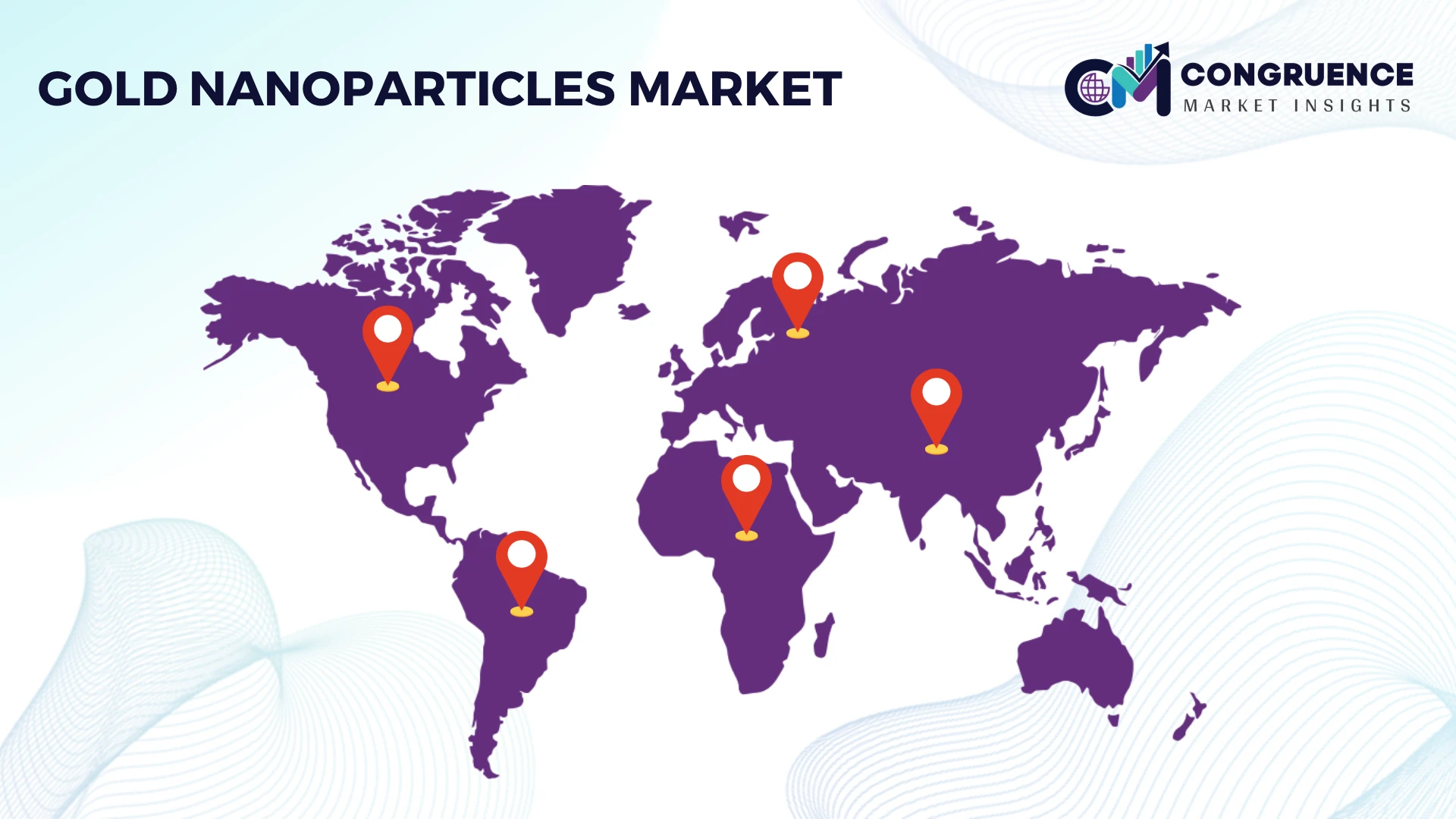
North America maintains a leading position in the gold nanoparticles market, accounting for approximately 38% of global demand due to its concentration of biotechnology firms, pharmaceutical innovators, and advanced diagnostic developers. The region benefits from a mature nanotechnology ecosystem, strong clinical research infrastructure, and widespread adoption of precision medicine platforms. More than 45% of nanoparticle-enabled clinical studies are concentrated in North America, reinforcing its commercialization advantage. Healthcare providers continue integrating gold nanoparticle-based assays into oncology and infectious disease diagnostics, while biotechnology companies expand manufacturing capacity to support translational medicine programs. Strategic collaborations between research institutions and private enterprises are accelerating product validation and deployment. The market also benefits from increased investment in nanomedicine production facilities and next-generation biosensor technologies, strengthening the region's position as a global innovation hub.
United States Market Outlook: The United States represents the largest national market globally, supported by a robust biotechnology sector, advanced healthcare infrastructure, and extensive nanotechnology research activity. More than 50% of the region’s nanoparticle-focused clinical development programs originate in the country. Strong federal research support, established GMP manufacturing capabilities, and active pharmaceutical partnerships enable rapid commercialization. The country’s leadership in precision oncology, molecular diagnostics, and targeted drug delivery continues to attract investment and accelerate adoption of advanced gold nanoparticle technologies.
Europe accounts for approximately 27% of global market activity, supported by advanced healthcare systems, strong academic research networks, and stringent quality standards governing nanomaterials. The region has emerged as a key center for nanoparticle-enabled diagnostics, biosensing technologies, and targeted therapeutic development. Regulatory harmonization and increasing focus on clinical validation are encouraging wider adoption across healthcare institutions. More than 30% of Europe’s nanotechnology research initiatives involve biomedical applications, highlighting strong innovation intensity. Companies are prioritizing specialized manufacturing facilities and collaborative research frameworks to accelerate commercialization. The growing integration of nanoparticle technologies into cancer diagnostics and personalized medicine programs is further strengthening operational demand across major healthcare markets.
Germany Market Outlook: Germany serves as the region’s strategic nucleus due to its extensive life-sciences infrastructure, advanced manufacturing capabilities, and strong research commercialization ecosystem. The country hosts a significant concentration of nanoparticle research centers and biotechnology enterprises. Nearly 20% of Europe’s nanotechnology-related healthcare patents originate from German institutions. Strong collaboration between universities, healthcare providers, and industrial manufacturers enables efficient technology transfer, supporting sustained deployment of nanoparticle-based diagnostics and therapeutic solutions.
Asia-Pacific accounts for approximately 24% of global market demand and represents the fastest-expanding regional ecosystem for gold nanoparticle production and deployment. The region benefits from expanding pharmaceutical manufacturing capacity, increasing healthcare investments, and rapidly growing nanotechnology research programs. China, Japan, South Korea, and India continue increasing support for advanced biomedical technologies and translational research. More than 35% of newly commissioned nanoparticle manufacturing capacity during recent years has been concentrated within Asia-Pacific. Regional enterprises are strengthening supply-chain integration and scaling production to support both domestic and export markets. The combination of lower manufacturing costs and growing clinical demand is improving competitive positioning across the value chain.
China Market Outlook: China has become the region’s most influential market due to its manufacturing scale, expanding biotechnology sector, and government-supported innovation initiatives. The country accounts for a significant share of regional nanoparticle production and continues investing heavily in nanomedicine, advanced diagnostics, and precision healthcare technologies. More than 40% of Asia-Pacific nanoparticle-related research publications originate from Chinese institutions. Strong industrial capacity, integrated supply networks, and growing healthcare modernization efforts continue supporting commercial expansion and technology deployment.
South America represents approximately 6% of global market activity and is gradually strengthening its position through healthcare modernization and expanding biomedical research initiatives. Demand is primarily concentrated in diagnostics, academic research, and selected pharmaceutical applications. Public and private healthcare providers are increasing investments in advanced testing capabilities, creating new opportunities for nanoparticle-enabled technologies. Several regional biotechnology partnerships have expanded laboratory infrastructure and improved access to specialized nanomaterials. While commercialization remains constrained by limited manufacturing capacity and funding availability, growing interest in precision diagnostics is supporting incremental adoption. Companies are increasingly leveraging partnerships and distribution agreements to improve market penetration and technical support capabilities.
Brazil Market Outlook: Brazil is the region’s leading market due to its large healthcare sector, expanding research infrastructure, and growing biotechnology ecosystem. Major universities and medical research centers continue advancing nanotechnology applications in diagnostics and therapeutics. The country accounts for more than 40% of South America’s healthcare research activity related to advanced nanomaterials. Increasing collaboration between public institutions and private enterprises is improving technology transfer and supporting broader adoption of gold nanoparticle-based solutions.
The Middle East & Africa accounts for approximately 5% of global market demand and is increasingly benefiting from healthcare infrastructure development and innovation-focused investment strategies. Several countries are expanding biotechnology capabilities, research facilities, and advanced diagnostic services to support healthcare diversification initiatives. Growing investments in medical technology infrastructure are improving access to nanoparticle-enabled testing and research applications. The market remains relatively early-stage, but modernization programs and public-sector funding are strengthening adoption potential. Companies are focusing on distribution partnerships, specialized laboratory support, and localized engagement strategies to establish long-term market presence. Increased emphasis on healthcare self-sufficiency is also encouraging greater interest in advanced biomedical technologies.
Saudi Arabia Market Outlook: Saudi Arabia is emerging as the region’s most strategically important market due to substantial healthcare investment programs, research infrastructure expansion, and national innovation initiatives. The country continues developing advanced life-sciences capabilities through partnerships with international healthcare and technology organizations. More than 25% of the region’s major healthcare modernization projects are concentrated in Saudi Arabia. Strong government support for biotechnology development and precision medicine programs is creating favorable conditions for future deployment of gold nanoparticle-based diagnostic and therapeutic platforms.
The Gold Nanoparticles Market is characterized by competition between technology-focused specialists such as Cytodiagnostics, nanoComposix, Nanopartz, BBI Solutions, and Tanaka Precious Metals, alongside regional manufacturers competing primarily on production cost and customization. The top five participants collectively control approximately 42% of global market activity, creating a moderately consolidated structure. Technology performance remains the primary competitive factor, with advanced surface-functionalized nanoparticles delivering 25–35% higher targeting efficiency and diagnostic sensitivity than standard formulations. Manufacturing consistency and delivery reliability influence nearly 30% of procurement decisions among healthcare and research buyers. Companies are expanding through clinical partnerships, application-specific product portfolios, contract manufacturing capabilities, and vertically integrated precious-metal supply chains. The competitive landscape is shifting from catalog-based nanoparticle sales toward integrated healthcare and diagnostic solutions. Regulatory validation requirements and high characterization standards remain significant entry barriers. Winning increasingly depends on scalable production, clinical-grade quality systems, proprietary surface engineering, and long-term partnerships with biotechnology and diagnostic developers.
nanoComposix, Inc.
Nanopartz Inc.
BBI Solutions
Tanaka Precious Metals Group
Sigma-Aldrich Corporation
Creative Diagnostics
Merck KGaA
Goldsol Inc.
Strem Chemicals, Inc.
nanoHybrids Inc.
Expedeon Ltd.
Meliorum Technologies, Inc.
American Elements
Gold nanoparticle technology is rapidly advancing from conventional colloidal formulations toward engineered multifunctional platforms designed for diagnostics, imaging, and therapeutic delivery. Surface-functionalized nanoparticles currently represent the most commercially significant technology trend, improving biomolecular binding efficiency by 20–30% and enhancing assay reproducibility. More than 50% of newly developed healthcare-focused nanoparticle products now incorporate advanced surface modification techniques. This enables stronger targeting precision, reduced sample variability, and faster clinical validation compared with earlier-generation formulations.
Emerging technologies include AI-assisted nanoparticle design, plasmonic biosensing platforms, and nanoparticle-enabled theranostic systems. Compared with traditional contrast agents, advanced plasmonic gold nanoparticles improve signal sensitivity by approximately 35%, supporting earlier disease detection and more accurate biomarker identification. Adoption within oncology and molecular diagnostics programs continues accelerating as healthcare providers seek higher-performance diagnostic workflows. Biotechnology innovators and specialized nanoparticle suppliers benefit most from these technology shifts because differentiation increasingly depends on performance rather than volume production.
Between 2026 and 2028, integrated diagnostic-therapeutic nanoparticle platforms are expected to reshape competitive positioning. Companies investing in automated synthesis, precision surface engineering, and clinical-grade manufacturing will achieve stronger deployment advantages. The strategic opportunity lies in combining diagnostics, imaging, and treatment functionality within unified nanoparticle architectures that improve operational efficiency while supporting personalized healthcare delivery.
January 2025 – Tanaka Precious Metal Technologies launched the Visi Fine® family of precious-metal medical-device materials, expanding advanced healthcare applications. The portfolio includes highly radiopaque platinum alloy wire designed for improved imaging visibility in minimally invasive procedures, strengthening the company’s medical materials positioning. Source: tanaka-preciousmetals.com
July 2025 – Tanaka Precious Metal Group announced a business partnership with JEPLAN to support circular-economy initiatives and precious-metal recycling. The collaboration strengthens sustainable material recovery capabilities and enhances supply-chain resilience for high-value precious-metal applications. Source: tanaka-preciousmetals.com
August 2025 – Tanaka Precious Metal Technologies confirmed its inaugural participation at SEMICON India 2025, showcasing advanced materials for next-generation semiconductors, power devices, and recycling technologies. The move expands engagement with India’s rapidly developing semiconductor ecosystem and industrial customer base. Source: tanaka-preciousmetals.com
September 2025 – Tanaka Precious Metal Technologies developed a high-performance palladium alloy hydrogen-permeable membrane capable of operating at 300°C, expanding advanced materials capabilities applicable to energy and industrial technology markets. The innovation improves low-temperature performance and supports next-generation material engineering programs. Source: tanaka-preciousmetals.com
This report provides comprehensive coverage of the global Gold Nanoparticles Market across key product categories, applications, end-user industries, and major geographic regions. The analysis evaluates water-soluble and oil-soluble nanoparticle segments, along with applications including imaging, targeted drug delivery, sensors, probes, catalysis, and industrial uses. End-user assessment covers healthcare, electronics, chemicals, research institutions, and advanced manufacturing sectors. Regional evaluation spans North America, Europe, Asia-Pacific, South America, and the Middle East & Africa, highlighting operational deployment patterns, technology adoption intensity, and competitive positioning.
The report further examines advanced nanoparticle engineering, precision diagnostics integration, biosensing technologies, and emerging nanomedicine platforms. More than 55% of demand remains concentrated in healthcare-focused applications, while electronics and advanced materials represent expanding adoption areas. Strategic insights support investment prioritization, market-entry planning, partnership evaluation, product development decisions, and competitive benchmarking. Coverage also includes innovation trends, supply-chain developments, commercialization pathways, and technology deployment dynamics expected to influence market direction between 2026 and 2033.
| Report Attribute / Metric | Details |
|---|---|
| Market Revenue (2025) | USD 630.0 Million |
| Market Revenue (2033) | USD 1,280.4 Million |
| CAGR (2026–2033) | 9.27% |
| Base Year | 2025 |
| Forecast Period | 2026–2033 |
| Historic Period | 2021–2025 |
| Segments Covered |
By Type
By Application
By End-User
|
| Key Deliverables | Revenue Forecast; Market Trends; Growth Drivers & Restraints; Technology Insights; Segmentation Analysis; Regional Insights; Competitive Landscape; Regulatory & ESG Overview; Recent Developments |
| Regions Covered | North America; Europe; Asia-Pacific; South America; Middle East & Africa |
| Companies Profiled | Cytodiagnostics Inc.; nanoComposix, Inc.; Nanopartz Inc.; BBI Solutions; Tanaka Precious Metals Group; Sigma-Aldrich Corporation; Creative Diagnostics; Merck KGaA; Goldsol Inc.; Strem Chemicals, Inc.; nanoHybrids Inc.; Expedeon Ltd.; Meliorum Technologies, Inc.; American Elements |
| Customization & Pricing | Available on Request (10% Customization Free) |




