
Reports
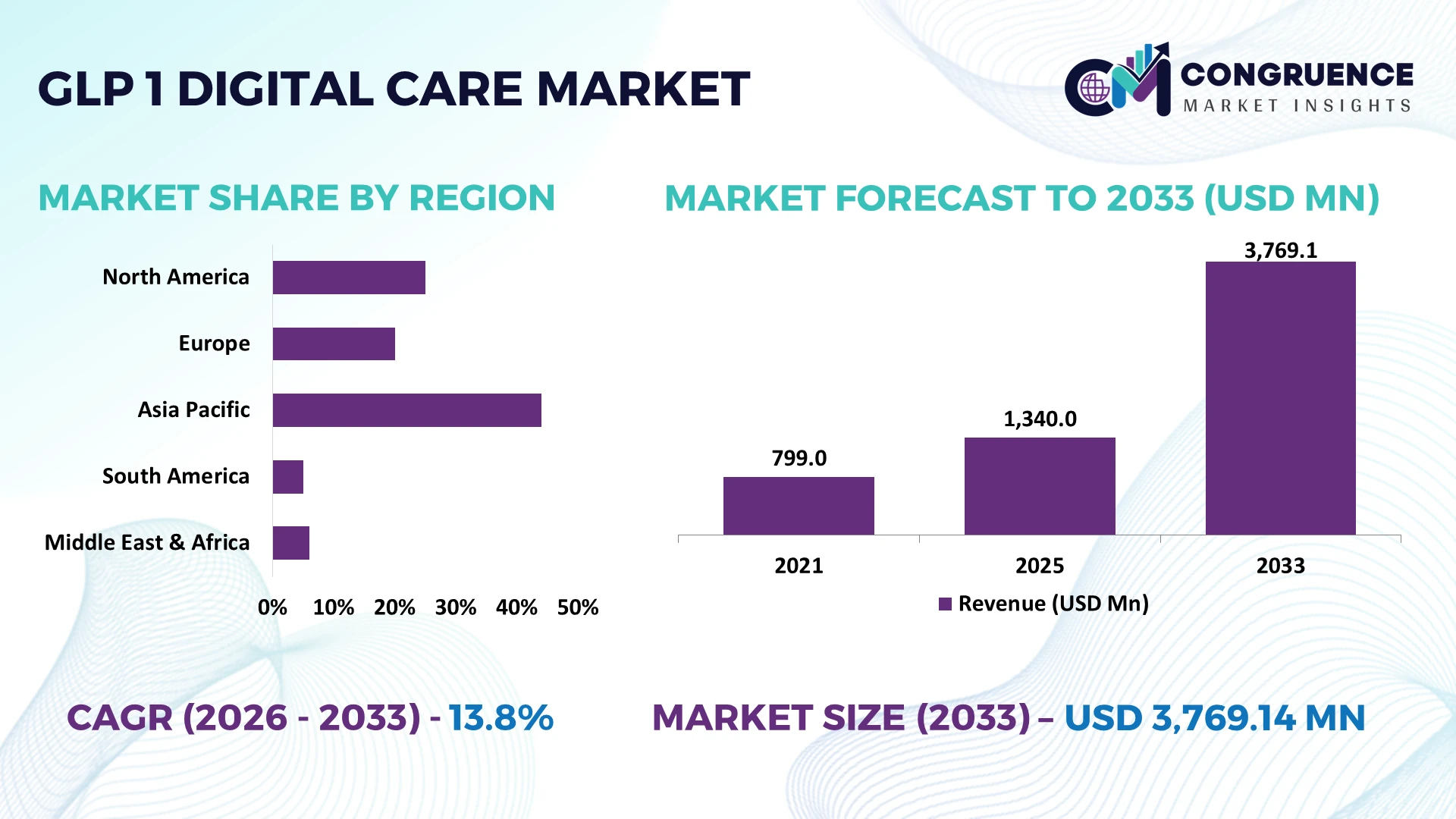
The Global GLP-1 Digital Care Market was valued at USD 1340 Million in 2025 and is anticipated to reach a value of USD 3769.14 Million by 2033 expanding at a CAGR of 13.8% between 2026 and 2033. Growth is driven by expanding obesity pharmacotherapy, virtual prescribing, digital medication adherence programs, remote metabolic monitoring, and integrated nutrition coaching.
The United States dominates GLP-1 digital care through established telehealth providers, pharmaceutical distribution networks, and employer sponsored obesity management programs. Its estimated market contribution exceeds 50%, supported by 40.3% adult obesity prevalence during August 2021 to August 2023. By comparison, England recorded approximately 26.5% adult obesity prevalence in 2023 to 2024. Companies including Hims & Hers, Ro, and WeightWatchers are expanding virtual obesity treatment pathways. FDA oversight of compounded GLP-1 products is reshaping prescribing, fulfillment, and digital pharmacy partnerships.
Strategically, providers integrating verified medication access, continuous clinical supervision, and personalized behavioral support will strengthen patient retention and treatment continuity.
Market Size & Growth: USD 1,340 million in 2025, reaching USD 3,769.14 million by 2033 at 13.8% CAGR, supported by virtual obesity treatment programs.
Top Growth Drivers: US adult obesity prevalence of 40.3%, diabetes prevalence of 15.8%, and 35% adult prediabetes prevalence underpin treatment demand.
Short Term Forecast: By 2028, automated patient engagement programs target 15% faster followup scheduling and 10% fewer missed monitoring interactions.
Emerging Technologies: Three innovations include AI nutrition coaching, connected glucose monitoring, and automated medication adherence tracking.
Regional Leaders: Indicative 2033 allocations place North America at USD 2,073.03 million, Europe at USD 942.29 million, and Asia Pacific at USD 565.37 million, reflecting differentiated telehealth adoption.
Consumer / End User Trends: Approximately 40% US adult obesity prevalence supports increasing interest in digitally supervised weight management and metabolic care.
Pilot / Case Example: The 2023 SELECT clinical trial demonstrated a 20% reduction in major cardiovascular events with semaglutide, strengthening clinical rationale for coordinated treatment monitoring.
Competitive Landscape: Ro, Hims & Hers, WeightWatchers, Noom, and Teladoc Health compete across 3 service areas: prescribing, behavioral support, and longitudinal monitoring.
Regulatory & ESG Impact: FDA restrictions on unauthorized compounded GLP-1 products reinforce prescription verification and clinical oversight across digital care platforms.
Investment & Funding: Ro secured USD 500 million in financing during 2021, illustrating investor commitment to integrated telehealth infrastructure and digital pharmacy services.
Innovation & Future Outlook: Integrated prescribing, connected metabolic tracking, and personalized coaching support the transition toward continuous obesity care through 2033.
The GLP-1 Digital Care Market is shifting toward integrated metabolic health services combining prescription management, nutritional counseling, physical activity tracking, and continuous clinical followup. Digital providers are expanding support for patients managing obesity, type 2 diabetes, and medication related gastrointestinal symptoms. US adult obesity prevalence of 40.3% highlights the scale of potential treatment demand. Recent FDA actions concerning compounded GLP-1 medications are increasing the importance of verified pharmaceutical supply and transparent prescribing practices. These developments position clinical integration, treatment persistence, and measurable patient outcomes as central considerations for future digital healthcare investment.
GLP-1 digital care is transforming obesity treatment from episodic prescribing into continuous metabolic health management, creating strategic opportunities for telehealth providers, pharmaceutical manufacturers, and healthcare insurers. The United States provides substantial treatment demand, with adult obesity prevalence reaching 40.3%. FDA restrictions affecting compounded semaglutide and tirzepatide are restructuring digital pharmacy relationships, encouraging verified medication sourcing and stronger clinical oversight. Providers increasingly compete through treatment continuity, prescription accessibility, and personalized patient engagement rather than consultation volume alone.
Digital care platforms integrate prescription management, nutrition coaching, and automated symptom monitoring within unified patient applications. Compared with conventional appointment scheduling, automated workflows can target 15% faster followup coordination and 10% fewer missed monitoring interactions. American providers emphasize direct medication access and employer partnerships, while European markets prioritize regulated prescribing and coordinated healthcare delivery. During 2026 to 2028, investment priorities increasingly include connected metabolic monitoring, integrated clinical records, and personalized adherence support.
Ro and WeightWatchers illustrate practical deployment through virtual clinician consultations, medication management, and structured behavioral programs. Providers are expanding pharmacy partnerships and digital care infrastructure to improve treatment accessibility. Competitive leadership increasingly depends on verified pharmaceutical supply, sustainable patient engagement, and measurable improvements in long term metabolic outcomes.
Rising obesity prevalence and expanding access to prescription weight management are accelerating demand for digitally supervised GLP-1 treatment. Approximately 40.3% of American adults had obesity during August 2021 to August 2023, while diabetes affected an estimated 15.8% of adults. Clinical evidence from the SELECT trial demonstrated a 20% reduction in major cardiovascular events among eligible patients receiving semaglutide, strengthening interest in coordinated metabolic care. FDA approval of additional GLP-1 treatment indications is broadening clinical applications beyond weight reduction. Ro, Noom, and WeightWatchers are integrating virtual consultations, prescription management, and behavioral coaching. Their strategic priority is maintaining treatment continuity through structured clinical monitoring rather than relying exclusively on initial medication prescriptions.
GLP-1 digital care providers face immediate constraints from prescription affordability, insurance coverage restrictions, and regulatory scrutiny of compounded medications. In the SELECT trial, gastrointestinal adverse events led to permanent treatment discontinuation in 16.6% of semaglutide recipients, compared with 8.2% receiving placebo. These differences increase the importance of clinical supervision and medication tolerance management. FDA resolution of shortages involving semaglutide and tirzepatide also changed the regulatory circumstances governing certain compounded products. Digital providers dependent on alternative medication sourcing face increased fulfillment complexity and commercial uncertainty. Companies are strengthening relationships with licensed pharmacies, improving eligibility verification, and expanding nutrition support services. Sustainable operations require dependable prescription access and transparent treatment costs.
Connected metabolic monitoring creates opportunities to extend GLP-1 digital care beyond prescription fulfillment into personalized treatment management. The STEP 1 trial demonstrated approximately 14.9% average body weight reduction with semaglutide compared with 2.4% for placebo after 68 weeks, highlighting the importance of structured treatment programs. Digital platforms integrating nutrition tracking, activity monitoring, and medication support can target 15% faster clinical followup coordination through automated workflows. India's expanding digital healthcare ecosystem presents opportunities for localized metabolic care applications and remote specialist consultations. Technology providers are investing in adaptive coaching algorithms, connected health devices, and longitudinal patient records. Competitive differentiation increasingly depends on supporting sustainable treatment outcomes and coordinated care after medication changes.
Maintaining consistent patient engagement throughout prolonged GLP-1 treatment presents a major operational challenge for digital healthcare platforms. In the STEP 1 trial extension, participants regained approximately two thirds of their previous weight loss within one year after discontinuing semaglutide and structured lifestyle intervention. This finding highlights the importance of ongoing behavioral support and treatment transition planning. Digital platforms also manage sensitive prescription records, biometric measurements, and consultation information requiring secure processing. United States healthcare providers face HIPAA obligations, while applicable European data protection violations can attract penalties reaching 4% of worldwide annual turnover. Companies must invest in cybersecurity, clinical escalation protocols, and longitudinal care pathways. Sustainable competitiveness requires reliable patient retention and demonstrable clinical oversight beyond initial treatment enrollment.
Direct Pharmaceutical Distribution Partnerships Expand: Digital healthcare providers are establishing direct relationships with pharmaceutical manufacturers to improve prescription fulfillment and pricing transparency. Novo Nordisk introduced NovoCare Pharmacy in 2025, offering eligible patients access to all 5 Wegovy injection dose strengths. Hims & Hers and Ro are restructuring pharmacy partnerships, reducing dependence on fragmented medication sourcing and strengthening fulfillment reliability.
Employer Coverage Models Become Selective: Employers are introducing structured eligibility requirements and outcomes monitoring for obesity treatment benefits. KFF's 2025 employer survey found that 19% of large firms offered GLP-1 coverage for weight loss, increasing to 43% among firms with at least 5,000 employees. Digital providers are adapting employer contracts around utilization oversight and documented treatment outcomes.
Oral Treatment Pathways Reshape Engagement: Pharmaceutical innovation is expanding treatment options beyond injectable medications. Novo Nordisk's oral semaglutide obesity development program demonstrated approximately 13.6% average weight reduction at 64 weeks in its OASIS 4 trial. Digital care platforms are preparing differentiated education, prescription workflows, and adherence interfaces for oral and injectable therapies, improving treatment pathway flexibility.
Digital Benefit Verification Gains Importance: Prescription platforms are integrating eligibility checks, prior authorization workflows, and pharmacy coordination into patient onboarding. United States commercial insurance plans increasingly apply coverage restrictions, creating multiple administrative checkpoints before treatment initiation. Providers are targeting 15% faster eligibility processing and 10% fewer incomplete applications through automated documentation, strengthening conversion efficiency and reducing avoidable clinician workload.
Telehealth Platforms account for an estimated 38% of the GLP-1 Digital Care Market, reflecting their established role in virtual consultations, prescription assessment, and ongoing obesity treatment supervision. Digital healthcare providers integrate clinician appointments, patient eligibility screening, and pharmacy coordination within unified service environments. Their scalability supports geographically distributed patients without requiring extensive physical clinic infrastructure. Medication Management Apps complement these platforms through prescription reminders, dose tracking, and treatment scheduling. Digital Therapeutics provide structured behavioral interventions addressing nutrition, physical activity, and sustainable lifestyle modification. Providers increasingly bundle these capabilities to strengthen treatment continuity and reduce fragmented patient experiences.
AI-Based Care Platforms represent the fastest growing category as providers introduce adaptive coaching, automated patient communication, and personalized engagement workflows. Remote Patient Monitoring supports connected weight measurements, glucose monitoring, and longitudinal metabolic assessment. Telehealth Platforms maintain an estimated 38% share, while AI enabled services are positioned for faster adoption through scalable clinical support. Companies are investing in integrated patient applications, configurable care pathways, and automated administrative systems. Competitive advantage increasingly depends on coordinated clinical oversight and efficient digital service delivery.
Weight Management represents an estimated 36% of the GLP-1 Digital Care Market, supported by widespread interest in prescription assisted weight reduction and digitally delivered behavioral programs. Telehealth providers offer structured consultation pathways, medication management, and lifestyle support to patients seeking supervised weight treatment. Obesity Care represents a closely related application focused on clinically diagnosed obesity and coordinated long term treatment. The United States recorded adult obesity prevalence of approximately 40.3% during August 2021 to August 2023, illustrating the scale of the eligible population requiring evidence based clinical assessment.
Metabolic Health Monitoring represents the fastest growing application as providers integrate weight trends, glucose measurements, and broader cardiometabolic indicators into ongoing care. Type 2 Diabetes Management maintains established clinical relevance through glucose control and medication supervision, while Medication Adherence applications address dosing schedules and treatment persistence. Digital providers are expanding connected monitoring capabilities, specialized clinical workflows, and patient engagement programs. Investment priorities increasingly emphasize measurable treatment outcomes, personalized monitoring, and continuity across different stages of metabolic healthcare.
Digital Health Providers account for an estimated 40% of the GLP-1 Digital Care Market, supported by their direct patient acquisition capabilities, integrated virtual consultations, and digital prescription management infrastructure. Companies including Ro, Noom, and WeightWatchers operate specialized weight management programs combining clinical evaluation with behavioral support. Specialty Clinics maintain substantial demand through endocrinology, obesity medicine, and metabolic treatment expertise. Hospitals increasingly integrate digital followup pathways into established healthcare services, particularly for patients requiring coordinated management of multiple chronic conditions. Digital providers prioritize efficient onboarding and centralized care operations to improve service accessibility.
Employers represent the fastest growing end user category as organizations evaluate structured obesity treatment benefits and workforce health programs. Health Insurance Providers influence adoption through formulary requirements, utilization management, and coverage policies. KFF's 2025 survey found that 19% of large employers offered GLP-1 coverage for weight loss, rising to 43% among the largest firms. Technology companies are developing employer specific reporting, configurable benefit administration, and clinical outcome monitoring. Competitive positioning increasingly depends on demonstrating treatment value to institutional purchasers.
North America accounted for the largest market share at an estimated 55% in 2025 however, Asia Pacific is expected to register the fastest growth, expanding at a projected CAGR of 16.5% between 2026 and 2033.
Integrated Obesity Treatment and Digital Pharmacy Expansion
North America represents an estimated 55% of the global GLP-1 Digital Care Market, supported by extensive telehealth infrastructure, prescription weight management programs, and established digital pharmacy networks. The United States dominates regional adoption through providers including Ro, Hims & Hers, Noom, and WeightWatchers, which integrate virtual consultations, medication management, and behavioral coaching. Employer sponsored obesity treatment programs provide additional institutional demand. KFF's 2025 employer survey found that 19% of large firms covered GLP-1 medications for weight loss, increasing to 43% among organizations employing at least 5,000 workers. FDA actions affecting compounded semaglutide and tirzepatide are restructuring digital medication sourcing and pharmacy partnerships. Canadian providers operate within more restrictive prescription reimbursement frameworks, emphasizing physician oversight and coordinated care. Regional competitive positioning increasingly depends on verified pharmaceutical access, clinical service integration, and measurable patient retention.
United States Market Outlook: The United States maintains leadership through advanced pharmaceutical distribution, established telehealth companies, and substantial obesity treatment demand. Approximately 40.3% of American adults had obesity during August 2021 to August 2023. Novo Nordisk's 2025 introduction of NovoCare Pharmacy strengthened direct prescription access, while digital providers expanded manufacturer partnerships and insurance verification capabilities. Integrated treatment programs increasingly combine clinician consultations, medication fulfillment, and personalized nutritional guidance to improve treatment continuity and operational efficiency.
Regulated Digital Prescribing and Coordinated Metabolic Care
Europe accounts for an estimated 25% of the global GLP-1 Digital Care Market, supported by established healthcare systems, pharmaceutical innovation, and expanding digital prescription infrastructure. The United Kingdom, Germany, and Denmark represent important centers for obesity treatment services and metabolic healthcare technology. European prescribing frameworks emphasize clinical eligibility, medication safety, and regulated pharmaceutical distribution, influencing how digital providers structure patient onboarding. The European Medicines Agency maintains oversight of authorized GLP-1 therapies, while national healthcare systems establish reimbursement and prescribing conditions. Digital health providers are developing integrated consultation, medication management, and behavioral support platforms. Denmark's pharmaceutical manufacturing ecosystem contributes to treatment innovation, while Germany's electronic prescription infrastructure supports digital care integration. Competitive differentiation increasingly reflects clinical governance, reimbursement compatibility, and the ability to coordinate medication access with sustained lifestyle intervention.
United Kingdom Market Outlook: The United Kingdom benefits from established digital healthcare services, obesity medicine expertise, and structured clinical treatment guidelines. Approximately 26.5% of adults in England were living with obesity during 2023 to 2024. NICE recommendations shape access to approved weight management medicines within eligible clinical pathways. Digital providers are expanding private consultation services, prescription verification, and remote patient monitoring while aligning treatment programs with established clinical standards and pharmaceutical safety requirements.
Digital Healthcare Scale and Metabolic Treatment Expansion
Asia Pacific represents an estimated 15% of the global GLP-1 Digital Care Market, supported by expanding digital healthcare infrastructure, pharmaceutical investment, and increasing metabolic disease management requirements. China, Japan, India, and South Korea offer distinct adoption pathways through telemedicine platforms, hospital networks, and pharmaceutical distribution systems. China's large digital healthcare ecosystem supports online consultations and prescription management, while Japan emphasizes clinically supervised diabetes treatment and regulated pharmaceutical access. India provides opportunities for mobile metabolic health applications and specialist consultation services. China's internet population exceeded 1.1 billion by the end of 2024, demonstrating the scale of its connected healthcare infrastructure. Regional providers are integrating digital prescription workflows, nutrition monitoring, and electronic patient records. Competitive positioning increasingly depends on localized clinical services, affordable patient engagement platforms, and reliable pharmaceutical fulfillment.
China Market Outlook: China maintains substantial advantages through domestic pharmaceutical manufacturing, large hospital networks, and advanced consumer digital platforms. The country's National Medical Products Administration approved tirzepatide for chronic weight management in 2024, expanding authorized treatment options. Local pharmaceutical companies are developing metabolic therapies while digital healthcare providers strengthen online consultation and prescription services. Integrated patient applications offer opportunities to coordinate medication supervision, dietary guidance, and long term metabolic monitoring across urban healthcare networks.
Private Telehealth Adoption and Obesity Treatment Accessibility
South America accounts for an estimated 3% of the global GLP-1 Digital Care Market, with Brazil representing the primary commercial center for digital obesity treatment services. Established private healthcare networks, expanding telemedicine adoption, and pharmaceutical distribution infrastructure support integrated metabolic care programs. Brazil's national telehealth framework provides a regulatory foundation for remote clinical consultations, while private healthcare providers increasingly incorporate digital followup and prescription management. Argentina and Chile contribute additional opportunities through specialist obesity services and connected patient engagement platforms. Medication affordability, uneven insurance reimbursement, and differences in digital healthcare accessibility constrain broader deployment. Technology providers are responding through partnerships with licensed pharmacies, specialist clinics, and established healthcare networks. Regional expansion strategies increasingly prioritize patient affordability, clinical supervision, and efficient integration with existing pharmaceutical distribution channels.
Brazil Market Outlook: Brazil offers the strongest regional commercial foundation through its large healthcare market, established pharmaceutical industry, and expanding telemedicine services. Law 14,510, enacted in 2022, established a legal framework for telehealth services. The country's substantial obesity burden supports demand for supervised weight management programs combining medical consultations and behavioral interventions. Digital providers are developing integrated prescription services, remote nutrition coaching, and followup platforms while adapting to ANVISA requirements governing pharmaceutical products and medical practice.
Healthcare Modernization and Digital Metabolic Treatment Investment
The Middle East and Africa represent an estimated 2% of the global GLP-1 Digital Care Market, supported by healthcare modernization programs, increasing metabolic disease treatment requirements, and expanding telemedicine infrastructure. Saudi Arabia and the United Arab Emirates are investing in digital healthcare platforms and integrated chronic disease management services. South Africa maintains established private healthcare networks supporting specialist consultations and prescription management. Regional deployment is concentrated in urban healthcare centers where digital connectivity, specialist availability, and pharmaceutical distribution infrastructure are strongest. Saudi Arabia's Vision 2030 healthcare transformation initiatives encourage technology enabled patient management and preventive healthcare services. Digital providers are developing partnerships with hospitals, pharmacies, and insurance organizations to improve treatment coordination. Competitive opportunities increasingly center on localized clinical protocols, secure patient data management, and integrated obesity care delivery.
Saudi Arabia Market Outlook: Saudi Arabia represents a strategically important market through its healthcare transformation agenda, pharmaceutical investment, and expanding digital health infrastructure. The country's Health Sector Transformation Program supports integrated healthcare delivery and electronic medical services. National health surveys have identified obesity as a substantial public health concern, reinforcing demand for structured metabolic treatment. Healthcare providers are expanding virtual consultations, connected patient monitoring, and coordinated prescription management while strengthening partnerships with pharmaceutical manufacturers and specialist medical institutions.
The GLP-1 Digital Care Market features competition between digital prescribing platforms, behavioral weight management providers, and integrated healthcare organizations. Ro and Hims & Hers compete through virtual consultations and medication fulfillment, while WeightWatchers and Noom differentiate through structured behavioral programs. Teladoc Health emphasizes enterprise healthcare integration. The leading five providers collectively represent an estimated 45% of market activity. Competition centers on prescription accessibility, clinical supervision, patient engagement, and treatment affordability. Automated onboarding platforms target 15% faster consultation scheduling, while integrated medication management systems pursue 10% fewer missed monitoring interactions. Companies are strengthening pharmaceutical partnerships, expanding clinical teams, and introducing personalized digital coaching. Competitive differentiation is shifting toward verified medication sourcing and longitudinal metabolic care rather than prescription acquisition alone. Regulatory scrutiny, pharmacy licensing requirements, and insurance coverage restrictions create substantial barriers. Sustainable leadership requires dependable pharmaceutical access, clinically validated services, and measurable patient outcomes.
Ro
Hims & Hers Health, Inc.
WW International, Inc. (WeightWatchers)
Noom, Inc.
Teladoc Health, Inc.
Form Health
Found Health, Inc.
Calibrate Health, Inc.
Virta Health Corp.
Omada Health, Inc.
9amHealth
Vida Health, Inc.
FuturHealth
Sequence Health
Current GLP-1 digital care technologies combine telehealth consultations, electronic prescribing, medication tracking, and connected metabolic monitoring. Integrated patient applications coordinate clinician reviews, weight measurements, nutritional assessments, and prescription fulfillment. Compared with conventional telephone scheduling, automated digital workflows can target 15% faster appointment coordination and 10% fewer missed monitoring interactions. Adoption is supported by established telehealth infrastructure and employer obesity benefits, with 19% of surveyed large American employers covering GLP-1 medications for weight management in 2025.
Emerging technologies emphasize artificial intelligence coaching, predictive adherence analytics, and continuous glucose monitoring integration. Machine learning systems identify engagement patterns, personalize dietary recommendations, and prioritize clinical followup. Providers are evaluating workflows targeting 20% fewer routine administrative tasks through automated eligibility verification and structured patient communication. Ro, Noom, and Omada Health benefit from integrating behavioral support with clinician supervised treatment, strengthening patient engagement without proportionately expanding administrative staffing.
Disruptive innovation centers on adaptive treatment pathways, connected biomarker interpretation, and interoperable pharmacy systems. Between 2026 and 2028, providers are prioritizing secure data exchange, personalized treatment transitions, and automated clinical escalation. Platforms targeting 99% successful medication record synchronization improve prescription visibility. Competitive advantage increasingly favors organizations combining verified pharmaceutical access, measurable metabolic outcomes, and scalable digital clinical infrastructure over fragmented consultation services.
September 2024: Noom launched its GLP-1 Rx program, combining medication access with behavioral coaching and muscle preservation support. The service initially offered delivery within 7 days, establishing an integrated digital treatment pathway focused on long term weight management. Source: globenewswire.com
July 2025: WeightWatchers expanded its Novo Nordisk collaboration, integrating NovoCare Pharmacy into its clinical platform. Eligible members received a temporary Wegovy offer of $299, improving branded medication accessibility while combining prescription fulfillment with established behavioral weight management services. Source: ww.com
January 2026: Omada Health published 12 month findings from its GLP-1 companion program. Participants persisting with medication achieved average weight loss of 18.4%, demonstrating the commercial importance of structured behavioral support alongside digitally supervised pharmaceutical treatment. Source: omadahealth.com
September 2026: Ro collaborated with Novo Nordisk on real world research evaluating transitions from injectable treatments to oral Wegovy. Participants recorded 4.1% average weight loss over three months, supporting evidence generation through integrated telehealth platforms. Source: novonordisk.com
The GLP-1 Digital Care Market Report examines Telehealth Platforms, Digital Therapeutics, Remote Patient Monitoring, AI-Based Care Platforms, and Medication Management Apps. Application analysis covers Weight Management, Obesity Care, Type 2 Diabetes Management, Metabolic Health Monitoring, and Medication Adherence. End user coverage includes Hospitals, Specialty Clinics, Digital Health Providers, Employers, and Health Insurance Providers. Geographic assessment spans North America, Europe, Asia Pacific, South America, and the Middle East and Africa, evaluating treatment accessibility and digital infrastructure.
The report profiles 14 market participants and assesses virtual prescribing, connected metabolic monitoring, automated clinical workflows, and behavioral care integration. Competitive analysis examines pharmaceutical partnerships, regulatory compliance, patient engagement, and medication fulfillment capabilities. Its 2026 to 2033 outlook supports investment planning, geographic expansion, technology selection, and competitive positioning across emerging digital obesity care models.
| Report Attribute/Metric | Report Details |
|---|---|
Market Revenue in 2025 | USD 1340 Million |
Market Revenue in 2033 | USD 3769.14 Million |
CAGR (2026 - 2033) | 13.8% |
Base Year | 2025 |
Forecast Period | 2026 - 2033 |
Historic Period | 2021 - 2025 |
Segments Covered | By Type
By Application
By End-User
|
Key Report Deliverable | Revenue Forecast, Growth Trends, Market Dynamics, Segmental Overview, Regional and Country-wise Analysis, Competition Landscape |
Region Covered | North America, Europe, Asia-Pacific, South America, Middle East, Africa |
Key Players Analyzed | Ro, Hims & Hers Health, Inc., WW International, Inc. (WeightWatchers), Noom, Inc., Teladoc Health, Inc., Form Health, Found Health, Inc., Calibrate Health, Inc., Virta Health Corp., Omada Health, Inc., 9amHealth, Vida Health, Inc., FuturHealth, Sequence Health |
Customization & Pricing | Available on Request (10% Customization is Free) |




