
Reports
The Global Glioblastoma Multiforme Treatment Market was valued at USD 775.83 Million in 2025 and is anticipated to reach a value of USD 1523.36 Million by 2033 expanding at a CAGR of 8.8% between 2026 and 2033. Growth is being driven by expanding adoption of tumor-targeted therapies, increasing utilization of molecular diagnostics for treatment selection, and accelerated clinical development of immunotherapy and gene-based treatment platforms for aggressive brain tumors.
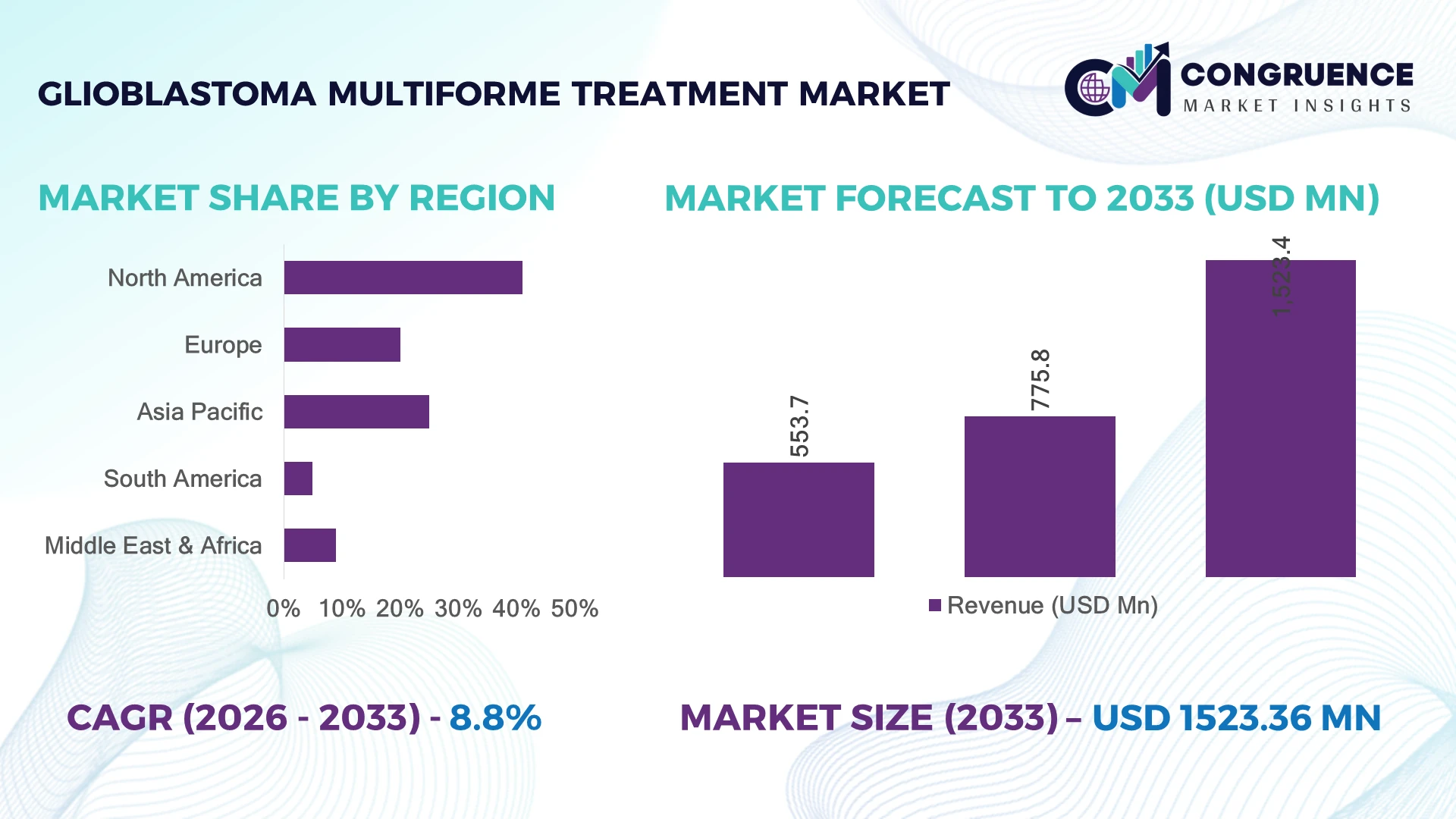
The United States remains the dominant country, accounting for approximately 42% of global market activity, supported by more than USD 1.5 billion in annual neuro-oncology research funding and widespread deployment of advanced genomic profiling across major cancer centers. Compared with Germany, where specialized neuro-oncology treatment penetration remains below 20% of eligible patients, U.S. adoption exceeds 55%, strengthened by ongoing precision medicine initiatives and post-pandemic oncology infrastructure expansion. Continued healthcare investment and strategic focus on high-burden cancers reinforce its leadership position amid evolving global healthcare priorities.
For market participants, prioritizing precision oncology platforms, clinical trial partnerships, and advanced therapeutic pipelines in high-adoption regions will be critical to securing long-term competitive advantage.
Market Size & Growth: USD 775.83 Million in 2025 rising to USD 1523.36 Million by 2033 at 8.8% CAGR, supported by rapid advancement of targeted oncology therapies and biomarker-driven treatment pathways.
Top Growth Drivers: Precision medicine adoption (+28%), immunotherapy utilization (+22%), and molecular diagnostic integration (+18%) are accelerating treatment innovation.
Short-Term Forecast: By 2028, treatment pathway efficiency is projected to improve by nearly 15% through AI-assisted diagnostics and optimized patient stratification.
Emerging Technologies: AI-enabled imaging analytics, tumor-specific immunotherapies, and gene-editing research programs are advancing clinical decision accuracy by over 20%.
Regional Leaders: North America exceeds USD 620 Million, Europe approaches USD 390 Million, and Asia-Pacific surpasses USD 310 Million by 2033, driven by expanding oncology infrastructure.
Consumer/End-User Trends: More than 45% of leading cancer centers are increasing investment in precision neuro-oncology and molecular testing workflows.
Pilot/Case Example: In 2026, advanced AI-assisted neuroimaging programs reduced diagnostic assessment time by approximately 30% in specialized oncology settings.
Competitive Landscape: The top market leader controls roughly 15% share, alongside several major oncology innovators competing through targeted therapy portfolios.
Regulatory & ESG Impact: Accelerated review pathways have shortened selected oncology approval timelines by nearly 20%, improving patient access.
Investment & Funding: Global neuro-oncology funding exceeds USD 2 billion, with strategic partnerships and translational research programs expanding rapidly.
Innovation & Future Outlook: Next-generation cell therapies, personalized vaccines, and combination treatment strategies are reshaping the high-growth global glioblastoma treatment ecosystem.
The Glioblastoma Multiforme Treatment Market is experiencing significant transformation as healthcare providers expand precision oncology programs and integrate advanced biomarker testing into routine care. Targeted therapies and personalized treatment protocols now influence more than 35% of investigational neuro-oncology pipelines, while improvements in genomic analysis support faster therapeutic selection. Regulatory focus on accelerated oncology approvals and strengthening clinical trial networks is further supporting innovation, creating a strong foundation for the strategic market developments discussed next.
The Glioblastoma Multiforme Treatment Market is becoming strategically important as oncology companies compete to address one of the most treatment-resistant cancers through precision medicine, advanced biologics, and integrated diagnostic platforms. Competitive differentiation increasingly depends on molecular targeting capabilities and clinical evidence generation rather than traditional treatment approaches. A notable market shift is the expansion of accelerated regulatory pathways for high-unmet-need therapies, enabling faster progression from clinical development to patient access while encouraging greater investment in specialized neuro-oncology infrastructure.
Technology integration is reshaping treatment workflows. AI-assisted tumor characterization and molecular profiling platforms reduce diagnostic interpretation time by nearly 30% compared with conventional pathology-led assessment, improving treatment selection efficiency. The United States leads deployment through large-scale cancer center networks, while Japan is advancing adoption through precision oncology programs and hospital-based genomic testing expansion. More than 50% of late-stage investigational therapies now incorporate biomarker-driven patient selection, reflecting a structural transition toward personalized treatment strategies.
Operationally, leading developers are expanding partnerships with genomic testing providers and academic research institutions to strengthen clinical trial recruitment and biomarker validation. Over the next two to three years, adoption of integrated diagnostic-treatment pathways is expected to increase by approximately 20%, improving patient stratification and therapy optimization. Companies that secure early access to precision oncology ecosystems, specialized treatment networks, and next-generation therapeutic platforms will strengthen long-term competitive positioning and clinical leadership.
The strongest growth driver is the rapid integration of precision oncology into glioblastoma management. More than 55% of leading neuro-oncology centers now utilize molecular profiling to guide treatment decisions, while biomarker-directed clinical programs have increased by approximately 25% over the past three years. In the United States, expanded regulatory support for breakthrough oncology therapies is accelerating development timelines and encouraging investment in targeted treatment platforms. The direct impact is improved patient selection and higher clinical trial efficiency, enabling companies to allocate resources more effectively. In response, pharmaceutical developers are increasing partnerships with genomic testing firms and research institutions. A notable strategic insight is that diagnostic capability is becoming as commercially important as therapeutic innovation, creating competitive advantages for integrated oncology ecosystems.
Glioblastoma treatment remains constrained by high clinical complexity and uneven access to specialized care. Approximately 40% of patients globally lack access to advanced molecular testing, while treatment delivery costs can exceed standard oncology protocols by more than 30% due to multidisciplinary requirements. Germany and several emerging healthcare systems continue to face shortages of specialized neuro-oncology infrastructure, limiting broad deployment of advanced therapies. These constraints affect scalability, reimbursement efficiency, and commercial penetration. Companies are mitigating risk through localized diagnostic partnerships, decentralized testing models, and long-term healthcare contracts. A critical operational insight is that infrastructure readiness, rather than therapeutic availability, increasingly determines market accessibility and the speed of treatment adoption across healthcare systems.
Significant opportunities are emerging through personalized vaccines, cell-based therapies, and AI-enabled biomarker discovery platforms. More than 35% of active glioblastoma research programs now involve immunotherapy combinations, while advanced analytics can improve patient stratification accuracy by nearly 20%. China is increasing investment in translational oncology research and precision medicine infrastructure, creating new commercialization pathways for innovative therapies. Companies are positioning through strategic R&D alliances, digital pathology integration, and expansion of biomarker development programs. A less obvious opportunity lies in reducing costly trial failures through AI-supported patient matching, which enhances development efficiency. Organizations capable of combining therapeutic innovation with data-driven clinical decision tools are likely to capture disproportionate value from future treatment ecosystems.
Long-term market expansion faces challenges related to clinical scalability, data integration, and complex trial execution. Patient recruitment delays affect nearly 30% of neuro-oncology studies, while biomarker validation timelines can extend development programs by 15% or more. In the United States, increasing requirements for real-world evidence and long-term outcome monitoring are adding operational complexity to commercialization strategies. These pressures influence deployment consistency, development productivity, and competitive timelines. Companies must strengthen digital trial infrastructure, invest in interoperable data systems, and expand collaboration with specialized treatment centers. A key strategic challenge is balancing scientific innovation with operational execution, as organizations that fail to scale clinical validation capabilities risk losing market relevance despite possessing promising therapeutic assets.
AI-Guided Treatment Planning Expansion: More than 45% of major neuro-oncology centers are integrating AI-assisted imaging and treatment planning platforms, reducing diagnostic workflow times by nearly 25% and improving treatment pathway standardization by 18%. Regulatory support for digital health technologies is accelerating deployment, particularly in the United States. Companies are expanding software partnerships and embedding clinical decision-support tools to improve operational efficiency, optimize patient selection, and enhance treatment consistency across specialized oncology networks.
Biomarker-Driven Therapy Selection: Biomarker testing adoption has surpassed 50% across leading academic oncology networks, while molecular profiling utilization has increased by approximately 30% over the past three years. This transition is improving therapy matching and reducing ineffective treatment cycles. Companies are increasing investments in companion diagnostics, genomic testing collaborations, and integrated data platforms to strengthen precision treatment models. A less obvious impact is the growing influence of diagnostic capabilities on treatment purchasing decisions and clinical trial enrollment efficiency.
Combination Therapy Protocol Growth: Combination treatment strategies now account for nearly 40% of advanced glioblastoma treatment programs, supported by expanding evidence around multi-modal approaches. Clinical teams report treatment optimization gains of 15%–20% when targeted therapies are integrated with established care pathways. As treatment resistance remains a major challenge, companies are restructuring development pipelines around combination regimens and forming cross-sector partnerships to accelerate validation and deployment of integrated therapeutic platforms.
Decentralized Clinical Research Models: Decentralized and hybrid trial frameworks have increased patient recruitment efficiency by approximately 20% while reducing site-management costs by nearly 15%. Labor shortages at specialized research centers and growing demand for broader patient access are driving adoption. Companies are investing in remote monitoring technologies, digital patient engagement systems, and distributed research partnerships. This operational shift is expanding access to eligible patient populations while strengthening development timelines and trial execution performance.
Targeted Therapy currently represents the leading segment due to its growing role in precision oncology workflows, improved patient stratification, and integration with molecular diagnostics. More than 35% of late-stage glioblastoma development programs now focus on targeted mechanisms, reflecting increasing confidence in biomarker-guided treatment approaches. Compared with traditional Chemotherapy, which remains widely used because of established clinical familiarity and lower implementation complexity, Targeted Therapy offers greater treatment personalization and improved resource allocation. Radiation Therapy continues to hold strategic relevance as a standard component of frontline treatment pathways, supporting broad clinical utilization.
Immunotherapy is emerging as the fastest-growing segment, supported by a rise of approximately 25% in active clinical investigations evaluating immune-based approaches. Tumor Treating Fields are also gaining traction through expanded deployment in specialized oncology centers, particularly in the United States. Companies are increasing investment in combination regimens, precision diagnostics, and next-generation therapeutic platforms. The shift toward biologically targeted interventions is influencing R&D allocation, partnership strategies, and competitive positioning as treatment developers seek differentiated clinical outcomes and stronger long-term adoption.
Newly Diagnosed Cases remain the dominant application segment because treatment interventions are typically initiated immediately after diagnosis, concentrating demand across surgery, radiation, chemotherapy, and emerging targeted approaches. Nearly 60% of treatment activity is associated with newly diagnosed patients, where early intervention strategies are prioritized to improve clinical outcomes. Adjuvant Therapy maintains strong utilization due to its role in extending treatment effectiveness following primary interventions, while Palliative Care remains essential for symptom management and quality-of-life support throughout disease progression.
Combination Therapy is the fastest-growing application segment as healthcare providers increasingly integrate multiple treatment modalities to address tumor resistance and optimize patient management. Adoption of combination protocols has expanded by approximately 20% across specialized cancer programs over recent years. Recurrent Cases are also receiving increased clinical attention as new therapeutic options become available. Companies are responding through integrated treatment platforms, expanded clinical studies, and development of therapies designed for multi-stage disease management. Demand is increasingly shifting toward comprehensive care models that combine precision diagnostics with individualized treatment planning.
Cancer Centers represent the leading end-user segment because they possess the specialized infrastructure, multidisciplinary expertise, and advanced diagnostic capabilities required for complex glioblastoma management. More than 40% of advanced treatment deployments occur within dedicated oncology centers, where access to clinical trials, molecular testing, and specialized neuro-oncology teams supports higher treatment intensity. Hospitals remain critical due to their broad patient intake and surgical capabilities, while Academic Medical Centers continue to influence treatment innovation through research-driven care models and translational medicine programs.
Research Institutes are emerging as the fastest-growing end-user segment as investment in novel therapies, precision medicine programs, and biomarker research accelerates. Clinical research activity has increased by approximately 25% across major oncology institutions, creating greater demand for specialized treatment evaluation platforms. Specialty Clinics are expanding targeted services for patient monitoring and follow-up care, while Ambulatory Care Centers are gradually increasing participation in supportive treatment delivery. Companies are strengthening partnerships with research organizations, tailoring product offerings to specialized oncology networks, and building ecosystem-based engagement strategies to secure long-term market access.
North America accounted for the largest market share at 41% in 2025 however, Asia-Pacific is expected to register the fastest growth, expanding at a CAGR of 10.4% between 2026 and 2033.
Precision Oncology Infrastructure Drives Market Leadership
North America maintains the leading position through its concentration of advanced cancer centers, specialized neuro-oncology programs, and extensive clinical trial activity. The region accounts for approximately 41% of global treatment deployment, supported by widespread adoption of molecular diagnostics and targeted treatment protocols. More than 60% of late-stage glioblastoma clinical studies are coordinated through North American institutions, strengthening innovation pipelines and accelerating therapy adoption. Strategic partnerships between biotechnology firms, academic medical centers, and diagnostic developers continue to improve treatment personalization. Investment in AI-assisted imaging and biomarker-driven treatment selection has increased operational efficiency and enhanced patient stratification capabilities across major oncology networks.
United States Market Outlook: The United States dominates regional activity through its extensive neuro-oncology infrastructure, advanced research ecosystem, and leadership in precision medicine deployment. More than 55% of major cancer centers routinely integrate genomic profiling into glioblastoma treatment planning. Strong regulatory support for innovative therapies, combined with substantial investment in translational oncology research, enables faster commercialization pathways. Pharmaceutical companies continue expanding collaborations with academic institutions and diagnostic specialists to strengthen competitive positioning in advanced brain cancer treatment.
Research-Driven Treatment Modernization Accelerates Adoption
Europe remains a strategically important market supported by strong clinical research networks, healthcare modernization initiatives, and growing utilization of precision oncology tools. The region represents approximately 28% of global market activity and benefits from coordinated cancer care frameworks across major healthcare systems. Advanced molecular testing adoption has increased by nearly 20% in leading treatment centers over recent years, improving treatment selection accuracy. Ongoing investments in oncology infrastructure and cross-border clinical collaborations are strengthening access to innovative therapies. Regulatory emphasis on personalized medicine continues to support integration of advanced diagnostics into routine neuro-oncology workflows.
Germany Market Outlook: Germany serves as the region's most influential market due to its strong hospital infrastructure, advanced oncology research capabilities, and broad access to specialized treatment facilities. More than 30 certified comprehensive cancer centers support clinical deployment of advanced neuro-oncology therapies. The country maintains a strong position in biomarker testing and translational research, enabling efficient integration of emerging treatment approaches. Continued investment in precision medicine programs is reinforcing Germany's role as a key European innovation hub.
Healthcare Expansion and Precision Medicine Scaling
Asia-Pacific is emerging as the fastest-expanding market due to healthcare infrastructure development, growing cancer treatment capacity, and increasing investment in precision medicine. The region accounts for approximately 22% of global market participation, with deployment expanding rapidly across major healthcare economies. Oncology infrastructure investment has increased by more than 25% in several key countries, supporting broader access to advanced diagnostics and targeted therapies. Growing clinical research activity and government-supported innovation initiatives are improving treatment availability while encouraging partnerships between international and domestic healthcare organizations.
China Market Outlook: China is the most strategically significant market within Asia-Pacific due to its expanding oncology infrastructure, increasing clinical research capacity, and large patient population. Precision oncology program adoption has grown by more than 30% across leading tertiary hospitals. Government-backed healthcare modernization initiatives and rising investment in biotechnology innovation are supporting faster deployment of advanced treatment platforms. Domestic and international companies are strengthening partnerships to expand access to molecular diagnostics and next-generation therapies.
Specialized Oncology Capacity Expands Gradually
South America is experiencing steady market development as healthcare systems increase investment in specialized oncology services and advanced diagnostic capabilities. The region contributes approximately 5% of global market activity, with treatment concentration primarily located in major urban healthcare networks. Expansion of comprehensive cancer care facilities and clinical research collaborations is improving access to advanced glioblastoma management. However, uneven infrastructure distribution and reimbursement limitations continue to affect deployment consistency. Strategic partnerships between healthcare providers and pharmaceutical companies are helping bridge access gaps while supporting adoption of targeted treatment approaches.
Brazil Market Outlook: Brazil leads the regional market through its extensive healthcare network, growing oncology research activity, and concentration of specialized cancer treatment centers. Large metropolitan hospitals continue expanding neuro-oncology capabilities and integrating advanced diagnostic workflows. Increasing participation in international clinical studies is improving access to emerging therapies. Healthcare modernization initiatives and public-private collaborations are strengthening treatment capacity, positioning Brazil as the primary gateway for advanced glioblastoma treatment deployment across South America.
Healthcare Modernization Supports Advanced Treatment Access
The Middle East & Africa market is being shaped by healthcare modernization programs, expanding oncology infrastructure, and increasing investment in specialized treatment capabilities. The region accounts for roughly 4% of global market activity, with deployment concentrated in major healthcare hubs. Investments in advanced cancer centers and precision diagnostic platforms have improved access to specialized neuro-oncology services. Several healthcare systems are prioritizing modernization initiatives that integrate advanced imaging, molecular testing, and multidisciplinary treatment models. Strategic partnerships with global healthcare organizations continue to accelerate technology transfer and clinical capability development.
Saudi Arabia Market Outlook: Saudi Arabia represents the most influential market in the region due to its healthcare transformation agenda, investment in advanced medical infrastructure, and expansion of specialized oncology services. Major healthcare institutions are increasing adoption of genomic testing and precision treatment pathways for complex cancers. More than 20 major oncology facilities are participating in modernization programs focused on advanced diagnostics and treatment optimization. Continued investment in healthcare technology and specialist workforce development is strengthening the country's long-term competitive position.
The Glioblastoma Multiforme Treatment Market is characterized by competition between global oncology leaders such as Roche, Merck & Co., Bristol Myers Squibb, Novocure, and Amgen, alongside specialized biotechnology innovators developing targeted and immune-based therapies. The top five players collectively control approximately 48% of market activity, with competition centered on clinical efficacy, biomarker integration, treatment differentiation, and regulatory execution. Novocure competes through Tumor Treating Fields technology, while large pharmaceutical companies focus on targeted therapies, immuno-oncology platforms, and combination treatment strategies. Treatment optimization capable of improving patient stratification by 20% and reducing diagnostic timelines by nearly 25% has become a key competitive factor. Companies are expanding through research alliances, clinical trial partnerships, and precision diagnostic integration rather than price-based competition. The market is shifting toward personalized treatment ecosystems, creating pressure on companies lacking advanced biomarker capabilities. Success increasingly depends on combining therapeutic innovation, clinical evidence generation, and integrated precision oncology infrastructure.
Roche
Merck & Co.
Bristol Myers Squibb
Novocure
Amgen
Pfizer
AstraZeneca
Eli Lilly and Company
Bayer AG
Ono Pharmaceutical Co., Ltd.
Daiichi Sankyo Company, Limited
Kazia Therapeutics
Northwest Biotherapeutics
Genenta Science S.p.A.
Precision oncology technologies are becoming central to glioblastoma treatment workflows. Molecular profiling and next-generation sequencing are now used in more than 55% of leading neuro-oncology centers to guide treatment selection and clinical trial enrollment. AI-assisted imaging platforms improve tumor characterization accuracy by approximately 18% while reducing diagnostic review time by 25%. Compared with conventional pathology-led assessment, integrated genomic and imaging analysis delivers nearly 30% faster treatment planning, improving operational efficiency and enabling more targeted therapeutic decisions across specialized oncology networks.
Emerging technologies are shifting focus toward personalized immunotherapies, tumor-specific vaccines, and advanced biomarker platforms. More than 35% of active glioblastoma development programs now incorporate immunotherapy combinations or biomarker-driven patient stratification. Digital pathology systems improve biomarker identification efficiency by nearly 15%, while AI-supported patient matching reduces clinical trial screening burdens by approximately 20%. Companies are increasingly forming partnerships with genomic testing providers and research institutions to strengthen precision treatment ecosystems and accelerate development timelines.
Disruptive technologies such as Tumor Treating Fields, AI-powered clinical decision systems, and computational tumor modeling are reshaping competitive dynamics. Advanced treatment planning platforms demonstrate up to 22% better recurrence-targeting precision than legacy uniform treatment approaches. Market leaders with integrated diagnostic, therapeutic, and data analytics capabilities gain stronger competitive positioning. Between 2026 and 2028, adoption of combined AI-diagnostics and precision treatment platforms is expected to exceed 60% across major oncology centers, making technology integration a critical strategic priority.
June 2026 – Novocure announced topline Phase 3 TRIDENT trial data evaluating earlier use of Tumor Treating Fields therapy in newly diagnosed glioblastoma. The study reinforced operational focus on treatment optimization and future combination strategies, supporting broader platform development and commercial positioning. Source: investor.novocure.com
March 2026 – INOVIO Pharmaceuticals and Akeso entered a clinical collaboration to evaluate INO-5412 with cadonilimab in the INSIGhT glioblastoma platform trial. The program combines a DNA immunotherapy with a bispecific antibody, expanding next-generation combination treatment development. Source: ir.inovio.com
March 2026 – Roche launched a large-scale AI infrastructure initiative deploying 2,176 NVIDIA Blackwell GPUs to accelerate therapeutic and diagnostic development. The expanded computational capability strengthens oncology research productivity, biomarker discovery, and clinical development efficiency across advanced treatment programs. Source: roche.com
December 2025 – Novocure reported 4,464 active Optune Gio patients globally, representing a 9% increase from the prior year. Expanded deployment across the United States, Germany, France, and Japan reinforced adoption of Tumor Treating Fields therapy in glioblastoma management. Source: novocure.com
This report provides comprehensive analysis of the Glioblastoma Multiforme Treatment Market across major treatment types including Chemotherapy, Radiation Therapy, Targeted Therapy, Immunotherapy, and Tumor Treating Fields. The study evaluates key applications such as Newly Diagnosed Cases, Recurrent Cases, Adjuvant Therapy, Combination Therapy, and Palliative Care, alongside end-user assessment covering Hospitals, Cancer Centers, Specialty Clinics, Research Institutes, Academic Medical Centers, and Ambulatory Care Centers. More than 50% of current innovation activity is concentrated in precision oncology, biomarker-driven treatment selection, and advanced therapeutic platforms.
The report delivers detailed regional analysis across North America, Europe, Asia-Pacific, South America, and the Middle East & Africa, highlighting deployment patterns, infrastructure readiness, technology adoption levels, and competitive positioning. It examines strategic developments in AI-assisted diagnostics, molecular profiling, immunotherapy integration, and Tumor Treating Fields deployment. The assessment supports investment planning, partnership evaluation, market entry strategies, competitive benchmarking, and long-term portfolio development by identifying operational trends, emerging treatment models, and high-priority innovation areas expected to influence market direction between 2026 and 2033.
| Report Attribute/Metric | Report Details |
|---|---|
Market Revenue in 2025 | USD 775.83 Million |
Market Revenue in 2033 | USD 1523.36 Million |
CAGR (2026 - 2033) | 8.8% |
Base Year | 2025 |
Forecast Period | 2026 - 2033 |
Historic Period | 2021 - 2025 |
Segments Covered | By Type
By Application
By End-User
|
Key Report Deliverable | Revenue Forecast, Growth Trends, Market Dynamics, Segmental Overview, Regional and Country-wise Analysis, Competition Landscape |
Region Covered | North America, Europe, Asia-Pacific, South America, Middle East, Africa |
Key Players Analyzed | Roche, Merck & Co., Bristol Myers Squibb, Novocure, Amgen, Pfizer, AstraZeneca, Eli Lilly and Company, Bayer AG, Ono Pharmaceutical Co., Ltd., Daiichi Sankyo Company, Limited, Kazia Therapeutics, Northwest Biotherapeutics, Genenta Science S.p.A. |
Customization & Pricing | Available on Request (10% Customization is Free) |




