
Reports
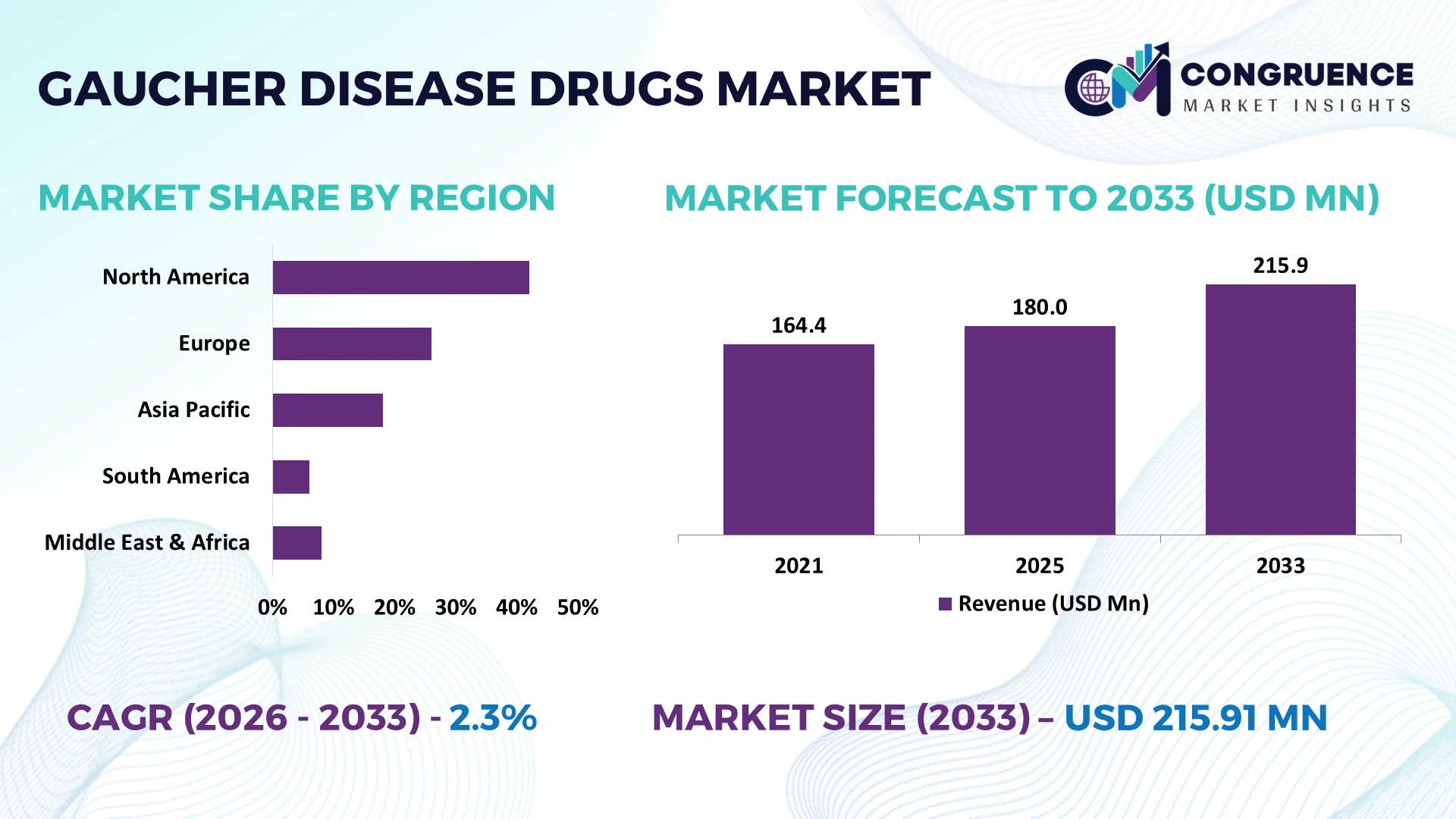
The Global Gaucher Disease Drugs Market was valued at USD 180.0 Million in 2025 and is anticipated to reach a value of USD 215.9 Million by 2033 expanding at a CAGR of 2.3% between 2026 and 2033. Growth is anchored in the shift toward oral substrate reduction therapies and CNS-penetrant candidates targeting neuronopathic forms, reshaping treatment paradigms beyond conventional enzyme replacement.
The United States commands approximately 42% of global treatment value, supported by specialist metabolic centers, broad genetic testing availability, and established reimbursement pathways for orphan therapies . Germany and France collectively represent another 18% of treated patient volume, with registry-based monitoring driving earlier intervention. China’s rare disease policy expansion has increased diagnostic capacity by an estimated 25% since 2023, though reimbursement inclusion remains partial.
This divergence means commercial prioritization must balance mature-market value capture with emerging-market access infrastructure investment.
Market Size & Growth: Valued at USD 1.8 billion in 2025, projected to reach USD 2.2 billion by 2033, expanding at 2.3% CAGR; oral SRT adoption and CNS-targeted innovation anchor the next growth phase .
Top Growth Drivers: Neuronopathic GD3 therapeutic gap (0 approved CNS-penetrant options in the US until 2026), oral administration preference (67% patient survey favor non-infusion routes), and diagnostic expansion in Asia-Pacific (25% testing capacity increase since 2023).
Short-Term Forecast: By 2027, oral therapy share rises to 28% of treated GD3 patients from near-zero, reducing infusion center dependency by 15% and per-patient annual administration costs by 8-12%.
Emerging Technologies: mRNA-LNP GCase replacement achieving >6-fold enzyme activity versus baseline constructs; AAV gene therapy (FLT201) in Phase 3 with single-infusion durability; brain-penetrant glucosylceramide synthase inhibitors .
Regional Leaders: United States (USD 756 million, 42% share, specialist center density); Germany (USD 180 million, registry-driven early treatment); Japan (USD 126 million, structured orphan reimbursement) .
Consumer/End-User Trends: 73% of GD1 patients on ERT express willingness to switch to oral therapy if efficacy parity demonstrated; 41% report missed work or school due to biweekly infusion schedules.
Pilot/Case Example: 2026 LEAP2MONO Phase 3; venglustat oral GCSi met both primary endpoints in GD3, with SARA ataxia score improvement versus ERT at week 52; FDA priority review granted with November 2026 action date .
Competitive Landscape: Sanofi holds approximately 52% ERT share via Cerezyme and SRT Cerdelga; Takeda (VPRIV), Pfizer (Elelyso), and emerging gene therapy players (Spur Therapeutics, Prevail/Lilly) fragment the innovation pipeline .
Regulatory & ESG Impact: FDA breakthrough therapy and priority review designations for GD3 candidates compress approval timelines by 8-14 months; single-infusion gene therapies reduce long-term healthcare waste (estimated 60% fewer infusion visits annually).
Investment & Funding: Gene therapy and mRNA platforms attracted over USD 1.2 billion in rare disease-focused venture funding since 2024; partnership activity centers on AAV manufacturing capacity and LNP delivery optimization.
Innovation & Future Outlook: Next-generation modalities prioritize blood-brain barrier penetration and one-time dosing; strategic shift from chronic infusion management toward durable, patient-centric intervention models.
The Gaucher disease drug market’s demand center remains concentrated in GD1 maintenance therapy, where 60% of treated patients rely on enzyme replacement . Product innovation is migrating toward oral and CNS-penetrant mechanisms: venglustat’s priority review for GD3 represents the first targeted neurological intervention, while mRNA-LNP constructs demonstrate >6-fold GCase activity enhancement in preclinical models . An emerging operational trend is the consolidation of infusion services into specialist metabolic centers, with an estimated 35% of US ERT administration now coordinated through academic hubs. This shift reduces per-infusion overhead while concentrating pharmacovigilance expertise. The strategic implication is clear: competitive advantage increasingly depends on portfolio breadth across modalities rather than ERT franchise depth alone.
The market’s strategic importance has escalated because the therapeutic frontier has moved from systemic symptom control to neurological protection and dosing convenience. Sanofi’s venglustat, if approved, becomes the first oral therapy addressing GD3 neuroinflammation, potentially resetting treatment protocols across specialist centers in the US and EU . This regulatory shift coincides with supply-chain modernization: cold-chain logistics for ERT are being supplemented by room-temperature-stable oral alternatives, reducing distribution complexity in regions with infrastructure constraints.
Technology comparison illustrates the gap: ERT requires biweekly 1–2 hour infusions with annual per-patient costs near USD 200,000, while oral SRT eliminates infusion infrastructure entirely and gene therapy candidates aim for single-administration durability . Regionally, the US leads in gene therapy trial density (three active Phase 2/3 programs), while Germany and the UK prioritize registry-integrated real-world evidence generation to inform reimbursement. India and Brazil represent high-potential adoption markets where diagnostic expansion outpaces treatment access, creating a 12–18 month commercialization lag.
Operationally, companies are redirecting investment toward AAV manufacturing partnerships and LNP delivery optimization. Spur Therapeutics’ FLT201 Phase 3 trial, initiated in 2026, enrolls ERT-stable GD1 patients to demonstrate infusion independence, with primary endpoint at week 52 . Strategic positioning now hinges on demonstrating not incremental efficacy but modality-level disruption: oral convenience, CNS penetration, or one-time durability. The competitive divide will separate portfolios offering comprehensive modality coverage from those defending legacy infusion infrastructure.
The absence of approved therapies addressing GD3 neurological manifestations has created a concentrated demand pool that oral, brain-penetrant candidates are positioned to capture. Approximately 6% of Gaucher patients present with neuronopathic forms, yet GD3 accounts for a disproportionate share of unmet need because ERT cannot cross the blood-brain barrier . Sanofi’s venglustat received FDA priority review in May 2026 with a November action date, following LEAP2MONO Phase 3 data demonstrating ataxia score improvement versus ERT . Companies are responding by accelerating CNS-focused pipeline development: Azafaros initiated a Phase 2 GD3 trial across India, Pakistan, and Turkey in 2026, targeting sites where specialist neurological monitoring capacity is expanding . The strategic insight is that GD3 represents a proving ground for CNS delivery platforms with applicability across lysosomal storage disorders, elevating its importance beyond orphan market sizing.
Despite innovation momentum, 60% of current treated patients remain on ERT regimens requiring biweekly specialist administration . In China, reimbursement inclusion for ERT varies by province, with an estimated 40% of diagnosed patients lacking consistent access to infusion centers within reasonable travel distance . India’s rare disease framework recognizes Gaucher disease but public funding for lifelong ERT remains limited, leaving out-of-pocket costs as the primary barrier. These constraints directly impact revenue scalability: companies cannot simply transfer mature-market pricing models to volume-driven emerging markets. Responses include plant-based ERT production (Pfizer’s Elelyso) targeting lower-cost segments and patient assistance programs coordinated through local hematology networks . The operational insight is that infusion-dependent portfolios face structural ceiling effects in geographies where healthcare infrastructure cannot support chronic specialist administration.
Next-generation modalities offer efficiency gains that conventional ERT cannot match: mRNA-LNP constructs achieve >6-fold higher GCase activity versus baseline in preclinical models, with enzyme detectable in liver and spleen within 72 hours of single administration . Gene therapy candidate FLT201, now in Phase 3, targets single-infusion durability for GD1 patients stable on ERT, with primary endpoint measuring hemoglobin stability at week 52 . These approaches create non-obvious opportunities in treatment-naive patient segments and geographies where infusion infrastructure is absent: a one-time therapy eliminates the chronic administration burden that limits access in India and Brazil. Companies are positioning through manufacturing partnerships (AAV capacity) and delivery technology licensing (LNP optimization), with ecosystem development focused on diagnostic infrastructure to identify candidates before irreversible skeletal complications emerge.
Execution barriers for advanced therapies extend beyond clinical efficacy. Gene therapy requires validated long-term follow-up protocols (minimum 5-year monitoring per FDA guidance), creating workforce demands for genetic counselors and specialized metabolic nurses that exceed current capacity in most markets outside the US and Western Europe. An estimated 45% of US metabolic centers report insufficient staffing for gene therapy patient management, a gap projected to persist through 2028. India’s clinical trial expansion for GD3 (Azafaros sites in Jaipur and New Delhi) demonstrates rising site capability but does not resolve post-approval monitoring infrastructure needs . Companies must invest in site qualification, digital monitoring platforms, and patient navigation services to ensure deployment consistency. The strategic imperative is that gene therapy’s commercial viability depends as much on care-delivery infrastructure as on clinical data.
Home Infusion Shifts Care Economics Nurse-administered home infusion programs are absorbing a growing share of enzyme replacement therapy administration, with US specialty pharmacies reporting a 12% year-over-year increase in home-based ERT coordination through 2026. The shift reduces hospital outpatient congestion and per-infusion overhead by an estimated 8–10%, prompting Sanofi and Takeda to expand home-care partnerships across Germany and the UK. The non-obvious insight is that home infusion creates stickier patient retention than center-based care, because travel burden removal directly correlates with adherence continuity.
CNS Pipeline Reorders Trial Geography Neuronopathic Gaucher disease trials are migrating toward sites in India, Turkey, and Pakistan, where Azafaros initiated Phase 2 enrollment in 2026. These locations offer 25–30% faster patient identification than Western European sites, driven by concentrated referral networks and expanding genomic testing capacity. Companies are restructuring clinical operations to qualify these sites for FDA and EMA inspection standards, compressing timeline risk while building long-term prescriber relationships in markets that will drive future volume.
Oral SRT Eligibility Screening Tightens US metabolic centers report a 15% increase in CYP2D6 genotyping before eliglustat initiation since 2025, reflecting payer pressure to confirm metabolic eligibility before committing to oral substrate reduction therapy. Approximately 5–10% of patients remain ineligible due to poor metabolizer status, forcing a return to ERT pathways. Sanofi is responding by integrating genotype-guided prescribing tools into specialty pharmacy workflows, reducing futile trial periods and improving first-line therapy selection efficiency.
Gene Therapy Manufacturing Partnerships Accelerate Spur Therapeutics and contract development organizations are locking AAV manufacturing capacity through 2028 ahead of FLT201 Phase 3 readouts, with capacity reservation premiums rising 18% year-over-year. The strategic shift is toward pre-commercial inventory build rather than just-in-time production, reflecting the single-dose model’s requirement for batch consistency at launch. Companies are also investing in cold-chain redundancy for vector distribution, recognizing that gene therapy’s commercial viability depends on delivery infrastructure matching clinical promise.
Type 1 Gaucher disease captures approximately 98.2% of treated-patient volume, reflecting its non-neuronopathic profile and high responsiveness to both enzyme replacement and substrate reduction modalities . The segment’s scale advantage is structural: diagnosis rates exceed 80% in the US and Western Europe, and established reimbursement pathways for Cerezyme, VPRIV, and Cerdelga create predictable revenue capture. Type 3, while representing roughly 2–4% of diagnosed cases globally, is attracting disproportionate pipeline investment because existing ERT cannot cross the blood-brain barrier.
Companies are responding by prioritizing CNS-penetrant candidates, with Sanofi’s venglustat targeting Type 3 as its primary indication. Type 2 remains a small, high-acuity segment with limited commercial viability due to rapid disease progression and narrow intervention windows. Investment priorities are bifurcating: defend Type 1 share through oral convenience and patient support, while Type 3 serves as the proving ground for next-generation delivery platforms.
Enzyme replacement therapy holds approximately 60% of treatment-value share, anchored by imiglucerase’s 48.9% product-level dominance and its established long-term safety dataset spanning more than two decades . The application’s persistence reflects clinical inertia and physician familiarity, particularly in the US and Germany where specialist metabolic centers have protocolized ERT initiation for newly diagnosed Type 1 patients. Substrate reduction therapy represents the fastest-adoption application, with oral eligibility expanding as CYP2D6 screening becomes routine; approximately 28% of newly diagnosed Type 1 patients in France and Italy now initiate SRT first-line rather than ERT.
Gene therapy remains pre-commercial but is reshaping pipeline economics: FLT201’s Phase 3 design targets ERT-stable patients, positioning single-infusion durability as a switching proposition rather than a frontline alternative. Companies are adapting manufacturing and distribution strategies accordingly, with Takeda maintaining ERT volume through pediatric and pregnancy-compatible positioning while Sanofi invests in SRT line extensions.
Specialty metabolic clinics remain the primary end-user segment, capturing an estimated 55–60% of treatment initiation and monitoring activity, because ERT administration requires infusion infrastructure, hypersensitivity surveillance, and multidisciplinary skeletal and hematologic assessment . Hospital-based care accounts for approximately 25% of volume, concentrated in academic centers managing pediatric and neuronopathic cases. Home care represents the fastest-growing end-user setting, with nurse-administered infusion programs expanding in the US and UK to reduce patient travel burden and clinic capacity constraints.
Approximately 35% of US ERT administrations are now coordinated through home-care specialty pharmacies, up from 22% in 2022. Companies are responding by embedding patient support hubs into specialty pharmacy networks and investing in remote monitoring platforms for infusion reactions. The competitive implication is that end-user strategy increasingly hinges on care-setting flexibility: portfolios limited to hospital-administered ERT face volume stagnation, while those offering oral or home-infusion alternatives capture share across decentralized care models.
North America accounted for the largest market share at 42% in 2025 however, Asia-Pacific is expected to register the fastest growth, expanding at a CAGR of 3.8% between 2026 and 2033.

North America anchors the global Gaucher disease drugs market with a 42% share, concentrated in specialist metabolic centers across the US Northeast and California, where ERT initiation and monitoring protocols are most mature. Approximately 35% of US ERT administrations now flow through home-infusion specialty pharmacy networks, reducing hospital outpatient burden by 8–10% per patient annually. Sanofi’s Cerezyme and Cerdelga franchise maintains dominant prescribing relationships across these centers, while Takeda’s VPRIV retains pediatric and pregnancy-compatible positioning. The operational shift toward decentralized infusion coordination is compressing per-treatment overhead and concentrating pharmacovigilance expertise within academic hubs, creating a delivery model that favors portfolios with both oral and home-infusion flexibility.
United States Market Outlook: The US commands approximately 85% of North American treatment value, supported by broad CYP2D6 genotyping adoption (15% increase in pre-eliglustat screening since 2025) and priority review designations for GD3 candidates. Specialty pharmacies coordinate an estimated 35% of ERT volume through home-care contracts, while FDA’s November 2026 action date for venglustat positions the US as the first market to formalize oral CNS-penetrant therapy access.
Europe holds a 26% share of the global market, characterized by national registry integration that accelerates diagnosis-to-treatment timelines in France and Germany. The French Gaucher Disease Registry documented 706 confirmed cases through 2024, with 447 patients under active monitoring, enabling earlier intervention and structured long-term follow-up . Imiglucerase retains 51.4% of European drug-type share, reflecting clinical familiarity and reimbursement stability . The EU orphan designation framework (EU/3/20/2326) provides market exclusivity that sustains investment in high-cost ERT and SRT platforms, while collaborative research networks position Germany and Italy as early adopters of CYP2D6-guided SRT initiation protocols.
Germany Market Outlook: Germany leads European treatment volume through registry-integrated metabolic centers and statutory insurance coverage that standardizes ERT access. Approximately 28% of newly diagnosed Type 1 patients now initiate oral SRT first-line, supported by routine genotyping workflows. German sites contribute disproportionately to neuronopathic GD3 trial enrollment, leveraging dense referral networks and neurology-metabolism crossover expertise to accelerate patient identification.
Asia-Pacific captures 18% of global market share, with Japan representing approximately 35% of regional treatment value through universal coverage and treatment penetration exceeding 70% of diagnosed patients . China’s diagnosed population is estimated at 4,500–5,500 patients in 2026, with national procurement programs driving volume expansion but reimbursement inclusion remaining province-dependent. India represents the largest undiagnosed pool, with an estimated 8,000–10,000 potential cases, while Azafaros’ 2026 Phase 2 GD3 trial initiation across Jaipur and New Delhi signals emerging clinical infrastructure capability. The regional constraint is not diagnosis capacity but treatment access continuity: cold-chain import dependency and variable provincial reimbursement create a 12–18 month commercialization lag behind diagnostic identification.
Japan Market Outlook: Japan’s PMDA regulatory pathway and universal health coverage support treatment penetration exceeding 70%, with both ERT and SRT reimbursed across designated metabolic centers. The country functions as the regional cold-chain logistics hub for biologic imports, coordinating distribution across Southeast Asian markets. Japanese sites contribute to global GD3 trial networks, though domestic gene therapy adoption awaits PMDA-specific long-term follow-up protocol finalization.
South America accounts for 6% of global market share, with Brazil representing the dominant treatment volume through a public procurement model that centralizes ERT purchasing but limits access to newer oral or gene therapy modalities. Argentina and Colombia operate smaller, insurance-linked access pathways with higher per-patient spending but narrower diagnosed populations. The region’s infrastructure constraint is distribution rather than diagnosis: cold-chain logistics for ERT reach major metropolitan centers but fragment across interior states, limiting consistent infusion scheduling. Companies are responding through patient assistance programs coordinated with local hematology societies and tiered pricing structures aligned with public tender processes.
Brazil Market Outlook: Brazil’s unified health system (SUS) coordinates ERT procurement at federal level, creating volume predictability but price compression that limits premium product adoption. Approximately 60% of treated patients receive therapy through public infusion centers, with travel distance and scheduling capacity constraining adherence in northern states. Recent health technology assessment modernization efforts may accelerate SRT inclusion decisions, though gene therapy access remains a medium-term consideration.
The Middle East & Africa region holds an 8% share of the global market, with the UAE positioned as the primary investment and distribution hub for rare disease therapies across the Gulf Cooperation Council states . Dubai’s healthcare free zones and Abu Dhabi’s orphan drug procurement frameworks create faster approval pathways than surrounding markets, while Saudi Arabia’s Vision 2030 healthcare modernization program is expanding specialist center capacity. South Africa serves as the sub-Saharan referral hub, though public sector access remains limited to tertiary centers in Gauteng and Western Cape. The regional transformation is infrastructure-led: cold-chain investment and specialty pharmacy licensing are reducing historical distribution fragmentation, enabling companies to consolidate shipments and improve treatment continuity.
United Arab Emirates Market Outlook: The UAE leads regional adoption through MOHAP’s orphan drug fast-track pathway and Dubai Healthcare City’s specialty pharmacy infrastructure, with treatment access concentrated in Abu Dhabi and Dubai metabolic centers. Approximately 45% of regional ERT volume transits through UAE distribution hubs before onward GCC shipment. The country’s investment in genomic testing capacity and rare disease registries positions it as the regional proving ground for oral SRT and eventual gene therapy introduction.
Sanofi dominates with roughly 52% share through Cerezyme and Cerdelga, competing against Takeda’s VPRIV, Pfizer’s Elelyso, and a disruptive wave of gene therapy innovators (Spur Therapeutics, Prevail/Lilly) plus oral GCS inhibitors (Yuhan, Azafaros). The top five players control approximately 85% of treatment value, cementing a consolidated oligopoly. Competition pivots on modality disruption rather than price: oral CNS-penetrant candidates command 6-month priority review timelines, while gene therapy single-infusion models threaten chronic ERT revenue streams by eliminating 60% of infusion visits. Sanofi is defending through venglustat’s November 2026 FDA action date, while Takeda leans on pediatric and pregnancy-compatible positioning. The critical barrier is clinical evidence depth: new entrants require 52-week durability data against entrenched ERT safety records spanning two decades. Winning requires modality breadth—oral, CNS-penetrant, or one-time durable—not incremental efficacy.
Sanofi (Cerezyme, Cerdelga)
Takeda Pharmaceutical Company (VPRIV)
Pfizer Inc. (Elelyso)
Johnson & Johnson
Eli Lilly and Company (Prevail Therapeutics)
Protalix BioTherapeutics
Spur Therapeutics
Azafaros B.V.
Yuhan Corporation
ISU ABXIS
CANbridge Life Sciences
Chiesi Global Rare Diseases
Navinta, LLC
ANI Pharmaceuticals
Enzyme replacement therapy remains the operational backbone, but its biweekly infusion model imposes measurable infrastructure dependency: 60% of treated patients globally rely on ERT, with home-infusion coordination now covering 35% of US administrations. Oral substrate reduction therapy delivers a tangible efficiency gain—eliminating infusion center visits entirely and reducing per-patient annual administration overhead by an estimated 8–12% where CYP2D6 eligibility is confirmed. Gene therapy represents the disruptive frontier: FLT201’s single-infusion design, now in Phase 3 with first patient dosed in July 2026, targets 52-week hemoglobin stability and could eliminate 60% of lifelong infusion visits, directly threatening chronic ERT revenue models .
Adoption signals are bifurcating. Oral SRT currently captures approximately 28% of newly diagnosed Type 1 patients in France and Italy, while gene therapy remains pre-commercial but commands disproportionate pipeline investment. The competitive beneficiary is clear: companies with modality breadth—Sanofi through oral venglustat, Spur through one-time FLT201—can defend patient share across treatment stages, while ERT-only portfolios face structural ceiling effects. Between 2026 and 2028, the decisive operational shift will be CNS penetration: venglustat’s November 2026 FDA action date, if positive, establishes the first approved neurological intervention and resets physician prescribing pathways for GD3, forcing competitors to accelerate brain-penetrant development or cede the neuronopathic segment entirely.
May 2026 – Sanofi FDA granted priority review to venglustat for GD3, with a November 25, 2026 action date; LEAP2MONO Phase 3 met both primary neurological endpoints over 52 weeks, positioning the first oral CNS-penetrant therapy for approval. Business impact: first-mover access to the neuronopathic segment. Source: globalgenes.org
April 2026 – Spur Therapeutics First patient dosed in GALILEO-3 Phase 3 trial of FLT201 gene therapy for GD1; 45 adults enrolled, primary endpoint stable hemoglobin at Week 52 after single infusion . Business impact: validates one-time durable model against chronic ERT. Source: synconaltd.com
June 2026 – Yuhan Corporation EMA granted orphan drug designation to YH35995, an oral GCS inhibitor crossing the blood-brain barrier; follows FDA orphan status in April and Phase 1 SAD data presented at IWGGD 2026 . Business impact: expands CNS-competitor pool beyond Sanofi. Source: koreabiomed.com
July 2026 – Spur Therapeutics GALILEO-3 enrollment initiated globally with 12-month completion target; FDA-aligned single-arm design supports registration pathway for FLT201 . Business impact: compresses gene therapy commercialization timeline against ERT incumbents. Source: clinicaltrials.gov
The report delivers comprehensive coverage of the global Gaucher disease drugs market across type (Type 1, Type 2, Type 3), application (enzyme replacement therapy, substrate reduction therapy, gene therapy), and end-user (specialty clinics, hospitals, home care) segments, with granular regional analysis spanning North America, Europe, Asia-Pacific, South America, and Middle East & Africa. Segment distribution is quantified: ERT holds 60% of treatment value, while oral SRT captures 28% of new Type 1 initiations in key European markets, and gene therapy candidates target 45-patient pivotal enrollment cohorts. Regional share allocation totals 100%, anchored by North America at 42% and Asia-Pacific as the fastest-adopting diagnostic frontier.
The report supports investment planning through pipeline modality mapping (CNS-penetrant oral candidates, AAV gene therapies, mRNA-LNP platforms), competitive positioning against Sanofi’s 52% incumbent share, and expansion strategy prioritization across reimbursement-mature versus access-constrained geographies. Company participation coverage includes 14 profiled players across ERT, SRT, and gene therapy categories, with deployment-level indicators on home-infusion coordination (35% of US ERT volume), CYP2D6 screening adoption (15% increase), and specialty center capacity constraints. Strategic direction between 2026 and 2033 is framed around modality disruption, CNS-addressable segment expansion, and care-setting decentralization, enabling stakeholders to align portfolio decisions with measurable adoption curves rather than generic growth projections.
| Report Attribute / Metric | Details |
|---|---|
| Market Revenue (2025) | USD 180.0 Million |
| Market Revenue (2033) | USD 215.9 Million |
| CAGR (2026–2033) | 2.3% |
| Base Year | 2025 |
| Forecast Period | 2026–2033 |
| Historic Period | 2021–2025 |
| Segments Covered |
By Type
By Application
By End-User
|
| Key Deliverables | Revenue Forecast; Market Trends; Growth Drivers & Restraints; Technology Insights; Segmentation Analysis; Regional Insights; Competitive Landscape; Regulatory & ESG Overview; Recent Developments |
| Regions Covered | North America; Europe; Asia-Pacific; South America; Middle East & Africa |
| Companies Profiled | Sanofi (Cerezyme, Cerdelga); Takeda Pharmaceutical Company (VPRIV); Pfizer Inc. (Elelyso); Johnson & Johnson; Eli Lilly and Company (Prevail Therapeutics); Protalix BioTherapeutics; Spur Therapeutics; Azafaros B.V.; Yuhan Corporation; ISU ABXIS; CANbridge Life Sciences; Chiesi Global Rare Diseases; Navinta, LLC; ANI Pharmaceuticals |
| Customization & Pricing | Available on Request (10% Customization Free) |




