
Reports
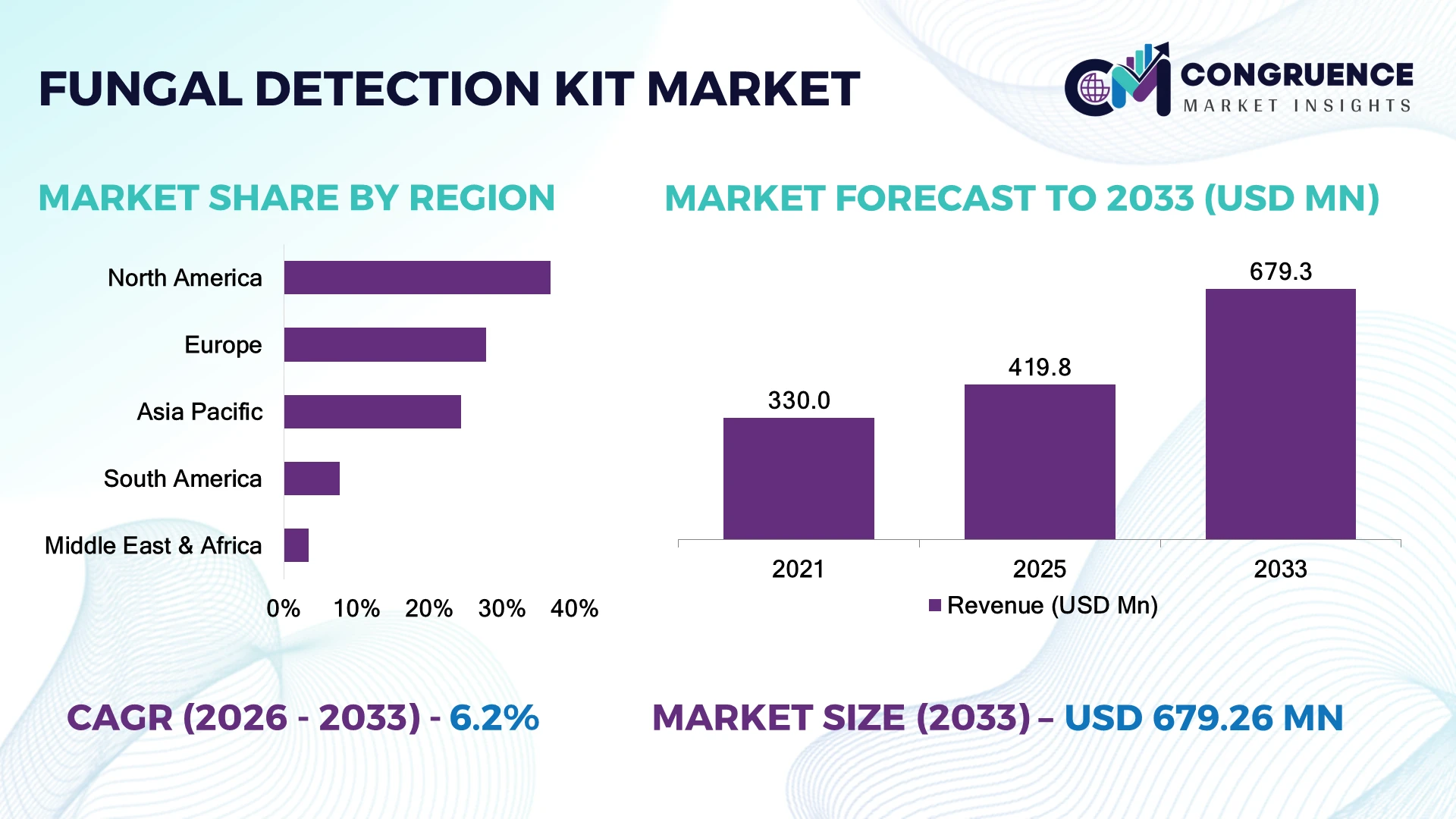
The Global Fungal Detection Kit Market was valued at USD 419.8 Million in 2025 and is anticipated to reach a value of USD 679.3 Million by 2033 expanding at a CAGR of 6.2% between 2026 and 2033. Growth is driven by faster molecular testing, rising attention to antifungal resistance, and the need to identify invasive fungal infections before treatment decisions are delayed.
The United States remains an important market for advanced fungal diagnostics because of its established hospital laboratories, molecular-testing infrastructure, and demand from transplant, oncology, and intensive-care services. Globally, more than 6.5 million invasive fungal infections and approximately 3.8 million associated deaths are estimated annually. The WHO’s 2025 diagnostic landscape assessment also identified uneven access to fungal testing, particularly in low- and middle-income countries. Unlike the United States, India faces a stronger need to balance diagnostic accuracy with affordability and laboratory access.
For suppliers, the strategic priority is to pair high-performance detection with workflows that hospitals can implement reliably across different resource settings.
Market Size & Growth: The market is estimated at USD 419.8 million in 2025 and projected at USD 679.3 million by 2033, supported by molecular diagnostics and increased attention to invasive fungal disease.
Top Growth Drivers: Three structural drivers are rising antifungal-resistance concerns, demand for faster identification, and expansion of testing for immunocompromised patients; reliable global percentage contributions are not separately established.
Short-Term Forecast: By 2028, suppliers will prioritize shorter turnaround times, simpler workflows, and reduced dependence on specialized laboratory infrastructure; performance improvements must be validated for each assay.
Emerging Technologies: PCR-based detection, multiplex panels, and antigen tests are expanding diagnostic options for priority fungal pathogens.
Regional Leaders: North America and Europe benefit from established diagnostic infrastructure, while Asia-Pacific presents substantial unmet-access needs. Audited regional revenue forecasts are not consistently disclosed.
End-User Trends: Hospitals, reference laboratories, and specialist infectious-disease centers prioritize testing for patients with cancer, organ transplants, advanced HIV disease, and critical illness.
Pilot and Implementation Context: The WHO’s 2025 diagnostic landscape review mapped commercially available and pipeline tests, highlighting persistent gaps in access, affordability, and suitability for lower-resource settings.
Competitive Landscape: Key participants include bioMérieux, Bruker, Thermo Fisher Scientific, Abbott, and F. Hoffmann-La Roche. A verified global market-share ranking is not publicly established.
Regulatory and ESG Impact: The WHO’s 2022 priority list identified 19 fungal pathogens, strengthening the case for improved surveillance and diagnostics. Better-targeted testing can also support more appropriate antifungal use.
Investment and Funding: Research priorities increasingly include rapid, near-patient testing and resistance detection. A single consolidated global investment total for fungal detection kits is not available.
Innovation and Future Outlook: The next competitive shift is toward combining analytical accuracy with accessible workflows, broader pathogen coverage, and faster clinical decision-making.
Across the global fungal detection kit market, clinical laboratories are balancing the accuracy of molecular and antigen-based methods against cost, staffing, and infrastructure requirements. The WHO’s 2025 assessment highlights gaps in access to diagnostics for invasive fungal diseases, particularly in lower-resource settings. Products that simplify testing without compromising clinical performance are well positioned to address this operational divide and support the next phase of market development.
Fungal detection is becoming strategically important because diagnostic delays can complicate treatment decisions for critically ill and immunocompromised patients. The WHO’s 2025 assessment estimated more than 6.5 million invasive fungal infections and 3.8 million associated deaths annually, while identifying major gaps in diagnostic availability and affordability. These gaps create a clear commercial need for reliable assays that support earlier clinical decisions.
The technology shift is from conventional culture-dependent workflows toward molecular assays, antigen detection, and multiplex testing. Culture remains useful for organism recovery and further investigation, but molecular and antigen-based approaches can provide actionable results sooner for selected pathogens. Actual turnaround time and cost advantages depend on the organism, assay, sample type, and laboratory workflow; no single improvement percentage applies across all kits. The United States and Western Europe have stronger specialist laboratory infrastructure, while many lower-resource settings require simpler tests and more dependable supply channels.
Over the next two to three years, suppliers will compete on validated performance, test accessibility, and compatibility with existing laboratory workflows. Practical priorities include expanding pathogen coverage, reducing hands-on steps, and supporting training and quality assurance. Manufacturers that combine dependable detection with practical deployment and local distribution partnerships will be better positioned to win institutional procurement and strengthen long-term clinical relevance.
Greater recognition of invasive fungal disease and antifungal resistance is strengthening the case for timely diagnostic testing. The WHO’s 2022 priority list identified 19 fungal pathogens across critical, high, and medium priority groups, while its 2025 diagnostic review estimated more than 6.5 million invasive infections annually. These figures underscore the need for broader diagnostic access rather than reliance on symptom-based treatment alone. Hospitals are prioritizing tests that distinguish fungal infections from bacterial or other causes of illness, particularly in intensive care and immunocompromised populations. Manufacturers are responding by developing molecular, antigen-based, and multiplex assays that target clinically important organisms. The non-obvious commercial advantage is workflow fit: a test that produces reliable results within existing laboratory capacity can be more valuable than a technically advanced assay that requires scarce specialist staff.
High equipment requirements, specialist staffing, and test costs constrain the deployment of advanced fungal detection kits, particularly in lower-resource health systems. The WHO’s 2025 assessment identified substantial access gaps in low- and middle-income countries and noted that some diagnostic approaches depend on equipped laboratories and trained personnel. A single global percentage for the cost premium or infrastructure shortfall is not established, so procurement decisions should be assessed at facility level. Hospitals must account for instrument utilization, reagent availability, quality-control requirements, and the cost of maintaining testing capability. Suppliers can reduce adoption barriers through simplified protocols, regional distribution, training, and dependable reagent supply. The key operational constraint is not only the kit’s purchase price: low test volumes can raise the effective cost per result and weaken the economics of installation.
Opportunity is strongest in tests that extend accurate fungal identification beyond highly specialized laboratories. The WHO’s 2025 review highlighted the need for faster, cheaper, and easier diagnostics, including tools suitable for use at or near the point of care. Its assessment covered commercially available and pipeline diagnostics for priority fungal pathogens, making product gaps a practical guide for research priorities. Manufacturers can focus on simplified sample preparation, multiplex detection, and assays that work with existing laboratory platforms. India and other countries with uneven access to specialist testing represent opportunities for cost-conscious products supported by local service and distribution. Partnerships with hospitals, reference laboratories, and public-health programs can help validate workflows and build adoption. A differentiated opportunity lies in designing for routine implementation from the outset, rather than adapting a complex reference-laboratory test after development.
Scaling fungal detection kits requires reliable performance across specimen types, patient groups, and laboratory conditions. The WHO’s priority framework spans 19 fungal pathogens, but no single assay addresses every organism or clinical presentation. Manufacturers must therefore demonstrate appropriate sensitivity, specificity, reproducibility, and clinical utility for each intended use. Differences in local pathogen prevalence and available laboratory infrastructure complicate deployment, while limited staff training can undermine otherwise capable technologies. Product developers need to invest in clinical validation, quality systems, clear interpretation guidance, and post-market performance monitoring. Interoperability with laboratory information systems also matters as facilities expand molecular testing. The long-term challenge is to increase access without weakening diagnostic quality: partnerships with clinical laboratories and public-health networks can help manufacturers establish reliable implementation standards across diverse healthcare environments.
Multiplex Testing Expands Pathogen Coverage
Laboratories are prioritizing panels that identify multiple targets from a single specimen, reducing sequential testing when a validated panel fits the clinical question. The WHO’s priority framework covers 19 fungal pathogens, but panel composition remains assay-specific. Manufacturers are extending target coverage while balancing reagent cost, interpretation complexity, and clinical validation requirements.
Antigen Tests Support Faster Decisions
Antigen-based assays remain important where rapid results and simpler workflows are needed, particularly for selected infections affecting immunocompromised patients. The operational shift is toward fitting tests into routine clinical pathways rather than relying exclusively on specialist laboratory procedures. Suppliers are emphasizing ease of use, dependable kit availability, and clear result interpretation.
Point-of-Care Access Gains Priority
The WHO’s 2025 assessment identified limited availability of suitable fungal diagnostics in lower-resource settings and called for faster, cheaper, easier tests. This is pushing product development toward near-patient use and reduced dependence on complex laboratory infrastructure. Companies are assessing simplified workflows, training requirements, and distribution partnerships before scaling deployment.
Resistance Detection Shapes Product Development
Growing concern about antifungal resistance is increasing the importance of tests that help identify pathogens and inform susceptibility assessment. The WHO’s 2025 diagnostic review explicitly included detection of susceptibility and resistance among its areas of focus. Developers are aligning assay pipelines with clinical and surveillance needs, while laboratories evaluate how new tests integrate with confirmatory methods and treatment pathways.
Molecular and PCR-based fungal detection kits are estimated to represent approximately 36% of the market, reflecting their ability to detect targeted fungal genetic material and support species-level identification for selected pathogens. Their value is strongest in reference laboratories and hospitals managing complex infections, where timely identification can influence treatment decisions. Culture-based kits and related conventional methods remain relevant for organism recovery, confirmatory investigation, and susceptibility testing, although infrastructure and turnaround requirements can limit their suitability for rapid screening. Antigen and antibody immunoassays serve a different role by enabling targeted detection through comparatively straightforward workflows.
Immunoassay-based kits are positioned for faster adoption in settings seeking simpler procedures and lower infrastructure dependence. Depending on the test and setting, streamlined workflows can reduce hands-on processing by an estimated 20–40% compared with more complex laboratory procedures; this is an operational planning range, not a universal clinical benchmark. Companies are prioritizing improved sensitivity, easier interpretation, and broader specimen compatibility. Investment is increasingly directed toward assays that combine reliable performance with deployment flexibility rather than analytical complexity alone.
Diagnosis of invasive fungal infections is estimated to account for approximately 48% of market demand, reflecting the clinical urgency associated with infections affecting critically ill and immunocompromised patients. Hospitals and specialist laboratories use molecular assays, antigen tests, and culture-based methods to investigate conditions involving pathogens such as Candida, Aspergillus, and Cryptococcus. Superficial fungal infection diagnosis remains an established application, supported by routine testing in dermatology and outpatient care. Screening and surveillance also contribute to demand, particularly where healthcare institutions monitor vulnerable patient groups or investigate suspected clusters.
Antifungal resistance detection is an emerging application as clinicians and laboratories seek more targeted treatment decisions. Its adoption is constrained by the need for validated methods, species-specific interpretation, and access to appropriate laboratory infrastructure. As a directional planning assumption, resistance-focused testing could expand its share of application demand by 3–5 percentage points over the medium term if access, clinical validation, and reimbursement improve; this is not a published market forecast. Companies are strengthening molecular menus, integrating identification with resistance-related workflows where validated, and partnering with reference laboratories. Demand is therefore shifting toward products that connect pathogen detection with actionable clinical information.
Hospitals and healthcare facilities are estimated to account for approximately 42% of demand, supported by intensive-care services, cancer treatment, transplantation, and management of other immunocompromised patient groups. These facilities need dependable testing pathways for suspected invasive fungal infections, often combining rapid assays with culture or confirmatory methods. Independent diagnostic laboratories and reference centers remain important because they consolidate specialized testing, maintain technical expertise, and serve facilities without comprehensive mycology capabilities. Research and academic institutions contribute through assay development, validation, surveillance, and clinical studies, while pharmaceutical and biotechnology companies use fungal detection methods in selected drug-development and microbiological workflows.
Diagnostic and reference laboratories are positioned for faster adoption as healthcare systems seek specialized testing without duplicating advanced infrastructure at every hospital. As a planning assumption, centralized testing can reduce duplicated equipment and quality-control overhead by 10–20% where sufficient sample volumes and dependable specimen transport exist; actual savings vary by network. Suppliers are responding with platform-compatible assays, laboratory partnerships, training, and reagent-distribution support. Hospitals continue to prioritize turnaround and clinical integration, while research organizations emphasize analytical performance and flexibility. Competitive positioning will increasingly depend on serving both centralized testing hubs and facilities that need simpler, locally accessible diagnostic options.
North America accounted for the largest market share at 36.7% in 2025; moreover, Asia-Pacific is also expected to register the fastest growth as healthcare systems expand fungal testing capacity and access to advanced diagnostics.
North America represents an estimated 36.7% of the global fungal detection kit market, supported by established clinical laboratory networks, specialist infectious-disease services, and relatively broad access to molecular diagnostics. The United States anchors regional demand through hospital testing, reference laboratories, and public-health surveillance. Candida auris remains an important operational concern because its multidrug-resistant characteristics require timely identification and infection-control responses. US surveillance recorded more than 6,197 clinical cases in 2024, reinforcing the need for organism-specific testing and coordinated laboratory reporting. Canada contributes through hospital and public-health laboratory systems, while Mexico presents opportunities to expand access to advanced diagnostic platforms. Suppliers are prioritizing validated assays, laboratory integration, and dependable reagent availability. Commercial success increasingly depends on combining analytical performance with efficient workflows and support for infection-control programs.
United States Market Outlook: The United States is the region’s principal demand center, supported by advanced hospital laboratories, specialist reference facilities, and established public-health testing capabilities. The Centers for Disease Control and Prevention operates a CLIA-certified reference laboratory providing fungal identification and susceptibility-testing support to public-health jurisdictions. This infrastructure supports specialized testing and surveillance while creating opportunities for manufacturers offering validated molecular assays, resistance-related testing, and laboratory-compatible diagnostic systems. Suppliers benefit from demonstrating clinical utility and dependable performance in complex hospital environments.
Europe accounts for an estimated 27.8% of the global fungal detection kit market, supported by established clinical microbiology services, specialist laboratories, and structured healthcare procurement. Germany, France, the United Kingdom, and Italy contribute through hospital diagnostics and reference-laboratory capabilities. The European Union’s In Vitro Diagnostic Medical Devices Regulation (IVDR) places greater emphasis on evidence, performance evaluation, and conformity assessment, influencing how diagnostic manufacturers maintain and commercialize their product portfolios. These requirements raise compliance costs but also strengthen the importance of documented analytical performance and quality systems. Laboratories continue to use culture, microscopy, antigen detection, and molecular methods according to clinical need. Suppliers are prioritizing regulatory readiness, validated test menus, and compatibility with established laboratory workflows. Companies with robust documentation and regional technical support are better positioned to maintain procurement access.
Germany Market Outlook: Germany benefits from a strong hospital network, established clinical microbiology expertise, and a substantial medical-technology and diagnostics industry. Its laboratories use complementary methods, including fungal culture, microscopy, antigen testing, and molecular identification, according to the suspected infection and patient profile. Manufacturers targeting Germany must demonstrate reliable performance, regulatory compliance, and integration with laboratory procedures. The country’s emphasis on documented diagnostic quality makes it an important market for suppliers investing in validation, technical support, and specialized infectious-disease testing.
Asia-Pacific represents an estimated 24.4% of the global fungal detection kit market and is positioned for the fastest regional expansion. Japan and Australia provide established clinical diagnostic capabilities, while China and India combine large patient populations with expanding hospital and laboratory infrastructure. Adoption varies considerably: advanced urban laboratories can support molecular testing, whereas facilities with limited equipment and specialist staffing need simpler and more affordable assays. The World Health Organization’s 2025 diagnostic assessment highlighted the need for faster, cheaper, and easier fungal tests, particularly in lower-resource healthcare settings. This creates opportunities for both advanced molecular platforms and accessible antigen-based kits. Suppliers are responding through local distribution, product adaptation, laboratory partnerships, and broader service coverage. Competitive advantage depends on matching test complexity and pricing to the capacity of individual healthcare systems.
India Market Outlook: India offers substantial opportunities because of its large hospital network, expanding private diagnostic sector, and need to improve access to fungal testing across different levels of care. Major urban centers support advanced microbiology and molecular diagnostics, while district-level facilities require practical workflows and affordable testing options. The WHO’s 2025 assessment specifically highlighted diagnostic-access gaps in lower-resource settings, reinforcing the relevance of products that reduce equipment and staffing requirements. Manufacturers can strengthen their position through local laboratory partnerships, reliable reagent distribution, training, and pricing suited to diverse healthcare budgets.
South America accounts for an estimated 5.7% of the global fungal detection kit market, with demand concentrated in larger healthcare systems and specialist laboratories. Brazil is the principal regional opportunity, while Argentina, Chile, and Colombia contribute through hospital microbiology and diagnostic services. Regional adoption is shaped by differences in public healthcare funding, laboratory infrastructure, access to specialist personnel, and procurement budgets. Culture-based testing remains relevant, while molecular and antigen assays provide opportunities to improve detection for selected invasive fungal infections. The WHO’s 2025 assessment emphasized that diagnostic availability and affordability remain major constraints in lower-resource settings, a challenge relevant to parts of the region. Suppliers are better positioned when they combine reliable products with distributor coverage, training, and support for reference laboratories. Cost per reportable result remains an important procurement consideration.
Brazil Market Outlook: Brazil is the region’s most strategically significant market because of its large healthcare system, extensive hospital network, and established public-health laboratory capabilities. The Unified Health System (SUS) provides a broad public healthcare framework, but diagnostic access and specialist capacity vary between major urban centers and less-served areas. Suppliers can address this gap through partnerships with hospital groups, reference laboratories, and regional distributors. Products that balance validated performance with practical operating costs are particularly relevant for expanding fungal testing beyond specialist facilities.
The Middle East and Africa region accounts for an estimated 3.4% of the global fungal detection kit market, with demand concentrated in countries investing in hospital infrastructure and specialist diagnostic services. Saudi Arabia and the United Arab Emirates are strengthening healthcare capabilities, while South Africa remains an important market for advanced laboratory testing in Africa. Elsewhere, limited specialist staffing, uneven laboratory coverage, and procurement constraints can restrict access to molecular diagnostics. The WHO’s 2025 diagnostic assessment highlighted that many existing fungal tests require equipped laboratories and trained personnel, creating a need for simpler testing options. Suppliers are targeting major hospitals and reference laboratories while developing distribution partnerships to reach additional facilities. Product selection increasingly depends on affordability, reagent continuity, technical support, and suitability for local testing workflows.
Saudi Arabia Market Outlook: Saudi Arabia is a strategically important market because of healthcare modernization, investment in hospital capacity, and efforts to strengthen diagnostic services under Vision 2030. Large tertiary hospitals and specialist centers provide a foundation for molecular and advanced microbiology testing, particularly for complex cases involving immunocompromised patients. Suppliers can benefit by aligning products with institutional procurement requirements, providing staff training, and maintaining reliable reagent supply. Partnerships with local distributors and healthcare providers can improve implementation and long-term service support as diagnostic capabilities expand.
The market pairs mycology specialists IMMY and Associates of Cape Cod against diagnostics groups bioMérieux, Thermo Fisher Scientific, Bruker, QIAGEN, and DiaSorin. Specialist firms compete through fungal antigen and molecular assays; platform companies compete through instruments, automated workflows, and broader laboratory menus. No audited disclosure establishes the top five suppliers’ combined global share, so assigning a precise percentage would be misleading. Competition turns on clinical validation, turnaround, target coverage, reagent availability, and cost per result. Automated identification can deliver fungal results in minutes, while selected syndromic panels report in about one hour. A 10–20% reduction in hands-on time is a workflow target, not a verified market outcome. Companies expand assay menus, adapt platforms to pathogens, and build laboratory partnerships. The competitive shift favors integrated workflows over standalone kits. Regulatory evidence, validation costs, and local distribution create entry barriers. Winning requires validated performance, reliable supply, and fit with clinical workflows.
Fungal detection spans culture, microscopy, antigen assays, PCR, sequencing, and automated identification. Culture remains useful for organism recovery but can delay decisions; selected molecular or antigen tests return results within hours. bioMérieux’s BIOFIRE bloodstream panel reports in about one hour, while IMMY offers PCR and antigen platforms for different laboratory capacities. Technology choice depends on pathogen, specimen, and clinical use.
Emerging investment centers on multiplex panels, rapid antigen formats, and non-invasive specimens. In August 2025, Pearl Diagnostics received FDA clearance for a urine-based Aspergillus assay, reporting approximately 90% sensitivity. IMMY’s Candida auris PCR detects fewer than 10 genome copies, while its Candida species workflow processes 96 patients per plate. These specifications offer measurable signals, but percentage improvements cannot be generalized without comparable clinical studies.
Adoption remains uneven: advanced hospitals support molecular workflows, while lower-resource facilities need simpler assays and dependable reagent supply. The WHO’s 2025 assessment identified diagnostic access gaps and called for faster, cheaper, easier tests. During 2026–2028, suppliers with validated assays, practical sample preparation, and local distribution should gain advantage. Competition is shifting from standalone kits toward workflows combining identification, validated resistance assessment, and clinical interpretation. Buyers should compare total workflow cost, not speed alone across care settings.
August 2025 Pearl Diagnostics received FDA 510(k) clearance for its MycoMEIA Aspergillus urine assay, the first FDA-cleared urine-based aid for invasive aspergillosis, with approximately 90% sensitivity reported; non-invasive sampling broadens diagnostic options for high-risk patients in practice. Source: Pearl Diagnostics.
April 2025 WHO published its landscape report on fungal diagnostics, estimating more than 6.5 million invasive infections and 3.8 million deaths globally. The assessment mapped pipeline tests, exposing access gaps and strengthening the case for affordable, faster diagnostics. Source: WHO.
August 2026 QIAGEN received FDA clearance for its QIAstat-Dx bloodstream infection panel, detecting 20 pathogen targets and 10 resistance markers in about one hour. The launch expands its infectious-disease portfolio; the platform had 5,200 cumulative placements by end-2025. Source: QIAGEN.
June 2025 DiaSorin launched a Candida auris assay on its LIAISON MDX platform in CE-mark accepting countries, expanding targeted molecular testing for a multidrug-resistant fungal pathogen. The addition supports laboratories strengthening detection workflows for healthcare-associated infection control surveillance. Source: DiaSorin.
The report evaluates fungal detection kits across molecular and PCR-based assays, antigen and antibody tests, culture-based methods, and automated identification. Application coverage includes invasive fungal infection diagnosis, superficial fungal infection testing, screening and surveillance, and antifungal-resistance assessment. End-user analysis covers hospitals, diagnostic and reference laboratories, research institutions, and pharmaceutical companies. Regional assessment spans North America, Europe, Asia-Pacific, South America, and the Middle East and Africa.
Technology coverage includes multiplex testing, rapid antigen formats, sequencing, non-invasive specimen approaches, and integration with laboratory systems. The report compares diagnostic access, workflow requirements, clinical validation, and reagent availability across emerging markets. With the WHO identifying more than 6.5 million invasive fungal infections annually, the analysis supports investment planning, expansion, product positioning, and partnership decisions. Its 2026–2033 outlook helps stakeholders assess where accessible testing, broader pathogen coverage, and resistance-related workflows can strengthen competitive positioning.
| Report Attribute/Metric | Report Details |
|---|---|
|
Market Revenue in 2025 |
USD 419.8 Million |
|
Market Revenue in 2033 |
USD 679.3 Million |
|
CAGR (2026 - 2033) |
6.2% |
|
Base Year |
2025 |
|
Forecast Period |
2026 - 2033 |
|
Historic Period |
2021 - 2025 |
|
Segments Covered |
By Type
By Application
By End-User
|
|
Key Report Deliverable |
Revenue Forecast, Growth Trends, Market Dynamics, Segmental Overview, Regional and Country-wise Analysis, Competition Landscape |
|
Region Covered |
North America, Europe, Asia-Pacific, South America, Middle East, Africa |
|
Key Players Analyzed |
bioMérieux, Thermo Fisher Scientific, Bruker Corporation, QIAGEN, DiaSorin, Abbott, Roche Diagnostics, IMMY, Associates of Cape Cod, Hardy Diagnostics, Pearl Diagnostics, Bio-Rad Laboratories |
|
Customization & Pricing |
Available on Request (10% Customization is Free) |




