
Reports
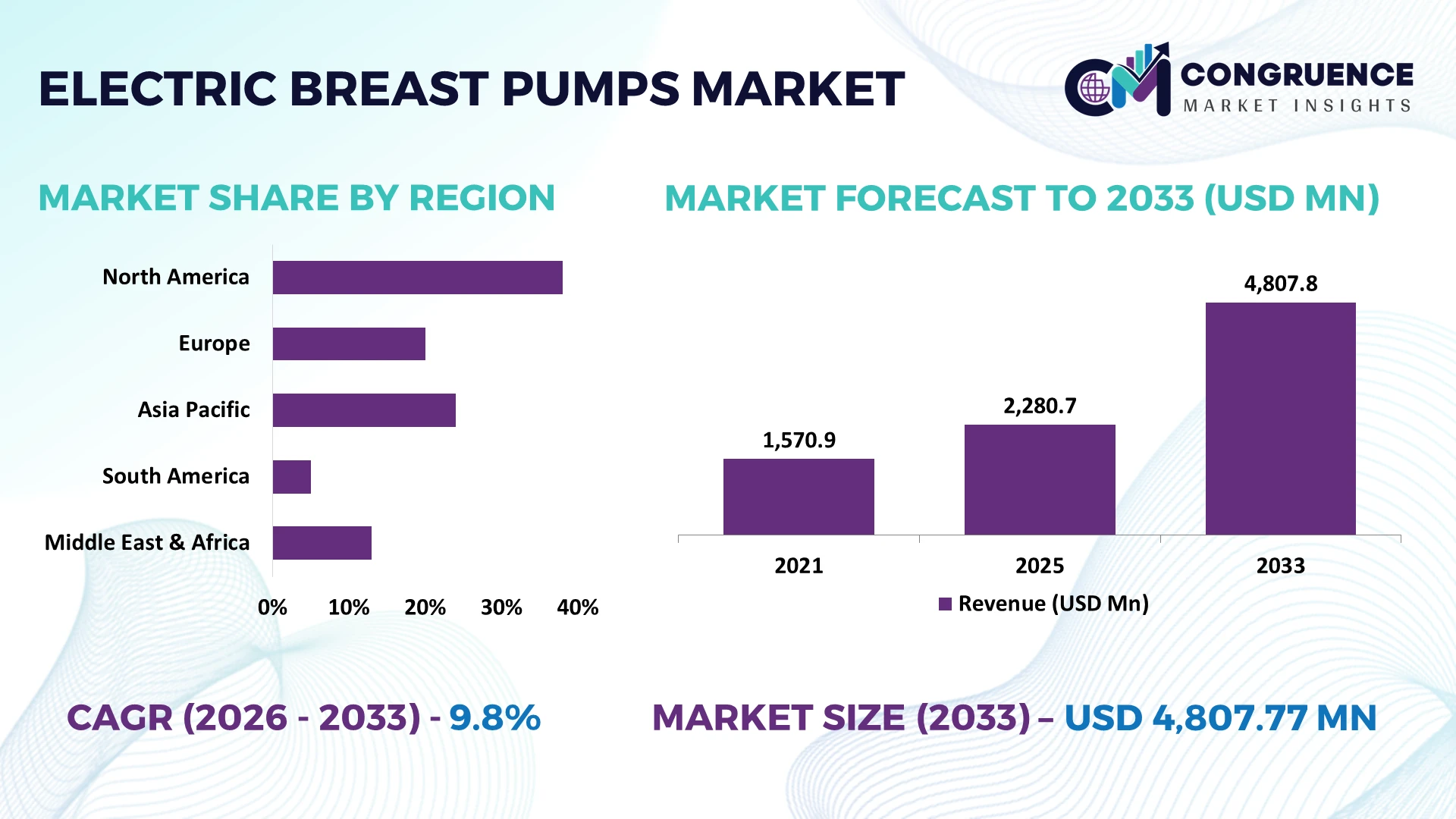
The Global Electric Breast Pumps Market was valued at USD 2280.73 Million in 2025 and is anticipated to reach a value of USD 4807.77 Million by 2033 expanding at a CAGR of 9.77% between 2026 and 2033. Growth is supported by rising hospital-grade electric pump adoption, expanding workplace lactation policies, connected pumping technology, and increasing integration of smart maternal healthcare devices.
The United States remains the dominant country, accounting for approximately 36% of global demand, supported by high insurance coverage, advanced maternal healthcare infrastructure, and rapid adoption of connected breast pumps exceeding 48% among premium product users. Compared with Germany, where hospital-grade deployment continues expanding through healthcare modernization, the U.S. benefits from stronger digital health integration and larger private-sector investments despite ongoing global supply-chain diversification following Red Sea logistics disruptions in 2026.
Manufacturers prioritizing connected product ecosystems, localized production, and premium healthcare partnerships are positioned to strengthen long-term competitive advantage across high-value regional markets.
Market Size & Growth: USD 2280.73 Million in 2025, reaching USD 4807.77 Million by 2033 at 9.77% CAGR, driven by smart wearable pumping systems and expanding maternal healthcare infrastructure.
Top Growth Drivers: Rising workforce participation (+18%), hospital-grade equipment adoption (+24%), and connected healthcare device penetration (+31%) continue accelerating global market expansion.
Short-Term Forecast: By 2028, manufacturing automation reduces assembly costs by nearly 14% while production efficiency improves approximately 19%.
Emerging Technologies: AI-assisted pumping analytics, wearable hands-free systems, and quieter motor platforms improve comfort, personalization, and battery performance across advanced product portfolios.
Regional Leaders: North America exceeds USD 1.7 Billion, Europe approaches USD 1.3 Billion, and Asia-Pacific surpasses USD 1.5 Billion, supported by digital healthcare adoption and regional manufacturing expansion.
Consumer Trends: More than 44% of urban mothers prefer portable electric breast pumps with mobile application connectivity and rechargeable battery functionality.
Pilot Example: In 2025, digital lactation support programs improved pumping routine adherence by approximately 22%, enhancing maternal care outcomes.
Competitive Landscape: Leading manufacturers collectively control about 48% market share, with Medela, Philips Avent, Spectra, Lansinoh, and Elvie maintaining strong global positioning.
Regulatory & ESG Impact: Energy-efficient production initiatives reduce manufacturing emissions by approximately 16%, supported by stricter medical device compliance requirements.
Investment & Funding: More than USD 900 Million supports manufacturing expansion, product innovation, and strategic partnerships amid global supply-chain regionalization.
Innovation & Future Outlook: Advanced wearable platforms, quieter motors, and digital maternal health ecosystems strengthen premium product differentiation and long-term competitive positioning.
The Electric Breast Pumps Market is experiencing stronger demand across hospitals, maternity clinics, and home healthcare environments as manufacturers introduce quieter wearable designs, app-enabled monitoring, and longer battery performance. Connected pumping solutions now represent over 30% of premium product launches, while regional manufacturing expansion improves supply resilience and regulatory compliance, creating a solid foundation for the strategic market assessment that follows.
The Electric Breast Pumps Market has become strategically important as manufacturers compete through connected maternal healthcare ecosystems, localized production, and premium product differentiation rather than hardware alone. Supply-chain restructuring since 2026 has encouraged companies to diversify component sourcing, while stricter medical device compliance has accelerated investment in traceability, product quality, and digital manufacturing. These shifts are reshaping procurement strategies for hospitals, retail healthcare providers, and direct-to-consumer distribution channels.
Smart electric breast pumps with mobile connectivity reduce pumping session setup time by nearly 25% and improve battery efficiency by approximately 18% compared with conventional standalone models, lowering maintenance requirements and enhancing user experience. The United States leads in deployment through mature reimbursement systems and digital health integration, while China is expanding manufacturing capacity and domestic innovation to strengthen export competitiveness. Over the next two to three years, connected product penetration is expected to exceed 40% of premium product shipments as software-enabled monitoring becomes a standard purchasing criterion.
Healthcare providers increasingly deploy app-enabled lactation programs that combine remote guidance with connected pumping devices, improving user adherence and operational continuity. Manufacturers are responding through technology partnerships, regional assembly expansion, and investment in intelligent product ecosystems, strengthening competitive positioning while improving manufacturing resilience and long-term operational flexibility.
Growing integration of digital maternal healthcare with portable electric breast pumps is accelerating market adoption across hospitals and home-care environments. Connected device usage has increased by approximately 30%, while wearable pump preference among working mothers has expanded by nearly 24%. Updated workplace lactation support standards in the United States and expanding maternity care programs are encouraging broader deployment of premium pumping solutions. Manufacturers are responding through localized assembly, software-enabled product ecosystems, and partnerships with healthcare providers to improve after-sales support. A notable strategic shift is the integration of remote lactation monitoring, enabling stronger customer retention while differentiating products through service capabilities rather than hardware specifications alone.
Dependence on specialized miniature motors, medical-grade silicone, and electronic control components continues to constrain manufacturing efficiency. Production input costs remain approximately 12% above pre-disruption levels, while imported electronic component lead times fluctuate by nearly 18% during procurement cycles. China remains a critical supplier for several precision components, creating operational exposure when logistics disruptions occur. These structural limitations compress manufacturing margins and delay new product introductions. Companies are reducing risk through dual-sourcing strategies, localized supplier qualification, and longer-term procurement contracts while redesigning products with standardized components that improve production flexibility and inventory management.
Next-generation wearable electric breast pumps integrated with AI-supported pumping analytics and cloud-connected maternal health applications are creating high-value differentiation opportunities. Smart feature adoption within premium products has exceeded 35%, while battery efficiency improvements of nearly 20% support extended daily use. Japan and South Korea are advancing compact motor technologies that enable quieter and lighter product designs. Companies are increasing R&D investment, collaborating with digital health platform providers, and expanding subscription-based support services. A less obvious opportunity lies in predictive maintenance and personalized pumping guidance, strengthening customer engagement while creating recurring service-based business models beyond device sales.
As connected breast pumps exchange health-related information through mobile applications, maintaining cybersecurity, software interoperability, and regulatory compliance has become increasingly complex. Around 42% of premium devices now include wireless connectivity, while software validation timelines have increased by nearly 15% because of evolving compliance requirements. Integrating devices with multiple healthcare platforms remains inconsistent across healthcare systems, particularly outside advanced digital infrastructure markets. Companies must strengthen cybersecurity frameworks, invest in interoperable software architecture, and collaborate with healthcare technology partners to ensure reliable long-term deployment while maintaining consumer confidence and operational scalability.
Wearable Designs Gain Momentum Compact wearable electric breast pumps are replacing traditional tabletop systems, with wearable product adoption rising approximately 28% and average device weight declining nearly 22%. Labor-force participation among mothers is accelerating demand for discreet solutions, prompting manufacturers to expand production capacity, redesign supply chains, and strengthen partnerships with maternity healthcare providers.
Connected Digital Lactation Platforms Around 41% of premium electric breast pumps now integrate with mobile applications offering pumping analytics, session tracking, and personalized guidance. Digital healthcare adoption and stricter product documentation requirements are encouraging software integration, while companies invest in cloud-enabled ecosystems and remote support capabilities that improve customer retention and operational efficiency.
Localized Manufacturing Expansion Manufacturers are increasing regional production to reduce logistics exposure, lowering average delivery times by approximately 18% while improving inventory availability by nearly 20%. Continued shipping disruptions and geopolitical trade adjustments are encouraging localized component sourcing, automated assembly, and supplier diversification to strengthen production continuity and cost stability.
Quieter Motor Technology Adoption Advanced brushless motors and optimized vacuum systems reduce operating noise by almost 30% while improving battery utilization by approximately 17%. Product differentiation increasingly depends on comfort and usability rather than pumping power alone, leading companies to prioritize engineering partnerships, precision manufacturing, and modular product platforms that accelerate innovation cycles.
Double Electric breast pumps account for approximately 44% of total market adoption, making them the leading product category because of higher pumping efficiency, reduced session duration, and suitability for frequent daily use. Simultaneous milk expression improves operational efficiency by nearly 35% compared with Single Electric models, encouraging adoption among employed mothers and healthcare providers. Hospital-Grade pumps remain indispensable for neonatal and postpartum care where continuous operation, infection control, and consistent suction performance are critical. Single Electric products continue serving cost-sensitive consumers and first-time users, maintaining relevance in developing healthcare markets through affordable pricing and simplified operation.
Wearable pumps represent the fastest-growing segment, with adoption increasing by nearly 30% as quieter motors, compact designs, and app-enabled monitoring become standard purchasing criteria. More than 38% of premium product launches in 2026 feature connected digital functions, reflecting a clear shift toward intelligent maternal healthcare solutions. Manufacturers are expanding wearable portfolios, investing in battery optimization, and forming technology partnerships while maintaining strong Double Electric product lines to protect market share and address both premium and value-oriented customer segments.
Personal Use dominates the Electric Breast Pumps Market with an estimated 53% share as flexible work schedules, extended breastfeeding awareness, and demand for convenient home-based feeding solutions continue increasing. Portable electric pumps offering rechargeable batteries and quiet operation have become preferred products for daily use. Hospital Use remains a core application where standardized maternal care protocols and post-delivery clinical support require reliable hospital-grade equipment capable of continuous operation and strict hygiene compliance.
Lactation Support is the fastest-growing application, supported by expanding digital consultation services and integrated breastfeeding management programs. Adoption of virtual lactation support has increased by approximately 27%, while connected pumping platforms have improved engagement by nearly 24% through personalized feeding guidance. NICU Feeding continues expanding as hospitals strengthen neonatal nutrition programs using advanced electric pumping systems. Companies are responding through healthcare partnerships, software integration, and specialized product development to support both institutional and home-based maternal care pathways.
Hospitals remain the dominant end-user segment with approximately 46% of market demand due to large patient volumes, structured maternity care services, and consistent procurement of hospital-grade pumping systems. Their extensive clinical infrastructure supports frequent equipment utilization and scheduled replacement cycles. Maternity Clinics continue expanding specialized postpartum services, while Lactation Centers strengthen breastfeeding education through dedicated consultation programs supported by professional pumping equipment.
Homecare is the fastest-growing end-user segment as wearable and portable electric breast pumps become increasingly accessible through digital retail and healthcare reimbursement programs. Home-based adoption has increased by approximately 31%, while nearly 40% of premium device purchases now prioritize smart connectivity and remote monitoring features. Manufacturers are expanding direct-to-consumer channels, introducing subscription-based accessory programs, and collaborating with healthcare providers to extend post-discharge maternal support, creating stronger customer retention and long-term ecosystem value.
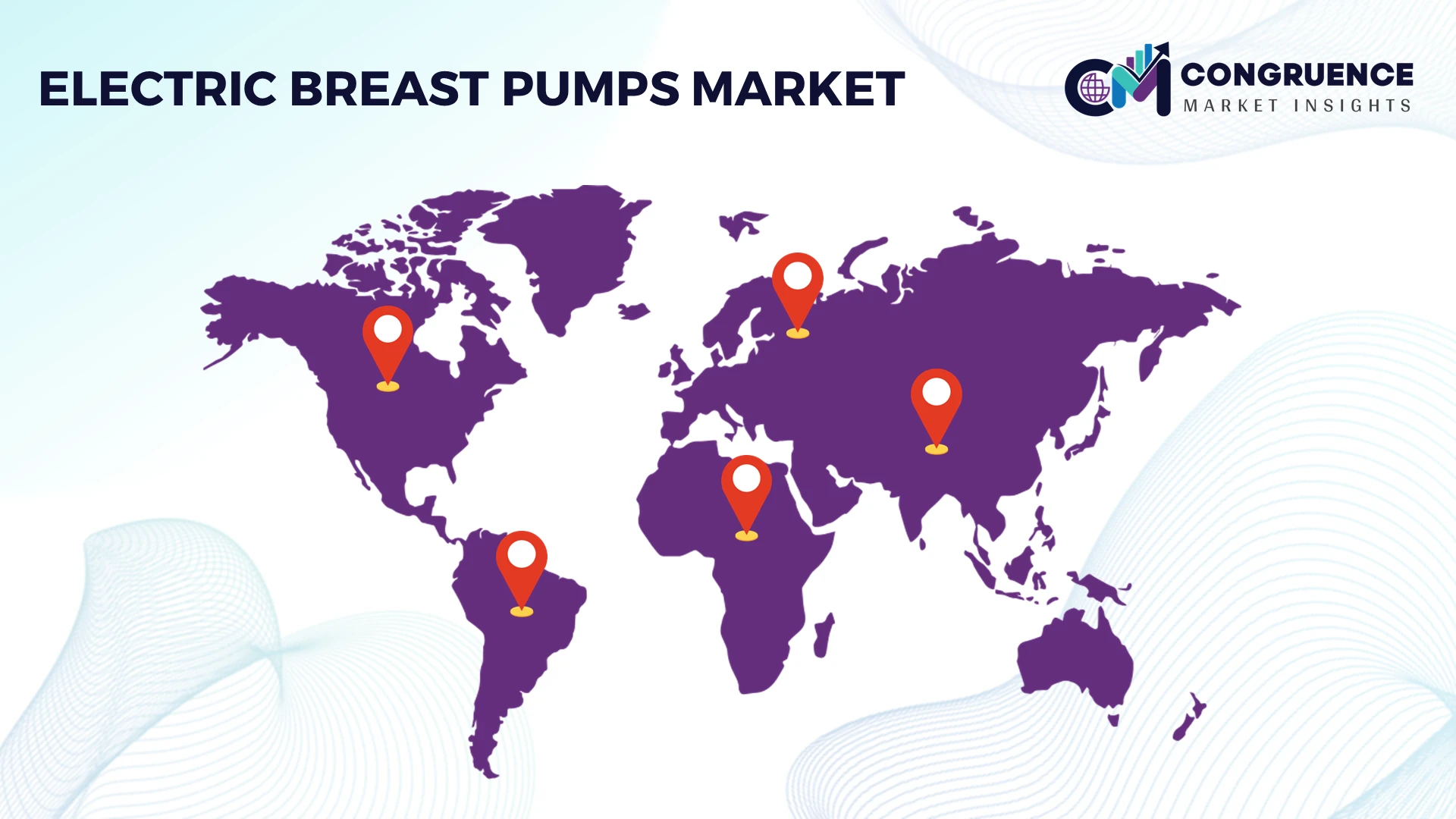
North America accounted for the largest market share at 38.4% in 2025 however, Asia-Pacific is expected to register the fastest growth, expanding at a CAGR of 11.2% between 2026 and 2033.
Strong Digital Healthcare Integration Drives Premium Product Adoption
North America remains the most mature Electric Breast Pumps Market, supported by advanced maternal healthcare infrastructure, favorable reimbursement frameworks, and widespread deployment of premium electric pumping systems. The region contributes approximately 38.4% of global demand, with hospitals and homecare providers increasingly adopting connected wearable devices integrated with digital maternal health platforms. More than 46% of premium product sales now include mobile application connectivity, reflecting the transition toward data-enabled breastfeeding support. Manufacturers continue expanding regional assembly operations, strengthening healthcare partnerships, and investing in intelligent product ecosystems that improve patient engagement, after-sales services, and operational resilience. Continuous product innovation and established distribution networks reinforce the region's leadership in premium electric breast pump adoption.
United States Market Outlook: The United States leads regional demand through extensive maternity care infrastructure, strong employer lactation support policies, and broad availability of advanced electric breast pumps. Connected devices account for nearly half of premium product installations, while hospitals continue modernizing postpartum care with digital lactation management systems. Manufacturers prioritize local partnerships, software-enabled healthcare integration, and premium wearable product development to maintain competitive differentiation across institutional and consumer channels.
Healthcare Modernization Strengthens Clinical Equipment Deployment
Europe maintains a strong market position through advanced public healthcare systems, standardized medical device regulations, and expanding maternal healthcare modernization programs. The region represents approximately 27% of global demand, supported by high deployment of hospital-grade electric breast pumps and increasing adoption of wearable solutions. More than 34% of newly procured premium devices incorporate digital monitoring functions that improve user experience and clinical follow-up. Manufacturers continue strengthening regional production capabilities while investing in sustainable manufacturing practices, quieter motor technologies, and regulatory compliance to support long-term operational competitiveness across established healthcare networks.
Germany Market Outlook: Germany remains the region's leading market due to its advanced medical device manufacturing ecosystem, highly developed hospital infrastructure, and strong engineering capabilities. More than 60% of maternity hospitals utilize advanced electric pumping equipment for postpartum care. Domestic manufacturers continue investing in product innovation, precision engineering, and energy-efficient production technologies, reinforcing Germany's strategic position within the European maternal healthcare equipment industry.
Manufacturing Scale and Domestic Innovation Accelerate Expansion
Asia-Pacific is emerging as the fastest-expanding regional market, supported by large-scale manufacturing capacity, improving maternal healthcare access, and rising adoption of portable electric breast pumps. The region contributes approximately 25% of global demand while serving as a major production hub for electric motors, electronic components, and medical-grade materials. Manufacturing automation has improved production efficiency by nearly 20%, allowing companies to expand exports while reducing operational costs. Enterprises continue investing in localized production, digital product development, and regional supply-chain resilience to strengthen competitiveness across both domestic and international markets.
China Market Outlook: China serves as the region's largest manufacturing and consumption hub, supported by integrated medical device supply chains and expanding domestic maternal healthcare programs. More than 45% of regional production capacity is concentrated within China, enabling efficient large-scale manufacturing and export operations. Companies continue expanding automated production facilities, strengthening component localization, and accelerating development of smart wearable breast pumps to enhance global market competitiveness.
Healthcare Access Expansion Supports Market Development
South America continues strengthening its Electric Breast Pumps Market through improving maternal healthcare infrastructure, expanding private healthcare services, and increasing awareness of breastfeeding support technologies. The region accounts for approximately 5.8% of global demand, with healthcare providers expanding deployment of portable electric pumping systems across maternity facilities. Investments in hospital modernization and digital healthcare programs have improved equipment availability by nearly 18% in major urban centers. Although import dependency remains a structural limitation, manufacturers are strengthening distributor partnerships and expanding localized service capabilities to improve product accessibility and operational continuity.
Brazil Market Outlook: Brazil remains the largest regional market due to its extensive hospital network, expanding private healthcare sector, and increasing investment in maternal care services. Large maternity hospitals continue upgrading breastfeeding support equipment, while distributors strengthen nationwide coverage through healthcare partnerships. Growing deployment of portable electric pumps across urban healthcare facilities supports long-term demand and broader access to advanced maternal care solutions.
Healthcare Investment Enhances Maternal Care Infrastructure
The Middle East & Africa market is advancing through sustained healthcare infrastructure investment, modernization of maternity services, and greater adoption of advanced medical technologies. The region contributes approximately 3.8% of global demand, with premium healthcare facilities increasingly deploying hospital-grade and wearable electric breast pumps. Hospital modernization initiatives have improved specialized maternal healthcare capacity by nearly 16% across leading healthcare systems. Companies continue expanding regional distribution partnerships, strengthening technical support networks, and improving product availability to address rising institutional demand while supporting healthcare transformation strategies.
Saudi Arabia Market Outlook: Saudi Arabia leads the regional market through large-scale healthcare modernization, continued investment in maternal health infrastructure, and adoption of advanced medical technologies. Public and private hospitals continue expanding specialized maternity departments equipped with premium electric breast pumps. Healthcare providers are increasing procurement of digitally enabled devices while manufacturers strengthen regional partnerships and technical service capabilities to support long-term operational growth.
The Electric Breast Pumps Market is led by Medela, Philips Avent, Elvie, Spectra Baby USA, and Lansinoh, with these global brands competing against value-focused regional manufacturers and private-label OEM suppliers. The top five companies collectively control approximately 58% of global market activity, while regional players compete aggressively through lower pricing and localized distribution. Competition increasingly centers on wearable technology, quieter motors, digital connectivity, and battery performance rather than suction capability alone. Connected premium devices command nearly 20% higher average selling prices, while manufacturing automation lowers production costs by approximately 12% and localized sourcing reduces component lead times by nearly 18%. Leading companies are expanding manufacturing capacity, partnering with digital maternal health platforms, and integrating software capabilities into product portfolios to strengthen customer retention. The competitive landscape is shifting toward intelligent wearable ecosystems and stronger supply-chain control, increasing pressure on manufacturers lacking engineering capability or digital expertise. Sustainable competitive advantage requires continuous innovation, localized manufacturing, integrated healthcare partnerships, and differentiated connected product ecosystems.
Medela AG
Philips Avent
Elvie
Lansinoh Laboratories
Spectra Baby USA
Ameda Inc.
Ardo Medical AG
Pigeon Corporation
Bellababy
Momcozy
BabyBuddha Products LLC
NCVI
Haakaa
Dr. Brown's
Connected electric breast pumps are becoming the industry standard as manufacturers integrate mobile applications, Bluetooth connectivity, and intelligent pumping analytics into premium products. Approximately 42% of newly launched premium devices now include app-based monitoring, while smart control systems improve pumping consistency by nearly 18%. Hospitals and homecare providers increasingly prefer connected platforms because they simplify usage tracking, personalize pumping routines, and strengthen post-discharge maternal support through digital healthcare integration.
Wearable engineering, brushless motor technology, and advanced vacuum algorithms are redefining product performance. Compared with conventional tabletop electric pumps, next-generation wearable systems reduce operating noise by approximately 30% and improve battery efficiency by nearly 22%, while lightweight construction enhances portability without compromising suction performance. Companies investing in compact motor development, intelligent sensors, and precision manufacturing gain stronger differentiation, whereas cost-focused manufacturers continue competing primarily in entry-level product categories.
Between 2026 and 2028, AI-enabled pumping optimization, predictive maintenance, and cloud-connected maternal healthcare platforms will reshape product development priorities. Adoption of intelligent wearable platforms is expected to exceed 45% within premium product portfolios, encouraging manufacturers to accelerate software integration, cybersecurity capability, and healthcare partnerships. Early technology adopters will strengthen customer retention, premium positioning, and long-term competitive advantage through connected maternal healthcare ecosystems.
October 2025 Medela launched Magic InBra™ and Motion InBra™ wearable breast pumps with enhanced comfort-focused designs and committed CHF 20,000 toward breastfeeding research initiatives, strengthening its premium wearable portfolio and maternal healthcare positioning. Source: medela.com
March 2025 Willow Innovations acquired Elvie to combine wearable breast pump technologies and maternal health solutions, creating a broader product platform with global distribution capabilities and operational scale advantages for competing in the femtech device market.
April 2025 Lansinoh introduced the Thrive 2-in-1 Breast Pump combining wearable convenience with hospital-strength performance, expanding its maternal care portfolio and targeting users seeking flexible pumping options across home and clinical environments through integrated product innovation.
September 2025 Willow Innovations launched Willow Wave, a wearable manual breast pump designed for mobility and comfort, targeting the 68% of U.S. breastfeeding mothers owning manual pumps while expanding innovation beyond traditional electric systems. Source: onewillow.com
The Electric Breast Pumps Market Report covers comprehensive segmentation across Single Electric, Double Electric, Hospital-Grade, and Wearable product categories, along with applications including Personal Use, Hospital Use, NICU Feeding, and Lactation Support. The analysis evaluates key end-users such as hospitals, maternity clinics, homecare providers, and lactation centers across North America, Europe, Asia-Pacific, South America, and Middle East & Africa.
The report examines technology trends including wearable systems, connected monitoring platforms, smart sensors, battery innovations, and digital maternal healthcare integration. It provides strategic insights into competitive positioning, deployment patterns, adoption shifts, and expansion priorities. With premium connected devices representing a growing share of new product launches and multiple global companies competing through innovation, the report supports investment decisions, market entry planning, operational strategy, and long-term business positioning from 2026 onward.
| Report Attribute/Metric | Report Details |
|---|---|
Market Revenue in 2025 | USD 2280.73 Million |
Market Revenue in 2033 | USD 4807.77 Million |
CAGR (2026 - 2033) | 9.77% |
Base Year | 2025 |
Forecast Period | 2026 - 2033 |
Historic Period | 2021 - 2025 |
Segments Covered | By Type
By Application
By End-User
|
Key Report Deliverable | Revenue Forecast, Growth Trends, Market Dynamics, Segmental Overview, Regional and Country-wise Analysis, Competition Landscape |
Region Covered | North America, Europe, Asia-Pacific, South America, Middle East, Africa |
Key Players Analyzed | Medela AG, Philips Avent, Elvie, Lansinoh Laboratories, Spectra Baby USA, Ameda Inc., Ardo Medical AG, Pigeon Corporation, Bellababy, Momcozy, BabyBuddha Products LLC, NCVI, Haakaa, Dr. Brown's |
Customization & Pricing | Available on Request (10% Customization is Free) |




