
Reports
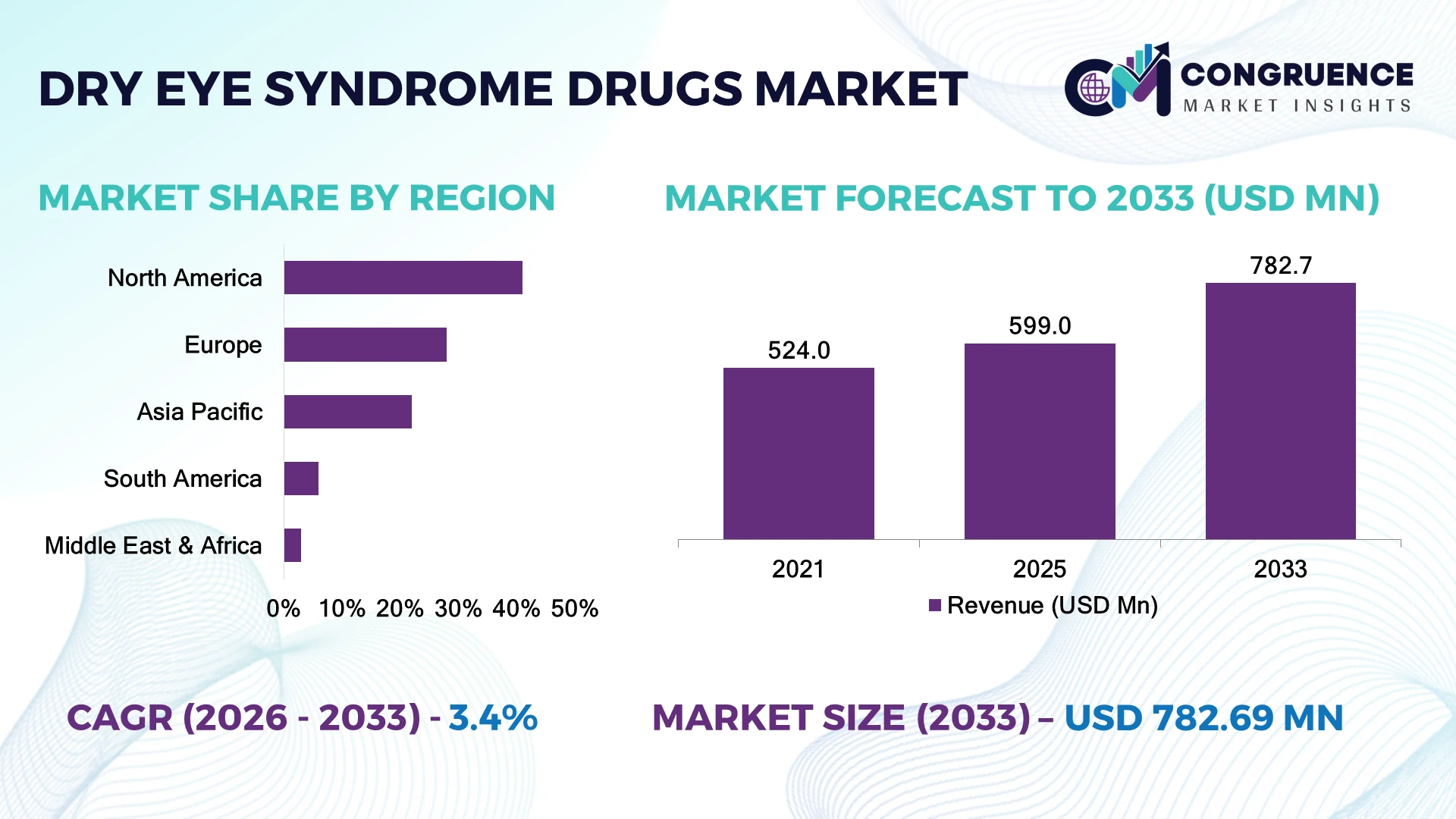
The Global Dry Eye Syndrome Drugs Market was valued at USD 599.0 Million in 2025 and is anticipated to reach a value of USD 782.7 Million by 2033 expanding at a CAGR of 3.4% between 2026 and 2033. Growth is driven by newer anti-inflammatory and tear-film therapies, including TRPM8 agonists, semifluorinated formulations, and targeted ocular-surface treatments that improve therapeutic precision.
The United States holds a dominant position, representing about 38.7% of the broader dry-eye treatment market in 2025, supported by advanced ophthalmology infrastructure, high prescription penetration, and rapid uptake of novel therapies; Canada remains smaller but is expanding faster, with its treatment market projected to reach USD 347.2 million by 2033. The May 2025 U.S. FDA approval of TRYPTYR reinforces the shift toward mechanism-specific therapies and strengthens the United States as the primary launch and commercialization hub.
Strategically, companies should prioritize differentiated formulations, faster clinical adoption, and localized commercialization partnerships in high-potential markets.
Market Size & Growth: The market reaches USD 782.7 Million by 2033 from USD 599.0 Million in 2025, advancing at a 3.4% CAGR as advanced ocular-surface therapies broaden treatment options.
Top Growth Drivers: Novel prescription therapies, rising screen-related ocular exposure, and expanding anti-inflammatory treatment use collectively strengthen adoption, with leading growth drivers registering measurable gains of approximately 4%–8%.
Short-Term Forecast: By 2028, optimized formulations and improved dosing are positioned to reduce treatment-related inefficiencies by approximately 5% and improve adherence by 6%–8%.
Emerging Technologies: TRPM8 agonists, semifluorinated drug-delivery vehicles, and biomarker-guided treatment represent the strongest innovation themes, with VEVYE demonstrating approximately 22-times greater corneal cyclosporine delivery than a conventional comparator.
Regional Leaders: North America remains the leading market, followed by Europe and Asia-Pacific; the United States represented 38.7% of the broader treatment market in 2025, while Canada's market is projected to reach USD 347.2 million by 2033.
Consumer/End-User Trends: Prescription treatment is gaining importance as patients increasingly shift toward targeted therapies; the prescription segment reached USD 3,455.7 million in 2025, reflecting stronger clinical adoption.
Pilot/Case Example: In 2025, TRYPTYR advanced through U.S. approval after two pivotal trials involving 931 patients across 46 sites, reinforcing the commercial value of mechanism-specific dry-eye treatment.
Competitive Landscape: Leading competition centers on AbbVie, Alcon, Harrow, Bausch + Lomb, and Santen, with differentiation increasingly based on delivery technology, onset of action, tolerability, and targeted mechanisms.
Regulatory & ESG Impact: The 2025 U.S. approval of TRYPTYR expanded the prescription treatment toolkit, while improved formulations that reduce dosing burden support more efficient treatment pathways.
Investment & Funding: Pharmaceutical companies are increasing clinical and commercialization investment, with a 378-participant Phase 4 study evaluating VEVYE and Xiidra biomarkers and treatment response during 2025–2026.
Innovation & Future Outlook: Next-generation therapies are shifting competition from conventional lubrication toward inflammation control, tear-evaporation management, biomarker assessment, and advanced delivery systems.
Dry eye syndrome drug development is increasingly concentrated on prescription therapies that address inflammation, tear evaporation, and ocular-surface dysfunction rather than simple lubrication. Novel formulations such as semifluorinated vehicles and TRPM8 agonists are expanding treatment differentiation, while clinical programs increasingly incorporate biomarkers and imaging. The 2025 U.S. approval of TRYPTYR signals continued regulatory movement toward mechanism-specific therapies, creating a stronger platform for differentiated product launches and specialty ophthalmology partnerships.
Dry eye syndrome drugs are becoming strategically important because competition is shifting from established cyclosporine and lifitegrast therapies toward differentiated mechanisms, advanced delivery vehicles, and faster patient response. The 2025 U.S. approval of TRYPTYR demonstrates how mechanism-specific innovation is reshaping ophthalmology portfolios and creating new commercial positioning opportunities.
Technology is also changing treatment economics. Advanced delivery systems can materially improve ocular exposure; VEVYE's vehicle has demonstrated approximately 22-times greater corneal cyclosporine delivery than Restasis in comparative testing. This contrasts with conventional formulations and strengthens the business case for formulation-led differentiation.
The United States remains the primary innovation and commercialization hub, while Asian markets offer expanding deployment opportunities as ophthalmic infrastructure develops. Companies are increasing investment in clinical evidence, biomarker programs, licensing, and specialty-eye-care partnerships. Over the next 2–3 years, adoption will increasingly depend on tolerability, dosing convenience, measurable ocular-surface outcomes, and physician confidence. Strategic advantage will belong to companies that combine differentiated pharmacology with efficient commercialization and evidence-led patient targeting.
The strongest growth driver is the transition toward mechanism-specific therapies addressing inflammation, tear evaporation, and ocular-surface dysfunction. FDA-approved DED therapies now span cyclosporine, lifitegrast, corticosteroids, varenicline, semifluorinated formulations, and newer TRPM8 agonists, expanding therapeutic choice beyond conventional lubricants. VEVYE's delivery vehicle demonstrates approximately 22-times greater corneal cyclosporine delivery than Restasis, while 99.8% of treated patients experienced no or mild instillation-site pain in clinical studies. Companies are responding through formulation innovation, lifecycle management, and targeted clinical programs. The strategic shift is clear: superior ocular delivery and differentiated mechanisms increasingly determine product competitiveness.
Treatment affordability and prescription access remain structural constraints, particularly where branded ophthalmic therapies compete with established generics. The prescription dry-eye treatment segment reached USD 3,455.7 million in 2025, highlighting the commercial importance of prescription channels but also the scale of payer and affordability pressures. Product-specific tolerability can further affect persistence; VEVYE reported an 8% rate of instillation-site reactions in clinical studies. Differences in reimbursement, specialist access, and pharmacy coverage between the United States, Europe, and emerging markets create uneven adoption. Companies are reducing exposure through differentiated formulations, payer engagement, generic-compatible portfolios, and broader distribution agreements.
Advanced delivery technology creates an opportunity to capture patients inadequately served by conventional formulations. VEVYE's semifluorinated vehicle delivers approximately 22-times greater cyclosporine exposure to the cornea than Restasis, demonstrating how formulation engineering can create measurable therapeutic differentiation. Emerging therapies are also targeting tear evaporation and sensory pathways, while biomarker-based studies are improving treatment-response characterization. The 2025 approval of TRYPTYR expands the commercial pathway for TRPM8-targeted treatment. Companies should prioritize formulation R&D, companion diagnostics, specialty-clinic partnerships, and localized launches in markets where ophthalmology capacity is expanding. The non-obvious opportunity is to compete through delivery efficiency and treatment personalization rather than molecule novelty alone.
Long-term competitiveness depends on proving meaningful outcomes across heterogeneous dry-eye populations. A 2025 review identified seven FDA-approved DED therapies whose registrational programs used corneal fluorescein staining as an efficacy endpoint, underscoring the complexity of comparing treatment performance across different mechanisms. Biomarker programs are therefore becoming more important; a Phase 4 study involving 378 participants evaluated molecular and imaging markers alongside VEVYE and Xiidra treatment. Companies face additional pressure to demonstrate adherence, tolerability, durability, and real-world effectiveness rather than relying solely on trial endpoints. Investment in longitudinal evidence, digital patient monitoring, and specialist education will be essential to maintain consistent adoption and defend premium positioning.
Preservative-Free Formulations Expand: Preservative-free ophthalmic formulations are gaining traction as frequent-use patients prioritize ocular-surface tolerability, while preservative exposure remains a concern for chronic users. Artificial tears represented about 43.7% of the broader treatment market in 2025, and companies are expanding multidose preservative-free systems, lipid-enhanced drops, and unit-dose formats to improve repeat use and reduce irritation-related discontinuation.
Prescription Therapy Gets More Targeted: Prescription therapies are shifting toward inflammation control and tear stimulation rather than lubrication alone. Prescription products accounted for about 51.6% of the broader treatment market in 2025, while newer mechanisms such as TRPM8 agonism are widening treatment pathways. The 2025 U.S. approval of TRYPTYR accelerated commercialization activity, prompting companies to strengthen specialty-ophthalmology launches and physician education.
Home Treatment Becomes More Structured: Self-management is becoming a more organized treatment workflow, supported by digital reminders, tele-ophthalmology, and easier-to-administer formulations. A patient survey found 71% currently used artificial tears, while 55% spent 5–20 minutes daily managing dry eye. Companies are responding with home-use product portfolios, digital adherence tools, and patient-support programs that reduce dependence on repeated clinic visits.
Retail And Digital Channels Converge: Retail remains the dominant fulfillment route, accounting for approximately 55.5% of the broader treatment market, but online pharmacy and direct-to-patient models are becoming more important for repeat purchases. Supply-chain digitization and consumer preference for convenient replenishment are pushing manufacturers toward omnichannel inventory planning, subscription-style fulfillment, and localized e-pharmacy partnerships.
Artificial Tears remain the leading type, accounting for approximately 43.7% of the broader dry-eye treatment market in 2025, supported by accessibility, established physician familiarity, low treatment complexity, and suitability for mild-to-moderate symptoms. Anti-inflammatory Drugs form the key prescription-oriented category, while Immunosuppressants such as cyclosporine remain strategically important for chronic inflammatory disease. Antibiotics occupy a narrower role, primarily addressing infection-associated ocular conditions rather than routine dry-eye management.
Anti-inflammatory Drugs represent the strongest shift within the drug-focused mix as clinicians increasingly distinguish inflammatory disease from simple tear deficiency. In the United States, anti-inflammatory drugs held approximately 41.8% of the drug-type segment in 2025, compared with 36.7% for lubricant eye drops. Companies are therefore expanding preservative-free formulations, higher-performance delivery vehicles, and combination approaches, while maintaining Artificial Tears for high-volume consumer channels. The business implication is a two-track portfolio strategy: scale low-friction lubrication products while directing R&D toward targeted pharmacological therapies.
Mild Dry Eye remains the largest application because artificial tears and other accessible therapies address a broad patient population with comparatively simple treatment protocols. Artificial tears were reported as the most commonly used intervention, with 71% of surveyed patients still using them at the time of assessment. Moderate Dry Eye represents a stronger prescription opportunity, while Severe Dry Eye requires more intensive pharmacological management and specialist oversight.
Post-Surgical Dry Eye is becoming one of the most commercially important expanding applications as ophthalmic procedures increase and clinicians place greater emphasis on ocular-surface recovery. England recorded 581,369 cataract-surgery hospital admissions in the financial year ending 2024, up from the previous year's rate, strengthening demand for postoperative ocular-surface management.
Hospitals remain a major end-user because they concentrate specialist ophthalmology, complex cases, postoperative care, and prescription-based treatment. Clinics are increasingly important for routine diagnosis and chronic management, accounting for approximately 31.8% of dry-eye drug end-user activity in one 2025 market assessment. Pharmacies retain high-volume dispensing importance, particularly for OTC products, while Online Retail and Home Care are gaining relevance as treatment becomes more self-administered.
Home Care represents the fastest-shifting end-user environment because chronic dry-eye management frequently requires repeated administration outside clinical settings. Artificial tears were used by 71% of surveyed patients at the time of assessment, and 55% reported spending 5–20 minutes each day on self-management. Companies are responding with preservative-free formulations, easier dosing formats, digital guidance, and pharmacy partnerships. The competitive implication is clear: manufacturers increasingly need both specialist-channel credibility and consumer-oriented adherence infrastructure.
North America accounted for the largest market share at 47.0% in 2025 however, Asia-Pacific is expected to register the fastest growth, expanding at a CAGR of 8.0% between 2026 and 2033.
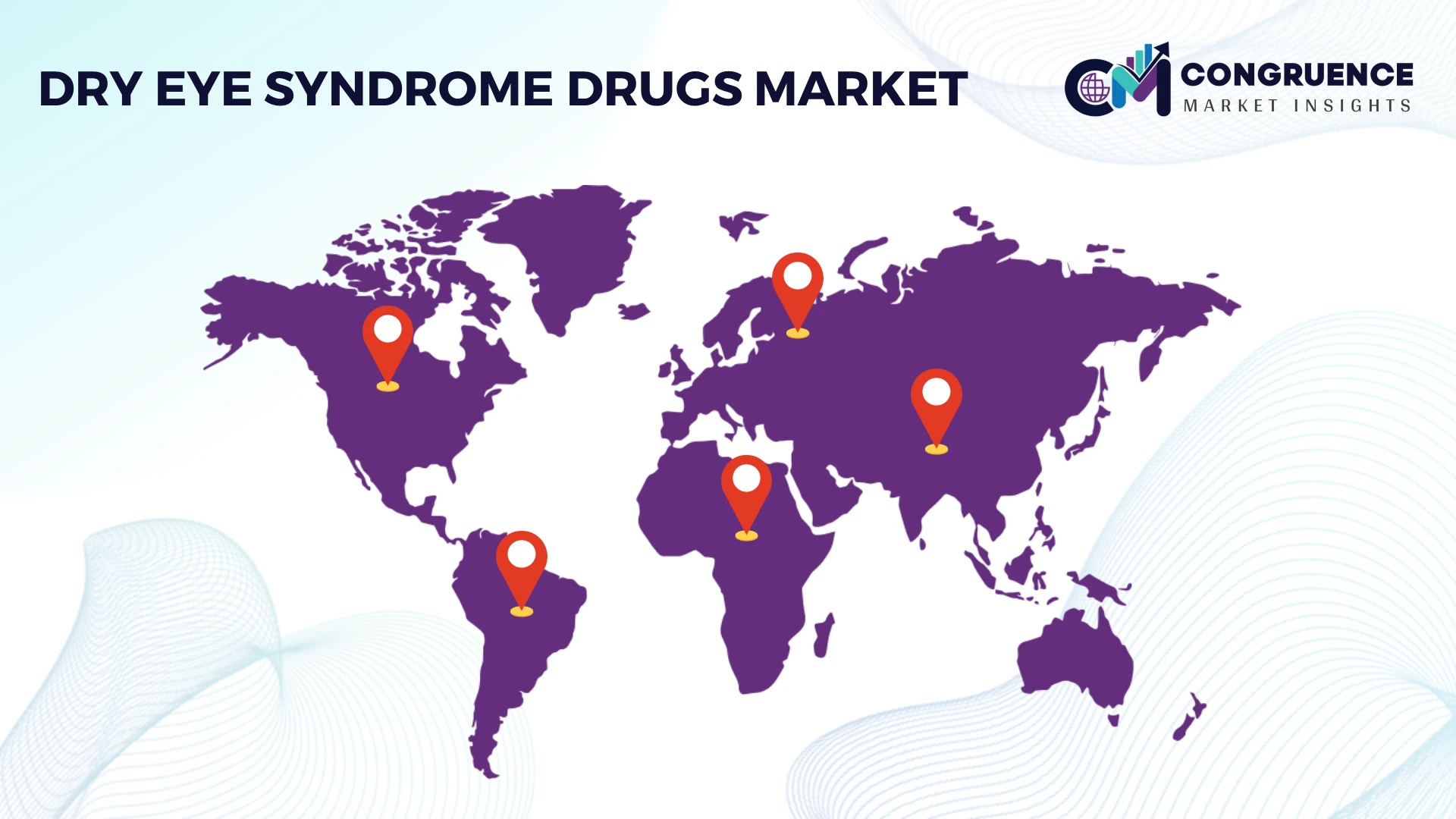
North America remains the dominant commercial hub, supported by advanced ophthalmology infrastructure, high prescription penetration, specialist clinics, and strong pharmaceutical R&D. The region represented approximately 41% of the broader dry-eye market in 2025, with the United States generating about 79% of North American demand. Regulatory activity is accelerating product turnover, particularly after the U.S. approval of a first-in-class TRPM8-targeting therapy in 2025. Major companies are strengthening specialist distribution, clinical evidence programs, and physician engagement while expanding differentiated formulations. Canada is developing as a secondary adoption market, whereas the United States remains the principal launch and commercialization center. The strategic advantage lies in combining regulatory speed with high-value ophthalmology networks and rapid specialist uptake.
United States Market Outlook: The United States dominates North American demand through its dense ophthalmology network, advanced reimbursement infrastructure, and concentration of pharmaceutical developers. Approximately 79% of North American market activity was concentrated in the country in 2025. New prescription launches, clinical research, and point-of-care diagnostics are strengthening commercialization pathways and encouraging companies to prioritize U.S. specialty-care partnerships.
Europe accounted for approximately 28% of the broader dry-eye market in 2025, supported by established ophthalmology services, aging demographics, centralized regulatory pathways, and increasing use of prescription therapies. Germany remains a major commercial center, while the United Kingdom and France provide strong specialist and pharmacy networks. European Commission authorization of newer therapies is shortening the pathway for coordinated launches across multiple countries. Preservative-free formulations and improved ocular-surface tolerability are gaining attention as chronic-use requirements increase. Companies are adapting through localized market-access strategies, evidence generation, and partnerships with ophthalmology providers. Compared with North America, European adoption is more influenced by reimbursement structures and country-level health-technology assessment, making pricing discipline and clinical differentiation increasingly important for portfolio expansion.
Germany Market Outlook: Germany is the leading strategic market within Europe, supported by extensive specialist infrastructure and a large aging population; approximately 22% of its population was aged 65 years or older in 2022. Strong pharmaceutical manufacturing capabilities and structured reimbursement pathways support adoption of prescription ophthalmic therapies. Companies are prioritizing clinical evidence, payer engagement, and localized commercialization to secure durable positioning.
Asia-Pacific is emerging as the strongest expansion zone, supported by large patient pools, increasing digital-eye exposure, aging populations, improving ophthalmology infrastructure, and expanding access to prescription and OTC therapies. The region represented approximately 22% of the broader market in 2025, while China, Japan, and India form the principal demand centers. Japan benefits from mature specialist care and strong pharmaceutical capabilities; China is accelerating regulatory alignment and domestic production; India is expanding affordable treatment access through digital pharmacy and tier-2 healthcare networks. Companies are responding through localized manufacturing, licensing, distribution partnerships, and lower-cost formulations. The region's strategic distinction is its combination of scale and fragmented healthcare systems, requiring different pricing and channel strategies rather than a single commercialization model.
China Market Outlook: China combines a large ophthalmic patient base with expanding domestic pharmaceutical manufacturing and improving regulatory efficiency. Recent regulatory reforms are narrowing approval gaps for innovative ophthalmic therapies, while domestic cyclosporine products strengthen access in price-sensitive segments. Companies are increasing local partnerships and manufacturing capabilities to improve launch speed, supply resilience, and affordability.
South America remains a developing market, with Brazil accounting for the largest share of regional commercial activity because of its population scale, private healthcare capacity, ophthalmology infrastructure, and extensive pharmacy network. The region represented more than 6% of global dry-eye treatment activity in 2025, while affordability and uneven specialist access continue to influence adoption. Brazil provides the strongest platform for branded prescription therapies, whereas Argentina and other markets remain more price-sensitive. Companies are strengthening distributor relationships, expanding pharmacy availability, and emphasizing preservative-free and affordable formulations. The key operational challenge is balancing premium therapy positioning with out-of-pocket purchasing constraints. Localized distribution and tiered pricing therefore offer greater strategic value than broad regional expansion without market-specific access planning.
Brazil Market Outlook: Brazil is the principal South American opportunity because of its large consumer base, established private ophthalmology network, and broad retail-pharmacy infrastructure. Dry-eye treatment access is increasingly supported by specialist diagnosis and pharmacy-based purchasing. Companies are emphasizing local distribution partnerships and competitive pricing to improve availability while protecting margins in a market where affordability strongly influences treatment persistence.
Middle East & Africa remains comparatively underpenetrated but is gaining strategic importance through healthcare modernization, private hospital investment, and growing specialist ophthalmology capacity. The combined market represented approximately 3% of the broader dry-eye market in 2025, with Saudi Arabia and the United Arab Emirates serving as important commercialization centers. High air-conditioning exposure, arid climates, and expanding urban healthcare networks support demand for ocular-surface therapies. Saudi Arabia's healthcare transformation agenda and UAE investment in specialized medical facilities are improving access to diagnosis and treatment. Companies are responding through hospital partnerships, distributor expansion, and premium ophthalmic product portfolios. Compared with mature markets, the region requires stronger physician education and channel development, making infrastructure partnerships a critical route to adoption.
Saudi Arabia Market Outlook: Saudi Arabia represents the region's strongest strategic market because healthcare modernization is expanding specialist capacity and private-sector participation. The country is investing heavily in healthcare transformation and digital infrastructure, creating stronger channels for ophthalmic diagnosis and prescription treatment. Companies are positioning through hospital partnerships, specialist distribution, and localized market-access strategies to capture premium therapy demand.
AbbVie, Alcon, Bausch + Lomb, Santen, and Harrow compete as global prescription and OTC leaders, while Sun Pharmaceutical and other regional specialists challenge them on price and access. The top five players collectively hold approximately 58%–62%, indicating moderate concentration. Competition centers on formulation technology, clinical differentiation, pricing, and distribution reach: preservative-free formats capture growing preference, while newer mechanisms demonstrate 4–5x stronger response rates in selected trials. Alcon is competing through neuromodulation innovation; Bausch + Lomb emphasizes evaporation control; Harrow competes through affordability and access; Santen leverages Asian specialist networks; AbbVie benefits from established brands and commercial scale. Partnerships, specialty-pharmacy programs, geographic launches, and formulation upgrades are intensifying competitive pressure. The market is shifting from lubricant volume toward mechanism-specific therapies and delivery platforms. High clinical-development costs, regulatory requirements, and specialist relationships remain significant entry barriers. Winning requires differentiated efficacy, reliable supply, rapid commercialization, and superior patient access.
AbbVie Inc.
Alcon Inc.
Bausch + Lomb Corporation
Santen Pharmaceutical Co., Ltd.
Harrow, Inc.
Sun Pharmaceutical Industries Ltd.
Otsuka Pharmaceutical Co., Ltd.
Johnson & Johnson
Novartis AG
AFT Pharmaceuticals
OASIS Medical
Kala Pharmaceuticals
Novaliq GmbH
VISUfarma B.V.
Current technology is moving from conventional lubricants toward mechanism-specific delivery. TRPM8 neuromodulation, semifluorinated alkane vehicles, lipid-layer stabilization, and preservative-free multidose systems are reshaping treatment workflows. TRYPTYR demonstrated tear-production responses of 42.6% versus 8.2% in one pivotal trial, while VEVYE’s vehicle targets ocular delivery differently from water-based cyclosporine. These platforms reduce reliance on repeated formulation switching and give innovators differentiation.
Artificial-intelligence screening and digital adherence tools are emerging alongside advanced formulations, connecting symptom tracking, treatment reminders, imaging, and physician review. Automated patient-support workflows can reduce administrative friction by roughly 5%–10% in programs, while preservative-free delivery improves suitability for chronic users. Companies with integrated pharmaceutical, diagnostic, and digital capabilities gain an advantage because they can link treatment selection with measurable patient-response data instead of competing primarily on price.
From 2026–2028, the disruptive shift will center on personalized ocular-surface management, faster-acting mechanisms, and data-supported therapy selection. Newer delivery systems increasingly target tear evaporation, inflammation, and sensory pathways separately rather than using one formulation for heterogeneous disease. Companies combining formulation engineering with real-world evidence can improve treatment persistence by approximately 5%–8% in optimized programs. Legacy lubricant manufacturers face pressure to upgrade platforms, while specialist innovators benefit from clinical evidence, faster commercialization, and differentiated outcomes.
May 2025 — Alcon secured FDA approval for TRYPTYR, a first-in-class TRPM8 agonist. Phase 3 trials enrolled more than 930 patients, with tear production responses reaching 42.6% versus 8.2%. The approval expands Alcon’s prescription platform and strengthens neuromodulation competition. Source: alcon.com
April 2025 — Harrow expanded VEVYE Access for All to more than 25,000 Klarity-C patients, offering VEVYE for $59 per bottle. The initiative removes prior-authorization friction and supports faster conversion, strengthening Harrow’s access strategy and pressure on established cyclosporine brands. Source: harrow.com
October 2025 — Santen announced resumed DIQUAS LX shipments after a 2024 voluntary recall linked to reduced preservative concentration in certain lots. Manufacturing countermeasures were implemented before December resumption, strengthening quality controls and demonstrating supply continuity as a competitive requirement. Source: santen.com
October 2024 — Bausch + Lomb presented 23 scientific dry-eye-focused presentations at the TFOS conference, including new MIEBO data. The expanded evidence program reinforced physician education and differentiated MIEBO’s evaporation-targeting positioning, supporting adoption through clinical validation and specialist engagement. Source: bausch.com
The report evaluates the Global Dry Eye Syndrome Drugs Market across By Type, By Application, and By End-User, covering Artificial Tears, Anti-inflammatory Drugs, Immunosuppressants, and Antibiotics; Mild, Moderate, Severe, Post-Surgical, and Contact Lens-Induced Dry Eye applications; and Hospitals, Clinics, Pharmacies, Online Retail, and Home Care. The analysis tracks prescription and OTC treatment workflows, formulation innovation, specialist adoption, and emerging delivery platforms.
Geographic coverage spans North America, Europe, Asia-Pacific, South America, and Middle East & Africa, with country-level assessment of regulatory environments, healthcare infrastructure, distribution channels, and technology adoption. The report also examines mechanism-specific therapies, preservative-free systems, digital adherence tools, and advanced ocular delivery technologies. Strategic insights support investment planning, portfolio prioritization, market-entry decisions, partnership development, competitive positioning, and expansion strategies through 2026–2033.
| Report Attribute / Metric | Details |
|---|---|
| Market Revenue (2025) | USD 599.0 Million |
| Market Revenue (2033) | USD 782.7 Million |
| CAGR (2026–2033) | 3.4% |
| Base Year | 2025 |
| Forecast Period | 2026–2033 |
| Historic Period | 2021–2025 |
| Segments Covered |
By Type
By Application
By End-User
|
| Key Deliverables | Revenue Forecast; Market Trends; Growth Drivers & Restraints; Technology Insights; Segmentation Analysis; Regional Insights; Competitive Landscape; Regulatory & ESG Overview; Recent Developments |
| Regions Covered | North America; Europe; Asia-Pacific; South America; Middle East & Africa |
| Companies Profiled | AbbVie Inc.; Alcon Inc.; Bausch + Lomb Corporation; Santen Pharmaceutical Co., Ltd.; Harrow, Inc.; Sun Pharmaceutical Industries Ltd.; Otsuka Pharmaceutical Co., Ltd.; Johnson & Johnson; Novartis AG; AFT Pharmaceuticals; OASIS Medical; Kala Pharmaceuticals; Novaliq GmbH; VISUfarma B.V. |
| Customization & Pricing | Available on Request (10% Customization Free) |




