
Reports
The Global Drug Repurposing Market was valued at USD 37571.8 Million in 2025 and is anticipated to reach a value of USD 108690.31 Million by 2033 expanding at a CAGR of 14.2% between 2026 and 2033. Growth is driven by FDA 505(b)(2)-enabled development, AI-based drug–disease matching, oncology repositioning, rare-disease programs, and pressure to bypass the 90–95% failure rate associated with conventional drug development.
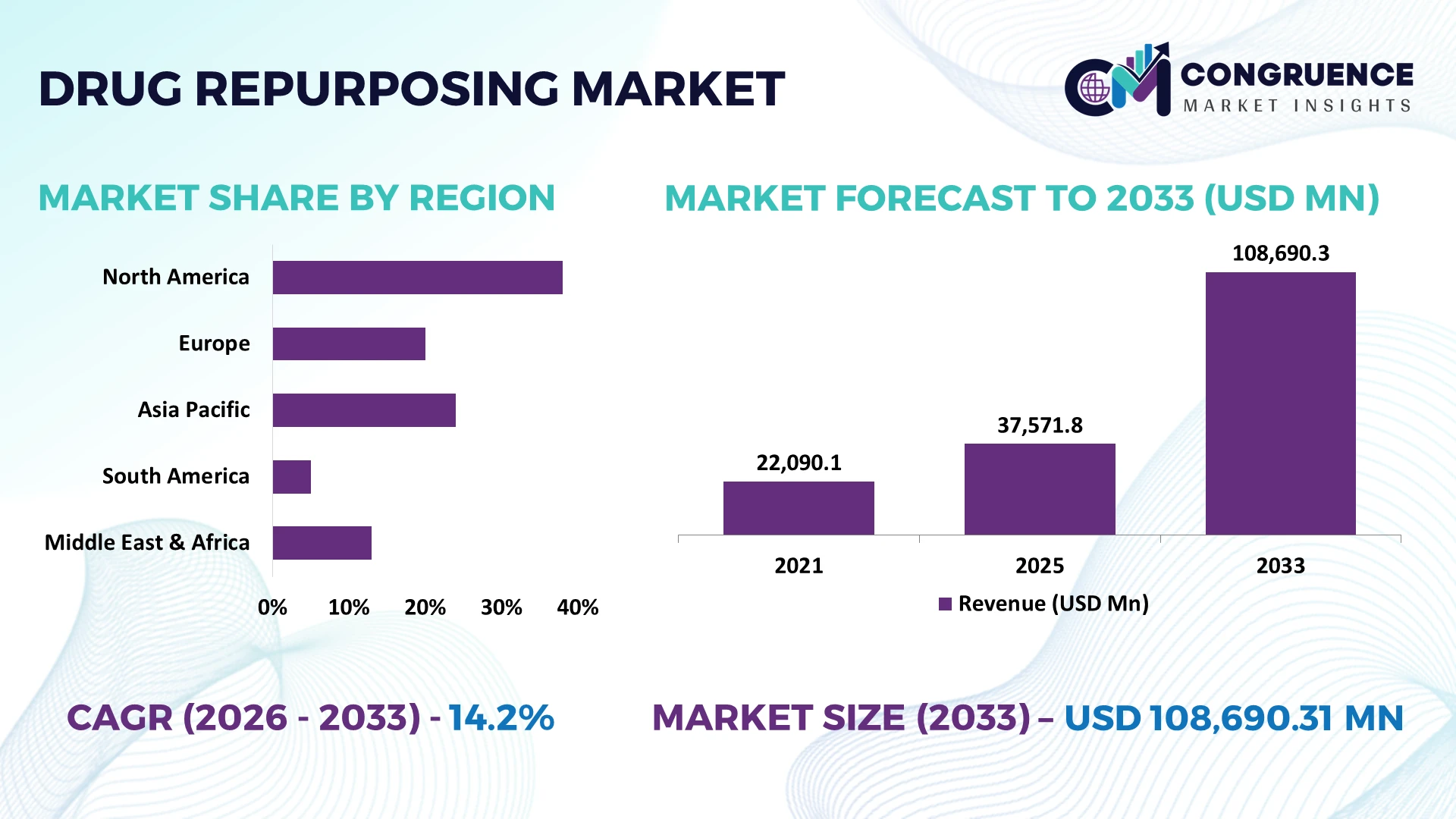
The United States anchors North America’s approximately 48.2% share, supported by FDA regulatory infrastructure, NIH translational programs, pharmaceutical R&D capacity, and extensive genomic and clinical datasets. Within AI-enabled repurposing, pharmaceutical and biotechnology companies account for 59.2% of adoption and oncology represents 36.7% of applications, reinforcing U.S. leadership in computational therapeutic repositioning and clinical validation. Compared with China, the United States combines stronger regulatory precedent with deeper clinical-data infrastructure, while China benefits from expanding computational biology capabilities and large patient datasets. U.S.–China biopharmaceutical competition and ongoing pharmaceutical supply-chain localization are increasing strategic emphasis on faster, lower-risk therapeutic development.
Strategically, drug developers should prioritize computational indication discovery, clinically validated existing assets, regulatory-ready evidence generation, and data partnerships that compress development risk while strengthening portfolio productivity.
Market Size & Growth: USD 37.57 billion in 2025 reaches USD 108.69 billion by 2033 at 14.2%, supported by AI-enabled indication discovery and accelerated regulatory pathways.
Top Growth Drivers: Conventional drug failure exceeds 95%, oncology captures 36.7% of AI-repurposing activity, and pharmaceutical-biotechnology companies represent 59.2% of AI platform adoption.
Short-Term Forecast: By 2028, computational screening and automated evidence synthesis can reduce early candidate-selection timelines by approximately 30–50% versus manually intensive workflows.
Emerging Technologies: Machine learning/deep learning holds 45.8% of AI-repurposing technology adoption, while generative AI and multimodal biomedical models are advancing target-indication matching.
Regional Leaders: North America represents approximately USD 18.1 billion, Europe about USD 10.1 billion, and Asia-Pacific roughly USD 7.1 billion in 2025, with computational adoption accelerating.
Consumer/End-User Trends: Pharmaceutical and biotechnology companies account for 59.2% of AI-enabled repurposing utilization as portfolio teams increasingly screen shelved and approved compounds computationally.
Pilot/Case Example: NCATS drug-development programs have advanced more than 45 promising therapeutics into clinical trials through translational partnerships and systematic compound-screening infrastructure.
Competitive Landscape: Pfizer, Novartis, AstraZeneca, Sanofi, and Eli Lilly anchor pharmaceutical participation, while AI specialists increasingly compete for indication-discovery and data-analysis partnerships.
Regulatory & ESG Impact: Repurposed-drug failure estimates of 25–70% compare with 90–95% for conventional discovery, strengthening regulatory interest in evidence reuse and development-risk reduction.
Investment & Funding: Isomorphic Labs secured USD 600 million in 2025, demonstrating investor commitment to AI-driven therapeutic discovery platforms and data-intensive pharmaceutical development.
Innovation & Future Outlook: Repurposing can compress development from 10–15 years toward 3–12 years, shifting competitive advantage toward proprietary clinical datasets, multimodal AI, and regulatory execution.
Drug Repurposing Market activity is concentrating in oncology, rare diseases, neurological disorders, infectious diseases, and failed-asset rescue. Oncology accounts for 36.7% of AI-enabled applications, while generative AI, knowledge graphs, genomic analytics, and automated phenotypic screening are improving indication selection. FDA evidence-reuse pathways and intensified global pharmaceutical portfolio optimization are pushing repositioning from opportunistic discovery toward systematic pipeline strategy, setting up the strategic discussion.
Drug repurposing is becoming strategically important because pharmaceutical companies can convert approved, shelved, or clinically characterized compounds into new pipeline assets without rebuilding discovery programs from zero. Conventional drug development experiences failure rates above 90%, while repurposed candidates benefit from existing pharmacokinetic and safety evidence. Regulatory pathways such as the U.S. FDA’s 505(b)(2) framework reinforce the shift toward evidence reuse, particularly in oncology, rare diseases, and neurological disorders.
AI materially changes the economics of candidate selection. Machine-learning platforms can screen thousands of drug–target–disease relationships simultaneously, reducing early hypothesis-generation and prioritization timelines by roughly 30–50% compared with manual literature and assay-led workflows. The United States leads through clinical datasets, regulatory infrastructure, and biotechnology density, while China is expanding computational biology and data-intensive discovery. India offers additional potential through generic-drug manufacturing, clinical research capabilities, and large therapeutic datasets.
A practical pathway is AI-led screening of approved compound libraries followed by targeted laboratory validation and biomarker-selected trials. Through 2026–2028, pharmaceutical companies are expanding partnerships with AI developers, academic centers, and genomic-data specialists to industrialize this workflow. Competitive advantage will belong to organizations combining proprietary clinical data, computational prediction, regulatory expertise, and rapid validation infrastructure.
Artificial intelligence is converting drug repurposing from largely hypothesis-led experimentation into systematic portfolio screening. Machine learning and deep learning account for approximately 45.8% of AI-enabled repurposing technology use, pharmaceutical and biotechnology companies represent about 59.2% of adoption, and oncology contributes roughly 36.7% of applications. Improved natural-language processing, knowledge graphs, molecular modeling, and multimodal biomedical models allow companies to connect existing compounds with previously overlooked targets and disease phenotypes. In the United States, growing integration of clinical, genomic, and real-world datasets is strengthening computational validation. Pharmaceutical companies are responding through AI partnerships, internal data platforms, and automated screening investments. The strategic benefit extends beyond faster discovery: computational triage prevents laboratory resources from being consumed by low-probability candidates, improving portfolio-level R&D productivity.
Commercial scalability is constrained by weak exclusivity for older molecules, fragmented clinical evidence, and uncertain reimbursement economics for inexpensive generic compounds. Roughly 70–80% of repurposing candidates originate from approved or previously investigated drugs, while development programs can still face failure rates of approximately 25–70% depending on indication and clinical stage. Existing safety data therefore reduces uncertainty without eliminating efficacy risk. In the United States, 505(b)(2) supports evidence reuse, but patent life and market exclusivity can remain materially shorter than for new molecular entities. Companies are responding through new formulations, dosing regimens, combination therapies, biomarker-defined indications, licensing agreements, and orphan-drug strategies. The non-obvious constraint is commercial rather than scientific: a clinically compelling repurposing opportunity can remain unattractive when defensible exclusivity cannot support additional trial expenditure.
Rare diseases offer a strategically attractive pathway because approximately 95% of recognized rare diseases still lack an approved treatment, while more than 7,000 rare conditions collectively affect hundreds of millions of people worldwide. Repurposing existing compounds can exploit known safety profiles while targeting genetically defined disease mechanisms, reducing the amount of early-stage experimentation required. U.S. orphan-drug incentives and advances in genomics, patient registries, organoids, and AI phenotype matching are improving candidate identification for small patient populations. Companies are building partnerships with universities, rare-disease foundations, genomic-data providers, and patient organizations to identify compounds overlooked by conventional commercial screening. Through 2026–2028, multimodal AI linking molecular, genomic, clinical, and literature data will expand indication discovery. The strategic opportunity is portfolio rescue: discontinued assets can become differentiated therapies without requiring entirely new chemical discovery programs.
Computational prediction does not eliminate the need to demonstrate clinically meaningful efficacy, making validation the central execution challenge. More than 90% of conventional drug candidates ultimately fail during development, while repurposed programs still face approximately 25–70% failure depending on indication, evidence quality, and trial design. AI platforms can rank thousands of candidate relationships, but biological causality, optimal dosing, drug–drug interactions, and patient stratification remain difficult to establish computationally. Oncology is particularly demanding despite representing about 36.7% of AI-repurposing applications because molecular heterogeneity can weaken signals observed in broad patient populations. Companies must invest in biomarker-led trials, organoid validation, real-world evidence infrastructure, and prospective clinical studies. The decisive capability is therefore not generating more predictions; it is building validation systems that rapidly distinguish computational correlations from therapeutically actionable mechanisms.
Generative AI Enters Evidence Workflows: Generative AI and large language models are moving beyond target discovery into literature synthesis, hypothesis ranking, and trial-design support. Machine learning/deep learning represents about 45.8% of AI-enabled repurposing activity, while pharmaceutical and biotechnology users account for 59.2%. Companies are integrating multimodal models with proprietary clinical datasets, shortening evidence-review cycles and reducing manual screening workloads.
Real-World Evidence Gains Regulatory Weight: Repurposing programs increasingly combine electronic health records, claims data, registries, and retrospective treatment outcomes before prospective trials. FDA’s 2026 repurposing initiative explicitly strengthened attention on existing clinical evidence, while U.S. programs increasingly require evidence beyond isolated case reports. Sponsors are restructuring evidence-generation workflows around reproducible datasets, improving candidate prioritization and reducing expenditure on weak therapeutic hypotheses.
Generic Repurposing Becomes Policy Priority: Off-patent medicines are receiving renewed institutional attention because weak exclusivity historically limited commercial development despite established safety records. In 2026, the NIH launched a repurposing initiative offering up to 40 awards and requiring at least Phase II, observational, computational, or real-world efficacy signals. Developers are forming public-private partnerships to convert clinically useful generic-drug evidence into regulatory-grade packages.
Phenotypic Screening Expands Validation: High-content cell models, patient-derived iPSCs, organoids, and automated screening are strengthening biological validation after computational selection. NCATS maintains approximately 2,500 approved drugs plus 1,000 investigational compounds for screening, creating a 3,500-compound validation resource. Companies and research institutions are coupling automated imaging with disease-specific assays, improving experimental throughput while eliminating computational candidates that lack reproducible phenotypic activity.
Small Molecules represent the leading type, accounting for approximately 45–50% of drug-repurposing activity because extensive safety histories, established manufacturing routes, oral formulations, and broad compound libraries simplify secondary-indication screening. Their chemical tractability also supports rapid dose optimization and combination development. Biologics hold a smaller but strategically important position, particularly where known immune or inflammatory mechanisms overlap across diseases. Existing biologics can command strong clinical interest despite higher manufacturing and administration complexity because target specificity can improve mechanistic confidence.
Oncology Drugs are the fastest-strengthening type as biomarker-led research identifies cross-tumor and non-oncology applications for previously characterized compounds; oncology represents approximately 36.7% of AI-enabled repurposing activity. Antivirals retain operational importance following pandemic-era screening infrastructure, while Vaccines remain selective because platform and immune-response requirements limit straightforward indication transfer. Developers are therefore directing computational screening toward large small-molecule libraries while using precision biomarkers for oncology assets and biologics. Investment priorities increasingly favor compounds combining existing human safety data with defensible formulation, combination, or indication-specific intellectual property.
Oncology remains the leading application, representing approximately 36.7% of AI-enabled drug-repurposing activity, because molecular profiling increasingly reveals shared pathways across tumor types and previously investigated compounds. Existing anticancer agents also provide extensive pharmacology, toxicity, and combination-treatment evidence that supports indication expansion. Infectious Diseases are the fastest-growing application as pathogen outbreaks and antimicrobial resistance increase the operational value of screening approved compound libraries against new biological targets. Pandemic-era infrastructure established reusable computational and high-throughput screening workflows that now support broader infectious-disease programs.
Neurological Disorders are gaining attention because approved CNS-active compounds provide known blood-brain-barrier and tolerability information, while Cardiovascular Diseases benefit from extensive longitudinal clinical and real-world datasets. Rare Diseases provide smaller patient pools but high strategic value because roughly 95% lack an approved therapy. Pharmaceutical developers are prioritizing biomarker-selected oncology programs, while academic groups increasingly screen compounds for neurological and rare conditions. Competitive advantage is shifting toward organizations that connect molecular evidence with patient-level phenotype and treatment-response datasets.
Pharmaceutical Companies remain the dominant end-user group, representing approximately 40% of overall repurposing activity and forming the largest component of the 59.2% combined pharmaceutical-and-biotechnology share within AI-enabled workflows. Their advantage comes from proprietary compound libraries, regulatory teams, pharmacovigilance databases, trial infrastructure, and the ability to resurrect discontinued assets. Biotechnology Companies are the fastest-strengthening commercial users because computational platforms allow smaller organizations to build indication pipelines without maintaining traditional large-scale discovery operations.
Academic Institutions remain important for mechanism discovery and investigator-led indication hypotheses, while Research Organizations provide screening, translational models, and public compound libraries. Contract Research Organizations are gaining operational relevance as sponsors outsource biomarker testing, data harmonization, and adaptive trial execution. Pharmaceutical companies are expanding AI partnerships and internal data platforms; biotechnology firms emphasize licensing and computational specialization; CROs are building integrated evidence-generation services. The strategic shift favors ecosystem collaboration because no single participant consistently controls compound access, disease biology, computational capability, and clinical validation simultaneously.
North America accounted for the largest market share at 48.2% in 2025 however, Asia-Pacific is expected to register the fastest growth, expanding at a CAGR of 15.6% between 2026 and 2033.
Regulatory Pathways Accelerate Asset Reuse
North America accounts for approximately 48.2% of global drug repurposing activity, anchored by U.S. pharmaceutical R&D, clinical-trial infrastructure, real-world evidence repositories, and computational drug-discovery platforms. The FDA 505(b)(2) pathway provides an established mechanism for applications relying partly on previously generated safety and efficacy evidence, improving the commercial viability of reformulated and repositioned therapeutics. AI adoption is particularly important: pharmaceutical and biotechnology companies represent approximately 59.2% of AI-enabled repurposing utilization, while oncology contributes around 36.7% of applications. NIH and NCATS infrastructure further connects approved compound libraries with phenotypic screening, translational models, and academic investigators. Companies are consequently expanding partnerships between pharmaceutical asset owners, AI developers, genomic-data specialists, and research hospitals. The operational advantage is faster elimination of weak candidates before expensive clinical development begins.
United States Market Outlook: The United States combines the world's deepest biopharmaceutical research infrastructure with a defined evidence-reuse regulatory pathway and extensive clinical datasets. NCATS maintains screening resources containing approximately 2,500 approved drugs and 1,000 investigational compounds. U.S. developers increasingly connect these libraries with electronic health records, genomic information, knowledge graphs, and biomarker-selected trials, strengthening both computational candidate discovery and subsequent clinical validation.
Public Research Networks Strengthen Translation
Europe represents approximately 27% of global drug repurposing activity, supported by established pharmaceutical clusters, cross-border academic research, centralized medicine regulation, and extensive public health datasets. Germany, the United Kingdom, Switzerland, France, and the Netherlands provide particularly strong translational infrastructure. European repurposing programs increasingly combine biobanks, disease registries, genomic datasets, and investigator-led trials rather than relying solely on proprietary pharmaceutical libraries. More than 30 million Europeans are estimated to live with rare diseases, strengthening the rationale for repositioning compounds where conventional development economics are difficult. Regulatory mechanisms for orphan medicines and academic-industry collaboration improve development pathways, although evidence harmonization across national healthcare systems remains operationally important. Pharmaceutical companies are expanding computational biology partnerships and precision-medicine programs, while research consortia increasingly coordinate compound access and clinical validation. Europe's competitive advantage lies in linking longitudinal patient evidence with multicountry translational research.
United Kingdom Market Outlook: The United Kingdom offers a strong combination of NHS longitudinal healthcare data, genomics infrastructure, university research, biotechnology clusters, and centralized clinical-research capabilities. Genomics England's 100,000 Genomes Project established a major foundation for genotype–phenotype analysis, while subsequent genomic programs substantially expand accessible datasets. This infrastructure strengthens biomarker-driven repurposing for oncology, rare diseases, and neurological conditions and supports partnerships between universities, AI developers, pharmaceutical companies, and NHS research centers.
Clinical Scale Meets Computational Expansion
Asia-Pacific represents approximately 19% of global drug repurposing activity and combines expanding pharmaceutical R&D with large patient populations, generic-drug manufacturing, clinical-research capacity, and rapidly improving AI infrastructure. China, Japan, India, South Korea, and Australia form the principal development hubs, but their strengths differ materially. China emphasizes AI-enabled drug discovery and large biomedical datasets; Japan contributes established pharmaceutical research and high-quality longitudinal healthcare information; India combines generics expertise with cost-efficient chemistry and clinical operations. China accounts for more than 20% of global pharmaceutical R&D pipeline activity, strengthening the pool of compounds potentially available for secondary-indication investigation. Companies are establishing computational discovery partnerships, licensing programs, and translational research alliances. The region's non-obvious advantage is asset diversity: innovative molecules, generic compounds, traditional drug libraries, and extensive clinical populations can all feed systematic repositioning pipelines.
China Market Outlook: China has become a strategically significant repurposing environment through rapidly expanding biotechnology R&D, AI infrastructure, hospital networks, and biomedical-data generation. The country contributes more than one-fifth of global pharmaceutical pipeline activity and has strengthened regulatory acceptance of innovative therapeutics. Domestic companies increasingly combine computational screening, structural biology, and hospital-derived clinical evidence, creating opportunities to identify secondary indications before assets are abandoned after unsuccessful primary-development programs.
Clinical Networks Support Targeted Repositioning
South America accounts for approximately 3–4% of global drug repurposing activity, with Brazil dominating pharmaceutical research scale, clinical-trial infrastructure, academic medicine, and public healthcare datasets. Infectious diseases, oncology, neurological conditions, and neglected tropical diseases provide distinctive repositioning targets because regional disease burdens differ from those prioritized by major pharmaceutical markets. Brazil's SUS healthcare system covers more than 200 million people, creating substantial longitudinal clinical-data potential, although fragmented digitization limits immediate computational utilization. Argentina and Chile contribute established clinical-research centers but operate at smaller scale. Universities and public institutes remain particularly important because weak commercial incentives can constrain industry-led repurposing for neglected diseases. Pharmaceutical companies and research organizations are increasing collaborations around clinical evidence and computational screening. Improving health-data interoperability would materially expand the region's ability to convert population-scale treatment records into actionable repurposing hypotheses.
Brazil Market Outlook: Brazil combines Latin America's largest healthcare system with substantial generic manufacturing, biomedical research, and clinical-trial capabilities. Fiocruz and leading university hospitals provide translational expertise across infectious and chronic diseases, while SUS serves more than 200 million residents. Connecting these population-level records with standardized digital research infrastructure would strengthen real-world evidence generation and create differentiated opportunities for repositioning affordable medicines against locally significant diseases.
Genomics Investment Builds Discovery Capacity
Middle East & Africa represents approximately 2–3% of global drug repurposing activity, but the underlying research infrastructure is changing rapidly in Saudi Arabia, the UAE, Israel, and South Africa. Gulf countries are investing in genomics, precision medicine, biotechnology manufacturing, and digital health infrastructure, while South Africa contributes extensive infectious-disease research and clinical-trial expertise. The UAE Genome Programme targets genomic sequencing at population scale, creating a valuable future dataset for disease stratification and therapeutic repositioning. Saudi Arabia is simultaneously expanding biotechnology localization under national economic-diversification programs. In Africa, tuberculosis, HIV, malaria, and neglected diseases provide strong clinical rationale for testing existing compounds, although laboratory capacity and research funding remain uneven. Companies are responding through university partnerships, genomic collaborations, and localized clinical research. The strategic opportunity centers on combining population-specific biology with compounds already characterized elsewhere.
United Arab Emirates Market Outlook: The UAE is building a differentiated position through population genomics, precision medicine, AI infrastructure, and integrated healthcare systems. Its national genome initiative targets more than 1 million participants, creating a substantial genotype–phenotype resource. Linking this information with electronic health records and therapeutic-response data can strengthen biomarker-driven repurposing while attracting pharmaceutical, biotechnology, and computational-discovery partnerships into Abu Dhabi's expanding life-sciences ecosystem.
Pfizer, Novartis, AstraZeneca, Sanofi, and Eli Lilly compete through proprietary compound libraries and clinical infrastructure, while Recursion, BenevolentAI, and Schrödinger challenge traditional models with computational indication discovery. The top five pharmaceutical participants represent approximately 28% of commercially driven repurposing activity, leaving substantial space for biotechnology and academic partnerships. AI screening can reduce candidate-prioritization time by 30–50%, while repurposed programs can lower early development expenditure by 40–60% and avoid portions of the 90%+ failure burden associated with conventional discovery. Pharmaceutical leaders compete through asset reuse, licensing, biomarker trials, and external AI partnerships; technology specialists differentiate through proprietary datasets, predictive models, and automated laboratories. Competition is shifting from compound ownership toward evidence integration and validation speed. Access to longitudinal clinical data, defensible intellectual property, and regulatory-grade evidence creates the principal entry barrier. Winning requires combining proprietary assets, computational accuracy, rapid experimental validation, and indication-specific regulatory execution at scale across global development portfolios.
Pfizer Inc.
Novartis AG
AstraZeneca plc
Sanofi
Eli Lilly and Company
Bristol Myers Squibb
GSK plc
Bayer AG
Takeda Pharmaceutical Company
Recursion Pharmaceuticals
Schrödinger, Inc.
Healx
Insilico Medicine
Lantern Pharma
Current drug-repurposing technology combines knowledge graphs, machine learning, phenotypic screening, electronic health records, and molecular modeling to rank compounds against new indications. AI-assisted triage can reduce target-selection workflows by roughly 30–50%, while pharmaceutical and biotechnology companies represent about 59% of AI-enabled adoption. Compared with manual literature-led screening, computational platforms evaluate millions of drug–disease relationships simultaneously, concentrating laboratory and clinical resources on higher-confidence hypotheses.
Emerging systems integrate generative AI, multimodal foundation models, genomics, proteomics, real-world evidence, organoids, and automated laboratories. Machine learning and deep learning account for approximately 46% of AI-repurposing technology use. Recursion reports its platform can triage hundreds of biological signals into dozens of experimentally validated targets within weeks; integrated trial-site intelligence compresses country and site selection from months to hours. These capabilities shift competitive advantage toward organizations controlling proprietary patient data and wet-lab validation.
Between 2026 and 2028, disruptive progress will center on agentic scientific workflows, causal inference, digital twins, and closed-loop AI experimentation linking prediction with laboratory validation. Regulatory interest in real-world evidence will reinforce adoption. Companies integrating computational discovery, biomarker selection, and regulatory-grade evidence can eliminate weak candidates earlier, lower validation expenditure, and reposition existing assets faster; acting now builds unique datasets competitors cannot quickly reproduce.
August 2024 Healx raised $47 million in Series C financing and received FDA clearance to advance HLX-1502 into Phase 2 for neurofibromatosis type 1, strengthening its AI-enabled rare-disease repurposing pipeline and financing clinical validation of computationally identified therapeutic opportunities. Source: healx.ai
January 2025 Every Cure expanded its Google Cloud collaboration, integrating Gemini 2.0 into MATRIX to analyze biomedical knowledge, omics, clinical data and real-world evidence. The platform addresses diseases affecting over 300 million people without treatments, accelerating systematic repurposing. Source: everycure.org
December 2025 Recursion reported positive REC-4881 Phase 1b/2 results in familial adenomatous polyposis: 75% of evaluable patients reduced total polyp burden, with a 43% median reduction after 12 weeks, clinically validating its technology-driven biological discovery and repositioning strategy. Source: sec.gov
September 2026 NIH launched the ReGen Drugs Evidence Package Challenge, offering up to $4 million across 40 awards for evidence-backed generic repurposing opportunities. The initiative creates a structured pathway toward trials, labeling updates and clinical adoption. Source: nih.gov
The Drug Repurposing Market Report examines Small Molecules, Biologics, Vaccines, Antivirals, and Oncology Drugs across Oncology, Infectious Diseases, Neurological Disorders, Cardiovascular Diseases, and Rare Diseases. Small molecules represent approximately 45–50% of repurposing activity, while oncology accounts for about 36.7% of AI-enabled applications. End-user analysis covers Pharmaceutical Companies, Biotechnology Companies, Academic Institutions, Research Organizations, and Contract Research Organizations.
Geographic assessment spans North America, Europe, Asia-Pacific, South America, and Middle East & Africa, evaluating regulatory pathways, clinical infrastructure, compound libraries, data availability, and research ecosystems. Technology coverage includes machine learning, knowledge graphs, generative AI, multimodal models, phenotypic screening, organoids, genomics, and real-world evidence. The 2026–2033 framework supports investment planning, asset-licensing decisions, geographic expansion, competitive positioning, partnership selection, and identification of underexploited therapeutic indications with commercially viable validation pathways.
| Report Attribute/Metric | Report Details |
|---|---|
Market Revenue in 2025 | USD 37571.8 Million |
Market Revenue in 2033 | USD 108690.31 Million |
CAGR (2026 - 2033) | 14.2% |
Base Year | 2025 |
Forecast Period | 2026 - 2033 |
Historic Period | 2021 - 2025 |
Segments Covered | By Type
By Application
By End-User
|
Key Report Deliverable | Revenue Forecast, Growth Trends, Market Dynamics, Segmental Overview, Regional and Country-wise Analysis, Competition Landscape |
Region Covered | North America, Europe, Asia-Pacific, South America, Middle East, Africa |
Key Players Analyzed | Pfizer Inc., Novartis AG, AstraZeneca plc, Sanofi, Eli Lilly and Company, Bristol Myers Squibb, GSK plc, Bayer AG, Takeda Pharmaceutical Company, Recursion Pharmaceuticals, Schrödinger, Inc., Healx, Insilico Medicine, Lantern Pharma |
Customization & Pricing | Available on Request (10% Customization is Free) |




