
Reports
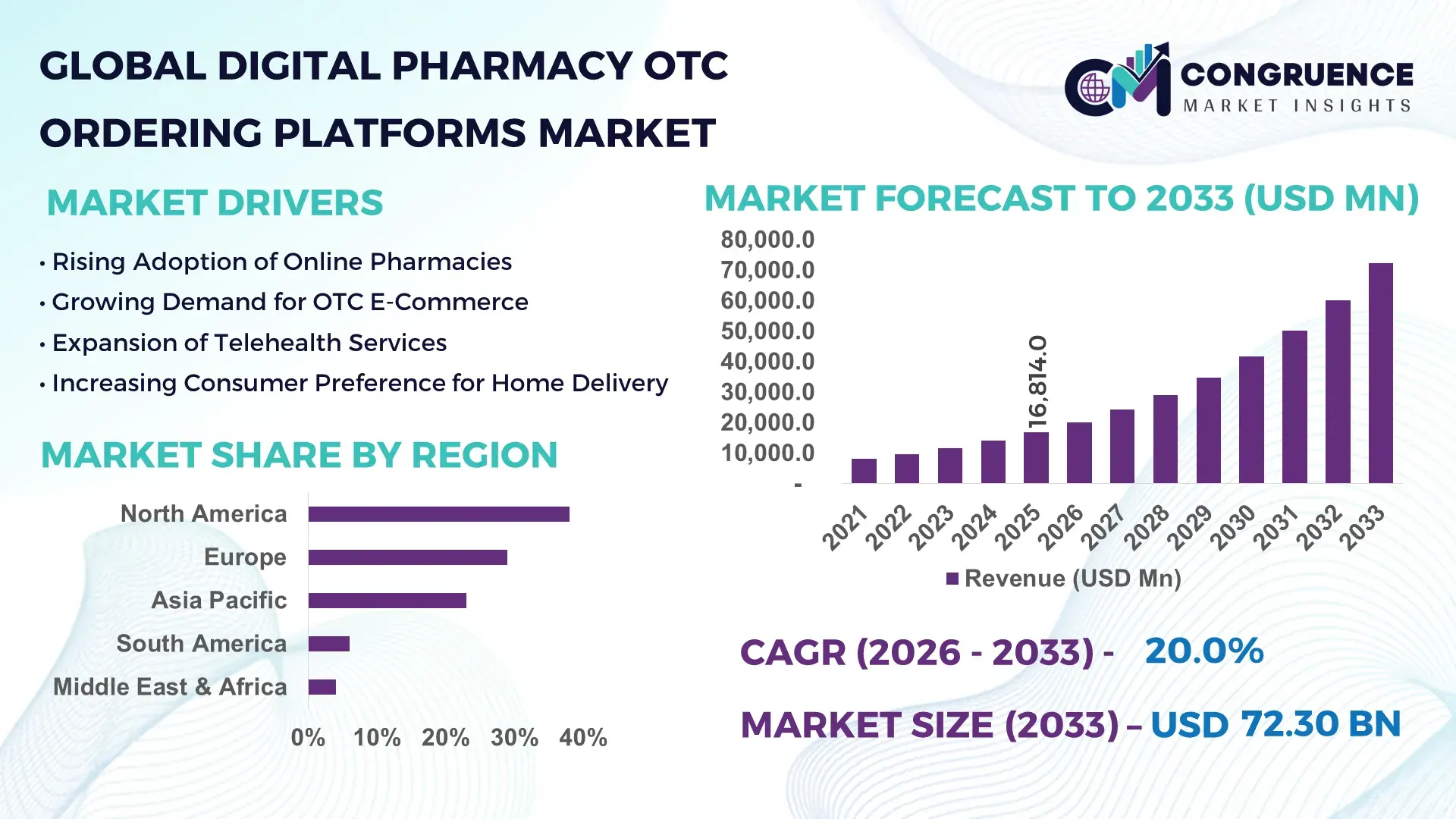
The Global Digital Pharmacy OTC Ordering Platforms Market was valued at USD 16,814.0 Million in 2025 and is anticipated to reach a value of USD 72,297.1 Million by 2033 expanding at a CAGR of 20% between 2026 and 2033, according to an analysis by Congruence Market Insights. The rapid shift toward digital healthcare ecosystems, telepharmacy integration, and growing consumer preference for convenient online access to OTC medicines are accelerating the expansion of digital pharmacy ordering platforms worldwide.
The United States currently represents the most technologically advanced market environment for digital pharmacy OTC ordering platforms. The country operates more than 24,000 retail pharmacy outlets integrated with digital fulfillment systems, enabling large-scale online OTC medicine distribution. E-commerce healthcare adoption is high, with over 62% of U.S. consumers purchasing health and wellness products online at least once per year. Investment in digital health exceeded USD 15 billion in 2024, much of which supports telehealth-enabled pharmacies and AI-driven drug recommendation engines. Major pharmacy chains operate automated fulfillment centers capable of processing over 100,000 OTC orders daily, while robotic dispensing technology and same-day delivery networks support large-scale platform operations. Integration of AI-based symptom checkers and personalized OTC recommendations across pharmacy apps has further strengthened digital pharmacy ecosystem capabilities in the country.
Market Size & Growth: The market stood at USD 16,814.0 Million in 2025 and is projected to reach USD 72,297.1 Million by 2033, expanding at 20% CAGR due to rising consumer preference for contactless pharmaceutical purchasing and integrated telehealth services.
Top Growth Drivers: Online pharmacy adoption exceeding 58%, AI-driven drug recommendation engines improving purchase conversion by 32%, and automated pharmacy fulfillment systems increasing operational efficiency by 40%.
Short-Term Forecast: By 2028, automated OTC order processing and smart logistics integration are expected to reduce order fulfillment time by 35% across digital pharmacy platforms.
Emerging Technologies: AI-powered drug recommendation systems, blockchain-based pharmaceutical traceability, and IoT-enabled pharmacy inventory management solutions.
Regional Leaders: North America projected near USD 26 Billion by 2033 with strong telehealth integration; Europe approaching USD 18 Billion with regulated e-pharmacy adoption; Asia-Pacific expected near USD 16 Billion driven by mobile-first pharmacy platforms.
Consumer/End-User Trends: More than 60% of urban consumers prefer ordering OTC medicines online due to convenience, while subscription-based digital pharmacy programs are growing among chronic-care users.
Pilot or Case Example: In 2024, a large pharmacy chain deployed AI-driven OTC recommendation tools, achieving a 28% improvement in order conversion rates and reducing product search time by 40%.
Competitive Landscape: Market leadership is held by a major e-pharmacy operator with approximately 14% platform share, followed by competitors including CVS Health, Walgreens Boots Alliance, Amazon Pharmacy, and Alibaba Health.
Regulatory & ESG Impact: Governments are implementing electronic prescription frameworks and pharmaceutical traceability rules, while digital pharmacies target 30% packaging waste reduction by 2030 through sustainable logistics.
Investment & Funding Patterns: Global digital health investment exceeded USD 25 Billion between 2023 and 2025, with venture capital increasingly directed toward AI pharmacy platforms and automated dispensing technologies.
Innovation & Future Outlook: Integration of AI triage systems, telehealth consultation features, and predictive drug demand analytics is expected to reshape pharmacy platform ecosystems over the next decade.
Digital pharmacy OTC ordering platforms support multiple healthcare sectors including consumer healthcare retail (42% of platform usage), telehealth service ecosystems (28%), and pharmaceutical retail chains (20%). Innovations such as AI-based symptom assessment, digital drug labeling, and automated fulfillment centers are enhancing platform efficiency. Regulatory frameworks enabling e-prescriptions and digital health IDs in North America, Europe, and Asia are accelerating platform adoption while mobile-first pharmacy apps continue to expand consumer healthcare accessibility globally.
Digital Pharmacy OTC Ordering Platforms are becoming a strategic pillar of the modern healthcare delivery ecosystem as governments, healthcare providers, and pharmaceutical retailers pursue digitally integrated healthcare distribution models. The rapid digitization of healthcare supply chains has created a platform economy where pharmacies operate integrated telehealth consultation, OTC medicine ordering, and home delivery logistics through unified digital infrastructure.
Artificial intelligence and predictive analytics are transforming digital pharmacy platforms by enabling automated symptom analysis and personalized drug recommendations. AI-driven pharmacy recommendation engines deliver nearly 35% higher prescription-to-purchase conversion rates compared to traditional keyword-based product search systems, improving platform engagement and consumer satisfaction. Integration of electronic health records with pharmacy ordering systems also enables safe OTC drug recommendations based on medical history and allergy profiles.
Regionally, North America dominates in transaction volume, supported by advanced telehealth networks and large pharmacy chains, while Asia-Pacific leads in adoption with nearly 65% of urban consumers using mobile pharmacy applications for OTC purchases and healthcare consultations. Rapid smartphone penetration and mobile payment ecosystems across countries such as China and India are accelerating digital pharmacy accessibility in emerging markets.
Short-term projections indicate strong digital transformation across pharmaceutical retail channels. By 2028, AI-driven pharmacy automation and digital fulfillment systems are expected to reduce OTC order processing times by nearly 40%, improving operational efficiency and enabling large-scale same-day medicine delivery networks.
Regulatory and ESG commitments are also shaping the industry. Many digital pharmacies are committing to 25% reductions in packaging materials and carbon emissions by 2030 through smart logistics routing, recyclable packaging, and electric last-mile delivery networks. Governments are simultaneously strengthening pharmaceutical traceability requirements to prevent counterfeit drug distribution in digital channels.
A notable example occurred in 2024, when a large U.S. pharmacy network deployed automated OTC dispensing robots in fulfillment centers and achieved a 32% reduction in order processing time, significantly improving digital pharmacy logistics efficiency.
As digital healthcare ecosystems mature, the Digital Pharmacy OTC Ordering Platforms Market will continue evolving as a core infrastructure layer supporting telemedicine, personalized healthcare services, and resilient pharmaceutical supply chains while enabling sustainable and compliant healthcare distribution models globally.
The Digital Pharmacy OTC Ordering Platforms Market is evolving rapidly as healthcare systems shift toward digitally integrated pharmaceutical distribution models. Increasing smartphone penetration, growth in e-commerce healthcare ecosystems, and expansion of telehealth services are significantly influencing market dynamics. Digital pharmacy platforms enable consumers to order OTC medicines, health supplements, and wellness products online while accessing pharmacist consultations and digital prescription services. Healthcare providers and pharmacy chains are investing heavily in automated fulfillment centers, cloud-based pharmacy management systems, and AI-driven recommendation engines to improve operational efficiency and patient engagement. Additionally, regulatory authorities across North America, Europe, and Asia are implementing frameworks for e-prescriptions and digital health records, enabling safer online pharmaceutical transactions. Consumer behavior is also evolving as urban populations increasingly rely on mobile applications for healthcare purchases, particularly for routine OTC products such as pain relievers, allergy medications, and vitamins. Strategic collaborations between telemedicine providers, pharmaceutical distributors, and logistics companies are further strengthening digital pharmacy ecosystems. However, regulatory complexities, cybersecurity concerns, and pharmaceutical authentication requirements continue to influence the pace of market development.
Consumer healthcare purchasing behavior has shifted significantly toward digital channels due to convenience, accessibility, and integrated healthcare services. Surveys indicate that over 60% of urban consumers globally prefer purchasing OTC medicines through digital platforms, particularly for common conditions such as cold, flu, allergies, and digestive health. Digital pharmacy platforms allow users to compare product information, check pharmacist guidance, and receive same-day delivery, which has significantly improved the consumer experience. Additionally, subscription-based medicine delivery programs are expanding among chronic-care patients who regularly purchase OTC supplements and wellness products. Telehealth integration also plays a major role, with nearly 45% of digital pharmacy platforms offering remote pharmacist consultation services. Large pharmacy chains and e-commerce companies are deploying AI-powered product recommendation tools that analyze symptoms and health profiles to guide consumers toward appropriate OTC products. These digital capabilities are increasing consumer trust and encouraging repeat usage, making online pharmacy platforms an important component of modern healthcare retail ecosystems.
Despite strong adoption trends, regulatory compliance and pharmaceutical safety requirements continue to limit the expansion of digital pharmacy OTC ordering platforms in several regions. Many countries maintain strict regulations governing online pharmaceutical sales to prevent the distribution of counterfeit or unverified medicines. Regulatory authorities require pharmacies to implement secure authentication systems, licensed pharmacist oversight, and traceable drug supply chains. Compliance with these requirements often increases operational costs and platform development complexity. In addition, cross-border pharmaceutical sales face restrictions due to varying healthcare regulations across countries. Consumer concerns regarding counterfeit medicines also remain a barrier in some markets, particularly where pharmaceutical traceability systems are still evolving. Cybersecurity risks associated with storing personal health information and transaction data further complicate platform operations. Healthcare regulators are increasingly mandating data protection standards and digital health certifications for pharmacy platforms, requiring companies to invest significantly in secure cloud infrastructure, authentication systems, and pharmaceutical verification technologies.
Telepharmacy and digital healthcare integration represent one of the most significant opportunities for digital pharmacy OTC ordering platforms. Telemedicine adoption has grown rapidly, with millions of virtual consultations conducted annually for minor illnesses and preventive healthcare services. By integrating telepharmacy features into digital pharmacy platforms, consumers can consult licensed pharmacists, receive symptom guidance, and purchase recommended OTC medicines within a single digital ecosystem. This integrated healthcare model improves patient convenience while expanding pharmacy service capabilities. Automated fulfillment centers and robotic dispensing technologies are also enabling large-scale order processing for online pharmacy platforms. Additionally, rural and underserved communities represent a large untapped opportunity for digital pharmacy services. In many developing regions, access to physical pharmacies is limited, making mobile pharmacy applications an important healthcare access channel. Pharmaceutical manufacturers are increasingly partnering with digital pharmacies to launch direct-to-consumer OTC product distribution models, further strengthening online pharmacy ecosystems.
Digital pharmacy platforms handle large volumes of sensitive health and consumer data, including medical histories, medication purchases, and payment details. This creates significant cybersecurity risks that companies must address through advanced data protection measures. Healthcare data breaches have increased globally, forcing digital pharmacy operators to adopt strict encryption standards, identity verification systems, and secure cloud storage architectures. Compliance with global data protection frameworks such as health information privacy regulations requires continuous monitoring and infrastructure upgrades. Platform operators must also implement authentication systems to ensure that OTC medicines are dispensed responsibly and not misused. Fraud prevention mechanisms are essential to prevent unauthorized purchases of restricted pharmaceutical products. Additionally, consumer trust remains a critical factor in the adoption of digital healthcare platforms. Any cybersecurity incident involving personal health information could significantly affect platform credibility and regulatory compliance. As a result, companies must invest heavily in cybersecurity infrastructure, regulatory certification, and digital identity verification systems to maintain safe and compliant pharmacy operations.
AI-Driven OTC Medicine Recommendation Systems: Digital pharmacy platforms are increasingly deploying AI-powered recommendation engines capable of analyzing symptom inputs and health profiles. These systems improve product discovery and reduce decision-making time for consumers. In several large pharmacy platforms, AI-driven recommendations increased product conversion rates by 28% while reducing search time by 40%. More than 45% of digital pharmacy applications now include AI-based symptom-checking tools integrated with OTC medicine catalogs.
Automated Pharmacy Fulfillment Centers: Pharmacy operators are investing heavily in robotic fulfillment systems to process high-volume OTC orders. Modern automated pharmacy warehouses can process up to 120,000 medicine orders per day, reducing manual dispensing errors by 35% and improving logistics efficiency. These facilities rely on conveyor-based sorting systems, robotic picking technologies, and digital inventory monitoring to accelerate order processing.
Mobile-First Healthcare Platforms: Mobile applications are becoming the primary access point for digital pharmacy services. Surveys indicate that over 68% of OTC medicine purchases on digital platforms occur through mobile apps, particularly in Asia-Pacific and North America. Integrated digital wallets and one-click prescription refill features have improved user engagement and repeat purchases by nearly 30% across several pharmacy apps.
Integration with Telehealth Ecosystems: Digital pharmacy platforms are increasingly integrated with telemedicine services, enabling users to consult pharmacists and healthcare professionals before purchasing OTC medicines. Telehealth integration has increased digital pharmacy platform engagement by 34%, while nearly 50% of telemedicine users prefer ordering recommended OTC medicines directly through integrated pharmacy apps.
The Digital Pharmacy OTC Ordering Platforms Market is segmented by type, application, and end-user to reflect the diverse digital healthcare ecosystem supporting OTC medicine distribution. Platform types include web-based pharmacy portals, mobile pharmacy applications, and integrated telepharmacy platforms. Applications range from OTC medication sales and wellness product ordering to telehealth-assisted medicine purchasing and automated subscription delivery programs. End-users include retail pharmacy chains, hospital pharmacies, healthcare platforms, and direct consumers. Mobile-first pharmacy platforms dominate digital adoption due to high smartphone usage, while integrated telehealth-pharmacy solutions are expanding rapidly as healthcare providers integrate digital consultations with pharmaceutical purchasing systems.
Digital pharmacy OTC ordering platforms are categorized into web-based pharmacy platforms, mobile pharmacy applications, and integrated telepharmacy platforms. Mobile pharmacy applications currently represent the leading segment, accounting for approximately 48% of platform adoption, largely due to high smartphone penetration and consumer preference for app-based healthcare services. Web-based pharmacy platforms hold nearly 30% adoption, serving as important access channels for consumers who prefer desktop ordering and enterprise healthcare procurement systems. However, integrated telepharmacy platforms are expanding fastest with an estimated 24% CAGR, driven by the integration of virtual pharmacist consultations and OTC product recommendation tools. Telepharmacy systems allow patients to receive medical guidance before purchasing OTC medicines, significantly improving medication safety and consumer confidence. Other niche platform types including chatbot-enabled pharmacy ordering systems and voice-activated medicine ordering tools collectively contribute nearly 22% of total platform usage, reflecting emerging digital healthcare interface technologies.
• In 2025, a leading digital pharmacy network implemented AI-powered telepharmacy consultation tools, enabling pharmacists to support over 3 million remote OTC consultations annually while improving medication guidance accuracy for consumers.
Applications of digital pharmacy OTC ordering platforms include online OTC medicine sales, wellness product distribution, telehealth-integrated medicine ordering, and subscription-based healthcare delivery services. Online OTC medicine sales remain the dominant application, representing approximately 44% of platform usage, as consumers frequently purchase common medications such as pain relievers, cold treatments, and allergy medicines through digital channels. Telehealth-integrated medicine ordering platforms account for about 26% adoption, enabling patients to receive healthcare advice before purchasing medicines. Subscription-based healthcare product delivery programs are expanding rapidly and represent the fastest-growing application segment with 23% CAGR, driven by consumers who regularly purchase vitamins, supplements, and preventive healthcare products. Other applications including health diagnostics kit ordering and pharmacy marketplace services collectively contribute around 30% of platform activity. Consumer adoption is also increasing significantly, with more than 38% of global digital healthcare users reporting at least one OTC medicine purchase through online pharmacy platforms. Additionally, over 55% of millennial consumers prefer digital pharmacies for routine health product purchases due to convenience and price transparency.
• In 2024, a major healthcare platform integrated telehealth consultations with its OTC pharmacy ordering system, enabling more than 5 million users to purchase recommended medicines immediately after virtual consultations.
End-users of digital pharmacy OTC ordering platforms include retail pharmacy chains, hospitals and healthcare providers, online healthcare platforms, and individual consumers. Individual consumers represent the leading end-user segment with approximately 52% of total platform activity, reflecting the rapid growth of direct-to-consumer digital healthcare services. Retail pharmacy chains account for nearly 28% adoption, using digital ordering platforms to expand online sales channels and support omnichannel pharmaceutical retail strategies. Healthcare providers and hospitals contribute roughly 12% of platform usage, mainly through integrated telehealth and pharmacy services that allow patients to order OTC products after medical consultations. Online healthcare platforms, including digital health marketplaces and wellness platforms, represent the fastest-growing end-user group with an estimated 25% CAGR, driven by integrated digital healthcare ecosystems. Consumer adoption statistics indicate that over 60% of digital healthcare users in urban regions prefer online pharmacy platforms for routine OTC medicine purchases, while nearly 40% of telehealth patients purchase recommended OTC medicines through integrated pharmacy applications after consultations.
• In 2025, a large healthcare network deployed integrated digital pharmacy services across its telehealth platform, enabling over 2 million patients to order OTC medicines directly following virtual consultations with healthcare professionals.
North America accounted for the largest market share at 38% in 2025 however, Asia-Pacific is expected to register the fastest growth, expanding at a CAGR of 22% between 2026 and 2033.

The regional landscape of the Digital Pharmacy OTC Ordering Platforms Market demonstrates strong digital healthcare adoption across developed economies while emerging regions are rapidly expanding mobile pharmacy ecosystems. North America processed an estimated 1.3 billion online OTC product transactions in 2025, supported by advanced telehealth infrastructure and automated pharmacy fulfillment networks. Europe followed with 29% market share, where regulated e-pharmacy frameworks and digital prescription systems are accelerating platform adoption across Germany, the United Kingdom, and France. Asia-Pacific accounted for 23% of global platform usage, but the region recorded the fastest user adoption rates due to high smartphone penetration and expanding e-commerce healthcare ecosystems. China alone reported over 350 million digital pharmacy app users, while India recorded more than 90 million online pharmacy consumers purchasing OTC medicines through mobile platforms. South America contributed nearly 6% of global platform demand, primarily driven by Brazil and Argentina where digital health regulations are evolving. Meanwhile, the Middle East & Africa accounted for approximately 4% market share, supported by government-led digital healthcare initiatives in the UAE, Saudi Arabia, and South Africa.
North America represents the most technologically mature environment for digital pharmacy OTC ordering platforms, accounting for approximately 38% of global market activity. The region processes more than 500 million digital OTC medicine orders annually, driven by high internet penetration and well-established pharmacy chains. Key industries supporting platform demand include retail pharmacy networks, telemedicine providers, healthcare technology firms, and e-commerce logistics companies. Regulatory frameworks such as electronic prescription laws and pharmaceutical traceability requirements have strengthened consumer trust in digital pharmacy transactions. Advanced technologies such as AI-driven medicine recommendation engines, robotic pharmacy fulfillment centers, and automated inventory systems are widely deployed across large pharmacy chains. For example, Amazon Pharmacy has expanded automated prescription and OTC delivery networks capable of processing tens of thousands of daily orders across multiple U.S. states. Regional consumer behavior reflects strong digital healthcare adoption, with nearly 65% of U.S. consumers preferring online platforms for purchasing OTC medicines and wellness products, particularly for routine healthcare needs.
Europe holds approximately 29% share of global digital pharmacy OTC ordering platform usage, supported by robust healthcare systems and regulated pharmaceutical supply chains. Leading markets include Germany, the United Kingdom, and France, which together account for nearly 65% of regional digital pharmacy transactions. European regulatory bodies have introduced stringent digital pharmacy verification frameworks, including mandatory pharmacy registration numbers and secure drug traceability systems. These measures ensure safe online pharmaceutical sales and protect consumers from counterfeit medicines. Technology adoption across the region includes AI-based symptom assessment tools, digital health identification systems, and electronic prescription integration with pharmacy platforms. A notable player, DocMorris, operates a large digital pharmacy ecosystem in Europe and processes millions of OTC product orders annually through integrated online consultation and delivery systems. Regional consumer behavior shows strong trust in regulated digital healthcare services, with over 58% of European online healthcare consumers preferring certified pharmacy platforms when purchasing OTC medicines.
Asia-Pacific represents the fastest-expanding region in the Digital Pharmacy OTC Ordering Platforms Market and accounts for approximately 23% of global platform demand. Major consuming countries include China, India, and Japan, which collectively account for more than 70% of regional digital pharmacy transactions. China alone hosts more than 350 million users of online healthcare platforms, supported by highly developed e-commerce ecosystems and integrated digital payment systems. Infrastructure expansion includes automated pharmaceutical distribution centers and AI-enabled healthcare platforms operating across major urban areas. Regional technology hubs such as Shenzhen, Bengaluru, and Tokyo are actively developing AI-driven pharmacy applications, telehealth platforms, and digital drug recommendation systems. A leading local player, Alibaba Health, operates a digital pharmacy platform serving millions of daily users across China. Consumer behavior patterns show strong reliance on mobile healthcare services, with nearly 72% of digital pharmacy orders in the region placed through smartphone applications, reflecting the dominance of mobile-first healthcare ecosystems.
South America represents an emerging market for digital pharmacy OTC ordering platforms and contributes approximately 6% of global platform demand. Key markets include Brazil and Argentina, which together account for more than 70% of regional digital pharmacy transactions. Government health agencies in several countries are introducing regulatory frameworks that allow licensed pharmacies to operate online OTC ordering services, enabling broader healthcare access for remote populations. Infrastructure development includes expansion of e-commerce logistics networks and digital payment systems supporting online medicine delivery. Local healthcare technology startups are collaborating with pharmacy chains to launch digital healthcare marketplaces. For example, Raia Drogasil, a major Brazilian pharmacy retailer, has expanded its digital platform allowing customers to order OTC medicines and wellness products through integrated mobile applications. Consumer behavior trends indicate growing demand for localized digital health services, with over 48% of urban consumers in Brazil using online healthcare platforms for purchasing routine OTC medicines.
The Middle East & Africa region accounts for approximately 4% of global Digital Pharmacy OTC Ordering Platforms Market activity, with demand concentrated in technologically progressive countries such as the United Arab Emirates, Saudi Arabia, and South Africa. Healthcare modernization initiatives across these countries are promoting digital healthcare infrastructure and online pharmaceutical services. Governments are implementing national e-health strategies that support telemedicine services, electronic prescriptions, and digital pharmacy networks. Infrastructure modernization includes cloud-based pharmacy management systems, AI-driven healthcare platforms, and smart logistics networks for medicine delivery. A regional digital health company, Okadoc, provides integrated telehealth and pharmacy services enabling patients to consult doctors and order OTC medicines through a single mobile platform. Consumer adoption trends vary across the region, with over 55% of healthcare app users in the UAE utilizing digital pharmacy services for OTC products, reflecting increasing trust in digital healthcare ecosystems.
United States – 34% Market Share: Dominance driven by advanced telehealth infrastructure, large retail pharmacy chains, and strong consumer adoption of online healthcare platforms.
China – 19% Market Share: Leadership supported by large-scale e-commerce healthcare platforms, high smartphone penetration, and widespread mobile payment adoption for healthcare services.
The Digital Pharmacy OTC Ordering Platforms Market features a moderately fragmented competitive structure with a mix of large retail pharmacy chains, global technology companies, and specialized digital health platforms competing across regional markets. More than 120 active companies worldwide operate digital pharmacy platforms offering OTC medicine ordering services, telepharmacy consultations, and automated prescription fulfillment. The top five companies collectively account for approximately 41% of global platform activity, reflecting strong market competition and rapid innovation across the sector.
Major competitors are focusing on expanding omnichannel pharmacy ecosystems that integrate mobile applications, AI-driven medicine recommendation engines, telemedicine consultations, and automated fulfillment centers. Companies are increasingly investing in robotic pharmacy warehouses capable of processing over 100,000 orders per day, enabling rapid delivery of OTC medicines and healthcare products. Strategic partnerships between pharmacy chains and technology companies are also increasing. For example, healthcare platforms are integrating digital payment systems, health records, and AI-based symptom assessment tools to improve the consumer experience.
Product innovation remains a key competitive differentiator. Several companies are deploying AI-powered OTC recommendation systems capable of analyzing thousands of medicine interactions and symptom combinations, significantly improving medication safety and consumer confidence. Additionally, companies are investing in logistics technologies such as drone delivery pilots, smart inventory systems, and predictive supply chain analytics to ensure efficient medicine distribution. As digital healthcare ecosystems expand globally, competition in the Digital Pharmacy OTC Ordering Platforms Market is expected to intensify through technology innovation, geographic expansion, and strategic mergers between pharmacy operators and digital health platforms.
Walgreens Boots Alliance
Amazon Pharmacy
Alibaba Health Information Technology Limited
JD Health International Inc.
DocMorris AG
Capsule Pharmacy
PharmEasy
Netmeds
1mg (Tata 1mg)
GoodRx
Ro Pharmacy
NowRx
Alto Pharmacy
Medlife
Technological innovation is playing a transformative role in the Digital Pharmacy OTC Ordering Platforms Market, enabling pharmacies to deliver efficient, personalized, and secure digital healthcare services. Artificial intelligence and machine learning technologies are widely deployed to analyze consumer health inputs and recommend appropriate OTC medicines based on symptoms, health history, and medication interactions. Modern AI recommendation systems can evaluate over 10,000 drug interaction combinations within seconds, improving medication safety and reducing inappropriate OTC purchases.
Automation technologies are also significantly improving digital pharmacy operations. Robotic dispensing systems and automated fulfillment centers are capable of processing more than 120,000 medicine orders per day while reducing human dispensing errors by nearly 35%. These facilities rely on automated sorting systems, robotic picking arms, and barcode verification technologies to ensure precise pharmaceutical distribution.
Cloud computing infrastructure is another critical technology supporting digital pharmacy platforms. Cloud-based pharmacy management systems allow operators to manage inventory, customer orders, and digital prescriptions across thousands of pharmacy locations simultaneously. These systems also enable secure integration with telehealth platforms and electronic health records, providing pharmacists with real-time patient data during OTC consultation services.
Blockchain technology is emerging as an important tool for pharmaceutical traceability and supply chain security. Digital pharmacy companies are deploying blockchain systems to track pharmaceutical shipments from manufacturers to consumers, helping prevent counterfeit drug distribution in online markets. In addition, mobile health technologies are transforming consumer engagement with digital pharmacies. Smartphone applications integrated with digital payment systems, health monitoring tools, and AI-powered chatbots allow consumers to quickly identify suitable OTC medicines and place orders through intuitive interfaces.
Future technological developments include voice-activated medicine ordering systems, predictive analytics for pharmaceutical demand forecasting, and AI-enabled telepharmacy consultation platforms capable of supporting millions of remote healthcare interactions annually.
• In March 2025, Walgreens Boots Alliance announced it had entered a definitive agreement to be acquired by Sycamore Partners in a transaction valued at approximately $23.7 billion, aiming to accelerate the company’s digital healthcare transformation and strengthen its pharmacy and online healthcare platform capabilities. Source: www.walgreensbootsalliance.com
• In 2025, Walgreens Boots Alliance reported continued growth in digitally initiated pharmacy transactions through its online and mobile platforms as part of its fiscal reporting, reflecting strong adoption of e-commerce pharmacy services integrated with prescription and OTC ordering capabilities.
• In 2024, Walgreens Boots Alliance expanded digital healthcare access through its mobile application, enabling customers to scan prescriptions, refill medications, chat with pharmacists 24/7, and receive same-day delivery, strengthening its digital pharmacy ecosystem and improving remote OTC medicine access.
• In 2024, Walgreens Boots Alliance highlighted its strategy to transform retail pharmacies into broader healthcare hubs, integrating digital health tools, AI-enabled analytics, and expanded pharmacy services to support patient engagement and improve healthcare access through digital platforms.
The Digital Pharmacy OTC Ordering Platforms Market Report provides a comprehensive analysis of the evolving digital healthcare ecosystem supporting online pharmaceutical distribution and consumer healthcare access. The report evaluates the structure of digital pharmacy platforms that allow consumers to order over-the-counter medicines, health supplements, and wellness products through web portals and mobile applications while integrating telehealth consultation services and automated fulfillment systems.
The scope of the report includes detailed analysis of key market segments such as platform types, application areas, and end-user categories operating within the digital pharmacy ecosystem. Platform types examined include web-based pharmacy portals, mobile pharmacy applications, and integrated telepharmacy platforms capable of providing remote consultation services. Application segments analyzed include OTC medicine ordering, wellness product distribution, digital prescription management, telehealth-assisted medicine purchasing, and subscription-based healthcare delivery services. End-user analysis covers retail pharmacy chains, hospitals and healthcare providers, digital healthcare platforms, and direct consumer users.
Geographic coverage in the report includes North America, Europe, Asia-Pacific, South America, and the Middle East & Africa, with in-depth analysis of major digital healthcare markets such as the United States, China, Germany, the United Kingdom, India, Japan, Brazil, and the United Arab Emirates. The report also evaluates technology adoption trends including artificial intelligence-based medicine recommendation systems, robotic pharmacy fulfillment technologies, cloud-based pharmacy management platforms, and blockchain-enabled pharmaceutical traceability systems.
Additionally, the report examines emerging industry developments such as mobile-first digital healthcare ecosystems, automated medicine delivery logistics, telepharmacy consultation services, and integrated health data platforms. Strategic insights are provided on competitive positioning, regulatory frameworks, technological transformation, and consumer adoption patterns shaping the global digital pharmacy landscape. The study ultimately aims to provide healthcare providers, pharmaceutical companies, technology firms, and investors with actionable intelligence on emerging opportunities within the digital pharmacy OTC ordering platforms ecosystem.
| Report Attribute / Metric | Details |
|---|---|
| Market Revenue (2025) | USD 16,814.0 Million |
| Market Revenue (2033) | USD 72,297.1 Million |
| CAGR (2026–2033) | 20.0% |
| Base Year | 2025 |
| Forecast Period | 2026–2033 |
| Historic Period | 2021–2025 |
| Segments Covered |
By Type
By Application
By End-User Insights
|
| Key Report Deliverables | Revenue Forecast; Market Trends; Growth Drivers & Restraints; Technology Insights; Segmentation Analysis; Regional Insights; Competitive Landscape; Regulatory & ESG Overview; Recent Developments |
| Regions Covered | North America; Europe; Asia-Pacific; South America; Middle East & Africa |
| Key Players Analyzed | CVS Health; Walgreens Boots Alliance; Amazon Pharmacy; Alibaba Health Information Technology Limited; JD Health International Inc.; DocMorris AG; Capsule Pharmacy; PharmEasy; Netmeds; 1mg (Tata 1mg); GoodRx; Ro Pharmacy; NowRx; Alto Pharmacy; Medlife |
| Customization & Pricing | Available on Request (10% Customization Free) |




