
Reports
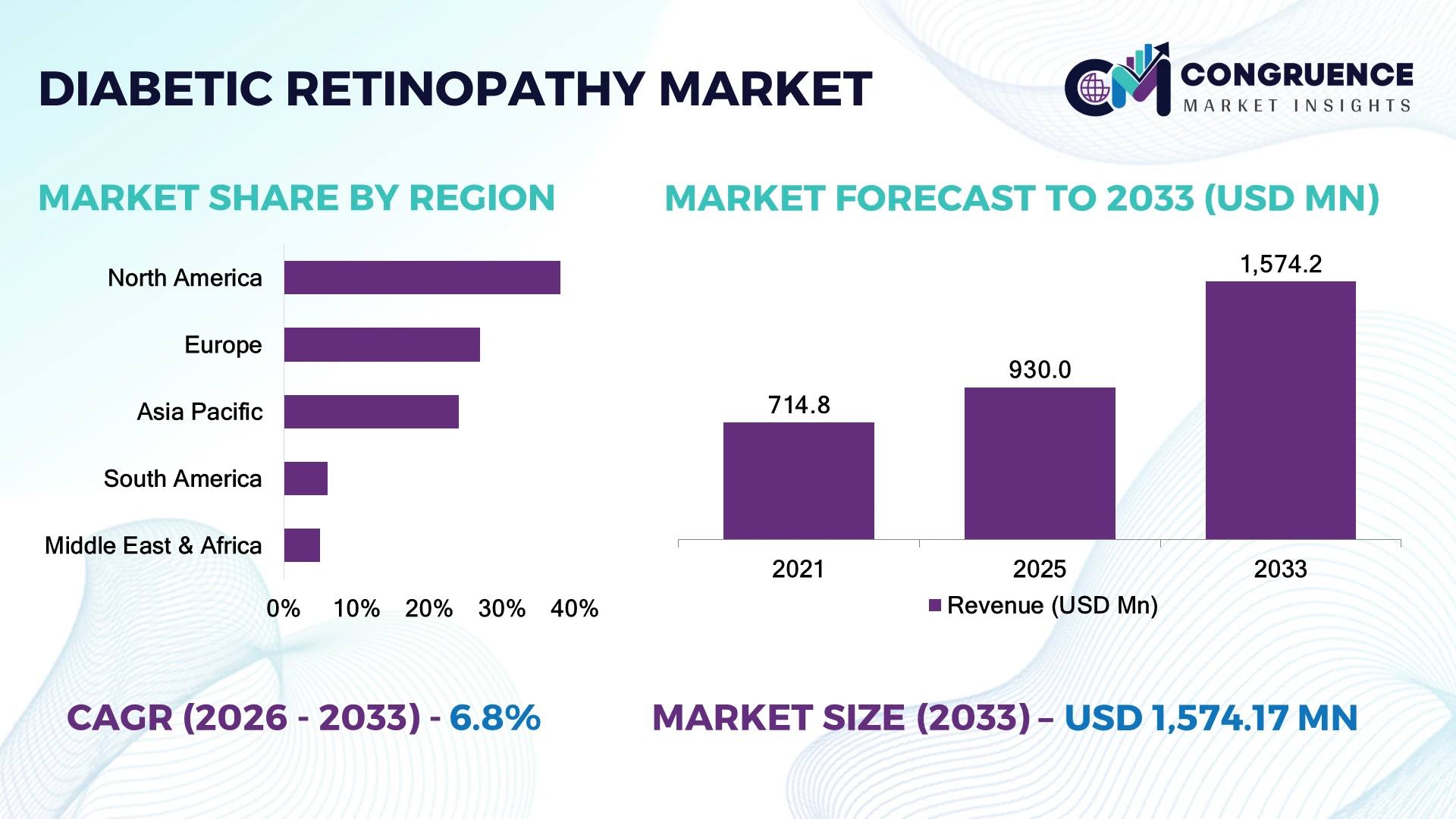
The Global Diabetic Retinopathy Market was valued at USD 930.0 Million in 2025 and is anticipated to reach a value of USD 1,574.2 Million by 2033 expanding at a CAGR of 6.8% between 2026 and 2033. Growth is being driven by rapid deployment of AI-enabled retinal screening platforms, expanding diabetic patient monitoring programs, and increased adoption of anti-VEGF therapies across ophthalmology networks.
The United States dominates the diabetic retinopathy landscape with approximately 34% of global treatment and diagnostic activity, supported by diabetes prevalence exceeding 38 million individuals and widespread deployment of AI-assisted retinal imaging across more than 25% of major eye-care networks. China follows with over 140 million diabetic patients, creating a significantly larger screening pool but lower specialist penetration. Government-backed digital health investments and teleophthalmology expansion continue accelerating patient identification rates, while advanced imaging adoption remains nearly 40% higher in the U.S. than in most emerging markets.
Strategic implication companies prioritizing AI-driven diagnostics, integrated screening ecosystems, and high-volume diabetic populations will secure stronger competitive positioning and clinical reach.
Market Size & Growth: USD 930.0 Million in 2025 reaching USD 1,574.2 Million by 2033, supported by expanding AI-assisted retinal diagnostics and broader anti-VEGF treatment adoption.
Top Growth Drivers: Rising diabetes prevalence (+12%), AI screening accuracy improvements (+20%), and teleophthalmology deployment growth (+18%) are accelerating market expansion.
Short-Term Forecast: By 2028, retinal screening efficiency is projected to improve by 30%, reducing diagnosis delays and increasing patient throughput.
Emerging Technologies: AI image analysis, cloud-connected retinal imaging, and automated disease grading systems are delivering diagnostic accuracy above 90% in clinical settings.
Regional Leaders: North America (~USD 520 Million), Asia Pacific (~USD 430 Million), and Europe (~USD 310 Million) lead adoption through digital ophthalmology infrastructure and screening modernization.
Consumer/End-User Trends: More than 45% of diabetic eye screening programs now incorporate digital imaging and remote specialist review workflows.
Pilot/Case Example: A 2024 AI-retinal screening deployment across community clinics improved early disease detection rates by approximately 27%.
Competitive Landscape: Market concentration remains moderate with the leading player controlling nearly 14% share; key participants include Roche, Regeneron, Novartis, Bayer, and AbbVie.
Regulatory & ESG Impact: Digital health reimbursement expansion increased screening accessibility by nearly 22% while reducing unnecessary specialist referrals.
Investment & Funding: More than USD 1.2 Billion has been directed toward ophthalmic innovation, AI diagnostics, partnerships, and retinal imaging platform expansion.
Innovation & Future Outlook: Advanced biomarker analytics, predictive disease modeling, and integrated screening ecosystems are reshaping long-term ophthalmic care strategies.
Diabetic retinopathy remains a critical focus area across ophthalmology, diabetes management, and digital healthcare ecosystems. Demand is increasing for earlier detection, remote screening capabilities, and precision treatment pathways. AI-assisted retinal imaging now improves screening productivity by over 25%, while regulatory support for digital diagnostics is accelerating deployment. A notable trend involves integration of cloud-based ophthalmic platforms with primary diabetes care networks, strengthening preventive intervention strategies and setting the stage for broader market transformation.
The diabetic retinopathy market has become strategically important because it sits at the intersection of chronic disease management, digital healthcare transformation, and ophthalmic innovation. Healthcare systems are shifting from reactive treatment toward preventive screening models as diabetic populations continue expanding. AI-enabled diagnostics, teleophthalmology infrastructure, and integrated patient monitoring programs are reshaping competitive priorities for healthcare providers, pharmaceutical companies, and diagnostic technology developers.
Technology adoption is delivering measurable operational benefits. AI-based retinal screening platforms can evaluate retinal images in minutes and improve screening productivity by nearly 30% compared with conventional specialist-dependent workflows. The United States leads in advanced diagnostic deployment and reimbursement support, while China is scaling high-volume screening programs to address its substantially larger diabetic population. This contrast highlights the balance between technological sophistication and population-scale implementation strategies.
Over the next two to three years, healthcare networks are expected to increase digital retinal screening coverage by more than 20%. Companies are responding through partnerships between imaging manufacturers, AI developers, and clinical providers. Recent deployments integrating retinal imaging directly into diabetes clinics demonstrate how workflow optimization improves patient capture rates. Organizations that establish scalable screening ecosystems and strengthen clinical integration capabilities will achieve stronger competitive positioning and long-term healthcare relevance.
The accelerating adoption of AI-powered retinal diagnostics is transforming diabetic retinopathy management. Automated image analysis systems now achieve diagnostic accuracy exceeding 90%, while screening productivity has improved by approximately 25–30% in large healthcare networks. In the United States, digital retinal screening coverage has expanded significantly as healthcare providers seek to reduce specialist bottlenecks and improve early disease identification. This shift creates a direct impact on treatment outcomes because patients diagnosed at earlier stages experience substantially lower progression risk. In response, leading companies are investing in AI partnerships, cloud-connected imaging platforms, and integrated diagnostic workflows. A notable strategic insight is that healthcare organizations increasingly view retinal screening as a scalable population-health management tool rather than a standalone ophthalmology service, creating new opportunities for ecosystem-based competition.
Limited access to ophthalmologists and advanced retinal imaging infrastructure continues to restrict market scalability. In several developing healthcare systems, fewer than 40% of diabetic patients receive recommended annual eye examinations, while specialist shortages can extend diagnostic waiting periods by more than 20%. Rural healthcare facilities often lack high-resolution imaging systems, creating dependence on centralized screening centers. These operational limitations directly affect patient coverage, treatment initiation timelines, and healthcare efficiency. To mitigate risks, companies are expanding teleophthalmology networks, deploying portable retinal imaging devices, and localizing diagnostic services through strategic partnerships. A key business insight is that infrastructure availability increasingly determines market penetration success, making distribution strategy and service accessibility as important as technological innovation.
The convergence of AI diagnostics, telemedicine, and cloud-based patient management platforms presents a significant opportunity. More than 50% of healthcare providers are actively evaluating digital ophthalmology integration initiatives to improve diabetic patient monitoring. Advanced predictive analytics can reduce unnecessary specialist referrals by approximately 20% while enhancing risk stratification accuracy. China and India are emerging as particularly attractive deployment markets because of large diabetic populations and expanding digital health infrastructure. Companies are increasing investment in software ecosystems, interoperability solutions, and collaborative healthcare partnerships. A distinctive strategic opportunity lies in embedding retinal screening directly into diabetes management pathways, enabling continuous monitoring and creating recurring value beyond episodic diagnostic services. This ecosystem approach strengthens provider engagement and enhances long-term patient retention.
Maintaining consistent deployment quality across diverse healthcare environments remains a major long-term challenge. AI diagnostic systems require high-quality retinal images, standardized clinical workflows, and trained personnel to sustain performance. Variability in image quality can reduce screening effectiveness by more than 15%, while integration complexity increases implementation timelines across multi-site healthcare networks. Regulatory requirements for software validation and clinical governance continue evolving, adding operational pressure for technology providers. Companies must invest in workforce training, platform interoperability, cybersecurity resilience, and infrastructure modernization to ensure sustainable adoption. A critical strategic insight is that future market leadership will depend not only on diagnostic innovation but also on the ability to deliver reliable, scalable, and clinically integrated solutions across fragmented healthcare ecosystems.
AI Screening Workflow Expansion AI-powered retinal screening is becoming embedded within diabetes care pathways, with automated image assessment reducing review times by nearly 35% and improving patient throughput by over 25%. More than 40% of newly deployed retinal imaging systems now include AI-assisted grading functions. Healthcare providers are integrating screening directly into endocrinology clinics, reducing referral bottlenecks and accelerating diagnosis. Companies are scaling software partnerships and cloud-based analytics platforms to support higher screening volumes and more standardized clinical workflows.
Teleophthalmology Network Integration Remote retinal assessment programs have expanded significantly, with digital consultation volumes increasing by approximately 30% and rural screening coverage improving by more than 20%. Workforce shortages among ophthalmologists are accelerating deployment of centralized image-reading hubs. Healthcare networks are restructuring care delivery models by connecting primary care facilities with specialist centers through interoperable imaging platforms. Technology vendors are responding through platform integration, managed-service partnerships, and deployment of portable retinal imaging devices to improve accessibility and operational efficiency.
Advanced Imaging Platform Adoption High-resolution OCT and ultra-widefield retinal imaging systems are gaining traction, improving lesion detection rates by nearly 20% while reducing repeat imaging requirements by approximately 15%. Clinical providers increasingly prioritize multimodal imaging workflows to support earlier intervention decisions. The shift toward integrated imaging platforms is streamlining diagnostic pathways and enhancing treatment planning. Manufacturers are expanding product portfolios, strengthening software capabilities, and accelerating enterprise deployments to capture demand from large ophthalmology networks.
Value-Based Eye Care Models Reimbursement modernization and outcome-focused care frameworks are reshaping diabetic retinopathy management. Digital screening compliance has improved by roughly 18%, while preventable vision-loss cases among screened populations have declined by nearly 12%. Healthcare systems are emphasizing earlier detection and population-health monitoring rather than episodic treatment. Companies are forming strategic alliances with healthcare providers, insurers, and digital health platforms to support scalable screening programs, creating a competitive advantage through long-term patient engagement and operational integration.
The market is segmented into Non-Proliferative Diabetic Retinopathy (NPDR), Proliferative Diabetic Retinopathy (PDR), and Diabetic Macular Edema (DME). Diabetic Macular Edema remains the leading segment, accounting for approximately 46% of total market activity due to its high treatment intensity, established anti-VEGF utilization, and recurring monitoring requirements. The segment benefits from strong integration with retinal imaging workflows and specialist treatment pathways. Proliferative Diabetic Retinopathy represents nearly 31% of the market and continues to generate significant demand for advanced intervention strategies.
Non-Proliferative Diabetic Retinopathy is emerging as the fastest-expanding segment as healthcare systems prioritize earlier detection and preventive disease management. AI-assisted screening programs have increased early-stage identification rates by more than 25%, shifting investment toward proactive monitoring solutions. Companies are expanding diagnostic capabilities, strengthening digital screening ecosystems, and increasing partnerships with diabetes care providers. This transition is gradually moving investment priorities from late-stage intervention toward continuous disease surveillance, creating broader opportunities across diagnostic and monitoring technologies.
The market is segmented into Screening & Diagnosis, Treatment, Monitoring & Follow-Up, and Research & Clinical Studies. Screening & Diagnosis leads with an estimated 42% share due to increasing deployment of digital retinal imaging systems, AI-enabled assessment platforms, and national diabetic screening initiatives. Healthcare organizations continue expanding routine eye examination programs, resulting in stronger demand for scalable diagnostic infrastructure. Treatment applications remain critical because of ongoing requirements for anti-VEGF injections, laser therapies, and specialist interventions.
Monitoring & Follow-Up represents the fastest-growing application segment as healthcare providers focus on long-term disease management and outcome optimization. Remote monitoring utilization has increased by approximately 22%, while digital patient tracking adoption has expanded by nearly 18%. Companies are integrating imaging, analytics, and patient-management software to improve continuity of care. Research & Clinical Studies maintain strategic importance through biomarker discovery and next-generation therapeutic development. Demand is increasingly shifting toward continuous monitoring models that improve retention, compliance, and clinical efficiency across ophthalmology networks.
The market is segmented into Hospitals, Specialty Ophthalmology Clinics, Ambulatory Surgical Centers (ASCs), and Research Institutes. Hospitals dominate with approximately 44% market share due to comprehensive diagnostic infrastructure, multidisciplinary diabetes care programs, and high patient volumes. Their ability to integrate retinal screening, imaging, and treatment services within a single care pathway supports operational efficiency and stronger patient retention. Specialty Ophthalmology Clinics account for a substantial share because of their concentration of retinal expertise and advanced imaging capabilities.
Specialty Ophthalmology Clinics are the fastest-growing end-user category, supported by increasing referrals, specialized treatment demand, and adoption of advanced diagnostic technologies. Digital retinal imaging utilization within specialized clinics has increased by roughly 25%, while patient throughput improvements have exceeded 15% through workflow automation. Ambulatory Surgical Centers continue gaining relevance for outpatient retinal procedures, while Research Institutes support innovation through clinical studies and therapeutic development. Companies are targeting these segments through customized imaging solutions, service agreements, and technology partnerships designed to improve deployment flexibility and clinical productivity.
North America accounted for the largest market share at 38% in 2025 however, Asia-Pacific is expected to register the fastest growth, expanding at a CAGR of 8.1% between 2026 and 2033.
North America represents approximately 38% of the global diabetic retinopathy market, supported by advanced healthcare infrastructure, widespread retinal imaging adoption, and strong integration of diabetes management programs. The region maintains the highest concentration of AI-assisted retinal screening deployments, with more than 30% of large healthcare systems incorporating automated image assessment into clinical workflows. Hospitals and specialty ophthalmology networks continue expanding digital screening capabilities to improve patient identification and treatment initiation rates. Strategic partnerships between imaging technology providers, software developers, and healthcare organizations are accelerating deployment efficiency. The increasing integration of retinal screening within primary diabetes care settings is strengthening operational scalability and reducing specialist referral bottlenecks across major healthcare networks.
United States Market Outlook: The United States remains the regional center of diabetic retinopathy innovation due to its extensive healthcare infrastructure, strong reimbursement environment, and leadership in digital diagnostics. More than 38 million people live with diabetes, creating one of the world's largest retinal screening populations. Enterprise healthcare systems are increasingly embedding retinal imaging within endocrinology and primary care networks, improving screening accessibility. The country also leads in AI-enabled ophthalmology deployment, supported by a robust ecosystem of technology developers, pharmaceutical companies, and specialty care providers focused on early disease detection and long-term patient management.
Europe accounts for approximately 27% of the global diabetic retinopathy market and benefits from established public healthcare systems, structured diabetic screening programs, and increasing adoption of digital ophthalmology platforms. National healthcare authorities continue prioritizing preventive eye-care strategies to reduce long-term vision impairment risks among diabetic populations. Digital retinal imaging utilization has increased significantly across major healthcare systems, while teleophthalmology networks are expanding access in underserved areas. Healthcare providers are modernizing diagnostic pathways through integration of AI-assisted screening tools and cloud-based image management platforms. Operational efficiency improvements and standardized screening protocols continue strengthening patient coverage while supporting earlier intervention across multiple healthcare environments.
Germany Market Outlook: Germany serves as a key market due to its advanced medical technology sector, strong ophthalmology infrastructure, and broad healthcare coverage. The country maintains a high concentration of specialist eye-care facilities and digital diagnostic deployments. Integrated diabetes management programs increasingly include retinal screening as a routine component of patient care. Healthcare institutions continue investing in imaging modernization and workflow automation, while collaborations between technology providers and clinical networks support efficient screening expansion. Germany's emphasis on preventive healthcare and clinical quality standards strengthens long-term adoption of advanced retinal diagnostic solutions.
Asia-Pacific holds approximately 24% of the global diabetic retinopathy market and represents the fastest-evolving regional landscape due to its large diabetic population base and rapidly expanding healthcare infrastructure. Governments and healthcare organizations are scaling retinal screening initiatives to address rising diabetes prevalence and improve early disease detection. Digital imaging deployments have increased substantially across major urban healthcare systems, while teleophthalmology programs are extending access into secondary and rural care environments. Investment in AI-enabled diagnostic platforms and mobile retinal screening technologies is improving operational efficiency and expanding patient reach. Companies are prioritizing local partnerships and scalable deployment models to address high-volume screening requirements across diverse healthcare settings.
China Market Outlook: China remains the most strategically significant market in the region because of its vast diabetic population and accelerating healthcare modernization efforts. The country has more than 140 million diabetic individuals, creating substantial demand for retinal screening and monitoring services. Public health initiatives continue supporting digital healthcare deployment, while major hospitals are investing in advanced imaging technologies and AI-assisted diagnostics. Domestic technology firms and healthcare providers are collaborating to expand screening coverage and improve diagnostic consistency. China's ability to deploy high-volume screening infrastructure at scale provides a distinct operational advantage within the regional market.
South America accounts for approximately 6% of the global diabetic retinopathy market, with increasing healthcare access and diabetes management initiatives supporting market development. Healthcare providers are expanding retinal screening programs within urban population centers while gradually improving diagnostic accessibility in underserved regions. Telemedicine adoption and portable imaging technologies are helping address specialist shortages and geographic coverage challenges. Healthcare systems continue investing in ophthalmology infrastructure, although deployment speed varies across countries due to funding and operational constraints. The growing focus on preventive diabetes care is encouraging earlier disease identification and supporting wider adoption of retinal imaging services across both public and private healthcare networks.
Brazil Market Outlook: Brazil leads the regional market through its large diabetic population, extensive healthcare network, and expanding digital health initiatives. Major metropolitan healthcare systems are investing in retinal imaging modernization and specialist care capacity. Teleophthalmology programs are increasingly used to connect remote communities with urban diagnostic centers, improving screening access. The country also benefits from a growing private healthcare sector that continues adopting advanced ophthalmic technologies. Ongoing efforts to improve chronic disease management and diagnostic coverage strengthen Brazil's position as the primary operational hub for diabetic retinopathy services in South America.
The Middle East & Africa region represents approximately 5% of the global diabetic retinopathy market and is increasingly shaped by healthcare modernization programs, specialist care investments, and digital health transformation initiatives. Several countries are expanding ophthalmology infrastructure to address rising diabetes-related complications and improve long-term healthcare outcomes. AI-enabled screening technologies, telemedicine platforms, and advanced imaging systems are gradually becoming part of national healthcare development strategies. Investment in specialty hospitals and diagnostic centers continues improving patient access to retinal care services. While infrastructure disparities remain across the region, targeted modernization efforts are creating stronger foundations for scalable diabetic eye-care delivery.
Saudi Arabia Market Outlook: Saudi Arabia is the leading market within the region due to substantial healthcare investment, expanding specialist care capacity, and strong digital transformation initiatives. National healthcare modernization programs continue supporting deployment of advanced diagnostic technologies and integrated chronic disease management systems. Large hospital networks are increasing retinal screening capabilities and implementing digital imaging solutions to improve patient management. The country also benefits from growing adoption of telehealth services and healthcare technology partnerships. Continued infrastructure expansion and focus on preventive healthcare are strengthening Saudi Arabia's role as a regional center for advanced diabetic retinopathy diagnosis and treatment.
The diabetic retinopathy market is led by Roche, Regeneron Pharmaceuticals, Bayer, Novartis, and AbbVie, whose combined market share is approximately 68%. Competition is primarily between global pharmaceutical leaders focused on anti-VEGF therapies and emerging technology innovators developing AI-enabled diagnostic ecosystems. Roche and Regeneron compete aggressively on treatment durability and dosing frequency, while imaging and diagnostic technology providers compete through automation speed and workflow integration. Technology-driven screening platforms improve diagnostic productivity by nearly 25%, while advanced imaging systems reduce repeat examinations by approximately 15%. Companies are expanding through retinal care partnerships, integrated diagnostics, treatment portfolio optimization, and digital screening deployments. The competitive landscape is shifting toward convergence between therapeutics and AI-assisted disease management, creating advantages for organizations controlling both patient identification and treatment pathways. Regulatory approvals, specialist network access, and clinical validation remain significant entry barriers. Winning requires scalable screening infrastructure, differentiated therapeutic outcomes, strong provider relationships, and seamless integration across the retinal care continuum.
Regeneron Pharmaceuticals
Bayer AG
Novartis AG
AbbVie Inc.
Alimera Sciences
Oxurion NV
Kodiak Sciences Inc.
Ocular Therapeutix Inc.
Apellis Pharmaceuticals Inc.
Topcon Corporation
ZEISS Group
NIDEK Co., Ltd.
Canon Medical Systems Corporation
The current technology landscape is being shaped by AI-enabled retinal screening, optical coherence tomography (OCT), and cloud-connected ophthalmic imaging platforms. AI-assisted screening systems are reducing image review time by nearly 35% while increasing screening throughput by over 25%. More than 40% of newly deployed retinal imaging workflows now include automated image assessment capabilities. Healthcare providers benefit from faster patient triage, improved diagnostic consistency, and more efficient utilization of specialist resources, creating measurable operational advantages in high-volume diabetes management programs.
Emerging technologies focus on predictive analytics, multimodal imaging, and automated retinal segmentation. Advanced OCT analytics improve lesion characterization and treatment planning accuracy by approximately 20% compared with conventional imaging interpretation. New-generation AI platforms outperform legacy manual screening pathways by reducing referral delays by nearly 30% and improving early-stage disease identification. Organizations adopting integrated imaging and analytics ecosystems gain stronger clinical efficiency, better patient retention, and more scalable screening operations than providers relying on standalone diagnostic workflows.
Disruptive innovation is moving toward continuous monitoring ecosystems, federated AI learning models, and cloud-based retinal care networks. Deployment of integrated diagnostic platforms has surpassed 30% among large ophthalmology networks, accelerating digital transformation. Between 2026 and 2028, organizations combining AI diagnostics, remote monitoring, and advanced imaging will strengthen competitive positioning through earlier intervention capabilities, lower operational costs, and more comprehensive diabetic eye-care management across distributed healthcare environments.
May 2025 – Roche received FDA approval for Susvimo for diabetic retinopathy, introducing the first continuous-delivery treatment requiring only one refill every nine months. The innovation reduces treatment burden and strengthens Roche’s long-duration retinal therapy portfolio. Source: Roche Media Release
April 2025 – Regeneron presented 27 scientific abstracts on EYLEA HD, including real-world outcomes from nearly 40,000 patients. The data reinforced treatment effectiveness and expanded evidence supporting broader retinal disease management strategies. Source: Regeneron Newsroom
February 2025 – Forus Health secured regulatory approval in India for its AI-led diabetic retinopathy screening platform. The solution demonstrated scalable deployment potential for populations where diabetic retinopathy affects up to 17% of diabetic patients, improving early detection capacity. Source: Express Healthcare
March 2026 – Kodiak Sciences reported positive late-stage results for Zenkuda, with 62.5% of treated patients achieving significant retinopathy improvement versus 3.3% in the control group. The outcome strengthens competition in next-generation retinal therapeutics. Source: Reuters Healthcare Report
This report provides comprehensive analysis of the diabetic retinopathy market across major disease types, applications, end-users, and geographic regions. Coverage includes Non-Proliferative Diabetic Retinopathy, Proliferative Diabetic Retinopathy, and Diabetic Macular Edema, alongside evaluation of screening, diagnosis, treatment, monitoring, and research applications. The study assesses demand patterns across hospitals, specialty ophthalmology clinics, ambulatory surgical centers, and research institutions. Regional analysis spans North America, Europe, Asia-Pacific, South America, and the Middle East & Africa, capturing deployment trends, healthcare infrastructure dynamics, and technology adoption patterns.
The report further evaluates AI-enabled diagnostics, retinal imaging systems, teleophthalmology platforms, predictive analytics, and emerging disease-management technologies. Analysis includes competitive positioning of leading participants, market-share concentration, screening deployment expansion, and evolving treatment pathways. With more than 40% of new retinal screening workflows incorporating digital technologies, the report supports strategic planning, investment prioritization, partnership evaluation, expansion initiatives, and long-term competitive decision-making across the 2026–2033 market outlook period.
| Report Attribute / Metric | Details |
|---|---|
| Market Revenue (2025) | USD 930.0 Million |
| Market Revenue (2033) | USD 1,574.2 Million |
| CAGR (2026–2033) | 6.8% |
| Base Year | 2025 |
| Forecast Period | 2026–2033 |
| Historic Period | 2021–2025 |
| Segments Covered |
By Type
By Application
By End-User
|
| Key Deliverables | Revenue Forecast; Market Trends; Growth Drivers & Restraints; Technology Insights; Segmentation Analysis; Regional Insights; Competitive Landscape; Regulatory & ESG Overview; Recent Developments |
| Regions Covered | North America; Europe; Asia-Pacific; South America; Middle East & Africa |
| Companies Profiled | Roche; Regeneron Pharmaceuticals; Bayer AG; Novartis AG; AbbVie Inc.; Alimera Sciences; Oxurion NV; Kodiak Sciences Inc.; Ocular Therapeutix Inc.; Apellis Pharmaceuticals Inc.; Topcon Corporation; ZEISS Group; NIDEK Co., Ltd.; Canon Medical Systems Corporation |
| Customization & Pricing | Available on Request (10% Customization Free) |




