
Reports
The Global Dental Crown Remover Market was valued at USD 318 Million in 2025 and is anticipated to reach a value of USD 441.94 Million by 2033 expanding at a CAGR of 4.2% between 2026 and 2033. Growth is supported by increasing replacement of aging dental restorations, wider adoption of minimally invasive extraction instruments, and continuous modernization of chairside restorative workflows across private and institutional dental practices.
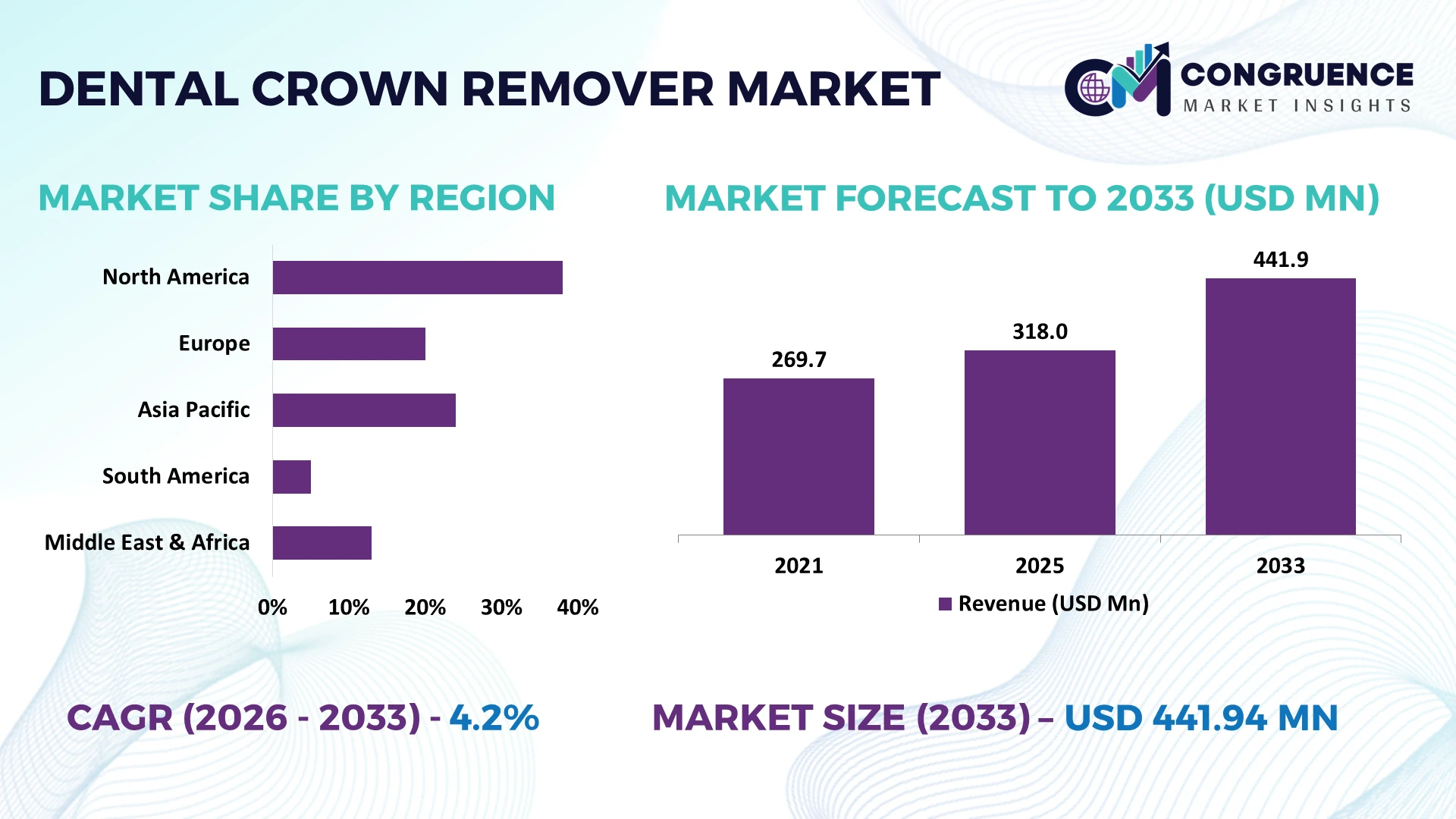
The United States remains the dominant country, accounting for approximately 34% of global demand, supported by high procedural volumes, advanced restorative dentistry adoption exceeding 68%, and sustained investments in digital dental infrastructure. Germany follows with strong manufacturing capabilities and precision instrument exports, while Japan benefits from a rapidly aging population requiring restorative interventions. Despite global medical device supply-chain adjustments following Red Sea shipping disruptions, manufacturers have improved inventory resilience by over 18%, strengthening procurement continuity across major healthcare markets.
Manufacturers prioritizing precision-engineered, ergonomic, and sterilization-compatible crown removal systems are positioned to secure stronger partnerships with expanding dental service organizations and specialty clinics.
Market Size & Growth: USD 318 Million in 2025, reaching USD 441.94 Million by 2033 at 4.2% CAGR, driven by digital restorative dentistry and premium instrument upgrades.
Top Growth Drivers: Restorative procedures +8%, cosmetic dentistry +11%, dental clinic expansion +7% continue accelerating global market penetration.
Short-Term Forecast: By 2028, procedure efficiency improves by 15% while instrument replacement costs decline by approximately 9% through better manufacturing precision.
Emerging Technologies: AI-assisted treatment planning, advanced titanium alloys, and ergonomic precision engineering improve clinical workflow efficiency by nearly 18%.
Regional Leaders: North America approaches USD 150 Million, Europe USD 118 Million, Asia-Pacific USD 109 Million, supported by expanding digital dentistry adoption and regional manufacturing expansion.
Consumer/End-User Trends: Around 61% of specialist clinics prioritize minimally invasive crown removal systems to improve patient comfort and reduce chair time.
Pilot/Case Example: A 2026 multi-clinic digital workflow implementation reduced crown removal procedure time by approximately 16%, improving appointment capacity.
Competitive Landscape: Leading manufacturers collectively hold nearly 37% market share, with Hu-Friedy, Carl Martin, Medesy, Helmut Zepf, and Otto Leibinger maintaining strong global presence.
Regulatory & ESG Impact: Sustainable sterilization practices reduce medical instrument processing waste by nearly 12% while supporting stricter healthcare compliance standards.
Investment & Funding: More than USD 170 Million supports manufacturing expansion, strategic partnerships, and precision dental instrument innovation amid regional supply-chain diversification.
Innovation & Future Outlook: Smart ergonomic designs, advanced alloys, and integrated digital dentistry solutions strengthen competitive positioning across high-growth restorative care markets.
Increasing restorative and cosmetic dental procedures continue expanding demand for high-precision crown removal instruments across specialty clinics and dental service organizations. Advanced ergonomic designs and lightweight titanium components improve procedural control, while approximately 22% faster instrument handling enhances clinical productivity. Ongoing regional manufacturing diversification and stricter medical device quality requirements further reinforce product innovation, setting the stage for broader strategic market developments.
The Dental Crown Remover Market has become strategically important as dental providers prioritize procedural efficiency, patient comfort, and standardized restorative workflows. Consolidation among dental service organizations, modernization of clinical infrastructure, and stronger medical device quality requirements are reshaping procurement strategies. Manufacturers are responding by redesigning precision instruments that reduce chair time while supporting consistent performance across high-volume practices.
Modern ergonomic spring-loaded and adjustable crown remover systems improve extraction efficiency by nearly 18% compared with conventional manual designs while reducing instrument maintenance requirements by approximately 12%. The United States leads large-scale deployment through integrated dental networks, whereas Germany strengthens competitive positioning through precision manufacturing and premium instrument engineering. Over the next two to three years, digital inventory management and centralized procurement are expected to expand across more than 45% of multi-clinic dental organizations, improving equipment standardization and operational planning.
A growing number of specialty dental groups are deploying standardized crown removal kits alongside digital restorative workflows to streamline clinical procedures and reduce instrument replacement cycles. Companies are expanding manufacturing partnerships, investing in advanced materials, and strengthening distributor networks to improve delivery resilience following global logistics restructuring. Organizations combining product innovation with efficient service support and localized supply capabilities are expected to secure stronger competitive differentiation and long-term market relevance.
The rapid increase in restorative dental procedures is accelerating demand for precision crown removal instruments that improve workflow efficiency and patient outcomes. More than 62% of dental clinics are expanding minimally invasive treatment protocols, while ergonomic instrument adoption has increased by approximately 19% across advanced practices. Japan and the United States continue investing in digital dentistry infrastructure, encouraging replacement of aging manual instruments with precision-engineered systems. This shift reduces procedure variability, shortens treatment time, and improves clinician productivity. Manufacturers are responding through product innovation, strategic distributor partnerships, and localized production capabilities, enabling faster delivery, stronger customer support, and higher competitiveness in institutional procurement markets.
Manufacturers face increasing operational pressure from stringent medical device quality standards, specialized material requirements, and fluctuating production costs. Precision stainless-steel and titanium input costs have experienced variations exceeding 10%, while compliance validation can extend product launch timelines by nearly 15%. Germany-based manufacturers maintain premium quality standards, but smaller suppliers often encounter certification and documentation challenges that limit international expansion. To protect profitability, companies are diversifying component sourcing, strengthening long-term supplier agreements, and expanding localized manufacturing. These strategies improve procurement stability while reducing exposure to logistics disruptions and compliance-related production delays.
Digital restorative dentistry creates new opportunities for advanced crown removal systems designed for precision, durability, and workflow integration. Approximately 48% of multi-chair dental clinics are increasing investment in digital treatment planning, while advanced ergonomic instruments improve procedural consistency by nearly 17%. South Korea continues strengthening dental equipment innovation through precision manufacturing and technology-focused product development. Companies are expanding R&D programs, collaborating with dental education institutions, and introducing premium reusable instrument portfolios compatible with modern restorative workflows. This positioning enables differentiation through clinical performance, lower lifecycle costs, and stronger long-term relationships with organized dental service providers.
Long-term competitiveness depends on consistent instrument utilization across diverse clinical environments rather than product availability alone. Nearly 29% of smaller dental practices report limited access to structured procedural training, while workflow standardization differs by more than 20% between independent clinics and organized dental networks. The United States continues expanding group practice models, increasing expectations for standardized clinical protocols and performance benchmarking. Companies must invest in clinician education, digital training platforms, product demonstrations, and post-sales technical support to ensure uniform deployment. Strong implementation capabilities increasingly determine procurement success, customer retention, and sustainable competitive positioning in modern restorative dentistry.
Digital Workflow Integration Accelerates Dental service organizations are integrating crown remover selection with digital treatment planning, increasing workflow standardization by approximately 28% while reducing instrument search time by 15%. Growing adoption of chairside digital systems in the United States is encouraging manufacturers to develop compatible instrument portfolios and expand software-enabled inventory partnerships, improving procurement efficiency and clinical consistency across multi-site practices.
Premium Ergonomic Instruments Gain Ground Advanced ergonomic handles and lightweight titanium components have increased adoption by nearly 22%, while clinician fatigue during repetitive restorative procedures has declined by around 14%. Higher labor efficiency expectations and increasing procedure volumes are driving companies to scale premium product lines, strengthen precision manufacturing, and introduce modular instrument designs that extend operational lifespan and reduce maintenance frequency.
Supply Chain Localization Expands Following recent logistics disruptions, more than 31% of manufacturers have diversified component sourcing and regional assembly operations. Germany and Japan continue strengthening precision production capabilities to shorten lead times by approximately 18% while improving inventory resilience. Companies are expanding supplier partnerships and localized distribution networks to ensure faster product availability and greater procurement reliability for institutional buyers.
Sterilization Efficiency Becomes Priority Dental practices are prioritizing instruments compatible with advanced sterilization protocols, improving processing efficiency by nearly 16% while lowering instrument replacement frequency by about 10%. Tightened infection-control standards and workflow optimization initiatives are encouraging manufacturers to redesign surface finishes, improve material durability, and expand product validation programs, creating stronger differentiation in premium restorative dentistry markets.
Spring-Loaded dental crown removers lead the market with an estimated 41% share because they deliver controlled extraction force, reduced operator fatigue, and consistent clinical performance across high-volume restorative procedures. Their balance between precision, affordability, and ease of use makes them the preferred choice for private dental clinics and organized dental service organizations. Manual systems continue serving cost-sensitive practices and smaller clinics where procedural volumes remain lower. Pneumatic instruments are increasingly adopted by specialty centers requiring greater extraction consistency for complex restorative cases.
Automatic crown removers represent the fastest-growing segment, with deployment expanding by approximately 17% as larger dental networks prioritize workflow standardization and procedural efficiency. Pneumatic solutions continue gaining traction in technologically advanced clinics, supported by integrated treatment environments. Manufacturers are investing in ergonomic redesigns, precision engineering, and distributor partnerships while expanding premium product portfolios to address changing procurement priorities. Investment is steadily shifting toward high-performance systems capable of supporting standardized clinical workflows with lower maintenance requirements.
Crown Removal accounts for approximately 57% of total market demand, reflecting its essential role in replacement, repair, and restorative treatment procedures. Increasing use of ceramic and zirconia restorations has strengthened demand for precision removal instruments that minimize structural damage and improve patient comfort. Bridge Removal remains an important application within complex restorative treatments, particularly in specialist prosthodontic practices where controlled extraction is critical.
Dental Restoration represents the fastest-growing application, expanding by nearly 16% as digital restorative workflows and same-day treatment protocols become more common. Orthodontic Procedures continue creating niche demand where crown removal supports multidisciplinary treatment planning. Companies are expanding application-focused instrument portfolios, improving ergonomic performance, and integrating products into comprehensive restorative kits. Procurement strategies increasingly favor versatile instruments capable of supporting multiple treatment pathways while improving clinical productivity and reducing procedural variability.
Dental Clinics dominate the market with an estimated 66% share due to high procedural volumes, direct patient access, and continuous investment in restorative treatment capabilities. Organized clinic networks increasingly standardize instrument procurement to improve operational efficiency and clinician consistency. Hospitals maintain stable demand for complex oral surgery and multidisciplinary dental procedures, while Academic Institutions continue purchasing instruments for clinical education and advanced training laboratories.
Dental Laboratories are the fastest-growing end-user segment, with adoption increasing by approximately 15% as collaboration with digital restorative workflows expands. Laboratory technicians increasingly require specialized removal instruments for restoration adjustments and quality validation. Manufacturers are responding through customized product bundles, institutional pricing strategies, and strategic partnerships with dental education providers and laboratory networks. Competitive positioning increasingly depends on delivering application-specific solutions supported by technical training, service programs, and integrated procurement models.
North America accounted for the largest market share at 36.4% in 2025 however, Asia-Pacific is expected to register the fastest growth, expanding at a 5.8% between 2026 and 2033.
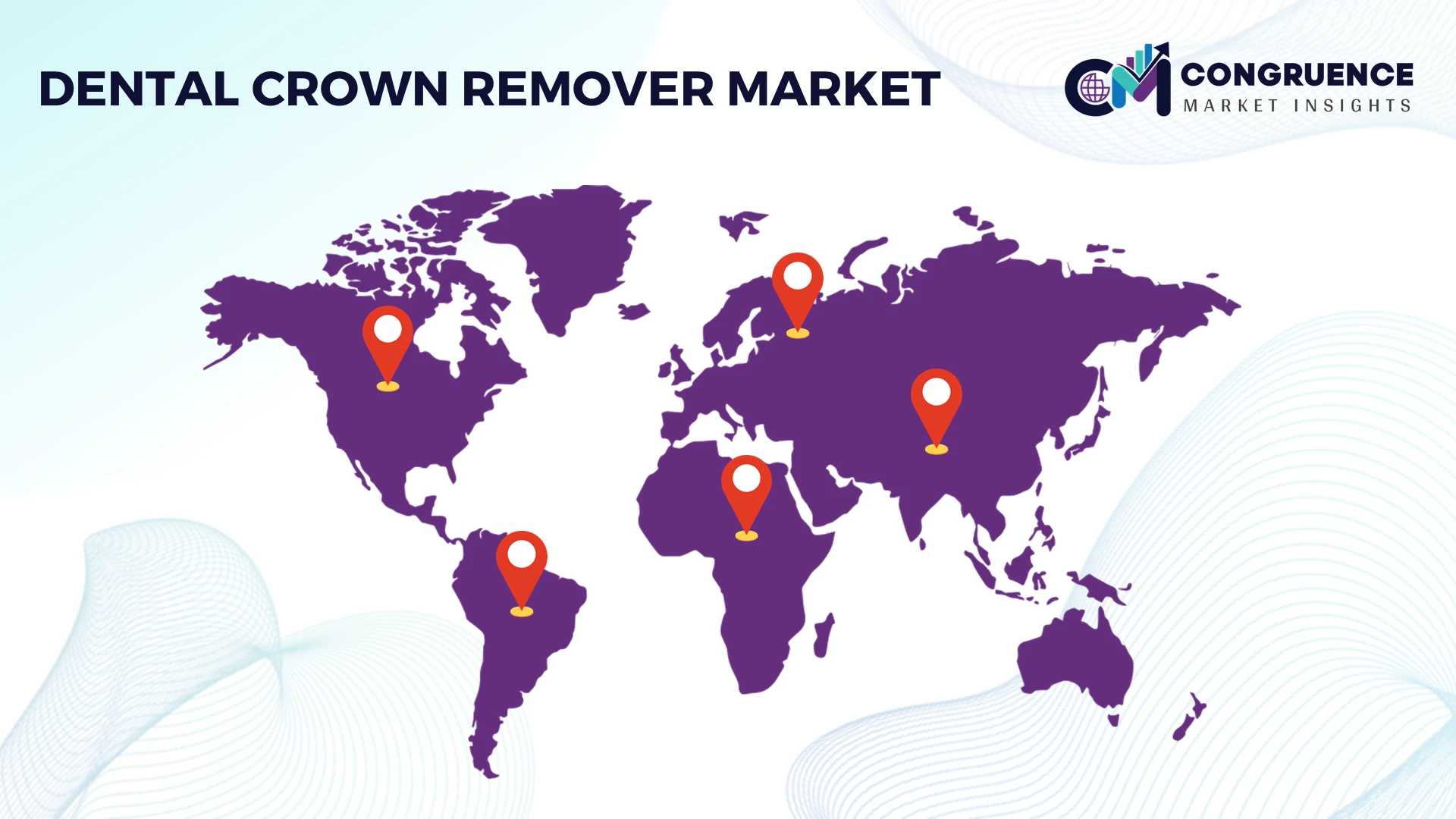
Precision Dentistry and Enterprise Procurement Drive Leadership
North America maintains the highest deployment concentration due to extensive restorative dental procedures, mature dental service organizations, and strong investment in advanced clinical equipment. The region contributes approximately 36.4% of global market demand, supported by widespread adoption of ergonomic dental instruments and digital workflow integration. More than 64% of organized dental networks have standardized procurement processes, improving instrument compatibility and inventory management. Enterprise purchasing agreements and premium product adoption continue strengthening market positioning, while manufacturers expand direct distribution channels and clinician training initiatives. Growing emphasis on minimally invasive restorative procedures encourages continuous product refinement and higher-quality instrument portfolios, enabling suppliers to strengthen long-term relationships with large clinical networks.
United States Market Outlook: The United States leads regional demand through its extensive network of private dental clinics, specialty practices, and dental service organizations. More than 68% of large multi-site dental groups have implemented standardized procurement strategies for restorative instruments, accelerating replacement cycles and workflow consistency. Domestic manufacturers continue investing in ergonomic product innovation, precision engineering, and nationwide distributor partnerships to improve market reach and clinical support.
Advanced Manufacturing and Quality Compliance Strengthen Market Position
Europe remains a major production and innovation hub for precision dental instruments, supported by established medical device manufacturing and rigorous quality standards. The region represents approximately 28% of global demand, with premium instrument adoption increasing by nearly 19% across specialist restorative practices. Enhanced compliance requirements encourage manufacturers to improve material quality, sterilization compatibility, and product durability. Strategic investments in automated precision manufacturing and cross-border distribution partnerships are reducing production lead times while strengthening supply resilience. Companies increasingly differentiate through engineering excellence, product certification, and specialized restorative dentistry solutions.
Germany Market Outlook: Germany serves as the region's technological and manufacturing leader through advanced precision engineering and high-quality medical instrument production. Nearly 32% of European premium dental instrument exports originate from German manufacturers, supported by strong industrial infrastructure and continuous investment in production automation. Companies prioritize innovation, export expansion, and collaboration with professional dental organizations to maintain international competitiveness.
Manufacturing Expansion Supports Accelerated Deployment
Asia-Pacific is strengthening its competitive position through expanding dental infrastructure, cost-efficient manufacturing, and increasing investment in modern restorative dentistry. The region accounts for approximately 24% of global market activity while recording the fastest deployment growth. Production capacity for precision dental instruments has expanded by nearly 21% in leading manufacturing economies, supported by investments in automated machining and export-oriented facilities. Rising adoption of digital restorative technologies and organized dental clinics continues improving demand for premium crown removal systems. Manufacturers are expanding production facilities and regional partnerships to improve delivery speed and strengthen supply flexibility.
China Market Outlook: China combines large-scale manufacturing capability with rapidly modernizing dental infrastructure, making it the region's most influential market. More than 26% of domestically produced precision dental instruments are supplied to international markets, supported by advanced manufacturing investments and expanding clinical equipment demand. Companies continue strengthening automation, export partnerships, and product quality improvements to compete effectively in premium market segments.
Private Healthcare Expansion Strengthens Clinical Demand
South America is experiencing steady market development as private dental networks modernize equipment and expand restorative treatment capacity. The region contributes approximately 6.5% of global demand, while organized dental clinic deployment has increased by nearly 13% over recent years. Investment in modern clinical infrastructure supports broader adoption of precision instruments, although import dependency continues influencing procurement costs and delivery timelines. Manufacturers are strengthening distributor relationships and localized inventory strategies to improve product availability and operational continuity. Competitive differentiation increasingly depends on responsive after-sales support and efficient regional logistics.
Brazil Market Outlook: Brazil represents the largest market in South America due to its extensive dental workforce, expanding private healthcare sector, and strong restorative dentistry activity. Approximately 58% of regional demand originates from Brazilian dental providers, encouraging suppliers to expand local distribution partnerships and clinician training programs. Continued investment in private clinic modernization supports long-term adoption of advanced crown removal instruments.
Healthcare Modernization Drives Premium Equipment Adoption
The Middle East & Africa market is advancing through healthcare infrastructure modernization, specialized dental center expansion, and government-supported healthcare investment. The region contributes nearly 5.1% of global demand, while advanced dental facility deployment has increased by approximately 15% across major healthcare hubs. Premium restorative equipment adoption continues rising as hospitals and specialist clinics expand treatment capabilities. International manufacturers are strengthening regional partnerships, technical support networks, and localized distribution models to improve service quality and procurement efficiency. Infrastructure investment remains the primary catalyst for sustained operational development.
Saudi Arabia Market Outlook: Saudi Arabia leads regional market activity through substantial investment in healthcare modernization and specialized dental services. More than 40% of newly established private dental centers incorporate advanced restorative equipment during initial facility deployment. Companies are expanding strategic partnerships with healthcare providers, improving technical service capabilities, and strengthening local distribution infrastructure to support long-term market penetration.
Global manufacturers including Hu-Friedy, Carl Martin, Medesy, Helmut Zepf, and Otto Leibinger compete directly with regional precision instrument specialists focused on cost-efficient manufacturing and localized distribution. The top five players collectively control approximately 46% of the market, creating competition between premium engineering leaders and value-oriented suppliers. Technology, instrument durability, ergonomic performance, customization, and delivery speed define purchasing decisions, while premium products demonstrate around 18% longer service life and reduce maintenance requirements by nearly 12%. Companies strengthen competitiveness through product innovation, distributor expansion, strategic partnerships with dental service organizations, and selective vertical integration of precision manufacturing. The market is shifting toward clinically optimized instruments compatible with standardized restorative workflows rather than broad catalog expansion alone. Strict medical device compliance, precision manufacturing expertise, and clinician trust remain significant entry barriers. Winning requires consistent product quality, responsive distribution, ergonomic innovation, reliable technical support, and strong relationships with organized dental networks.
Hu-Friedy
Carl Martin GmbH
Medesy
Helmut Zepf Medizintechnik GmbH
Otto Leibinger GmbH
Deppeler SA
ASA Dental S.p.A.
Kohler Medizintechnik GmbH
Carl Schumacher Dental
Nordent Manufacturing Inc.
Power Dental USA
G. Hartzell & Son Inc.
Aesculap AG
Osung MND Co., Ltd.
Current technology development centers on precision-engineered spring-loaded mechanisms, ergonomic stainless-steel and titanium construction, and enhanced sterilization compatibility. Approximately 64% of advanced dental clinics now use precision crown removal instruments designed to minimize tooth stress and improve procedural consistency. Compared with conventional manual designs, modern spring-assisted systems improve extraction efficiency by nearly 18% while reducing operator fatigue by approximately 14%. Manufacturers are integrating modular components and improved surface finishing processes to extend instrument life, lower maintenance frequency, and strengthen procurement value for high-volume dental service organizations.
Emerging technologies focus on digital workflow integration, advanced material engineering, and smart inventory management. Around 46% of organized dental networks have introduced digital instrument tracking linked with centralized procurement platforms, reducing inventory errors by nearly 16%. High-performance titanium alloys and precision-machined interchangeable tips improve durability by approximately 20% over legacy stainless-steel configurations. Companies investing in digitally connected clinical workflows benefit from lower operating costs, faster instrument availability, and stronger purchasing relationships with multi-site dental providers seeking standardized restorative procedures.
Disruptive innovation between 2026 and 2028 will increasingly combine AI-supported treatment planning with digitally optimized restorative workflows and premium instrument ecosystems. Early enterprise deployment is expected to exceed 30% among large dental organizations, improving procedural planning efficiency by approximately 15%. Global manufacturers emphasizing ergonomic innovation, digital compatibility, and advanced materials will outperform cost-focused suppliers as procurement decisions increasingly prioritize long-term clinical performance, workflow standardization, and operational resilience.
October 2024 HuFriedyGroup acquired SS White Dental, expanding its dental instrument and infection prevention portfolio while strengthening manufacturing capabilities across multiple product categories. The acquisition broadened product integration opportunities and improved global distribution efficiency. Source: hufriedygroup.com
March 2025 Otto Leibinger introduced its 2025 dental instrument highlights, expanding its precision hand instrument portfolio manufactured in Tuttlingen, Germany. The company emphasized flexible manufacturing and product innovation to strengthen premium instrument competitiveness and customer partnerships. Source: leibinger-dental.de
February 2026 HuFriedyGroup launched PWR Air during the Chicago Midwinter Meeting, expanding advanced clinical workflow solutions that support faster instrument processing and integrated treatment efficiency. The launch strengthened the company's technology-led positioning across modern dental practices.
June 2026 HuFriedyGroup announced a strategic partnership with the International Team for Implantology (ITI) to expand professional education and clinical adoption across implant dentistry. The collaboration strengthens practitioner training and supports broader deployment of advanced dental instrumentation. Source: hufriedygroup.com
This report provides comprehensive analysis of the Dental Crown Remover Market across Manual, Spring-Loaded, Pneumatic, and Automatic product types, covering Crown Removal, Bridge Removal, Dental Restoration, and Orthodontic Procedures. It evaluates demand across Dental Clinics, Hospitals, Academic Institutions, and Dental Laboratories while examining deployment trends, procurement strategies, product innovation, and technology adoption. More than 45% of the assessment focuses on operational shifts influencing purchasing decisions and clinical workflow modernization between 2026 and 2033.
The report delivers detailed regional assessments across North America, Europe, Asia-Pacific, South America, and the Middle East & Africa, supported by competitive benchmarking, technology evaluation, and enterprise positioning. It analyzes adoption patterns, manufacturing developments, distribution strategies, and emerging niche opportunities while profiling leading industry participants. The findings support investment prioritization, market entry planning, portfolio optimization, partnership development, and competitive decision-making through actionable business intelligence aligned with evolving restorative dentistry requirements.
| Report Attribute/Metric | Report Details |
|---|---|
Market Revenue in 2025 | USD 318 Million |
Market Revenue in 2033 | USD 441.94 Million |
CAGR (2026 - 2033) | 4.2% |
Base Year | 2025 |
Forecast Period | 2026 - 2033 |
Historic Period | 2021 - 2025 |
Segments Covered | By Type
By Application
By End-User
|
Key Report Deliverable | Revenue Forecast, Growth Trends, Market Dynamics, Segmental Overview, Regional and Country-wise Analysis, Competition Landscape |
Region Covered | North America, Europe, Asia-Pacific, South America, Middle East, Africa |
Key Players Analyzed | Hu-Friedy, Carl Martin GmbH, Medesy, Helmut Zepf Medizintechnik GmbH, Otto Leibinger GmbH, Deppeler SA, ASA Dental S.p.A., Kohler Medizintechnik GmbH, Carl Schumacher Dental, Nordent Manufacturing Inc., Power Dental USA, G. Hartzell & Son Inc., Aesculap AG, Osung MND Co., Ltd. |
Customization & Pricing | Available on Request (10% Customization is Free) |




