
Reports
The Global Dementia Drugs Market was valued at USD 1,660.0 Million in 2025 and is anticipated to reach a value of USD 2,960.6 Million by 2033 expanding at a CAGR of 7.5% between 2026 and 2033. Growth is being driven by accelerated approvals of disease-modifying Alzheimer’s therapies, expanding biomarker-based diagnostics, and rising integration of neurodegenerative disease management programs across aging populations.
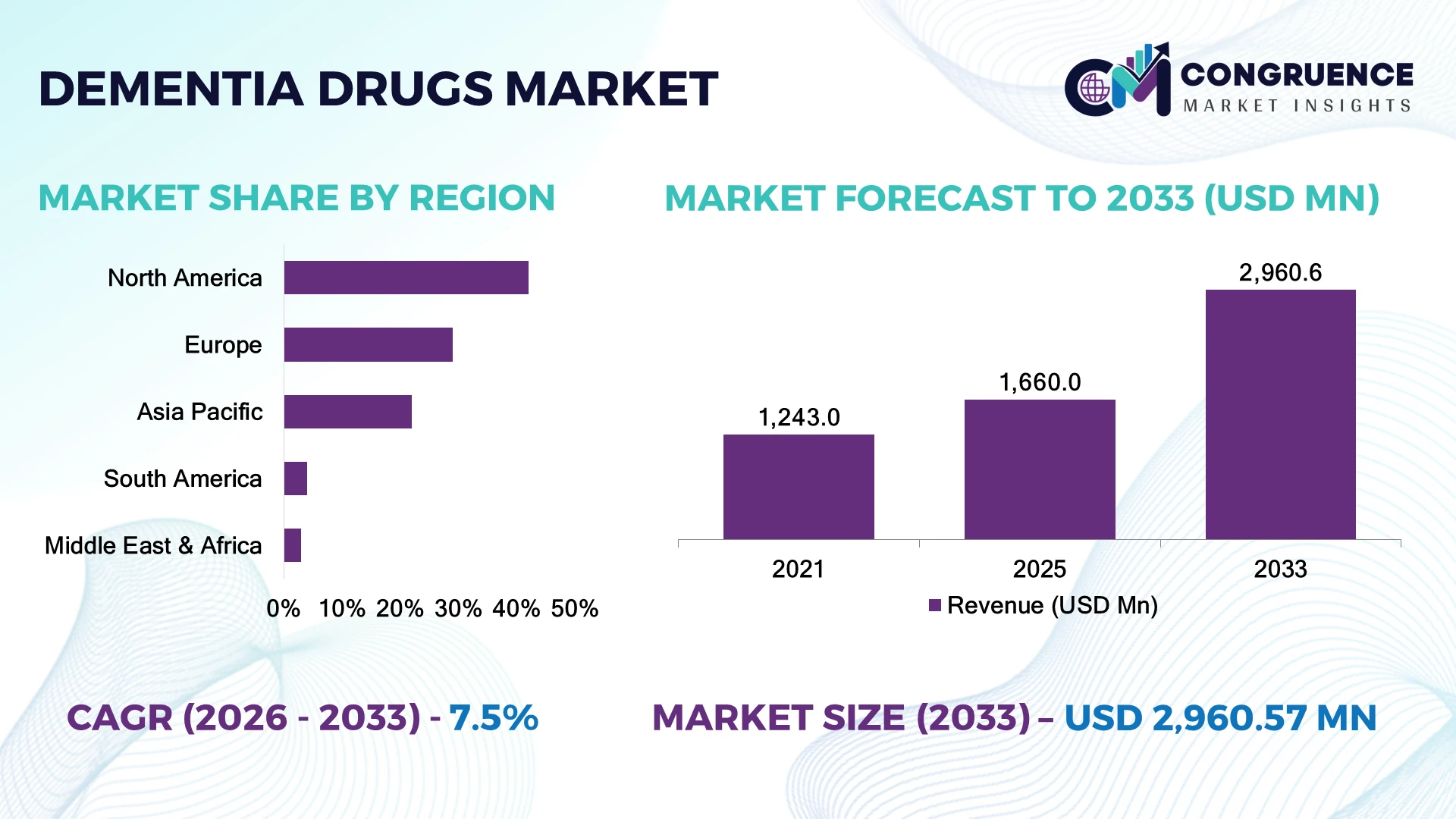
The United States dominates the global dementia drugs market with an estimated 42% share, supported by annual neurological research investments exceeding USD 3 billion and widespread adoption of advanced amyloid-targeting therapies. More than 7 million Americans live with Alzheimer’s disease, compared with approximately 1.8 million diagnosed dementia patients in Japan. Strong reimbursement frameworks, extensive clinical trial activity, and rapid biomarker testing deployment reinforce U.S. leadership. The geopolitical focus on healthcare resilience following post-pandemic healthcare reforms has further accelerated neurodegenerative treatment infrastructure modernization.
Strategic implication Companies that secure early diagnostic ecosystems and disease-modifying treatment portfolios are positioned to capture the highest-value patient segments and strengthen long-term competitive differentiation.
Market Size & Growth: USD 1,660.0 million in 2025 reaching USD 2,960.6 million by 2033, supported by disease-modifying drug adoption and advanced diagnostics.
Top Growth Drivers: Aging population (+22%), biomarker testing expansion (+35%), and neurodegenerative R&D activity (+28%).
Short-Term Forecast: By 2028, early-stage dementia diagnosis rates are projected to improve by nearly 30% through wider screening adoption.
Emerging Technologies: AI-enabled patient stratification, blood-based biomarkers, and precision neurology platforms are reshaping treatment pathways.
Regional Leaders: North America (~USD 1.2 billion), Europe (~USD 760 million), and Asia-Pacific (~USD 540 million) lead through reimbursement expansion and diagnostic upgrades.
Consumer/End-User Trends: More than 45% of specialist centers are integrating biomarker-supported treatment decisions.
Pilot/Case Example: In 2024, advanced diagnostic initiatives improved early Alzheimer’s identification rates by approximately 25%.
Competitive Landscape: Leading players collectively control over 55% of the market, including Eisai, Biogen, Eli Lilly, Novartis, and Pfizer.
Regulatory & ESG Impact: Accelerated review pathways reduced selected neurotherapy approval timelines by nearly 20%.
Investment & Funding: Global neurodegenerative research funding exceeded USD 5 billion, with partnerships focused on disease-modifying therapies.
Innovation & Future Outlook: Next-generation monoclonal antibodies and personalized treatment algorithms are strengthening precision-care strategies.
Dementia drugs are increasingly focused on slowing disease progression rather than solely managing symptoms. Demand is strongest in Alzheimer’s treatment, cognitive impairment management, and early-stage intervention programs. Recent innovation centers on blood-based biomarker testing and amyloid-targeting therapeutics, while precision neurology platforms improve patient selection accuracy by more than 30%. Expanding regulatory support for neurodegenerative therapies and stronger specialty-care infrastructure are accelerating commercial deployment, setting the stage for broader strategic transformation across the treatment landscape.
The dementia drugs market has become strategically important as healthcare systems shift from symptom management toward disease-modifying intervention. Competition is increasingly centered on diagnostic integration, biomarker validation, and therapeutic differentiation. Regulatory agencies in the United States, Japan, and Europe have accelerated pathways for innovative neurodegenerative therapies, encouraging greater investment in neuroscience pipelines. This shift is reshaping competitive positioning and raising the value of early-diagnosis capabilities.
Advanced biomarker-guided treatment pathways demonstrate approximately 25–35% higher patient identification efficiency compared with traditional cognitive assessment approaches. While North America leads in commercialization and reimbursement readiness, Japan and South Korea are advancing rapidly through aging-population healthcare initiatives and expanded neurological screening programs. Over the next two to three years, blood-based diagnostic adoption is expected to increase significantly across specialist care networks, reducing diagnostic delays and improving treatment eligibility assessments.
Companies are expanding partnerships with diagnostic developers, healthcare providers, and research institutions to strengthen treatment ecosystems. For example, integrated diagnostic-treatment models are being deployed to streamline patient selection and monitoring. Organizations that align therapeutic innovation with diagnostic infrastructure, clinical evidence generation, and payer engagement will secure stronger competitive advantages and long-term relevance within the evolving neurodegenerative care landscape.
The transition from symptomatic therapies toward disease-modifying dementia treatments is fundamentally reshaping market dynamics. Early-stage intervention programs have expanded by more than 30% across leading neurological centers, while biomarker-supported diagnosis adoption has increased by nearly 35%. In the United States, growing utilization of amyloid-targeting therapies is strengthening demand for integrated diagnostic infrastructure. This shift creates a direct impact on treatment pathways by increasing patient eligibility identification and improving therapeutic targeting. In response, pharmaceutical companies are investing heavily in neurological research collaborations, expanding manufacturing capabilities, and developing companion diagnostic partnerships. A notable strategic insight is that diagnostic access has become nearly as important as therapeutic efficacy, making ecosystem development a critical competitive differentiator for market leaders.
Limited access to advanced diagnostics remains a major structural constraint. In several healthcare systems, fewer than 40% of eligible patients receive comprehensive biomarker testing before treatment decisions. Specialized neurological centers are concentrated in urban regions, creating access disparities that exceed 25% between metropolitan and rural populations in certain countries. Reimbursement complexities and lengthy patient evaluation processes further slow therapy adoption. These barriers directly affect scalability, treatment consistency, and commercial penetration. To reduce risk, companies are pursuing localized diagnostic partnerships, expanding testing networks, and negotiating long-term reimbursement agreements. A key operational insight is that healthcare infrastructure readiness, rather than therapeutic availability alone, increasingly determines successful market expansion and patient access outcomes.
Precision neurology represents one of the most significant future opportunities in the dementia drugs market. Blood-based biomarker technologies have demonstrated potential to reduce diagnostic assessment timelines by over 40%, while AI-assisted patient stratification tools improve screening efficiency by nearly 30%. Japan and Germany are investing heavily in neurological diagnostic modernization programs, creating favorable environments for integrated care models. Companies are expanding R&D partnerships to combine therapeutics, diagnostics, and digital monitoring solutions into unified treatment ecosystems. A non-obvious opportunity lies in decentralized screening networks that can identify patients earlier and lower specialist workload requirements. Organizations that build comprehensive precision-care platforms are likely to secure stronger physician adoption and improved patient pathway efficiency.
Successful deployment of advanced dementia therapies requires coordinated integration across diagnostics, treatment administration, patient monitoring, and long-term care management. More than 50% of healthcare providers report operational challenges related to patient eligibility assessment and treatment workflow coordination. Workforce shortages in neurology specialties exceed 20% in several developed healthcare systems, creating pressure on treatment scalability. Additionally, evolving regulatory monitoring requirements increase compliance complexity for providers and manufacturers. These challenges affect deployment consistency and long-term treatment sustainability. Companies must address these barriers through workforce training programs, digital monitoring infrastructure, and collaborative healthcare partnerships. A critical strategic insight is that operational execution capability will increasingly determine market leadership as treatment technologies become more sophisticated and widely available.
Blood-Based Biomarker Expansion Blood-based diagnostic adoption has increased by nearly 35% across major neurological care networks, reducing patient screening timelines by approximately 40% compared with traditional assessment pathways. Healthcare providers in the United States and Japan are integrating biomarker testing into routine dementia evaluations, improving treatment eligibility identification. This operational shift is lowering diagnostic bottlenecks and accelerating therapy deployment. Pharmaceutical companies are responding through partnerships with diagnostic developers and expanded clinical validation programs to strengthen treatment ecosystems.
Disease-Modifying Therapy Integration The share of newly diagnosed eligible patients entering disease-modifying treatment pathways has increased by more than 25%, while specialist infusion capacity has expanded by nearly 20%. Regulatory acceleration for neurodegenerative therapies has encouraged healthcare systems to redesign treatment workflows. Companies are scaling manufacturing capacity, strengthening distribution networks, and expanding provider education programs. A notable operational effect is the growing alignment between therapeutic deployment and diagnostic infrastructure planning.
AI-Enabled Patient Stratification AI-supported neurological assessment platforms have improved patient selection efficiency by approximately 30% and reduced manual review workloads by nearly 25%. Hospitals are increasingly deploying predictive analytics tools to prioritize high-risk populations and optimize treatment pathways. This trend improves clinical resource utilization and reduces administrative burden. Drug developers are investing in digital health collaborations and data-driven patient monitoring platforms to enhance real-world treatment performance and evidence generation.
Specialty Care Network Consolidation More than 40% of advanced dementia treatment programs are now concentrated within specialized neurological centers, while integrated care coordination models have improved patient retention rates by nearly 18%. Workforce shortages in neurology have accelerated provider network restructuring and centralized treatment delivery. Companies are expanding strategic partnerships with specialty clinics, digital monitoring providers, and healthcare systems. A non-obvious outcome is that operational scale and care-network access are becoming as critical as therapeutic innovation in determining competitive advantage.
The dementia drugs market is segmented into Cholinesterase Inhibitors, NMDA Receptor Antagonists, Combination Drugs, Disease-Modifying Therapies, and Others. Cholinesterase inhibitors remain the leading segment, accounting for approximately 44% of total market demand due to established clinical utilization, broad physician familiarity, and extensive deployment across mild-to-moderate dementia management programs. Their integration into standard treatment protocols and relatively lower treatment complexity continue to support widespread adoption. NMDA receptor antagonists maintain strong relevance in moderate-to-severe disease management, while combination therapies are gaining traction through improved symptom-management outcomes and treatment continuity. Disease-modifying therapies represent the fastest-growing segment, with adoption rates increasing by more than 30% as healthcare systems shift toward interventions designed to influence disease progression. Approximately 35% of new neurological investment initiatives are focused on advanced therapeutic platforms and biomarker-linked treatment pathways. Companies are prioritizing pipeline expansion, clinical partnerships, and specialized treatment infrastructure to strengthen positioning. Meanwhile, emerging therapies within the “Others” category continue to attract targeted research funding for next-generation neurodegenerative treatment approaches. This shift is redirecting investment priorities from symptom control toward precision neurology and earlier intervention strategies.
The dementia drugs market is segmented into Alzheimer’s Disease, Vascular Dementia, Lewy Body Dementia, Frontotemporal Dementia, and Others. Alzheimer’s disease dominates the market with an estimated 68% share, supported by its significantly larger patient population, broader treatment availability, and stronger clinical research activity. Healthcare systems continue prioritizing Alzheimer’s screening and intervention programs, resulting in sustained treatment concentration. Vascular dementia remains a significant segment due to increasing cardiovascular disease prevalence, while Lewy body dementia and frontotemporal dementia maintain specialized therapeutic demand within neurological care settings. Alzheimer’s disease also represents the fastest-evolving application area as advanced diagnostics and targeted therapies expand treatment eligibility. Biomarker-supported patient identification has improved by nearly 30%, while early-stage intervention rates have increased by approximately 25%. Companies are scaling clinical support programs, enhancing specialist engagement, and expanding treatment access initiatives. Demand is also strengthening in rarer dementia subtypes as healthcare providers improve diagnostic differentiation capabilities. The growing focus on precision diagnosis is creating operational advantages for companies capable of supporting multiple dementia indications through integrated treatment portfolios.
The dementia drugs market is segmented into Hospitals, Specialty Clinics, Homecare Settings, Research Institutes, and Others. Hospitals remain the dominant end-user segment with approximately 48% market share due to their extensive diagnostic capabilities, infusion infrastructure, multidisciplinary care teams, and ability to manage complex neurological treatment pathways. Large hospital systems increasingly serve as primary hubs for advanced dementia therapy administration and patient monitoring. Specialty clinics represent a substantial portion of treatment activity, particularly for diagnosis, follow-up care, and specialist consultations. Specialty clinics are the fastest-growing end-user group, with patient volumes increasing by nearly 28% as healthcare systems seek more efficient neurological care delivery models. Around 35% of new dementia treatment programs are being developed through hospital-clinic collaboration frameworks designed to improve access and reduce treatment delays. Homecare settings are also gaining relevance as remote monitoring technologies support long-term patient management. Companies are responding through customized service models, provider partnerships, patient-support programs, and digital monitoring solutions. Future demand is expected to shift toward integrated care ecosystems that combine specialized expertise with decentralized patient engagement.
North America accounted for the largest market share at 42% in 2025 however, Asia-Pacific is expected to register the fastest growth, expanding at a CAGR of 8.9% between 2026 and 2033.
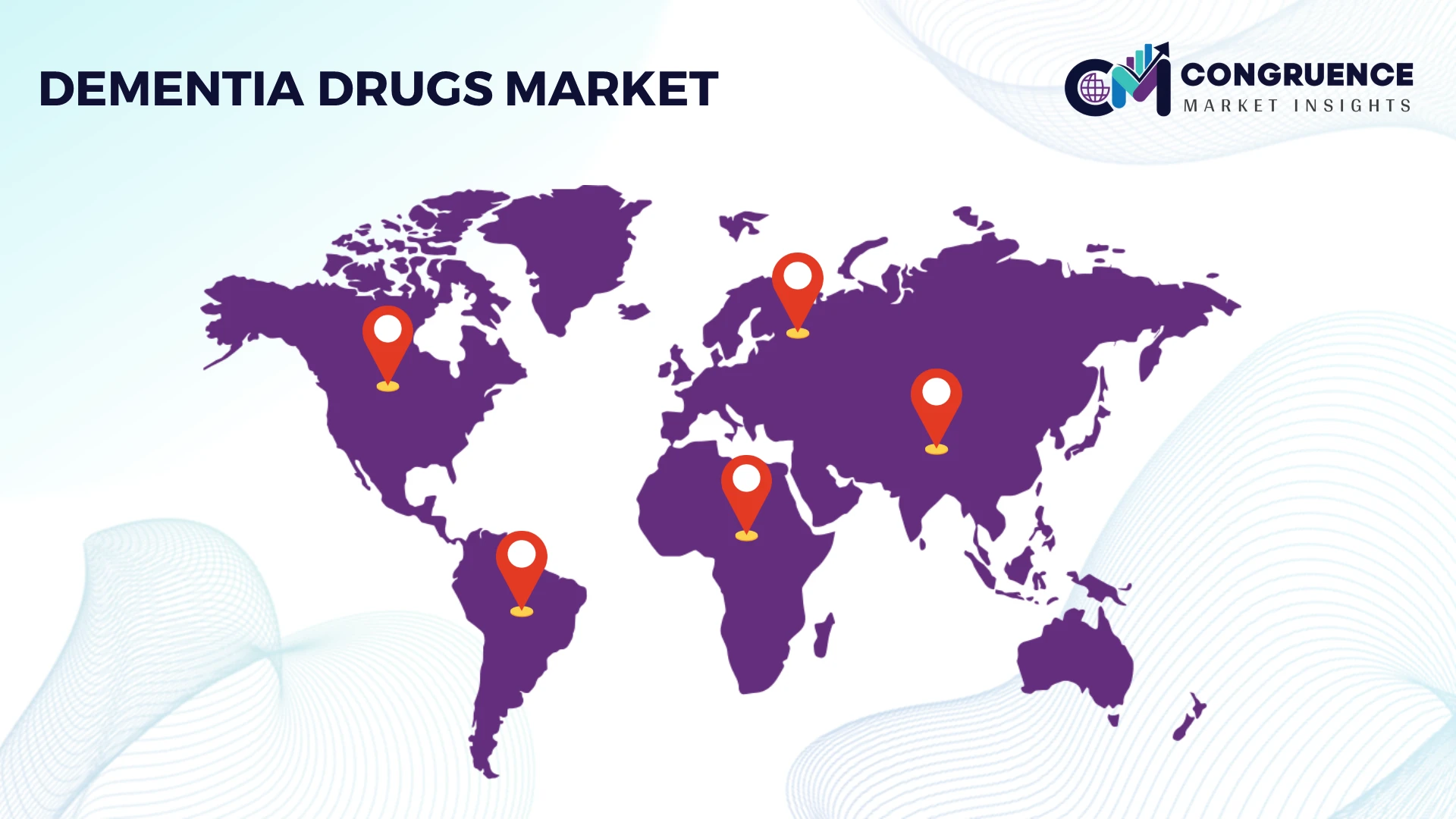
North America maintains the leading position in the dementia drugs market, supported by strong neurological research infrastructure, high diagnostic penetration, and rapid adoption of disease-modifying therapies. The region accounts for approximately 42% of global demand, with the United States contributing the majority of treatment deployments and clinical development activity. Biomarker-supported diagnostic programs have expanded by more than 35% across major healthcare systems, accelerating patient identification and treatment eligibility assessments. Pharmaceutical companies continue to strengthen partnerships with specialty care providers, while healthcare networks are expanding infusion capacity and patient monitoring capabilities. A notable operational development is the integration of digital cognitive assessment tools, which has improved specialist workflow efficiency by nearly 25%. The region's mature reimbursement environment and concentration of neurological expertise continue to reinforce leadership across diagnosis, treatment, and long-term care management.
United States Market Outlook: The United States serves as the primary innovation hub for dementia therapeutics, supported by extensive neurological research programs, advanced healthcare infrastructure, and strong regulatory engagement. More than 7 million individuals live with Alzheimer’s disease, creating substantial demand for diagnostic and therapeutic solutions. Large healthcare providers have expanded biomarker testing capabilities by over 30%, while specialty neurological centers continue investing in integrated treatment pathways. Strong clinical trial activity and growing adoption of precision neurology platforms position the country at the forefront of next-generation dementia care deployment.
Europe represents a significant share of the global dementia drugs market, supported by aging demographics, universal healthcare frameworks, and increasing investments in neurological disease management. The region accounts for approximately 29% of global market activity, with strong adoption across Germany, France, and the United Kingdom. National healthcare systems are increasingly prioritizing early diagnosis programs and integrated dementia care strategies. Advanced diagnostic deployment has increased by nearly 28% across major healthcare networks, improving treatment pathway efficiency. Pharmaceutical companies are expanding collaborations with academic institutions and neurological research centers to accelerate therapy evaluation and patient access. Regulatory modernization efforts have improved the speed of neurological treatment assessments, while cross-border healthcare initiatives continue enhancing access to specialized care services throughout the region.
Germany Market Outlook: Germany remains the largest dementia drugs market in Europe due to its advanced healthcare infrastructure, extensive neurological care network, and strong clinical research ecosystem. The country has expanded memory clinic capacity and specialist neurological services to improve early diagnosis rates. More than 40% of major neurological centers have implemented advanced biomarker-supported assessment programs. Strong collaboration between healthcare providers, pharmaceutical companies, and research institutions continues to strengthen Germany’s position as a leading center for dementia treatment innovation and deployment.
Asia-Pacific is emerging as the fastest-expanding regional market, driven by demographic shifts, healthcare modernization, and expanding neurological treatment infrastructure. The region accounts for approximately 22% of global market activity and benefits from large patient populations in China, Japan, and South Korea. Healthcare systems are increasing investments in dementia screening programs and specialist care capacity, improving diagnosis rates and treatment access. Neurological diagnostic deployment has increased by nearly 32% across key markets, while healthcare providers are adopting advanced patient management technologies to support growing demand. Pharmaceutical companies are expanding regional partnerships, manufacturing capabilities, and localized clinical programs to strengthen market presence. Rising awareness of neurodegenerative diseases and improving healthcare accessibility continue to support long-term operational expansion.
Japan Market Outlook: Japan holds a strategically important position due to its aging population, sophisticated healthcare system, and strong neurological care infrastructure. Dementia prevalence continues to rise alongside demographic aging trends, encouraging substantial investment in early diagnosis and treatment programs. More than one-third of specialized neurological facilities have enhanced biomarker testing capabilities in recent years. The country's focus on precision medicine, digital health integration, and long-term care coordination strengthens its role as a leading adopter of advanced dementia treatment pathways across Asia-Pacific.
South America is experiencing steady development in the dementia drugs market as healthcare systems expand neurological care access and improve disease awareness. The region accounts for approximately 4% of global market activity, with Brazil representing the largest treatment and diagnosis center. Healthcare providers are increasing investments in specialist neurological services and memory care programs to address growing dementia prevalence. Diagnostic access has improved by nearly 20% across major urban healthcare networks, supporting earlier identification and treatment initiation. Pharmaceutical companies are strengthening distribution partnerships and patient-support initiatives to improve therapy accessibility. While infrastructure disparities remain between urban and rural areas, continued healthcare modernization efforts are creating opportunities for broader treatment adoption and long-term market development.
Brazil Market Outlook: Brazil leads the regional market through its large healthcare network, growing neurological care infrastructure, and expanding access to specialized treatment services. Major healthcare institutions are increasing investments in cognitive health programs and specialist training initiatives. Neurological treatment availability has expanded across leading metropolitan healthcare centers, improving patient access to advanced therapies. Strong public-private healthcare collaboration and growing awareness of neurodegenerative conditions continue to position Brazil as the primary market for dementia treatment deployment within South America.
The Middle East & Africa dementia drugs market is gradually expanding as governments and healthcare providers invest in specialized neurological services and healthcare modernization programs. The region accounts for approximately 3% of global market activity, with the Gulf countries leading treatment adoption and infrastructure development. Healthcare systems are strengthening neurological care pathways and improving access to advanced diagnostics. Specialized dementia assessment capacity has increased by approximately 18% across leading healthcare institutions, supporting earlier diagnosis and treatment planning. Pharmaceutical companies are expanding strategic partnerships with hospitals and healthcare groups to improve therapy availability. Continued investment in healthcare infrastructure and digital health technologies is strengthening the foundation for future neurological care expansion across the region.
Saudi Arabia Market Outlook: Saudi Arabia represents the most strategically significant market within the region due to substantial healthcare investment, modernization initiatives, and expanding specialist care infrastructure. The country continues to develop advanced neurological treatment capabilities through hospital expansion and healthcare technology deployment. Major healthcare institutions have increased investment in cognitive health and neurodegenerative disease management programs, while specialist care networks continue to expand. Strong government support for healthcare transformation and growing adoption of advanced diagnostic technologies are reinforcing Saudi Arabia’s leadership in regional dementia care development.
The dementia drugs market is characterized by competition between global neuroscience leaders such as Eisai, Biogen, Eli Lilly, Novartis, and Pfizer, while regional pharmaceutical companies compete primarily in symptomatic treatment segments and localized distribution channels. The top five players collectively account for approximately 58% of market activity, creating a concentrated innovation-driven environment. Eisai and Biogen compete directly with Eli Lilly in disease-modifying Alzheimer’s therapies, while established pharmaceutical groups focus on broad neurological portfolios and physician networks. Competition is increasingly based on therapeutic efficacy, diagnostic integration, and treatment accessibility rather than pricing alone. Biomarker-supported patient identification improves treatment selection efficiency by nearly 30%, while advanced diagnostic deployment has expanded by more than 35% across leading markets. Companies are strengthening positions through clinical partnerships, geographic expansion, manufacturing scale-up, and precision-neurology investments. The competitive shift is moving toward integrated therapy-diagnostic ecosystems. Regulatory complexity and specialized infrastructure requirements remain key entry barriers. Success depends on combining clinical innovation, diagnostic access, and scalable care-network integration.
Biogen Inc.
Eli Lilly and Company
Novartis AG
Pfizer Inc.
Johnson & Johnson
Otsuka Pharmaceutical Co., Ltd.
Lundbeck A/S
AbbVie Inc.
F. Hoffmann-La Roche Ltd.
Merz Therapeutics
Alzheon Inc.
Cassava Sciences, Inc.
AC Immune SA
The dementia drugs market is undergoing a technology transition centered on blood-based biomarkers, AI-enabled patient stratification, and precision neurology platforms. Blood-based testing reduces diagnostic assessment timelines by approximately 40% compared with traditional imaging-intensive pathways and is now being incorporated into nearly 35% of advanced neurological evaluation programs. AI-supported screening tools improve patient identification efficiency by about 30%, enabling healthcare providers to optimize specialist resources and accelerate treatment decisions. These technologies strengthen operational workflows while improving patient selection accuracy.
Emerging innovation is shifting toward integrated therapeutic and diagnostic ecosystems. Compared with conventional cognitive assessment approaches, biomarker-guided treatment pathways deliver nearly 25% higher patient eligibility identification rates. Digital monitoring platforms are being adopted across more than 20% of specialized dementia treatment networks to support treatment adherence and longitudinal outcome tracking. Pharmaceutical companies with strong diagnostic partnerships benefit through faster patient onboarding, stronger clinical evidence generation, and improved treatment deployment efficiency.
Disruptive technologies between 2026 and 2028 are expected to focus on tau-targeted therapies, predictive analytics, and real-world evidence platforms. Advanced data-driven treatment models are projected to improve monitoring efficiency by more than 20%. Companies that integrate diagnostics, digital health tools, and next-generation therapeutics will secure stronger competitive positioning as neurological care increasingly shifts toward personalized disease-management strategies.
January 2024 – Eisai announced approval of LEQEMBI in China for early Alzheimer’s disease treatment and initiated launch preparations. The therapy targets amyloid pathology and supports earlier intervention strategies, expanding access across one of the world’s largest patient populations. Source: www.us.eisai.com
July 2024 – Eli Lilly received FDA approval for Kisunla (donanemab) for early symptomatic Alzheimer’s disease. Clinical data showed up to 35% slowing of cognitive and functional decline, strengthening competition within the disease-modifying therapy segment. Source: www.investor.lilly.com
July 2024 – Biogen and Eisai secured approval of LEQEMBI in Hong Kong. The treatment became available in another major Asia-Pacific market and demonstrated disease-progression reduction capabilities, supporting broader commercialization and regional treatment expansion. Source: www.investors.biogen.com
April 2025 – Biogen announced FDA Fast Track designation for BIIB080, an investigational tau-targeting therapy for Alzheimer’s disease. The designation accelerates development activities and reinforces industry focus on next-generation mechanisms beyond amyloid-directed treatments.
This report provides comprehensive analysis of the dementia drugs market across major therapy categories, applications, end-user groups, and geographic regions. Coverage includes cholinesterase inhibitors, NMDA receptor antagonists, combination therapies, disease-modifying treatments, and emerging neurological interventions. Application analysis evaluates Alzheimer’s disease, vascular dementia, Lewy body dementia, frontotemporal dementia, and related neurodegenerative conditions. The report further assesses hospitals, specialty clinics, homecare settings, research institutes, and evolving treatment ecosystems.
The study examines market activity across North America, Europe, Asia-Pacific, South America, and the Middle East & Africa, highlighting adoption patterns, deployment trends, and competitive positioning. More than 45% of advanced treatment initiatives are linked to biomarker-supported care pathways, while precision neurology adoption continues expanding across specialist networks. Strategic insights cover diagnostic innovation, therapeutic development, regulatory evolution, partnership activity, and technology integration. The report supports investment prioritization, expansion planning, competitive benchmarking, and long-term decision-making across the 2026–2033 forecast period.
| Report Attribute / Metric | Details |
|---|---|
| Market Revenue (2025) | USD 1,660.0 Million |
| Market Revenue (2033) | USD 2,960.6 Million |
| CAGR (2026–2033) | 7.5% |
| Base Year | 2025 |
| Forecast Period | 2026–2033 |
| Historic Period | 2021–2025 |
| Segments Covered |
By Type
By Application
By End-User
|
| Key Deliverables | Revenue Forecast; Market Trends; Growth Drivers & Restraints; Technology Insights; Segmentation Analysis; Regional Insights; Competitive Landscape; Regulatory & ESG Overview; Recent Developments |
| Regions Covered | North America; Europe; Asia-Pacific; South America; Middle East & Africa |
| Companies Profiled | Eisai Co., Ltd.; Biogen Inc.; Eli Lilly and Company; Novartis AG; Pfizer Inc.; Johnson & Johnson; Otsuka Pharmaceutical Co., Ltd.; Lundbeck A/S; AbbVie Inc.; F. Hoffmann-La Roche Ltd.; Merz Therapeutics; Alzheon Inc.; Cassava Sciences, Inc.; AC Immune SA |
| Customization & Pricing | Available on Request (10% Customization Free) |




