
Reports
The Global Connected Wearable Patches Market was valued at USD 5,198.5 Million in 2025 and is anticipated to reach a value of USD 21,187.9 Million by 2033 expanding at a CAGR of 19.2% between 2026 and 2033. Growth is fueled by expanding remote patient monitoring programs, AI-enabled biosensing technologies, reimbursement support for digital healthcare, and increasing adoption of continuous physiological monitoring across chronic disease management.
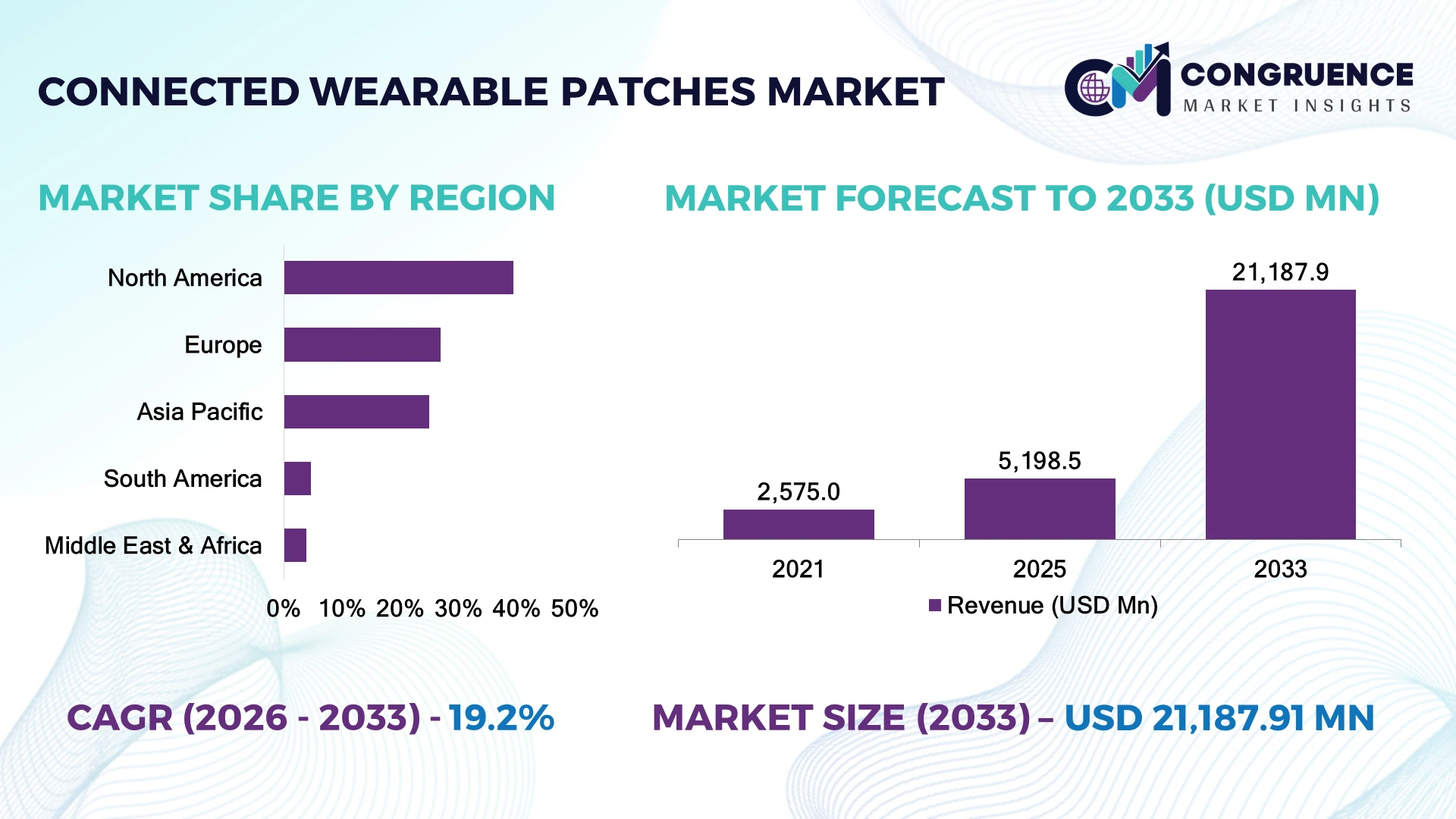
The United States accounts for approximately 37% of global Connected Wearable Patches demand, supported by advanced digital health infrastructure, strong medical device innovation, and large-scale remote patient monitoring deployment. More than 48% of connected patch-based monitoring programs are concentrated across U.S. healthcare providers, compared with significantly lower deployment intensity in Germany. Continued healthcare digitalization and supply-chain diversification in 2026 are accelerating next-generation biosensor production while strengthening domestic manufacturing resilience.
Manufacturers investing in AI-powered sensing platforms, secure cloud connectivity, and scalable medical-grade production capabilities are best positioned to capture long-term competitive advantage.
Market Size & Growth: USD 5,198.5 million in 2025 reaching USD 21,187.9 million by 2033 at 19.2% CAGR, driven by digital healthcare expansion and continuous biosensing.
Top Growth Drivers: Remote patient monitoring (+34%), chronic disease management (+29%), AI-enabled biosensors (+24%).
Short-Term Forecast: By 2028, monitoring accuracy improves 18% while clinical workflow efficiency increases 21%.
Emerging Technologies: Flexible electronics, AI analytics, printed biosensors, and ultra-low-power wireless communication reshape device performance.
Regional Leaders: North America (~USD 8.1 billion), Europe (~USD 5.2 billion), Asia-Pacific (~USD 6.6 billion), supported by connected healthcare deployment.
Consumer/End-User Trends: Approximately 57% of chronic care patients prefer continuous wearable monitoring over intermittent testing.
Pilot/Case Example: A 2026 hospital remote monitoring initiative reduced avoidable readmissions by nearly 17%.
Competitive Landscape: Top five companies hold approximately 52% market share through biosensor innovation and digital ecosystem expansion.
Regulatory & ESG Impact: Digital monitoring reduces unnecessary in-person consultations by approximately 19%, improving healthcare efficiency.
Investment & Funding: More than USD 3.8 billion supports wearable biosensor R&D, manufacturing expansion, and strategic partnerships.
Innovation & Future Outlook: AI-enabled predictive monitoring, stretchable electronics, and multimodal sensing define next-generation connected wearable patches.
The Connected Wearable Patches market is transitioning toward continuous, medical-grade physiological monitoring supported by flexible electronics, AI-driven analytics, and cloud-based clinical platforms. Nearly 46% of newly introduced devices now integrate multi-parameter sensing for cardiac, glucose, and temperature monitoring. Healthcare digitalization and localized electronics manufacturing are accelerating deployment, creating a strong foundation for the strategic transformation discussed below.
Connected wearable patches have become a strategic component of modern healthcare as providers prioritize continuous patient monitoring, decentralized care delivery, and data-driven clinical decision-making. Healthcare systems are expanding digital monitoring infrastructure while manufacturers restructure supply chains to improve component security, reduce production risk, and accelerate commercialization of medical-grade wearable technologies. Regulatory support for remote patient monitoring continues reinforcing enterprise investment across healthcare networks.
Flexible biosensor platforms deliver approximately 23% higher monitoring continuity than conventional handheld diagnostic methods while reducing manual clinical intervention by nearly 18%. The United States leads in deployment scale through mature digital health ecosystems and reimbursement support, whereas South Korea and Japan continue advancing miniaturized sensor technologies and low-power wearable electronics. Over the next two to three years, more than half of newly launched premium wearable patches are expected to integrate AI-assisted analytics and predictive health monitoring capabilities.
Medical technology companies are expanding partnerships with hospitals, digital health providers, and cloud platform developers to strengthen remote care ecosystems. Deployment across chronic cardiac monitoring and diabetes management demonstrates how continuous wearable sensing improves care efficiency while supporting earlier intervention. Organizations capable of combining clinical-grade accuracy, secure connectivity, AI-enabled analytics, and scalable manufacturing will establish sustainable competitive leadership as connected healthcare becomes increasingly integrated into routine clinical practice.
Healthcare providers are rapidly integrating connected wearable patches into chronic disease management, post-discharge monitoring, and hospital-at-home programs to improve clinical outcomes while reducing inpatient burden. Approximately 58% of newly deployed remote patient monitoring solutions now incorporate wearable biosensors, while continuous monitoring improves early clinical intervention by nearly 24% and reduces manual data collection by approximately 21%. The United States continues expanding reimbursement coverage for digitally connected healthcare services, accelerating enterprise-scale adoption. This structural shift is prompting manufacturers to invest in AI-enabled biosensing platforms, expand production capacity, and establish partnerships with healthcare providers and cloud platform developers. A significant operational advantage lies in continuous data acquisition that enables proactive rather than reactive patient management.
Interoperability challenges between wearable patches, hospital information systems, and digital health platforms continue limiting enterprise-scale deployment. Approximately 37% of healthcare organizations report integration complexity with legacy electronic medical record systems, while advanced semiconductor and biosensor components account for nearly 32% of device manufacturing costs. Taiwan remains a critical supplier of advanced sensing components, exposing manufacturers to supply-chain volatility during geopolitical disruptions. These structural constraints increase deployment timelines, implementation costs, and operational complexity. Companies are mitigating risks through localized electronics manufacturing, standardized communication protocols, long-term semiconductor procurement agreements, and strategic partnerships that improve ecosystem compatibility and supply resilience.
Next-generation connected wearable patches are evolving into comprehensive health monitoring platforms capable of simultaneously measuring cardiac activity, glucose, hydration, temperature, and respiratory biomarkers. Approximately 43% of advanced wearable patch development programs now prioritize multimodal biosensing, while AI-assisted predictive analytics improve early risk detection by nearly 26%. Singapore is accelerating digital healthcare innovation through connected medical device ecosystems and health data interoperability initiatives. Manufacturers are increasing investment in flexible electronics, printable biosensors, and cloud-based clinical intelligence while expanding collaborations with pharmaceutical companies and digital therapeutics providers. Subscription-based remote monitoring ecosystems present a high-value opportunity beyond conventional hardware sales.
Scaling connected wearable patches across healthcare systems requires consistent clinical validation, secure data management, and standardized regulatory compliance. Approximately 35% of enterprise healthcare buyers identify cybersecurity assurance as a primary procurement criterion, while regulatory validation extends commercial deployment timelines by nearly 18%. Germany continues strengthening digital medical device compliance requirements for connected healthcare technologies, increasing product development complexity. Delays in regulatory approval and fragmented digital infrastructure reduce deployment consistency and commercial scalability. Manufacturers must strengthen cybersecurity architecture, expand clinical evidence generation, and collaborate with healthcare institutions to establish interoperable, secure, and clinically validated digital monitoring ecosystems.
Stretchable Sensors Gain Adoption: Stretchable electronic patches now represent approximately 34% of advanced wearable device development, improving wearer comfort by nearly 27% while enabling longer continuous monitoring. Flexible electronics manufacturing advances are encouraging companies to expand production capacity and strengthen materials partnerships for next-generation medical wearables.
Multi-Biomarker Monitoring Expands: Connected wearable patches capable of monitoring three or more physiological parameters have increased by approximately 31%, while reducing separate diagnostic device usage by nearly 19%. Healthcare providers are restructuring remote monitoring workflows, encouraging manufacturers to integrate multiple biosensors into compact wearable platforms for broader clinical applications.
Edge AI Improves Analytics: Edge-based artificial intelligence embedded within wearable patches reduces cloud data transmission requirements by approximately 23% while improving real-time health event detection by nearly 21%. Medical device companies are accelerating embedded processor integration and software optimization to enhance operational efficiency and extend battery life.
Manufacturing Localization Accelerates: Diversification of electronics manufacturing has increased localized wearable patch production by approximately 18%, reducing supply-chain lead times by nearly 15%. Geopolitical supply-chain realignment and demand for resilient medical device manufacturing are prompting companies to expand regional production facilities and automate biosensor assembly operations.
Vital sign monitoring patches account for approximately 44% of the Connected Wearable Patches market, driven by widespread deployment across cardiac monitoring, temperature tracking, respiratory assessment, and hospital-at-home programs. Their dominance reflects proven clinical performance, long battery life, wireless connectivity, and seamless integration with hospital information systems. ECG monitoring patches remain the largest contributor within this category, while glucose monitoring patches continue expanding through increasing diabetes prevalence. Drug delivery patches retain strategic relevance by combining therapeutic administration with digital adherence tracking, and hydration monitoring patches are gaining traction in sports medicine and occupational health.
Multi-parameter monitoring patches represent the fastest-growing segment as healthcare providers seek comprehensive physiological monitoring using a single wearable platform. Approximately 41% of new product development programs now focus on integrated biosensing, while multi-sensor devices improve clinical workflow efficiency by nearly 22%. Companies are investing in flexible electronics, AI-enabled analytics, and miniaturized sensor architectures while expanding strategic collaborations with digital health platforms. Investment priorities are shifting toward multifunctional wearable patches that improve clinical decision-making while reducing the need for multiple standalone monitoring devices.
A 2026 enterprise assessment released by the Digital Medicine Society highlighted growing healthcare provider preference for integrated wearable biosensing platforms capable of continuously monitoring multiple physiological parameters within a single connected device.
Chronic disease monitoring accounts for approximately 39% of Connected Wearable Patches deployment, supported by rising demand for continuous management of cardiovascular disease, diabetes, and respiratory disorders. Connected patches enable uninterrupted physiological monitoring, allowing clinicians to detect health deterioration earlier while improving treatment adherence. Cardiac monitoring remains the largest mature application, whereas glucose management continues benefiting from sensor innovation. Post-operative monitoring and sports performance applications are expanding steadily as healthcare providers increasingly adopt wearable technologies beyond traditional hospital environments.
Remote patient monitoring is the fastest-growing application, supported by healthcare decentralization and expansion of hospital-at-home programs. Approximately 47% of newly implemented digital care initiatives now incorporate wearable patch technologies, while continuous monitoring reduces avoidable hospital visits by nearly 19%. Medical technology companies are integrating wearable patches with telehealth platforms, cloud-based analytics, and AI-assisted decision support to improve patient engagement. Demand is increasingly shifting toward scalable monitoring ecosystems capable of supporting long-term clinical supervision across diverse patient populations.
A 2025 healthcare enterprise survey conducted by the American Telemedicine Association found that connected wearable monitoring solutions were increasingly incorporated into remote care programs for chronic disease management, improving clinician visibility and patient engagement.
Hospitals account for approximately 52% of Connected Wearable Patches procurement due to extensive deployment across intensive care units, cardiology departments, emergency medicine, and post-discharge monitoring programs. Large healthcare systems benefit from enterprise-scale digital infrastructure, enabling seamless integration of wearable patches with electronic medical records and centralized monitoring platforms. Specialty clinics continue expanding deployment for outpatient diagnostics, while research organizations support clinical validation and next-generation biosensor development through collaborative innovation programs.
Home healthcare providers represent the fastest-growing end-user segment as healthcare systems increasingly transition toward decentralized patient management. Approximately 36% of remote monitoring initiatives now include wearable patch technologies, while home-based digital monitoring improves patient adherence by nearly 24%. Manufacturers are strengthening partnerships with telehealth providers, introducing subscription-based monitoring services, and customizing wearable platforms for long-term chronic disease management. Competitive positioning increasingly depends on delivering interoperable, user-friendly, and clinically validated solutions that support both institutional healthcare providers and home-based care environments.
A 2026 healthcare technology assessment published by the International Hospital Federation observed increasing integration of connected wearable patches into remote patient monitoring programs, enabling hospitals to extend continuous clinical oversight beyond conventional inpatient care while improving operational efficiency.
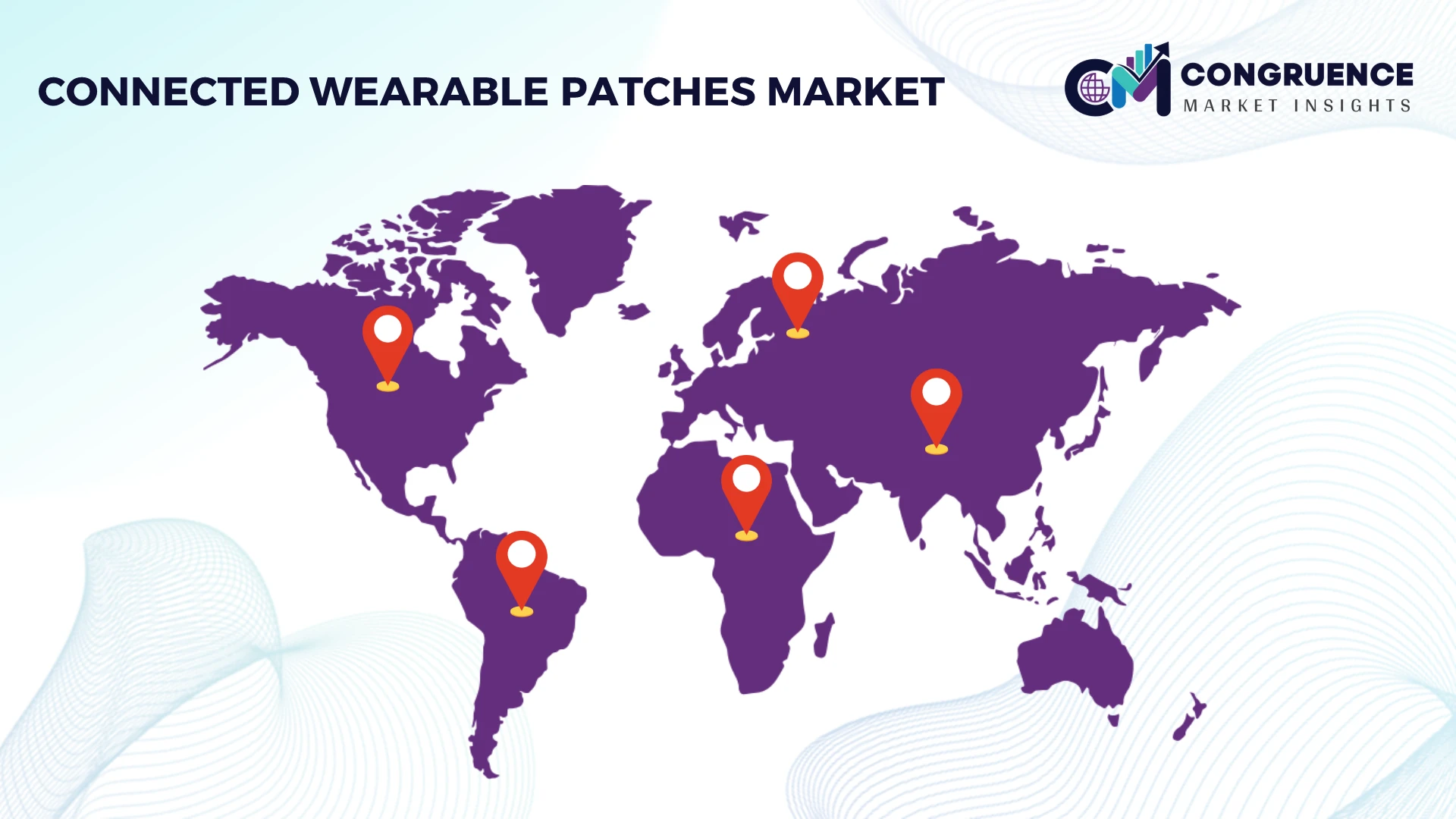
North America accounted for the largest market share at 39.4% in 2025 however, Asia-Pacific is expected to register the fastest growth, expanding at a CAGR of 20.8% between 2026 and 2033.
Remote Monitoring Ecosystems Strengthen Market Leadership
North America maintains leadership in the Connected Wearable Patches market through advanced digital healthcare infrastructure, broad reimbursement support for remote patient monitoring, and strong medical device innovation. The region contributes approximately 39.4% of global market demand, supported by widespread deployment across hospitals, home healthcare providers, and chronic disease management programs. Nearly 62% of enterprise remote patient monitoring platforms now integrate connected wearable patches with cloud-based clinical systems. Medical technology companies continue expanding biosensor manufacturing, strengthening software partnerships, and investing in AI-enabled clinical analytics to improve healthcare efficiency and patient outcomes across decentralized care environments.
United States Market Outlook: The United States dominates regional deployment through its mature digital health ecosystem, large network of healthcare providers, and strong investment in connected medical technologies. Healthcare organizations continue expanding hospital-at-home programs supported by wearable biosensors and interoperable monitoring platforms. Approximately 54% of advanced remote patient monitoring deployments utilize connected wearable patches, encouraging manufacturers to increase domestic production, expand digital partnerships, and accelerate commercialization of AI-enabled monitoring solutions.
Digital Healthcare Standards Accelerate Clinical Adoption
Europe accounts for approximately 27% of the global Connected Wearable Patches market, supported by healthcare digitalization, aging populations, and expanding adoption of connected medical technologies. Hospitals and outpatient care providers increasingly integrate wearable biosensors into chronic disease management and post-discharge monitoring workflows. Approximately 43% of digital healthcare modernization projects now include wearable patient monitoring technologies. Companies are strengthening collaborations with healthcare institutions while expanding software integration capabilities that support secure clinical data exchange and regulatory compliance.
Germany Market Outlook: Germany leads the regional market through advanced medical device manufacturing, strong digital health initiatives, and well-established healthcare infrastructure. Hospitals continue deploying wearable monitoring platforms integrated with electronic health records to improve continuity of care. Approximately 31% of large healthcare organizations have expanded connected patient monitoring infrastructure during recent modernization programs, supporting broader enterprise adoption of wearable medical technologies.
Electronics Manufacturing and Healthcare Expansion Drive Growth
Asia-Pacific is rapidly strengthening its position through world-leading electronics manufacturing capabilities, healthcare digitalization, and expanding investments in wearable medical technologies. The region contributes approximately 25% of global Connected Wearable Patches deployment while serving as a major manufacturing base for flexible electronics and biosensors. Around 46% of new wearable biosensor production capacity is concentrated within leading East Asian manufacturing clusters. Medical technology companies continue expanding automated production, regional R&D facilities, and strategic partnerships to accelerate commercialization of next-generation wearable healthcare devices.
China Market Outlook: China has emerged as the region's largest manufacturing and deployment hub through integrated electronics supply chains, growing digital healthcare infrastructure, and expanding domestic medical device production. Large healthcare providers increasingly adopt connected wearable technologies for chronic disease management and remote monitoring. Approximately 39% of regional flexible biosensor manufacturing capacity is concentrated in China, strengthening innovation, export competitiveness, and supply-chain efficiency.
Healthcare Modernization Expands Digital Monitoring
South America is steadily increasing adoption of connected wearable patches through healthcare digitalization, improved telemedicine infrastructure, and growing chronic disease management initiatives. Brazil accounts for the largest share of regional deployment owing to expanding healthcare investment and increasing implementation of connected patient monitoring solutions. Approximately 21% of recently modernized healthcare facilities have incorporated wearable monitoring technologies into outpatient and remote care services. Medical device companies are strengthening distributor partnerships while expanding localized technical support to improve deployment efficiency across developing healthcare systems.
Brazil Market Outlook: Brazil leads regional demand through expanding telehealth services, healthcare infrastructure modernization, and increasing investment in connected medical technologies. Public and private healthcare providers continue deploying wearable monitoring platforms to support long-term management of cardiovascular disease and diabetes. Growing digital healthcare adoption is encouraging manufacturers to strengthen regional distribution, clinical partnerships, and technical service capabilities for scalable implementation.
Healthcare Transformation Supports Connected Care
The Middle East & Africa Connected Wearable Patches market is advancing through healthcare infrastructure modernization, national digital health strategies, and increasing investment in connected patient monitoring. Demand is strongest across Gulf countries, where healthcare providers continue integrating wearable technologies into chronic disease management and virtual care programs. Approximately 24% of newly implemented digital healthcare projects now include connected wearable monitoring solutions. Manufacturers are strengthening partnerships with regional healthcare providers while expanding commercial operations to improve technology availability and implementation support.
Saudi Arabia Market Outlook: Saudi Arabia leads regional market development through extensive healthcare modernization, smart hospital initiatives, and investment in digital health transformation. National healthcare programs continue expanding connected monitoring infrastructure across major medical centers and outpatient services. Increasing deployment of wearable biosensors within chronic disease management programs is strengthening demand for interoperable digital healthcare platforms while encouraging international medical technology companies to expand local partnerships and implementation capabilities.
Global medical technology leaders Medtronic, Dexcom, Abbott, BioIntelliSense, and VitalConnect compete with digital health innovators, biosensor developers, and specialized wearable platform providers, while regional manufacturers emphasize cost-efficient production and localized clinical integration. The top five companies collectively control approximately 55% of the global market. Competition is driven by biosensor accuracy, battery longevity, AI-enabled analytics, and interoperability rather than hardware pricing alone. Advanced wearable platforms improve monitoring continuity by nearly 24%, embedded AI enhances clinical event detection by approximately 21%, and flexible electronics reduce device thickness by around 18%. Companies are expanding manufacturing capacity, partnering with healthcare providers, integrating cloud-based monitoring platforms, and vertically strengthening biosensor supply chains. Competitive momentum is shifting toward multi-parameter wearable ecosystems combining hardware, software, and predictive analytics. Regulatory validation, cybersecurity compliance, and clinical evidence remain significant entry barriers. Winning requires scalable biosensor innovation, secure digital ecosystems, validated clinical performance, and seamless healthcare integration.
Medtronic plc
Dexcom, Inc.
Abbott Laboratories
BioIntelliSense, Inc.
VitalConnect, Inc.
iRhythm Technologies, Inc.
LifeSignals Group
Preventice Solutions
VivaLNK, Inc.
Kenzen, Inc.
Epicore Biosystems
Vivalnk Medical
Byteflies NV
Connected wearable patches are evolving through flexible biosensors, printable electronics, AI-assisted analytics, Bluetooth Low Energy connectivity, and cloud-integrated remote monitoring platforms. Approximately 61% of newly introduced medical-grade wearable patches support continuous multi-parameter monitoring, while advanced biosensor architectures improve physiological signal accuracy by nearly 22%. Flexible substrates reduce skin irritation by approximately 17%, enabling longer wear duration and improving patient compliance. These technologies strengthen continuous healthcare delivery while reducing manual intervention across remote monitoring programs.
Emerging innovations include stretchable electronics, edge AI processing, energy-efficient chipsets, and multimodal biosensing capable of simultaneously tracking cardiac activity, temperature, respiratory rate, and biochemical markers. Compared with conventional single-parameter wearable devices, AI-enabled multi-sensor patches improve early health event detection by approximately 27% while reducing false alerts by nearly 19%. Healthcare providers and digital health platforms benefit most because integrated clinical intelligence improves workflow efficiency, accelerates intervention, and supports decentralized patient management.
Between 2026 and 2028, connected wearable patches will increasingly integrate with electronic health records, telehealth ecosystems, and digital therapeutics. Manufacturers investing in cybersecurity, advanced semiconductor packaging, and AI-driven predictive analytics will strengthen market leadership. Early adopters will achieve faster clinical decision-making, improved patient adherence, enhanced operational scalability, and stronger competitive differentiation as continuous connected monitoring becomes an essential component of precision healthcare.
March 2024 – Dexcom received U.S. FDA clearance for the over-the-counter Stelo Glucose Biosensor System, expanding continuous glucose monitoring beyond insulin users. The wearable operates for up to 15 days, broadening consumer access to connected biosensing. Source: U.S. Food and Drug Administration
September 2024 – Abbott launched Lingo and Libre Rio in the United States following FDA clearance, expanding its connected biowearables portfolio. The initiative builds on technology already used by approximately 6 million Libre users worldwide, strengthening consumer health monitoring. Source: Abbott
July 2025 – Dexcom issued a software correction for selected G7 and ONE+ connected glucose monitoring applications after identifying an alert design issue. Mandatory application updates enhanced patient safety and strengthened software reliability across deployed wearable ecosystems. Source: U.S. Food and Drug Administration
June 2026 – Dexcom secured FDA clearance for over-the-counter use of the Stelo Glucose Biosensor System in children aged 2 years and older, significantly expanding pediatric access to connected glucose monitoring and strengthening adoption across family healthcare settings. Source: FDA
The report provides comprehensive analysis of the Connected Wearable Patches market across major product types, clinical applications, end-user categories, and regional healthcare ecosystems. It evaluates vital sign monitoring, glucose monitoring, ECG monitoring, drug delivery, hydration monitoring, and emerging multi-parameter wearable platforms while assessing adoption across chronic disease management, remote patient monitoring, sports medicine, and post-operative care. The study also examines flexible electronics, AI-enabled biosensing, cloud connectivity, printable sensors, and predictive analytics shaping next-generation wearable healthcare technologies.
The report covers North America, Europe, Asia-Pacific, South America, and the Middle East & Africa, analyzing manufacturing concentration, deployment patterns, digital healthcare integration, and competitive positioning. More than 60% of advanced wearable patch platforms now support continuous connected monitoring with interoperable digital health capabilities. The analysis supports investment planning, technology evaluation, market expansion, partnership development, and competitive benchmarking between 2026 and 2033 by identifying high-growth applications, regional deployment trends, product innovation priorities, and emerging opportunities across connected healthcare ecosystems.
| Report Attribute/Metric | Report Details |
|---|---|
|
Market Revenue in 2025 |
USD 5,198.5 Million |
|
Market Revenue in 2033 |
USD 21,187.9 Million |
|
CAGR (2026 - 2033) |
19.2% |
|
Base Year |
2025 |
|
Forecast Period |
2026 - 2033 |
|
Historic Period |
2021 - 2025 |
|
Segments Covered |
By Type
By Application
By End-User
|
|
Key Report Deliverable |
Revenue Forecast, Growth Trends, Market Dynamics, Segmental Overview, Regional and Country-wise Analysis, Competition Landscape |
|
Region Covered |
North America, Europe, Asia-Pacific, South America, Middle East, Africa |
|
Key Players Analyzed |
Medtronic plc, Dexcom, Inc., Abbott Laboratories, BioIntelliSense, Inc., VitalConnect, Inc., iRhythm Technologies, Inc., LifeSignals Group, Preventice Solutions, VivaLNK, Inc., Kenzen, Inc., Epicore Biosystems, Vivalnk Medical, Byteflies NV |
|
Customization & Pricing |
Available on Request (10% Customization is Free) |




