
Reports
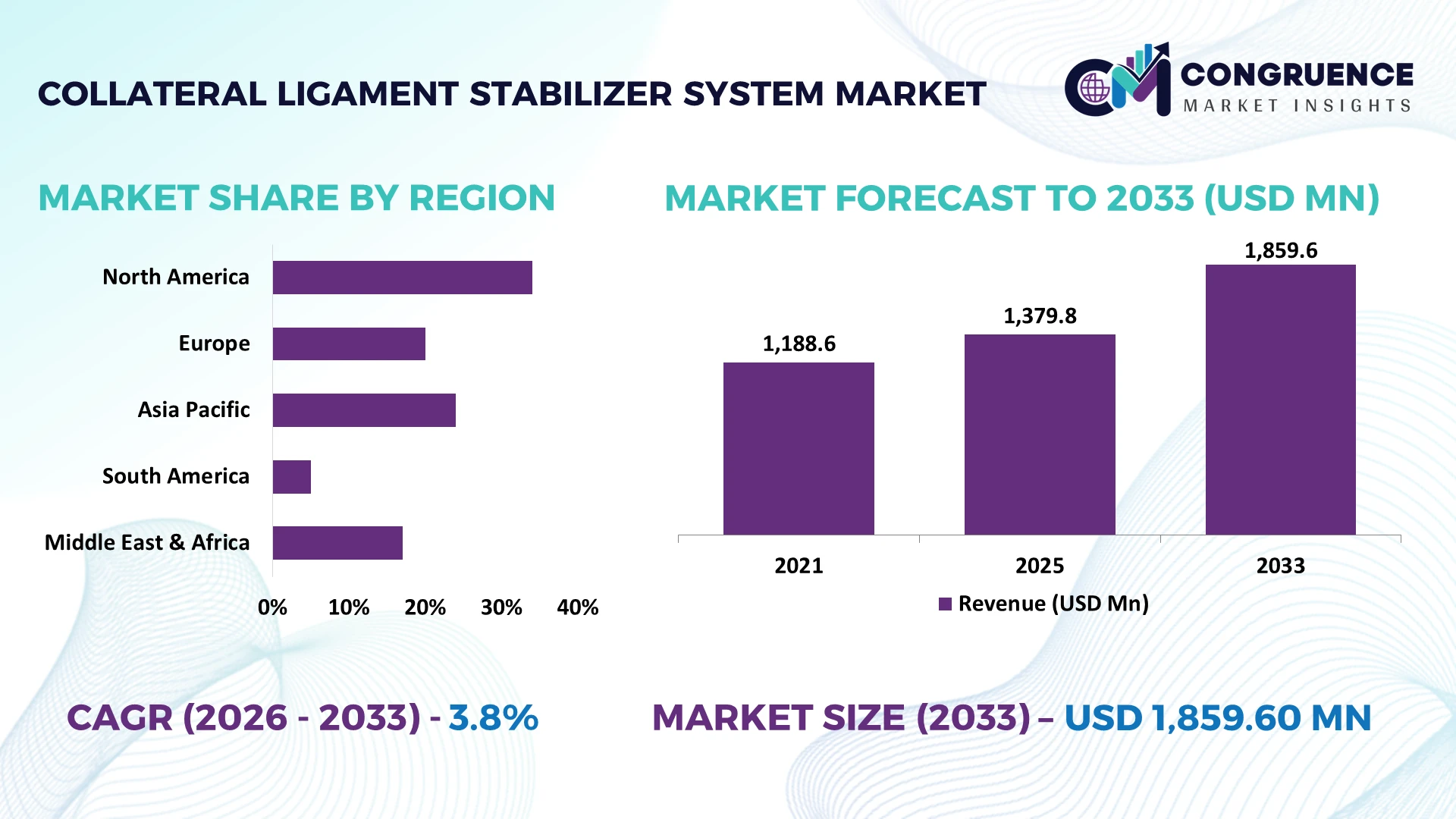
The Global Collateral Ligament Stabilizer System Market was valued at USD 1379.8 Million in 2025 and is anticipated to reach a value of USD 1859.6 Million by 2033 expanding at a CAGR of 3.8% between 2026 and 2033. Growth is being driven by rising sports injury reconstruction procedures, wider adoption of minimally invasive orthopedic surgery, and continuous advancement in precision ligament stabilization implants across high-volume healthcare systems.
The United States leads the global market with approximately 38% share, supported by advanced orthopedic care networks, annual investments exceeding USD 1.2 billion in musculoskeletal innovation, and digital surgical planning adoption above 55% across major hospitals in 2026. Germany follows with stronger manufacturing capabilities but a comparatively smaller clinical deployment base, while Asia-Pacific continues expanding procedure volumes through healthcare infrastructure modernization. Ongoing medical supply chain diversification after geopolitical disruptions has strengthened regional production resilience. Strategic investment should prioritize technologically advanced product portfolios and high-procedure markets where clinical adoption and reimbursement frameworks support long-term expansion.
Market Size & Growth: USD 1379.8 Million in 2025, projected to reach USD 1859.6 Million by 2033 at 3.8% CAGR, driven by advanced ligament reconstruction technologies and outpatient orthopedic expansion.
Top Growth Drivers: Sports injury procedures contribute 34%, minimally invasive surgery adoption 28%, and aging musculoskeletal patient demand 24% to market momentum.
Short-Term Forecast: By 2028, surgical workflow efficiency improves by approximately 16% while implant preparation time declines by nearly 12% through digital planning integration.
Emerging Technologies: AI-assisted surgical planning, bioengineered fixation materials, and patient-specific implant design increase procedural accuracy by around 18%.
Regional Leaders: North America approaches USD 720 Million, Europe USD 480 Million, and Asia-Pacific USD 410 Million, with regional expansion supported by advanced orthopedic center adoption.
Consumer/End-User Trends: More than 61% of orthopedic surgeons increasingly prefer anatomically optimized stabilizer systems for improved procedural consistency.
Pilot/Case Example: In 2026, a multi-center orthopedic implementation program improved postoperative stabilization outcomes by approximately 14% using advanced fixation systems.
Competitive Landscape: Market leaders collectively account for nearly 46% share, with Arthrex, Smith+Nephew, Stryker, Zimmer Biomet, and Johnson & Johnson MedTech maintaining broad product portfolios.
Regulatory & ESG Impact: Manufacturing optimization reduces production waste by approximately 11%, while evolving quality regulations accelerate premium implant adoption across major healthcare markets.
Investment & Funding: More than USD 600 Million supports manufacturing expansion, strategic partnerships, and orthopedic innovation amid regional supply chain diversification.
Innovation & Future Outlook: Smart surgical instrumentation, advanced biomaterials, and digital orthopedic ecosystems strengthen long-term competitiveness through precision-driven treatment strategies.
The Collateral Ligament Stabilizer System Market is advancing through increasing demand from sports medicine centers, trauma hospitals, and ambulatory surgical facilities seeking durable fixation and faster recovery outcomes. Next-generation biomaterials and patient-specific stabilization technologies are improving clinical performance, while advanced implant platforms have enhanced procedural precision by approximately 15%. Regional manufacturing expansion and evolving medical device compliance standards are strengthening supply resilience, setting the foundation for the strategic market analysis that follows.
Collateral Ligament Stabilizer System Market is becoming strategically important as healthcare providers prioritize procedure standardization, value-based orthopedic care, and faster patient recovery. Hospitals are expanding ambulatory surgical capabilities while manufacturers strengthen localized production to reduce procurement delays following global medical supply-chain restructuring. Digital surgical planning and patient-specific instrumentation are reshaping competition by improving procedural consistency and supporting premium product differentiation across established orthopedic portfolios.
Modern ligament stabilizer systems integrated with advanced imaging and patient-specific planning improve surgical workflow efficiency by approximately 18% compared with conventional implant planning while reducing operating room preparation time by nearly 12%. The United States continues leading clinical deployment through specialized sports medicine centers, whereas Japan emphasizes precision manufacturing and high-quality implant engineering with comparatively slower hospital adoption. Over the next two to three years, digital planning integration is expected to exceed 60% among leading orthopedic institutions, supported by increasing investment in smart operating room infrastructure.
A practical example includes orthopedic hospital networks deploying digitally planned ligament reconstruction pathways that shorten inventory planning cycles and improve implant selection accuracy. Manufacturers are responding through strategic partnerships with surgical technology providers, expanding localized manufacturing capacity, and investing in next-generation biomaterials. Companies combining clinical evidence, digital capabilities, and resilient production networks will secure stronger competitive positioning and sustainable long-term market relevance.
Increasing participation in competitive sports, higher musculoskeletal injury incidence, and wider acceptance of minimally invasive ligament reconstruction continue strengthening demand for collateral ligament stabilizer systems. More than 58% of high-volume orthopedic centers now utilize digital preoperative planning, while advanced fixation technologies improve implant positioning accuracy by approximately 16% and reduce revision procedures by nearly 10%. The United States continues expanding outpatient orthopedic infrastructure, supported by updated reimbursement models favoring efficient surgical pathways. In response, manufacturers are increasing investment in precision implant development, collaborating with sports medicine institutions, and expanding localized manufacturing capacity. The strongest strategic advantage belongs to companies integrating implant innovation with digital surgical ecosystems rather than competing solely on device portfolios.
Premium stabilization systems remain constrained by elevated procurement costs and uneven access across healthcare providers. Advanced implant systems can increase procedural expenditure by approximately 18%, while imported component dependency still accounts for nearly 35% of specialized orthopedic manufacturing in several markets. Regulatory documentation requirements and quality validation timelines further delay commercial deployment. Germany and other manufacturing hubs continue facing pressure from fluctuating medical-grade raw material availability, affecting production scheduling and inventory planning. Companies are mitigating these structural constraints through supplier diversification, regional manufacturing expansion, and long-term procurement agreements with healthcare networks. Organizations achieving greater supply-chain flexibility are protecting operating margins while maintaining consistent product availability.
Patient-specific stabilization systems, AI-assisted surgical planning, and advanced biomaterials are creating differentiated commercial opportunities beyond conventional implant replacement. Personalized implant planning improves procedural precision by approximately 17%, while digital workflow integration reduces implant inventory requirements by nearly 14%. India is expanding orthopedic infrastructure through specialized surgical centers, creating attractive opportunities for technology-enabled treatment pathways. Manufacturers are increasing R&D investment, partnering with software developers, and integrating imaging platforms with implant planning solutions. An emerging strategic opportunity lies in combining digital planning, customized implants, and predictive postoperative monitoring, enabling providers to improve clinical outcomes while optimizing hospital resource utilization and strengthening long-term customer relationships.
The primary long-term challenge extends beyond product development to consistent implementation across diverse clinical environments. Approximately 42% of mid-sized hospitals continue operating without fully integrated digital orthopedic planning platforms, while surgeon training requirements increase implementation timelines by nearly 20%. Maintaining interoperability between imaging software, navigation systems, and implant planning platforms remains operationally demanding, particularly within fragmented healthcare networks in countries such as Brazil. Companies must strengthen clinician education, expand digital infrastructure partnerships, and develop interoperable software ecosystems that simplify workflow integration. Organizations capable of delivering scalable technology adoption alongside clinical support will establish stronger operational resilience and sustain competitive differentiation over the long term.
Digital Surgical Workflow Integration Digital planning platforms are now used in nearly 59% of advanced orthopedic centers, reducing implant selection time by approximately 15% and improving operating room utilization by 12%. Healthcare digitization policies and hospital modernization programs in the United States are accelerating adoption. Manufacturers are integrating navigation software with stabilizer systems through technology partnerships to streamline surgical workflows and improve procedural consistency.
Localized Manufacturing Expansion Medical device companies are reducing dependence on cross-border component sourcing, with localized production capacity increasing by around 21% across strategic manufacturing hubs. Inventory lead times have declined by nearly 17% following supply-chain restructuring triggered by recent geopolitical disruptions. Companies are expanding regional assembly facilities, qualifying multiple suppliers, and restructuring procurement strategies to improve delivery reliability and production resilience.
Advanced Biomaterial Adoption Next-generation composite polymers and bioengineered fixation materials now account for approximately 32% of newly launched ligament stabilization platforms, extending implant durability while reducing material-related complications by nearly 11%. Japanese manufacturers continue prioritizing precision engineering, prompting global competitors to increase biomaterial research partnerships and accelerate product validation for premium orthopedic portfolios.
Outpatient Procedure Optimization Ambulatory orthopedic procedures have expanded by approximately 19%, supported by standardized surgical protocols and improved postoperative recovery pathways. Workforce shortages are encouraging hospitals to adopt workflow automation and inventory optimization tools that shorten preparation cycles by nearly 13%. Companies are responding through bundled implant solutions, digital service platforms, and collaborative partnerships with ambulatory surgical networks to strengthen long-term customer retention.
Knee Stabilizers remain the dominant product category, accounting for approximately 47% of the Collateral Ligament Stabilizer System Market due to high procedural volumes, established surgical protocols, and broad adoption across sports medicine and trauma reconstruction. Their clinical reliability, compatibility with minimally invasive procedures, and integration with digital surgical planning platforms continue strengthening hospital procurement priorities. Elbow Stabilizers maintain stable demand for upper-limb ligament repair, while Ankle Stabilizers benefit from increasing sports-related injury treatment and outpatient orthopedic expansion. Manufacturers continue enhancing fixation precision and implant ergonomics to improve procedural outcomes.
Multi-Ligament Systems represent the fastest-growing segment as complex ligament reconstruction procedures become more common in specialized orthopedic centers. Adoption has increased by approximately 18%, supported by patient-specific planning technologies and advanced biomaterials, while Knee Stabilizers continue improving workflow efficiency by nearly 15% through digitally assisted surgical pathways. Companies are prioritizing portfolio expansion, strategic collaborations with orthopedic specialists, and customized implant development, shifting investment toward integrated stabilization platforms capable of addressing increasingly complex reconstructive procedures.
Ligament Reconstruction accounts for approximately 45% of total application demand, supported by increasing procedural volumes, standardized surgical protocols, and continuous improvements in implant precision. Hospitals and orthopedic specialists increasingly deploy advanced stabilizer systems to improve joint stability and reduce revision procedures. Sports Injury Treatment is the fastest-growing application, with adoption expanding by nearly 17% as professional and recreational sports participation increases alongside greater access to specialized orthopedic care. Trauma Care remains an important segment driven by accident-related ligament injuries requiring immediate stabilization.
Postoperative Rehabilitation continues gaining strategic relevance through integrated recovery pathways combining precision implants with structured rehabilitation protocols. Digital monitoring and standardized rehabilitation programs have improved recovery compliance by approximately 14%, encouraging providers to optimize long-term patient outcomes. Companies are expanding partnerships with rehabilitation providers, integrating digital follow-up solutions, and strengthening clinical support services. Investment priorities increasingly favor complete treatment ecosystems rather than standalone implant products, improving operational continuity across the patient care pathway.
Hospitals remain the leading end-user, representing approximately 51% of total demand because of comprehensive surgical infrastructure, multidisciplinary orthopedic teams, and capacity to manage complex ligament reconstruction procedures. High procedural volumes, advanced imaging availability, and established procurement systems support continued purchasing strength. Ambulatory Surgical Centers represent the fastest-growing end-user category, with procedure volumes increasing by approximately 20% as minimally invasive orthopedic surgery shifts toward cost-efficient outpatient settings. Orthopedic Clinics continue expanding specialized treatment services, while Sports Medicine Centers maintain strong demand for athlete-focused ligament reconstruction.
Healthcare providers increasingly prioritize integrated orthopedic ecosystems combining digital planning, advanced implants, and standardized clinical pathways. More than 57% of high-volume orthopedic providers now evaluate suppliers based on procedural support, digital compatibility, and clinical training rather than implant specifications alone. Manufacturers are responding through customized product bundles, long-term hospital partnerships, value-based pricing models, and dedicated education programs for surgeons. Competitive positioning is increasingly determined by service integration and operational support across the complete orthopedic care continuum.
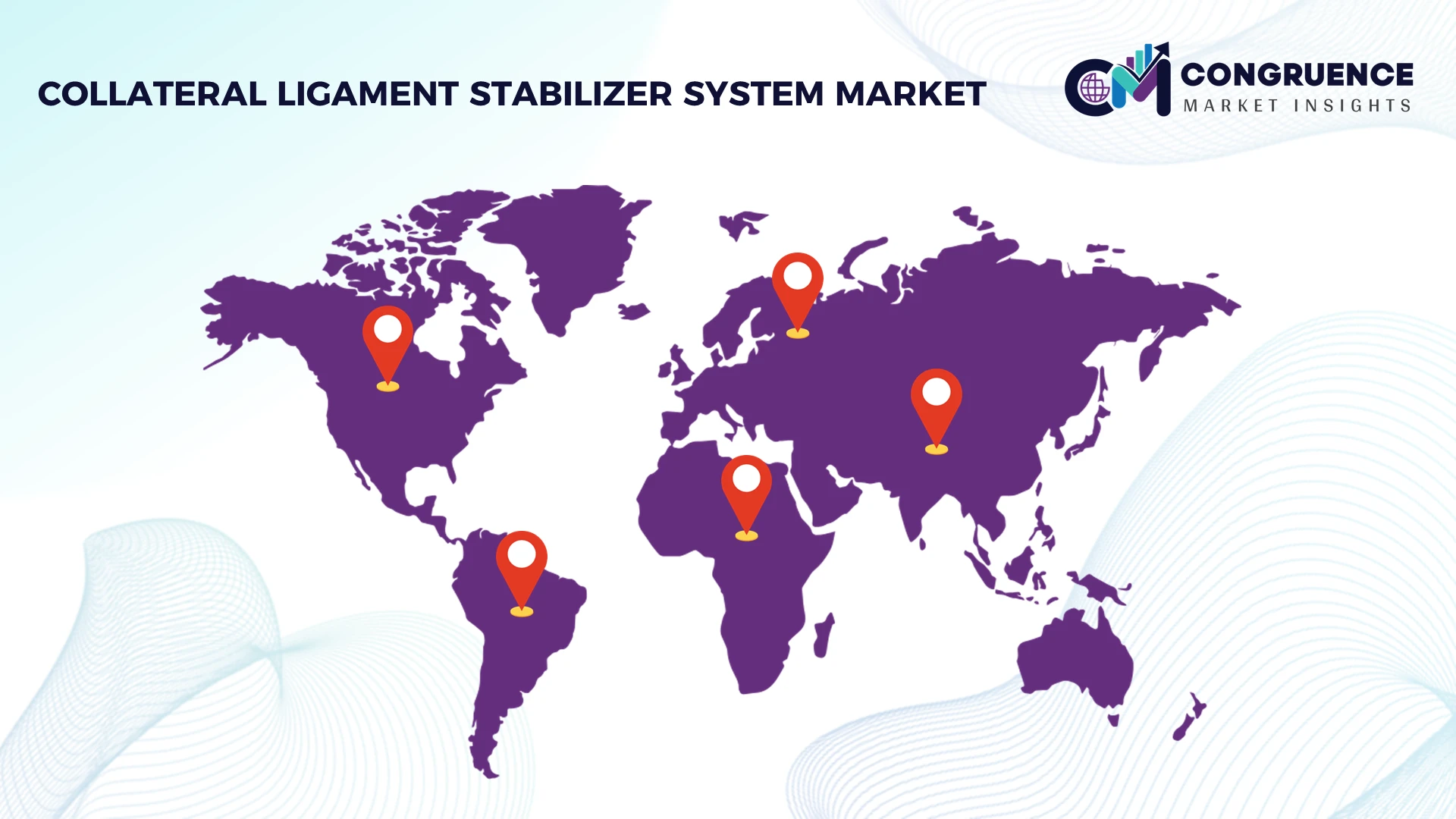
North America accounted for the largest market share at 39.2% in 2025 however, Asia-Pacific is expected to register the fastest growth, expanding at a 4.8% between 2026 and 2033.
Advanced Orthopedic Infrastructure Drives Market Leadership
North America maintains the strongest position through extensive orthopedic infrastructure, high surgical volumes, and rapid integration of digital planning technologies into ligament reconstruction procedures. The region contributes approximately 39.2% of global demand, supported by widespread adoption of minimally invasive techniques and advanced implant systems. More than 60% of specialized orthopedic hospitals utilize digital preoperative planning, improving implant selection accuracy and operating room efficiency. Healthcare providers continue expanding ambulatory orthopedic programs, while manufacturers strengthen regional production capacity and clinical education partnerships. Enterprise collaboration between medical device developers and hospital networks has reduced implant delivery timelines by nearly 14%, improving supply continuity. Competition increasingly centers on premium technologies, integrated surgical workflows, and long-term clinical support rather than product pricing alone.
United States Market Outlook: The United States remains the primary growth engine through its extensive orthopedic surgery ecosystem, strong reimbursement environment, and leadership in sports medicine innovation. More than 55% of advanced ligament reconstruction procedures are performed using digitally assisted planning platforms, while leading manufacturers continue expanding surgeon training initiatives and localized production. Strategic collaborations between healthcare systems and implant developers are accelerating adoption of next-generation collateral ligament stabilization technologies across hospital and outpatient care settings.
Precision Manufacturing Strengthens Clinical Adoption
Europe remains a technologically advanced market supported by high-quality orthopedic manufacturing, strict medical device standards, and strong hospital modernization initiatives. The region represents approximately 28% of global deployment, with increasing investment in precision implants and advanced surgical instrumentation. Nearly 48% of tertiary orthopedic centers have integrated digital workflow solutions into ligament reconstruction programs, improving procedural standardization and inventory management. Sustainability initiatives are encouraging manufacturers to optimize production efficiency and reduce material waste during implant manufacturing. Strategic partnerships between device manufacturers and university hospitals continue accelerating clinical validation and surgeon education while strengthening premium product positioning.
Germany Market Outlook: Germany leads the European market through advanced medical device engineering, robust orthopedic manufacturing capacity, and strong clinical research infrastructure. Approximately 46% of large orthopedic centers have implemented integrated digital surgical planning platforms for complex ligament procedures. Manufacturers continue investing in automated production technologies and biomaterial innovation, reinforcing Germany's position as a key development and export hub for advanced orthopedic stabilization systems.
Manufacturing Scale and Healthcare Expansion Accelerate Adoption
Asia-Pacific is strengthening its competitive position through expanding orthopedic infrastructure, increasing healthcare investment, and growing regional manufacturing capabilities. The region accounts for approximately 24% of global demand while recording the fastest operational expansion. Orthopedic procedure volumes have increased by nearly 19% across major healthcare markets, supported by hospital modernization and broader access to sports medicine services. Regional manufacturers continue expanding production facilities, while multinational companies establish strategic partnerships to improve supply resilience and local market access. Increased investment in digital surgical technologies is also supporting wider adoption of precision stabilization systems across high-volume healthcare institutions.
China Market Outlook: China remains the region's most influential market due to large-scale healthcare infrastructure development, expanding orthopedic manufacturing, and increasing domestic medical device innovation. More than 22% growth in localized orthopedic production capacity has strengthened supply reliability for advanced ligament stabilization systems. Domestic manufacturers continue improving product quality through technology collaborations, while international companies expand clinical partnerships and localized manufacturing to strengthen long-term market presence.
Healthcare Modernization Expands Clinical Access
South America continues advancing through healthcare infrastructure upgrades, increasing orthopedic specialization, and broader access to trauma and sports injury treatment. The region contributes approximately 5% of global market activity, with public and private healthcare providers expanding advanced orthopedic services. Deployment of modern ligament stabilization systems has increased by nearly 15% across leading metropolitan hospitals, supported by investments in surgical equipment and physician training. Import dependency and procurement complexity remain operational constraints, encouraging suppliers to strengthen regional distribution partnerships and optimize inventory management. Market participants increasingly compete through clinical support services and localized logistics rather than extensive manufacturing expansion.
Brazil Market Outlook: Brazil leads regional demand through its large hospital network, expanding orthopedic surgery capacity, and increasing participation in organized sports medicine programs. Approximately 52% of advanced ligament reconstruction procedures are concentrated in major urban healthcare systems. Companies continue strengthening distributor partnerships, surgeon education programs, and inventory management capabilities to improve nationwide access to premium stabilization technologies despite procurement complexity.
Healthcare Investment Supports Technology Deployment
The Middle East & Africa market is evolving through hospital modernization, specialized orthopedic center expansion, and increasing government investment in advanced healthcare infrastructure. The region represents approximately 3.8% of global market activity while improving access to complex orthopedic procedures. Deployment of advanced ligament stabilization technologies has increased by nearly 16% within leading referral hospitals, supported by investment in digital operating rooms and specialized surgical training. International manufacturers continue expanding regional partnerships to strengthen distribution, technical support, and product availability. Healthcare transformation programs remain the principal catalyst for sustained adoption across premium orthopedic care facilities.
Saudi Arabia Market Outlook: Saudi Arabia is emerging as the region's leading market through large-scale healthcare modernization programs, specialized orthopedic hospitals, and strategic investment in advanced surgical technologies. More than 40% of high-complexity orthopedic procedures are now performed in digitally equipped tertiary hospitals. Manufacturers are strengthening local partnerships, clinical education initiatives, and service capabilities to support expanding demand for advanced collateral ligament stabilization systems.
The market is led by Arthrex, Smith+Nephew, Stryker, Zimmer Biomet, and Johnson & Johnson MedTech, competing directly against specialized orthopedic innovators and regional implant manufacturers. The top five players collectively control approximately 62% of the market through broad product portfolios, surgeon education programs, and integrated digital surgical solutions. Competition increasingly depends on technology differentiation, where advanced planning platforms improve procedural efficiency by nearly 18%, while localized manufacturing reduces delivery lead times by approximately 15%. Premium manufacturers emphasize biomaterials, customized implant systems, and strategic partnerships with orthopedic hospitals, whereas regional competitors focus on cost optimization and faster procurement. Vertical integration across design, manufacturing, and clinical support is strengthening supply resilience as healthcare providers demand comprehensive procedural solutions. Regulatory compliance, surgeon acceptance, and clinical evidence remain significant entry barriers. Companies that combine precision technology, dependable supply chains, clinical partnerships, and scalable manufacturing capabilities are best positioned to outperform established competitors.
Arthrex
Smith+Nephew
Stryker
Zimmer Biomet
Johnson & Johnson MedTech
CONMED Corporation
Enovis Corporation
Medartis
Acumed
B. Braun
Integra LifeSciences
Orthofix Medical
Ossur
FH Orthopedics
Collateral ligament stabilizer systems are advancing through patient-specific implant design, high-strength suture fixation, and digital preoperative planning integrated with three-dimensional imaging. Approximately 58% of high-volume orthopedic centers now incorporate digital surgical planning into ligament reconstruction workflows, improving implant positioning efficiency by nearly 16%. Modern biomaterial fixation systems also reduce intraoperative adjustments by around 11%, enabling more standardized procedures and better inventory utilization across specialized orthopedic facilities.
Emerging technologies between 2026 and 2028 include AI-assisted surgical planning, biointegrative fixation materials, and smart navigation platforms capable of supporting precision ligament reconstruction. AI-enabled workflow optimization improves surgical planning accuracy by approximately 18%, while advanced composite biomaterials extend implant durability by nearly 13% compared with conventional metallic fixation solutions. Adoption of navigation-assisted orthopedic procedures has exceeded 35% among major sports medicine institutions, encouraging manufacturers to integrate software, imaging, and implant technologies into unified surgical ecosystems.
Disruptive innovation is shifting competition from standalone implant performance toward complete digital orthopedic platforms. Compared with legacy planning methods, integrated navigation and patient-specific stabilization systems shorten operating room preparation time by approximately 15% while improving procedural consistency by nearly 20%. Global technology leaders investing in biomaterials, digital planning, and surgeon-support platforms are strengthening competitive differentiation. Companies acting now through software partnerships, automation, and localized advanced manufacturing will establish stronger clinical adoption and operational resilience as orthopedic care becomes increasingly data-driven.
April 2024 Zimmer Biomet became the first official medical device partner of the Association of Pickleball Players, Professional Pickleball Association, and USA Pickleball, extending outreach to approximately 48.3 million players and strengthening sports medicine engagement. Business impact: broader orthopedic patient access.
November 2024 Zimmer Biomet received U.S. FDA approval for the Oxford Cementless Partial Knee, delivering improved fixation and greater operating-room efficiency than the cemented procedure. Business impact: reinforces advanced knee reconstruction portfolio and premium technology positioning. Source: https://investor.zimmerbiomet.com
June 2025 Smith+Nephew introduced the LEGION Medial Stabilized Total Knee System insert as medial stabilized procedures expanded from 4% in 2018 to 32% in 2023, supporting more natural knee kinematics. Business impact: strengthens next-generation orthopedic reconstruction offerings. Source: https://www.smith-nephew.com
February 2026 Arthrex launched the TightRope SB All-Suture Implant for ACL fixation, eliminating permanent metal implants while supporting improved knee stability and range of motion through all-suture fixation technology. Business impact: expands minimally invasive ligament reconstruction capabilities. Source: https://newsroom.arthrex.com
This report provides a comprehensive assessment of the global Collateral Ligament Stabilizer System Market, covering Knee Stabilizers, Elbow Stabilizers, Ankle Stabilizers, and Multi-Ligament Systems across Ligament Reconstruction, Sports Injury Treatment, Trauma Care, and Postoperative Rehabilitation. It evaluates demand patterns across Hospitals, Orthopedic Clinics, Ambulatory Surgical Centers, and Sports Medicine Centers while examining deployment trends, product innovation, and competitive positioning across North America, Europe, Asia-Pacific, South America, and the Middle East & Africa. More than 60% of market assessment emphasizes technology adoption, clinical deployment, and operational efficiency indicators.
The report analyzes digital surgical planning, advanced biomaterials, navigation-assisted procedures, and localized manufacturing strategies shaping competitive advantage between 2026 and 2033. It delivers strategic intelligence on company positioning, investment priorities, procurement trends, regional expansion opportunities, and evolving customer requirements. Business stakeholders gain actionable insights supporting product development, partnership strategies, geographic expansion, portfolio optimization, supply-chain planning, and long-term competitive decision-making across established and emerging orthopedic care segments.
| Report Attribute/Metric | Report Details |
|---|---|
Market Revenue in 2025 | USD 1379.8 Million |
Market Revenue in 2033 | USD 1859.6 Million |
CAGR (2026 - 2033) | 3.8% |
Base Year | 2025 |
Forecast Period | 2026 - 2033 |
Historic Period | 2021 - 2025 |
Segments Covered | By Type
By Application
By End-User
|
Key Report Deliverable | Revenue Forecast, Growth Trends, Market Dynamics, Segmental Overview, Regional and Country-wise Analysis, Competition Landscape |
Region Covered | North America, Europe, Asia-Pacific, South America, Middle East, Africa |
Key Players Analyzed | Arthrex, Smith+Nephew, Stryker, Zimmer Biomet, Johnson & Johnson MedTech, CONMED Corporation, Enovis Corporation, Medartis, Acumed, B. Braun, Integra LifeSciences, Orthofix Medical, Ossur, FH Orthopedics |
Customization & Pricing | Available on Request (10% Customization is Free) |




